
Unlock the Secrets of Sourdough: Top Online Courses to Master Crumb & Starter


Welcome to BakeWithEase, your trusted guide to the delightful world of baking! Are you ready to unlock the secrets of perfect sourdough? This is where your journey begins. Discover our curated list of top sourdough starter online courses designed to transform you from a baking novice into a confident bread artisan. Intrigued? Let's dive in and cultivate your perfect starter!
- Mastering Sourdough: Why Online Courses Are Your Best Bet
- Top Sourdough Starter Online Courses: A Comprehensive Comparison
- Reviewing the Best Sourdough Courses Online: Crumb & Starter Perfection
- Choosing the Right Sourdough Online Course for You: Key Considerations
- Beyond the Course: Essential Tools and Ingredients for Sourdough Success
- Elevate Your Sourdough Game: Advanced Techniques and Resources
- Conclusion: Unleash Your Inner Artisan Baker with Sourdough Online Courses
-
Frequently Asked Questions
- What are the benefits of taking a Sourdough Starter Online Course?
- How do I choose the right Sourdough Starter Online Course for me?
- What are the key things I'll learn in a Sourdough Starter Online Course?
- Do I need any special equipment to take a Sourdough Starter Online Course?
- Can a Sourdough Starter Online Course really help me bake better sourdough bread?
- Final Reflection: The Ever-Rising Dough of Online Sourdough Learning
- Unleash Your Inner Baker: Start Your Sourdough Journey Today!
Mastering Sourdough: Why Online Courses Are Your Best Bet
The Allure of Sourdough: A Baker's Journey
There's a unique magic to sourdough baking that captivates bakers worldwide. It starts with nurturing a living culture, a blend of flour and water teeming with wild yeast and bacteria, known affectionately as a sourdough starter. This starter isn't just an ingredient; it's a partner in the baking process, imparting that distinctive tangy flavor, chewy texture, and beautiful open crumb that defines great sourdough bread. Many bakers begin their journey with a simple loaf, perhaps inspired by photos of stunning bread shared online, eager to replicate that artisanal quality in their own kitchen.
The process of maintaining a healthy sourdough starter and consistently producing delicious loaves is both an art and a science. It requires patience, observation, and a willingness to experiment. Factors like temperature, hydration, flour type, and fermentation time all play critical roles. Achieving that perfect balance and control over the natural leavening process is a rewarding challenge, pushing bakers to understand the fundamental principles of fermentation and dough handling on a deeper level than conventional baking.
Why Choose Online Sourdough Training Over Traditional Methods?
Online sourdough training offers unparalleled flexibility and access compared to traditional in-person classes. You can learn at your own pace, revisiting complex techniques or critical steps as many times as needed. This is particularly beneficial when mastering sensitive processes like feeding a sourdough starter or performing delicate dough folds. Whether you're a busy professional, a parent, or simply prefer the comfort of your home kitchen, online courses remove geographical barriers and scheduling conflicts, making high-quality instruction accessible to everyone.
Furthermore, many online sourdough starter online courses provide comprehensive resources that physical classes might not, such as downloadable guides, detailed video demonstrations, and access to instructor support or community forums. This allows for a more immersive learning experience where you can not only watch techniques being performed but also ask specific questions about your own starter's behavior or dough issues. The ability to connect with a global community of fellow sourdough enthusiasts can also provide invaluable peer support and inspiration.
Top Sourdough Starter Online Courses: A Comprehensive Comparison
The Criteria: What Makes a Great Online Sourdough Course?
Choosing the right online sourdough course can significantly impact your learning experience and baking success. Several key factors distinguish excellent programs from the rest. The quality and experience of the instructor are paramount; you want someone who not only knows their craft but can also articulate complex concepts clearly and patiently, guiding you through the nuances of working with a live sourdough starter and dough.
Beyond the instructor, look at the curriculum. A great course should cover essential topics from starter creation and maintenance to mixing, kneading (or folding), fermentation, shaping, scoring, and baking. The depth to which it delves into each topic, offering detailed explanations and troubleshooting tips, is crucial.
Community support, often through dedicated forums or groups, provides a space to ask questions, share results, and learn from others' experiences, creating a valuable support system as you navigate the challenges of sourdough baking. Finally, consider the cost relative to the value provided – the comprehensiveness of the content, the level of access to the instructor, and the quality of the production all contribute to the overall worth of the course.
- Instructor Expertise & Teaching Style
- Curriculum Depth and Breadth
- Community Support and Interaction
- Cost and Value for Money
Reviewing the Best Sourdough Courses Online: Crumb & Starter Perfection
Course 1: Bake With Jack's "Sourdough Masterclass"
Jack's "Sourdough Masterclass" is renowned for its thorough approach, guiding students from activating a dormant starter or creating a new one, all the way to baking loaves with stunning oven spring and open crumb. The course features detailed video tutorials covering everything from understanding flour properties and hydration ratios to mastering various folding techniques and achieving intricate scoring patterns that make each loaf unique. Students often highlight the step-by-step clarity and Jack's friendly, encouraging teaching style as major benefits.
A significant strength of this masterclass lies in its emphasis on troubleshooting and understanding the 'why' behind each step. Jack provides extensive guidance on diagnosing common sourdough issues, such as dense crumb, lack of rise, or gummy texture, and offers practical solutions. The course includes access to a private community forum where students can share their progress, ask questions, and receive personalized feedback, making it an interactive learning environment despite being online. While it represents a premium investment, the depth of knowledge and ongoing support aim to equip bakers with the skills for consistent, high-quality sourdough results.
- Key Features: Detailed starter maintenance, intricate scoring patterns, high-hydration dough techniques.
- Pros: Comprehensive instruction, personalized feedback through forums, troubleshooting emphasis.
- Cons: Premium price, substantial time commitment required.
- Ideal For: Experienced bakers seeking advanced sourdough mastery.
This introductory course by the acclaimed Bread Ahead Bakery School offers a fantastic entry point for absolute beginners looking to understand the fundamentals of sourdough. It starts with the very basics: how to create and care for your initial sourdough starter from scratch, explaining the simple process of combining flour and water and nurturing it over several days until it's active and ready for baking. The instructors break down the intimidating aspects of sourdough into manageable steps, focusing on a reliable, straightforward recipe for a classic loaf.
The course excels in its clear, visual demonstrations, making it easy for novices to follow along. You'll learn essential techniques like basic mixing, simple folds, and the initial shaping process suitable for a beginner's dough. While it provides a solid foundation and helps learners gain confidence in using their active sourdough starter, it intentionally keeps the techniques relatively simple, focusing on getting that first successful loaf baked. This makes it an excellent, low-cost option for those who want to dip their toes into the world of sourdough without feeling overwhelmed by complex variables.
- Key Features: Beginner-friendly starter creation, simple bread recipes, clear video demonstrations.
- Pros: Affordable, easy-to-follow instruction, ideal for novices.
- Cons: Limited advanced techniques, minimal focus on complex recipes.
- Ideal For: Beginners wanting to learn sourdough fundamentals.
Course 3: Maurizio Leo's "Advanced Sourdough Techniques" on The Perfect Loaf
Maurizio Leo, creator of The Perfect Loaf website, is a widely respected authority in the sourdough community, known for his meticulous approach and scientific understanding. His advanced course caters specifically to bakers who have already mastered the basics and are looking to push their skills further. It delves into more complex areas such as working with high-percentage whole wheat flours, experimenting with various preferments like a liquid levain or poolish built from your sourdough starter, and understanding the impact of long, cold fermentation on flavor and texture.
This program is designed to expand a baker's repertoire beyond standard white sourdough, introducing techniques for enriching doughs, incorporating grains and seeds, and adjusting fermentation schedules for different outcomes. Maurizio explains the science behind these techniques, helping bakers understand how different flours behave and how to manage fermentation temperatures and times for optimal results. It's a course that requires a solid foundation in sourdough principles but offers immense value for those ready to explore sophisticated methods and achieve a greater variety of bread styles.
- Key Features: Exploration of diverse flours, preferments, and long fermentation methods.
- Pros: Expands knowledge beyond basic sourdough, introduces new techniques, exciting for adventurous bakers.
- Cons: Assumes prior sourdough experience, requires access to specific flours.
- Ideal For: Intermediate to advanced bakers wanting to refine their skills.
Course 4: "Open Crumb Mastery" by Trevor J Wilson
Trevor J Wilson is celebrated within the sourdough community for his obsession with achieving an exceptionally open crumb structure, a hallmark of truly artisanal sourdough. His course is laser-focused on the techniques and principles required to consistently produce loaves with large, irregular holes. It goes deep into understanding dough strength, proper fermentation assessment, gentle handling techniques, and optimal shaping methods specifically aimed at preserving the gas structure developed during bulk fermentation.
The course provides detailed video demonstrations and explanations, often using cross-sections of bread to illustrate the impact of different techniques on the final crumb. Trevor shares his specific methodologies for developing dough strength without destroying the delicate gluten network and teaches how to read your dough to know exactly when it's ready for the next step.
This is not a beginner's course; it assumes you can already bake a basic loaf but want to elevate your results to that coveted, airy texture. It's ideal for bakers who are consistently getting a dense or tight crumb and want actionable strategies to improve it.
- Key Features: Detailed analysis of open crumb structure, techniques for achieving desired crumb, troubleshooting advice.
- Pros: Highly focused on crumb structure, provides actionable tips, helps diagnose and solve problems.
- Cons: Requires good understanding of sourdough principles, not for beginners.
- Ideal For: Bakers seeking to improve their sourdough crumb.
Choosing the Right Sourdough Online Course for You: Key Considerations
Your Baking Experience Level: Beginner, Intermediate, or Advanced?
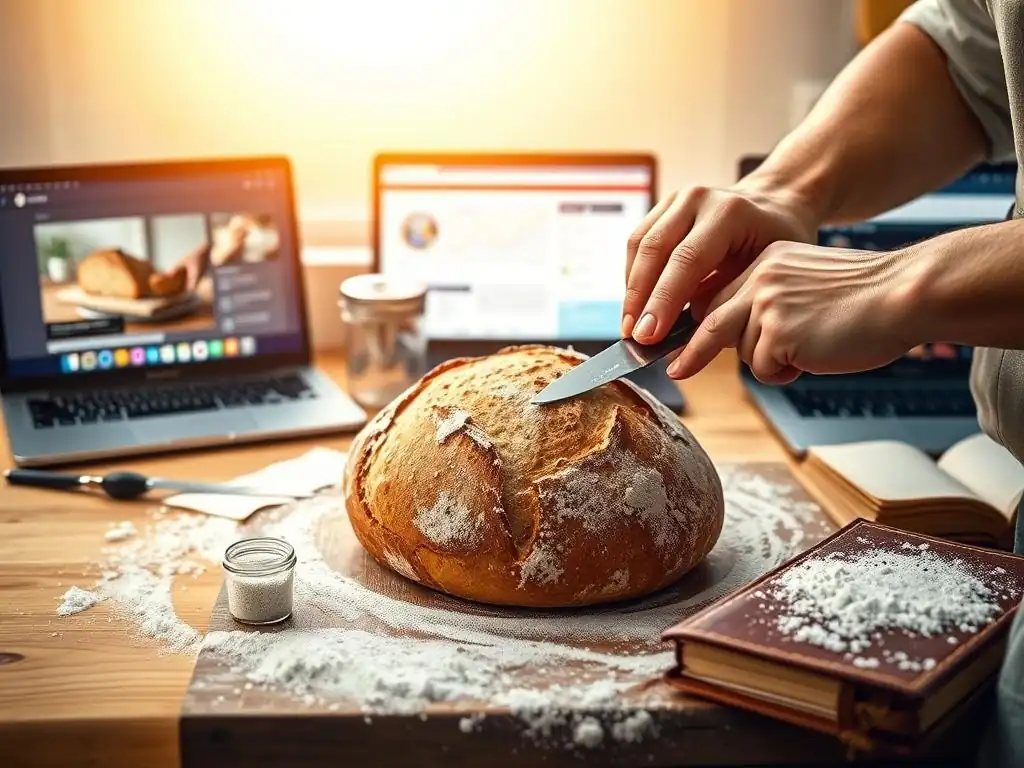
Identifying your current skill level is the most critical step in selecting a sourdough starter online course. If you've never touched a sourdough starter before or baked with wild yeast, a beginner-focused course is essential. These programs typically start with the absolute basics, guiding you through creating and maintaining your first starter, understanding fundamental terminology, and baking a simple, forgiving loaf. Jumping into an advanced course without this foundation can lead to frustration and confusion.
Intermediate bakers, who have some experience maintaining a starter and baking basic loaves but want to improve consistency or explore variations, should look for courses that build upon these skills. This might involve learning about different hydration levels, incorporating whole grains, or refining techniques like shaping and scoring. Advanced bakers, who are comfortable with complex recipes and want to master specific outcomes like a super open crumb or experiment with long fermentation, will benefit from courses that delve into the science and nuances of sourdough at a higher level.
Your Learning Style: Visual, Auditory, or Hands-On?
Consider how you learn best. Do you absorb information primarily by watching videos and demonstrations? Most online sourdough courses rely heavily on video content, which is excellent for visual learners. Observing an instructor perform techniques like kneading, folding, or shaping can be far more effective than reading about them. Pay attention to the production quality and clarity of the video lessons in the course descriptions.
If you prefer reading detailed explanations and following written instructions, ensure the course includes comprehensive written materials, such as downloadable PDFs or extensive notes accompanying the videos. Some courses also offer audio components or interactive elements, which might appeal to auditory or more hands-on learners who benefit from engaging with the material through different senses or activities. Reviews from past students can often shed light on the teaching style and the balance of different learning materials provided.
Budget Considerations: Finding the Best Value for Your Investment
The cost of sourdough starter online courses can vary significantly, from affordable subscription services offering a range of classes to premium masterclasses with higher price tags. Determine how much you are willing or able to spend on your sourdough education. Remember that the cheapest option isn't always the best value if it lacks depth or support, but the most expensive isn't necessarily required if you only need to learn the basics.
Look beyond the initial price tag to consider the overall value. Does the course offer lifetime access, allowing you to revisit lessons whenever needed? Is there ongoing support through a community forum or direct access to the instructor? Does it include downloadable resources or bonus content? Comparing these factors against the cost will help you find a course that fits your budget while providing the quality of instruction and support you need to succeed in your sourdough journey.
Beyond the Course: Essential Tools and Ingredients for Sourdough Success
The Best Sourdough Starter Jars: Maintaining a Healthy Culture
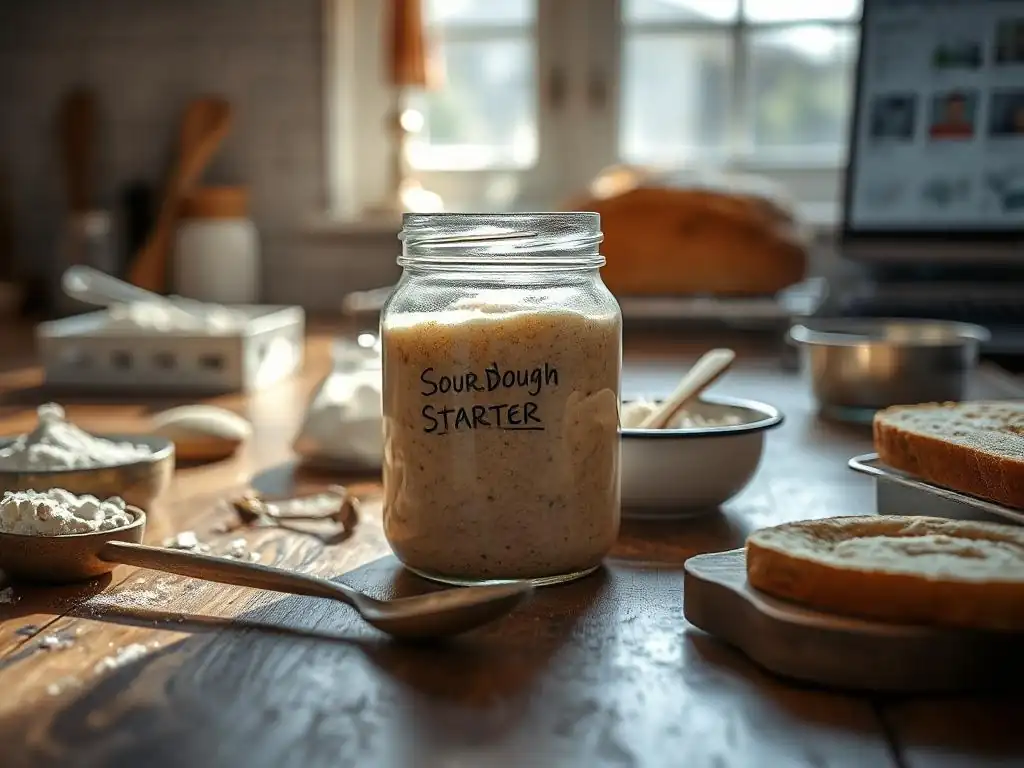
Choosing the right container for your sourdough starter is surprisingly important for maintaining its health and activity. An ideal jar allows you to easily see the starter's rise and fall, indicating its fermentation activity. It should also have a wide mouth for easy feeding and cleaning. While any clean jar can work, specific designs are preferred by experienced bakers.
Weck jars, with their wide opening and glass lids secured by rubber rings and clips, are a popular choice. They provide an airtight seal when needed but are also easy to vent. The straight sides make it simple to gauge the starter's growth with an elastic band or marker. Alternatively, standard wide-mouth mason jars are readily available and effective. Using a jar with clear markings or simply placing a rubber band at the level of the freshly fed starter allows you to accurately track its doubling or tripling, a key indicator of its readiness to bake.
- Weck Jars: Excellent for starter visibility and airtight seal.
Must-Have Baking Equipment: From Dutch Ovens to Banneton Baskets
Having the right equipment can dramatically improve your sourdough results. One of the most crucial pieces for achieving that signature crispy crust and excellent oven spring is a Dutch oven or a lidded baking vessel. Baking the dough inside a preheated, lidded pot traps the steam released by the dough in the initial stages of baking, keeping the crust soft and allowing the loaf to expand fully before the crust sets.
Another essential tool is a banneton basket (proofing basket). These baskets, typically made of rattan or cane, are lined with linen or dusted with flour and provide support for your shaped dough during its final proofing stage. They help the dough maintain its shape and also impart a lovely spiral pattern on the crust if baked directly from the basket. Other useful tools include a digital scale for accurate ingredient measurement (crucial in sourdough), a bench scraper for handling sticky dough, and a lame or sharp razor for scoring.
- Lodge Cast Iron Dutch Oven: Perfect for creating a crispy crust.
- Brotdoc Banneton Basket: Provides excellent support for shaping dough.
High-Quality Flour: The Foundation of Great Sourdough
The quality and type of flour you use are fundamental to the health of your sourdough starter and the outcome of your bread. A good, unbleached bread flour with a protein content typically ranging from 11% to 13% provides the necessary gluten structure to support the open crumb desired in sourdough. Using organic flour can sometimes lead to a more active starter as it may contain more naturally occurring microbes.
For feeding your sourdough starter, using a mix of bread flour and a small amount of whole wheat or rye flour can boost its activity and nutritional profile, leading to a more robust culture. When baking, experimenting with different flours, such as whole wheat, rye, spelt, or even specialized bread flours, can significantly alter the flavor, texture, and appearance of your loaves. Many experienced bakers recommend starting with a reliable, consistent brand like King Arthur Flour while learning, as its predictable performance helps in troubleshooting other variables in the process.
- King Arthur Flour: A baker's favorite for consistent results.
Elevate Your Sourdough Game: Advanced Techniques and Resources
Mastering Scoring Techniques: Create Beautiful Bread
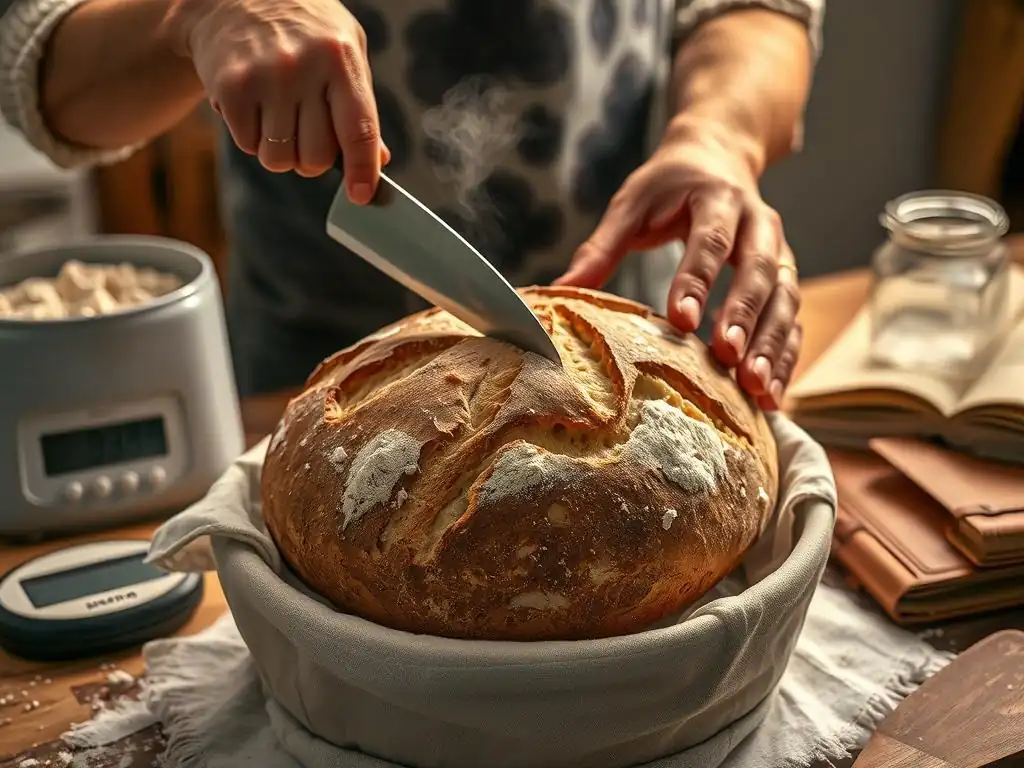
Scoring, the act of cutting the surface of the dough just before baking, serves both a functional and aesthetic purpose in sourdough baking. Functionally, the cuts allow the dough to expand in a controlled manner during oven spring, preventing blowouts and ensuring a better rise. Aesthetically, scoring transforms a simple loaf into a work of art, from basic slashes to intricate patterns like ears, leaves, or geometric designs. Mastering scoring requires practice and understanding how the depth, angle, and placement of cuts influence the final shape and appearance of the loaf.
Different types of scoring tools, primarily a lame (a razor blade attached to a handle), allow for varying degrees of precision and curvature. A straight blade is often used for simple slashes or creating an 'ear,' while a curved blade is better for decorative patterns. Learning how to hold the lame at a shallow angle (around 15-30 degrees) is key to creating an ear, where a flap of crust lifts during baking. Practice on simple shapes first, focusing on making confident, swift cuts, and gradually move towards more complex designs as your dough handling and scoring skills improve.
Understanding Hydration Levels: Achieving the Perfect Dough
Hydration refers to the ratio of water to flour in your dough, expressed as a percentage of the flour weight. For example, a dough with 500g of flour and 350g of water has a hydration of 70% (350/500 * 100). Understanding and manipulating hydration levels is crucial in sourdough, as it significantly impacts dough handling, fermentation speed, and the final crumb structure. Higher hydration doughs (75% and above) tend to be stickier and more challenging to handle but often result in a more open, airy crumb.
Lower hydration doughs (below 70%) are easier to work with, making them suitable for beginners, and typically produce a denser, more uniform crumb. Learning to adjust your hydration based on the type of flour used (whole wheat absorbs more water than white bread flour) and the desired outcome is a key skill. Many online sourdough starter online courses delve into this topic, providing guidelines on how to calculate hydration and adjust recipes, helping bakers confidently work with doughs of varying stickiness to achieve their desired bread characteristics.
Troubleshooting Common Sourdough Problems: Tips and Tricks
Even experienced bakers encounter issues with sourdough from time to time. Common problems include a dense or gummy crumb, lack of oven spring, a starter that won't become active, or dough that's difficult to handle. A dense crumb is often related to insufficient fermentation (either bulk fermentation or final proofing) or inadequate dough development (not enough strength). If your starter isn't active, it might be due to inconsistent feeding, incorrect flour-to-water ratios, or temperature issues; consistency is key in maintaining a healthy culture.
Troubleshooting involves observing your starter and dough closely at each stage and making adjustments based on environmental factors like room temperature and the feel of the dough. Online sourdough courses often provide valuable troubleshooting guides and access to communities where you can ask questions and see how others have overcome similar hurdles. Learning to read your dough – its texture, elasticity, and how it responds to handling – is one of the most important skills you'll develop on your sourdough journey, allowing you to identify problems early and course-correct before baking.
Conclusion: Unleash Your Inner Artisan Baker with Sourdough Online Courses
Frequently Asked Questions
What are the benefits of taking a Sourdough Starter Online Course?
Online courses offer structured learning, expert guidance, and the convenience of learning at your own pace. They help you avoid common pitfalls and achieve consistent results with your sourdough baking.
How do I choose the right Sourdough Starter Online Course for me?
Consider your skill level, the course curriculum (is it beginner-friendly?), and the instructor's experience. Look for courses that offer personalized feedback and support.
What are the key things I'll learn in a Sourdough Starter Online Course?
You'll learn how to cultivate and maintain a healthy sourdough starter, understand fermentation processes, and master techniques for baking various sourdough breads. Expect to learn how to troubleshoot common issues.
Do I need any special equipment to take a Sourdough Starter Online Course?
While some equipment is helpful, most courses focus on using readily available tools. You'll typically need a jar, flour, water, and a scale. More advanced courses may recommend a proofing box.
Can a Sourdough Starter Online Course really help me bake better sourdough bread?
Yes! These courses provide the knowledge and skills necessary to understand the science behind sourdough baking. They equip you with the ability to troubleshoot problems and consistently bake delicious, artisan-quality bread.
Final Reflection: The Ever-Rising Dough of Online Sourdough Learning
The accessibility of online learning has democratized the once-esoteric art of sourdough baking, bringing the satisfying crackle of a perfectly risen loaf within reach of anyone with an internet connection. This isn't just about learning a recipe; it's about connecting with a vibrant community of bakers, sharing the triumphs and tribulations of nurturing a sourdough starter, and ultimately, experiencing the profound satisfaction of creating something beautiful and delicious from scratch.
The journey of mastering sourdough, whether through online courses or traditional methods, is a testament to patience, precision, and the unexpected joys of working with living organisms. It's a journey that reflects our own personal growth – the careful nurturing mirroring our own self-cultivation. The best bread is made with love,
a phrase often heard in baking circles, speaks to the deeper connection we forge with our food and ourselves through this process. The online courses highlighted in this article simply provide the tools and guidance to navigate this rewarding path.
Consider the impact of this newfound accessibility. You, the reader, now hold the key to unlocking a world of flavour and artistry. Will you embrace the challenge? Will you nurture your own starter, patiently tending to its needs, and eventually reward yourself with the fragrant aroma of freshly baked sourdough? The journey awaits, and the rewards are immeasurable. Take the first step, and discover the magic within the humble sourdough loaf.
Unleash Your Inner Baker: Start Your Sourdough Journey Today!
Thanks for exploring the wonderful world of sourdough with us! You've now armed yourself with the knowledge to create amazing bread. Ready to put your new skills to the test?
- Dive into a Sourdough Course: Choose from our selection of curated online courses to master your starter and perfect your crumb. This is the perfect next step to truly unlock your sourdough potential.
- Share Your Sourdough Success: Show off your beautiful loaves on social media! Tag us @BakeWithEase and inspire other budding bakers.
- Join our Baking Community: Connect with fellow sourdough enthusiasts in our online forum – share tips, ask questions, and celebrate baking successes together!
What delicious sourdough creation will you bake first? Let us know in the comments!