
The Best Affordable Oven Thermometers for Consistent Results

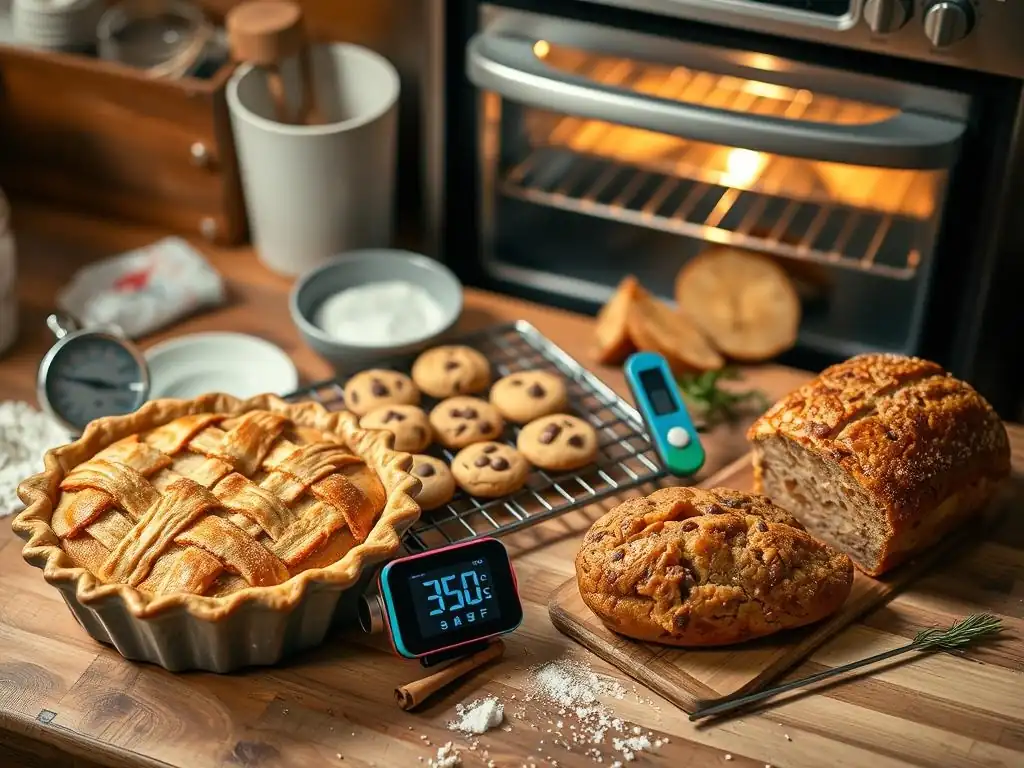
Welcome to BakeWithEase, your partner in crafting delightful baked goods! Are you tired of inconsistent baking results? Discover how a simple tool can revolutionize your oven's performance. Dive into our guide on Affordable Oven Thermometer Reviews to unlock the secret to perfectly baked treats, every single time. Curious to find out which thermometer is right for you? Let's get baking!
- The Best Oven Thermometers for Consistent Baking
- Achieve Baking Perfection with Accurate Oven Readings
- Why You Need an Oven Thermometer: Eliminating Baking Inconsistencies
-
Our Top Picks: Oven Thermometer Reviews
- Review Criteria: What Makes a Great Oven Thermometer
- #1: Digital Instant Read Thermometer (Often used for Meat, but Great for Spot-Checking Oven Temp)
- #2: Classic Dial Oven Thermometer
- #3: Durable Stainless Steel Bi-Metal Thermometer (Often Commercial Grade)
- Comparison Table: Side-by-Side Look at the Best Thermometers
- Maximizing Your Thermometer's Accuracy: Tips and Tricks
- Beyond the Thermometer: Other Baking Essentials
- Conclusion: Baking with Confidence.
-
Frequently Asked Questions
- What is the primary benefit of using an oven thermometer, especially in home baking?
- Why is it important to consider "affordable" oven thermometers?
- How do oven thermometers contribute to the success of recipes found on BakeWithEase.com?
- What are some key features to look for in an affordable oven thermometer?
- Can an oven thermometer help with baking bread, specifically sourdough, as mentioned on BakeWithEase?
- Final Reflection: Precision Baking, Affordable Prices
- Unlock Baking Perfection: Take Control of Your Oven!
The Best Oven Thermometers for Consistent Baking
Achieve Baking Perfection with Accurate Oven Readings
Baking is often described as a science, and like any science, precision is key. While recipes provide exact measurements for ingredients, they also assume a consistent and accurate oven temperature. Unfortunately, many home ovens, even relatively new ones, can be surprisingly inaccurate, sometimes by as much as 25 to 50 degrees Fahrenheit (or even more!).
This discrepancy can mean the difference between a perfectly golden-brown loaf of bread and a pale, undercooked one, or between cookies with crisp edges and chewy centers versus flat, burnt discs. Investing in an affordable oven thermometer is one of the simplest and most impactful steps you can take to eliminate guesswork and achieve consistently excellent results in all your baking endeavors.
Understanding your oven's true temperature empowers you to adjust baking times and temperatures as needed, ensuring that your culinary creations turn out exactly as intended, batch after batch. Whether you're tackling delicate pastries, robust sourdough, or simple weeknight brownies, knowing the actual temperature inside your oven provides the control necessary for success. This small, inexpensive tool removes a major variable from the baking equation, allowing you to focus on perfecting your technique and enjoying the process. Let's explore why these little gadgets are so crucial and which affordable oven thermometer options stand out.
Why You Need an Oven Thermometer: Eliminating Baking Inconsistencies
Understanding Oven Temperature Fluctuations
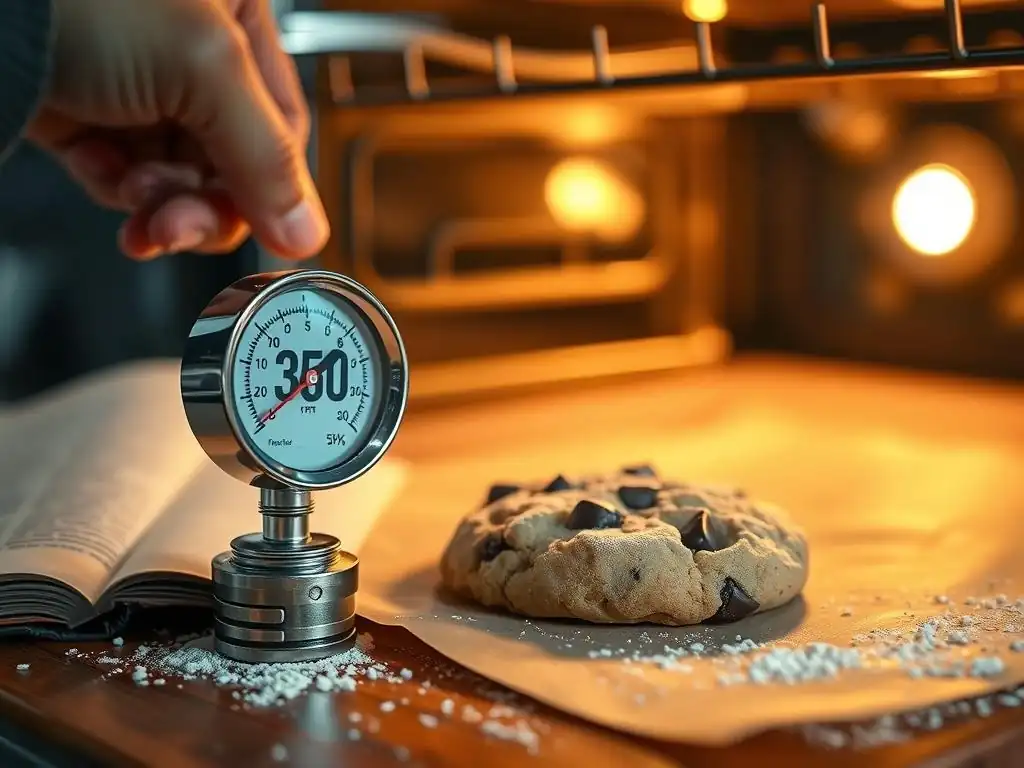
Oven temperature is rarely static. Many ovens cycle on and off to maintain a set temperature, leading to natural peaks and valleys in the internal heat. The oven's thermostat might be calibrated to a certain point, but the actual air temperature inside can swing significantly.
For example, an oven set to 350°F might cycle between 330°F and 370°F. Furthermore, the initial preheating cycle doesn't always bring the oven to the correct temperature, even if the oven's indicator light or chime suggests it's ready. Often, it takes an additional 10-20 minutes after the indicator signals completion for the oven cavity's temperature to truly stabilize at the set point.
Factors like opening the oven door, older heating elements, poor insulation, or even the age of the oven can exacerbate these fluctuations and inaccuracies. Relying solely on the oven's built-in thermostat can lead to under-baked or over-baked goods because you're not truly aware of the environment your food is cooking in. An affordable oven thermometer provides a real-time, independent reading of the actual air temperature, allowing you to see these fluctuations and understand exactly what's happening inside.
The Importance of Accurate Temperature Readings
Accurate temperature readings are fundamental to successful baking outcomes. Recipes are developed based on specific temperatures, and deviations can drastically alter the chemical reactions happening within your dough or batter. For instance, if a cake recipe calls for 350°F but your oven is actually only 325°F, the cake will take longer to bake, might not rise properly, and could end up dense or gummy. Conversely, if the oven is too hot at 375°F, the cake could bake too quickly on the outside, resulting in a burnt crust and an undercooked interior, or it might dome excessively and crack.
Beyond just hitting the right number, consistent temperature is also vital. For delicate items like soufflés or meringues, wild temperature swings can cause collapse. For bread with a crisp crust, maintaining a high initial temperature is crucial for oven spring and crust development. Using an affordable oven thermometer helps you verify the temperature throughout the baking process, allowing you to make necessary adjustments to your oven's dial or baking time, ensuring your baked goods achieve the desired texture, color, and doneness every single time. It's a small investment that pays off with consistently better results.
Our Top Picks: Oven Thermometer Reviews
Review Criteria: What Makes a Great Oven Thermometer
When evaluating affordable oven thermometer options, several factors are crucial to consider to ensure you get a reliable tool for consistent baking. Accuracy is paramount; a thermometer that reads consistently within a few degrees of the true temperature is essential. Durability is also important, as the thermometer will live in a hot, sometimes humid, environment. Materials like stainless steel are often preferred for their longevity and resistance to heat damage. The temperature range the thermometer can handle must exceed typical baking temperatures, ideally going up to 500°F (260°C) or even 600°F (315°C) to accommodate broiling or high-temperature bread baking.
Ease of reading is another significant factor. Some thermometers feature large, clear dials, while others use digital displays. The display should be easy to see through the oven door or when quickly opening it.
Mounting options are also key; many oven thermometers can hang from an oven rack or stand on the oven floor, offering flexibility in placement. Finally, speed of reading can be a consideration, though for monitoring oven temperature over time, instant-read capabilities aren't as critical as for measuring food internal temperature. Considering these aspects helps narrow down the choices to find an affordable oven thermometer that truly meets your baking needs without breaking the bank.
#1: Digital Instant Read Thermometer (Often used for Meat, but Great for Spot-Checking Oven Temp)
- Features: Typically features a thin probe attached to a digital display via a wire, or a fold-out probe directly on the unit. Offers rapid temperature readings, often within 2-5 seconds. Wide temperature range suitable for baking and roasting. May include features like temperature hold, min/max readings, and temperature alarms.
- Pros: Very fast readings, highly accurate (often within ±1°F), versatile for both oven temperature spot-checking and measuring internal food temperature. Digital display is easy to read precisely.
- Cons: Not designed to be left inside the oven continuously during baking (the wire or electronics may not withstand prolonged high heat). Primarily useful for checking the oven's temperature before baking or for quick checks when the door is opened briefly. Requires batteries.
- Best For: Bakers who want a versatile thermometer for checking oven temperature before loading food and also need a reliable tool for checking the internal temperature of meats, bread, or cakes. Excellent for verifying preheat accuracy quickly.
#2: Classic Dial Oven Thermometer
- Features: Uses a bi-metal coil or spring mechanism to move a needle across a circular dial. Made entirely of heat-resistant materials like stainless steel. Can hang from an oven rack or stand on the oven floor. Designed to remain inside the oven during the entire baking process.
- Pros: Durable, requires no batteries, designed for continuous monitoring inside the oven. Provides an easy-to-read analog display that shows temperature trends. Generally very affordable.
- Cons: Slower to register temperature changes compared to digital thermometers. Accuracy can sometimes drift slightly over time, though usually remains within an acceptable range for baking (e.g., ±10-20°F). Reading the exact temperature can be harder than with a digital display.
- Best For: Bakers who want a simple, reliable, and durable thermometer to constantly monitor oven temperature throughout the baking cycle. Ideal for set-it-and-forget-it monitoring during long bakes like roasts or slow-cooked items, but equally useful for everyday baking.
#3: Durable Stainless Steel Bi-Metal Thermometer (Often Commercial Grade)
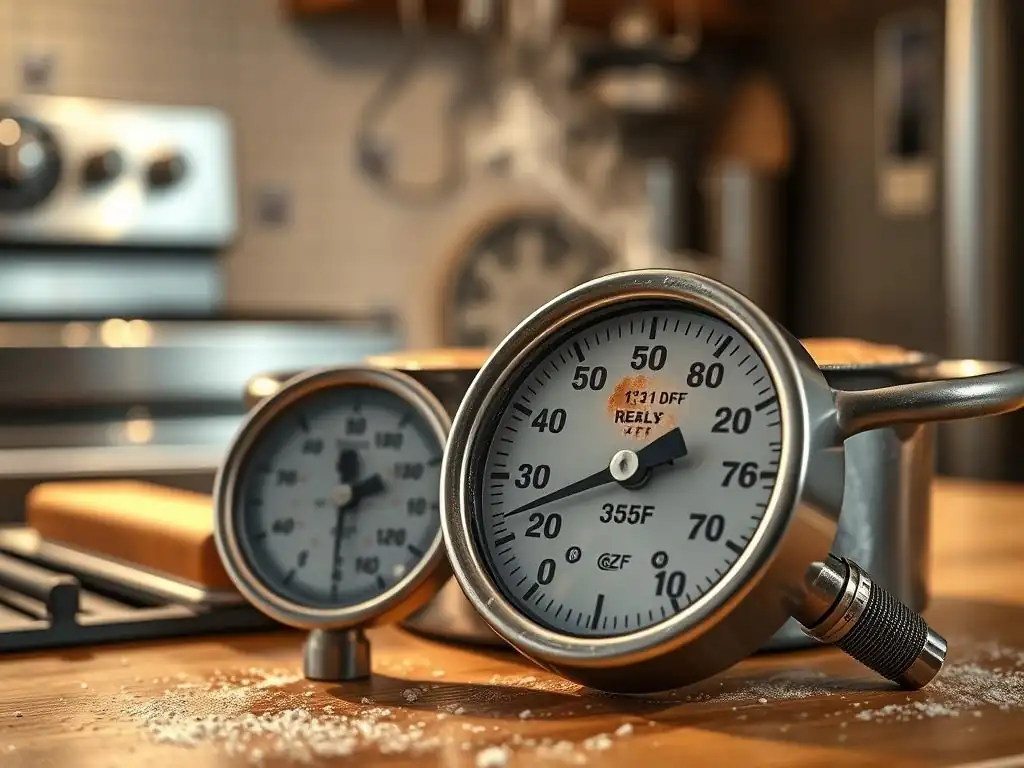
- Features: Similar to the classic dial thermometer but often built with heavier-duty stainless steel for increased durability. Features a large, clear dial and often multiple mounting options (hanging and standing). Wide temperature range, typically up to 500°F or 600°F.
- Pros: Extremely robust and built to last, even in busy baking environments. Large, easy-to-read dial. Reliable for continuous monitoring within the oven. No batteries required. Excellent value for its durability.
- Cons: Like other dial thermometers, it's not as fast or precisely accurate as digital options. Can still have minor variations compared to the true temperature.
- Best For: Bakers seeking maximum durability and longevity from their oven thermometer. Great for frequent use or for those who want a thermometer that can withstand accidental bumps or drops. Provides dependable, continuous monitoring of the oven environment.
Comparison Table: Side-by-Side Look at the Best Thermometers
| Feature | Digital Instant Read (Type) | Classic Dial (Type) | Durable Stainless Steel (Type) |
|---|---|---|---|
| Temperature Display | Digital | Analog Dial | Analog Dial |
| Speed | Very Fast | Slower | Slower |
| Continuous Use | No (Spot Check) | Yes | Yes |
| Power | Batteries | None | None |
| Accuracy | Very High (±1°F typical) | Good (±10-20°F typical) | Good (±10-20°F typical) |
| Durability | Moderate (Probe/Wire) | High | Very High |
| Mounting | N/A (Handheld/Probe) | Hang/Stand | Hang/Stand |
| Typical Cost | Mid-Range Affordable | Very Affordable | Affordable |
Maximizing Your Thermometer's Accuracy: Tips and Tricks
Calibrating Your Oven Thermometer
While most affordable oven thermometer options come pre-calibrated, it's a good practice to check their accuracy occasionally, especially for dial thermometers which can drift. A simple way to test is using an ice bath. Fill a glass with crushed ice and add cold water, stirring for a few minutes. Insert the thermometer probe (or the sensing part of a dial thermometer) into the ice bath, making sure it's submerged but not touching the bottom or sides of the glass.
After a few minutes, the reading should be 32°F (0°C). If it's off by more than a few degrees, you'll know your thermometer isn't reading accurately. Some dial thermometers have a small nut on the back that can be adjusted to recalibrate, while others may need to be replaced if they are significantly off.
Another method, particularly useful for checking higher temperatures, is the boiling water test. Bring a pot of water to a rolling boil at sea level. Insert the thermometer into the boiling water, again ensuring it's not touching the pot. At sea level, boiling water is 212°F (100°C). Note that boiling point decreases at higher altitudes (e.g., about 202°F in Denver, Colorado). Compare the reading to the expected boiling point for your altitude. If the thermometer is consistently off by a certain amount in both tests, you can mentally adjust your readings or determine if it needs replacement.
Proper Placement of Your Oven Thermometer
The placement of your oven thermometer significantly impacts the reading you get. Avoid placing it too close to the heating elements (either at the bottom or top/broiler) as this will give an artificially high reading that doesn't reflect the overall cavity temperature. Also, don't place it right next to the oven walls or door, which can be cooler than the center. The best location is typically clipped or standing on the middle oven rack, near where your food will be placed. This position provides a reading that is most representative of the temperature surrounding your baked goods.
If you are using a digital thermometer for a quick check, insert the probe into the oven cavity after it's preheated and close the door around the wire (if applicable) for a minute or two to get a stable reading. For dial thermometers designed for continuous use, leave it in its chosen spot on the middle rack throughout the baking process.
Observing its reading over time will give you insights into your oven's temperature cycling and help you make informed decisions about adjusting the thermostat or baking time. Consistent placement ensures that you are always comparing apples to apples when monitoring your oven's temperature.
Understanding Hot Spots in Your Oven
Even with an accurate oven thermometer on the middle rack, it's important to understand that ovens can have "hot spots" or areas where the temperature is consistently higher or lower than the average. These variations can be caused by the location of the heating element, convection fans (if present), or even how heat reflects off the oven walls. For instance, the back of the oven might be hotter than the front, or the bottom rack might be significantly warmer than the top. An oven thermometer gives you a crucial overall reading, but it doesn't map the entire oven cavity.
To identify your oven's hot spots, you can perform a simple test. Place slices of white bread or mounds of sugar evenly across a large baking sheet covering most of one oven rack. Bake at a moderate temperature (like 350°F) until the bread or sugar starts to brown.
The areas that brown fastest indicate hot spots, while those that brown slowly are cooler spots. Knowing where these variations occur helps you decide where to place your baking pans, whether to rotate them during baking, or if you need to use multiple affordable oven thermometer units in different locations for critical tasks.
Beyond the Thermometer: Other Baking Essentials
Supplementing Your Baking Arsenal
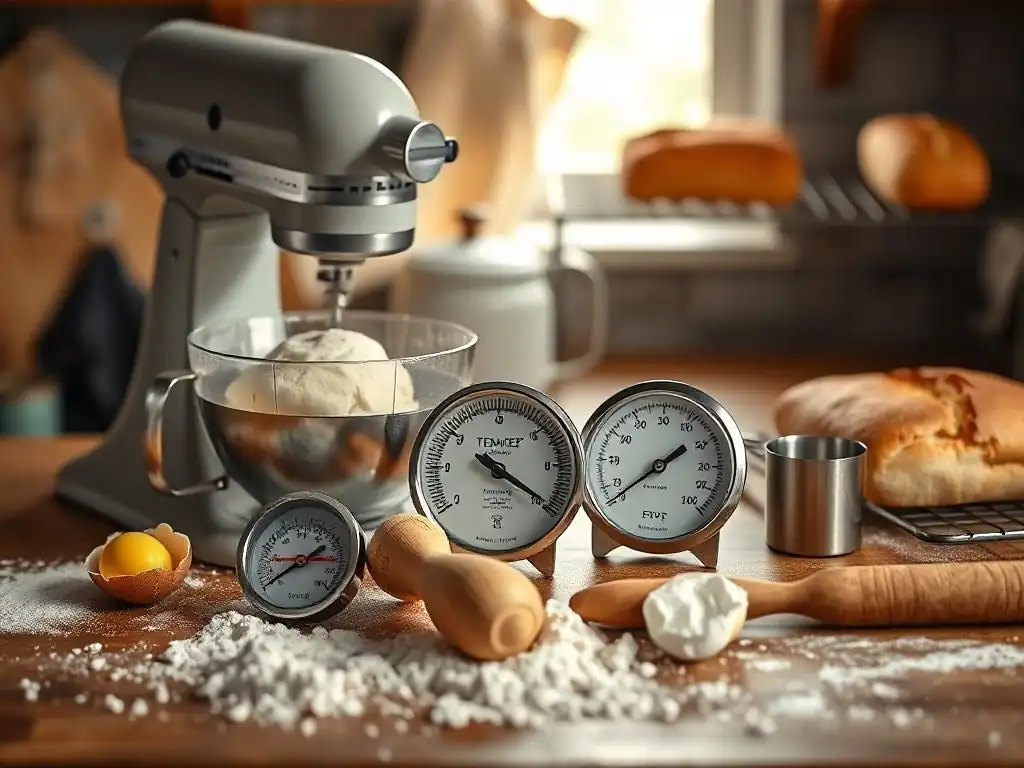
While an affordable oven thermometer is a foundational tool for consistent baking, it's part of a larger ecosystem of helpful equipment. Achieving professional results often relies on accuracy not just in temperature, but also in measurements and timing. Having a few other key pieces of equipment can significantly enhance your baking success and make the process smoother and more enjoyable. These tools don't have to be expensive; many affordable options deliver excellent performance.
Consider tools like precise measuring cups and spoons, timers, quality baking pans that heat evenly, and parchment paper or silicone mats for easy cleanup and even baking. Each piece plays a role in controlling variables and ensuring your recipes turn out as intended. Just as you rely on an affordable oven thermometer to verify your oven's heat, these other essentials help maintain accuracy throughout the preparation and baking process.
The Best Baking Scale for Precise Measurements
- Recommendation: A digital kitchen scale with a capacity of at least 5-10 pounds (2-5 kg) and the ability to measure in grams and ounces. Look for a tare function, which allows you to zero out the weight of your container.
- Why it's essential: Measuring ingredients by weight (especially flour) is significantly more accurate than using volume (cups). A cup of flour can vary in weight depending on how packed it is, sometimes by as much as 20-30%. Using a scale ensures you use the exact amount specified in the recipe, leading to more reliable and consistent results, particularly in finicky recipes like bread or pastries.
Conclusion: Baking with Confidence.
Incorporating an affordable oven thermometer into your baking routine is a simple yet powerful step towards achieving consistent and delicious results. By providing an accurate reading of your oven's true temperature, this small tool eliminates much of the guesswork and frustration caused by inaccurate oven thermostats. Whether you choose a speedy digital option for quick checks or a durable dial thermometer for continuous monitoring, you're gaining valuable insight into your baking environment.
Pairing your oven thermometer with other essential tools like a reliable baking scale further enhances your precision, transforming baking from a hopeful gamble into a controlled process. With a better understanding of your oven's performance and accurate ingredient measurements, you can approach any recipe with increased confidence, knowing you've taken key steps to ensure success. Happy baking!
Frequently Asked Questions
What is the primary benefit of using an oven thermometer, especially in home baking?
An oven thermometer ensures accurate temperature readings, which is vital for consistent baking results. Many ovens aren't calibrated correctly, leading to under- or over-baked goods.
Why is it important to consider "affordable" oven thermometers?
Affordable oven thermometers make precise baking accessible to everyone. You don't need to spend a fortune to improve your baking consistency and quality.
How do oven thermometers contribute to the success of recipes found on BakeWithEase.com?
BakeWithEase recipes rely on specific temperatures for optimal results. An oven thermometer guarantees your oven matches the recipe's requirements, leading to predictable and delicious outcomes every time.
What are some key features to look for in an affordable oven thermometer?
Look for thermometers with easy-to-read displays, durable construction, and accurate temperature ranges. Some also include temperature guides for common baked goods.
Can an oven thermometer help with baking bread, specifically sourdough, as mentioned on BakeWithEase?
Yes, maintaining the correct oven temperature is crucial for sourdough baking. An oven thermometer helps ensure the proper crust formation and even baking of the bread's interior, leading to a perfect loaf.
Final Reflection: Precision Baking, Affordable Prices
The pursuit of perfectly baked goods hinges on accuracy, and that accuracy begins with a reliable oven thermometer. While professional-grade equipment can cost a fortune, our exploration of affordable oven thermometers proves that consistent, delicious results don't require breaking the bank. This is more relevant than ever in a time of rising food costs and a renewed interest in home baking.
The impact of readily available, affordable tools on the home baking landscape is undeniable. It empowers individuals to take control of their cooking, fostering creativity and confidence in the kitchen. This democratization of precision baking allows more people to enjoy the satisfaction of creating delicious treats from scratch. The best things in life are simple, but not always easy.
This rings true for baking; while the process can be challenging, the right tools, even affordable ones, can significantly ease the journey.
Now, it's your turn. Consider the impact a simple, inexpensive oven thermometer can have on your own baking. Don't let inaccurate oven temperatures hold you back from achieving your culinary goals. Invest in precision, invest in yourself, and invest in the joy of baking with confidence. The perfect cake, cookie, or loaf is within reach – all it takes is a little accuracy and a dash of determination.
Unlock Baking Perfection: Take Control of Your Oven!
Thanks for taking the time to learn about affordable oven thermometers! We hope this guide helped you understand the importance of accurate temperature control for baking success. Now it's time to put that knowledge into action.
- Order your perfect oven thermometer today! Don't wait another minute to experience consistently delicious baked goods. This is your chance to elevate your baking game.
- Share your baking triumphs (and challenges!) with us on social media! Let's create a supportive baking community! Use #BakeWithEase to connect with other passionate bakers.
- Try a new recipe that requires precise temperature control – you’ll be amazed at the difference! Challenge yourself to master a new skill.
What delicious creation will you bake first with your perfectly calibrated oven?