
Deep Dive into Sourdough: Best Books for Serious Bakers

Welcome to BakeWithEase, where baking becomes a joy, not a chore! Ever dreamt of crafting that perfect, tangy loaf? Then you're in the right place. Prepare to unlock the secrets of sourdough with our curated Sourdough Baking Book Guide. Ready to elevate your baking game and discover which resources will truly transform your skills? Let's dive in and find your perfect baking companion...
- Sourdough Baking Book Guide: Level Up Your Fermentation Game
- The Top Sourdough Baking Books: Our Expert Recommendations
- Choosing the Right Sourdough Book: A Buyer's Guide
- Beyond the Books: Essential Sourdough Baking Tools
- Mastering Sourdough: Tips and Tricks for Success
- Conclusion: Your Journey to Sourdough Mastery Starts Here
-
Frequently Asked Questions
- What makes a sourdough baking book "good" for serious bakers?
- Why is a sourdough baking book guide necessary?
- What are some essential topics covered in a comprehensive sourdough baking book?
- Can a beginner benefit from a sourdough baking book aimed at serious bakers?
- Where can I find a reliable sourdough baking book guide?
- Final Reflection: The Ever-Rising Crust of Sourdough Knowledge
- Unleash Your Inner Sourdough Master!
Sourdough Baking Book Guide: Level Up Your Fermentation Game
Embarking on the sourdough journey is a rewarding, albeit sometimes challenging, endeavor. It requires patience, practice, and a willingness to understand the living culture at the heart of your bread. While online resources offer quick tips, a comprehensive sourdough baking book guide can provide the foundational knowledge and detailed techniques needed to truly master the craft. These books offer structured learning, troubleshooting advice, and a deep dive into the science and art of fermentation that goes beyond simple recipes.
Choosing the right guide to sourdough baking books is crucial. Different authors approach sourdough with varying philosophies – some focus on simplicity, others on scientific precision, and some on traditional methods. Finding a book that resonates with your learning style and current skill level can significantly smooth the learning curve, helping you achieve consistent results and stunning loaves. Whether you're just starting your first starter or looking to refine advanced techniques, a well-chosen sourdough baking book can be your most valuable tool.
The Top Sourdough Baking Books: Our Expert Recommendations
1. Tartine Bread by Chad Robertson: The Sourdough Baking Bible
Tartine Bread, first published in 2010, quickly became a cornerstone for serious home bakers and professionals alike. Written by Chad Robertson, co-owner of the renowned Tartine Bakery in San Francisco, this book isn't just a collection of recipes; it's a detailed exposition of his specific method for achieving the signature open crumb and dark, crackling crust that defines Tartine's loaves. The book dedicates significant space to understanding fermentation, starter maintenance, and the nuances of dough handling, making it an intensive sourdough baking book guide.
Robertson's approach emphasizes minimal handling, long fermentation times, and high hydration doughs. While the book begins with his fundamental country loaf recipe, it branches out to explore other bread types, including whole wheat and rye, always rooted in the same core principles. With over 300 pages, the depth of information can be initially daunting, but it provides a comprehensive framework for understanding the sourdough process from start to finish, making it an indispensable resource for those committed to mastering the art.
Features of Tartine Bread
- Detailed, step-by-step instructions for the Tartine Country Loaf method.
- Extensive guidance on creating and maintaining a vibrant sourdough starter.
- Beautiful photography illustrating techniques and finished loaves.
- Recipes for variations including whole wheat, rye, baguettes, and enriched doughs.
- Insights into the philosophy behind the Tartine baking process.
Price and Where to Buy
The typical retail price for Tartine Bread hardcover ranges from approximately $30 to $45 USD, depending on the retailer and edition. It is widely available online through major booksellers and can also be found in many physical bookstores. Used copies may be available at lower prices.
Unique Benefits for Bakers
This book offers an unparalleled deep dive into a specific, highly regarded method. Bakers who commit to learning the Tartine way will gain a profound understanding of dough development, fermentation control, and baking techniques using a Dutch oven or hearth. It's particularly beneficial for those aiming for high-hydration doughs and the sought-after open crumb structure. While challenging for absolute beginners due to its technical detail, it serves as an exceptional sourdough baking book guide for anyone serious about elevating their skills.
2. Flour Water Salt Yeast by Ken Forkish: A Fundamental Sourdough Approach
Ken Forkish's Flour Water Salt Yeast, published in 2012, takes a slightly different, yet equally foundational, approach to bread baking, including sourdough. Forkish, founder of Ken's Artisan Bakery and Pizzeria in Portland, Oregon, breaks down the process into manageable steps, focusing on time and temperature as critical factors. His methods often involve relatively simple ingredient ratios but rely heavily on long fermentation periods, often overnight or even longer, to develop flavor and structure.
The book is structured logically, starting with simpler yeasted doughs before moving into sourdough. This progression allows bakers to build confidence and understanding of basic principles before tackling the complexities of a wild yeast starter. Forkish provides clear schedules for various doughs, which are incredibly helpful for planning your baking around a busy life. His explanations are clear and encouraging, making this a solid sourdough baking book guide for those who appreciate a systematic approach.
Features of Flour Water Salt Yeast
- Clear, accessible language explaining fundamental bread science.
- Focus on time and temperature management for fermentation.
- Includes recipes for both commercial yeast and sourdough breads.
- Detailed schedules for various doughs, often involving overnight fermentation.
- Practical advice for home bakers using standard equipment.
Price and Where to Buy
Flour Water Salt Yeast typically retails for about $25 to $35 USD for a new hardcover edition. It is readily available online and in most bookstores stocking culinary titles. Ebook versions are also commonly available.
Unique Benefits for Bakers
Forkish's book excels at demystifying the baking process. His emphasis on time and temperature makes it easier for bakers to understand why certain steps are necessary and how to adapt recipes. For someone looking for a reliable sourdough baking book guide that builds from basic principles and offers practical, time-tested methods suitable for a home kitchen, this book is an excellent choice. It provides a strong foundation applicable to many different bread styles.
3. The Perfect Loaf by Maurizio Leo: Mastering Sourdough at Home
Maurizio Leo, the creator of the popular website ThePerfectLoaf.com, brings his meticulous, science-backed approach to his book, The Perfect Loaf, published in 2022. This book is a comprehensive guide specifically tailored for the home sourdough baker. Leo is known for his detailed explanations, experimental approach, and willingness to share the 'why' behind every step, making complex concepts understandable. His book is a true sourdough baking book guide, focusing almost exclusively on wild yeast fermentation.
The book covers everything from building and maintaining a starter to advanced techniques like using different flours, incorporating inclusions, and troubleshooting common issues. Leo provides precise measurements and schedules, often with helpful tips for adjusting based on environmental factors like kitchen temperature. With approximately 400 pages, it offers extensive content, including numerous recipes beyond the basic loaf, such as pizzas, bagels, and pastries, all using sourdough.
Features of The Perfect Loaf
- Highly detailed, science-forward explanations of the sourdough process.
- Comprehensive guide to building and maintaining a starter.
- Numerous recipes for various sourdough breads and other baked goods.
- Emphasis on precise measurements and understanding dough behavior.
- Troubleshooting tips and explanations for common problems.
Price and Where to Buy
The hardcover edition of The Perfect Loaf usually ranges from $35 to $45 USD at major booksellers and online retailers. It is a relatively recent publication, making it widely available in new condition.
Unique Benefits for Bakers
This book is ideal for the home baker who loves detail and wants to understand the science behind sourdough. Leo's clear explanations and extensive troubleshooting sections make it an invaluable reference. If you've struggled with inconsistent results or want to move beyond basic recipes to explore a wide range of sourdough applications, this sourdough baking book guide provides the tools and knowledge to do so successfully. It empowers bakers to understand and adapt, rather than just follow instructions blindly.
4. Sourdough Mania by Anita Šumer: Unlock the Secrets of Sourdough
Anita Šumer, a passionate sourdough baker from Slovenia, shares her unique approach in Sourdough Mania, first published in English in 2019. Her philosophy centers on building a strong, active starter and using specific techniques to achieve airy, beautiful loaves. Šumer's method gained popularity online for its focus on starter health and relatively straightforward processes once the starter is vigorous. This book serves as a practical sourdough baking book guide with a slightly different perspective than the more academic or professional bakery-focused texts.
The book provides clear instructions for creating and maintaining a starter, followed by core recipes for basic sourdough bread. Šumer also includes a variety of recipes for other baked goods and even dishes that use leftover starter or discard, showcasing the versatility of sourdough. Her tone is encouraging and aims to make sourdough baking accessible. While perhaps less focused on the deep science than some other books, it offers a solid, repeatable method for achieving good results at home.
Features of Sourdough Mania
- Clear instructions for creating and maintaining a vibrant starter.
- Focus on a specific, repeatable method for baking sourdough bread.
- Includes recipes for a variety of baked goods using sourdough.
- Tips for using sourdough discard creatively.
- Approachable tone suitable for home bakers.
Price and Where to Buy
Sourdough Mania typically sells for approximately $25 to $35 USD for the paperback edition. It is available through online retailers and some physical bookstores, particularly those specializing in baking or international authors.
Unique Benefits for Bakers
Bakers who appreciate a clear, specific method and want to ensure they have a strong, active starter will find this book particularly helpful. Šumer's emphasis on starter health is a key takeaway. This sourdough baking book guide is well-suited for those who have perhaps struggled with starter issues in the past or who prefer a step-by-step approach that yields reliable results without getting bogged down in overly complex scientific details. It offers a practical path to achieving a successful sourdough routine.
Choosing the Right Sourdough Book: A Buyer's Guide
Selecting the best sourdough baking book guide can feel overwhelming with so many excellent options available. The ideal book for you depends heavily on your current experience level, what you hope to achieve with your baking, and how you best absorb new information. Considering these factors will help you find a guide that supports your learning journey and helps you bake the bread you envision.
Think of this process like finding a mentor. Some mentors are best for getting started, offering simple steps. Others are better for refining advanced skills, providing detailed theory. Your personal sourdough baking book guide should align with where you are now and where you want to go.
Assessing Your Skill Level: Beginner, Intermediate, or Advanced?
Your current baking experience is the most significant factor in choosing a sourdough baking book guide. If you've never made bread before or are new to working with sourdough starter, a book designed for beginners will offer simpler recipes, more hand-holding, and extensive troubleshooting for common initial problems like inactive starters or dense loaves. These books often prioritize getting a successful first loaf over exploring complex variations.
Intermediate bakers, who have made several loaves but want to improve consistency, understand fermentation better, or explore new techniques like shaping or incorporating different flours, will benefit from books that delve deeper into the 'why' behind the steps. Advanced bakers, perhaps aiming for specific crumb structures, working with high hydration doughs, or experimenting with long retards, will seek guides that offer detailed scientific explanations, advanced recipes, and nuanced discussions of variables like temperature, hydration, and flour types. A good sourdough baking book guide caters to a specific audience.
Understanding Your Baking Goals: What Do You Want to Achieve?
Consider what you ultimately want from your sourdough baking. Are you primarily interested in baking a simple, rustic loaf for your family each week? Or do you aspire to bake a wide variety of breads, including enriched doughs, pizzas, or even pastries using sourdough? Some sourdough baking book guides focus narrowly on mastering the basic country loaf, while others offer a broad spectrum of recipes.
If your goal is versatility, look for a book with a wide range of recipes beyond the basic loaf. If you want to perfect one specific type of bread, find a guide that dedicates significant space to that particular technique. Your goals will dictate the type of content and recipes that will be most valuable to you in a sourdough baking book guide.
Considering Your Learning Style: Visual, Hands-On, or Theoretical?
People learn in different ways. Some bakers are highly visual and benefit greatly from books with numerous photos illustrating each step of the process, from mixing and kneading to shaping and scoring. Others are hands-on learners who prefer clear, concise instructions they can follow step-by-step in the kitchen, learning by doing. Some are more theoretical, wanting to understand the scientific principles behind fermentation, gluten development, and the Maillard reaction.
Review the layout and writing style of a potential sourdough baking book guide. Does it have lots of photos? Is the text dense with scientific explanations, or is it more narrative and instructional? Does it provide detailed schedules or more flexible guidelines? Choose a book whose presentation style matches how you best absorb information to make your learning experience enjoyable and effective.
Beyond the Books: Essential Sourdough Baking Tools
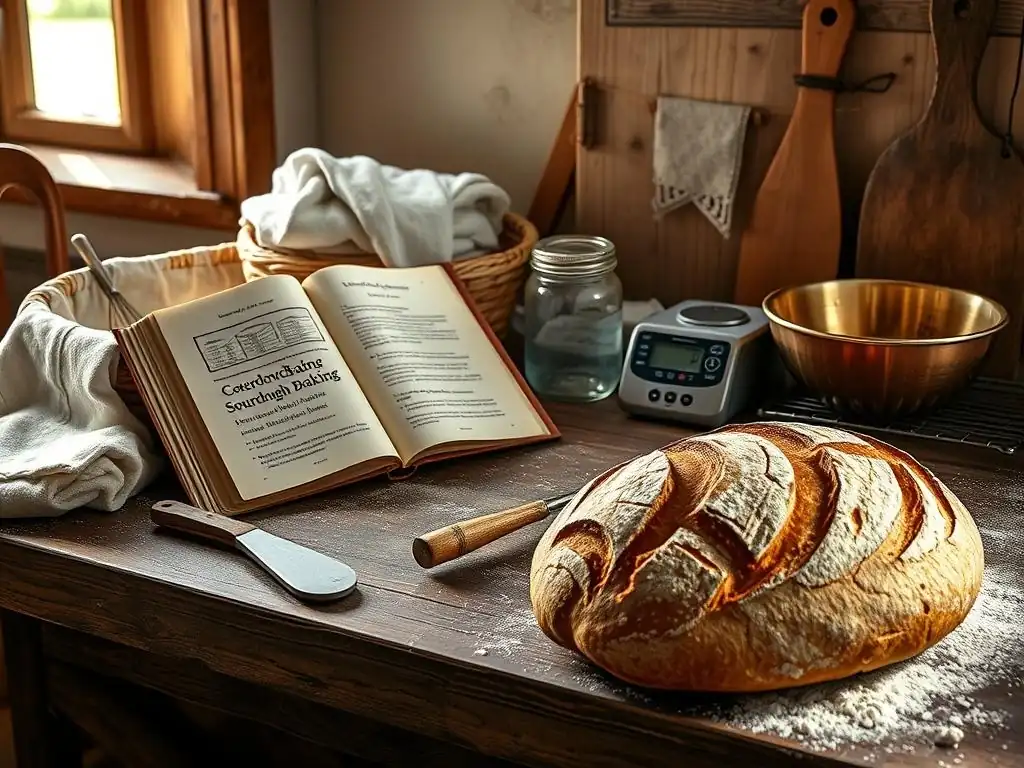
While a great sourdough baking book guide is invaluable, having the right tools can significantly impact your success and make the process smoother. Certain pieces of equipment are considered essential by many experienced sourdough bakers because they help control variables like dough temperature, shape, and baking environment, leading to better results consistently.
Investing in a few key tools recommended in many a sourdough baking book guide can elevate your bread from good to great. These tools aren't just fancy gadgets; they serve specific purposes in the sourdough process, from managing the dough's final proof to creating the ideal conditions for oven spring.
Bannetons: Achieving the Perfect Shape and Crust
Bannetons, or proofing baskets, are typically made of rattan, cane, or plastic and are dusted with flour before placing the shaped dough inside for its final rise. Their primary purpose is to support the dough during this crucial proofing period, helping it maintain its shape and structure before baking. This is especially important for high-hydration sourdough doughs, which can spread easily without support.
Beyond shape support, bannetons also help manage the dough's moisture. Rattan bannetons wick away a small amount of surface moisture, which can contribute to a better crust formation during baking. The pattern of the basket also leaves an imprint on the dough, creating an attractive spiral pattern on the finished loaf. Most sourdough baking book guides will recommend using bannetons for consistent loaf shape.
Dutch Ovens: Creating a Steamy Baking Environment
Baking sourdough in a Dutch oven is a technique widely recommended in almost every sourdough baking book guide because it effectively mimics the steamy environment of a professional deck oven. When the dough is placed in a preheated Dutch oven and the lid is sealed, the moisture evaporating from the dough is trapped inside. This steam keeps the surface of the dough soft and pliable during the initial phase of baking, allowing the loaf to expand fully – this is known as oven spring.
Once the loaf has achieved maximum oven spring (usually after 15-25 minutes), removing the lid allows the crust to dry out and brown beautifully. Baking in a Dutch oven ensures excellent heat transfer to the bottom of the loaf and helps achieve a thick, crispy crust. Cast iron Dutch ovens are particularly popular for their heat retention capabilities.
Bread Lame: Scoring Your Dough for Optimal Rise
A bread lame (pronounced "lahm") is a tool used to score or slash the surface of the dough just before it goes into the oven. Scoring is essential for sourdough because it provides controlled vents for the rapidly expanding gases inside the dough during oven spring. Without scoring, the loaf might burst unpredictably at its weakest point, resulting in a less attractive shape and potentially restricted rise.
Proper scoring, as taught in any good sourdough baking book guide, allows the baker to direct the expansion of the dough, influencing the shape and appearance of the final loaf. Different scoring patterns can create unique designs. A sharp blade is key to making clean cuts that open up nicely in the oven, and a lame holds a razor blade securely for this purpose.
Mastering Sourdough: Tips and Tricks for Success

Achieving sourdough mastery is a journey of continuous learning and practice. Beyond following the steps in your chosen sourdough baking book guide, incorporating a few key tips and understanding common pitfalls can significantly improve your results. Consistency in your starter, patience during fermentation, and attention to detail are paramount.
- Maintain an Active Starter: Feed your starter regularly according to a schedule that fits your baking frequency. An active, bubbly starter that reliably doubles or triples in volume after feeding is crucial for successful leavening. Use the float test (a small piece floats in water) to check its readiness.
- Understand Your Dough: Learn to recognize what your dough should feel like at different stages – after mixing, after bulk fermentation, and after proofing. Touch, sight, and even smell are valuable indicators of dough development and fermentation progress.
- Control Temperature: Temperature significantly impacts fermentation speed. Learn how your kitchen temperature affects your dough and adjust bulk fermentation and proofing times accordingly. Many sourdough baking book guides provide temperature-dependent schedules.
- Practice Shaping: Shaping is key to building tension and structure in your loaf, which helps it hold its shape and achieve good oven spring. Watch videos, practice with non-sourdough dough first if needed, and be gentle but firm.
- Don't Rush: Sourdough takes time. Long fermentation develops flavor and texture. Avoid cutting corners on bulk fermentation or proofing times, even if a recipe seems lengthy.
- Keep a Baking Journal: Note down temperatures, times, starter activity, and results for each bake. This helps you identify what works and troubleshoot issues, making your sourdough baking book guide even more effective as a personal record.
- Embrace Failure: Not every loaf will be perfect. Treat less-than-ideal bakes as learning opportunities. Analyze what might have gone wrong based on your sourdough baking book guide and journal notes, and adjust for the next bake.
Conclusion: Your Journey to Sourdough Mastery Starts Here
Diving into the world of sourdough baking is a rewarding experience that connects you to ancient traditions and yields incredibly flavorful bread. While online resources are abundant, a dedicated sourdough baking book guide offers structured knowledge, detailed techniques, and the comprehensive understanding needed to move beyond basic loaves and truly master the craft. The books discussed here – Tartine Bread, Flour Water Salt Yeast, The Perfect Loaf, and Sourdough Mania – each offer a unique path and valuable insights for bakers at different levels.
Choosing the right guide to sourdough baking books based on your skill level, goals, and learning style is the first step. Supplementing your learning with essential tools like bannetons, Dutch ovens, and a bread lame will further enhance your baking success. Remember that patience, practice, and paying close attention to your starter and dough are key. With a good sourdough baking book guide in hand and a willingness to learn, you are well on your way to consistently baking delicious, beautiful sourdough bread right in your own kitchen. Happy baking!
Frequently Asked Questions
What makes a sourdough baking book "good" for serious bakers?
A good sourdough baking book for serious bakers typically focuses on the science behind sourdough, offers advanced techniques beyond basic recipes, and provides detailed troubleshooting tips.
Why is a sourdough baking book guide necessary?
With so many sourdough books available, a guide is essential to help bakers navigate the options and find resources that align with their skill level and specific interests, such as focusing on specific grains or techniques.
What are some essential topics covered in a comprehensive sourdough baking book?
A comprehensive book will cover topics like starter maintenance, autolyse techniques, fermentation control, and scoring methods to achieve desired results in crust and crumb.
Can a beginner benefit from a sourdough baking book aimed at serious bakers?
While challenging, beginners with a strong interest can benefit by focusing on the foundational chapters and gradually progressing. It is important to understand the basic principles first and then build upon them.
Where can I find a reliable sourdough baking book guide?
Websites like BakeWithEase.com often provide curated lists and reviews of sourdough baking books, highlighting their strengths and weaknesses to help you make an informed decision about which book to purchase.
Final Reflection: The Ever-Rising Crust of Sourdough Knowledge
The enduring appeal of sourdough bread transcends mere culinary skill; it's a testament to our connection with ancient techniques and the simple, yet profound, act of creation. From humble beginnings in the home kitchen, sourdough baking has exploded in popularity, transforming from a niche hobby to a widely celebrated craft. This surge in interest highlights a growing desire for authenticity, connection to our food, and a deeper understanding of the processes that bring nourishment to our tables.
This journey through the best sourdough baking books has been a personal exploration, not just of different techniques and recipes, but of the rich history and evolving culture surrounding this timeless art. The dedication and passion poured into these books, as reflected in their detailed instructions and stunning photography, is truly inspiring. Bread is the staff of life,
a simple phrase, yet it encapsulates the profound significance of this staple food, and the journey of making it from scratch elevates it even further. The books reviewed here serve as guides on that journey, each offering a unique perspective and invaluable knowledge.
Now, it's your turn. Which book resonates most with your baking style and aspirations? Will you embrace the challenge of nurturing your own starter, patiently waiting for its transformation? More importantly, will you allow yourself the time and space to connect with the process, to savor the aroma of rising dough, and to experience the simple joy of creating something delicious and meaningful with your own hands? The world of sourdough awaits – embark on your own baking adventure.
Unleash Your Inner Sourdough Master!
Thanks for joining us on this delicious journey into the world of sourdough! We hope you've gained valuable insights and inspiration to elevate your baking game. Ready to take the next step?
- Dive deeper into sourdough techniques: Pick up one of the recommended books and start experimenting with different recipes and techniques. This is your chance to truly master the art of sourdough.
- Share your sourdough adventures: Show us your creations! Post a picture of your latest loaf on social media and tag us – we’d love to see your baking journey unfold.
- Join our baking community: Connect with fellow sourdough enthusiasts in our online forum (link to forum removed as per instructions). Share tips, recipes, and troubleshoot together!
What unique sourdough creation will you bake next?