
Is Your Favorite Recipe Healthy? Find Out Instantly with a Nutritional Calculator App

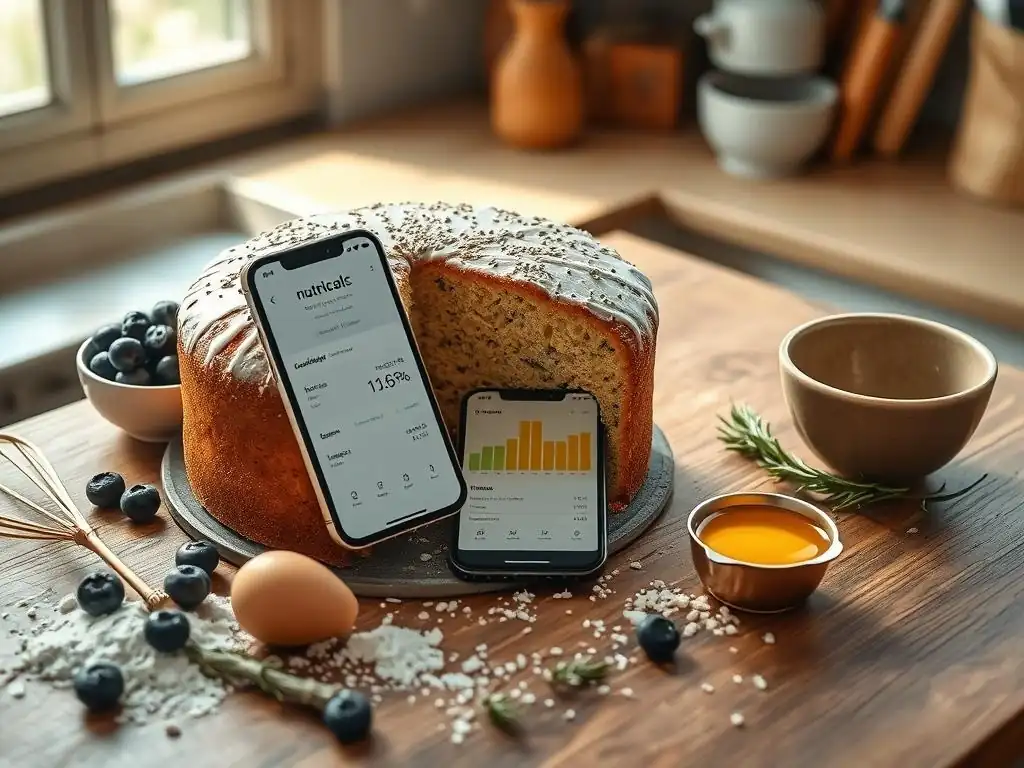
Welcome to BakeWithEase, where baking dreams become delicious realities! Ever wondered just how healthy your favorite treats really are? Dive in and discover the answer with our article on the revolutionary healthy baking recipe calculator app. Unlock a world of nutritional insights and see how easily you can bake healthier, without sacrificing flavor. Ready to transform your baking and understand your ingredients better? Let's get started!
Baking brings joy, comfort, and delicious treats into our lives. Whether you're whipping up a batch of cookies, perfecting a rustic loaf of bread, or crafting a celebratory cake, there's a unique satisfaction in creating something wonderful from simple ingredients. However, many traditional baking recipes, while undeniably tasty, can be surprisingly high in calories, sugar, and unhealthy fats.
Understanding the nutritional breakdown of your baked goods is key to enjoying them as part of a balanced diet. This is where a healthy baking recipe calculator app becomes an invaluable tool for any home baker looking to make more informed choices.
- The Problem: Nutritional Uncertainty in Baking
- The Solution: Leveraging a Nutritional Calculator App for Baking
- Recommended Healthy Baking Recipe Calculator Apps
- Real-World Examples: Transforming Your Favorite Recipes
- Making Informed Choices: Beyond Calories
- Conclusion: Bake with Confidence and Knowledge
-
Frequently Asked Questions
- What is a Healthy Baking Recipe Calculator App, and how can it help me?
- How does the app help me make my baking recipes healthier?
- Can I use the app to find healthy baking recipes directly?
- Is the app suitable for all baking skill levels, from beginners to experienced bakers?
- Where can I find the Healthy Baking Recipe Calculator App and other healthy baking resources from BakeWithEase?
- Final Reflection: Reclaiming the Joy of Baking, One Healthy Choice at a Time
- Unlock Your Recipe's Nutritional Secrets!
The Problem: Nutritional Uncertainty in Baking
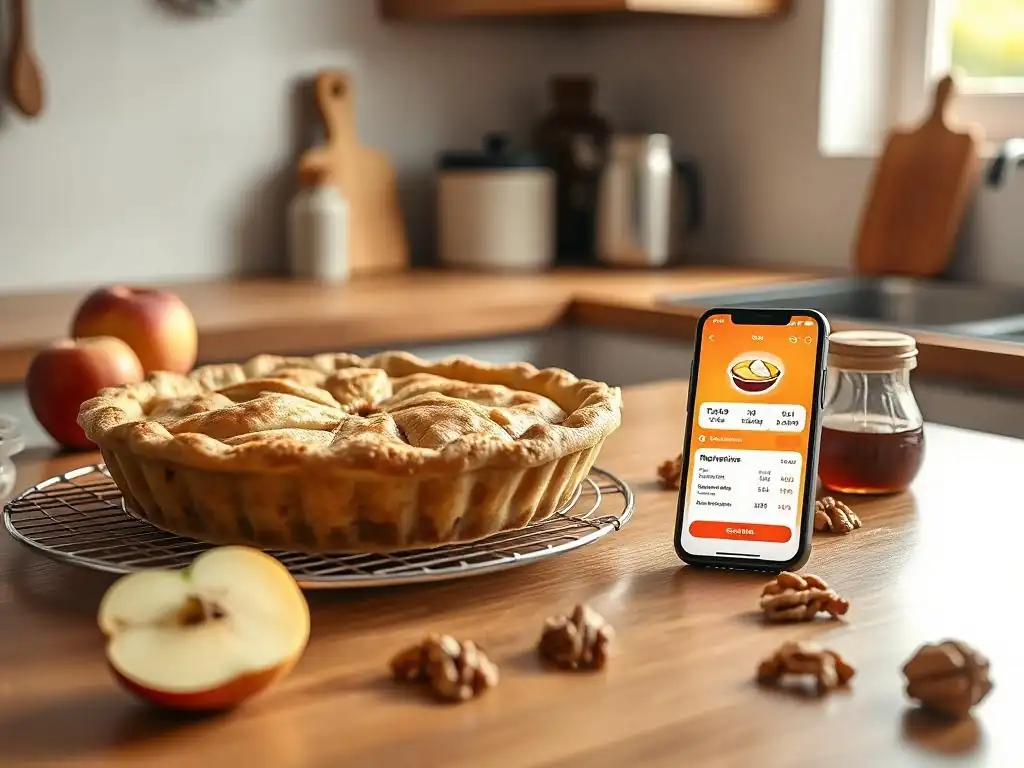
Baking, by its nature, often involves ingredients that are calorie-dense and can significantly impact the nutritional profile of the final product. Flour, sugar, butter, and eggs are staples in many recipes, and while essential for texture and flavor, they contribute substantially to total calories, carbohydrates, and fats.
For instance, a single cup of all-purpose flour contains roughly 455 calories and 95 grams of carbohydrates, while a stick (half cup) of butter packs in about 810 calories and 92 grams of fat, nearly 58 grams of which are saturated. These figures add up quickly when combined in a recipe, making it challenging to estimate the nutritional impact of a single serving without precise calculation.
Many beloved baking recipes originated in times when nutritional science was less understood, and the focus was purely on taste and texture. Ingredients like refined sugar and saturated fats (butter, lard) were used generously for flavor, moisture, and structure. A classic pound cake, for example, derives its name from the pound each of butter, sugar, flour, and eggs traditionally used, resulting in a very calorie-dense treat.
Even seemingly simple recipes can hide significant amounts of sugar; a standard chocolate chip cookie recipe might call for a cup or more of sugar, adding around 770 calories and 200 grams of sugar just from that ingredient. Without a detailed breakdown, it's easy to underestimate the caloric load and the proportion of less healthy components like saturated fat and added sugars.
Furthermore, the type of ingredients used plays a crucial role. Swapping whole wheat flour for white flour or using unsaturated fats like olive oil instead of butter can dramatically alter the fiber content and fat profile, but understanding the extent of that change requires specific data.
Many traditional recipes rely heavily on refined ingredients that offer little in the way of micronutrients or fiber, contributing primarily to calorie intake. A healthy baking recipe calculator app helps pull back the curtain on these hidden nutritional facts, allowing bakers to see exactly what's in their creations and identify areas for potential modification.
The Frustration of Manually Calculating Nutritional Information
Attempting to manually calculate the nutritional information for a baking recipe is a time-consuming and complex process. It involves looking up the nutritional data for every single ingredient by weight or volume, summing up the total calories, protein, carbohydrates, fats, vitamins, and minerals for the entire batch, and then dividing by the number of servings.
Consider a recipe with 10-15 ingredients: you'd need to find data for flour, sugar, eggs, butter, leavening agents, flavorings, mix-ins like chocolate chips or nuts, and potentially liquids like milk or buttermilk. Each ingredient's data can vary slightly depending on the brand or source, adding another layer of complexity.
Beyond just the basic macros (protein, carbs, fat), a thorough nutritional analysis should ideally include saturated fat, trans fat, cholesterol, sodium, fiber, and sugars, as well as key vitamins and minerals. Trying to compile all this data accurately from various sources like packaging labels or online databases for each ingredient in a recipe is tedious and prone to errors. A small mistake in measuring an ingredient or looking up its data can significantly skew the final nutritional values per serving.
This manual effort is often so daunting that bakers simply skip the nutritional analysis altogether, remaining unaware of the true health impact of their baked goods. This highlights the need for a streamlined, accurate tool like a healthy baking recipe calculator app.
The Solution: Leveraging a Nutritional Calculator App for Baking
Using a nutritional calculator app specifically designed for recipes transforms the process of understanding what's in your baked goods from a chore into a simple step. These apps typically have extensive databases of common ingredients, allowing you to quickly add each component of your recipe along with its quantity.
The app then automatically calculates the total nutritional value for the entire recipe batch. The real power comes in defining the number of servings; the app instantly divides the total nutritional values to provide a per-serving breakdown, giving you clear data on calories, macros, and often micronutrients for each slice, cookie, or muffin.
Beyond simple calculation, these apps offer features that are particularly useful for bakers. They can often handle various units of measurement (grams, cups, ounces, etc. ), though using weight measurements (grams) is generally recommended for the most accurate nutritional analysis in baking.
Some apps allow you to save your analyzed recipes, making it easy to track the nutritional profile of your go-to bakes. This capability is essential for those who frequently bake the same items or want to compare the nutritional impact of different recipe variations. Finding a reliable healthy baking recipe calculator app is the first step towards baking with greater nutritional awareness.
Key Features to Look for in a Recipe Nutrition Analysis App
When choosing a healthy baking recipe calculator app, several features are crucial for obtaining accurate and useful information. Firstly, a comprehensive and verified ingredient database is paramount. The app should recognize a wide variety of common baking ingredients, including different types of flour, sugars, fats, dairy, and leavening agents, ideally with nutritional data based on standard sources or verified entries. The ability to add custom ingredients or adjust existing entries is also beneficial if you use unique products.
Secondly, the app must allow for flexible input of ingredient quantities, supporting both volume measurements (cups, teaspoons) and weight measurements (grams, ounces). For baking accuracy, inputting ingredients by weight provides a much more reliable nutritional calculation. Look for apps that provide a detailed breakdown per serving, including not just total calories, protein, carbs, and fat, but also saturated fat, trans fat, sugars (including added sugars if possible), fiber, and sodium.
Some advanced apps even offer insights into vitamins and minerals. The ability to easily adjust the number of servings and instantly see the updated per-serving values is also a key feature for tailoring recipes to your needs. A good healthy baking recipe calculator app makes this analysis intuitive.
Recommended Healthy Baking Recipe Calculator Apps

Finding the right tool can make all the difference in analyzing your baking creations. While many general nutrition tracking apps exist, some offer robust features specifically for recipe analysis that are perfect for bakers. These apps help bridge the gap between delicious taste and nutritional awareness, making it easier to enjoy your favorite treats responsibly. Exploring the features of a healthy baking recipe calculator app can empower you to make healthier choices without sacrificing flavor.
MyFitnessPal is one of the most popular calorie and nutrition tracking apps available, and its premium subscription tier offers powerful recipe analysis features ideal for bakers. The "Recipe Importer" allows users to copy and paste ingredients from online recipes, and the app attempts to match them to its database, significantly speeding up the process. Alternatively, you can manually enter each ingredient and its quantity. Once the ingredients are added, MyFitnessPal calculates the total nutritional value for the recipe batch.
The real value for bakers comes after the calculation. MyFitnessPal allows you to specify the total number of servings the recipe yields. It then automatically divides the total nutritional values (calories, macros, and many micronutrients) by the number of servings to give you a detailed breakdown per serving.
This makes it easy to see how a single slice of cake or one cookie fits into your daily nutritional goals. While the core app is free, the recipe analysis and saving features are part of the premium offering, which costs approximately $19.99 per month or $79.99 annually (prices may vary). This investment is worthwhile for serious bakers who want detailed nutritional insights into their creations.
Option 2: Cronometer - Accurate Nutrient Tracking for Baking
Cronometer is highly regarded for its accuracy and detailed nutrient tracking, making it an excellent healthy baking recipe calculator app. It pulls nutritional data from verified sources like the USDA database, ensuring reliability. The app allows you to create custom recipes by adding ingredients from its extensive database, specifying quantities by weight or volume. Cronometer excels in providing a comprehensive micronutrient breakdown, showing not just calories and macros but also a wide array of vitamins, minerals, and even amino acids and fatty acids.
For bakers, Cronometer's precision is a major advantage. You can input ingredients with exact gram measurements for the most accurate analysis. Once the recipe is entered, you define the number of servings, and Cronometer provides a detailed nutritional panel for each serving. This level of detail is particularly useful for those tracking specific nutrients or catering to dietary needs that require monitoring vitamins or minerals. While Cronometer offers a free version, the Gold subscription (around $8.99/month or $49.99/year) provides enhanced features like sharing custom recipes and more detailed analysis, which can be beneficial for avid bakers.
Option 3: Yazio - Simple and User-Friendly Recipe Calculator
Yazio is a popular calorie counter and nutrition tracking app known for its user-friendly interface, making it an accessible healthy baking recipe calculator app for beginners. It offers a straightforward way to create and analyze your own recipes. You simply add each ingredient from its database, specifying the quantity, and the app calculates the total nutritional values. Like other apps, you then define the number of servings to get the per-serving breakdown.
Yazio's strength lies in its simplicity and ease of use. While its micronutrient data might not be as extensive as Cronometer's, it provides clear information on calories, protein, carbohydrates, and fats, along with sugar and fiber. This is sufficient for many home bakers looking for a general understanding of their recipe's nutritional profile.
The app also offers premium features (Yazio Pro, around $4.99/month or $39.99/year) that include more detailed recipe analysis and the ability to save an unlimited number of recipes, which is useful if you frequently analyze different baking projects. Its intuitive design makes analyzing your baking creations less intimidating.
Real-World Examples: Transforming Your Favorite Recipes
Understanding the nutritional profile of your recipes using a healthy baking recipe calculator app isn't just about knowing the numbers; it's about using that information to make intentional changes. By analyzing a recipe, you can identify areas where healthier substitutions or modifications can be made without compromising taste or texture significantly. This allows you to enjoy your favorite baked goods while aligning them better with your health goals. Let's look at how this might work in practice.
Imagine a classic chocolate chip cookie recipe that calls for 1 cup (200g) of granulated sugar and 1/2 cup (100g) of brown sugar, totaling 300g of sugar. Using a healthy baking recipe calculator app, you input all ingredients and find that sugar alone contributes about 1150 calories and 300 grams of sugar to the batch. If the recipe yields 24 cookies, that's roughly 48 calories and 12.5 grams of sugar per cookie just from the added sugar.
Now, you decide to modify the recipe, reducing the granulated sugar to 1/2 cup (100g) and the brown sugar to 1/4 cup (50g), a total reduction of 150g of sugar. Re-running the analysis in your app shows that the sugar contribution to the batch is now around 575 calories and 150 grams of sugar. For the same 24 cookies, the sugar contribution per cookie drops to about 24 calories and 6.25 grams of sugar.
This significant reduction (over 50%) in sugar per cookie, clearly quantifiable with the app, helps you make a healthier choice while still enjoying a sweet treat. The app provides the data to confirm the impact of your modification.
Case Study 2: Increasing Fiber in Muffins
Consider a standard blueberry muffin recipe made with 2 cups (240g) of all-purpose flour, which provides only about 6-8 grams of fiber for the entire batch. Analyzing this in a healthy baking recipe calculator app reveals a low fiber count per muffin. You decide to make the muffins healthier by substituting one cup of all-purpose flour (120g) with one cup (120g) of whole wheat flour and adding 1/4 cup (20g) of rolled oats.
Using the app to analyze the modified recipe: the whole wheat flour adds approximately 12-14 grams of fiber, and the rolled oats add about 2 grams. The total fiber for the batch increases from roughly 8 grams to around 22-24 grams. If the recipe yields 12 muffins, the fiber per muffin jumps from less than 1 gram to nearly 2 grams.
The app also shows how this substitution slightly changes the calorie count and macronutrient profile, often increasing protein slightly. This real-time data provided by the healthy baking recipe calculator app allows you to see the tangible nutritional benefit of adding fiber-rich ingredients and confidently state that your modified muffins are indeed healthier.
Making Informed Choices: Beyond Calories

While calorie count is often the first thing people look at, a healthy baking recipe calculator app offers insights far beyond just energy intake. Understanding the breakdown of macronutrients (carbohydrates, protein, fat) and the types of fats used is crucial for making truly informed dietary choices. Baking provides a unique opportunity to influence these factors based on ingredient selection and modification. Leveraging the detailed information from a healthy baking recipe calculator app helps you see the broader nutritional picture.
The app can highlight, for example, the proportion of saturated fat in your recipe compared to unsaturated fats. It shows the total amount of sugar, which is particularly important for monitoring added sugars. Furthermore, seeing the grams of fiber per serving can encourage incorporating whole grains or other fiber-rich ingredients. This detailed nutritional panel empowers you to consider the quality of the calories you're consuming, not just the quantity.
Understanding the Impact of Different Fats
Fats are essential in baking for moisture, texture, and flavor, but the type of fat used significantly impacts the nutritional profile. Saturated fats, commonly found in butter, lard, and coconut oil, are often solid at room temperature and have been linked to increased cholesterol levels when consumed in excess. A typical stick of butter contains about 58 grams of saturated fat. Unsaturated fats, like those in olive oil, canola oil, or nuts and seeds, are generally liquid at room temperature and are considered healthier for heart health when used in moderation.
A healthy baking recipe calculator app will show you the total fat content and, crucially, the breakdown of saturated fat per serving. This allows you to compare recipes or modifications. For instance, substituting half the butter in a cake recipe with a liquid oil (like canola or melted coconut oil) will reduce the saturated fat content, and the app will quantify this reduction, showing you the specific change in grams per serving. Identifying and limiting trans fats, though less common in modern recipes due to health concerns, is also possible with detailed app data, as some apps track this.
Balancing Macronutrients for Optimal Health
Achieving a balance of macronutrients – carbohydrates, protein, and fat – is important for overall health and energy levels. Baking recipes are typically carbohydrate-heavy, often with significant amounts of fat and relatively low protein. A healthy baking recipe calculator app provides a clear breakdown of the grams of carbs, protein, and fat per serving, often showing their percentage contribution to total calories.
Analyzing your recipe allows you to see this balance (or imbalance). For example, a standard cookie might be 60% carbs, 35% fat, and only 5% protein by calorie. If you're aiming for a more balanced snack, the app's data might prompt you to modify the recipe by adding ingredients that boost protein or fiber, like incorporating nuts, seeds, or protein powder, or using whole wheat flour. Re-running the analysis after modifications will show how the macro percentages shift, helping you create baked goods that better fit your dietary goals, whether that's increasing protein intake or reducing net carbs.
Conclusion: Bake with Confidence and Knowledge
Understanding the nutritional content of your home-baked goods is no longer a daunting task reserved for nutritionists. With the advent of user-friendly tools like a healthy baking recipe calculator app, you have the power to instantly analyze your recipes, revealing calories, macronutrients, and even micronutrients with ease. This knowledge empowers you to make informed decisions about the ingredients you use and the modifications you make, transforming your favorite treats into options that better support your health goals.
Whether you aim to reduce sugar, increase fiber, manage fat intake, or simply understand what you're eating, a reliable recipe nutrition analysis app is an indispensable companion in the kitchen. By embracing this technology, you can continue to enjoy the pleasure of baking while ensuring that your creations contribute positively to a balanced and healthy lifestyle. Bake with confidence, bake with knowledge, and savor every bite knowing exactly what's in it.
Frequently Asked Questions
What is a Healthy Baking Recipe Calculator App, and how can it help me?
It's a digital tool that analyzes your baking recipes to provide nutritional information such as calories, fat, sugar, and protein. This helps you understand if your recipe aligns with your health goals and make informed adjustments. It is a key tool for healthy baking.
How does the app help me make my baking recipes healthier?
The app breaks down the nutritional content of your recipe, allowing you to identify areas where you can make healthier substitutions. For example, you might replace sugar with natural sweeteners or butter with applesauce.
Can I use the app to find healthy baking recipes directly?
While this app primarily analyzes existing recipes, BakeWithEase.com offers a range of healthy baking recipes alongside tips on nutritional substitutions. The app complements these resources.
Is the app suitable for all baking skill levels, from beginners to experienced bakers?
Yes, the app is designed with a user-friendly interface, making it accessible to bakers of all levels. Whether you're a beginner or a seasoned pro, you can easily input your recipes and get instant nutritional analysis.
Where can I find the Healthy Baking Recipe Calculator App and other healthy baking resources from BakeWithEase?
You can typically find the app through app stores (like Google Play or the App Store) by searching for "healthy baking calculator". For more resources, visit BakeWithEase.com for recipes, tips, and techniques focused on healthy baking, allowing you to master the art of baking.
Final Reflection: Reclaiming the Joy of Baking, One Healthy Choice at a Time
The ease and accessibility of nutritional calculator apps are revolutionizing how we approach baking, shifting the focus from guilt-ridden indulgence to mindful enjoyment. We've explored the power of these tools to transform beloved recipes into healthier versions, proving that deliciousness and nutrition aren't mutually exclusive. This isn't just about calorie counting; it's about empowering ourselves to make informed choices.
The impact of readily available nutritional information extends far beyond individual kitchens. It's fostering a broader cultural shift towards healthier eating habits, challenging the pervasive notion that baked goods are inherently unhealthy. The best way to find yourself is to lose yourself in the service of others.
While this quote doesn't directly address baking, it speaks to the broader theme of self-improvement and mindful choices that using a nutritional calculator app encourages. By understanding the nutritional content of our creations, we can better serve ourselves and our loved ones, creating healthier and happier lives.
Now, it's your turn. Consider your favorite recipes – those cherished family heirlooms or decadent indulgences. Don't shy away from them; instead, embrace the opportunity to understand their nutritional profile. Download a nutritional calculator app, experiment with healthier substitutions, and rediscover the joy of baking with a newfound sense of empowerment and control. The journey towards healthier baking is a personal one, and with the right tools, it can be both delicious and fulfilling.
Unlock Your Recipe's Nutritional Secrets!
Thanks for taking the time to explore the world of healthy baking with us! We hope you now feel empowered to make informed choices about the ingredients you use. Ready to take your culinary knowledge to the next level?
- Dive deep into your favorite recipes: Use our recommended nutritional calculator app (available on the app store) to analyze the nutritional content of your favorite dishes – and discover new ways to boost their health profile! This is your chance to become a nutritional detective!
- Share your findings with friends: Post your healthiest recipe modifications on social media and inspire others to bake healthier too! #BakeWithEase #HealthyBaking
- Explore our recipe collection: Discover delicious and nutritious alternatives to your current favorites on our website.
So, what surprising nutritional discoveries will you unveil in your favorite recipes today?