
Baking Accessories You Didn't Know You Needed (But Won't Bake Without)

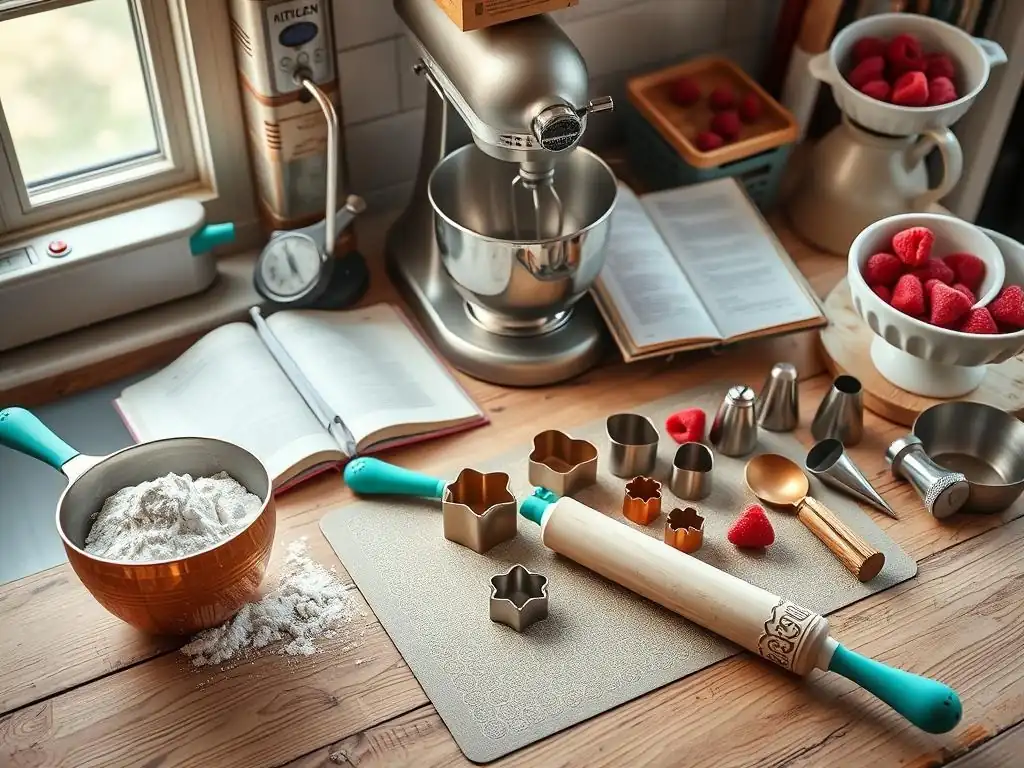
Welcome to BakeWithEase, your haven for all things baking! Ever wondered if there's a secret ingredient to baking success? It might not be what you think. In this article, we'll unveil the essential baking tools for beginners that will transform your kitchen and elevate your creations. Prepare to discover accessories you didn't know you needed (but soon won't bake without! ), and unlock a new level of confidence in your baking journey. Let's get started!
- Elevate Your Baking Game: Essential Baking Tools for Beginners and Beyond
- The Must-Have Baking Tools for Beginners: Setting Up Your Kitchen
- Beyond the Basics: Advanced Baking Tools for Confident Bakers
- Baking Accessories for a Stylish and Functional Kitchen
- Maximizing Your Baking Experience: Essential Baking Equipment for Better Results
- Where to Buy: Finding the Best Deals on Baking Supplies
-
Frequently Asked Questions
- What are the most essential baking tools for someone just starting out?
- I already have measuring cups, but should I invest in a kitchen scale too?
- Are there any specific types of spatulas that are better for baking?
- I'm on a budget. Which of the "nice-to-have" baking accessories should I prioritize?
- How important is it to have a good quality baking pan?
- Final Reflection: The Unexpected Joy of Baking's Hidden Helpers
- Unleash Your Inner Pastry Chef!
Elevate Your Baking Game: Essential Baking Tools for Beginners and Beyond
Embarking on your baking journey is exciting, and having the right equipment can make all the difference between frustration and flour-dusted success. While intricate techniques and perfect recipes are important, the foundation of great baking often lies in the quality and suitability of your tools. For anyone just starting out, identifying the truly essential baking tools for beginners can feel overwhelming amidst the vast array of gadgets available. But fear not! We're here to guide you through the must-haves that will set you up for success, build your confidence, and make baking a truly enjoyable experience.
Moving beyond the absolute basics, even seasoned bakers can benefit from exploring baking accessories that might seem non-essential at first glance but prove invaluable in practice. These tools can streamline processes, improve results, or simply add a touch of joy and style to your kitchen.
Whether you're whipping up your first batch of cookies or tackling a complex layered cake, understanding which baking equipment is truly essential and which accessories offer significant advantages will help you build a functional and efficient baking space. Let's dive into the world of essential baking tools and discover some hidden gems along the way.
Beyond the obvious mixing bowls and measuring cups, there's a world of essential baking accessories that can significantly enhance your results and make the process smoother. These aren't always the first items people think of when setting up their kitchen, especially when considering essential baking tools for beginners, but they quickly become indispensable. Think of them as secret weapons that elevate your craft from good to consistently great. They address common baking challenges, improve precision, or simply make cleanup a breeze, freeing you up to focus on the creative aspects of baking.
For instance, a simple bench scraper might seem trivial, but it's incredibly useful for handling dough, cleaning flour off surfaces, and portioning ingredients. Another often-overlooked item is a good quality parchment paper or silicone baking mat, which ensures even baking and prevents sticking better than grease alone. These items, while not always listed as core essential baking tools for beginners lists, contribute significantly to reducing frustration and achieving professional-looking results right from the start. Investing in a few key, slightly less common accessories can truly transform your baking experience.
The Must-Have Baking Tools for Beginners: Setting Up Your Kitchen
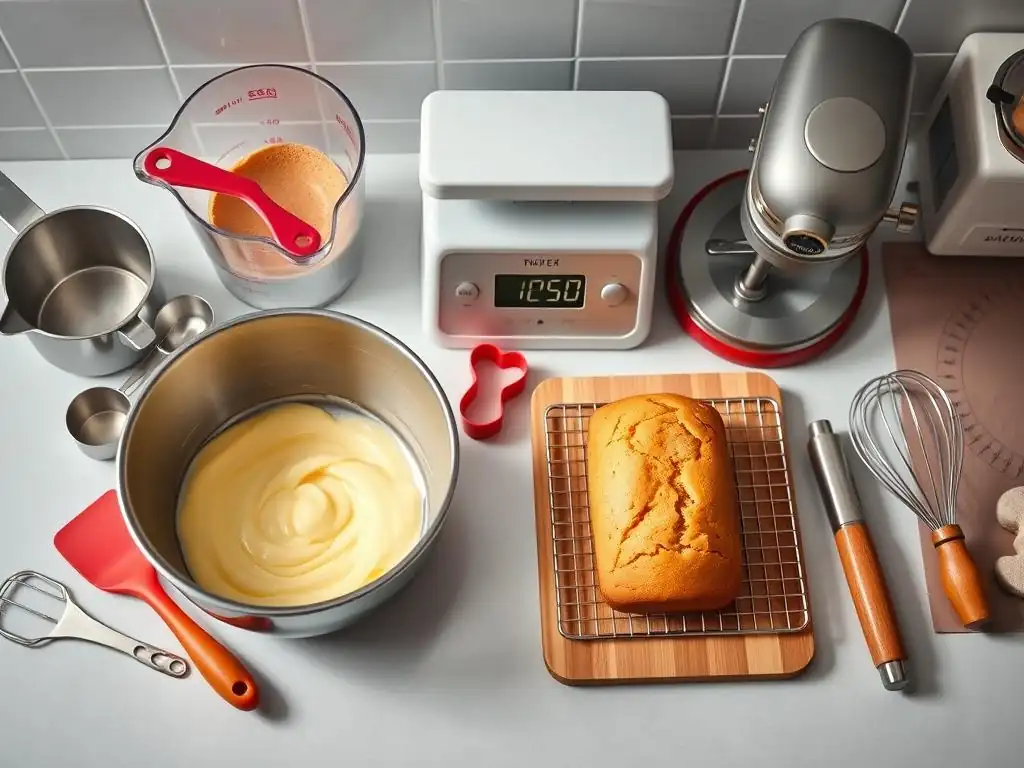
Setting up your baking kitchen doesn't require a professional-grade arsenal right away. The key is to start with a solid foundation of basic baking equipment that will allow you to tackle a wide range of recipes. These are the workhorse items you'll reach for every time you bake, forming the core of your essential baking tools for beginners collection. Prioritizing versatility and reliability in these initial purchases is crucial for building confidence and developing fundamental skills.
From accurately measuring ingredients to properly mixing batters and doughs, each step in the baking process relies on having the right tools at hand. We've compiled a list of the absolute essentials, focusing on items that are fundamental, versatile, and relatively affordable. Mastering the use of these basic baking tools will provide a strong base upon which you can build your skills and gradually expand your collection as you become a more experienced baker.
Measuring Perfection: Accurate Scales and Measuring Cups
- Why You Need It: Consistent measurements are key to baking success.
- Recommendation: Escali Primo Digital Kitchen Scale - Precise measurements for consistent results.
- Alternative: Pyrex Glass Measuring Cups - Durable and heat-resistant.
Accurate measurement is arguably the most critical step in baking. Unlike cooking, which often allows for improvisation, baking is a science that relies on precise ratios. Using a digital kitchen scale is paramount, especially for ingredients like flour, sugar, and fats, where volume measurements can vary significantly based on how the ingredient is scooped or packed.
Weighing ingredients ensures you're using the exact amount specified in a recipe, leading to more predictable and consistent outcomes every time. For example, a cup of all-purpose flour can weigh anywhere from 115 to 145 grams depending on density and technique; weighing eliminates this variability.
While a scale is essential for dry ingredients, liquid measuring cups are also a necessary part of your essential baking tools for beginners. Glass or clear plastic cups with spouts allow you to measure liquids accurately by viewing the measurement line at eye level. Having a set of both dry measuring cups (for scooping and leveling) and liquid measuring cups, alongside a reliable scale, covers all your measurement needs. Mastering these basic tools is foundational to developing accuracy and consistency in your baking.
Mixing Like a Pro: Choosing the Right Mixing Bowls
- Why You Need It: Different sizes and materials for various baking tasks.
- Recommendation: Stainless Steel Mixing Bowl Set with Lids - Versatile and easy to clean.
- Budget Option: Anchor Hocking Glass Mixing Bowls - Classic and affordable.
A set of mixing bowls in various sizes is fundamental for any baker. You'll need large bowls for mixing cake batters or bread doughs, medium bowls for whisking eggs or combining dry ingredients, and small bowls for melting butter or holding pre-measured components. Having multiple bowls allows you to prepare different parts of a recipe simultaneously, streamlining the process and keeping your workspace organized. Materials like stainless steel are lightweight, durable, and non-reactive, making them ideal for whisking meringues or mixing acidic batters.
Glass bowls, while heavier, offer the advantage of allowing you to see the ingredients as you mix, which can be helpful for beginners learning about texture and consistency. Plastic bowls are often the most budget-friendly option, but can sometimes retain odors or stains. Regardless of material, ensure your bowls have a stable base that won't slide around while you're mixing vigorously. A good set of mixing bowls is truly one of the most essential baking tools for beginners, providing the primary vessel for bringing your creations to life.
Spreading the Love: Offset Spatulas for Flawless Frosting
- Why You Need It: Achieve smooth and even frosting on cakes and cupcakes.
- Recommendation: Ateco Ultra Offset Spatula - Perfect for smoothing frosting.
- Expert Tip: Use a turntable for even smoother frosting application.
While you might think any knife or spatula can spread frosting, an offset spatula is specifically designed for the task and makes a significant difference in achieving a professional finish. The offset handle keeps your knuckles clear of the frosting surface, allowing you to spread, smooth, and level frostings and glazes with ease.
They come in various sizes, from small ones perfect for cupcakes or spreading batter in pans to larger ones ideal for frosting multi-layer cakes. This specialized tool might not be the very first item on a list of essential baking tools for beginners, but it quickly becomes indispensable once you start decorating.
Using an offset spatula allows you to create clean edges and smooth surfaces on your baked goods, giving them a polished look. For example, achieving a perfectly smooth buttercream finish on a round cake is far easier with a long offset spatula used in conjunction with a cake turntable. Even for simpler tasks like spreading jam or ganache, the design of the offset spatula provides superior control compared to a straight spatula or knife. It's a relatively inexpensive item that dramatically improves the aesthetic outcome of your decorated treats.
Beyond the Basics: Advanced Baking Tools for Confident Bakers
As you gain confidence and venture into more complex recipes, you'll discover that certain specialized tools can significantly improve your results and efficiency. These items might not be on every list of essential baking tools for beginners, but they become incredibly valuable as you explore different techniques and types of baked goods, like artisan breads or delicate pastries. Investing in these tools marks a step forward in your baking journey, allowing you to tackle challenges with greater precision and achieve higher-quality results.
These advanced baking tools often serve specific purposes that basic equipment cannot replicate effectively. They are designed to optimize particular processes, from developing gluten in dough to monitoring critical temperatures. While not strictly necessary for every single recipe, they open up new possibilities and help you refine your techniques. Consider these tools as investments in expanding your baking repertoire and mastering more challenging bakes.
The Secret Weapon: Dough Whisk for Perfect Breads
- Why You Need It: Gently incorporates ingredients for light and airy bread.
- Recommendation: Danish Dough Whisk - Prevents over-mixing for improved texture.
- Case Study: See how the Danish Dough Whisk improved the texture of our sourdough recipe.
For bread bakers, especially those working with wet or high-hydration doughs like sourdough or no-knead recipes, a Danish dough whisk is a game-changer. Its unique design features thick, circular wires that cut through thick doughs and batters, incorporating ingredients quickly and efficiently without overdeveloping the gluten early on. Unlike a traditional balloon whisk which can get clogged and requires more effort to push through stiff mixtures, the dough whisk works surprisingly well with minimal sticking, making initial mixing much easier.
Using a Danish dough whisk results in a more evenly hydrated dough with less effort than mixing by hand or with a spoon. This gentle yet effective mixing action is particularly beneficial for rustic breads where a tender crumb is desired. For instance, in our BakeWithEase sourdough recipe, switching from a regular whisk to a Danish dough whisk during the initial mix significantly reduced the time spent incorporating the flour and water, leading to a smoother dough with better structure before the bulk fermentation stage. It’s a simple tool, but incredibly effective for bread enthusiasts.
Temperature Control: Mastering Baking with a Thermometer
- Why You Need It: Ensures accurate internal temperatures for breads, cakes, and custards.
- Recommendation: Thermapen One Digital Thermometer - Quick and accurate readings.
- Pro Tip: Use it to test the doneness of your bread and avoid under-baked loaves.
Temperature is a critical factor in many baking processes, from ensuring yeast activity to achieving the correct consistency in custards or the perfect doneness in bread. Relying solely on visual cues can be misleading, leading to under-baked centers or overcooked exteriors. A reliable digital thermometer allows you to measure internal temperatures accurately, taking the guesswork out of crucial steps and ensuring consistent, safe, and delicious results. While not always listed among the very first essential baking tools for beginners, it quickly becomes vital for specific recipes.
For example, yeast is most active in water between 105°F and 115°F (40°C to 46°C); a thermometer ensures your water is in the optimal range. When baking bread, knowing the internal temperature has reached 190-210°F (88-99°C) confirms it's fully cooked through, preventing that dreaded gummy center. Similarly, custards like crème brûlée need to reach around 160°F (71°C) to set properly. A quick, accurate thermometer is an indispensable tool for mastering these temperature-sensitive bakes and is a valuable addition to your baking equipment.
Precision Piping: Decorating Like a Professional with Piping Bags and Tips
- Why You Need It: Create beautiful designs on cakes, cupcakes, and cookies.
- Recommendation: Wilton Deluxe Decorating Tip Set - A wide variety of tips for every design.
- Online Course Recommendation: "Cake Decorating for Beginners" on Skillshare - Learn professional piping techniques.
Once you've mastered baking the perfect cake or cupcake, the desire to decorate them beautifully often follows. Piping bags and tips are the essential tools for adding swirls of frosting, intricate borders, or delicate writing to your baked creations. While a zip-top bag with a corner snipped off can work in a pinch, a proper piping bag (reusable silicone/canvas or disposable plastic) fitted with various metal or plastic tips offers much greater control and allows for a wider range of decorative effects. This set of tools moves beyond basic baking equipment into the realm of finishing and presentation.
A basic set of piping tips usually includes round tips for dots and lines, star tips for rosettes and borders, and perhaps a leaf tip. As you become more comfortable, you can explore specialized tips like petal tips for flowers or basketweave tips. Learning a few basic piping techniques, such as creating simple swirls or stars, can dramatically elevate the look of your desserts. While not strictly essential for baking itself, piping tools are crucial for anyone looking to add a professional touch to their finished products and are a key part of decorative baking accessories.
Baking Accessories for a Stylish and Functional Kitchen
Baking isn't just about the final product; it's also about the process and the environment you create in your kitchen. Having the right accessories can add a layer of functionality, comfort, and even style to your baking sessions. These items might not directly impact the chemistry of your bake, but they contribute significantly to making the experience more enjoyable, efficient, and clean. For beginners, establishing good habits that include using items like aprons and silicone mats can make the learning curve smoother.
From protecting your clothes from inevitable flour dust and batter splatters to ensuring your baked goods don't stick to pans, these accessories address practical needs while also offering aesthetic appeal. They are the supporting cast that makes the baking process less messy and more manageable. Incorporating these items into your routine helps create a more professional and pleasant baking environment, whether you're a novice or an experienced baker.
The Stylish Apron: Protect Yourself and Look Good Doing It
- Why You Need It: Keep your clothes clean and add a touch of personality to your baking.
- Recommendation: Hedley & Bennett Apron - Durable and stylish.
- Material Matters: Choose a durable and easy-to-clean fabric.
Baking can be messy! Flour flies, batter drips, and chocolate melts. A good apron is your first line of defense against turning your clothes into a tie-dye of ingredients. More than just protection, wearing an apron can also help put you in the baking mindset, creating a sense of purpose and readiness. Aprons come in various styles, materials, and patterns, allowing you to choose one that reflects your personality and adds a bit of flair to your kitchen.
Look for aprons made from durable, washable fabrics like cotton canvas or twill that can withstand frequent washing. Features like adjustable neck straps and large pockets for holding towels, timers, or even your phone are incredibly useful. While not a piece of essential baking equipment in the technical sense, an apron is an essential kitchen accessory for any baker who wants to keep their wardrobe clean and feel like a proper culinary artist. It's a simple addition that makes a big difference in comfort and cleanliness.
Silicone Baking Mats: Non-Stick Magic for Easy Cleanup
- Why You Need It: Prevents sticking and ensures even baking.
- Recommendation: Silpat Premium Non-Stick Silicone Baking Mat - A kitchen essential.
- Versatile Use: Use it for cookies, breads, and even roasting vegetables.
Silicone baking mats are a fantastic alternative to parchment paper or greasing pans, offering a reusable, non-stick surface that makes baking and cleanup significantly easier. Placed directly on a baking sheet, they provide an excellent non-stick surface for cookies, pastries, meringues, and even roasting vegetables. Their consistent, even surface also helps promote uniform baking, ensuring that cookies, for example, brown evenly across the sheet.
These mats are typically oven-safe up to very high temperatures (often 480°F or 250°C) and are incredibly durable, lasting for hundreds or even thousands of uses with proper care. They eliminate the need for single-use parchment paper or the mess of greasing and flouring pans for many applications. While not strictly one of the absolute essential baking tools for beginners if working with well-greased pans, they are a wise investment for anyone who bakes frequently and values easy release and minimal cleanup.
Cooling Racks: Preventing Soggy Bottoms
- Why You Need It: Allows air to circulate and prevents condensation.
- Recommendation: Wilton 3-Tier Cooling Rack - Saves space and cools multiple batches at once.
Once your baked goods come out of the oven, they need to cool properly. Placing hot items directly on a solid surface traps steam, leading to condensation and a soggy bottom. Cooling racks, with their open grid design, allow air to circulate freely around the item, enabling even cooling and preventing moisture buildup. This is crucial for everything from preventing cookies from becoming greasy on the bottom to ensuring cakes cool without collapsing or developing a damp layer.
Having one or more sturdy cooling racks is an essential part of the post-baking process. Wire racks are common and effective. Consider racks with feet that lift them sufficiently off the counter for good airflow. For bakers who produce large batches, stackable cooling racks are a fantastic space-saving solution. While seemingly simple, a cooling rack is a vital piece of basic baking equipment that ensures the texture you worked hard to achieve in the oven is preserved during the cooling phase.
Maximizing Your Baking Experience: Essential Baking Equipment for Better Results
Beyond the individual tools, thinking about your baking equipment as a cohesive system can help you maximize your efficiency and improve the quality of your results. It's not just about having the right tools, but also understanding how to choose them wisely, care for them properly, and ensure you have everything you need for any recipe you want to try. Building a well-equipped kitchen with essential baking tools for beginners and beyond is an ongoing process.
Considering the longevity and performance of your tools is key to a rewarding baking experience. Investing in quality pieces where it matters most can save you frustration and yield better outcomes over time. Furthermore, proper care ensures that your favorite baking accessories remain in top condition, ready for your next baking adventure. Let's look at how to make smart choices and maintain your collection.
Investing in Quality: Choosing Long-Lasting Baking Tools
When building your collection of essential baking tools for beginners, it can be tempting to opt for the cheapest options available. However, investing a little more in quality for certain key items can pay dividends in terms of performance, durability, and overall baking enjoyment. High-quality tools often perform better – a sturdy whisk whips more efficiently, a heavy-gauge baking sheet heats more evenly and resists warping, and well-made measuring tools remain accurate over time.
Consider items you use frequently, like baking sheets, mixing bowls, and measuring cups/spoons. Look for materials that are known for durability and performance, such as stainless steel, heavy-duty aluminum, or sturdy silicone. While a complete set of high-end equipment might be out of reach initially, prioritizing quality for a few core pieces of essential baking equipment will make a noticeable difference in your baking results and the lifespan of your tools, saving you money in the long run compared to constantly replacing flimsy items.
Caring for Your Tools: Extending the Life of Your Baking Accessories
Proper care and maintenance are crucial for extending the life of your essential baking tools and accessories. Different materials require different cleaning methods. For example, wooden spoons and rolling pins should generally be hand-washed and dried immediately to prevent cracking or warping, while metal baking sheets might benefit from soaking before washing to loosen baked-on residues. Non-stick surfaces should be treated gently, often avoiding harsh scrubbing pads or dishwasher cycles that can degrade the coating over time.
Storing your tools correctly also contributes to their longevity. Prevent scratches on non-stick pans by using pan protectors or paper towels between stacked items. Hang measuring cups and spoons to keep sets together and easily accessible. Keeping sharp tools like knives or pastry blenders covered protects both the blades and your hands. Developing a routine for cleaning and storing your baking equipment after each use ensures that your essential baking tools for beginners remain in excellent condition, ready for countless future baking projects.
Baking Tools Checklist: Making Sure You Have Everything You Need
To help you get started or assess your current collection, here is a checklist of essential baking tools for beginners. Think of this as a guide to building a functional baking kitchen capable of tackling most basic recipes.
- [ ] Digital kitchen scale
- [ ] Set of dry measuring cups
- [ ] Set of liquid measuring cups
- [ ] Set of measuring spoons
- [ ] Set of mixing bowls (various sizes)
- [ ] Whisk (balloon whisk)
- [ ] Rubber or silicone spatulas (at least 2-3)
- [ ] Wooden spoons
- [ ] Baking sheets (at least 2)
- [ ] Cooling racks (at least 1)
- [ ] Oven mitts or pot holders
- [ ] Timer
- [ ] Rolling pin
- [ ] Pastry brush
- [ ] Sieve or fine-mesh strainer
- [ ] Standard cake pan (e.g., 9-inch round or 9x13-inch rectangular)
- [ ] Muffin tin
- [ ] Loaf pan
Adding items like an offset spatula, a bench scraper, or silicone baking mats can enhance this basic set as you become more comfortable and explore different types of baking.
Where to Buy: Finding the Best Deals on Baking Supplies
Finding the right places to purchase your essential baking tools for beginners and advanced accessories is just as important as knowing what to buy. You want quality, variety, and good value. Several avenues offer a wide selection of baking equipment, catering to different needs and budgets.
- Online Retailers: Amazon, King Arthur Baking Company, and More
- Local Baking Supply Stores: Supporting Your Community
- BakeWithEase Shop: Curated Selection of Baking Essentials.
Frequently Asked Questions
What are the most essential baking tools for someone just starting out?
The most essential tools are a good set of measuring cups and spoons for accurate ingredient ratios, a mixing bowl, and a sturdy spatula for combining ingredients effectively. A baking sheet is also crucial for oven-baked treats.
I already have measuring cups, but should I invest in a kitchen scale too?
While measuring cups are helpful, a kitchen scale provides greater accuracy for baking, especially with dry ingredients. Using a scale can lead to more consistent results and improved recipe outcomes.
Are there any specific types of spatulas that are better for baking?
Silicone spatulas are excellent for baking due to their heat resistance and flexibility, making them ideal for scraping bowls and folding delicate ingredients. A rubber spatula is also good for general mixing.
I'm on a budget. Which of the "nice-to-have" baking accessories should I prioritize?
Prioritize a good quality stand mixer if your budget allows, as it can significantly reduce prep time and effort. If not, a hand mixer is a more affordable option.
How important is it to have a good quality baking pan?
A good quality baking pan is very important as it ensures even heat distribution, preventing hot spots and burnt edges. Look for pans made from materials like aluminum or stainless steel.
The seemingly simple act of baking hinges on more than just flour and sugar; it's a delicate dance orchestrated by the right tools. Mastering the art requires not only recipes but also the right equipment, elevating the experience from a chore to a joyful creation. This article explored those often-overlooked baking accessories that transform the process, proving that even the smallest additions can yield the most significant results.
The impact of these seemingly minor tools extends beyond the kitchen; they represent a commitment to craftsmanship and the pursuit of perfection. Baking, for many, is a deeply personal act, a form of self-expression and a way to connect with loved ones. The right tools amplify this experience, allowing for greater precision and control, leading to more consistent and satisfying results. As Julia Child famously said, Find something you're passionate about and keep tremendously interested in it.
This passion is nurtured, in part, by having the right equipment to support your culinary aspirations.
Now, consider your own baking journey. What tools have you discovered that have unexpectedly enhanced your baking experience? What seemingly insignificant addition has made a world of difference? I encourage you to reflect on this, to embrace the joy of experimentation, and to continue exploring the world of baking accessories. Don't be afraid to try something new; you might just discover your next indispensable baking companion. The perfect cake, the fluffiest muffin, the crispiest cookie—they all begin with the right tools and a passion for the process.
Unleash Your Inner Pastry Chef!
Thanks for exploring the world of baking with us! We hope you discovered some amazing new tools to elevate your baking game. Ready to take your skills to the next level?
- Master a new technique: Try out that silicone spatula or pastry bag you just learned about – what delicious creation will you make first?
- Share your baking journey: Show off your creations and tag us on social media – we'd love to see what you bake! Use #BakeWithEase to join the community.
- Explore more essential tools: Dive deeper into our other articles for even more baking inspiration and tips – find your next favorite gadget!
What innovative baking tool are you most excited to try next?