
Upgrade Your Baking: Affordable Tools That Make a Big Difference

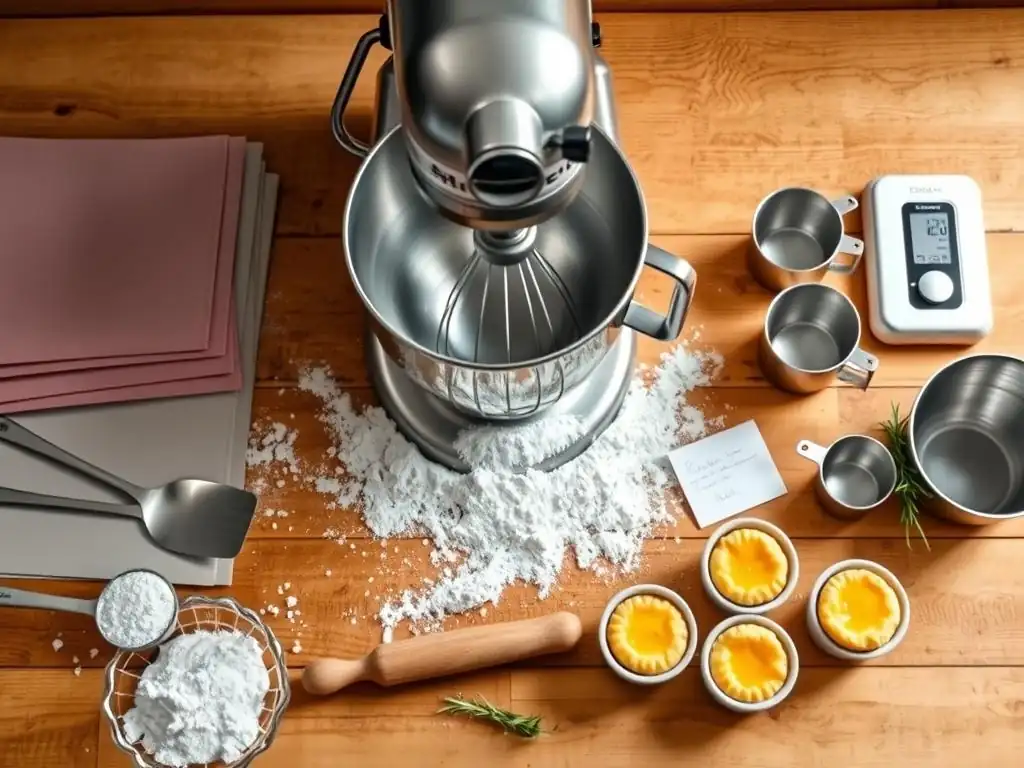
Welcome to BakeWithEase, your trusted guide to baking bliss! Are you ready to ditch the kitchen chaos and unlock your inner pastry chef? This week, we're diving deep into the world of best baking tools for beginners. Discover the essential, budget-friendly equipment that will elevate your baking game and transform even the simplest recipe into a masterpiece. Curious about the secret weapon every successful baker swears by? Keep reading to find out!
- Introduction: Level Up Your Baking Game on a Budget
- Essential Baking Tools: The Foundation for Success
- Beyond the Basics: Affordable Equipment for Professional Results
- Maximizing Baking with Budget-Friendly Upgrades
- Conclusion: Baking Made Easy and Affordable
-
Frequently Asked Questions
- What are the essential baking tools a beginner should invest in first?
- Are expensive baking tools always better than affordable options?
- Where can I find affordable baking tools that are still reliable?
- What is the most versatile baking tool for a beginner?
- How often should I replace my baking tools?
- Final Reflection: The Sweetness of Accessible Baking
- Unlock Your Inner Baker: Level Up Your Baking Game!
Introduction: Level Up Your Baking Game on a Budget
Starting your baking journey or looking to improve your results doesn't require breaking the bank. Many aspiring bakers believe they need expensive, professional-grade equipment right away, but that's simply not true. The reality is, some of the most impactful upgrades to your baking process come from surprisingly affordable tools. These aren't just nice-to-haves; they are the best baking tools for beginners because they provide the precision and control needed for consistent success, turning potential baking disasters into delicious triumphs.
This article will guide you through a selection of essential baking tools and budget-friendly equipment that can dramatically enhance your baking skills and the quality of your finished goods. From fundamental measuring tools to specialized items that make specific tasks much easier, we'll explore how these accessible items can help you achieve professional-level results without a significant investment. Get ready to discover how smart, affordable choices in your kitchen arsenal can truly upgrade your baking game.
Essential Baking Tools: The Foundation for Success
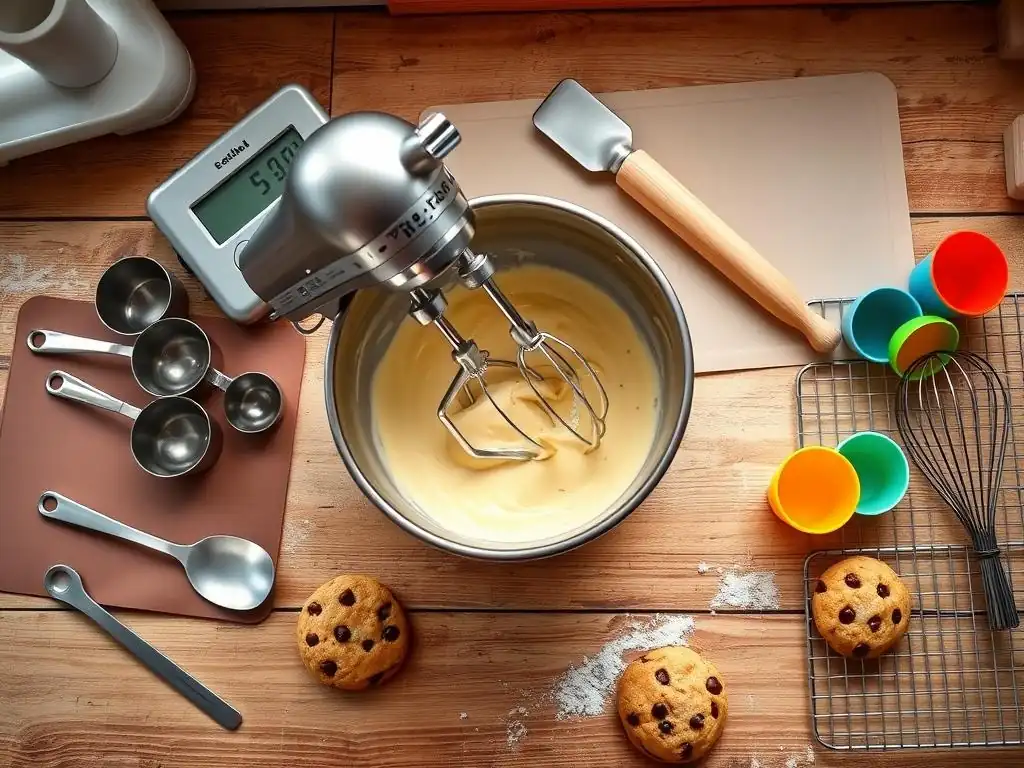
Building a solid foundation in baking starts with having the right basic equipment. These aren't fancy gadgets but rather reliable workhorses that you'll use in almost every recipe. Investing in quality versions of these core items is one of the smartest decisions a beginner baker can make, ensuring accuracy and ease from the very first step. Think of these as the best baking tools for beginners – non-negotiable items that set you up for success.
Having a well-equipped kitchen, even with just these essential, affordable baking tools, makes following recipes simpler and more enjoyable. It reduces frustration and increases the likelihood of consistently good results. Let's dive into some of the absolute must-haves that won't strain your budget but will significantly impact your baking precision and efficiency.
Durable and Versatile Mixing Bowls
Every baking recipe starts with combining ingredients, making mixing bowls arguably the most fundamental tool. For beginners, having a set of durable mixing bowls in various sizes is crucial. Materials like stainless steel are popular because they are lightweight, non-reactive (meaning they won't affect the taste or color of your food), easy to clean, and surprisingly affordable, with a set of three often costing around $20-$30.
Glass bowls are another excellent option; they are heavier and can be microwaved, useful for melting butter or chocolate, and a basic set is typically available for a similar price range. Plastic bowls are the lightest and often the cheapest, though some may retain odors or stains over time.
The versatility of a good set of mixing bowls cannot be overstated. You'll use them for everything from whisking eggs and combining dry ingredients to mixing batters and doughs. Different sizes allow you to work with various batch sizes and keep ingredients separate until needed. For instance, a large bowl (around 4-6 quarts) is perfect for mixing cake batter or bread dough, while smaller bowls (1-2 quarts) are ideal for whisking eggs, melting ingredients, or holding pre-measured items. Prioritizing a set that nests for easy storage is also a smart, space-saving choice for any kitchen.
Accurate Measuring Cups and Spoons
Baking is a science, and accuracy in measuring ingredients is paramount to success. Unlike cooking, where you can often adjust seasoning on the fly, baking requires precise ratios. Therefore, accurate measuring cups and spoons are among the most essential baking tools for beginners. You'll need two types of measuring cups: dry measure cups (designed to be leveled off) and liquid measure cups (with a spout and measurement lines below the rim). Stainless steel or sturdy plastic sets for dry ingredients and glass or clear plastic for liquids are reliable options, often available for under $15-$20 per set.
Using the correct type of measuring tool for the ingredient is vital. For example, scooping flour directly with a dry measuring cup can result in significantly more flour than needed (packing it down), potentially leading to a dry, dense baked good. Instead, it's best to spoon flour into the cup and level it off.
Similarly, liquid measuring cups allow you to accurately read the volume at eye level. Investing in a good set of both cups and spoons ensures you consistently add the right amount of each ingredient, dramatically improving your chances of achieving the desired texture and flavor in your baked goods.
The Right Spatula for Mixing and Frosting
A good spatula is an indispensable tool in any baker's kit, serving multiple functions from gently folding delicate ingredients to scraping down the sides of a bowl and even frosting cakes. Silicone spatulas are particularly useful because they are flexible yet sturdy, heat-resistant, and non-reactive.
A set of two or three spatulas in different sizes and shapes – including a standard spoon-shaped spatula for scraping and mixing, and a flat or offset spatula for frosting and spreading – can be found for around $10-$20. Their ability to scrape every last bit of batter or dough from a bowl minimizes waste and makes cleanup easier.
Offset spatulas, with their angled blade, are especially beneficial for frosting cakes and cupcakes, allowing you to create smooth surfaces or decorative swirls without getting your knuckles in the frosting. A smaller offset spatula is also great for lifting delicate cookies from a baking sheet. When choosing spatulas, look for those with sturdy handles and heads that are firmly attached or one-piece designs for hygiene. Having a few reliable spatulas in your collection significantly improves efficiency and precision in various baking tasks, making them truly essential baking equipment for beginners.
Beyond the Basics: Affordable Equipment for Professional Results
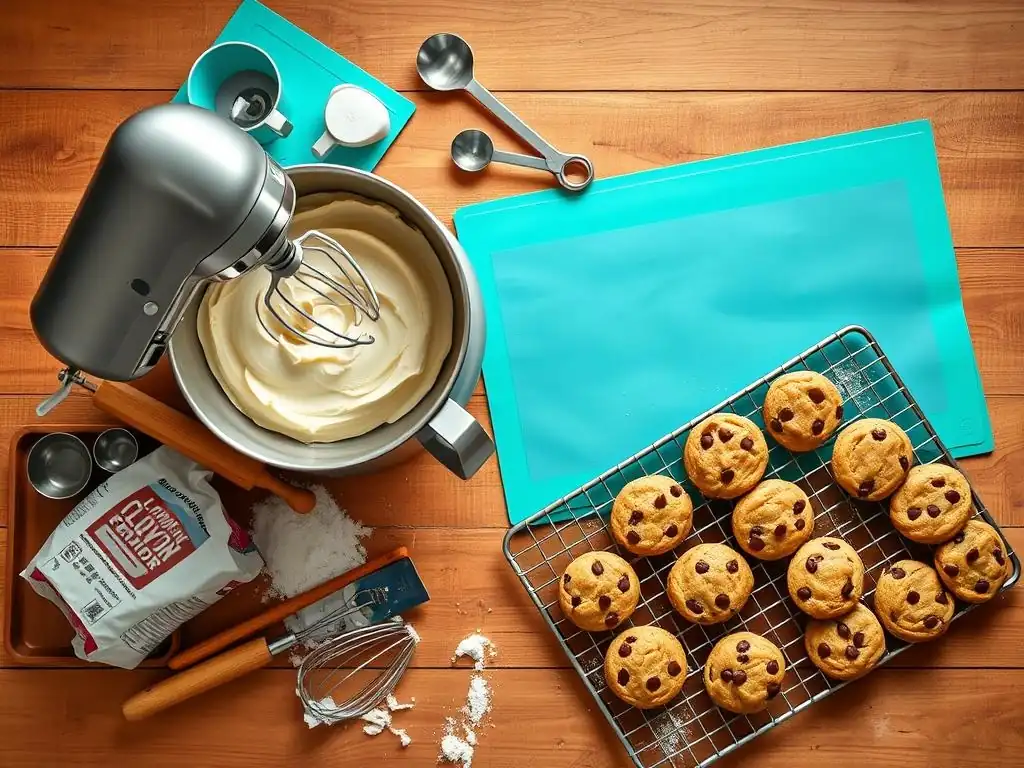
Once you have the foundational tools, you might find certain tasks a bit cumbersome or messy. This is where slightly more specialized, yet still very affordable, equipment comes into play. These tools aren't strictly necessary for every recipe, but they make specific processes much easier, cleaner, and lead to more consistent, professional-looking results. Adding these items to your collection represents the next step in upgrading your baking setup on a budget, moving you from simply making baked goods to perfecting them.
These budget-friendly upgrades are the best baking tools for beginners looking to expand their repertoire beyond simple cookies and muffins to tackle bread, pastries, and decorated cakes. They offer practical solutions to common baking challenges, improving both the process and the final product. Let's explore some key pieces of affordable baking equipment that can elevate your results significantly.
Dough Scraper for Bread and Pastry
For anyone interested in making bread or pastries, a dough scraper quickly becomes an invaluable tool. This simple, flat piece of metal or sturdy plastic with a handle is incredibly versatile. It's primarily used for portioning dough, scraping sticky dough from work surfaces, and transferring chopped ingredients. A basic metal dough scraper with a wooden or plastic handle typically costs under $10-$15 and offers a level of control and efficiency that's hard to match with other tools. For bread bakers, it's essential for dividing bulk fermented dough into loaves or rolls cleanly and accurately.
Beyond dough handling, a bench scraper (another common name for this tool) is excellent for cleaning up flour and sticky residue from your countertop after kneading or rolling. Its straight edge allows you to gather everything quickly and efficiently. For pastry makers, it's useful for cutting butter into flour or transferring delicate pie crust pieces. Given its low cost and high utility, especially if you plan to explore yeasted doughs or laminated pastries, a dough scraper is one of the best baking tools for beginners aiming for more advanced techniques.
Rolling Pin for Consistent Thickness
Achieving uniform thickness is crucial for many baked goods, from pie crusts and cookie doughs to puff pastry. A rolling pin is the tool designed for this task, ensuring even cooking and texture. While many types exist, a simple wooden rolling pin (either a classic American-style with handles or a handle-less French-style) is affordable and effective, often costing between $15 and $25. French-style pins, tapering towards the ends, offer more control for shaping circles and are favored by many for their simplicity and feel.
Consistency is key when rolling dough. Uneven thickness means thinner parts will cook faster and potentially burn, while thicker parts remain underbaked. Using a rolling pin helps distribute pressure evenly, resulting in a uniform sheet of dough. Some rolling pins even come with adjustable guides or rings to help achieve specific thicknesses consistently, which can be particularly helpful for beginners working on recipes like sugar cookies that require precise dimensions. Investing in a solid, easy-to-use rolling pin is a small step that yields significant improvements in the quality and appearance of rolled doughs.
Baking Sheets for Even Baking
Baking sheets, also known as sheet pans, are fundamental for baking cookies, pastries, scones, and even savory items. The material and color of your baking sheet significantly impact how your baked goods cook. Light-colored, heavy-gauge aluminum baking sheets are generally recommended because they conduct heat evenly and prevent the bottoms of your baked goods from browning too quickly. A standard half-sheet size (approximately 18x13 inches) is the most versatile for home ovens, and a good quality one can be purchased for around $20-$30. Having at least two allows you to bake in batches efficiently.
Avoid dark-colored or thin baking sheets, as they can cause bottoms to burn before the tops are cooked through due to faster heat absorption. The even heat distribution from a quality aluminum sheet promotes uniform rising and browning, leading to perfectly cooked cookies with golden edges and evenly baked pastries. Using a reliable baking sheet is a simple upgrade that directly impacts the success of a wide range of recipes, making it an essential piece of affordable baking equipment.
Cooling Racks for Preventing Soggy Bottoms
After spending time and effort baking, the last thing you want is a soggy bottom on your cookies, cakes, or bread. Cooling racks are a simple, inexpensive solution to this problem. They allow air to circulate around your baked goods as they cool, preventing condensation from forming on the bottom and ensuring they maintain their crispness or desired texture. A basic wire cooling rack can cost as little as $8-$15, and having two or three is ideal for cooling multiple batches simultaneously.
Cooling directly on a hot baking sheet continues the cooking process and traps steam, leading to a less-than-ideal texture. Transferring baked goods to a wire rack allows them to cool properly and evenly. For cakes and bread, cooling racks prevent the bottom crust from becoming dense or wet. For cookies, they help achieve that perfect crispness. This humble tool is one of the best baking tools for beginners because it addresses a common issue easily and affordably, making a noticeable difference in the final quality of your treats.
Maximizing Baking with Budget-Friendly Upgrades
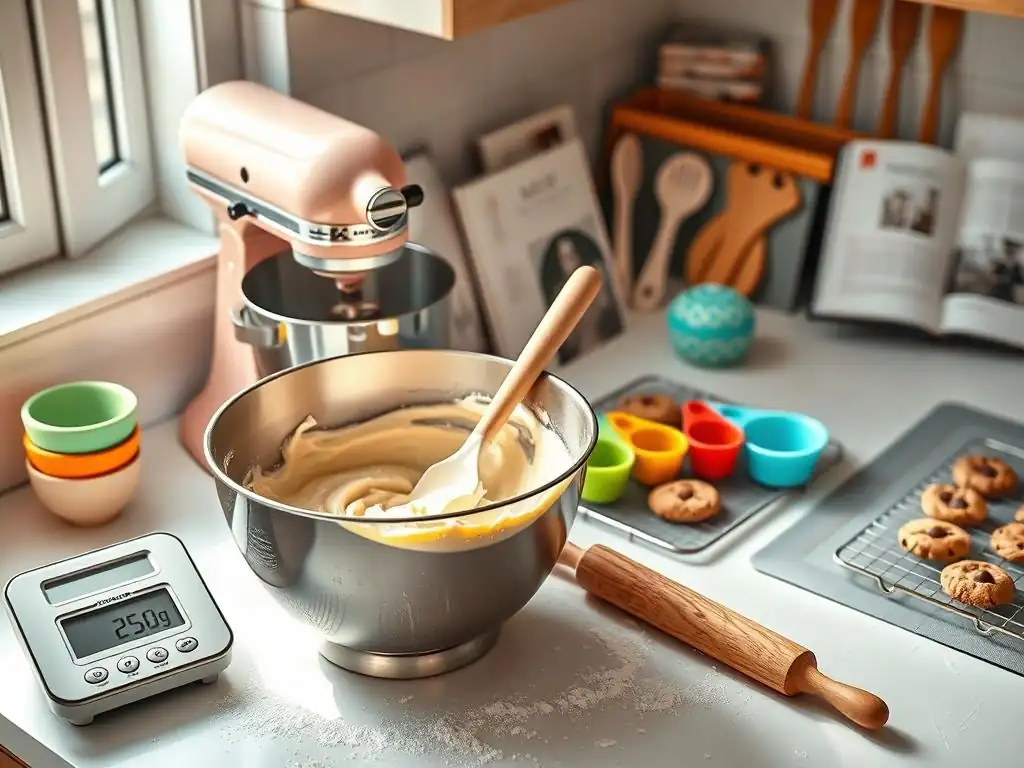
Beyond the core essentials and helpful specific tools, there are other affordable items that can either replace more expensive equipment or provide convenient, cost-effective solutions for specific baking tasks. These upgrades focus on efficiency, ease of use, and enabling techniques that might otherwise require a larger investment. They are perfect for beginners looking to expand their capabilities without committing to high-end machinery immediately.
These clever, budget-friendly additions to your kitchen can streamline processes, improve results, and even open up new avenues like cake decorating. They demonstrate that you don't need the most expensive gear to achieve impressive results; smart, targeted investments in affordable baking equipment can make a world of difference. Let's look at some options that offer significant value without the high price tag.
Hand Mixers: Stand Mixer Alternatives
While a stand mixer is a dream tool for many bakers, its significant cost (often $200-$400+) can be prohibitive for beginners or those with limited space. A quality hand mixer offers a fantastic, affordable alternative, capable of handling most tasks like whipping cream, beating eggs, mixing batters, and even some lighter doughs. A good hand mixer with multiple speeds and basic attachments (like beaters and dough hooks) can be purchased for $30-$60. Look for models with at least 200-300 watts of power for sufficient strength.
Hand mixers are portable, easier to store than stand mixers, and perfectly adequate for the vast majority of home baking recipes a beginner will attempt. While they require manual effort to hold and maneuver, they significantly reduce the labor compared to hand whisking or mixing. For instance, whipping egg whites to stiff peaks takes minutes with a hand mixer compared to potentially 10-15 minutes by hand. They are truly one of the best baking tools for beginners looking for mechanical assistance without the high investment of a stand mixer.
Parchment Paper and Silicone Baking Mats: Non-Stick Solutions
Dealing with sticky batters and doughs can be frustrating, but affordable non-stick solutions make cleanup a breeze and prevent baked goods from sticking. Parchment paper is a disposable option that creates a non-stick surface on baking sheets and cake pans. A large roll typically costs around $5-$10 and lasts for many baking sessions. Simply line your pan, and your cookies or cake will lift off easily. It also prevents spread on cookies and protects your baking sheets from residue.
Silicone baking mats (like Silpat) are a reusable alternative. While a single mat might cost $10-$20 initially, they last for hundreds of uses, making them very cost-effective over time. They provide an excellent non-stick surface, promote even heat distribution, and are easy to clean with just soap and water. For beginners who bake frequently, silicone mats are a worthwhile investment that saves money on parchment paper and simplifies cleanup dramatically. Both options are excellent, affordable ways to improve the baking experience and results.
Cake Decorating: Piping Bags and Tips
Adding simple decorations can transform a plain cake or cupcake into something special. You don't need a complex decorating kit to start; a basic set of piping bags and a few essential tips is incredibly affordable and opens up a world of creative possibilities. A starter set with disposable or reusable piping bags and 4-6 common tips (like a round tip for writing and dots, and a star tip for swirls and borders) can cost as little as $10-$20. This small investment allows beginners to practice fundamental piping techniques.
Piping bags allow for controlled application of frosting, whipped cream, or even meringue. Basic tips enable you to create classic decorations seen on professional baked goods. Mastering simple techniques like piping swirls on cupcakes or writing a message on a cake is achievable with minimal, affordable equipment. This makes piping bags and tips excellent baking tools for beginners who want to add a personal, decorative touch to their creations without a large financial outlay, enhancing both skill and presentation.
Conclusion: Baking Made Easy and Affordable
Embarking on your baking journey or seeking to improve your skills is an exciting endeavor, and thankfully, it doesn't require a significant financial commitment. As we've explored, many of the best baking tools for beginners are surprisingly affordable yet offer immense value in terms of precision, efficiency, and the quality of your final baked goods. From the fundamental accuracy provided by proper measuring tools and versatile mixing bowls to the practical benefits of dough scrapers, rolling pins, and cooling racks, these budget-friendly items form the backbone of a functional home bakery.
Furthermore, clever upgrades like hand mixers as alternatives to stand mixers, and reusable silicone mats for non-stick convenience, demonstrate that professional-level results are within reach without the high price tag. By strategically investing in these affordable baking tools and essential baking equipment, beginners can build confidence, reduce frustration, and consistently produce delicious, well-executed treats. Remember, the magic in baking often lies more in technique and reliable basic tools than in expensive gadgets. Equip yourself wisely, practice consistently, and enjoy the rewarding process of creating wonderful baked goods right in your own kitchen.
Frequently Asked Questions
What are the essential baking tools a beginner should invest in first?
A beginner should start with the basics: a good quality mixing bowl, a set of measuring cups and spoons, and a reliable baking sheet. These are versatile and cover most simple recipes.
Are expensive baking tools always better than affordable options?
Not necessarily. While higher-end tools can be more durable, many affordable options perform just as well for beginner bakers. Focus on functionality and quality within your budget.
Where can I find affordable baking tools that are still reliable?
Look for reputable brands at kitchen supply stores or online retailers. Reading customer reviews is also crucial to assess the quality and durability of the tools.
What is the most versatile baking tool for a beginner?
A stand mixer is incredibly versatile, but it's a bigger investment. For beginners, a good set of mixing bowls and a whisk are more budget-friendly and can handle a wide range of tasks.
How often should I replace my baking tools?
It depends on the quality of the tools and how frequently they're used. Inspect them regularly for signs of wear and tear, such as rust or damage. Replace them when they no longer function properly.
Final Reflection: The Sweetness of Accessible Baking
The pursuit of delicious, homemade baked goods shouldn't be limited by budget. This article highlighted that even with limited resources, aspiring bakers can achieve incredible results with affordable, high-impact tools. The joy of baking, a skill passed down through generations, is now more accessible than ever.
The impact of accessible baking extends beyond the individual kitchen. It fosters creativity, strengthens family bonds through shared experiences, and even provides a sense of accomplishment and self-sufficiency. Baking, in its simplest form, is a powerful act of creation. The best things in life are homemade.
This sentiment rings truer than ever as we rediscover the simple pleasures and tangible rewards of creating something delicious with our own hands. The tools discussed in this article are not just utensils; they are the keys to unlocking this potential for everyone.
Now, it's your turn. Consider which affordable tool resonates most with you, and take the first step. Don't let perceived limitations hold you back from the rewarding experience of baking. Embrace the process, experiment with recipes, and most importantly, enjoy the sweet fruits of your labor. The journey of a baker is a lifelong adventure, and your first step begins today.
Unlock Your Inner Baker: Level Up Your Baking Game!
Thanks for taking the time to explore affordable ways to elevate your baking! We hope you discovered some exciting new tools and techniques. Ready to put your newfound knowledge into practice?
- Try out one new tool this week: Start small—choose one affordable tool from the article and experiment with it in your next baking project. See how it transforms your results!
- Share your baking triumphs (and challenges!): We'd love to see what you create! Post a photo of your baking masterpiece on social media and tag us – let's inspire each other!
- Explore a new recipe: Feeling adventurous? Browse our website for a recipe that uses one of the tools you've learned about—it's time to put those new skills to the test!
What affordable baking tool are you most excited to try first, and what delicious treat will you bake?