
Your Recipe's Nutritional Report Card: Unveiling the Data with Calculator Apps

Welcome to BakeWithEase, where your baking journey becomes delightfully simple! Ever wondered about the real nutritional value of your delicious creations? Our latest article dives deep into the world of baking nutrition calculator app review, offering a crucial peek into how these tools can transform your understanding of every ingredient. Discover how to unlock the secrets hidden within your recipes and bake with both flavor and informed choices. Intrigued? Keep reading to find out which calculator app is right for your kitchen!
- Understanding the Nutritional Value of Your Baked Creations
- Baking Nutrition Calculator App Review: Finding the Perfect Tool
- Top Baking Nutrition Calculator Apps Compared
- Case Study: Analyzing a Classic Chocolate Chip Cookie Recipe
- Monetization Strategies for Baking Nutrition Calculator Apps
- How to Choose the Best Baking Nutrition Calculator App for Your Needs
- Conclusion: Empowering Your Baking with Nutritional Data
-
Frequently Asked Questions
- What is a baking nutrition calculator app and why should I use one?
- How accurate are baking nutrition calculator apps?
- Can these apps help me adjust recipes for specific dietary needs?
- Are there any free baking nutrition calculator apps available?
- How does a "Baking nutrition calculator app review" help me choose the right app for my needs?
- Final Reflection: Unlocking Healthier Baking Through Data
- Unleash Your Inner Nutritionist: Dive Deeper into Your Baking!
Understanding the Nutritional Value of Your Baked Creations
Why Track Nutrition in Your Baking Recipes?
Knowing the nutritional content of what you bake goes beyond simple curiosity; it's about informed consumption and health management. For many home bakers, understanding calories, macronutrients (fats, carbohydrates, proteins), and micronutrients (vitamins, minerals) in their creations is crucial, especially when baking for individuals with dietary restrictions, allergies, or health goals like managing blood sugar or calorie intake. Tracking allows you to quantify the impact of ingredient choices – swapping white flour for whole wheat, reducing sugar, or adding nuts and seeds – and understand how these changes affect the final product's nutritional profile.
Furthermore, if you ever consider sharing your recipes online or selling baked goods, providing accurate nutritional information becomes not just helpful, but often required by regulations. Even for personal enjoyment, having this data empowers you to make conscious decisions about portion sizes and how your delicious treats fit into a balanced diet. Using a reliable baking nutrition calculator app is the most efficient way to get this detailed breakdown without complex manual calculations.
The Importance of Accurate Nutritional Information for Baking
Accuracy is paramount when analyzing the nutritional value of baked goods. Unlike simple dishes where ingredients are just mixed, baking involves chemical reactions that can slightly alter nutrient profiles, although the primary data comes from the raw ingredients and their quantities. Using precise measurements (preferably by weight in grams) is the first step towards accurate nutritional analysis. A good baking nutrition calculator app takes these precise measurements and uses a comprehensive database to provide a detailed report.
Inaccurate data can be misleading and potentially harmful, particularly for those relying on this information for medical reasons, such as diabetics counting carbohydrates or individuals tracking specific nutrient intake. A robust baking nutrition calculator app review will highlight tools that pull from verified databases, like the USDA's, ensuring the figures you get are as reliable as possible. This allows bakers to confidently understand the energy density, macro split, and micronutrient contributions of their favorite loaves, cakes, and cookies.
Baking Nutrition Calculator App Review: Finding the Perfect Tool
What Makes a Great Baking Nutrition Calculator App?
Choosing the right tool for a baking nutrition calculator app review involves evaluating several key factors that impact functionality, accuracy, and user experience. The ideal app should seamlessly integrate into a baker's workflow, making recipe analysis less of a chore and more of an insightful step. Ease of ingredient entry, database quality, and the level of detail in the nutritional report are fundamental.
Beyond the basics, a great app offers features that cater specifically to baking nuances, such as accounting for moisture loss during baking (though this is a complex calculation often approximated) or allowing for ingredient substitutions to see the immediate nutritional impact. The overall user interface should be intuitive, allowing bakers to quickly add recipes, calculate values, and understand the resulting data without needing a degree in nutrition. This is where a thorough baking nutrition calculator app review becomes invaluable, highlighting which tools truly excel.
Accuracy and Comprehensive Data
The bedrock of any reliable baking nutrition calculator app is its database. It must be extensive, covering a wide variety of common and less common baking ingredients, and crucially, the data within it must be accurate and sourced from reputable origins, like national food composition databases. An app that relies on user-submitted data without verification may provide inconsistent results.
Furthermore, the app should provide comprehensive nutritional information, not just calories and macros. Detailed breakdowns including sugars (total and added), fiber, cholesterol, sodium, and key vitamins and minerals (like Vitamin D, calcium, iron, potassium) are essential for a complete nutritional picture. When conducting a baking nutrition calculator app review, verify the depth and source of the data provided by each contender.
User-Friendliness and Recipe Input Options
Entering a recipe into a nutrition calculator shouldn't feel like doing your taxes. A great app simplifies the process. Look for features like:
- Quick search for ingredients.
- Options to input quantities by weight (grams, ounces) and volume (cups, tablespoons).
- Ability to save custom ingredients or recipes.
- Easy ways to adjust serving sizes and see how the nutritional values change per serving.
Some apps even allow you to paste recipe ingredients from a website or document, which can be a huge time-saver. The interface should be clean, logical, and easy to navigate, whether you're on a desktop or using a mobile device in the kitchen. This aspect is frequently highlighted in user feedback within a baking nutrition calculator app review.
Feature Set: Beyond Basic Calculations
While calculating basic nutrition is the core function, the best baking nutrition calculator apps offer more. Advanced features can include:
- Tracking nutrients over time, perhaps if you're analyzing multiple batches or recipe variations.
- Analyzing recipes based on different yield amounts (e.g., per cookie, per slice of cake).
- Providing allergy information or filtering ingredients based on dietary needs (vegan, gluten-free).
- Integration with fitness trackers or other health apps.
- Visual representations of data, like pie charts for macronutrient distribution.
These extra features can significantly enhance the value proposition, turning a simple calculator into a powerful tool for recipe development and dietary planning. A detailed baking nutrition calculator app review should explore these additional functionalities.
Top Baking Nutrition Calculator Apps Compared
Nutritionix Track: A Powerful Option for Recipe Analysis
Nutritionix Track, often recognized for its vast food database, extends its capabilities effectively to recipe analysis, making it a strong contender in any baking nutrition calculator app review. Its database boasts over 1 million verified foods, including restaurant items and common grocery products, which translates well to identifying the nutritional data for countless baking ingredients. The platform allows users to manually input ingredients and quantities for their custom recipes, providing a detailed nutritional breakdown per serving.
The strength of Nutritionix Track for bakers lies in its extensive ingredient library and the detail it provides. You can often find multiple entries for similar ingredients (e.g., different brands of flour or types of sugar), potentially offering more precise calculations depending on what you use. While primarily a food tracking app, its recipe creation feature is robust enough for detailed nutritional analysis of baked goods, giving you a clear picture of calories, macros, and a good range of micronutrients.
Nutritionix Track Baking Nutrition Calculation Features
Nutritionix Track allows users to build recipes by searching their extensive database and adding ingredients with specified quantities. You can define the total yield of the recipe (e.g., number of cookies, weight of a loaf) and the app automatically calculates the nutritional information per serving. The report includes total calories, fat (saturated, trans), cholesterol, sodium, carbohydrates (fiber, sugars), protein, and a selection of vitamins and minerals like Vitamin D, calcium, iron, and potassium.
A useful feature is the ability to save your custom recipes for future reference or modification. If you tweak a recipe, you can easily go back, adjust the ingredient list or quantities, and recalculate the nutrition. This makes it convenient for iterating on recipes to meet specific nutritional targets. However, it's worth noting that Nutritionix Track doesn't specifically account for nutrient changes during baking, relying on raw ingredient data, which is standard for most consumer-level tools.
Nutritionix Track Pricing and User Experience
Nutritionix Track offers a free version which allows basic food and recipe logging, including nutritional calculations for custom recipes. This free tier is often sufficient for many home bakers looking to analyze their recipes. They also offer a paid subscription, "Pro," which removes ads, unlocks premium features like more detailed historical data, and potentially enhances the database access, though the core recipe calculation feature is available for free.
The user interface is generally clean and functional, available as a mobile app and via a web portal. Entering ingredients can be quick thanks to the large database and search functionality. While designed primarily for food tracking, navigating to the recipe creation section is straightforward. Some users might find the sheer size of the database slightly overwhelming initially, but the search function mitigates this. Overall, it offers a solid user experience for recipe analysis within its broader tracking platform.
Cronometer: Precision Nutrition for Serious Bakers
Cronometer is highly regarded for its accuracy and detailed tracking of micronutrients, making it an excellent tool for bakers who are serious about understanding the full nutritional profile of their creations. Unlike many apps that focus primarily on calories and macros, Cronometer provides extensive data on vitamins, minerals, and even amino acids, drawing primarily from verified sources like the USDA FoodData Central, NCCDB, and user-submitted data that undergoes a verification process.
For baking, Cronometer's strength lies in its precise ingredient data and the ability to build complex recipes. You add ingredients with exact weights or volumes, and the app provides a remarkably detailed breakdown of over 60 nutrients. This level of detail is particularly useful for bakers interested in optimizing their recipes for specific nutritional goals beyond just calorie or macro counting, such as boosting fiber or increasing specific mineral content.
Cronometer Baking Nutrition Calculation Features
Cronometer's recipe feature allows you to combine multiple ingredients from its verified database into a single recipe. You specify the total yield, and the app calculates the nutritional information per serving. The reports are incredibly detailed, covering all standard macros and calories, plus an extensive list of vitamins (A, C, D, E, K, B vitamins), minerals (calcium, iron, magnesium, zinc, selenium, etc. ), trace elements, and even fatty acid profiles and amino acids.
You can save recipes, log them as consumed (if you're also using the app for personal tracking), and easily modify them. The app also has a feature to share recipes. The precision comes from its database; using weight measurements is highly recommended for the most accurate results. The interface for building recipes is logical, allowing for easy addition and adjustment of ingredients.
Cronometer Pricing and User Experience
Cronometer offers a free version ("Gold") which provides access to its core tracking and recipe creation features with the detailed nutrient database. This free tier is exceptionally generous and more than sufficient for detailed baking nutrition analysis. They also have a paid premium version ("Gold") which offers additional features like more advanced charts, fasting timers, and the ability to share data with health professionals, but the core recipe calculation is free.
The user interface is functional and data-rich. While perhaps not as visually flashy as some apps, it prioritizes clear presentation of detailed nutritional data. Navigating the recipe creation tool is straightforward. The search function for ingredients is effective, pulling from their verified database. Users who appreciate detail will love Cronometer, while those seeking extreme simplicity might find the sheer amount of information overwhelming at first glance. It's a top choice for a detailed baking nutrition calculator app review focusing on data depth.
Verywell Fit: Simplicity for Everyday Baking
Verywell Fit, known for its user-friendly interface and extensive food database, offers a straightforward approach to calculating the nutritional information of your baked goods. While it might not provide the micronutrient depth of Cronometer, it excels in ease of use and accessibility, making it a great option for everyday bakers who primarily focus on calories, macronutrients, and common nutrients like sugar and fiber.
The app allows you to create custom recipes by adding ingredients from its database, which includes a vast number of generic and branded foods. The process is simple and intuitive, designed for quick entry. For many popular baking ingredients, you'll find multiple measurement options (cups, grams, etc. ), though using weight generally yields more accurate results. Verywell Fit is a solid choice for a baking nutrition calculator app review focusing on ease of use for general nutritional analysis.
Verywell Fit Baking Nutrition Calculation Features
Verywell Fit's recipe calculator function allows users to input ingredients and their quantities to create a custom dish. You define the total number of servings the recipe yields. The app then calculates the calories, total fat (including saturated fat), cholesterol, sodium, total carbohydrates (including dietary fiber and sugars), and protein per serving. It also often includes Vitamin A, Vitamin C, Calcium, and Iron.
The process of adding ingredients is streamlined, with a search bar that quickly accesses their large database. You can save your recipes to your profile for easy access and recalculation if you make adjustments. The reports are clear and easy to read, presenting the key nutritional data upfront. While it doesn't offer the deep dive into trace minerals or amino acids like Cronometer, it provides the essential information most bakers need for daily tracking and understanding their recipes.
Verywell Fit Pricing and User Experience
Verywell Fit offers a free platform, including access to its food database and recipe calculator. This makes it a very accessible option for anyone looking to start analyzing their baked goods' nutrition without a financial commitment. They may have premium features or associated content, but the core recipe nutrition calculation is available for free.
The user interface is clean, modern, and very easy to navigate, both on their website and in their mobile app. The focus is clearly on user-friendliness, making the process of adding ingredients and viewing results quick and painless. This simplicity is a major advantage for bakers who aren't looking for overly complex analysis tools but want reliable basic nutritional information. It's a strong contender for a baking nutrition calculator app review emphasizing accessibility and ease of use.
USDA FoodData Central: A Free Alternative for Basic Needs
For bakers who need a free, reliable source of raw ingredient nutritional data and are comfortable with manual calculation or using spreadsheet software, the USDA FoodData Central is an invaluable resource. This is the primary source of nutritional information for many commercial products and tracking apps. It's not a recipe calculator app in the traditional sense, but a comprehensive database you can use to find the nutritional profile of virtually any raw or processed ingredient.
While it requires more effort to build a full recipe analysis (you have to look up each ingredient's data and sum it up based on quantities), its accuracy is top-tier as it's maintained by the United States Department of Agriculture. It's an excellent reference point for verifying data found in other apps or for calculating nutrition manually when a dedicated app isn't available or preferred. It's a different approach in a baking nutrition calculator app review context, focusing on the data source itself.
USDA FoodData Central Baking Nutrition Calculation Features
USDA FoodData Central provides detailed nutritional profiles for tens of thousands of food items, including raw ingredients commonly used in baking like flours, sugars, fats, eggs, and dairy, as well as some prepared items. You can search for an ingredient and view its nutritional breakdown per standard measure (e.g., 100 grams, 1 cup). The data is extensive, covering calories, macros, fiber, sugars, fats (including different types), cholesterol, sodium, and a wide array of vitamins and minerals.
To use this for a recipe, you would look up each ingredient individually, find its nutritional data based on the quantity you use in your recipe (converting measurements as needed, often to grams for accuracy), and then sum up the values for all ingredients. Finally, you would divide the totals by the number of servings to get the per-serving nutrition. This process is manual but provides direct access to highly reliable data.
USDA FoodData Central: Free and Publicly Available
The most significant feature of USDA FoodData Central is that it is completely free and publicly available to everyone. There are no subscriptions, ads, or premium tiers. It is a government-funded resource designed to provide accurate food composition data for research, policy-making, and public health initiatives.
Access is provided through a web portal where you can search the database. While not as user-friendly as a dedicated recipe app interface, the search functionality is effective, and the data is clearly presented. It requires a bit more manual work than automated apps, but for those who want direct access to the foundational data source or are comfortable with spreadsheets, it's an incredibly powerful and cost-effective tool for baking nutrition analysis. It serves as a benchmark for accuracy mentioned in any thorough baking nutrition calculator app review.
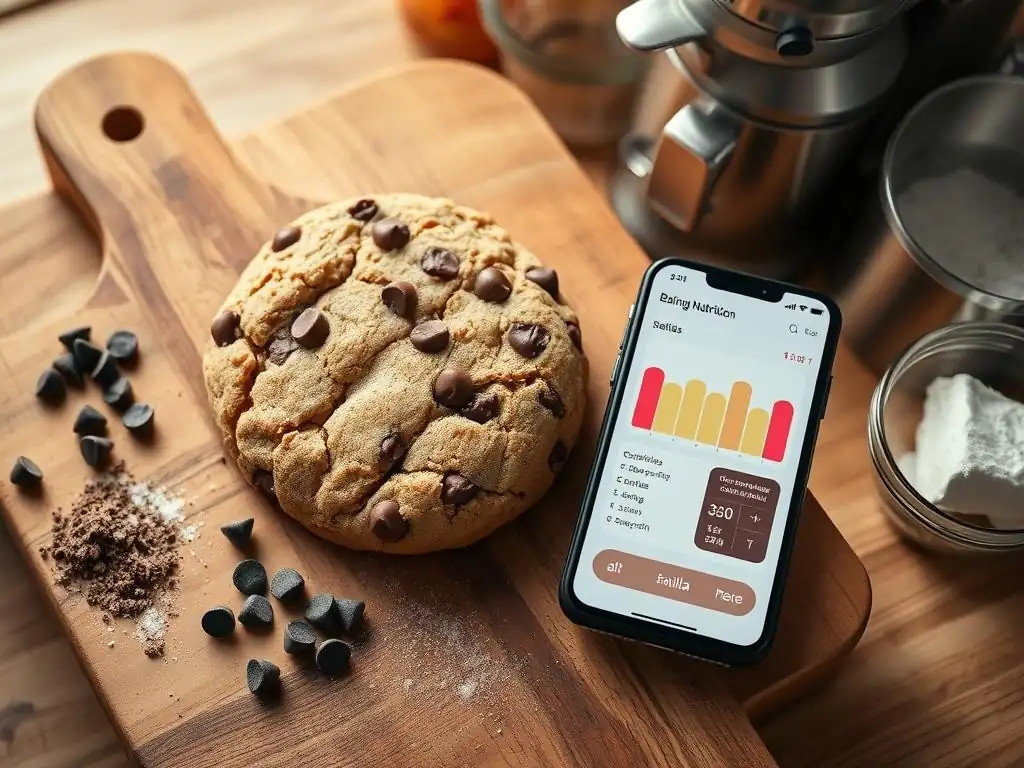
Let's walk through analyzing a common baking recipe using a nutrition calculator app. We'll take a standard recipe for about 24 classic chocolate chip cookies. The ingredients typically include:
- 1 cup (approx. 120g) All-Purpose Flour
- 1/2 tsp (approx. 2g) Baking Soda
- 1/4 tsp (approx. 1g) Salt
- 1/2 cup (approx. 113g) Unsalted Butter, softened
- 1/4 cup (approx. 50g) Granulated Sugar
- 1/2 cup (approx. 100g) Packed Light Brown Sugar
- 1 Large Egg (approx. 50g)
- 1 tsp (approx. 5g) Vanilla Extract
- 1 cup (approx. 175g) Semi-Sweet Chocolate Chips
These are approximate weights; using a scale for precision is always best for accurate nutritional calculation.
Using Nutritionix Track (or a similar app with a recipe feature), you would start by creating a new recipe entry. You would name it "Classic Chocolate Chip Cookies". Then, you'd add each ingredient by searching its database: "All-Purpose Flour", "Baking Soda", "Salt", "Unsalted Butter", "Granulated Sugar", "Packed Light Brown Sugar", "Large Egg", "Vanilla Extract", and "Semi-Sweet Chocolate Chips".
For each ingredient, you would input the quantity using the most appropriate unit, preferably grams (e.g., 120g for flour, 113g for butter, 175g for chocolate chips). Once all ingredients and quantities are added, you would specify the recipe yield – in this case, 24 cookies. The app then processes this information, pulling the nutritional data for the specified quantities of each ingredient from its database and summing them up.
Breaking Down the Results: Calories, Macros, and Micronutrients
After calculation, the app provides a nutritional summary per serving (one cookie). Based on typical database values for these ingredients and quantities, a classic chocolate chip cookie (from a batch of 24) might yield results roughly like this:
- Calories: Approximately 180-200 kcal
- Total Fat: Approximately 9-11g (with about 5-6g saturated fat)
- Cholesterol: Approximately 15-20mg
- Sodium: Approximately 90-110mg
- Total Carbohydrates: Approximately 23-26g
- Dietary Fiber: Approximately 0.5-1g
- Total Sugars: Approximately 15-18g
- Protein: Approximately 1.5-2g
Micronutrient data would also be available, showing small amounts of iron, calcium, and perhaps some B vitamins from the flour and egg. This detailed breakdown allows the baker to see the primary contributors to calories (fats and sugars) and understand the macronutrient distribution.
Optimizing Your Recipe for Healthier Baking: Tips and Tricks
Once you have the nutritional baseline from your baking nutrition calculator app review analysis, you can experiment with modifications to make the recipe healthier. For instance, to reduce sugar, you could try decreasing the amount of granulated and brown sugar or using a portion of a sugar substitute, then recalculate to see the impact on total sugars and calories.
To increase fiber and complex carbs, swap a portion or all of the all-purpose flour for whole wheat flour, noting the change in fiber content. You could also add nuts or seeds for healthy fats and additional fiber. Reducing butter slightly or using a fat substitute can lower total and saturated fat. Each tweak can be analyzed with the baking nutrition calculator app to quantify its effect, allowing for informed adjustments towards healthier outcomes without sacrificing too much flavor or texture.
Monetization Strategies for Baking Nutrition Calculator Apps
Developing and maintaining a quality baking nutrition calculator app requires resources. Several strategies can be employed to generate revenue while still providing value to users. These methods often involve leveraging the user base interested in baking and nutrition data.
Monetization needs to be balanced carefully to avoid alienating users, especially in a niche focused on helpful tools for home bakers. A successful approach often combines different revenue streams, offering a free tier to attract users and premium options for those who need more advanced features or prefer an ad-free experience.
Affiliate Links: Partnering with Baking Supply Companies
A natural fit for a baking nutrition calculator app is partnering with companies that sell baking ingredients, tools, or equipment. Within the app or on an associated website (where the baking nutrition calculator app review might live), you could include affiliate links to products mentioned or used in recipe examples.
For example, when a user adds "all-purpose flour" to their recipe calculation, a discreet link could appear suggesting where to buy high-quality flour. Similarly, links to recommended kitchen scales (essential for accurate ingredient measurement and thus accurate nutritional calculation) or baking pans could be integrated. When a user clicks these links and makes a purchase, the app owner earns a small commission. This provides a service to the user by suggesting relevant products while generating revenue.
Display Advertising: Running Ads on Your Recipe Analysis Pages
Another common monetization strategy is displaying advertisements within the app or on the website where the nutrition calculator is hosted. These ads can be targeted towards users interested in baking, cooking, health, or nutrition.
Ads could appear on recipe calculation result pages, ingredient search results, or within user profiles. While ads can sometimes detract from the user experience, they are a standard way to support free access to tools and data. Offering a paid "premium" version of the app that removes ads is a common way to cater to users who prefer an uninterrupted experience. The revenue generated from display advertising can help cover the costs associated with maintaining the app and its vast food database.
Offering a premium subscription is a popular model for software and app services, and it works well for baking nutrition calculator apps. The free version provides core functionality – basic recipe calculation and nutritional summaries – while a paid subscription unlocks advanced features.
These premium features could include:
- More detailed micronutrient analysis (e.g., breakdown of specific fatty acids, amino acids).
- Ability to save an unlimited number of recipes (free might have a limit).
- Advanced charting and data visualization (e.g., macro pie charts, nutrient trends).
- Exporting nutritional data in different formats.
- Ingredient substitution suggestions with instant nutritional comparison.
- Ad-free experience.
This tiered approach allows casual users to benefit from the free tools while providing an incentive for more serious bakers, health enthusiasts, or small business owners to subscribe for enhanced capabilities, creating a sustainable revenue model.
How to Choose the Best Baking Nutrition Calculator App for Your Needs
With several options available, selecting the right baking nutrition calculator app involves considering your personal baking habits, dietary goals, and technical preferences. There's no single "best" app; the ideal choice depends on what you plan to use it for and the level of detail you require.
Taking the time to evaluate your needs against the features offered by different apps, perhaps guided by a comprehensive baking nutrition calculator app review, will help you find the tool that best supports your baking journey and health objectives.
Considering Your Baking Style and Frequency
Think about how often you bake and the complexity of your recipes. If you only bake occasionally and need basic calorie and macro counts for simple recipes like cookies or muffins, a free, user-friendly app like Verywell Fit or the free tier of Nutritionix Track might be perfectly adequate.
However, if you are a frequent baker, experiment with complex recipes (like sourdough with varying hydration or enriched breads), or are developing recipes for others, you might benefit from an app with more robust recipe management, precise measurement options (like Cronometer's emphasis on grams), and the ability to save and modify many recipes easily. Your baking volume and variety should influence the feature set you prioritize in a baking nutrition calculator app review.
Evaluating Your Nutritional Goals
Your specific nutritional interests should heavily influence your choice. Are you primarily tracking calories for weight management? Most apps handle this well. Are you monitoring macronutrient ratios (keto, high-protein)? Ensure the app provides a clear macro breakdown, preferably in grams and percentages.
If you are focused on micronutrients – ensuring adequate intake of vitamins, minerals, or specific fatty acids – an app like Cronometer with its extensive micronutrient database and detailed reporting is likely the superior choice. For those managing conditions like diabetes, precise carbohydrate and sugar counts are critical, so verify the app's accuracy in these areas during your evaluation or when reading a baking nutrition calculator app review.
Testing Out Free Trials and Demo Versions
Before committing to a paid subscription (if considering one), take advantage of free trials or the free tiers offered by the apps. This hands-on experience is invaluable. Try inputting a few of your typical recipes. How easy is it to find ingredients? How intuitive is the interface? Is the resulting nutritional data presented clearly and in a way that is useful to you?
Use this testing phase to assess the app's user-friendliness, the depth and accuracy of its database for the ingredients you commonly use, and whether the features meet your needs. A real-world test with your own recipes is the best way to determine if a baking nutrition calculator app is the right fit for your kitchen workflow.
Conclusion: Empowering Your Baking with Nutritional Data
Understanding the nutritional makeup of your homemade baked goods is a powerful way to align your passion for baking with your health and dietary goals. Gone are the days of guessing; with the advent of dedicated tools, a detailed nutritional report card for your recipes is just a few clicks away. Whether you're tracking calories, managing macros, monitoring sugar intake, or optimizing for micronutrients, a baking nutrition calculator app provides the data you need to make informed choices about what you bake and eat.
From robust, data-rich platforms like Cronometer and Nutritionix Track to user-friendly options like Verywell Fit and the foundational data source of USDA FoodData Central, there's a tool suited for every baker's needs and technical comfort level. By leveraging these resources, you not only gain deeper insight into your favorite recipes but also unlock the potential to modify them for enhanced health benefits, making your delicious creations even more nourishing.
Taking Control of Your Recipes and Your Health
Integrating a baking nutrition calculator app into your baking process empowers you to take control. You move from simply following a recipe to truly understanding its components and impact. This knowledge allows you to confidently adapt recipes for specific dietary needs, experiment with healthier ingredient substitutions, and accurately track your intake if you're using the app for personal health management.
It transforms baking from an art form into a science, where creativity meets nutritional awareness. Explore the options available through a baking nutrition calculator app review and start analyzing your recipes today – your health and your taste buds will thank you!
Frequently Asked Questions
What is a baking nutrition calculator app and why should I use one?
A baking nutrition calculator app helps you analyze the nutritional content of your recipes. It provides data like calories, fats, carbs, and protein per serving, useful for health-conscious bakers or those with dietary restrictions.
How accurate are baking nutrition calculator apps?
Accuracy can vary, but most apps rely on established food databases and ingredient quantities you provide. For the most accurate results, ensure you input data correctly and use precise measurements.
Can these apps help me adjust recipes for specific dietary needs?
Yes, absolutely! These apps allow you to see the nutritional impact of ingredient changes, helping you reduce sugar, increase protein, or meet other dietary requirements. This enables you to bake recipes that are tailored to your needs.
Are there any free baking nutrition calculator apps available?
Yes, many free apps offer basic nutritional analysis. However, some may have limitations on features or the size of their ingredient database. Paid versions often provide more advanced tools and a wider range of options.
How does a "Baking nutrition calculator app review" help me choose the right app for my needs?
Reviews provide insights into the app's features, user interface, accuracy, and overall usability. They can highlight the pros and cons of different apps, helping you make an informed decision based on your specific requirements.
Final Reflection: Unlocking Healthier Baking Through Data
The accessibility of nutritional information is revolutionizing how we approach baking, moving beyond mere recipes to a mindful understanding of what we consume. We're no longer limited to guesswork; apps provide the tools to analyze our creations, empowering us to make informed choices about ingredients and portion sizes. This shift towards data-driven baking is not just a trend; it's a crucial step towards a healthier lifestyle.
The impact of readily available nutritional data extends far beyond individual kitchens. It fosters a greater awareness of the hidden sugars, fats, and calories often lurking in beloved baked goods. This increased transparency encourages a more critical approach to food choices, influencing not only personal health but also broader conversations around food labeling and public health initiatives. Knowing is half the battle,
and with these apps, we're armed with the knowledge to make healthier, more conscious decisions.
You, the reader, now hold the power to transform your baking journey. Don't just follow recipes; understand them. Experiment with ingredient substitutions, analyze the nutritional profile of your creations, and tailor your baking to your specific dietary needs and goals. Embrace the data, embrace the knowledge, and embrace the delicious, healthier possibilities that await.
Unleash Your Inner Nutritionist: Dive Deeper into Your Baking!
Thanks for taking the time to explore the world of nutritional analysis with us! You've now learned how easy it is to understand the nutritional breakdown of your favorite recipes. Ready to put this new knowledge into practice?
- Calculate the nutritional facts of your next creation: Use a calculator app to analyze your recipes and make informed adjustments. This is the key step to understanding your baking better!
- Share your findings: Compare your recipe's nutritional profile to similar ones online – you might discover surprising differences!
- Join our community: Discuss your results and share your favorite healthy baking swaps in the comments below.
What surprising nutritional fact did you uncover about one of your recipes? Let's discuss!