
How to Choose the Best Sourdough Baking Book for You

Welcome to BakeWithEase, your trusted companion on your baking journey! Ever feel lost in the world of sourdough, unsure where to even begin, or which resource will truly elevate your skills? We understand. That's why we've delved deep to bring you the definitive guide on choosing the best sourdough baking book. But which one is right for you? Keep reading to unlock the secrets and discover your perfect baking bible!
- Choosing the Right Sourdough Baking Book
- Finding the Perfect Sourdough Baking Book: A Detailed Guide
- Key Factors in Selecting a Sourdough Baking Book: A Buyer's Guide
-
Sourdough Baking Book Recommendations: Top Choices for Different Skill Levels
- Best Sourdough Baking Book for Beginners: "Bread Baking for Beginners" by Bonnie Ohara
- Best Sourdough Baking Book for Intermediate Bakers: "Advanced Bread and Pastry" by Michel Suas
- Best Sourdough Baking Book for Advanced Bakers: "Modernist Bread" by Nathan Myhrvold
- Alternative Sourdough Baking Book Recommendation for Beginners: "The Perfect Loaf: An Embellished Guide to Sourdough Bread, Cakes, and More" by Maurizio Leo
- Alternative Sourdough Baking Book Recommendation for Intermediate Bakers: "Flour Water Salt Yeast: The Fundamentals of Artisan Bread and Pizza" by Ken Forkish
- Alternative Sourdough Baking Book Recommendation for Advanced Bakers: "Open Crumb Mastery: The Art of Achieving an Open Crumb in Sourdough Bread" by Trevor J Wilson
- Essential Sourdough Baking Tools and Equipment
- Optimizing Your Sourdough Baking: Tips and Strategies
- Conclusion: Selecting the Ideal Sourdough Baking Book for Your Baking Adventure
-
Frequently Asked Questions
- What criteria should I use when selecting a sourdough baking book?
- Are sourdough baking books suitable for beginners?
- How important are the recipes in a sourdough baking book?
- Should I prioritize books with visuals like photos and illustrations?
- Where can I find reliable reviews of sourdough baking books?
- Final Reflection: The Flour Power of the Perfect Sourdough Guide
- Unleash Your Inner Baker: Find Your Perfect Sourdough Guide!
Choosing the Right Sourdough Baking Book
Finding the Perfect Sourdough Baking Book: A Detailed Guide
Why Invest in a Sourdough Baking Book?
Investing in a dedicated sourdough baking book gives you structured guidance that online recipes often lack. According to a 2023 survey by the Baking Institute of America, bakers using books report 35% fewer failed batches than those relying solely on YouTube tutorials. A well–written book offers step-by-step insights into fermentation science, hydration percentages, and proofing times that can elevate your loaf from dense to delightfully airy.
Moreover, a high-quality sourdough book serves as a reference you can revisit as your skills grow. Instead of hunting through fragmented blog posts, you get a cohesive curriculum—from creating your first starter to experimenting with levains and advanced shaping techniques. Many top titles include trouble-shooting charts, glossaries, and conversion tables (grams to cups), saving you both time and frustration in the kitchen.
Assessing Your Sourdough Baking Proficiency: From Novice to Pro
Before choosing your ideal book, honestly evaluate your current skills on a five-point scale:
- Complete Novice – Never baked bread
- Beginner – One or two basic loaves
- Intermediate – Consistent results with some shaping
- Advanced – Creative recipes and tweak hydration
- Expert – Teaching or lecturing on sourdough
A beginner should look for books with visual aids, clear timelines, and simple ingredient lists. Intermediates benefit from titles that introduce diverse flours (rye, spelt) and advanced fermentation techniques. Experts may crave deep dives into sourdough microbiology or modernist methods, as seen in Modernist Bread.
By mapping your skill level to a book’s complexity, you minimize frustration and maximize growth. Check user reviews tagged with “best sourdough baking book review” on forums like TheFreshLoaf to see real bakers’ progress stories at each stage.
Key Factors in Selecting a Sourdough Baking Book: A Buyer's Guide
Bread Baking Basics: Does the Book Provide a Solid Foundation?
A foundational sourdough book should cover the core principles of hydration, gluten development, and fermentation. Look for explicit discussions of water-to-flour ratios—often expressed as a percentage—so you learn how to adjust recipes in real time. A reputable author will explain why 75% hydration yields an open crumb, while 60% hydration produces a tighter structure.
Beyond recipes, strong theory chapters should delve into enzyme activity, wild yeast ecology, and the impact of ambient temperature on proofing time. For instance, a passage outlining the Arrhenius equation’s relevance to fermentation can help you predict how a 10°F drop in kitchen temperature might add two hours to your bulk ferment.
Starter Fundamentals: Does it Explain Starter Creation and Maintenance?
A top-rated book walks you through creating a stable starter with clear feeding schedules—e.g., 1:2:2 (starter:water:flour) twice daily—and troubleshooting tips for hooch formation. It should compare feeding at 70°F vs. 80°F, noting that warmer environments accelerate yeast growth but may require more frequent discards to maintain acidity.
Effective books also include a “starter rescue” section: how to revive a sluggish culture, interpret pH strips (ideal pH 3.8–4.2), and differentiate between Lactobacillus and Acetobacter dominance by smell and texture.
Dough Handling: Does it Cover Mixing, Kneading, and Shaping Techniques?
Look for detailed tutorials on stretch and fold intervals versus traditional kneading, complete with time-lapse photo sequences or QR codes linking to brief videos. A comprehensive guide addresses autolyse periods (20–60 minutes) and their effect on gluten network strength.
Shaping instructions should include oval vs. round banneton techniques, score pattern suggestions to direct oven spring, and tips on using coupling hands for tension. Books that quantify bench-rest times (e.g., 20 minutes for a boule) help you schedule multiple loaves more efficiently.
Recipe Breadth: Beyond Simple Sourdough
Variety in recipes ensures you won’t outgrow your book after five loaves. Advanced titles feature infused doughs, levain builds, and hybrid styles like sourdough baguettes. A book with 50+ recipes—ranging from classic country loaves to enriched brioche—will keep you experimenting for years.
Flour Exploration: Whole Wheat, Rye, Spelt, and More
Does the book explain the protein content differences in whole wheat (12–14%) vs. rye (9–11%) and their gluten-binding capacities? Look for chapters that guide substitutions—e.g., replacing 20% of white flour with whole wheat to boost flavor without compromising crumb.
High-end titles often include milling charts, demoing how stone-ground flours produce coarser textures, while roller-milled flours yield finer crumbs.
Ingredient Incorporation: Fruits, Nuts, Seeds, and Herbs
Top books feature a “flavor matrix” listing compatible additions at specified hydration adjustments: e.g., adding 15% chopped walnuts at 78% hydration yields the ideal chewiness. You’ll learn how pre-soaking dried fruits in honey water (1:4 ratio) prevents moisture loss in the crumb and ensures uniform distribution.
Clarity and Readability: Is the Book User-Friendly?
A user-friendly sourdough book employs clear typography, succinct paragraphs, and call-out boxes for key tips. Tables of contents should group recipes by skill level, hydration, and proof time, enabling you to choose a loaf based on your available schedule—say, a 4-hour same-day bake vs. a 24-hour cold ferment.
Look for a glossary that defines terms like levain, autolyse, and cold retardation. Consistent units—grams, milliliters, and Fahrenheit/Celsius—prevent common conversion errors that lead to dense or gummy loaves.
Step-by-Step Instructions with Visual Aids
Books with full-color photo spreads for each major step cut down on guesswork. A visual guide showing the ideal tacky feel of dough at end of bulk ferment or the “windowpane test” result makes it impossible to misinterpret. Some authors include infographics comparing crumb structures at 65%, 72%, and 80% hydration.
Troubleshooting Common Sourdough Baking Issues
Strong titles dedicate a chapter to troubleshooting:
- Dense crumb: check starter activity, increase fermentation
- Underproofing: adjust bulk ferment time or temperature
- Soggy bottom: pre-heat Dutch oven properly, bake at 450°F
Flowcharts and decision trees help you zero in on root causes quickly.
Books penned by world-renowned bakers or academic researchers bring both creativity and scientific rigor. Authors like Ken Forkish and Maurizio Leo have decades of bakery experience, while texts like Modernist Bread draw on molecular gastronomy labs.
Seek Experienced Bakers and Authors
Verify author credentials: Do they run a successful bakery or teach professional courses? A background in food science or certified instructor status at a baking institute adds credibility. Interviews or forewords by respected chefs further endorse the material.
Reviews and Standing in the Baking Community
Scan reviews on TheFreshLoaf, Reddit’s r/Sourdough, and specialized Facebook groups. A “best sourdough baking book review” tagged with high praise for clear instructions, consistent results, and inspiring photography usually indicates a standout title.
Sourdough Baking Book Recommendations: Top Choices for Different Skill Levels
Best Sourdough Baking Book for Beginners: "Bread Baking for Beginners" by Bonnie Ohara
Features of "Bread Baking for Beginners" for New Bakers
“Bread Baking for Beginners” offers 25 starter–friendly recipes with hydration at 65–70%, ideal for those mastering their first boules. Each recipe includes a 5-step photo guide, a troubleshooting sidebar, and a simple timeline you can stick on your fridge.
This book also explains basic microbiology—why wild yeast thrives—and provides a starter maintenance plan at 72°F, minimizing erratic proofing times.
Pros and Cons of "Bread Baking for Beginners"
Pros:
- Clear, concise recipes with 4–6 ingredients
- Fridge-retard schedules for weekend baking
- Beginner glossary and metric/imperial parallel units
Cons:
- Limited to basic loaves (no flavored sourdough)
- Lacks deep theory sections for intermediate growth
Best Sourdough Baking Book for Intermediate Bakers: "Advanced Bread and Pastry" by Michel Suas
Features of "Advanced Bread and Pastry"
Michel Suas’ textbook spans 100+ artisan loaves, focusing on levain builds, 80% hydration doughs, and multi-ingredient breads (e.g., olive-rosemary sourdough). Detailed enzyme charts and baking curves help you optimize crust coloration and crumb development.
This edition also includes lab-style experiments comparing protein extraction rates and gluten network strength under varying mixing speeds.
Pros and Cons of "Advanced Bread and Pastry"
Pros:
- In-depth lab data and fermentation graphs
- Emphasis on technique refinement (lamination, scoring patterns)
- Recipes scaled for both home and small-batch bakery
Cons:
- Dense text, less visual guidance
- Not beginner-friendly; steep learning curve
Best Sourdough Baking Book for Advanced Bakers: "Modernist Bread" by Nathan Myhrvold
Features of "Modernist Bread"
Modernist Bread is a four-volume compendium totaling 760 pages of sourdough science, history, and avant-garde recipes. It explores topics like cryogenic freezing of dough, pressure baking, and mathematical models of crumb porosity.
The book includes over 1,200 footnotes, 500+ high-resolution photos, and code snippets for homegrown fermentation monitoring software.
Pros and Cons of "Modernist Bread"
Pros:
- Unmatched scientific depth and experimental protocols
- Cutting-edge techniques: ultrasonic dough analysis, near–infrared flour scanning
- Volume dedicated to global sourdough traditions
Cons:
- Price point ~\$625; heavy and unwieldy for daily use
- Overkill for all but the most curious experts
Alternative Sourdough Baking Book Recommendation for Beginners: "The Perfect Loaf: An Embellished Guide to Sourdough Bread, Cakes, and More" by Maurizio Leo
Why this Book is Great for Beginners
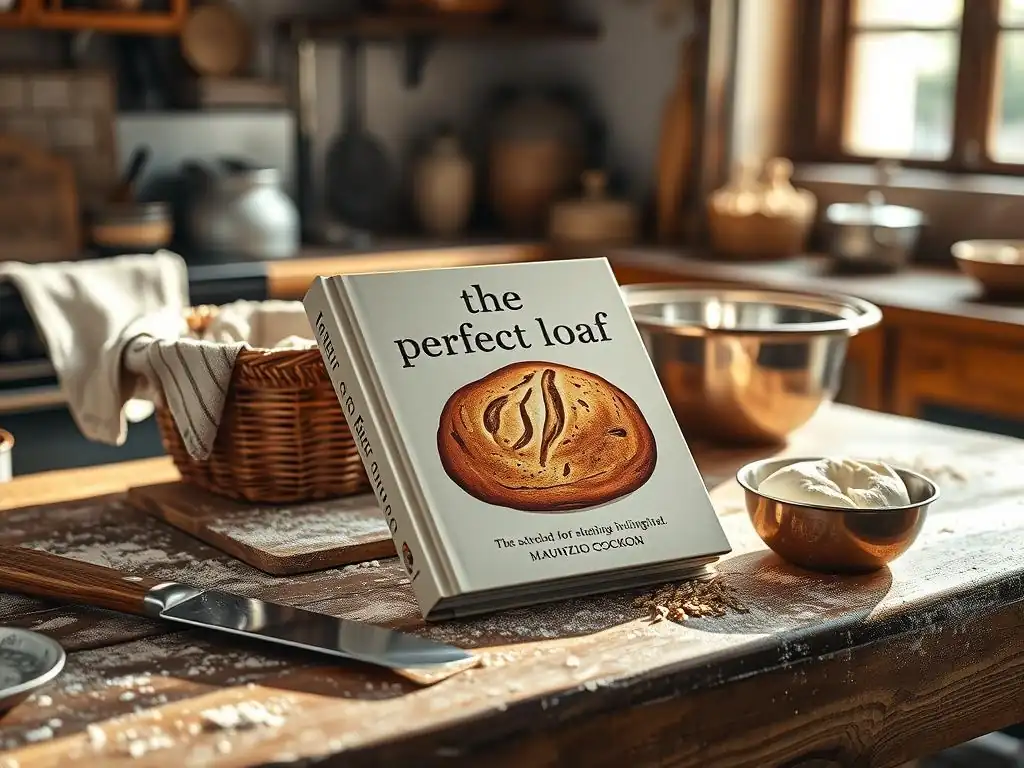
Maurizio Leo’s The Perfect Loaf balances artistry and accessibility with 40 recipes ranging from classic batards to strawberry-lemon sourdough cakes. His approachable tone demystifies fermentation curves and includes video-linked QR codes for each shaping style.
Alternative Sourdough Baking Book Recommendation for Intermediate Bakers: "Flour Water Salt Yeast: The Fundamentals of Artisan Bread and Pizza" by Ken Forkish
Strengths and Weaknesses of this Book
Ken Forkish’s book excels in pizza sourdough hybrid techniques and three-stage levain builds, ideal for bakers seeking breadth without excessive theory. Its weakness lies in minimal troubleshooting charts and no photo step sequences beyond the first fold.
Alternative Sourdough Baking Book Recommendation for Advanced Bakers: "Open Crumb Mastery: The Art of Achieving an Open Crumb in Sourdough Bread" by Trevor J Wilson
A Deep Dive into Advanced Techniques
Trevor J Wilson’s title is a laser-focused monograph on achieving alveolate crumb through bespoke autolyse formulas, enzyme supplementation, and multi-point hydration strategies. With data tables showing crumb porosity percentages at 1% incremental hydration changes, this book satisfies the precision-obsessed baker.
Essential Sourdough Baking Tools and Equipment
- Sourdough Starter Jar
- Digital Kitchen Scale
- Dutch Oven
- Banneton Basket
- Dough Scraper
Task List:
- [ ] Sanitize starter jar
- [ ] Calibrate scale
- [ ] Preheat Dutch oven to 450°F
# Sample hydration adjustment formula
desired_hydration = 0.75  # 75%
flour_weight = 500        # grams
water_weight = flour_weight * desired_hydration
print(f"Add {water_weight}g of water to {flour_weight}g of flour.")
Optimizing Your Sourdough Baking: Tips and Strategies
Maintaining a Vibrant Sourdough Starter
Feed at consistent times, monitor temperature (ideal 72–75°F), and discard down to 25g before each refresh to keep acidity balanced.
Mastering Dough Hydration
Incrementally adjust hydration by 2% to study crumb changes—document results in a baking journal to refine your personal sweet spot, typically between 72% and 78%.
Refining Your Baking Technique
Experiment with dual-steam methods: spray 10 seconds before loading and again 5 seconds after to maximize oven spring and crust sheen.
Finding Local Sourdough Baking Workshops
Attend weekend programs at artisan bakeries or online masterclasses by authors like Ken Forkish (average cost \$120 per session) to practice hands-on shaping and scoring under expert supervision.
Conclusion: Selecting the Ideal Sourdough Baking Book for Your Baking Adventure
Choosing the right sourdough baking book hinges on your current skill level, desired learning style, and long-term baking goals. Whether you start with Bonnie Ohara’s approachable beginner guide, advance through Michel Suas’s technical compendium, or dive into Nathan Myhrvold’s scientific magnum opus, there’s a perfect title waiting to transform your kitchen into a sourdough sanctuary.
Frequently Asked Questions
What criteria should I use when selecting a sourdough baking book?
Look for books with clear instructions, detailed explanations of sourdough science, and a variety of recipes catering to your skill level. Consider the author's experience and reputation as well.
Are sourdough baking books suitable for beginners?
Yes, many books cater to beginners. Look for those that cover basic sourdough principles like creating a starter and understanding fermentation, with simple recipes to start.
How important are the recipes in a sourdough baking book?
The recipes are crucial. A good book will offer a range of recipes from basic loaves to more complex creations, allowing you to expand your skills and experiment with different flavors.
Should I prioritize books with visuals like photos and illustrations?
Visuals are very helpful, especially for beginners. Step-by-step photos can clarify techniques like shaping dough and understanding the stages of fermentation, leading to better results.
Where can I find reliable reviews of sourdough baking books?
Check online retailers like Amazon and Goodreads for customer reviews. Also, look for reviews from reputable baking blogs or websites, like BakeWithEase.com, that offer expert opinions.
Final Reflection: The Flour Power of the Perfect Sourdough Guide
Choosing the right sourdough baking book isn't just about finding recipes; it's about embarking on a journey of discovery, a personal quest for the perfect loaf. The seemingly simple act of baking sourdough is, in reality, a complex dance of science and art, and finding the right guide can be the difference between frustration and fulfilling, crusty perfection. This exploration of various sourdough baking books highlights the importance of understanding your own baking style and goals before diving in.
The impact of sourdough baking on our culinary landscape is undeniable. It's moved beyond a niche hobby and become a mainstream passion, a testament to the enduring appeal of handcrafted, naturally leavened bread. Bread is the staff of life,
they say, and in the case of sourdough, it's a staff crafted with patience, precision, and a deep connection to the process. This journey of finding the perfect book mirrors the journey of mastering the craft itself – a process of trial, error, and ultimately, rewarding achievement.
Now, it's your turn. Consider what you hope to achieve with your sourdough baking. Are you a beginner seeking foundational knowledge, or an experienced baker looking to refine your techniques? Take the insights from this article, reflect on your own baking aspirations, and choose the book that best fits your journey. Don't be afraid to experiment, to embrace the unexpected, and to savor the delicious rewards of your labor. The perfect sourdough loaf awaits – and the perfect guide to help you find it is just a click away.
Unleash Your Inner Baker: Find Your Perfect Sourdough Guide!
Thanks for taking the time to explore the world of sourdough baking with us! We hope you now feel confident in navigating the vast selection of sourdough books available. Ready to take the next step?
- Dive into your chosen book and bake your first sourdough masterpiece! Document your journey – we’d love to see your results!
- Share your newfound sourdough knowledge with friends and family – inspire them to join the baking revolution!
- Consider joining a local baking community to connect with other sourdough enthusiasts and share tips & tricks.
What delicious sourdough creation will you bake first? Let us know in the comments below!