
Your First Sourdough Bake: Best Books for Beginners

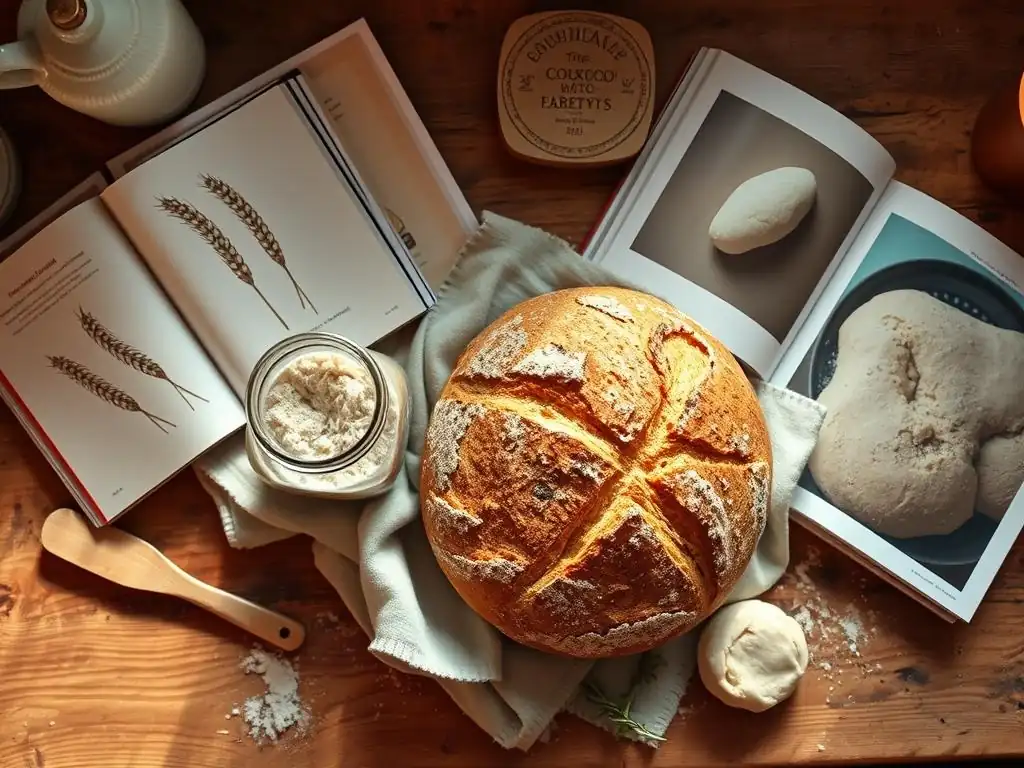
Welcome to BakeWithEase, your partner in creating delicious moments! Ever dreamt of crafting that perfectly tangy loaf? This article dives into the world of sourdough, and we're here to guide you, starting with the essential resources. Discover our curated list of sourdough starter beginner books that will empower you to cultivate your own thriving starter and bake incredible bread. Intrigued? Let's unlock the secrets to sourdough success together!
- Mastering Sourdough: A Beginner's Guide to Starter and Baking with Ease
- Choosing the Right Sourdough Book for Your Baking Journey
-
Top Sourdough Books Reviewed:
- 1. Tartine Bread by Chad Robertson: A Classic Approach
- 2. The Perfect Loaf: The Craft of Sourdough Baking by Maurizio Leo: In-Depth Science and Recipes
- 3. Sourdough Baking for Beginners: Step-by-Step Recipes to Bake Your Own Sourdough Bread by Vanessa Kimbell: A Practical Guide
- 4. Sourdough Every Day: Your Guide to Baking Better Bread with Less Flour by Hannah Dela Cruz: Simple and Approachable
- 5. Bread Baking for Beginners: The Easiest Way to Bake Homemade Bread by Bonnie Ohara: A Broader Approach to Bread Making
- Building Your Sourdough Starter: Books That Simplify the Process
- Beyond the Basics: Expanding Your Sourdough Knowledge
- Essential Tools and Ingredients Recommended by These Books
- Making the Most of Your Sourdough Book: Tips and Tricks
- Conclusion: Your Sourdough Journey Starts Now!
-
Frequently Asked Questions
- What are the key features to look for in a sourdough starter beginner book?
- How important is it that a sourdough starter beginner book includes recipes beyond just bread?
- Can a sourdough starter beginner book replace online resources entirely?
- What if I find a sourdough starter beginner book with conflicting information compared to other sources?
- How long does it typically take to master the basics using a sourdough starter beginner book?
- Final Reflection: The Unexpected Joys of Sourdough, One Book at a Time
- Unleash Your Inner Baker: Start Your Sourdough Journey Today!
Mastering Sourdough: A Beginner's Guide to Starter and Baking with Ease
Embarking on the sourdough journey is exciting! It's a rewarding process that connects you to a timeless baking tradition. While the internet is full of resources, sometimes the best way to get started is with a solid foundation, which is where excellent sourdough starter beginner books come into play. These resources offer structured learning that can demystify the process from feeding your first starter to pulling your first golden loaf from the oven.
Choosing the right guide is crucial for a positive initial experience. A good sourdough starter beginner book will walk you through the steps patiently, explaining the science and technique without overwhelming you. It's like having a patient mentor guiding your hands through the sticky, bubbly world of fermentation and dough handling.
Welcome to the World of Sourdough: Why Start with Books?
Diving into sourdough can feel daunting with all the variables: flour types, hydration levels, fermentation times, and oven temperatures. While online blogs and videos offer quick tips, sourdough starter beginner books provide a comprehensive, step-by-step approach designed to build foundational knowledge. They often cover the entire process, from creating and maintaining a vibrant starter (the heart of sourdough) to mixing, shaping, proofing, and finally baking your bread.
A well-structured book offers a linear path to learning, ensuring you don't miss critical steps or concepts. Unlike fragmented online advice, a dedicated sourdough starter beginner book presents information in a logical sequence, often starting with the absolute basics and gradually introducing more complex ideas. This structured learning environment is invaluable for beginners who need a clear roadmap to navigate the complexities of wild yeast fermentation and dough development.
Recommended Sourdough Books for Beginners
Navigating the vast selection of baking literature to find the perfect sourdough starter beginner book can be a task in itself. The best books for those just starting out simplify complex ideas, offer clear instructions, and build confidence with early successes. They often prioritize foundational skills and reliable, less-fussy recipes to ease you into the process.
Whether you prefer a scientific deep dive or a simple, practical guide, there's a sourdough starter beginner book tailored to your learning style. The books recommended often feature detailed explanations of key concepts like fermentation signs, dough consistency, and baking techniques, ensuring you understand why you're doing what you're doing, not just how.
Choosing the Right Sourdough Book for Your Baking Journey
Selecting the ideal sourdough starter beginner book is a personal decision that depends on your prior baking experience, learning style, and what you hope to achieve. Are you looking for a quick win with simple recipes, or do you want to understand the microbial world thriving in your starter? Identifying your goals helps narrow down the options.
Consider how you learn best. Do you prefer lots of photos and diagrams, or do you thrive on detailed written explanations? Some sourdough starter beginner books are highly visual, while others are text-heavy and delve into the science. Thinking about these preferences will guide you towards a book that you'll actually enjoy using and learn effectively from.
Understanding Your Baking Style: Finding the Perfect Match
Your current baking habits and comfort level with kitchen experiments play a big role in finding the right sourdough starter beginner book. If you're already comfortable with baking yeast breads, you might be ready for a slightly more technical book. If you're completely new to bread making, a book focused purely on simplicity and guaranteed results might be a better fit.
Think about the type of bread you dream of baking. Is it rustic country loaves, tangy rye, or perhaps enriched sourdough brioche? While most sourdough starter beginner books start with a basic loaf, some quickly move into variations. Choosing a book that aligns with your interests will keep you motivated as you progress from beginner steps to more ambitious bakes.
Key Features to Look for in Sourdough Baking Books for Beginners
When evaluating sourdough starter beginner books, several features stand out as particularly helpful for newcomers. Look for books that anticipate the challenges beginners face and offer proactive solutions. The clarity of instruction is paramount – ambiguity can lead to frustration and failed bakes, which no beginner needs.
Beyond just recipes, the best sourdough starter beginner books act as a reference guide. They equip you with the knowledge to understand what's happening at each stage of the process, empowering you to make adjustments based on environmental factors like temperature and humidity, which significantly impact sourdough.
Clear Instructions and Visual Aids
For anyone tackling sourdough for the first time, step-by-step instructions are non-negotiable. The best sourdough starter beginner books break down complex techniques into manageable steps, often accompanied by clear photographs or illustrations. Visuals showing dough consistency at different stages, how to shape a loaf, or the appearance of a healthy starter are incredibly valuable.
A book that includes a visual timeline for starter creation or a photographic guide to judging proofing can save beginners a lot of guesswork and anxiety. These visual aids complement the written instructions, making it easier to follow along and understand if you're on the right track. This clarity is a hallmark of effective sourdough starter beginner books.
Troubleshooting Tips and Common Issues
Sourdough baking inevitably involves challenges – a sluggish starter, dough that won't rise, or a loaf that's dense inside. A great sourdough starter beginner book doesn't just provide recipes; it anticipates these common problems and offers solutions. Look for dedicated troubleshooting sections or tips embedded within the instructions.
Understanding why something went wrong is key to improving. The best sourdough starter beginner books explain the potential causes of common issues (like using water that's too hot, insufficient kneading, or under-proofing) and suggest corrective actions. This empowers beginners to learn from mistakes rather than being discouraged by them.
Recipe Variety and Difficulty Levels
While your first focus will likely be a basic sourdough loaf, a good sourdough starter beginner book should offer a progression of recipes. Starting with a simple country loaf is great, but having recipes for things like pizza dough, focaccia, or even sourdough pancakes allows you to utilize your starter in different ways and expand your skills.
Consider if the book clearly labels recipes by difficulty. Some sourdough starter beginner books might introduce slightly more complex techniques, like high-hydration doughs or enriched breads, later in the book. A gradual increase in complexity helps build confidence as you master the basics before moving on to new challenges.
Top Sourdough Books Reviewed:
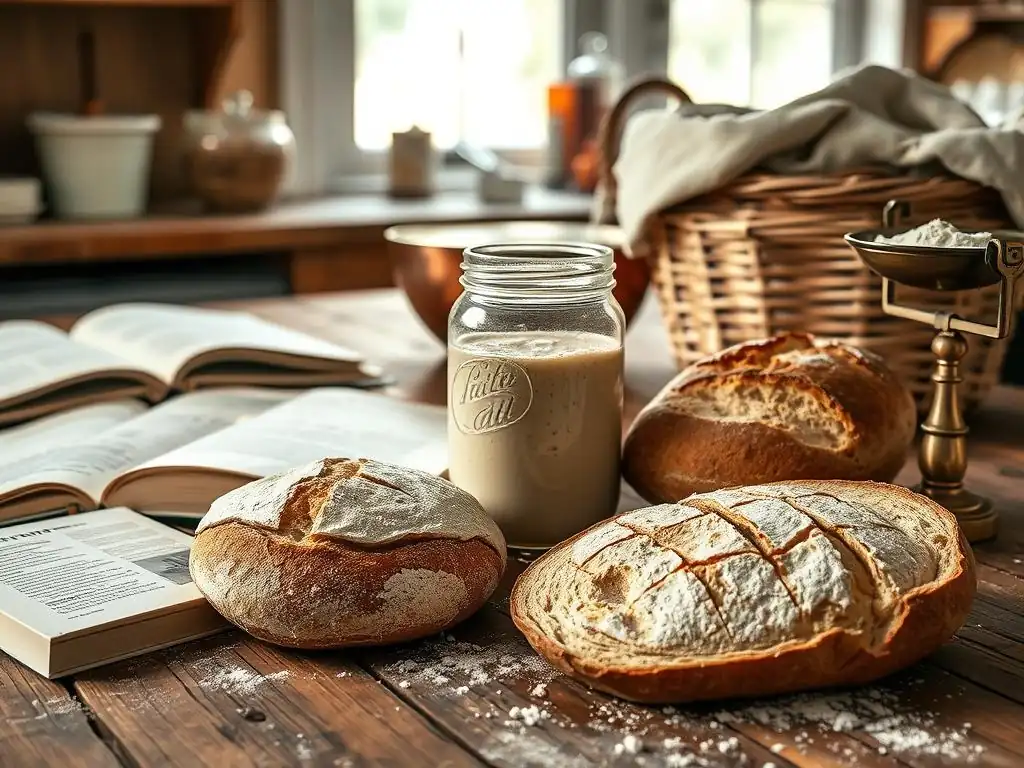
Choosing among the many sourdough starter beginner books can be tough. Here's a look at some popular and highly-regarded options, evaluating their strengths and weaknesses specifically from a beginner's perspective. Each offers a different approach to the craft of sourdough baking.
Understanding the focus and style of each book helps you decide which sourdough starter beginner book aligns best with your learning preferences and baking goals. Some are rooted in traditional methods, while others embrace modern techniques and scientific understanding.
1. Tartine Bread by Chad Robertson: A Classic Approach
Published in 2010, Tartine Bread is considered a modern classic in the baking world. It details the methods used at the famous Tartine Bakery in San Francisco. While not explicitly marketed as a sourdough starter beginner book, its detailed approach has guided countless bakers.
The book's influence is undeniable, popularizing specific techniques like stretch and folds and baking in a Dutch oven. However, its depth and focus on achieving professional-level results mean it can be a steep learning curve for someone with no prior bread baking experience.
Pros: Detailed Explanations, Focus on Technique
Tartine Bread excels in explaining the 'why' behind the techniques. It provides extensive detail on creating and maintaining a starter, understanding dough development, and shaping. The book includes numerous photographs illustrating key steps, which are highly valuable for visual learners.
The focus on building fundamental skills and understanding the process rather than just following recipes makes this a powerful resource for those who want a deep understanding of sourdough. It lays a strong foundation for future baking endeavors.
Cons: Can be Intimidating for Absolute Beginners, High Learning Curve
For someone who has never baked bread before, the sheer volume of information and the assumption of some basic baking knowledge can be overwhelming. The initial recipe, while foundational, requires a significant time commitment and attention to detail that might challenge a complete novice.
The language and structure, while thorough, are geared towards someone serious about mastering the craft, potentially making it less approachable than books specifically designed as sourdough starter beginner books. It requires patience and a willingness to embrace initial failures.
2. The Perfect Loaf: The Craft of Sourdough Baking by Maurizio Leo: In-Depth Science and Recipes
Based on the highly popular website of the same name, The Perfect Loaf (published 2022) offers a comprehensive and scientifically-minded approach to sourdough. Maurizio Leo meticulously explains the processes of fermentation, dough handling, and baking.
This book is perhaps one of the most thorough resources available, blending detailed scientific explanations with practical, well-tested recipes. It's ideal for beginners who are curious about the science behind sourdough and want to understand every variable.
Pros: Science-Backed Approach, Comprehensive Guide
Maurizio Leo's strength lies in explaining the microbial activity in the starter and dough in an understandable way. The book provides data-driven insights into factors like temperature and hydration, helping bakers understand how to control the process. It covers everything from starter maintenance to a wide variety of bread types.
The recipes are incredibly detailed, often including timelines and specific instructions for different environmental conditions. This level of precision is invaluable for beginners who want to minimize guesswork and understand the impact of each step.
Cons: Requires More Technical Understanding
While comprehensive, the scientific depth can be intimidating for beginners who just want to bake a loaf without delving into complex biological concepts. Readers comfortable with a bit of science will thrive, but those who prefer a purely practical approach might find it dense in places.
The level of detail, while a pro for many, means the book is quite extensive. It's a significant investment in time to read and absorb the information, which might not be suitable for someone looking for the absolute simplest entry point into sourdough.
3. Sourdough Baking for Beginners: Step-by-Step Recipes to Bake Your Own Sourdough Bread by Vanessa Kimbell: A Practical Guide
Vanessa Kimbell's book (published 2018) lives up to its title, focusing specifically on making sourdough accessible to newcomers. Kimbell, known for her work on the gut-health benefits of sourdough, provides clear, simple instructions designed to build confidence quickly.
This book is explicitly designed as a sourdough starter beginner book, prioritizing straightforward methods and reliable results. It's less about deep scientific dives and more about getting you baking delicious bread with minimal fuss.
Pros: Beginner-Friendly Language, Simple Recipes, Affordable
Kimbell uses clear, encouraging language that removes much of the jargon often found in sourdough literature. The recipes are designed to be manageable for beginners, focusing on core techniques without unnecessary complexity. It often includes recipes utilizing discarded starter, which is helpful for beginners building their starter.
This book is generally more affordable than some of the larger, more comprehensive tomes, making it an accessible first purchase. Its focus on practicality makes it one of the best sourdough starter beginner books for those who want to start baking right away.
Cons: Less Detail on Advanced Techniques
While excellent for getting started, the book doesn't delve into advanced techniques or a wide variety of complex bread types. Once you've mastered the basics, you'll likely need to consult other resources to expand your repertoire or troubleshoot more nuanced issues.
The explanations, while clear, are less scientifically detailed than in books like The Perfect Loaf. If you're someone who wants to understand the microbial processes in depth, you might find this book less satisfying in that regard.
4. Sourdough Every Day: Your Guide to Baking Better Bread with Less Flour by Hannah Dela Cruz: Simple and Approachable
Hannah Dela Cruz's book (published 2020) offers a very approachable entry point into sourdough, with an emphasis on simplicity and minimizing waste, particularly starter discard. It focuses on practical, everyday baking.
This book positions itself as an easy guide for incorporating sourdough into your regular baking routine, making it a strong contender among sourdough starter beginner books for those who value ease and efficiency.
Pros: Great Intro to Sourdough, Beginner Friendly, Emphasis on Minimizing Waste
The instructions are straightforward and easy to follow, making it very accessible for complete novices. The focus on using discarded starter in various recipes (like crackers, muffins, and pancakes) is a major plus, reducing waste and providing quick, satisfying baking projects.
The recipes are generally less complex than those found in books aimed at advanced bakers, providing achievable goals for beginners. It builds confidence by showing how versatile a sourdough starter can be beyond just baking loaves.
Cons: Not as Detailed as Other Books
While simple and accessible, the book doesn't provide the same level of detail on the underlying science or advanced techniques as more comprehensive guides. It's excellent for getting started and incorporating sourdough into everyday baking but less suited for those seeking a deep dive into the craft.
The range of traditional bread recipes might be narrower compared to books focused solely on artisan bread making. Its strength lies in its simplicity and everyday application, rather than exhaustive coverage of bread types or advanced methods.
5. Bread Baking for Beginners: The Easiest Way to Bake Homemade Bread by Bonnie Ohara: A Broader Approach to Bread Making
Bonnie Ohara's book (published 2018) isn't exclusively a sourdough book, but it includes a significant and very beginner-friendly section on sourdough. It covers a range of bread types, offering a broader introduction to home baking.
For someone who is new to all bread baking, including both commercial yeast and sourdough, this book serves as an excellent primer. Its inclusion of a simple sourdough starter and loaf recipe makes it a valuable sourdough starter beginner book within a wider context.
Pros: Simple and Easy to Follow, Lots of Different Bread Types, Great for Beginners
The book excels at making bread baking approachable for absolute novices. The instructions for all types of bread, including sourdough, are clear and broken down into simple steps. It builds foundational baking skills that apply to both yeast and sourdough breads.
Having recipes for various breads (sandwich loaves, rolls, focaccia, etc.) allows beginners to practice different techniques and understand the role of ingredients before tackling sourdough exclusively. The sourdough section is designed with minimal fuss in mind.
Cons: Less Focused on Sourdough Specifically
As it covers multiple types of bread, the sourdough section is less extensive and detailed than in books solely dedicated to sourdough. It provides a great introduction but won't offer the depth on starter maintenance variations or advanced sourdough techniques found in specialized sourdough starter beginner books.
If your sole interest is mastering sourdough from day one, a book dedicated exclusively to that topic might provide a more focused and comprehensive starting point for your specific sourdough journey.
Building Your Sourdough Starter: Books That Simplify the Process
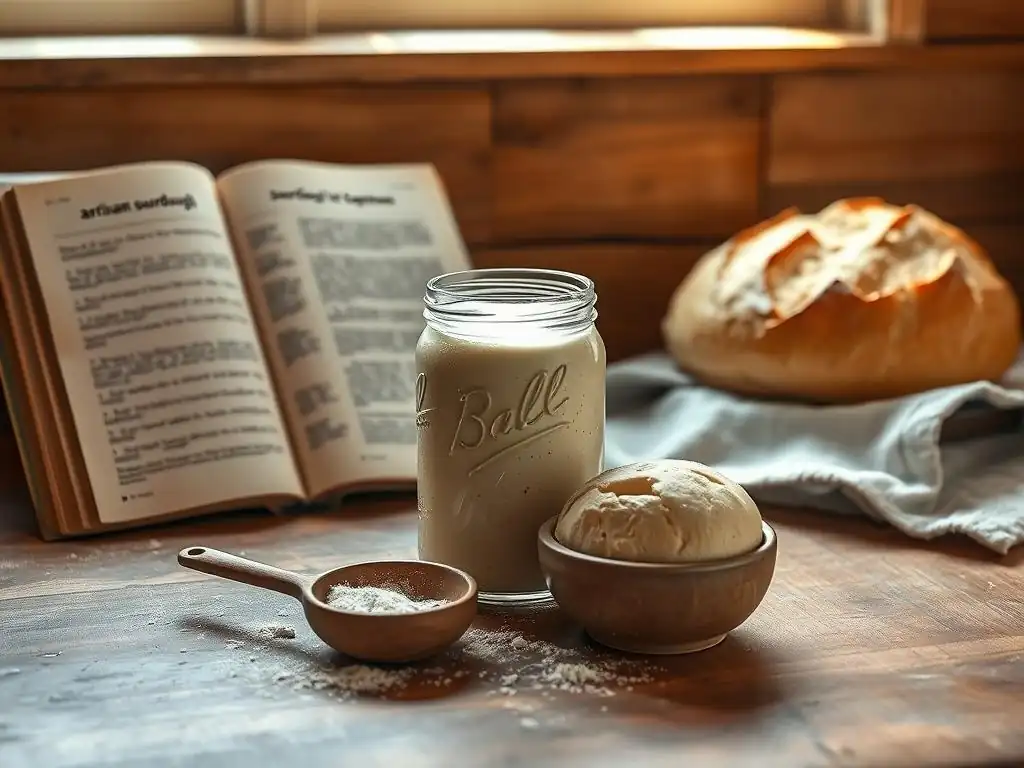
The heart of sourdough baking is the starter – a living culture of wild yeast and bacteria. Creating and maintaining a healthy starter is the first critical step, and sourdough starter beginner books often dedicate significant space to this process. They guide you through the initial mixing of flour and water, the feeding schedule, and recognizing the signs of a vibrant, active starter ready for baking.
Different sourdough starter beginner books might recommend slightly different feeding ratios, flours, or timelines (some suggest 5-7 days, others up to 14 or more to establish a robust starter). Understanding the principles behind these variations, as explained in a good book, helps you adapt the process to your kitchen environment and the specific flour you're using.
Sourdough Baking for Beginners Focus on Starter Creation
Vanessa Kimbell's Sourdough Baking for Beginners provides a very straightforward and encouraging method for creating your first starter. It typically involves simple ratios of flour and water and a clear daily feeding schedule.
The book emphasizes observing your starter's activity – looking for bubbles, rise, and a pleasant tangy smell – rather than strictly adhering to a rigid timeline. This practical approach helps beginners feel confident in assessing their starter's health and readiness.
The Perfect Loaf's Scientific Approach to Starter Development
In contrast, The Perfect Loaf by Maurizio Leo offers a more detailed, science-informed guide to starter creation. It explains the microbial changes happening day by day and might recommend specific temperatures or feeding schedules based on scientific principles.
Leo provides insights into how different flours affect starter activity and how to maintain your starter for optimal health and baking performance. This approach is excellent for beginners who appreciate understanding the underlying biology of their starter.
Beyond the Basics: Expanding Your Sourdough Knowledge
Once you've successfully baked your first few loaves using a sourdough starter beginner book, you might find yourself wanting to explore further. Sourdough is a vast and fascinating topic, with endless possibilities for variation and improvement. Moving beyond beginner resources opens up new techniques and recipes.
This next phase often involves experimenting with different flours (like whole wheat, rye, or spelt), adjusting hydration levels to achieve different crumb structures, and exploring longer fermentation times for deeper flavor development. Your initial sourdough starter beginner book provides the launchpad for this exploration.
Moving Beyond Beginner Sourdough Books: What's Next?
After gaining confidence with the fundamentals from your initial sourdough starter beginner book, you might seek out resources that delve deeper into specific areas. This could mean books focused on high-hydration doughs, enriched sourdoughs (like brioche or challah), or regional sourdough styles.
You might also look for books that offer more advanced troubleshooting or explain how to adapt recipes based on environmental factors like temperature and altitude. The goal is to refine your techniques and expand your understanding of sourdough dynamics.
Exploring Advanced Techniques: Autolyse, Levain, and More
Many sourdough starter beginner books introduce basic concepts like bulk fermentation and proofing. More advanced resources will explore techniques like autolyse (mixing flour and water before adding the starter for better hydration and gluten development) or creating a levain (a small, specifically built preferment using your starter).
Understanding and implementing these techniques can significantly impact the texture, flavor, and rise of your bread. Moving beyond beginner books allows you to experiment with these methods and see how they influence your final loaf.
Experimenting with Different Flours and Hydration Levels
Your initial sourdough starter beginner book likely focused on white or basic bread flour and a standard hydration level (e.g., 70%). As you advance, you can explore how different flours (like whole wheat, rye, or ancient grains) affect the starter and the dough.
Experimenting with higher hydration levels (above 75%) can lead to more open crumb structures but requires more advanced dough handling skills. Advanced sourdough resources provide guidance on working with these challenging but rewarding doughs.
Essential Tools and Ingredients Recommended by These Books
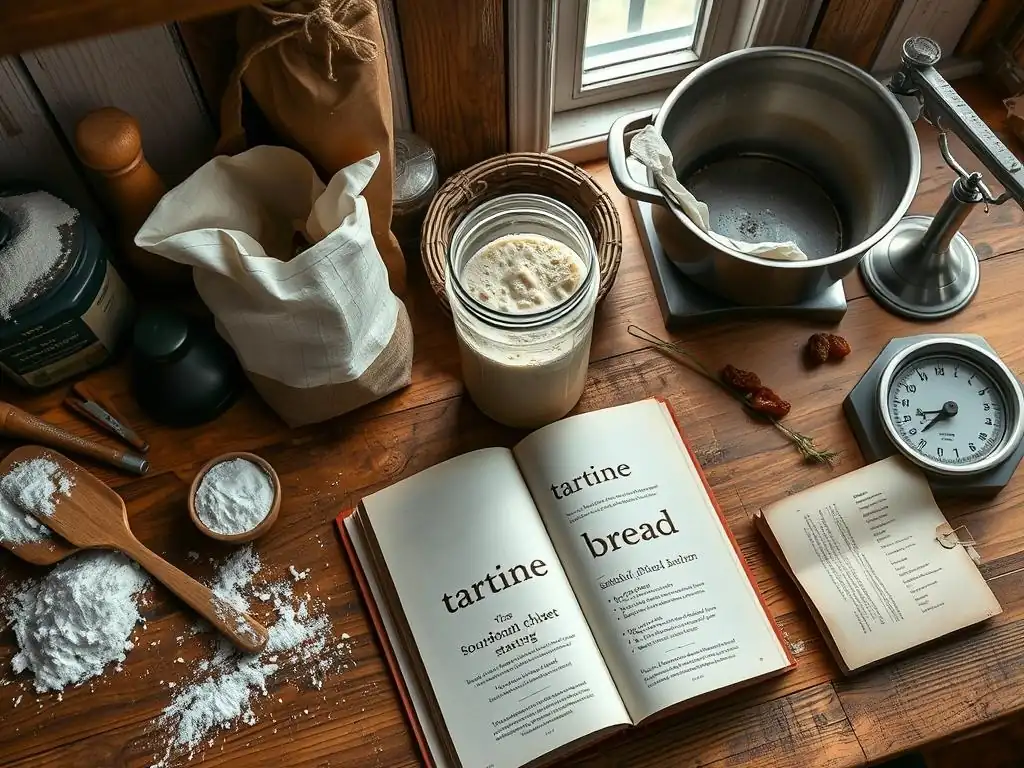
While you can start sourdough with minimal equipment, certain tools and ingredients are consistently recommended across sourdough starter beginner books to improve results and make the process easier. Investing in a few key items can make a significant difference in your baking journey.
From the basic necessities for maintaining your starter to equipment for shaping and baking your loaf, having the right tools can help you achieve better consistency and quality in your sourdough.
Flour Power: Choosing the Right Flour for Your Sourdough
Most sourdough starter beginner books emphasize the importance of good quality flour. For starters, using unbleached all-purpose or bread flour is typically recommended. For the dough itself, bread flour with a higher protein content is often preferred for its gluten development capabilities.
Some books will discuss the impact of using whole wheat or rye flour in your starter or dough, which can affect flavor and fermentation speed. Understanding the properties of different flours, as explained in your sourdough starter beginner book, is key to successful baking.
Baking Equipment: Starter Jars, Bannetons, and Dutch Ovens
Several tools are frequently mentioned in sourdough starter beginner books. A glass jar for your starter is essential for observation. Bannetons (proofing baskets) help dough hold its shape during proofing and create beautiful patterns on the crust.
Baking in a Dutch oven is a method highly recommended in many sourdough starter beginner books because it traps steam around the loaf, promoting a great oven spring and a beautiful crust. While not strictly necessary (you can use a baking stone or sheet), a Dutch oven simplifies achieving professional-looking results at home.
Measuring Tools: Precision for Perfect Results
Accuracy is important in sourdough baking, especially when dealing with hydration levels and starter ratios. Most sourdough starter beginner books will recommend using a digital kitchen scale to measure ingredients by weight rather than volume.
Measuring by weight (grams or ounces) is far more precise than cups and spoons, which can vary significantly. A good scale ensures consistency from bake to bake, helping you troubleshoot more effectively and replicate successful results.
Making the Most of Your Sourdough Book: Tips and Tricks
Simply owning a sourdough starter beginner book isn't enough; actively engaging with its content will unlock its full potential. Think of your book as a guide to be studied and practiced, not just a collection of recipes.
Applying specific strategies as you read and bake can enhance your learning experience and lead to more successful outcomes. Your sourdough starter beginner book is a resource to be used diligently and referenced often.
Reading Actively: Understanding the "Why" Behind the "How"
Don't just skim the recipes in your sourdough starter beginner book. Take the time to read the introductory sections and the explanations for each step. Understanding why you perform certain actions – like stretching and folding dough or waiting for your starter to peak – is crucial.
This deeper understanding, often clearly explained in good sourdough starter beginner books, empowers you to make informed decisions and adapt techniques when necessary. It moves you from being a recipe follower to becoming a true baker.
Practice Makes Perfect: Don't Be Afraid to Experiment
Sourdough baking is a skill that improves with practice. Your sourdough starter beginner book provides the foundation, but repetition is key to mastering the techniques. Don't be discouraged by initial setbacks; every bake is a learning opportunity.
Once you feel comfortable with the basic recipe in your sourdough starter beginner book, try slightly modifying variables like fermentation time or temperature (while keeping notes!). Experimentation, guided by the principles learned from your book, is how you'll truly grow as a sourdough baker.
Troubleshooting Common Sourdough Baking Problems with Your New Book
When a bake doesn't go as planned, turn back to your sourdough starter beginner book. Use the troubleshooting section to identify potential causes for issues like dense crumb, tough crust, or poor rise.
Referencing the book's descriptions and visuals for correctly fermented dough or active starter can help you diagnose what went wrong. Your sourdough starter beginner book is a valuable reference tool to help you learn from mistakes and improve your next loaf.
Conclusion: Your Sourdough Journey Starts Now!
Choosing the right sourdough starter beginner book is a fantastic first step into the rewarding world of sourdough baking. Each book offers a unique path, whether you prefer a simple, practical approach or a deep dive into the science. The key is to find a guide that resonates with your learning style and encourages you to start baking.
Remember that mastering sourdough takes time and practice. Your chosen sourdough starter beginner book will be your companion through the bubbling stages of starter creation, the tactile process of dough handling, and the triumphant moment of pulling a beautiful loaf from your oven. Embrace the learning process, celebrate your successes, and don't be afraid of the occasional flat loaf – it's all part of the journey.
Embrace the Process and Enjoy the Rewards
Sourdough baking is more than just following a recipe; it's a process of nurturing a living culture and understanding the subtle language of dough. Be patient with yourself and your starter. The tangy flavor and wonderful texture of a homemade sourdough loaf are incredibly rewarding and well worth the effort.
Your sourdough starter beginner book provides the roadmap, but the experience is built through your own hands and observations. Enjoy the smells, the feel of the dough, and the anticipation as your loaf bakes.
Choosing the Best Sourdough Book for Your Needs
Review the options discussed and consider which sourdough starter beginner book aligns best with your goals, learning style, and prior experience. Whether it's the classic depth of Tartine Bread, the scientific precision of The Perfect Loaf, the beginner-friendly simplicity of Sourdough Baking for Beginners or Sourdough Every Day, or the broader scope of Bread Baking for Beginners, there's a perfect match for you.
Investing in a quality sourdough starter beginner book is investing in your baking education. It provides a structured, reliable resource to guide you through the initial steps and build the confidence needed to become a successful sourdough baker. Happy baking!
Frequently Asked Questions
What are the key features to look for in a sourdough starter beginner book?
A good book should focus on simplicity and clear instructions. It should also cover troubleshooting common issues and offer visual aids like photos.
How important is it that a sourdough starter beginner book includes recipes beyond just bread?
While not essential, recipes beyond bread are a great bonus. They show the versatility of sourdough and allow you to explore different flavors.
Can a sourdough starter beginner book replace online resources entirely?
No, a book is a valuable foundation. However, online resources offer a complementary source of information and community support.
What if I find a sourdough starter beginner book with conflicting information compared to other sources?
Compare the advice to multiple reputable sources. Focus on understanding the underlying principles of sourdough baking.
How long does it typically take to master the basics using a sourdough starter beginner book?
Mastery takes time and practice, but the basics can be learned in a few weeks. Consistent baking and observation are key.
Final Reflection: The Unexpected Joys of Sourdough, One Book at a Time
The seemingly simple act of baking sourdough bread has exploded in popularity, transforming from a niche hobby to a widespread passion. This surge reflects a growing desire for connection to the natural world and a deeper appreciation for the craft of food production. It's more than just bread; it's a journey of patience, experimentation, and ultimately, immense satisfaction.
The journey into sourdough baking, as detailed in this exploration of beginner books, is a testament to the power of community and shared knowledge. The very act of nurturing a starter, a living organism, fosters a unique bond between baker and bread. This connection transcends the simple act of following a recipe; it's about understanding the process, embracing the inevitable imperfections, and celebrating the unique character of each loaf. The best bread is the bread you bake yourself.
This simple truth resonates deeply as you witness the transformation from flour and water to a golden, crusty masterpiece.
Now, it's your turn. Don't be intimidated by the seemingly complex world of sourdough. Choose a book from our list, gather your ingredients, and embark on this rewarding adventure. Embrace the learning process, celebrate the small victories, and remember that even the most experienced bakers started somewhere. The journey is as important as the destination; the satisfaction of your first sourdough loaf will be a testament to your patience and dedication. So, grab your apron, and let the baking begin!
Unleash Your Inner Baker: Start Your Sourdough Journey Today!
Thanks for taking the time to explore the wonderful world of sourdough baking! We hope you found the perfect book to kickstart your adventure. Now it's time to get your hands (and your starter!) messy.
- Begin your sourdough journey: Order your chosen book now and start reading. Gather your ingredients and prepare for a delicious adventure. This is the crucial first step to sourdough success.
- Share your baking triumphs (and tribulations!): Join our BakeWithEase community on social media and share your sourdough creations and questions. We're all in this together!
- Explore beyond the book: Once you've mastered the basics, try experimenting with different flours, grains, and recipes. The possibilities are endless!
So, what exciting sourdough recipe will you tackle first?