
Best Sourdough Books for Moving Beyond the Basics

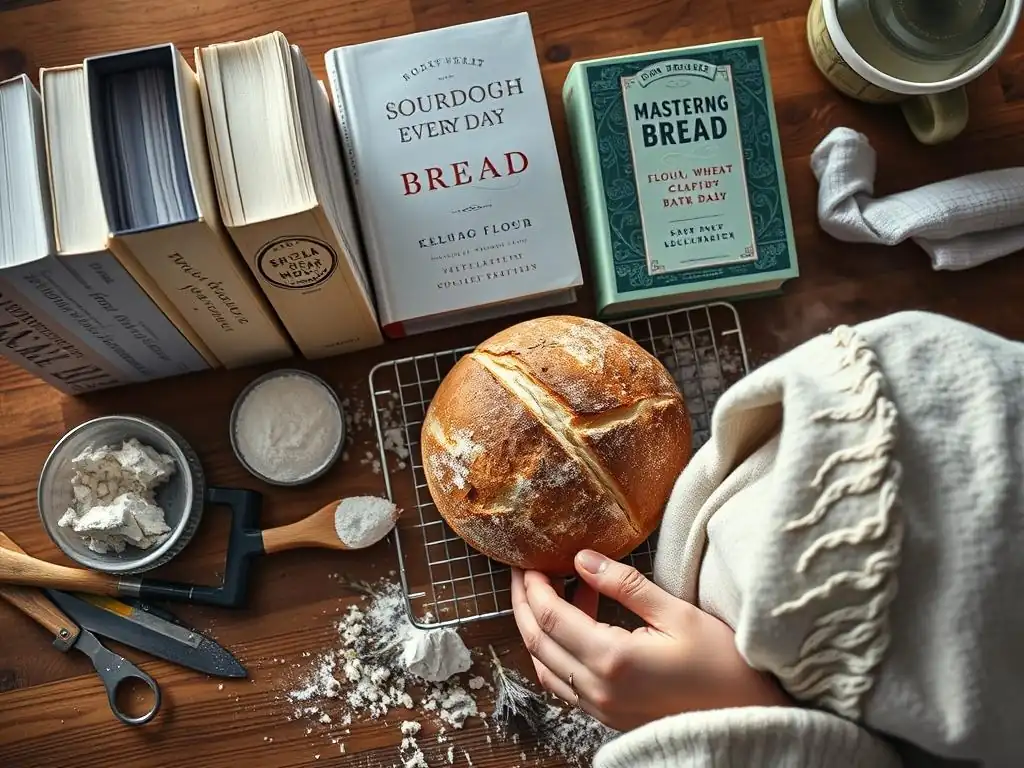
Welcome to BakeWithEase, your trusted companion on the journey to baking brilliance! Are you ready to conquer the tangy world of sourdough? Unlock the secrets to crafting the perfect loaf with our curated selection of the best sourdough baking books for beginners. But which one holds the key to your sourdough success? Dive in and discover the perfect guide to elevate your baking from basic to breathtaking!
- Best Sourdough Books for Advancing Your Baking Skills
- Mastering Sourdough: Books for Intermediate to Advanced Bakers
- Top Sourdough Bread Books for Intermediate Bakers: Our Recommendations
- Advanced Sourdough Techniques Explained: Books That Focus on Specific Skills
- Choosing the Right Sourdough Baking Book: A Summary and Recommendation
-
Frequently Asked Questions
- What makes a sourdough baking book suitable for beginners?
- Where can I find sourdough baking books specifically designed for beginners?
- What are some essential topics covered in beginner-friendly sourdough books?
- Do these books typically offer tips for troubleshooting common sourdough problems?
- Besides recipes, what other valuable information can I expect from a sourdough baking book for beginners?
- Final Reflection: The Ever-Rising Crust of Sourdough Knowledge
- Unlock Your Sourdough Potential: Take Your Baking to the Next Level!
Best Sourdough Books for Advancing Your Baking Skills
Mastering Sourdough: Books for Intermediate to Advanced Bakers
Elevating Your Sourdough: A Guide to Advanced Techniques and Flavor Development
Moving beyond your first successful sourdough loaf opens up a world of possibilities in baking. While beginner sourdough baking books provide the essential foundation – how to create and maintain a starter, mix a basic dough, and bake a simple boule – intermediate and advanced resources delve into the nuanced aspects that truly elevate your bread.
These books guide you in understanding the why behind techniques, allowing you to predict and control outcomes. Topics include mastering hydration levels, perhaps working with doughs at 80% hydration or higher, which dramatically changes handling, or understanding how different flours like whole wheat, rye, or spelt impact fermentation speed and final flavor profiles.
These advanced sourdough baking books are designed for bakers who have already established a routine with their starter and are comfortable with basic mixing and shaping. They focus on refining skills such as precise dough development through techniques like autolyse or targeted folding schedules, exploring different preferments (even within sourdough, like stiff levains), and perfecting scoring methods not just for aesthetics but to control oven spring and crust development.
The goal is to move from simply following a recipe to understanding the complex interplay of time, temperature, ingredients, and technique, enabling you to consistently produce loaves with exceptional crumb structure, crust, and depth of flavor.
Top Sourdough Bread Books for Intermediate Bakers: Our Recommendations

1. Flour Water Salt Yeast by Ken Forkish: A Foundation for Artisan Bread
Ken Forkish's Flour Water Salt Yeast, published in 2012, quickly became a cornerstone text for home bread bakers aspiring to artisan quality. While not exclusively a sourdough baking book, its comprehensive approach to dough development, fermentation, and baking techniques is directly applicable and incredibly valuable for intermediate sourdough bakers.
Forkish meticulously explains the impact of each ingredient and process step, emphasizing observation and understanding over rigid adherence to timing charts, although those are provided. His focus on achieving crust and crumb structure through proper fermentation and high-heat baking environments, often utilizing Dutch ovens, provides a solid framework for improving any sourdough loaf.
The book introduces and thoroughly explains concepts like autolyse, varying hydration levels (many recipes are 70% hydration and above), and the critical role of time and temperature in long fermentation. It provides detailed schedules for various doughs, including several natural leaven (sourdough) recipes. For an intermediate baker, applying Forkish's principles to their existing sourdough practice can dramatically improve results, leading to more open crumbs, better oven spring, and richer flavor development. It teaches you to read your dough, a crucial skill for advancing beyond basic recipes.
Understanding Forkish's Approach: Autolyse and Long Fermentation
Forkish champions the autolyse technique, a simple yet powerful method involving mixing only the flour and water and letting it rest for a period, typically 20 to 30 minutes but sometimes longer, before adding the starter and salt. This rest period allows the flour to fully hydrate and enzymes to begin breaking down proteins, kickstarting gluten development without the interference of salt or the starter's fermentation activity.
For an intermediate sourdough baker, understanding and implementing autolyse can lead to dough that is easier to handle, requires less kneading, and results in a better crumb structure and volume in the final loaf.
Equally central to Forkish's philosophy is the concept of long, slow fermentation. Many of his recipes involve bulk fermentation periods stretching from 12 to 15 hours at cool room temperature or even longer in refrigeration. This extended fermentation time is paramount for developing the complex flavors characteristic of excellent sourdough. It also contributes to a more mature dough structure, improving its strength and ability to hold shape and trap gases for a light, open crumb. Forkish provides detailed visual cues, like dough volume increase and surface bubbling, to help bakers judge the fermentation progress accurately, moving beyond simple clock-watching.
Flour Water Salt Yeast: Pros and Cons
- Pros:
- Provides a deep understanding of fundamental artisan bread principles applicable to sourdough.
- Excellent guidance on dough development, fermentation, and baking in home ovens.
- Detailed explanations and visuals help bakers learn to read their dough.
- Includes several core natural leaven (sourdough) recipes.
- Cons:
- Not exclusively a sourdough baking book; covers yeasted breads as well.
- Some techniques and equipment recommendations (like Dutch ovens) might be a step up for some beginners.
2. Bread Baking for Beginners by Bonnie Ohara: A Comprehensive Guide
Bonnie Ohara's Bread Baking for Beginners, while titled for novices, contains substantial and well-explained sourdough content that makes it a valuable resource for those just moving into intermediate territory or seeking a comprehensive guide that includes sourdough. Published in 2018, the book offers a friendly and accessible approach to various bread types, dedicating significant sections to understanding and working with sourdough starter. It serves as an excellent bridge for bakers who started with simpler sourdough recipes and want to explore variations and troubleshoot common issues with clear, encouraging guidance.
The book covers essential sourdough topics like maintaining a healthy starter, understanding fermentation stages, and basic shaping and baking techniques. Its value for the intermediate baker lies in its clear explanation of principles that underpin sourdough success, presented in a way that solidifies foundational knowledge before tackling more complex recipes. It offers multiple sourdough recipes, including variations beyond the basic loaf, allowing bakers to practice skills on different dough types. This comprehensive approach, covering both sourdough and other bread types, makes it a versatile addition to a baker's library.
Exploring Bread Baking with Bread Baking for Beginners
Ohara's book excels in breaking down the bread baking process into manageable steps, making it easy to follow even for those new to more involved techniques. The sourdough section provides clear, visual cues for assessing starter readiness and dough fermentation, crucial skills for intermediate bakers learning to adjust to environmental factors like temperature. It offers practical advice on common sourdough challenges, such as achieving sufficient oven spring or dealing with sticky high-hydration doughs, empowering bakers to troubleshoot effectively.
Beyond the basic sourdough loaf, the book includes recipes that introduce new techniques or ingredients, such as enriched sourdough doughs or loaves incorporating different flours. This allows intermediate bakers to gradually expand their repertoire and comfort zone. For instance, attempting a slightly richer dough or a loaf with a percentage of whole wheat using Ohara's clear instructions provides a structured way to learn how sourdough behaves differently in various contexts. The book's emphasis on building confidence through understanding makes it a supportive guide for skill development.
Bread Baking for Beginners: Pros and Cons
- Pros:
- Comprehensive coverage of bread baking, including a strong sourdough section.
- Clear, beginner-friendly explanations suitable for solidifying intermediate understanding.
- Offers practical troubleshooting tips for common sourdough issues.
- Includes recipes for various bread types, providing versatility.
- Cons:
- Not exclusively focused on advanced sourdough techniques.
- May not delve into the deepest scientific or highly experimental aspects of sourdough.
3. The Sourdough School: Sweet Baking with Sourdough by Vanessa Kimbell: Exploring Sourdough in Sweet Baking
Vanessa Kimbell's The Sourdough School: Sweet Baking with Sourdough, published in 2019, is a highly specialized sourdough baking book that opens up a fascinating avenue for intermediate to advanced bakers: incorporating sourdough into sweet applications. This is a significant step beyond basic bread making, requiring a deep understanding of how the starter's acidity and fermentation activity influence dough structure, leavening, and flavor in recipes traditionally made with commercial yeast or chemical leaveners. Kimbell, known for her expertise from The Sourdough School in the UK, provides detailed guidance rooted in both practical experience and scientific understanding.
The book covers everything from adjusting starter maintenance for sweet doughs to managing fermentation times in enriched doughs (those containing butter, sugar, or eggs), which behave very differently from lean bread doughs. It explores how sourdough contributes unique flavors and textures to pastries, cakes, cookies, and other sweet treats. For a baker who has mastered the basic sourdough loaf and is looking for a new challenge and a way to utilize their starter creatively, this book offers a wealth of knowledge and innovative recipes.
Mastering Sourdough Sweet Treats with Vanessa Kimbell
This book guides bakers through the intricacies of using sourdough in recipes like croissants, brioche, cinnamon rolls, cakes, and even cookies and muffins. It explains how the starter's activity and acidity can tenderize crumb, add subtle tang, and contribute to complex flavor profiles that cannot be achieved with commercial yeast. Kimbell provides detailed instructions on adapting techniques like lamination (for croissants and puff pastry) to accommodate sourdough fermentation, which requires careful temperature and timing control.
The recipes often involve multi-day processes, typical of sourdough baking, but adapted for sweeter doughs. For example, a sourdough brioche might involve an overnight cold proofing stage to develop flavor and manage the rich dough. The book also discusses using different flours and ingredients and their interaction with the sourdough culture in sweet contexts. Successfully baking from this book requires a confident hand with sourdough basics and a willingness to experiment with new dough types and longer, more complex timelines.
The Sourdough School: Sweet Baking with Sourdough: Pros and Cons
- Pros:
- Highly specialized and comprehensive guide to sourdough in sweet baking.
- Innovative recipes that expand the use of sourdough beyond bread.
- Detailed explanations of techniques adapted for enriched doughs.
- Authored by a renowned expert in sourdough education.
- Cons:
- Requires a solid understanding of sourdough bread basics before diving in.
- Recipes can be time-consuming and require precision.
- Niche focus might not appeal to bakers solely interested in bread.
Advanced Sourdough Techniques Explained: Books That Focus on Specific Skills
4. Sourdough Modern Recipes for Traditional Bread by Michel Roux: Modern Recipes for Traditional Bread
Michel Roux's Sourdough: Modern Recipes for Traditional Bread, first published in English in 2014, offers an approach rooted in classic French baking but adapted for the modern home kitchen. This book is ideal for intermediate bakers who appreciate precision and want to refine their techniques for producing specific, traditional loaf styles using sourdough. Roux, from the esteemed Roux culinary family, brings a professional chef's perspective to sourdough, focusing on consistency, technique, and achieving classic results.
The book features detailed recipes for iconic breads like Pain de Campagne, various rye loaves, and classic white sourdoughs, often providing specific weight measurements and step-by-step instructions that leave little room for guesswork. It delves into aspects like precise hydration percentages for different flour types, the importance of specific folding techniques for developing gluten in various doughs, and methods for achieving the perfect crust and crumb structure through controlled proofing and baking environments.
Getting the Perfect Loaf: Recipes and Techniques
Roux's book provides a masterclass in achieving consistent, high-quality results for traditional sourdough loaves. It details techniques such as incorporating different types of preferments (though primarily sourdough-based), managing bulk fermentation and proofing times with precision, and mastering shaping techniques for different loaf forms like bâtards and boules. For instance, the instructions for a classic Pain de Campagne might specify a precise series of folds over a set period and a specific baking temperature profile to ensure optimal oven spring and crust color.
The emphasis is on repeatable results through careful adherence to method. The book illustrates how subtle variations in hydration, flour blend (e.g., adding a percentage of rye or whole wheat), or fermentation temperature can significantly impact the final loaf. It's a book that encourages intermediate bakers to move beyond approximation and embrace the precision that can lead to truly exceptional bread, offering a clear path to mastering classic sourdough styles.
Sourdough Modern Recipes for Traditional Bread: Pros and Cons
- Pros:
- Focuses specifically on traditional sourdough bread styles with modern precision.
- Detailed recipes and techniques for consistent, high-quality results.
- Authored by a professional with a strong culinary background.
- Excellent for mastering specific classic loaf types.
- Cons:
- May assume some basic familiarity with sourdough terms and processes.
- Requires attention to detail and precise execution.
5. Sourdough Cookbook by Sara Owens: A Variety of Recipes for All Skill Levels
Sourdough: Recipes for Rustic Fermented Breads, Sweet Treats, and More by Sara Owens, published in 2015, while titled broadly, offers a range of recipes that extend beyond the basic loaf, making it suitable for intermediate bakers looking for diverse applications of sourdough. The book aims to showcase the versatility of sourdough culture, providing recipes for various breads, but also incorporating the starter into other baked goods like pizzas, pancakes, biscuits, and even desserts. This variety allows a baker who has mastered the fundamental sourdough loaf to explore new ways to use their active starter.
The book typically includes guidance on maintaining a healthy starter and covers basic sourdough bread techniques, but its strength for intermediate bakers lies in the breadth of recipes. It provides opportunities to practice working with different dough consistencies, hydration levels, and fermentation timings required for diverse applications. For example, the hydration and handling needed for a sourdough pizza dough are different from a standard loaf, and this book offers recipes to explore these variations.
Diving into The Science of Sourdough
While not a purely scientific text, Sara Owens' book often includes explanations that touch upon the science behind sourdough, helping bakers understand why certain steps are taken. This might involve discussing the role of the wild yeast and lactic acid bacteria in flavor development and leavening, or explaining how hydration levels affect dough handling and crumb structure. This level of detail moves the baker beyond simply following instructions to gaining a deeper appreciation for the biological process at work.
Understanding the science helps intermediate bakers troubleshoot issues and adapt recipes. For instance, knowing how temperature affects fermentation rate allows a baker to adjust proofing times on a warm day versus a cool day. The book's practical recipes, combined with these scientific insights, empower bakers to become more intuitive and skilled, capable of adapting sourdough techniques to a wide array of baked goods. It encourages experimentation and a deeper engagement with the sourdough process.
Sourdough Cookbook: Pros and Cons
- Pros:
- Offers a wide variety of recipes using sourdough, including non-bread items.
- Includes guidance on starter maintenance and basic techniques.
- Provides opportunities to practice sourdough techniques on different dough types.
- Often includes explanations that bridge the gap between recipe and underlying science.
- Cons:
- The "all skill levels" approach might mean some recipes are too basic for experienced bakers.
- May not delve into extreme advanced techniques like very high hydration doughs or specific regional styles with the depth of more specialized books.
Choosing the Right Sourdough Baking Book: A Summary and Recommendation
Selecting the Best Book for Your Skill Level and Goals
Choosing the best sourdough baking book when you're ready to move beyond the basics depends heavily on what you want to learn next. If your goal is to master the fundamental techniques of artisan bread, including sourdough, with a focus on dough development and fermentation timing, Flour Water Salt Yeast is an invaluable resource. Its principles are foundational for any serious bread baker. For those who want a comprehensive guide that includes sourdough but also explores other bread types and offers clear troubleshooting, Bread Baking for Beginners provides a friendly and thorough approach that solidifies core knowledge.
If your passion lies in exploring the creative uses of sourdough beyond traditional loaves, The Sourdough School: Sweet Baking with Sourdough offers a unique specialization in pastries and other sweet treats. For bakers focused on achieving professional-level results with classic sourdough styles through precise techniques, Sourdough Modern Recipes for Traditional Bread provides detailed guidance from a culinary master. Finally, a book like Sourdough: Recipes for Rustic Fermented Breads, Sweet Treats, and More by Sara Owens offers a broad collection of recipes, allowing intermediate bakers to explore diverse applications and gain a broader understanding of sourdough's versatility while perhaps touching on the underlying science.
Consider your current skills, the types of baked goods that excite you most, and the level of detail you prefer in instructions. Experimenting with different books and techniques is part of the journey to becoming a skilled sourdough baker.
Frequently Asked Questions
What makes a sourdough baking book suitable for beginners?
A suitable book will usually feature clear, concise instructions, easy-to-find ingredients, and troubleshooting tips for common sourdough problems. It will also explain the fundamentals of sourdough in a simple way.
Where can I find sourdough baking books specifically designed for beginners?
Websites like Amazon, Barnes & Noble, and even local bookstores often have dedicated sections or curated lists for beginner sourdough bakers. BakeWithEase.com may also offer recommendations.
What are some essential topics covered in beginner-friendly sourdough books?
These books typically cover creating and maintaining a starter, basic sourdough recipes like loaves and pizza dough, and understanding fermentation times and temperatures.
Do these books typically offer tips for troubleshooting common sourdough problems?
Yes, a good beginner sourdough book will include a section dedicated to common issues such as a sluggish starter, dense loaves, or over-proofing, and how to correct them.
Besides recipes, what other valuable information can I expect from a sourdough baking book for beginners?
Beyond recipes, expect information on equipment needed, understanding different types of flour, and developing your own baking schedule to fit your lifestyle.
Final Reflection: The Ever-Rising Crust of Sourdough Knowledge
The pursuit of perfect sourdough is far more than a baking hobby; it's a journey of discovery, patience, and ultimately, delicious reward. The books reviewed here represent a crucial stepping stone for beginners, offering a pathway beyond the initial hurdles and into the fascinating world of advanced sourdough techniques. This isn't just about making bread; it's about understanding a living organism and mastering a centuries-old craft.
The impact of sourdough baking on our cultural landscape is undeniable. From the rise of artisan bakeries to the explosion of online sourdough communities, this ancient technique has experienced a remarkable resurgence. It's a testament to our desire for connection to tradition, for the satisfaction of creating something beautiful and nourishing with our own hands. Bread is the staff of life,
they say, and in the case of sourdough, it's a staff imbued with a deep sense of accomplishment and pride. This renewed interest speaks to a broader yearning for authenticity and a slower pace of life, a welcome counterpoint to the frenetic energy of modern society.
Now, it's your turn. Don't just read about sourdough; bake it. Choose a book from our list, gather your ingredients, and embrace the unpredictable nature of this living process. Allow yourself to be surprised, to learn from your mistakes, and to savor the incredible taste of a loaf crafted with your own hands. The journey may be challenging, but the rewards – both culinary and personal – are immeasurable. The world of sourdough awaits; are you ready to rise to the occasion?
Unlock Your Sourdough Potential: Take Your Baking to the Next Level!
Thanks for diving into the world of sourdough with us! We hope you gained valuable insights into elevating your baking skills. Now it’s time to put that knowledge into practice. Ready to transform your bread-making journey?
- Dive deeper into your favorite techniques: Choose one specific technique from the book list that excites you most and experiment with it this week. Try a new scoring pattern, explore a different hydration level, or perfect your shaping.
- Share your sourdough creations: Snap a picture of your freshly baked loaf and share it on social media – tag us and let's celebrate your baking successes together!
- Explore a new recipe: Pick a sourdough recipe from one of the books discussed and challenge yourself to bake something completely new. Embrace the adventure!
What exciting sourdough experiment will you tackle first? Let us know in the comments below!