
The Best Sourdough Baking Books: From Beginner to Expert


Welcome to BakeWithEase, your trusted companion in the delightful world of baking! Are you ready to unlock the secrets of a perfect sourdough loaf? This guide dives deep into the best sourdough baking books for beginners, offering a curated selection that will empower you to create artisanal breads from the comfort of your own kitchen. But which book will truly set you on the path to sourdough mastery? Keep reading to discover our top picks and start your baking adventure today!
- The Best Sourdough Baking Books: From Beginner to Expert - BakeWithEase
- Discover the Best Sourdough Baking Books for Beginners
- Elevate Your Sourdough Baking: Intermediate Sourdough Books
- Advanced Sourdough Baking: Books for the Experienced Baker
- Comparing Sourdough Baking Books: Choosing the Right One for You
- Resources for Your Sourdough Journey
-
Frequently Asked Questions
- What are some good sourdough baking books for beginners?
- What makes a sourdough baking book suitable for a beginner?
- Do sourdough baking books cover topics beyond just the basic loaf?
- How important is it that a sourdough baking book includes detailed photos or illustrations?
- Can a sourdough baking book help me troubleshoot problems like a flat loaf or overly sour taste?
- Final Reflection: The Ever-Rising Dough of Sourdough Knowledge
- Unleash Your Inner Baker: Sourdough Success Awaits!
The Best Sourdough Baking Books: From Beginner to Expert - BakeWithEase
Discover the Best Sourdough Baking Books for Beginners
Embarking on the sourdough journey can seem daunting at first, but with the right guidance, it's an incredibly rewarding experience. Choosing the best sourdough baking books for beginners is a crucial step in setting yourself up for success. These books are specifically designed to demystify the process, starting with the absolute basics like creating and maintaining a healthy sourdough starter. They often feature step-by-step instructions, clear explanations of the science behind fermentation, and simple, forgiving recipes that build confidence.
A good beginner sourdough book will focus on fundamental techniques rather than overwhelming you with complex variations. Look for books that offer visual aids, troubleshoot common problems, and provide a solid foundation in understanding the ingredients – flour, water, salt, and the starter itself. Many of the best sourdough baking books for beginners prioritize simplicity and accessibility, making the art of baking naturally leavened bread achievable for anyone, regardless of prior baking experience. They often start with basic white or whole wheat loaves before introducing variations.
Starting Your Sourdough Journey: Top Beginner-Friendly Books
For those just dipping their toes into the world of naturally leavened bread, finding the right guide is key. The best sourdough baking books for beginners are those that break down the process into manageable steps, focusing on building foundational skills and confidence. They should explain the 'why' behind each step, from feeding your starter to the final bake, in plain language.
Several excellent resources stand out for their beginner-friendly approach. These books prioritize clarity, offer troubleshooting tips, and provide reliable recipes that yield delicious results right from the start. They understand that the initial steps, particularly managing a live culture like a sourdough starter, can be the most intimidating for newcomers.
"Sourdough Made Simple" by Emilie Raffa: A Perfect Starting Point
Emilie Raffa's "Sourdough Made Simple" lives up to its name, making it an ideal choice among sourdough baking books beginner editions. The book provides a warm, encouraging tone alongside clear, concise instructions for creating and maintaining a sourdough starter, mixing dough, shaping, and baking. It focuses on a core set of reliable recipes that are easy to follow and consistently produce good results.
This book is particularly strong in its visual guidance, often including step-by-step photos for key techniques like shaping. It addresses common beginner pitfalls, such as an inactive starter or dense loaves, offering practical solutions. The recipes are designed to be relatively forgiving, allowing beginners to learn without feeling overwhelmed by overly technical requirements. For instance, the basic Country Loaf recipe is incredibly popular among new bakers using this book due to its straightforward process.
"The Perfect Loaf" by Maurizio Leo: Understanding the Fundamentals
While Maurizio Leo's blog and subsequent book "The Perfect Loaf" delve into advanced topics, his approach to the fundamentals is incredibly thorough and valuable for ambitious beginners. The initial chapters and core recipes in his work provide a deep dive into the science and technique behind sourdough, explained with precision and clarity. It's less "simple" than some other beginner books but offers a robust understanding.
Leo's book emphasizes understanding the why behind each action, such as the role of fermentation temperature or the impact of different flours. While his signature recipes might involve longer timelines, the foundational knowledge provided is invaluable for anyone serious about mastering sourdough. For example, his detailed explanation of starter maintenance and dough development phases provides a level of detail that empowers beginners to troubleshoot and adapt. Many who start with his basic recipe find it a reliable benchmark for their progress.
Essential Skills Covered in Beginner Sourdough Baking Books
The best sourdough baking books for beginners universally cover a set of core skills necessary to produce a successful loaf. These fundamentals are non-negotiable and form the bedrock of all future sourdough baking endeavors. Mastering them ensures a reliable process and helps build intuition for dough handling.
These essential skills typically include understanding the life cycle of a sourdough starter, the process of mixing and kneading dough (or opting for no-knead methods), the importance of fermentation (both bulk and proofing), and the basic techniques for shaping and baking. Without a solid grasp of these elements, consistent results are difficult to achieve.
Creating Your Sourdough Starter: Step-by-Step Guides
Every sourdough journey begins with a starter, and beginner sourdough books dedicate significant space to this crucial first step. They provide detailed, day-by-day instructions on how to mix flour and water and nurture this wild yeast culture over several days or weeks until it's active and ready for baking. This process typically involves discarding a portion and feeding the remainder regularly.
For example, many guides will show a calendar view demonstrating how a starter progresses from a bubbly mixture on day 3-5 to a more consistently active culture by day 7-14. They explain signs of activity, such as doubling in size within a few hours after feeding, and the importance of using consistent feeding ratios (like 1:1:1 or 1:2:2 starter:water:flour by weight). Troubleshooting sections often cover common issues like mold or slow activity and how to revive a sluggish starter.
Basic Sourdough Recipe: The Foundation for Success
Once a starter is active, the next critical element is a reliable basic sourdough recipe. Beginner sourdough baking books feature recipes designed to be forgiving and illustrative of the core process. These typically involve simple ingredients – active starter, flour, water, and salt – and a straightforward timeline.
A typical beginner recipe might involve an overnight bulk fermentation at room temperature followed by a shorter proof in the refrigerator. Quantities are often kept manageable, perhaps yielding one or two loaves. For instance, a common recipe might use 100g active starter, 500g flour, 350g water (70% hydration), and 10g salt. These recipes serve as a template upon which bakers can later build, experimenting with different flours, hydration levels, and fermentation times as they gain experience.
Elevate Your Sourdough Baking: Intermediate Sourdough Books
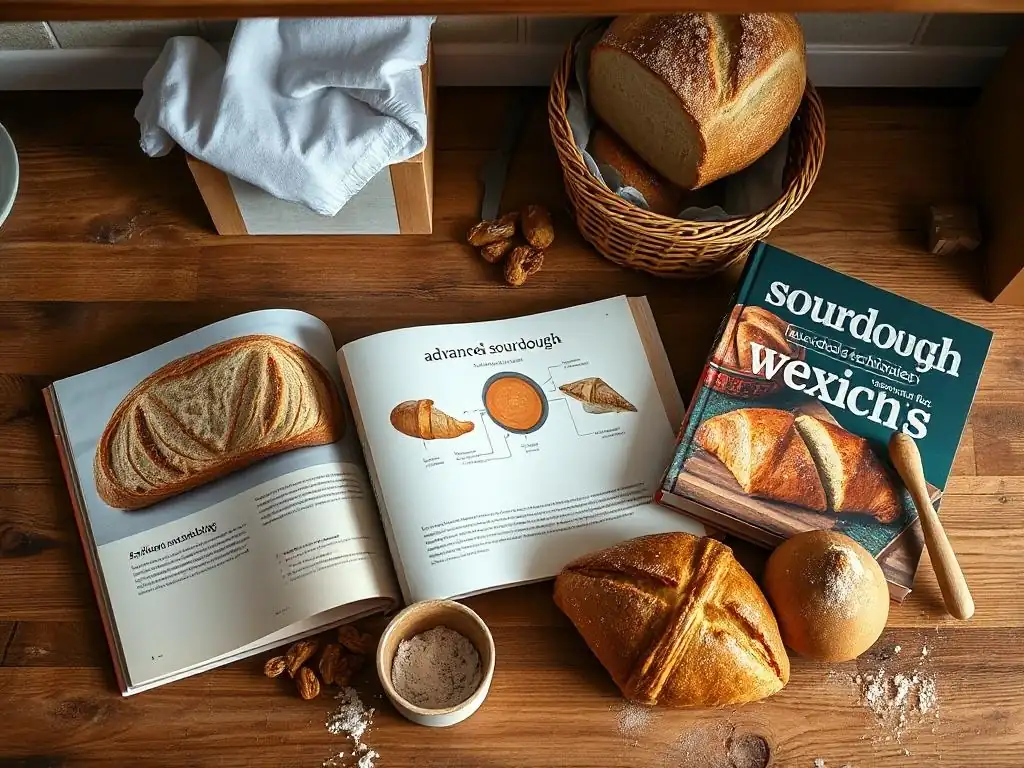
Once you've mastered the basics and consistently produce good loaves, you might feel ready to explore more complex techniques and recipes. Intermediate sourdough books cater to bakers who are comfortable with their starter and the fundamental process but want to deepen their understanding and expand their repertoire beyond a basic country loaf.
These books introduce concepts like higher hydration doughs, different types of flour blends, longer and colder fermentation methods, and a wider variety of shaping techniques. They often assume you have a working knowledge of terms like "autolyse" or "stretch and fold" and are ready to refine your process for better crumb structure, flavor, and crust development.
Taking Your Sourdough Skills to the Next Level
Moving into intermediate sourdough baking means refining your touch and understanding the nuances of dough handling. It's about achieving greater consistency, improving the internal structure (crumb), and developing more complex flavors. Intermediate sourdough books provide the knowledge and recipes to help you achieve these goals.
These guides often delve deeper into the science of fermentation, explaining how time and temperature affect the dough's development. They introduce concepts like using a levain (a specifically built preferment) rather than just using discard or unfed starter. The recipes become more varied, including enriched doughs, loaves with inclusions (seeds, fruits, nuts), and different types of flour like rye or spelt.
"Tartine Bread" by Chad Robertson: Mastering the Art of Sourdough
Chad Robertson's "Tartine Bread" is often considered a cornerstone text for intermediate to advanced sourdough bakers. While the famous Tartine Country Loaf recipe is approachable, the book's true value lies in its detailed explanation of Robertson's process, emphasizing observation and feel over strict timings. It introduced many home bakers to concepts like using a levain and achieving a moist, open crumb.
The book provides a deep dive into the Tartine method, which involves a long bulk fermentation with multiple sets of folds and shaping techniques designed for high-hydration doughs. While the recipes can be challenging initially, the insights into dough development and handling are invaluable. For example, Robertson's description of dough texture and activity during fermentation teaches bakers how to read their dough, a skill crucial for consistency with variable factors like room temperature. The iconic Country Loaf recipe, while appearing simple, requires attention to detail in fermentation and shaping.
"Flour Water Salt Yeast" by Ken Forkish: A Comprehensive Guide to Artisan Bread
Ken Forkish's "Flour Water Salt Yeast" is another widely acclaimed book that bridges the gap between beginner and intermediate baking, with significant content for the latter. Although it covers yeasted breads, its sourdough section is robust, offering detailed schedules and clear instructions for achieving excellent results, particularly known for beautiful crusts.
Forkish provides precise schedules and temperatures, which can be helpful for bakers who prefer a more structured approach compared to Tartine's emphasis on feel. His book explains the impact of temperature on fermentation speed in detail. For instance, he provides different timelines for his Overnight Country Blonde recipe based on ambient temperature, allowing bakers to adapt. The book's focus on simple, high-quality ingredients and techniques for developing strong dough makes it a valuable resource for intermediate bakers looking to refine their skills.
Intermediate Sourdough Techniques and Recipes
Intermediate sourdough baking involves moving beyond the simplest methods to incorporate techniques that improve the dough's structure, flavor, and handling. These skills allow for greater control over the final product and open the door to a wider range of bread types.
Understanding and implementing techniques like autolyse, bulk fermentation control, and precise shaping and scoring are hallmarks of intermediate sourdough baking. These methods require a better understanding of dough elasticity, extensibility, and the impact of handling on the final loaf.
Autolyse and Bulk Fermentation: Understanding the Process
Autolyse is a technique where flour and water are mixed and allowed to rest before the starter and salt are added. Intermediate sourdough books explain how this step allows the flour to fully hydrate and gluten development to begin without the presence of salt or yeast, resulting in a more extensible dough that's easier to handle and shape. This rest period can range from 20 minutes to several hours.
Bulk fermentation, the first rise after mixing all ingredients, is where significant flavor development and dough strengthening occur. Intermediate guides emphasize the importance of monitoring the dough's activity and volume increase (typically 20-50% depending on the recipe and temperature) rather than relying solely on a timer. Techniques like stretch and folds or coil folds, performed periodically during bulk fermentation, are detailed as methods to build dough strength and structure gently. For example, a recipe might call for 4 sets of folds within the first 2 hours of a 4-hour bulk fermentation.
Shaping and Scoring: Achieving a Perfect Loaf
Shaping transforms the bulk-fermented dough into a cohesive unit ready for proofing and baking, while scoring controls how the loaf expands in the oven (oven spring). Intermediate sourdough books provide detailed instructions and visuals for various shaping techniques, such as boule (round) and batard (oval), emphasizing the creation of surface tension.
Scoring, done just before baking, is both functional and artistic. These books explain how the depth, angle, and pattern of cuts influence the loaf's rise and appearance. A standard ear (a flap of crust that peels back) is achieved with a specific angle and depth of cut. Mastering shaping ensures the loaf holds its structure during proofing and baking, while effective scoring maximizes oven spring and prevents the crust from cracking randomly. Practice with different dough hydrations helps bakers understand how to handle stickier doughs during shaping.
Advanced Sourdough Baking: Books for the Experienced Baker
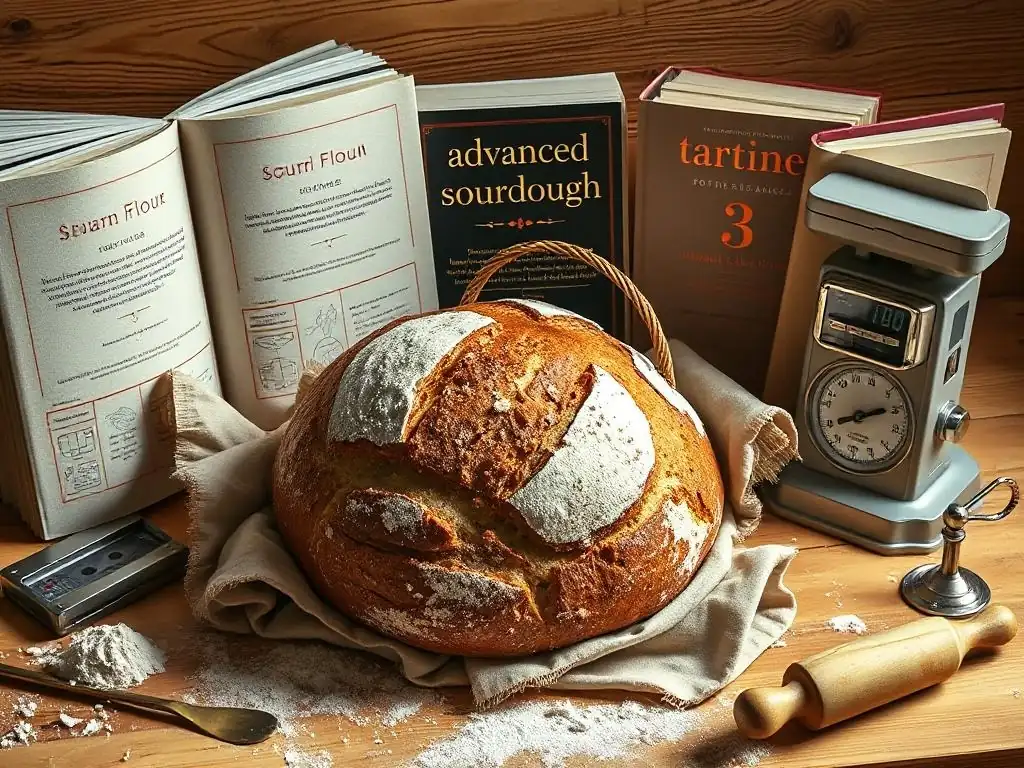
For those who have spent considerable time honing their skills and are consistently producing high-quality loaves, advanced sourdough baking offers new frontiers. Books in this category delve into highly technical aspects, explore complex flavor profiles, and often focus on specific types of bread or ingredients.
Advanced sourdough resources assume a high level of comfort with the basic and intermediate techniques. They might explore using ancient grains, manipulating fermentation for specific outcomes (like extreme sourness or sweetness), working with very high hydration doughs (over 80%), or focusing on the nutritional aspects of sourdough.
Exploring Advanced Sourdough Techniques and Recipes
Advanced sourdough baking is about pushing the boundaries of what's possible with flour, water, salt, and culture. This involves experimenting with less common grains, implementing multi-stage fermentation processes, and understanding the intricate relationship between ingredients and microbial activity.
These books often feature recipes for challenging bread types, like 100% rye sourdough or extremely high-hydration ciabatta. They might discuss techniques for creating specific textures, such as a very open, lacy crumb, or achieving a deeply caramelized crust. The focus shifts from simply making a good loaf to mastering specific outcomes and understanding the underlying biological and chemical processes in fine detail.
"The Sourdough School" by Vanessa Kimbell: Nutrition and Gut Health Focused Sourdough
Vanessa Kimbell's "The Sourdough School" takes an in-depth look at the science behind sourdough, particularly its impact on nutrition and gut health. This book is far more than a recipe collection; it's a scientific exploration of fermentation, grain varieties, and the digestibility of bread.
Kimbell discusses how different fermentation times and temperatures, as well as the type of flour used (especially heritage and ancient grains), affect the production of beneficial compounds and the breakdown of phytic acid. She provides recipes and methods specifically designed to maximize the health benefits of sourdough. For example, she details long fermentation techniques that can break down gluten more effectively and increase nutrient availability, backing her methods with scientific references. The book offers detailed guidance on selecting and milling grains for optimal results.
"Advanced Sourdough" by Manuel Monade: Pushing the Boundaries of Flavor and Texture
Manuel Monade's "Advanced Sourdough" is aimed squarely at experienced bakers looking to experiment and innovate. The book explores complex techniques, unusual ingredients, and methods for manipulating fermentation to achieve unique flavor profiles and textures.
Monade delves into topics like using different preferments alongside a sourdough starter (like a poolish or biga), incorporating ingredients like fruit purees or roasted vegetables into dough, and mastering techniques for challenging shapes or very high-hydration loaves. He provides formulas and processes for achieving specific characteristics, such as an exceptionally crisp crust or a very airy crumb. An example might be a detailed formula for a multi-grain pain au levain requiring precise temperature control throughout a two-day fermentation process.
Mastering Advanced Sourdough Concepts
At the advanced level, sourdough baking involves a deep understanding of variables and how to manipulate them to achieve desired outcomes. It's about moving beyond following a recipe to truly controlling the process.
Key concepts include a refined understanding of hydration's impact, the power of long fermentation periods (especially cold fermentation), and the ability to adapt techniques based on environmental factors and flour characteristics. This level requires keen observation, experimentation, and the ability to troubleshoot complex issues.
Hydration Levels: Experimenting with Different Dough Consistencies
Understanding and working with varying hydration levels is a hallmark of advanced sourdough baking. Hydration refers to the ratio of water to flour by weight (e.g., 70% hydration means 70g water per 100g flour). While beginner books might stick to 65-75%, advanced texts explore everything from stiff doughs (50-60%) to very wet doughs (80% or higher).
Mastering high hydration doughs requires different mixing, handling, and shaping techniques due to their stickiness and extensibility. Advanced books explain how higher hydration generally leads to a more open crumb structure and a crispier crust, but also requires more skill to manage. Conversely, lower hydration doughs are easier to handle but result in a denser crumb. Experimenting with hydration allows bakers to achieve a wider range of bread textures, from a chewy baguette (often higher hydration) to a tighter-crumbed sandwich loaf (often lower hydration).
Long Fermentation: Developing Complex Flavors
Long fermentation, particularly cold fermentation in the refrigerator, is a technique extensively explored in advanced sourdough baking. While intermediate books might introduce overnight refrigeration, advanced methods can involve fermentation periods of 24, 48, or even 72 hours or longer.
These extended periods allow complex flavors to develop as the yeast and bacteria in the starter slowly break down sugars and proteins in the dough. This process results in a more pronounced sourness (depending on the starter's balance) and a deeper, more nuanced flavor profile. Advanced books detail how temperature control during long fermentation is critical to managing microbial activity and preventing the dough from over-fermenting. For example, a recipe might specify a 12-hour bulk fermentation at room temperature followed by a 36-hour cold proof at 4°C (39°F) to maximize flavor development.
Comparing Sourdough Baking Books: Choosing the Right One for You
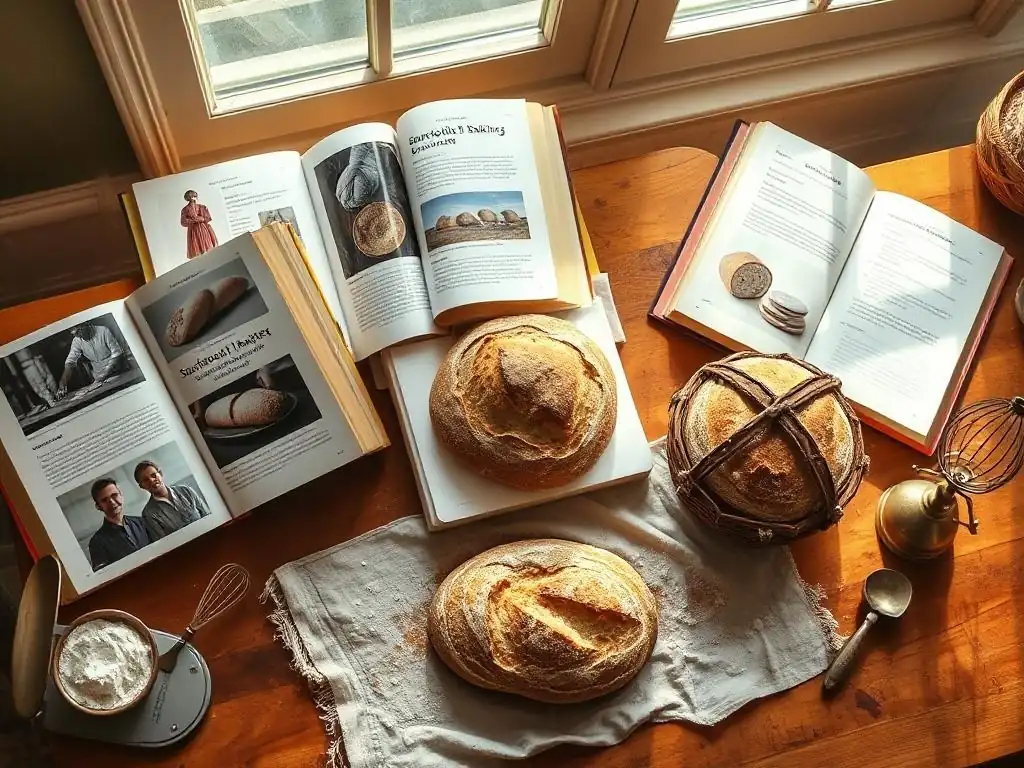
Selecting the best sourdough baking books depends entirely on your current skill level and baking goals. A book perfect for a complete newcomer might be too basic for an experienced baker, and vice versa. It's helpful to consider the book's overall approach, the clarity of its instructions, and the types of recipes it features.
When choosing among the many sourdough baking books available, consider factors like the author's background, the book's layout, and whether it includes helpful visuals or troubleshooting sections. Reading reviews and looking at sample pages (if possible) can provide insight into whether the book's style aligns with your learning preference.
Beginner Sourdough Books Comparison: "Sourdough Made Simple" vs "The Perfect Loaf"
Comparing "Sourdough Made Simple" and the beginner aspects of "The Perfect Loaf" highlights different approaches to introducing newcomers to sourdough. Both are excellent resources, but they cater to slightly different learning styles and levels of ambition for the very beginning stages.
"Sourdough Made Simple" prioritizes getting a successful loaf into the oven quickly and building confidence with foundational techniques. "The Perfect Loaf," even in its beginner sections, lays a more technical groundwork, appealing to those who want a deeper understanding from the outset, even if it means a steeper initial learning curve.
Ease of Use and Accessibility
"Sourdough Made Simple" excels in ease of use and accessibility for the absolute novice. Its instructions are broken down into truly simple steps, often with accompanying photos, making it easy to follow along without feeling overwhelmed. The recipes are forgiving and designed for reliable results with minimal specialized equipment initially.
"The Perfect Loaf," while comprehensive, is more detailed and requires a higher level of engagement with the material. The explanations are thorough but can be dense for someone with no prior baking knowledge. While it offers fundamental recipes, the overall tone and depth lean towards someone who is serious about understanding the why behind the process from day one, which can feel less "simple" than the title of the other book suggests. For many, "Sourdough Made Simple" is the gentler introduction.
Focus on Fundamentals vs. Technical Details
The primary focus of "Sourdough Made Simple" is on the absolute fundamentals required to bake a loaf: starter creation, mixing, basic shaping, and baking. It provides enough information to get the job done successfully and build a routine.
"The Perfect Loaf," conversely, provides a much deeper dive into the technical details of sourdough baking from the ground up. It explains the science of fermentation, the impact of different flours on gluten development, and the nuances of temperature control with greater precision. While it covers the fundamentals, it does so with a level of technical depth that prepares bakers for more advanced concepts later on, even within its initial chapters.
Intermediate Sourdough Books Comparison: "Tartine Bread" vs "Flour Water Salt Yeast"
Comparing "Tartine Bread" and the sourdough sections of "Flour Water Salt Yeast" provides a look at two highly influential, yet distinct, approaches to intermediate sourdough baking. Both have shaped how many home bakers approach naturally leavened bread, but they offer different philosophies and methodologies.
"Tartine Bread" is often seen as more intuitive and focused on developing a feel for the dough and process, while "Flour Water Salt Yeast" is known for its structured schedules and precise instructions. Choosing between them might depend on whether you prefer a more artistic, adaptable approach or a systematic, repeatable one.
Emphasis on Technique vs. Recipe Variety
"Tartine Bread" places a strong emphasis on mastering a core set of techniques, particularly related to handling high-hydration doughs and managing bulk fermentation through observation and folds. While it includes various recipes beyond the basic country loaf, the core value for many bakers lies in understanding and applying the foundational Tartine method to different doughs.
"Flour Water Salt Yeast" offers a wider variety of specific bread recipes, including different hydration levels, flour blends, and fermentation schedules. While it explains techniques clearly, its structure is more recipe-driven, providing detailed instructions and timelines for each specific bread type. For instance, it offers distinct formulas and processes for a Pain de Campagne, a Whole Wheat Country Loaf, and a Pain au Levain, each with tailored schedules.
Approach to Ingredients and Equipment
"Tartine Bread" emphasizes using high-quality, often freshly milled, flour and provides guidance on sourcing. It details using a Dutch oven for baking but is less prescriptive about other equipment, focusing more on the baker's interaction with the dough.
"Flour Water Salt Yeast" also advocates for quality ingredients but provides more specific recommendations for standard home baking equipment. It gives clear instructions on using different types of ovens and vessels for baking, including Dutch ovens, baking stones, and even baking in a conventional oven without special equipment. Forkish's approach is arguably more adaptable to a standard home kitchen setup compared to the somewhat idealized setup sometimes implied in "Tartine."
Resources for Your Sourdough Journey
Finding the right sourdough baking books is just one part of the journey. Having access to reliable sources for equipment and ingredients is equally important. Whether you're a beginner or looking to expand your collection, knowing where to find what you need is key to successful baking.
From sourcing quality flour to finding the perfect proofing basket, having access to the right tools makes the process smoother and more enjoyable. These resources complement the knowledge gained from your chosen sourdough baking books.
Where to Buy the Best Sourdough Baking Books
Finding the best sourdough baking books is easy with the abundance of options available both online and in physical stores. Prices can vary, but most popular titles are readily accessible.
Browsing in person at a bookstore allows you to flip through pages and assess the layout and clarity before purchasing, which can be particularly helpful when choosing beginner sourdough books. Online retailers offer convenience, wider selection, and often competitive pricing.
Online Retailers and Local Bookstores
Major online retailers are a primary source for buying sourdough baking books. Websites like Amazon, Barnes & Noble online, and Book Depository (for international options) carry a vast selection of titles, from the most popular beginner guides to niche advanced texts. They often provide customer reviews, which can offer valuable insights into the book's strengths and weaknesses from other bakers.
Supporting local bookstores is another excellent option. Many independent bookstores have dedicated cooking sections where you can find popular sourdough titles. Some specialized culinary bookstores might even carry a wider range of artisan baking books. Checking their stock online or calling ahead can save a trip. Prices might be slightly higher than online discounters, but the ability to browse and support a local business is a significant benefit.
Recommended Baking Equipment for Sourdough
While you can start sourdough baking with minimal equipment, certain tools can significantly improve the process and results, especially as you move past the beginner stage. Many sourdough baking books beginner and intermediate editions will list recommended equipment.
Investing in a few key pieces of equipment can make dough handling easier, improve oven spring, and help achieve that desired artisan look. These tools are often simple but designed specifically for the unique properties of sourdough dough.
Banneton Baskets, Dutch Ovens, and More
A banneton basket (proofing basket) is highly recommended for proofing shaped dough. These baskets, often made of rattan or cane, provide structure to the dough during its final rise and wick away excess moisture, helping to create a better crust. They come in various shapes (round/banneton and oval/batard) and sizes.
A Dutch oven is arguably the most crucial piece of equipment for baking sourdough at home. The lidded pot creates a steamy environment around the loaf during the initial baking phase, mimicking the conditions of a professional deck oven with steam injection. This steam allows the crust to remain pliable, enabling maximum oven spring before it sets.
Cast iron Dutch ovens are popular for their heat retention, but ceramic or enamel-coated options also work well. Other useful tools include a digital scale for precise ingredient measurements (essential for sourdough), a bench scraper for handling sticky dough, and a lame (scoring tool) for making clean cuts before baking.
Frequently Asked Questions
What are some good sourdough baking books for beginners?
Several books cater to sourdough newbies. Look for titles that emphasize the basics of sourdough and include step-by-step instructions with clear photos. Many focus on creating a healthy starter.
What makes a sourdough baking book suitable for a beginner?
A beginner-friendly book will explain sourdough terminology, like autolyse and levain, in plain language. It should also provide troubleshooting tips for common sourdough baking problems.
Do sourdough baking books cover topics beyond just the basic loaf?
Yes, many books expand beyond simple loaves to include recipes for sourdough pizza crust, sourdough pancakes, and other sourdough-based goods.
How important is it that a sourdough baking book includes detailed photos or illustrations?
Visual aids are incredibly helpful! Photos demonstrating techniques such as shaping dough and understanding the dough's texture at various stages are very beneficial, especially for beginners.
Can a sourdough baking book help me troubleshoot problems like a flat loaf or overly sour taste?
Absolutely! Good books dedicate sections to identifying and correcting common sourdough baking issues. They often cover factors like fermentation time, starter activity, and oven temperature.
Final Reflection: The Ever-Rising Dough of Sourdough Knowledge
The enduring appeal of sourdough baking, once a niche hobby, has exploded into a mainstream passion. From humble beginnings in home kitchens, sourdough's popularity continues to rise, fueled by a desire for artisanal food and a deeper connection to the craft of baking. This surge in interest highlights the need for accessible and comprehensive resources, making the right guide an invaluable asset in this delicious journey.
The journey of mastering sourdough is as much about patience and understanding as it is about technique. It's a process that demands respect for the living organism at its heart, the sourdough starter. This living element adds a layer of complexity and unpredictability, making the learning curve both challenging and rewarding. The best bread is made with love and patience.
This simple statement encapsulates the essence of sourdough baking, reflecting not only the time investment but also the emotional connection bakers forge with their craft. The books reviewed here represent a spectrum of approaches, catering to diverse learning styles and experience levels, ultimately contributing to the growing body of knowledge surrounding this ancient art.
Consider the lessons learned within these pages. You, the aspiring baker, now hold the key to unlocking the secrets of sourdough. Don't be afraid to experiment, to embrace the occasional failure, and to learn from each loaf you create. Choose the book that resonates with your learning style and embark on this rewarding journey. The taste of your first perfectly risen sourdough loaf will be a testament to your dedication and a delicious reward for your efforts. The world of sourdough awaits – happy baking!
Unleash Your Inner Baker: Sourdough Success Awaits!
Thanks for taking the time to explore the world of sourdough baking with us! We hope you've found some truly inspiring books to help you on your journey. Ready to take the next step?
- Dive into your chosen book and start baking! Choose a recipe that excites you and get your hands messy. The best way to learn is by doing.
- Share your sourdough journey! Post pictures of your creations on social media using #BakeWithEaseSourdough and inspire others.
- Consider joining a local baking group or online forum – connecting with other sourdough enthusiasts can unlock a wealth of knowledge and support.
What delicious sourdough creation will you bake first?