
KitchenAid vs. The Competition: Finding Your Perfect Stand Mixer Match


Welcome to BakeWithEase, your guide to baking bliss!
Ever dreamt of effortlessly whipping up perfect pastries and delectable doughs? Choosing the right stand mixer is the key. But with so many options, how do you find your perfect match? Dive into our in-depth KitchenAid stand mixer comparison to uncover the best features, performance, and value, and discover which model will transform your baking adventures from daunting to delightful. Ready to find your baking soulmate? Let's get started!
- Factors to Consider When Choosing a Stand Mixer: Beyond the Brand
-
Frequently Asked Questions
- What are the key factors to consider in a KitchenAid stand mixer comparison?
- How does a KitchenAid stand mixer benefit a beginner baker?
- Are there any significant differences between KitchenAid models, such as the Artisan and Professional lines?
- What are some popular attachments available for KitchenAid stand mixers, and what do they do?
- How does the price of a KitchenAid stand mixer compare to other brands on the market?
- Final Reflection: The Joy of Baking, Perfectly Mixed
- Unleash Your Inner Baker: Find Your Perfect Stand Mixer!
Factors to Consider When Choosing a Stand Mixer: Beyond the Brand
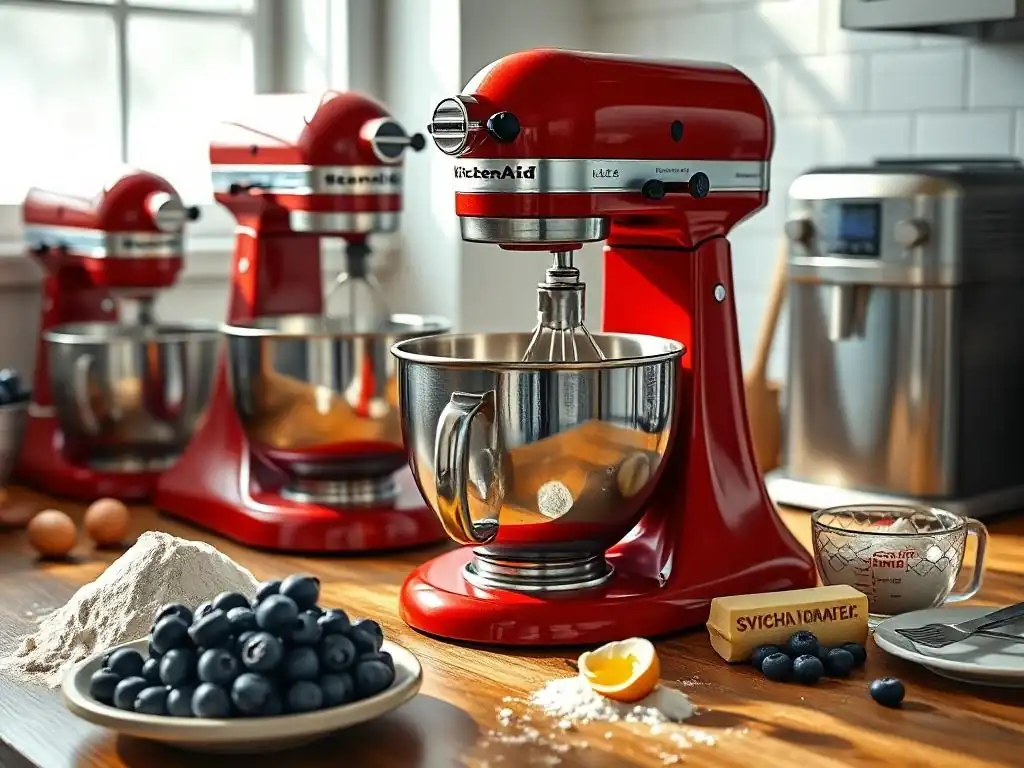
Choosing the perfect stand mixer involves looking beyond just the brand name, even when considering a popular KitchenAid stand mixer comparison. Several key factors will influence which model is the best fit for your kitchen and your baking habits. Thinking about how often you bake, what kinds of recipes you tackle, and your available budget will guide you towards a decision that brings joy, not frustration, to your baking endeavors. Let's explore some of these crucial considerations in detail.
It's easy to get caught up in the features and aesthetics of different mixers, but the practical realities of your baking life should always be the priority. Do you bake large batches for events, or just small treats for yourself? Are you a bread baker who needs powerful dough kneading, or a cake decorator focused on light meringues and frostings? Understanding your typical baking workload is the first step in evaluating potential stand mixers against your specific needs, ensuring your investment truly enhances your baking journey.
Stand Mixer Power and Capacity: Matching Your Baking Needs
The motor's power, often measured in watts, and the bowl's capacity, typically measured in quarts, are fundamental specifications that directly impact a stand mixer's performance and the volume of ingredients it can handle. For lighter tasks like whipping cream or mixing cake batter, a mixer with a lower wattage motor and a smaller bowl (say, 3.5 to 5 quarts) might be perfectly adequate.
Many KitchenAid stand mixer comparison models in the Artisan range, for example, feature motors around 325 watts and 5-quart bowls, which are ideal for handling standard cookie dough recipes (like a batch using 3-4 cups of flour) or double layers of cake batter.
However, if you plan on making dense bread dough regularly or mixing large batches of stiff cookie dough, you'll likely need a more powerful motor and a larger bowl. Kneading bread dough puts significant strain on a mixer's motor and gears. Models designed for heavier use, such as the KitchenAid Professional series, often boast motors exceeding 500 watts and bowls ranging from 6 to 8 quarts.
These larger capacities can comfortably handle dough made with 8-10 cups of flour, allowing you to bake multiple loaves or large quantities of heavier batters without overloading the machine. When doing a KitchenAid stand mixer comparison, always consider the maximum batch size you typically work with to ensure the mixer isn't undersized for your ambitions.
Attachments and Accessories: Expanding Your Stand Mixer's Capabilities
One of the most compelling aspects of many stand mixers, particularly KitchenAid models, is their versatility, largely thanks to the wide array of available attachments and accessories. While most mixers come standard with a flat beater, wire whisk, and dough hook, the potential to expand functionality is vast. These attachments can transform your mixer from a simple mixing tool into a multi-purpose kitchen appliance, allowing you to tackle tasks far beyond traditional baking.
Exploring the range of attachments available for a specific model is a crucial part of any thorough KitchenAid stand mixer comparison. Think about what other culinary activities you enjoy or might want to explore. Do you make fresh pasta, grind your own meat, spiralize vegetables, or juice fruits? Many manufacturers offer attachments that can perform these tasks, saving you counter space and the cost of separate appliances. Investing in a mixer with a robust attachment ecosystem can unlock new possibilities in your kitchen, making your stand mixer a true culinary workhorse.
The KitchenAid Pasta Roller Attachment: A Review
The KitchenAid pasta roller attachment is a popular accessory that connects to the power hub on the front of most KitchenAid stand mixers. It typically comes as a set with rollers for sheets of pasta and cutters for fettuccine and spaghetti. Using this attachment is significantly easier than rolling pasta by hand, providing consistent thickness for perfectly cooked noodles.
To use it, you simply feed flattened dough through the roller, adjusting the dial for increasingly thinner sheets. The motorized action of the mixer handles the rolling, allowing you to focus on guiding the dough. While specific performance can vary slightly between models (stainless steel vs. chrome-plated), users generally report excellent results, achieving smooth, uniform pasta sheets ready for ravioli, lasagna, or cutting into various shapes. This attachment truly leverages the mixer's motor power for a task that would otherwise require considerable manual effort or a separate, dedicated pasta machine.
Meat Grinder Attachment Options and Uses
Another versatile attachment often available for stand mixers, including many in the KitchenAid stand mixer comparison lineup, is the meat grinder. This attachment typically includes various grinding plates (fine, medium, coarse) and can process raw meat, poultry, and even some fruits and vegetables. It attaches to the same front power hub as the pasta roller.
A stand mixer meat grinder is perfect for home cooks who want control over the quality and content of their ground meat for burgers, sausages, meatloaf, or tacos. You can grind specific cuts of meat, combine different types, and ensure there are no unwanted fillers. Beyond meat, it can be used for grinding hard cheeses, making breadcrumbs, or even preparing ingredients for pet food. While not designed for extremely high-volume or commercial use, for the average home baker or cook, it's a fantastic tool that adds another dimension to the stand mixer's utility.
Budget Considerations: Finding a Stand Mixer That Fits Your Price Range
Stand mixers represent a significant investment, and their price can vary widely depending on the brand, model, power, and capacity. When doing a KitchenAid stand mixer comparison against competitors, you'll notice a range from entry-level models often priced under $300 to high-end professional-grade machines that can cost $600 or more, potentially even exceeding $1000 for specialized models or bundles. Establishing a realistic budget upfront is essential to narrow down your options and avoid overspending.
Consider the value proposition offered by different mixers within your price range. Sometimes, a slightly higher initial cost for a more durable model or one with better performance for your specific needs (like bread making) can save you money and frustration in the long run.
Look for sales, compare prices across different retailers, and factor in the cost of any essential attachments you might need immediately. While it's tempting to go for the cheapest option, a stand mixer is a tool you'll hopefully use for many years, so balancing cost with quality and functionality is key to making a wise purchase that serves your baking passion effectively.
Frequently Asked Questions
What are the key factors to consider in a KitchenAid stand mixer comparison?
The main factors are power and capacity, attachments and versatility, and price and durability. Consider what you bake most often to determine your needs.
How does a KitchenAid stand mixer benefit a beginner baker?
KitchenAid mixers offer ease of use and consistent results, making them ideal for learning baking techniques. They also reduce the manual labor involved in mixing.
Are there any significant differences between KitchenAid models, such as the Artisan and Professional lines?
Yes, the Professional line generally offers more power and larger capacity compared to the Artisan series. This makes them suitable for heavier doughs and larger batches.
What are some popular attachments available for KitchenAid stand mixers, and what do they do?
Popular attachments include the pasta roller and cutter, the meat grinder, and the ice cream maker. These expand the mixer's functionality beyond basic baking.
How does the price of a KitchenAid stand mixer compare to other brands on the market?
KitchenAid mixers are generally priced higher than some competitors, but they are known for their quality and longevity. Other brands may offer similar features at lower price points.
Final Reflection: The Joy of Baking, Perfectly Mixed
The quest for the perfect stand mixer is more than just a kitchen appliance upgrade; it's an investment in culinary creativity and countless happy memories. Choosing the right model, as we've explored through this comparison of KitchenAid and its competitors, significantly impacts the baking experience, from the ease of use to the final product's quality. This isn't just about power and features; it's about finding the tool that best suits your individual needs and aspirations.
The enduring popularity of the KitchenAid stand mixer, and the emergence of strong competitors, reflects a broader cultural shift towards valuing homemade goods and the satisfaction of creating something delicious from scratch. This isn't just a trend; it's a testament to the enduring human desire for connection and self-expression through food. The kitchen is the heart of the home,
a phrase often heard, rings truer than ever when considering the central role a stand mixer plays in many people's lives. It's a tool that facilitates connection, whether it's baking cookies with family or whipping up a cake for a special occasion.
So, as you consider your own culinary journey and the tools that will accompany you, remember the importance of finding the perfect fit. Don't just settle for any stand mixer; choose the one that inspires you, that makes the process of baking enjoyable, and that helps you create memories that will last a lifetime. Take the time to weigh your needs, consider the options, and select the stand mixer that will become your trusted companion in the kitchen. The perfect cake, the perfect bread, the perfect cookie—it all starts with the perfect tool.
Unleash Your Inner Baker: Find Your Perfect Stand Mixer!
Thanks for joining us on this delicious journey of stand mixer discovery! We hope you now feel confident in navigating the world of kitchen appliances and finding the perfect fit for your baking needs. Ready to take the next step?
- Take our quick mixer quiz: We've created a fun, personalized quiz to help you pinpoint the ideal stand mixer based on your baking style and preferences. It only takes a few minutes!
- Share your favorite mixer recipe: Let's celebrate our shared love of baking! Post your go-to stand mixer recipe on social media and tag us – we can't wait to see your creations.
- Explore our curated mixer accessory guide: Discover essential attachments and add-ons to maximize your baking potential and elevate your kitchen game.
What exciting recipe are you going to tackle with your new (or perfectly matched!) stand mixer first?