
Understanding Gluten Development in Sourdough: Beyond the Basics


Welcome to BakeWithEase, your trusted guide to unlocking baking brilliance! Ever wondered about the secret behind that perfectly chewy sourdough crust? This article dives deep into the fascinating world of gluten development in sourdough baking. Prepare to go beyond the basics and discover the techniques that will elevate your loaves to new heights. Curious to learn how to achieve that open crumb and tangy flavour? Let's get started!
- Understanding Gluten Development in Sourdough: Achieving Optimal Structure
- The Crucial Role of Gluten in Sourdough Baking
- Factors Influencing Gluten Development in Sourdough
- Assessing Gluten Development in Sourdough Dough
- Troubleshooting Gluten Issues in Sourdough
- Advanced Techniques for Enhancing Gluten Development in Sourdough
- Conclusion: Mastering Gluten Development for Exceptional Sourdough Baking
-
Frequently Asked Questions
- What is gluten development, and why is it important in sourdough baking?
- How does sourdough baking differ from using commercial yeast regarding gluten development?
- What are some techniques I can use to improve gluten development in my sourdough?
- What role does time play in gluten development in sourdough baking?
- What happens if I over-develop or under-develop the gluten in my sourdough?
- Final Reflection: The Ever-Evolving Dance of Gluten in Sourdough
- Unleash Your Inner Sourdough Master!
Understanding Gluten Development in Sourdough: Achieving Optimal Structure
The Sourdough Alchemist: Mastering Gluten for Exceptional Results
Achieving that perfect open crumb, chewy texture, and lofty rise in your sourdough loaf isn't magic; it's largely about understanding and controlling gluten development. In sourdough baking, gluten isn't just a structural component; it's the very fabric that holds the dough together, traps the gases produced by fermentation, and allows the loaf to expand during baking. Mastering gluten development in sourdough is a fundamental skill that elevates a good loaf to a truly exceptional one, giving you control over the dough's strength, elasticity, and extensibility – qualities essential for shaping and baking success.
Think of gluten as the scaffolding of your bread. Without proper gluten development, the dough would be a formless blob, unable to hold its shape or capture the carbon dioxide bubbles created by your active sourdough starter. This understanding is particularly crucial in sourdough baking, where the longer fermentation times and acidic environment interact uniquely with the gluten network compared to yeasted breads. By focusing on how to build and manage this network, you unlock the potential for superior texture, volume, and overall quality in every loaf you bake.
The Crucial Role of Gluten in Sourdough Baking

What is Gluten and Why Does It Matter in Sourdough?
Gluten is a complex network formed when two proteins found in wheat flour, gliadin and glutenin, combine with water and are agitated through mixing or kneading. Gliadin provides extensibility (the ability to stretch without breaking), while glutenin provides elasticity (the ability to spring back). When these proteins hydrate and link together, they form a viscoelastic matrix – sticky, stretchy, and capable of trapping gas. This matrix is absolutely vital in sourdough development because it creates the structure that allows the dough to rise.
In sourdough, the importance of this gluten network is amplified. The fermentation process, driven by lactic acid bacteria and wild yeasts, produces significant amounts of carbon dioxide. A strong, well-developed gluten structure is necessary to contain these gases, allowing the dough to inflate and achieve volume. Without sufficient gluten development, the gas would simply escape, resulting in a dense, flat loaf. Furthermore, the gluten structure contributes significantly to the final crumb texture and chewiness that is characteristic of great sourdough bread.
The Unique Characteristics of Gluten in Sourdough Compared to Commercial Yeast Breads
Gluten development in sourdough differs notably from that in commercial yeast breads primarily due to the presence of a complex microbial community and longer fermentation times. The lactic acid bacteria (LAB) in sourdough starters produce organic acids, predominantly lactic and acetic acid. These acids interact with the gluten proteins, potentially altering their structure over time. While short exposure can strengthen the network by promoting disulfide bond formation, prolonged exposure, particularly at higher temperatures, can actually begin to degrade or weaken the gluten, a process known as proteolysis.
This delicate balance means that managing fermentation time and temperature is paramount for optimal gluten development in sourdough. Unlike commercial yeast, which ferments rapidly, sourdough provides a slow, sustained gas production within an acidic environment. This allows for a gradual stretching and strengthening of the gluten network during bulk fermentation and proofing. However, it also introduces the risk of over-fermentation and subsequent gluten degradation, which can lead to a gummy crumb or difficulty in shaping. Understanding this unique interplay is key to mastering sourdough gluten development.
Factors Influencing Gluten Development in Sourdough
Flour Selection: Choosing the Right Flour for Optimal Gluten Development in Sourdough
The type of flour you use is perhaps the single most important factor influencing gluten development in sourdough. Different flours have varying protein contents, and since gluten is formed from protein, a higher protein flour generally has the potential to form a stronger gluten network. Bread flour, typically containing 12-14% protein, is a popular choice for sourdough due to its high gluten-forming potential, which provides the strength needed for a good rise and open crumb structure. All-purpose flour (around 10-12% protein) can also work, but may require more careful handling to achieve sufficient strength.
Beyond protein content, other characteristics of the flour matter. Whole wheat flour, for example, contains bran and germ particles that can interfere with gluten development by physically cutting the gluten strands. While whole wheat flours often have high protein content (e.g., 13-15%), the presence of these sharp particles means the effective gluten development might be less robust than a white bread flour with slightly lower protein. Rye flour, on the other hand, is very low in gluten-forming proteins and contains pentosans that absorb water and inhibit gluten development, making 100% rye sourdough challenging without specific techniques.
Protein Content and its Impact on Sourdough Gluten Strength
As mentioned, protein content is a direct indicator of a flour's potential for gluten development sourdough baking. Flours with higher protein levels, such as strong bread flour (13%+ protein), are capable of forming a more extensive and robust gluten network compared to flours with lower protein, like cake flour (6-8% protein).
This stronger network is essential for trapping the large volume of gas produced during sourdough fermentation, leading to a higher rise and a more open crumb structure. Using a flour with insufficient protein will result in a weak dough that struggles to hold its shape and yields a dense loaf.
For instance, using a high-protein bread flour (say, 13.5% protein) allows for higher hydration levels while still maintaining dough structure, facilitating better gluten development and extensibility. Conversely, attempting the same high hydration with a lower-protein all-purpose flour (10.5% protein) would likely result in a slack, unmanageable dough because there aren't enough gluten-forming proteins to absorb the water and create a supportive network. Understanding your flour's protein content is crucial for predicting its behavior and adjusting your recipe and techniques accordingly for optimal gluten development in sourdough.
Ash Content and its Influence on Gluten Quality in Sourdough
Ash content in flour refers to the mineral content remaining after combustion, which is an indicator of how much of the outer layers of the grain (bran and germ, rich in minerals) are present. White flours have low ash content (e.g., 0.4-0.5%), while whole wheat flours have high ash content (e.g., 1.5-1.8%). Higher ash content generally means more bran and germ particles are present, and these particles can interfere with gluten development by physically disrupting the gluten network as it forms.
Flours with higher ash content, even if their protein percentage is high, may yield doughs that are slightly weaker or require gentler handling and longer rest periods to achieve comparable gluten development to a low-ash white flour. Enzymes present in the bran and germ can also play a role in breaking down gluten over long fermentation periods. Therefore, when using whole wheat or high-extraction flours in sourdough, bakers often adjust hydration, mixing times, and fermentation strategies to account for the impact of ash content on gluten development sourdough baking.
Hydration: The Key to Unlocking Gluten Potential in Sourdough
Hydration, or the ratio of water to flour in your dough, is a critical factor in gluten development sourdough baking. Water is essential for the gluten-forming proteins (gliadin and glutenin) to hydrate and begin linking together. Without sufficient water, these proteins remain relatively inert, and a strong, extensible gluten network cannot form. Higher hydration levels generally lead to more complete protein hydration and potentially better gluten development, resulting in a more extensible dough capable of achieving a more open crumb structure.
However, there is a balance. While high hydration (e.g., 80% or more) can promote excellent gluten development, it also makes the dough stickier and more challenging to handle. Lower hydration doughs (e.g., 65-70%) are easier to manage but may require more mechanical work (mixing/kneading) or longer rest periods to achieve adequate gluten development. The optimal hydration level depends on the flour used (higher protein flours can handle more water) and the desired outcome, but ensuring adequate water is the first step to unlocking the flour's gluten potential.
Understanding Hydration Levels and their Effect on Gluten Formation
Hydration is expressed as a percentage of the flour weight. For example, a dough made with 500g of flour and 375g of water has a hydration of (375/500) * 100 = 75%. Lower hydration doughs (below 70%) are stiffer and less sticky. The gluten network forms more slowly and requires more effort to develop, but the resulting dough is easier to shape and handle, often producing a tighter crumb structure. Think of a bagel dough, which is typically low hydration (around 50-55%) and very stiff, resulting in a dense, chewy texture.
Higher hydration doughs (75% and above) are much wetter and slack. The gluten proteins hydrate rapidly, and while the network takes longer to build structure through mixing, it becomes highly extensible and elastic. These doughs are more challenging to handle but are favored for achieving the airy, open crumb characteristic of artisan sourdough bread. The water acts as a lubricant, allowing the gluten strands to slide past each other and stretch significantly as the dough rises. Mastering the handling of high-hydration dough is key to maximizing gluten development sourdough baking for an open crumb.
Autolyse: Maximizing Hydration for Enhanced Gluten Development
Autolyse is a simple technique that involves mixing only the flour and water from a recipe and letting the mixture rest for a period (typically 20 minutes to an hour, sometimes longer) before adding the sourdough starter and salt. During this rest period, the flour fully hydrates, and enzymatic activity begins to break down proteins, making the gluten more extensible. More importantly for gluten development sourdough baking, the gluten-forming proteins start to link together without the interference of salt (which tightens the network) or the mechanical stress of mixing with starter.
This initial hydration and rest significantly kickstarts gluten development, making subsequent mixing much easier and more effective. The dough becomes noticeably smoother and more extensible after autolyse. For high-hydration doughs, autolyse is particularly beneficial as it allows the flour to absorb water fully before the introduction of the starter and salt makes the dough stickier and harder to work. Implementing autolyse can lead to a more relaxed dough, better extensibility, and ultimately, a stronger, more developed gluten network with less physical effort.
Mixing Techniques for Sourdough: Developing Gluten Effectively
Mixing is the mechanical process that brings the hydrated gliadin and glutenin proteins together to form the gluten network. The amount and type of mixing significantly impact gluten development sourdough baking. For sourdough, which often involves high hydration and long fermentation, gentle mixing techniques are frequently favored over intensive kneading used in commercial baking. Techniques like stretch and folds or coil folds build strength gradually while preserving the gas produced during fermentation.
The goal of mixing in sourdough is not just to develop gluten but also to incorporate air and distribute the starter evenly. Over-mixing can lead to a tight, tough dough, while under-mixing results in a weak dough that collapses. Finding the right balance, often through a series of gentle manipulations over the first few hours of bulk fermentation, is crucial for building a strong yet extensible gluten structure capable of supporting the rise and creating the desired crumb.
Gentle Mixing vs. Intensive Mixing: Which is Best for Sourdough?
For many artisan sourdough bakers, gentle mixing techniques like stretch and folds or coil folds are preferred over traditional intensive kneading. Intensive kneading (either by hand for 10-15 minutes or in a stand mixer for 5-10 minutes) rapidly develops gluten by continuously stretching and folding the dough. This can be effective, especially for lower hydration doughs, but it can also incorporate too much air initially and potentially overwork the dough if not careful.
Gentle techniques involve short bursts of manipulation (e.g., 3-4 sets of stretch and folds performed every 30-60 minutes during the first 2-3 hours of bulk fermentation). These techniques build strength gradually, allowing the gluten network to develop and relax between sets. This approach is particularly effective for high-hydration sourdoughs, which are difficult to knead intensively. It builds a strong, extensible network while preserving the delicate structure of gas bubbles formed during fermentation, contributing to a more open crumb.
The Importance of Rest and Relaxation in Gluten Development (Fermentation)
Rest periods, particularly during bulk fermentation, are as crucial for gluten development sourdough baking as the mixing itself. Allowing the dough to rest gives the gluten network time to relax after being stretched and manipulated during mixing or folds. This relaxation makes the dough more extensible, easier to handle in subsequent folds, and less likely to tear. It also allows enzymes present in the flour and starter to continue their work, including modifying the gluten proteins.
During the bulk fermentation period (the first rise), the sourdough starter is actively producing gas and organic acids. As the gas inflates the dough, it gently stretches the gluten network, further developing its structure. The organic acids also contribute to conditioning the gluten. This slow, enzymatic development and gentle stretching during bulk fermentation are fundamental to building the strong, extensible gluten network that characterizes well-made sourdough bread. Skipping adequate rest or shortening the bulk fermentation time will result in underdeveloped gluten and a poor rise.
Fermentation's Impact on Gluten Structure in Sourdough
Fermentation is a transformative process in sourdough, not just for flavor and leavening but also for gluten development sourdough baking. The activity of the wild yeasts and, more significantly, the lactic acid bacteria (LAB) profoundly influences the gluten network. The acids produced by LAB condition the gluten, making it more extensible. However, if fermentation is too long or at too high a temperature, proteolytic enzymes (both intrinsic to the flour and produced by microorganisms) can start to break down the gluten, weakening the network.
This dual effect means that successful sourdough fermentation requires careful monitoring. The ideal fermentation allows sufficient time for the acids to condition the gluten and for the gas production to stretch the network, building strength and elasticity. But it must be stopped before excessive enzymatic activity degrades the gluten to the point where it can no longer support the dough's structure, leading to collapse or a gummy texture.
The Role of Lactic and Acetic Acids in Gluten Modification
Lactic acid bacteria (LAB) are key players in sourdough fermentation, producing lactic acid and acetic acid. These acids lower the dough's pH, which has several effects, including inhibiting undesirable bacteria and activating certain enzymes in the flour. More importantly for gluten development sourdough baking, the acidic environment interacts with the gluten proteins. A slightly acidic environment (pH around 4-5) can actually strengthen the gluten network by promoting the formation of disulfide bonds between protein chains.
This conditioning effect improves the gluten's extensibility and elasticity, making the dough easier to handle and contributing to better oven spring. Acetic acid, often more prominent in cooler, longer fermentations, has a stronger flavor profile but can also contribute to the conditioning process. While beneficial in moderation, excessively low pH from over-fermentation can eventually lead to gluten degradation, as highly acidic conditions can activate proteolytic enzymes that break down the protein chains.
Controlling Fermentation Time and Temperature for Optimal Gluten Results
Controlling fermentation time and temperature is paramount for managing the activity of both yeasts and bacteria, and thus, the impact on gluten development sourdough baking. Warmer temperatures (e.g., 75-80°F or 24-27°C) accelerate fermentation, leading to faster gas production and quicker development/conditioning of gluten. This requires shorter bulk fermentation times, typically 4-6 hours, depending on the starter's activity. While faster, warmer fermentation increases the risk of over-fermentation and gluten degradation if not watched carefully.
Cooler temperatures (e.g., 65-70°F or 18-21°C) slow down fermentation significantly. This results in longer bulk fermentation times, often 8-12 hours or even longer. The slower pace allows for a more gradual development of flavor and a slower, gentler stretching of the gluten network. This extended cool fermentation often leads to a more robust gluten structure and can increase the production of acetic acid. Many bakers utilize cold proofing in the refrigerator (35-40°F or 2-4°C) for 12-48 hours, which almost halts fermentation but allows enzymes to continue conditioning the gluten slowly, enhancing flavor and improving handling while minimizing degradation.
Assessing Gluten Development in Sourdough Dough
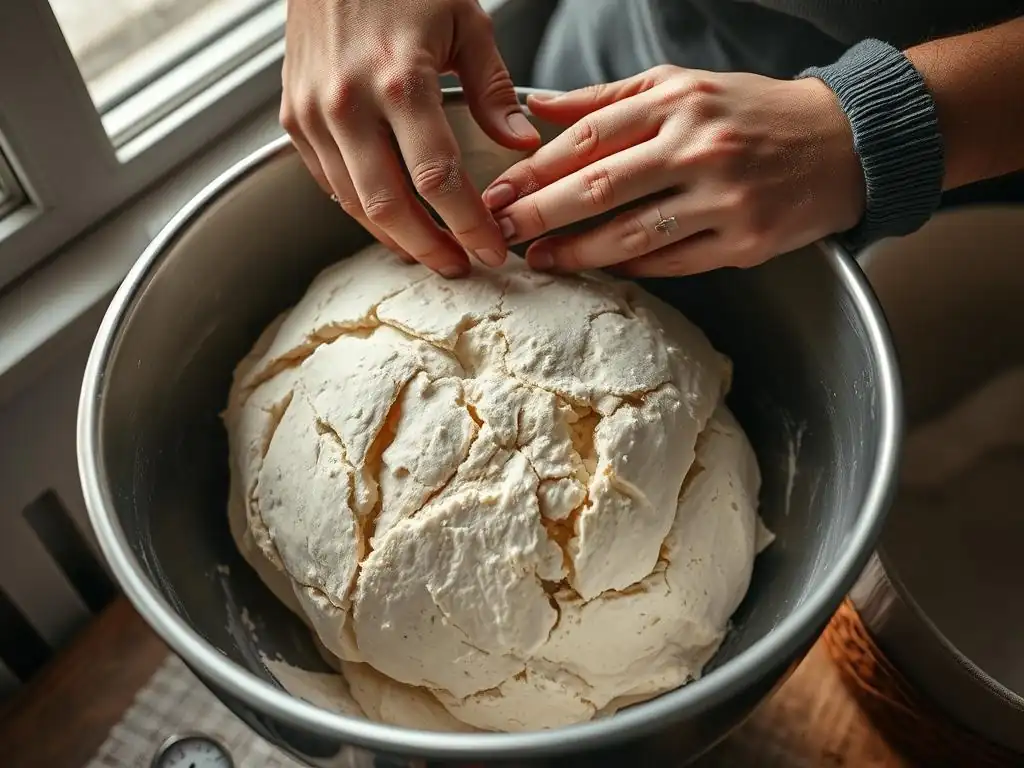
Knowing how to tell if your sourdough dough has reached optimal gluten development is a crucial skill. Relying solely on time is unreliable, as fermentation rates vary based on temperature, starter activity, and flour. Instead, assessing the dough directly through visual cues, feel, and specific tests provides accurate indicators of gluten strength and extensibility.
Properly developed gluten in sourdough results in a dough that is strong enough to hold its shape yet extensible enough to stretch without tearing. It should feel alive and elastic. Learning to read these signs prevents issues like a dense crumb from underdevelopment or a gummy texture from degradation.
Visual Cues: Recognizing Well-Developed Gluten in Sourdough Dough
A dough with well-developed gluten will exhibit specific visual characteristics. As you perform stretch and folds, the dough will become progressively smoother and less shaggy. It will resist tearing and feel more cohesive. During bulk fermentation, you'll observe the dough gaining volume and becoming more airy, indicating that the gluten network is successfully trapping gas.
When gently stretched during a fold, a well-developed sourdough dough will hold its shape somewhat before slowly relaxing. The surface will appear taut and potentially show small bubbles just beneath the surface. If the dough tears easily or remains shaggy and loose even after several folds and rest periods, it indicates insufficient gluten development sourdough baking.
The Windowpane Test: A Reliable Indicator of Gluten Strength
The windowpane test is a classic method for assessing gluten development. To perform it, take a small piece of dough (about the size of a golf ball) and gently stretch it between your fingers and thumbs. Try to stretch it into a thin membrane, like a windowpane.
If the dough has well-developed gluten, you should be able to stretch it thin enough to see light through it without it tearing. This indicates that the gluten network is strong, elastic, and extensible. If the dough tears quickly before you can stretch it thin, it means the gluten is underdeveloped. While not the only test needed for sourdough (dough can pass the windowpane but still need more strength for shaping), it's a valuable snapshot of the gluten's capabilities.
Dough Elasticity and Extensibility: Understanding the Balance
Elasticity and extensibility are two key properties of gluten development, and achieving the right balance is vital in sourdough. Extensibility is the dough's ability to stretch, while elasticity is its ability to spring back to its original shape. Underdeveloped dough lacks both; it's weak and tears easily. Over-developed dough can be very elastic but lacks extensibility, becoming tight and difficult to shape.
Well-developed sourdough gluten is both extensible and elastic. It stretches readily when pulled (extensibility) but also resists that stretch and slowly springs back (elasticity). This balance allows the dough to expand significantly during fermentation and oven spring while still maintaining enough structure to hold its shape. Assessing this balance by how the dough feels and behaves during folds and shaping is a practical way to gauge gluten development sourdough baking progress.
Feel and Texture: How to Identify Properly Developed Gluten by Touch
Beyond visual cues and the windowpane test, the feel and texture of the dough provide invaluable information about its gluten development. As gluten develops, the dough transitions from a shaggy, sticky mass to a smooth, supple, and less sticky texture. It will feel alive and elastic in your hands, offering some resistance when stretched but yielding smoothly.
When you poke the surface of a well-developed sourdough dough gently, it should slowly spring back, leaving a slight indentation. If the indentation springs back immediately, the dough might be too tight (possibly due to under-relaxation or slightly underdeveloped gluten needing more rest). If the indentation remains or the dough feels slack and lifeless, it indicates insufficient gluten development or potential degradation.
Assessing Dough Strength and Resistance
Dough strength refers to its ability to hold its shape and resist spreading. It's a direct result of the developed gluten network. You can assess strength during stretch and folds; a strong dough will offer increasing resistance with each fold, becoming more taut. When resting on the counter, a strong dough will maintain a relatively rounded shape and won't spread out excessively.
Resistance is the feeling you get when stretching or shaping the dough – how much it pushes back. While some resistance is good (elasticity), excessive resistance can indicate a tight gluten network that needs more relaxation or wasn't developed with enough extensibility. A properly developed sourdough dough will have good strength to hold its structure but also enough extensibility to be shaped gently without fighting back too much.
Recognizing Over-Proofing and Gluten Degradation
Identifying over-proofing is crucial, as it often involves gluten degradation. An over-proofed sourdough dough will look very airy and potentially start to spread out excessively. When poked, the indentation will likely remain without springing back at all, and the dough may feel fragile or even slightly wet and sticky on the surface.
If you attempt a windowpane test on over-proofed dough, it will likely tear very easily, feeling weak and lacking elasticity. This is because the long fermentation and acidic environment have activated proteolytic enzymes that have started breaking down the gluten proteins. Gluten degradation due to over-proofing leads to a dough that cannot hold its shape during baking, resulting in a flat, dense loaf with a gummy or unpleasant crumb texture.
Troubleshooting Gluten Issues in Sourdough
Even with careful technique, sometimes things don't go exactly as planned with gluten development sourdough baking. Recognizing common issues like weak or over-developed gluten and knowing how to address them is part of the learning process.
By understanding the root causes of these problems, you can adjust your approach in future bakes or even attempt to salvage a current dough. Patience and observation are key when troubleshooting gluten issues in sourdough.
Weak Gluten: Causes and Solutions for Sourdough Baking
Weak gluten is a common problem resulting in a dough that's slack, doesn't hold its shape, tears easily, and produces a flat loaf with a dense crumb. Several factors can contribute to this.
Identifying the cause is the first step to fixing it. Often, weak gluten stems from insufficient interaction between flour and water, inadequate mechanical development, or conditions that hinder protein linking.
Insufficient Mixing and Fermentation
One of the primary causes of weak gluten is simply not giving the dough enough mechanical action or time to develop. If you don't mix or perform enough stretch and folds, the gluten proteins won't link up sufficiently. Similarly, if your bulk fermentation time is too short, the gluten network won't have enough time to strengthen and become extensible through the gentle stretching caused by gas production.
- Solution: Increase mixing time slightly or perform more sets of stretch and folds during the initial hours of bulk fermentation. Ensure your bulk fermentation is long enough for the dough to gain significant volume and show signs of strength (like passing a modified windowpane test or feeling more cohesive). Monitor the dough's development rather than strictly adhering to a schedule.
Using Low-Protein Flour
As discussed earlier, flour with insufficient protein content simply doesn't have enough gluten-forming proteins to build a strong network, regardless of how much you mix it. Using all-purpose flour when a bread flour is needed, or using flours naturally low in gluten like rye or spelt in high percentages, can lead to weak dough.
- Solution: Use a higher protein flour specifically designed for bread baking (12-14% protein). If using a blend of flours including lower-gluten types, ensure a significant portion (e.g., 70-80%) is strong bread flour to provide the necessary structure for good gluten development sourdough baking.
Over-Hydration and its Effects
While hydration is crucial for gluten development, excessively high hydration relative to the flour's protein content can overwhelm the gluten network. There aren't enough proteins to absorb all the water and form a supportive structure, resulting in a very slack, difficult-to-manage dough that can feel weak and soupy.
- Solution: Reduce the hydration percentage in your recipe to match the flour's capacity. Start with a hydration level you are comfortable handling (e.g., 70-75%) and gradually increase in future bakes as you gain experience. If a dough feels too wet during mixing, you can carefully incorporate a small amount of additional flour (a tablespoon or two at a time) during the initial mixing or folds to help bring it together, though this can slightly alter the final ratio.
Over-Developed Gluten: Preventing Tough and Chewy Sourdough
Over-developed gluten is less common in home sourdough baking with gentle techniques but can occur with intensive mixing or excessive fermentation. It results in a dough that is very tight, lacks extensibility, tears easily when stretched thin (despite being strong), and bakes into a loaf with a dense, tough, or overly chewy texture.
This happens when the gluten network becomes too tight or when proteolytic activity starts to degrade the network excessively, making it brittle.
Over-Mixing and its Consequences
Intensive mixing, especially in a stand mixer on high speed for too long, can rapidly build gluten but also make it overly tight and less extensible. The gluten strands become aligned and tense, reducing their ability to stretch smoothly. This is less likely with gentle hand mixing or stretch and folds but is a risk with mechanical mixers.
- Solution: Reduce mixing time or speed. If using stretch and folds, be mindful of the dough's resistance; stop performing folds when the dough holds its shape well and passes the windowpane test without being excessively tight. Allow adequate rest time between folds to let the gluten relax.
Excessive Fermentation Times
While fermentation develops flavor and conditions gluten, excessively long fermentation, particularly at warm temperatures, can lead to the activation of proteolytic enzymes that begin to break down the gluten network. Instead of becoming stronger and more extensible, the gluten starts to degrade, resulting in a dough that might initially seem strong but becomes increasingly slack, sticky, and eventually loses its ability to hold shape, exhibiting the signs of over-proofing discussed earlier.
- Solution: Monitor your dough's development during bulk fermentation rather than relying solely on time. Look for signs of significant volume increase (often 50-80% depending on the recipe and temperature), a domed surface, and air bubbles. Use the poke test. If fermenting warm, reduce the bulk fermentation time. Consider using cooler temperatures or a cold proof in the refrigerator to slow down enzymatic activity and manage gluten development sourdough baking over longer periods.
Other Factors Affecting Gluten Quality in Sourdough
Beyond the main culprits, other aspects of your ingredients and process can subtly influence gluten development. Understanding these can help fine-tune your approach.
Even small details can impact the final gluten structure and, consequently, your sourdough's texture and rise.
The Impact of Salt on Gluten Structure
Salt is a crucial ingredient in bread making, not just for flavor but also for its impact on gluten development. Salt strengthens the gluten network by tightening it and making it less extensible. This is why salt is typically added after the autolyse phase or after the initial mixing; adding it too early can make it harder to hydrate the flour and develop the initial network.
While salt tightens gluten, it also makes it more elastic and stable, improving dough handling and oven spring. The typical salt percentage in sourdough is around 1.8-2.2% of the flour weight. Too little salt can result in a slack dough, while too much can make the dough too tight and inhibit yeast activity. Finding the right balance is key for optimal gluten development sourdough baking.
Understanding the Role of Additives (If Any)
Some recipes or flours might include additives that affect gluten. Ascorbic acid (Vitamin C), often added to commercial flours or used as a dough enhancer, acts as an oxidant that strengthens the gluten network, making the dough more elastic and increasing volume. Enzymes, such as amylase (naturally present in flour and increased in malted flour) or added proteases, can also influence gluten. Amylase breaks down starches, providing food for yeast, while proteases break down proteins, potentially weakening gluten if not controlled.
While most home sourdough bakers avoid additives, it's useful to be aware of their effects, especially if using commercially milled flours that may contain them. For example, using malted barley flour (high in amylase) can help with crust browning and crumb softness, but too much can lead to a sticky crumb if starches are over-broken down. Understanding your ingredients helps predict their impact on gluten development sourdough baking.
Advanced Techniques for Enhancing Gluten Development in Sourdough

Once you've mastered the basics, several advanced techniques can further enhance gluten development, structure, and the final characteristics of your sourdough. These methods often involve manipulating the dough or ingredients in specific ways to optimize protein interaction and network formation.
These techniques are particularly useful for achieving specific results, like a very open crumb, a tender texture, or the layered structure needed for pastries.
Using Pre-Ferments (Poolish, Biga) to Improve Gluten Structure
While sourdough starter is itself a type of pre-ferment, incorporating a separate poolish or biga (both typically made with commercial yeast, though sourdough versions exist) can influence the final dough's gluten structure. A poolish is a liquid pre-ferment (equal parts flour and water), while a biga is stiff (lower hydration). Both are fermented for several hours before being added to the final dough mix.
Using a pre-ferment hydrates a portion of the flour for an extended period, allowing gluten development to begin enzymatically before the final mix. This can lead to a more extensible dough with improved handling properties. The acids produced in a sourdough starter already provide some of this benefit, but combining a mature starter with, say, a poolish can add complexity and further enhance gluten development sourdough baking by pre-hydrating a larger portion of the flour.
Lamination Techniques for Sourdough (e.g., Sourdough Croissants)
Lamination is a technique where dough is repeatedly folded and rolled out with layers of butter or fat incorporated, creating multiple thin layers of dough separated by fat. This is essential for pastries like croissants or puff pastry, but it also significantly develops the gluten network through the extensive rolling and folding process.
While traditional sourdough loaves don't typically use lamination in the same way, the principle of stretching and folding dough to build layers is similar to the stretch and fold technique used during bulk fermentation. For sourdough pastries, the precise lamination process is critical for creating distinct layers and ensuring the gluten is developed enough to withstand the rolling and folding without tearing, while remaining extensible enough to achieve a flaky texture.
The Tangzhong Method for Softening the Crumb
The Tangzhong method, originating from Asian baking, involves cooking a small portion of the flour and liquid (usually milk or water) into a thick paste before adding it to the main dough. This paste gelatinizes the starches in the flour, allowing them to absorb and retain significantly more water than they would in a standard dough.
When this hydrated paste is added to the sourdough dough, the extra retained moisture results in a much softer, more tender crumb and extends the bread's shelf life. While not directly a method for increasing gluten development sourdough baking, Tangzhong ensures that the gluten network is surrounded by ample moisture, preventing the crumb from drying out and contributing to a soft, almost pillowy texture, even in a sourdough loaf. It's a technique used to modify the result of gluten development rather than the development itself, often used in enriched sourdough recipes.
Conclusion: Mastering Gluten Development for Exceptional Sourdough Baking
Mastering gluten development sourdough baking is a journey that transforms your baking results. It's about understanding the science behind how flour and water interact, the crucial role of mechanical action, and the unique influence of sourdough fermentation. From selecting the right high-protein flour to managing hydration, employing effective mixing techniques like stretch and folds, and carefully controlling fermentation time and temperature, each step plays a vital part in building the strong, extensible gluten network needed for a successful loaf.
Learning to assess your dough's gluten development through visual cues, feel, and tests like the windowpane method empowers you to adjust your process in real-time. Troubleshooting weak or over-developed gluten becomes less daunting when you understand the underlying causes. By paying attention to these details and practicing consistently, you will consistently achieve sourdough loaves with fantastic volume, a beautiful open crumb, and that signature chewy texture that defines artisan baking. Keep experimenting, keep observing, and enjoy the rewarding process of creating incredible sourdough bread.
Frequently Asked Questions
What is gluten development, and why is it important in sourdough baking?
Gluten development is the process of forming a strong, elastic network from the proteins in flour. This network is crucial in sourdough as it traps the gases produced by fermentation, giving the bread its structure and airy texture.
How does sourdough baking differ from using commercial yeast regarding gluten development?
Sourdough relies on wild yeasts and bacteria which ferment slowly and produce acids. These acids contribute to gluten development by weakening the gluten structure, making it more extensible and easier to shape.
What are some techniques I can use to improve gluten development in my sourdough?
Techniques include autolysing the flour and water before adding the starter, kneading or stretching and folding the dough, and maintaining the correct hydration level. These ensure proper gluten formation and strength.
What role does time play in gluten development in sourdough baking?
Sourdough baking is a slow fermentation process. Time allows the enzymes in the dough to work on the gluten, strengthening it and improving its elasticity. This results in a more complex flavor profile.
What happens if I over-develop or under-develop the gluten in my sourdough?
Over-developed gluten can result in a tough, dense bread. Under-developed gluten will lead to a flat, weak structure, unable to hold its shape during baking.
Final Reflection: The Ever-Evolving Dance of Gluten in Sourdough
Understanding gluten development in sourdough is not merely a technical skill; it's the key to unlocking the full potential of this ancient craft. The nuances of gluten formation, influenced by factors ranging from hydration levels to fermentation time, directly impact the final texture and flavor of your sourdough loaf. Mastering this intricate process elevates sourdough baking from a simple recipe to a deeply satisfying and rewarding art.
The journey of understanding gluten development in sourdough is a continuous one, mirroring the ever-changing nature of the sourdough starter itself. Each bake presents a new opportunity for learning and refinement, a testament to the dynamic interplay between science and artistry. The subtle shifts in dough behavior, the subtle changes in aroma during fermentation – these are the whispers of a living process, constantly reminding us of the organic nature of this craft. The best bread is made with love and patience,
a phrase often heard in baking circles, truly encapsulates the essence of mastering gluten development in sourdough. It's a process that demands both careful attention to detail and a willingness to embrace the unexpected.
Now, consider your own sourdough journey. What have you learned about the delicate balance of hydration and fermentation? How has your understanding of gluten development shaped your approach to baking? I encourage you to continue experimenting, to push the boundaries of your knowledge, and to embrace the imperfections that often lead to the most delicious discoveries. The world of sourdough is vast and ever-evolving; your exploration is only just beginning. Embrace the challenge, and the rewards will be truly magnificent.
Unleash Your Inner Sourdough Master!
Thanks for diving deep into the fascinating world of gluten development in sourdough! We hope you gained valuable insights into crafting that perfect loaf. Now it's time to put your knowledge into action.
- Experiment with different hydration levels: This is the single most impactful step towards mastering your sourdough technique. Try varying the water percentage by 5% in your next bake and observe the differences in gluten strength and texture.
- Share your sourdough journey: Post a picture of your latest creation on social media and tag us – we'd love to see your baking triumphs (and learn from any challenges! ).
- Explore advanced sourdough techniques: Research different shaping methods, fermentation times, and baking temperatures to further refine your skills.
Ready to elevate your sourdough game? What unique experiment are you most excited to try?