
Sourdough with Ancient Grains: Techniques for Challenging Flours

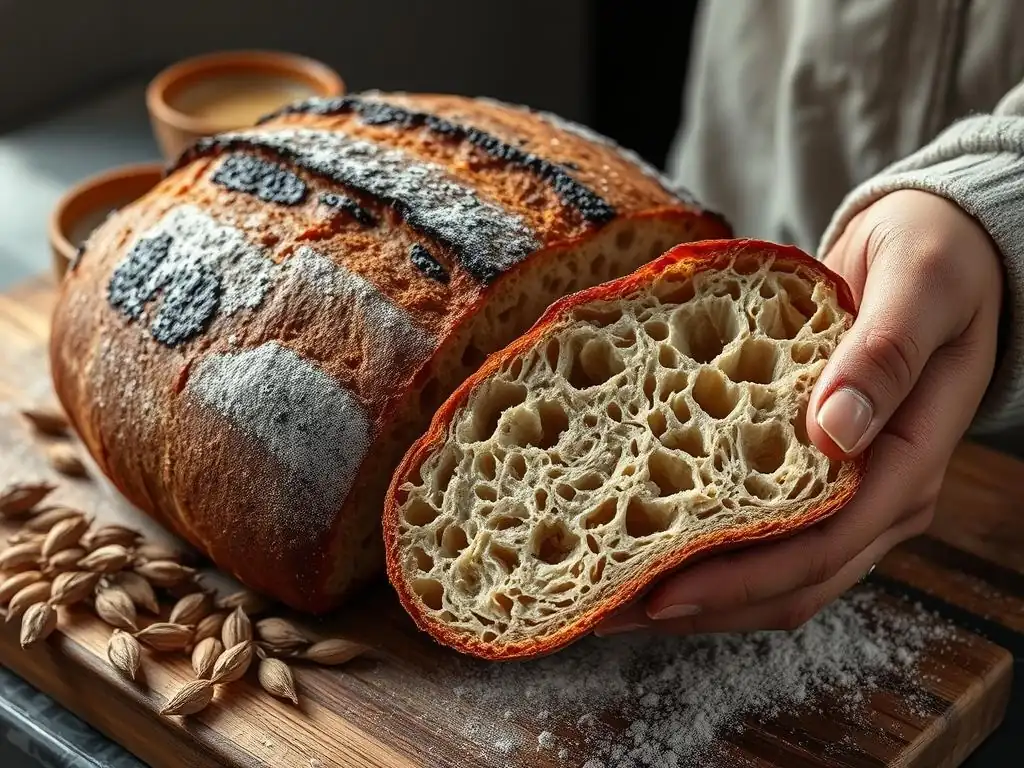
Welcome to BakeWithEase, where we demystify the world of baking, one delicious recipe at a time! Ever wondered how to unlock the secrets of crafting a truly exceptional loaf? Get ready to elevate your baking with our guide to a sourdough bread ancient grain recipe. This isn't just another recipe; it's a journey into the heart of flavor and texture. Discover the techniques for working with challenging flours and create a sourdough masterpiece that will impress even the most discerning palate. What unexpected textures and flavors will you discover? Let's get baking!
- Rye Sourdough Bread: Mastering Flavor and Texture with BakeWithEase
- Adapting Sourdough Techniques for Rye Flour
- Sourdough Starter Management for Rye Breads
- Advanced Sourdough Techniques for Rye
- Rye Sourdough Recipe: Step-by-Step Guide
- Troubleshooting Common Issues in Rye Sourdough
- Enjoying Your Homemade Rye Sourdough
-
Frequently Asked Questions
- What are ancient grains and why use them in sourdough bread?
- What challenges might I face when using ancient grains in sourdough?
- Can I substitute all-purpose flour completely with ancient grains in a sourdough recipe?
- What are some good ancient grains to start with for sourdough bread?
- How do I adjust the hydration when using ancient grains in my sourdough recipe?
- Final Reflection: The Enduring Allure of Ancient Grains in Sourdough
- Unleash Your Inner Bread Wizard: Master Ancient Grains!
Rye Sourdough Bread: Mastering Flavor and Texture with BakeWithEase
What is Rye Flour and Why Use it in Sourdough?
Rye flour comes from the grain of the rye plant ( Secale cereale), a close relative of wheat and barley. Unlike wheat, rye contains a higher proportion of soluble fiber, particularly pentosans, which absorb significantly more water than wheat proteins. This unique characteristic means rye doughs behave very differently from wheat doughs; they are stickier, less elastic, and don't develop gluten structure in the same way. Using rye in a sourdough bread ancient grain recipe introduces distinct earthy, tangy, and sometimes slightly sweet flavors that are highly prized.
Incorporating rye flour into your baking, whether partially or entirely in a sourdough bread ancient grain recipe, offers a wonderful opportunity to expand your baking skills and palate. The unique properties of rye contribute to a denser, moister crumb and a robust crust, providing a satisfying contrast to lighter wheat loaves. Many bakers turn to rye when seeking deeper flavors and a bread with a longer shelf life, as the moisture-retentive properties of rye flour help keep the loaf fresh for extended periods.
Nutritional Benefits and Flavor Profiles of Rye Flour for Sourdough
Rye flour is a nutritional powerhouse, offering significant dietary fiber, including beta-glucans, which are known for their potential to help regulate blood sugar and cholesterol levels. It's also a good source of vitamins and minerals such as B vitamins, iron, magnesium, and zinc. When used in a sourdough bread ancient grain recipe, the fermentation process can further enhance the bioavailability of these nutrients, making rye sourdough a particularly wholesome choice.
The flavor profile of rye flour varies greatly depending on its type, but it consistently brings a unique tang and depth. Light rye offers a milder, slightly sour note, while darker types provide intense, earthy, and sometimes slightly malty flavors. The sourdough fermentation process interacts beautifully with these inherent flavors, producing complex aromas and a pleasant sourness that complements the rye's natural characteristics. This makes a sourdough bread ancient grain recipe with rye a truly rewarding baking experience.
Types of Rye Flour for Sourdough: A Comparison
Rye flour is milled to different levels of refinement, impacting its nutritional content, behavior in dough, and flavor. Understanding these differences is key to choosing the right flour for your desired sourdough bread ancient grain recipe. The main types you'll encounter are light, medium, dark, and pumpernickel, each offering a distinct experience.
The choice of rye flour significantly influences the outcome of your sourdough loaf, affecting everything from the crumb structure to the intensity of flavor. Experimenting with different types in your sourdough bread ancient grain recipe allows you to tailor the bread to your preferences, whether you seek a mild, everyday loaf or a deeply flavored, traditional rye bread.
Light Rye Sourdough: Delicate Flavor and Open Crumb
Light rye flour, sometimes called white rye, is milled from the inner part of the rye berry after most of the bran and germ have been removed. It is the closest in texture and color to white wheat flour among the rye types. Using light rye in a sourdough bread ancient grain recipe results in a milder flavor profile compared to darker ryes, with less earthiness and a more subtle tang from the sourdough starter.
Because it contains less bran and germ, light rye absorbs less water than whole grain rye flours and can sometimes support a slightly more open crumb structure than breads made with darker ryes. While still denser than a typical wheat loaf, a sourdough bread ancient grain recipe using primarily light rye will be lighter in texture and color, making it a good entry point for bakers new to using rye.
Medium Rye Sourdough: Balanced Flavor and Texture
Medium rye flour contains more of the bran and germ than light rye but is still more refined than dark or pumpernickel. It offers a balanced flavor profile, combining some of the subtle tang of light rye with the deeper, earthy notes of the outer grain layers. This makes it a versatile choice for many sourdough bread ancient grain recipe variations.
Breads made with medium rye typically have a richer color and a denser, more traditional rye bread texture than those made with light rye. The increased bran and germ content means it absorbs more water, requiring careful hydration adjustments. A sourdough bread ancient grain recipe using medium rye often strikes a good balance between manageability and achieving that characteristic rye flavor and moist crumb.
Dark Rye Sourdough: Intense Flavor and Dense Crumb
Dark rye flour is milled from almost the entire rye berry, including a significant portion of the bran and germ. This results in a dark color, robust flavor, and high nutritional content. A sourdough bread ancient grain recipe using dark rye will yield a loaf with intense, earthy, and sometimes slightly bitter or malty notes, characteristic of traditional European rye breads.
Due to the high bran and germ content and the unique properties of rye pentosans, dark rye flour absorbs a large amount of water. Doughs made with dark rye are very dense and sticky, and the resulting bread has a tight, moist crumb structure. Mastering a sourdough bread ancient grain recipe with dark rye requires understanding its high hydration needs and unique handling characteristics.
Pumpernickel Rye Sourdough: Deep, Earthy Flavor
Pumpernickel flour is the coarsest grind of rye flour, often containing the whole rye berry, including the outer husks. It is sometimes pre-steamed or roasted, contributing to its very dark color and deep, complex flavor. A sourdough bread ancient grain recipe using pumpernickel flour delivers the most intense, earthy, and sometimes sweet-and-sour flavor profile among the rye types.
Breads made with pumpernickel flour are traditionally very dense and moist, often requiring long, slow baking times, sometimes at lower temperatures. The coarse texture and high absorption rate make this flour challenging to work with, but the resulting sourdough bread ancient grain recipe is incredibly flavorful and has a unique texture. Pumpernickel is often used in combination with other rye or wheat flours.
Adapting Sourdough Techniques for Rye Flour
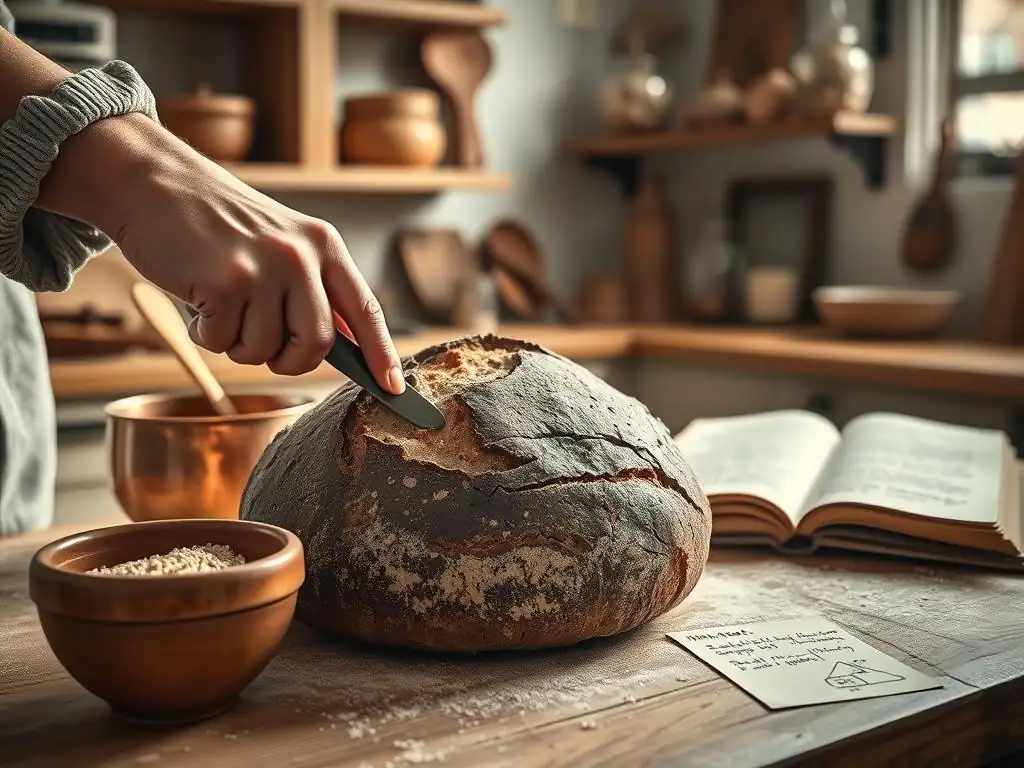
Working with rye flour in sourdough baking requires adjustments compared to baking with wheat. The differences in protein structure and water absorption mean that standard wheat-based techniques need modification. Understanding these adaptations is crucial for successfully creating a delicious sourdough bread ancient grain recipe using rye.
The stickiness and lower gluten development of rye doughs mean that familiar steps like vigorous kneading might be less effective or even detrimental. Instead, techniques that focus on hydration control, gentle handling, and longer fermentation times often yield better results with a sourdough bread ancient grain recipe containing significant amounts of rye.
Hydration Adjustments for Rye Sourdough
Rye flour absorbs significantly more water than wheat flour due to its high pentosan content. However, despite its high absorption, rye doughs can feel much wetter and stickier than wheat doughs at the same hydration percentage. This means that a sourdough bread ancient grain recipe with rye often requires a higher effective hydration to achieve a workable dough, but the hydration percentage relative to flour weight might be lower than you'd expect for a typical open-crumb wheat loaf.
For instance, a 100% dark rye sourdough might use a hydration of 80-90%, which feels incredibly wet compared to a wheat dough at that percentage. A rye-wheat blend might start with a lower overall hydration, perhaps 65-75%, depending on the proportion of rye. It's often best to start with a hydration you're comfortable with and adjust in future bakes, as different rye flours can vary in their absorption rates.
Mixing and Kneading Rye Doughs: Avoiding Over-Mixing
Rye flour contains less gluten-forming protein than wheat, and the structure it does form is often weaker and more easily broken down. This means that traditional vigorous kneading used for wheat doughs is not necessary and can actually be detrimental to rye dough. Over-mixing rye dough can result in a sticky, unmanageable mess and a dense, gummy crumb in the final bread.
For a sourdough bread ancient grain recipe with rye, gentle mixing is key. Often, a simple mix until the ingredients are combined, followed by periods of rest (autolyse or just covered rest), is sufficient. Some bakers use a stand mixer with a paddle or dough hook for initial mixing, while others prefer hand mixing with a spoon or Danish whisk due to the dough's stickiness. Minimal stretching and folding, or simply shaping a relatively slack dough, are often preferred over intensive kneading.
Bulk Fermentation with Rye: Timing and Temperature
Bulk fermentation, the first rise after mixing, is crucial for developing flavor and structure in any sourdough, and a sourdough bread ancient grain recipe with rye is no exception. However, rye ferments more quickly than wheat. This means the bulk fermentation time for a rye or high-rye dough is typically shorter than for a purely wheat sourdough.
Monitoring the dough, rather than strictly following time guidelines, is essential. Look for signs of fermentation: the dough will increase in volume (though often less dramatically than wheat), develop small bubbles on the surface, and feel lighter. A temperature of around 75-78°F (24-26°C) is often ideal for encouraging fermentation without it proceeding too rapidly. Over-fermentation can lead to a loss of structure and a dense loaf.
Shaping and Proofing Rye Sourdough Loaves
Shaping rye dough can be challenging due to its stickiness and lack of strong gluten structure. Unlike wheat doughs that can be tautly shaped, rye doughs often require a gentler approach. Many bakers shape rye doughs into simple rounds (boules) or ovals (batards) with minimal handling, often using wet hands or a bench scraper to manage the stickiness. Shaping directly into the proofing basket or loaf pan is a common technique for high-percentage rye sourdough.
Proofing (the final rise before baking) for rye sourdough is also typically shorter than for wheat. Rye doughs don't hold their shape well when over-proofed and can collapse easily. They are often baked when they show modest signs of expansion and feel airy, rather than doubling in size. Proofing in a well-floured basket or loaf pan helps maintain shape. Cold proofing in the refrigerator can slow down fermentation and develop more flavor, but the proofing time will still be shorter than for a wheat loaf.
Sourdough Starter Management for Rye Breads
A healthy and active sourdough starter is the foundation of any successful sourdough bread ancient grain recipe. When baking with rye, you might consider adapting your starter feeding routine or even maintaining a separate rye starter. Rye flour contains more enzymes that can break down gluten, so a strong starter is particularly important to provide adequate leavening power.
The type of flour used to feed your starter influences its behavior and the flavor it imparts to the bread. Feeding your starter with rye flour can make it very active and lend specific rye characteristics to the levain, which will then carry through to your sourdough bread ancient grain recipe.
Feeding Your Starter with Rye Flour
You can feed your existing wheat or mixed-flour starter with rye flour, or you can maintain a starter that is exclusively fed with rye. Rye starters tend to be very active and can ferment more quickly than wheat starters. To feed a starter with rye, simply use your usual feeding ratio (e.g., 1:1:1 starter:flour:water by weight) substituting some or all of the flour with rye flour.
For example, to convert a wheat starter to rye, you might gradually increase the proportion of rye flour over several feedings. To maintain a rye starter, consistently feed it with rye flour and water. Keep in mind that rye starters can become very liquidy and active quickly, often peaking within 4-6 hours at room temperature (around 75°F/24°C), so timing your levain build for a sourdough bread ancient grain recipe is important.
Maintaining Starter Strength for Optimal Rise
A strong starter is paramount for leavening a sourdough bread ancient grain recipe, especially one containing a high percentage of rye. Rye doughs are denser and harder to lift, so your starter needs to be at its peak activity when used as a levain. This means using it shortly after it has peaked or slightly before, when it is most bubbly and active.
Regular feeding is key to maintaining starter strength. For a starter used frequently for sourdough bread ancient grain recipe baking, daily feeding at room temperature might be necessary. If stored in the refrigerator, weekly feeding is usually sufficient, but you'll need to feed it a couple of times at room temperature before using it in a recipe to ensure it's vigorous. Look for consistent doubling or tripling in volume and a bubbly, frothy texture.
Troubleshooting Starter Issues with Rye Flour
Rye starters, while active, can sometimes present unique challenges. They can become very liquid and may not show the same dramatic rise or gluten development as wheat starters. It's important to recognize the signs of a healthy rye starter, which include consistent bubbling throughout the culture, a pleasant tangy smell, and predictable rising and falling after feeding.
If your rye starter seems sluggish, ensure you are using fresh rye flour and filtered water. Adjusting the feeding ratio (e.g., feeding a higher ratio of flour to starter) or increasing the feeding frequency can help build strength. Temperature also plays a significant role; a warmer environment (around 75-80°F / 24-27°C) promotes faster fermentation. If you notice off smells (like acetone) or mold, discard a large portion and feed it generously, potentially moving it to a clean jar.
Advanced Sourdough Techniques for Rye
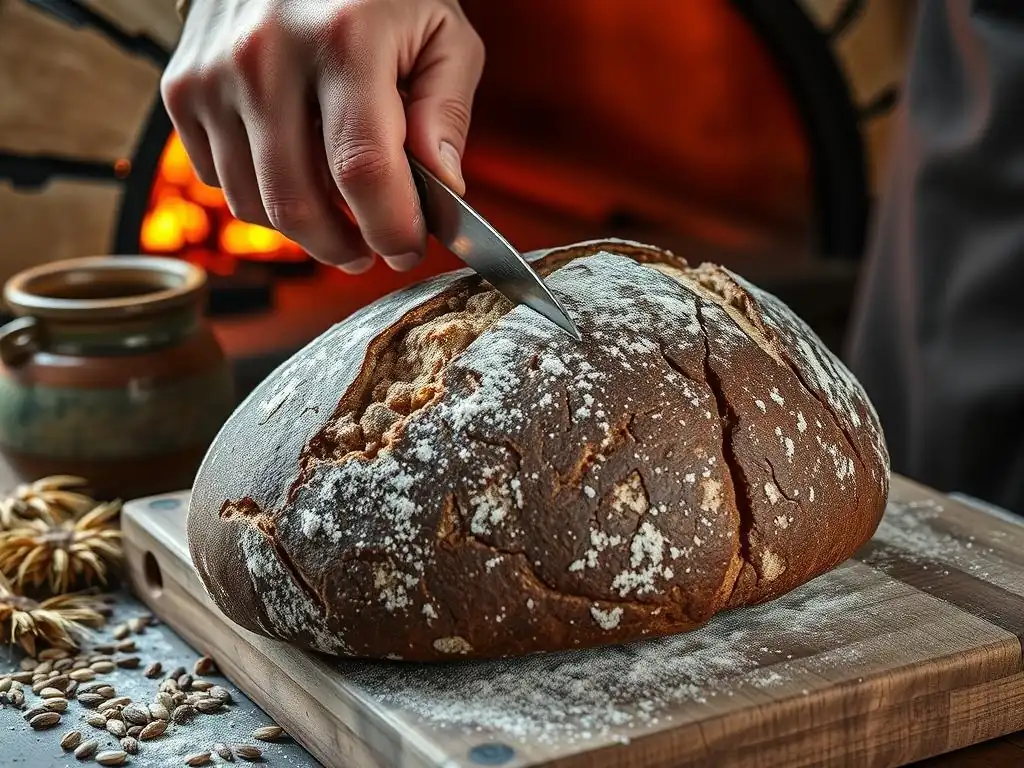
Once you've mastered the basics of incorporating rye into your sourdough, you might explore advanced techniques to further enhance the texture, flavor, and structure of your sourdough bread ancient grain recipe. Techniques like autolyse, using a soaker, and cold fermentation can significantly improve the outcome of rye loaves.
These methods can help manage the unique properties of rye flour, such as its high water absorption and lower gluten potential. Implementing them thoughtfully can lead to a more manageable dough and a more complex, satisfying final product when baking a sourdough bread ancient grain recipe with rye.
Autolyse and its Impact on Rye Sourdough
Autolyse is a technique where flour and water are mixed together and allowed to rest before the starter and salt are added. This resting period allows the flour to fully hydrate and the gluten to start developing naturally. While rye flour doesn't form gluten in the same way as wheat, autolyse can still be beneficial in a sourdough bread ancient grain recipe containing rye, especially in blends with wheat.
For rye or high-rye doughs, a shorter autolyse (perhaps 20-30 minutes) is often sufficient. It helps the rye pentosans absorb water and swell, leading to a smoother, less sticky dough during mixing. For a sourdough bread ancient grain recipe that is 100% rye, the benefit is primarily in hydration and making the initial mix easier, rather than significant gluten development.
Using a Soaker for Rye Flour
Due to rye's high water absorption and propensity for a dense crumb, incorporating a soaker (or altus in traditional rye baking) can be very effective in a sourdough bread ancient grain recipe. A soaker involves pre-hydrating a portion of the rye flour (often with hot water or leftover bread) for several hours or overnight before adding it to the main dough.
Using a soaker allows the rye flour to fully absorb water, improving the dough's hydration and the crumb's texture. It can also enhance flavor, especially if stale rye bread is included. This technique helps prevent a gummy crumb and ensures the rye is thoroughly hydrated, leading to a more balanced and moist loaf in your sourdough bread ancient grain recipe.
Cold Fermentation for Enhanced Flavor in Rye Sourdough
Cold fermentation, or proofing the dough in the refrigerator for an extended period (12-48 hours), is a popular technique in sourdough baking for developing deeper flavors and improving handling. This method works well for a sourdough bread ancient grain recipe with rye, though the duration might be slightly shorter than for pure wheat loaves.
The cooler temperature slows down yeast activity but allows the lactic acid bacteria in the sourdough starter to continue producing flavorful acids. This results in a more complex, tangy flavor profile that complements the inherent characteristics of rye. Cold fermentation also slightly firms up the dough, making it easier to handle and score before baking.
Rye Sourdough Recipe: Step-by-Step Guide
Ready to bake your own sourdough bread ancient grain recipe featuring rye? This guide outlines the steps for a representative loaf, often a blend of rye and wheat for better manageability, or a smaller 100% rye loaf which requires specific handling. Remember that baking times and temperatures can vary based on your oven and flour.
This recipe focuses on techniques suitable for handling rye dough, emphasizing hydration, gentle mixing, and careful fermentation monitoring. Mastering this sourdough bread ancient grain recipe will give you a fantastic, flavorful loaf.
Ingredients for a 100% Rye Sourdough Loaf
- Active rye sourdough starter: 100g (fed and active)
- Dark rye flour: 400g
- Water: 340g (85% hydration)
- Salt: 8g (2% of flour weight)
- Optional: Caraway seeds (5-10g)
These ingredients are for a relatively small loaf, suitable for mastering the technique with 100% rye. For a larger loaf or a blend, adjust quantities proportionally.
Preparing the Levain (Sourdough Starter)
About 4-6 hours before you plan to mix the dough (or longer if your starter is less active or room temperature is cooler), prepare your levain. Take a small amount of your mature starter (e.g., 20g) and feed it with rye flour (e.g., 40g) and water (e.g., 40g) in a clean jar.
Mix thoroughly until no dry flour remains. Cover the jar loosely and let it sit at room temperature (ideally around 75-80°F / 24-27°C) until it has peaked or is very active and bubbly, showing significant rise and a domed top before starting to fall slightly. This active levain is crucial for lifting the dense rye dough in your sourdough bread ancient grain recipe.
Mixing the Dough and Autolysing
In a large mixing bowl, combine the dark rye flour and 340g of water. Mix with a spoon or your hand until all the flour is hydrated and no dry pockets remain. The dough will be very sticky and shaggy. This is your autolyse step.
Cover the bowl and let it rest for 20-30 minutes. This brief rest period allows the rye flour to fully absorb the water. After the rest, add the 100g of active rye levain and the 8g of salt (and optional caraway seeds) to the bowl.
Mix gently but thoroughly, using your hand (wetting it helps with stickiness) or a sturdy spoon, until the starter and salt are evenly incorporated into the dough. Avoid vigorous kneading. The dough will remain sticky and dense. Scrape down the sides of the bowl.
Bulk Fermentation: Monitoring and Folding
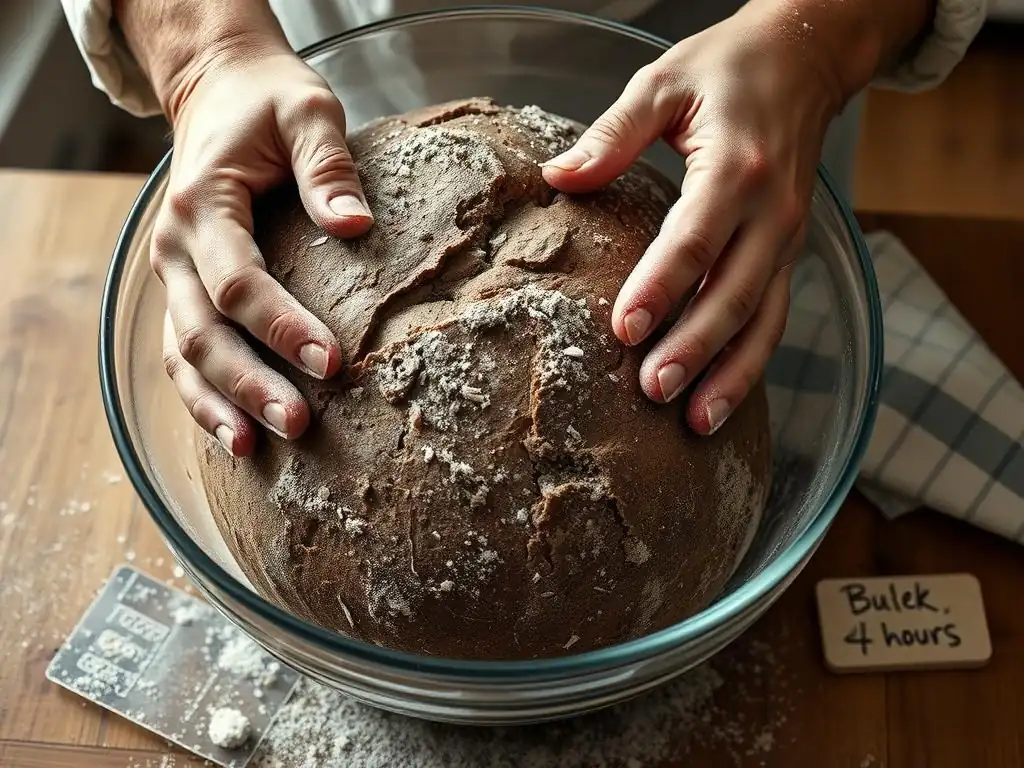
Cover the bowl and let the dough ferment at room temperature (around 75-78°F / 24-26°C). Rye ferments relatively quickly. Monitor the dough closely; it may not double in size like wheat dough. Look for signs like increased volume (perhaps 30-50%), bubbles on the surface and sides, and a slightly lighter feel.
Depending on the temperature and starter activity, bulk fermentation could take anywhere from 2 to 4 hours. You can perform one or two sets of gentle folds during the first hour or so if desired, using wet hands to manage stickiness, but it's not strictly necessary for 100% rye. The key is to stop bulk fermentation when the dough shows clear signs of activity but before it starts to lose tension.
Shaping and Proofing the Sourdough Loaf
Rye dough is best shaped gently and quickly. Lightly flour your work surface with rye flour or use wet hands. Gently scrape the dough out of the bowl. Shape it into a round or oval loaf using a bench scraper to help gather and tuck the edges underneath. Avoid excessive handling or trying to create significant surface tension.
Immediately transfer the shaped dough, seam-side up, into a well-floured proofing basket (banneton) or seam-side down into a greased loaf pan. Ensure the proofing vessel is generously floured with rye flour or rice flour to prevent sticking.
Proof the dough at room temperature for a final rise (approx. 30-60 minutes) or place it in the refrigerator for a cold proof (4-12 hours). Rye dough is prone to over-proofing, so watch it closely. For a room temperature proof, it's ready when it feels slightly airy but still holds its shape. For a cold proof, it will firm up significantly.
Baking Your Rye Sourdough Bread
Preheat your oven and baking vessel (like a Dutch oven or baking stone with steam) to a high temperature, typically 450-475°F (230-245°C). If using a Dutch oven, preheat it for at least 30-45 minutes.
Carefully invert the proofed dough into the hot Dutch oven or onto the preheated stone. If using a Dutch oven, score the loaf quickly if desired (rye doesn't expand much, so deep scores aren't essential). Cover the Dutch oven. If baking on a stone, create steam in the oven by placing a tray of hot water on the bottom rack or using lava rocks.
Bake covered (or with steam) for 20-25 minutes. Then, remove the lid (or steam source) and continue baking for another 20-30 minutes, or until the crust is deep brown and the internal temperature reaches 200-210°F (93-99°C). Rye loaves often benefit from a slightly longer bake to ensure the interior is fully cooked.
Once baked, transfer the loaf to a wire rack to cool completely before slicing. This is crucial for rye bread, as the internal structure needs time to set. Slicing too early can result in a gummy crumb.
Troubleshooting Common Issues in Rye Sourdough
Baking a sourdough bread ancient grain recipe with rye can present unique challenges compared to wheat. Understanding common issues and their causes will help you refine your technique and achieve better results. Don't be discouraged by initial attempts; practice makes perfect with rye.
Many problems stem from the unique properties of rye flour – its high water absorption, lack of strong gluten, and faster fermentation. Adjusting your handling, timing, and hydration are often key to resolving issues.
Dense or Gummy Crumb
A dense or gummy crumb is one of the most common issues with rye sourdough. This can be caused by several factors:
- Under-baking: Rye loaves need thorough baking to cook the interior fully. Ensure the internal temperature reaches at least 200°F (93°C).
- Slicing too early: Slicing a warm rye loaf traps moisture and can result in a gummy texture. Always let it cool completely, ideally for several hours.
- Over-hydration: While rye absorbs lots of water, too much can lead to a slack, gummy dough that doesn't bake through properly.
- Weak starter or under-proofing: An inactive starter or insufficient proofing won't create enough lift, leading to a dense loaf.
- Over-mixing: Breaking down the limited rye structure can result in a poor crumb.
Flat or Under-Proofed Loaf
If your rye sourdough bakes up flat, it might be under-proofed or your starter wasn't active enough. Rye doughs don't show as much visual rise during proofing as wheat, making it tricky to judge readiness.
An under-proofed rye loaf often has a dense, tight crumb with possibly a few large tunnels. It may also exhibit significant oven spring, but spread outwards rather than upwards. Ensure your starter is vigorous and allow sufficient, but not excessive, proofing time, paying attention to the dough's feel and subtle signs of expansion.
Over-Proofed Dough
Over-proofing rye dough is also a common pitfall because it ferments quickly and lacks the strong gluten network to support itself once it's gone too far.
An over-proofed rye loaf will often feel fragile, may spread excessively when turned out of the proofing basket, and will have little to no oven spring. The crumb might be uneven or collapse slightly. Careful monitoring of bulk fermentation and proofing time, especially in warmer conditions, is essential to avoid this. Cold proofing can help slow things down.
Difficult Shaping and Handling
Rye dough is notoriously sticky and lacks the elasticity of wheat dough, making it challenging to shape and handle.
Using wet hands or a wet bench scraper can help manage the stickiness. Shaping should be minimal and gentle; trying to create tight surface tension like you would with wheat often doesn't work and can damage the structure. Shaping directly into the proofing vessel or loaf pan is a recommended technique for high-percentage rye loaves to maintain their form.
Enjoying Your Homemade Rye Sourdough
Congratulations! You've successfully baked a sourdough bread ancient grain recipe featuring rye. The reward is a flavorful, aromatic loaf with a unique texture. Taking the time to properly cool, slice, and store your bread will ensure you get the most enjoyment from your baking efforts.
Rye sourdough is incredibly versatile and pairs well with a variety of foods. Its dense, moist crumb and tangy flavor make it a wonderful addition to meals and snacks.
Serving Suggestions and Pairings
Rye sourdough, especially a sourdough bread ancient grain recipe with a high percentage of rye, has a distinctive flavor that complements strong and rich foods. It's fantastic simply buttered, but here are some other ideas:
- Cheese: Pair with aged cheeses like cheddar, Gruyère, or strong blues.
- Smoked Fish: Excellent with smoked salmon, lox, or smoked herring.
- Cured Meats: Try it with pastrami, corned beef, or other charcuterie.
- Pickled Vegetables: The tanginess of the bread works well with pickled onions, cucumbers, or sauerkraut.
- Hearty Soups and Stews: Rye bread is perfect for soaking up rich broths.
- Open-faced Sandwiches: A classic base for various toppings, from avocado to liver pâté.
Storing Your Sourdough Bread for Freshness
Rye sourdough tends to stay fresh longer than wheat bread due to its high moisture content. Once completely cool, store the loaf at room temperature.
Wrap the loaf in a linen bread bag, a cotton towel, or place it cut-side down on a cutting board. Avoid plastic bags if storing at room temperature for more than a day or two, as they can trap moisture and make the crust soft. For longer storage, slice the cooled loaf and freeze the slices in an airtight container or freezer bag. You can toast slices directly from frozen.
Further Experimentation with Rye and Sourdough
Mastering a sourdough bread ancient grain recipe with rye is just the beginning. There are many ways to continue experimenting:
- Vary the Rye Percentage: Try loaves with 20%, 50%, or 75% rye blended with wheat to see how the texture and flavor change.
- Explore Different Rye Types: Bake loaves with light, medium, or pumpernickel rye to compare their characteristics.
- Add Inclusions: Incorporate seeds (sunflower, pumpkin, flax, caraway), nuts, or dried fruit into your rye sourdough dough.
- Use a Soaker or Altus: Experiment with pre-hydrating some of the rye flour or adding old rye bread for deeper flavor and moisture.
- Adjust Hydration: Slightly increase or decrease the water percentage in your sourdough bread ancient grain recipe to see how it affects the dough handling and final crumb.
Keep baking, keep experimenting, and enjoy the wonderful world of sourdough bread ancient grain recipe variations!
Frequently Asked Questions
What are ancient grains and why use them in sourdough bread?
Ancient grains are unmodified grains that have remained largely unchanged over centuries. They add complex flavors and nutritional benefits to sourdough bread, making it a healthier and more interesting bake.
What challenges might I face when using ancient grains in sourdough?
Ancient grains often have different gluten structures and water absorption rates compared to modern wheat. This can result in a denser or stickier dough requiring adjustments to your recipe.
Can I substitute all-purpose flour completely with ancient grains in a sourdough recipe?
It's generally not recommended to substitute 100% of the all-purpose flour. Start by substituting 20-50% ancient grains and adjust based on the dough's hydration and strength.
What are some good ancient grains to start with for sourdough bread?
Good starter ancient grains include spelt, einkorn, and kamut. These tend to be more forgiving and have a more familiar flavor profile than some of the more obscure options.
How do I adjust the hydration when using ancient grains in my sourdough recipe?
Ancient grains often require more or less water than all-purpose flour. Start with the recipe's suggested hydration, and gradually add water or flour until the dough feels properly hydrated but not overly sticky.
Final Reflection: The Enduring Allure of Ancient Grains in Sourdough
The resurgence of sourdough baking, combined with a growing interest in ancient grains, represents a powerful return to culinary traditions and a conscious effort towards healthier eating. This isn't just a fleeting trend; it's a movement reflecting a deeper desire for connection to our food sources and a renewed appreciation for the nuanced flavors and nutritional benefits of less-processed ingredients.
The journey of working with ancient grains in sourdough has been profoundly rewarding. It's a testament to the resilience of both the baking process and the grains themselves, demanding patience and precision but ultimately yielding loaves of unparalleled depth and character. Bread is the staff of life,
a simple phrase, yet it encapsulates the profound connection between sustenance and culture. The unique challenges and rewards of baking with ancient grains only deepen this understanding, revealing the artistry and history woven into each loaf.
Now, it's your turn. Consider the possibilities: experiment with different ancient grains, explore the nuances of their individual characteristics, and embrace the journey of mastering this ancient craft. Don't be afraid to fail; each attempt brings you closer to understanding the intricate dance between flour, water, time, and the magic of sourdough. The reward? A loaf of bread that tells a story, a taste of history, and a connection to something far greater than yourself.
Unleash Your Inner Bread Wizard: Master Ancient Grains!
Thanks for joining us on this sourdough adventure! You've now unlocked the secrets to working with those wonderfully challenging ancient grains. Ready to put your new skills to the test?
- Bake your own masterpiece: Try one of the recipes mentioned in the article, adapting it with your favorite ancient grain flour. Share your results – we'd love to see them!
- Experiment with different grains: Explore the nuances of spelt, einkorn, or kamut – each offering a unique flavor and texture. Keep notes on what works best for you!
- Join the BakeWithEase community: Share your experiences and ask questions in the comments below. Let's build a supportive network of sourdough enthusiasts!
What unique flavor profile will you create with your next sourdough loaf?