
Creating a Velvety Chocolate Mousse: Ingredient Secrets Revealed

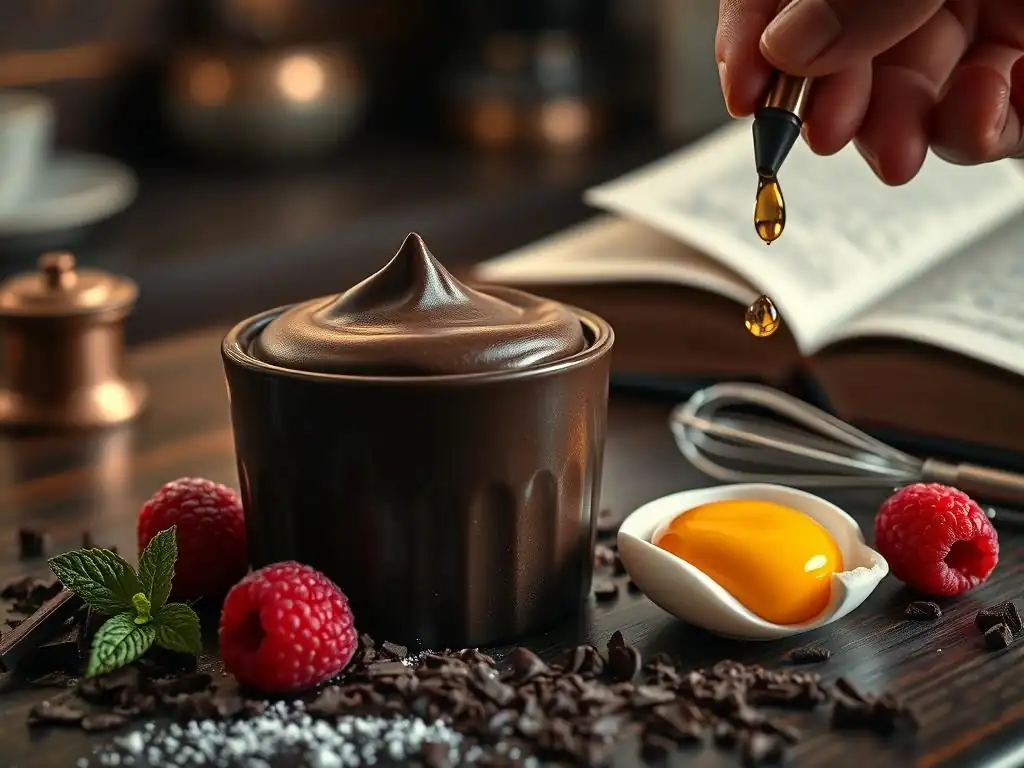
Welcome to BakeWithEase, your guide to baking brilliance!
Ever wondered what really makes a chocolate mousse transcend from good to unforgettable? In this article, we unlock the secrets behind a truly velvety chocolate mousse recipe, delving into the crucial role each ingredient plays. Prepare to elevate your baking game as we explore the nuances that will leave everyone craving more. Intrigued? Let's dive in!
- Creating a Velvety Chocolate Mousse: Ingredient Secrets Revealed (BakeWithEase.com)
- The Ultimate Velvety Chocolate Mousse Recipe: A BakeWithEase Guide
- Understanding the Key Ingredients for a Perfect Chocolate Mousse
-
Mastering the Technique: Step-by-Step Velvety Chocolate Mousse Recipe
- Step 1: Preparing the Chocolate Base for Mousse Perfection
- Step 2: Whipping the Egg Yolks and Sugar for Maximum Volume
- Step 3: Gently Folding in the Chocolate for a Smooth Texture
- Step 4: Whipping the Cream to Soft Peaks for Mousse
- Step 5: Incorporating the Whipped Cream for Velvety Lightness
- Step 6: Chilling the Mousse to Achieve the Ideal Consistency
- Secrets to a Velvety Texture: Avoiding Common Chocolate Mousse Mistakes
- Exploring Chocolate Variations: From Dark to White Chocolate Mousse
- Serving and Garnish Ideas for Your Velvety Chocolate Mousse
- Troubleshooting Your Velvety Chocolate Mousse Recipe
-
Frequently Asked Questions
- What makes a chocolate mousse truly velvety?
- Can I use any type of chocolate for this Velvety Chocolate Mousse recipe?
- How important is the temperature of the ingredients when making Velvety Chocolate Mousse?
- What are some common mistakes to avoid when making Velvety Chocolate Mousse?
- How long does Velvety Chocolate Mousse need to chill before serving?
- Final Reflection: The Enduring Allure of Velvety Perfection
- Unlock Your Inner Pastry Chef: Master the Art of Chocolate Mousse!
Creating a Velvety Chocolate Mousse: Ingredient Secrets Revealed (BakeWithEase.com)
The Ultimate Velvety Chocolate Mousse Recipe: A BakeWithEase Guide
Creating a truly velvety chocolate mousse is a delightful endeavor, resulting in a dessert that is both rich and incredibly light. It's a classic that impresses, yet with the right understanding of ingredients and technique, it's surprisingly achievable in your home kitchen. At BakeWithEase, we believe the secret lies not just in following steps, but in appreciating the role each component plays in achieving that coveted smooth, airy texture. This guide will take you deep into the heart of what makes a perfect velvety chocolate mousse, from selecting the finest chocolate to mastering the gentle folding techniques.
Embarking on the journey to create a perfect velvety chocolate mousse recipe involves a balance of science and artistry. It's about understanding how fats, proteins, and sugars interact to create a stable yet delicate structure. We'll break down the essential ingredients, revealing how each contributes to the final texture and flavor, and then guide you through the process with clear, actionable steps. Get ready to unlock the secrets to a dessert that will have everyone asking for your velvety chocolate mousse recipe.
Understanding the Key Ingredients for a Perfect Chocolate Mousse
High-Quality Chocolate: The Foundation of Your Velvety Mousse
The quality of your chocolate is paramount when crafting a velvety chocolate mousse. It dictates the depth of flavor and contributes significantly to the mousse's texture and stability. Using chocolate with a high cocoa butter content, typically found in couverture or high-quality baking bars, is crucial. For a rich dark chocolate mousse, aim for chocolate that is at least 60% to 70% cocoa. Cheaper chocolates or chocolate chips often contain stabilizers and less cocoa butter, which can result in a grainy or less smooth mousse that doesn't set properly.
When selecting chocolate, look for brands that list cocoa mass, cocoa butter, sugar, and vanilla as primary ingredients, avoiding those with excessive emulsifiers or vegetable fats replacing cocoa butter. For instance, using a 70% single-origin dark chocolate from a reputable chocolatier will yield a far more intense and nuanced flavor profile than a standard supermarket baking bar. Approximately 200-250 grams of high-quality chocolate is typically needed for a standard recipe serving 4-6 people, providing the essential structure and deep chocolate taste for your velvety chocolate mousse.
Eggs: Binding and Creating Airiness in Chocolate Mousse
Eggs play a dual vital role in many classic velvety chocolate mousse recipes: the yolks provide richness and act as an emulsifier, while the whites are whipped to create lift and airiness. The lecithin in egg yolks helps bind the fat from the chocolate and cream with the liquid components, preventing separation and contributing to a smooth texture. Often, egg yolks are gently heated with sugar (a process called pâte à bombe or simply tempering) to cook them slightly, making them safe to consume raw and creating a stable base.
Egg whites, when whipped into stiff peaks, trap air bubbles. Gently folding these aerated whites into the chocolate mixture is what gives the mousse its characteristic light and airy texture. For a standard recipe, you might use 3-4 large eggs (about 50-55g each). The volume of whipped egg whites can increase by 6 to 8 times, demonstrating their significant contribution to the mousse's final structure and lightness. Ensuring your egg whites are free of any yolk or grease is essential for them to whip properly and provide maximum lift for your velvety chocolate mousse.
Sugar: Achieving the Right Sweetness and Texture
Sugar in a velvety chocolate mousse recipe does more than just add sweetness; it also affects the texture and stability. When whisked with egg yolks, sugar helps to strengthen the protein structure, creating a more stable emulsion. The amount of sugar needed depends on the type of chocolate used – darker chocolates require more sugar to balance their bitterness than milk or white chocolate. Granulated sugar is commonly used, but superfine (caster) sugar dissolves more quickly, which can be beneficial when whisking with egg yolks, especially if gently heating them.
Using the correct amount of sugar is key to balancing the flavors and achieving the desired consistency of your velvety chocolate mousse. Too little sugar, especially with dark chocolate, can result in a harsh, bitter taste. Too much can make the mousse overly sweet and potentially interfere with the setting process. A typical recipe might call for 50-80 grams of sugar for 200g of dark chocolate, adjusting based on personal preference and the cocoa percentage. The sugar also helps to stabilize the whipped egg whites, preventing them from collapsing too quickly when folded in.
Cream: Adding Richness and Velvety Smoothness
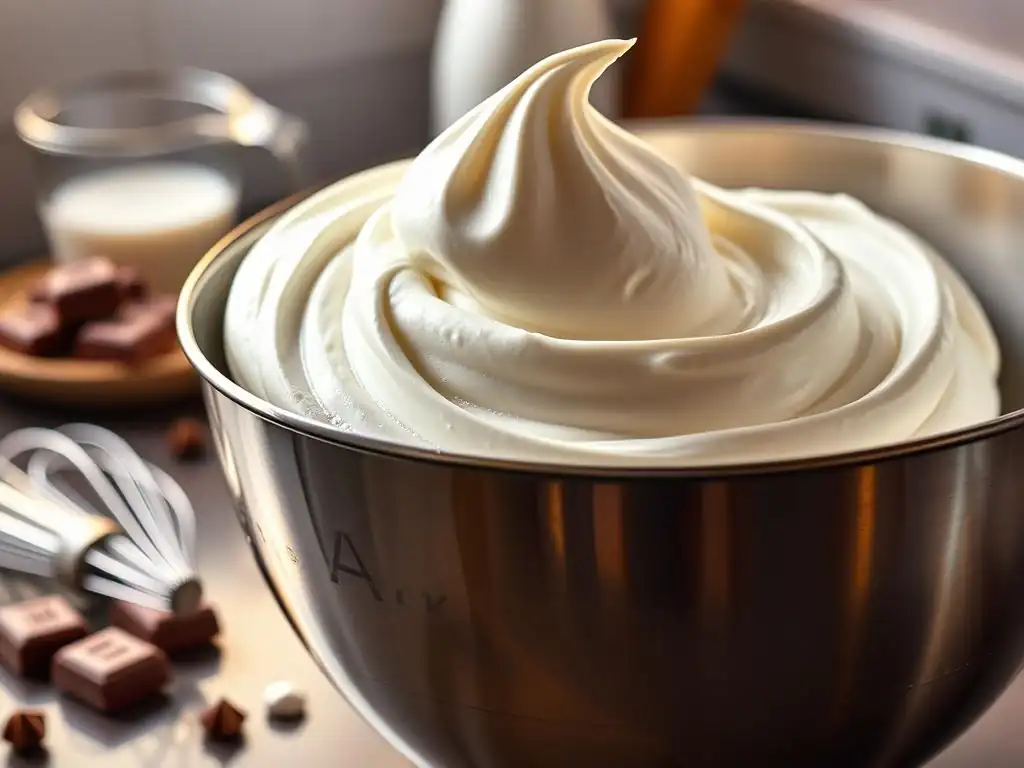
Heavy cream (or whipping cream) is another cornerstone ingredient for a velvety chocolate mousse, contributing significantly to its richness, smoothness, and luxurious mouthfeel. When whipped to soft peaks, the cream incorporates air and provides a stable, creamy base that lightens the dense chocolate mixture. The fat content of the cream is crucial; typically, cream with at least 30% fat (often 35% or higher in many regions) is required to whip properly and hold its shape.
Using cold heavy cream is essential for successful whipping. As you whip, the fat molecules bind together, trapping air and creating volume. The goal is soft peaks – the cream should hold a shape but still be soft and pillowy. Over-whipping to stiff peaks can make the mousse heavy or even slightly grainy. Roughly 250-300 ml of heavy cream is often used in conjunction with the chocolate and egg base, providing that signature velvety texture and richness that defines a superb chocolate mousse.
Optional Enhancements: Coffee, Liquor, and Extracts
While the core velvety chocolate mousse recipe relies on chocolate, eggs, sugar, and cream, optional enhancements can elevate the flavor profile and add complexity. A small amount of strong brewed coffee or espresso can intensify the chocolate flavor, making it taste deeper and more robust without necessarily adding a coffee taste. Alcohol like rum, brandy, or a coffee liqueur (such as Kahlúa) can also be incorporated, usually a tablespoon or two, to add warmth and sophistication. The alcohol also slightly alters the texture, often making it even smoother.
Vanilla extract is a common addition that rounds out the flavors, enhancing the chocolate notes. Other extracts like almond or peppermint can be used depending on the desired flavor profile, though they should be used sparingly to avoid overpowering the delicate chocolate. A pinch of salt is another secret ingredient that can surprisingly boost the chocolate flavor. These enhancements, while optional, allow for creative variations on the classic velvety chocolate mousse, tailoring it to specific tastes or occasions.
Mastering the Technique: Step-by-Step Velvety Chocolate Mousse Recipe
Step 1: Preparing the Chocolate Base for Mousse Perfection
The first critical step in creating a velvety chocolate mousse recipe is preparing the chocolate base. This typically involves melting the chopped chocolate. It's best to melt chocolate gently to prevent it from seizing or burning. A double boiler is the ideal method: place the chopped chocolate in a heatproof bowl set over a saucepan of simmering (not boiling) water, ensuring the bottom of the bowl doesn't touch the water. Stir occasionally until the chocolate is smooth and completely melted.
Alternatively, you can melt the chocolate in a microwave on low power (50% or less), stirring every 30 seconds. This method requires careful attention to avoid overheating. Once melted, remove the chocolate from the heat and let it cool slightly, but not solidify. It should be warm to the touch, around 40-45°C (104-113°F), which is the ideal temperature for incorporating the other ingredients without scrambling the eggs or causing the fat and liquid to separate. This smooth, warm chocolate provides the essential foundation for your velvety chocolate mousse.
Step 2: Whipping the Egg Yolks and Sugar for Maximum Volume
Next, focus on the egg yolks and sugar. In many classic velvety chocolate mousse recipes, the egg yolks are whisked with sugar, often over a gentle heat, to create a rich, stable base. Place the egg yolks and sugar in a heatproof bowl set over a saucepan of simmering water (another double boiler setup). Whisk continuously with a balloon whisk or electric mixer on medium speed.
Continue whisking until the mixture is pale yellow, thick, and has increased significantly in volume – it should be ribbon-like, meaning when you lift the whisk, the mixture falls back into the bowl in ribbons that hold their shape briefly before disappearing. This process, known as pâte à bombe or simply cooking the yolks, typically takes 5-10 minutes and ensures the yolks are cooked while also creating a stable, airy foam that contributes to the velvety texture of the mousse. Remove from the heat and continue whisking until it cools slightly.
Step 3: Gently Folding in the Chocolate for a Smooth Texture
Once the melted chocolate has cooled slightly (but is still liquid) and the egg yolk mixture is ready, it's time to combine them. This step requires gentle handling to maintain the air incorporated into the yolks. Pour the slightly cooled melted chocolate into the bowl with the whisked egg yolk mixture.
Using a rubber spatula, gently fold the chocolate into the egg yolks. The key word here is fold, not stir vigorously. Cut down through the center of the mixture, scoop from the bottom, and bring it up and over the top, rotating the bowl as you go. Continue folding until the mixture is just combined and uniform in color, with no streaks of yolk or chocolate visible. Overmixing can deflate the airy yolk mixture, resulting in a denser mousse. This careful folding ensures a smooth, consistent base for your velvety chocolate mousse.
Step 4: Whipping the Cream to Soft Peaks for Mousse
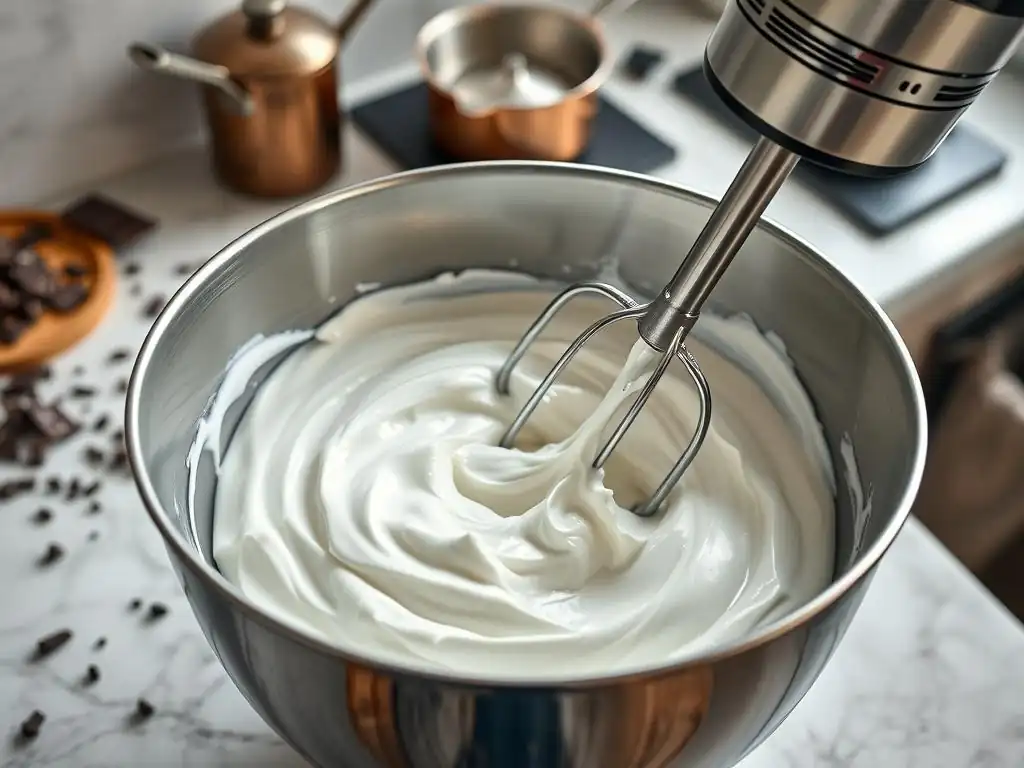
Now, prepare the whipped cream. Ensure your heavy cream is very cold. For best results, you can also chill your mixing bowl and whisk attachment for 10-15 minutes beforehand. Pour the cold heavy cream into the chilled bowl.
Using an electric mixer, start whipping the cream on medium speed. As it begins to thicken, gradually increase the speed to medium-high. Whip until the cream forms soft peaks. This means when you lift the whisk, the cream forms peaks that curl over slightly at the top, rather than standing straight up.
Whipped cream at the soft peak stage is light and airy, perfect for folding into the chocolate base. Be careful not to over-whip, as this can lead to a grainy texture. Approximately 2-4 minutes of whipping is usually sufficient for about 250ml of cold heavy cream to reach soft peaks.
Step 5: Incorporating the Whipped Cream for Velvety Lightness
This is perhaps the most crucial step for achieving that signature velvety texture in your chocolate mousse: incorporating the whipped cream into the chocolate base. Take about one-third of the whipped cream and add it to the chocolate and egg mixture. Use your rubber spatula to gently fold it in. This first addition helps to lighten the base mixture and make it easier to fold in the remaining cream without deflating it.
Once the first third of the cream is mostly incorporated (it doesn't need to be perfectly uniform yet), add the remaining two-thirds of the whipped cream. Again, using the folding technique, gently combine the mixtures. Work carefully, cutting through the center, scooping, and bringing over. Stop folding as soon as the mixture is homogenous and no streaks of white cream are visible. Over-folding will knock out the air you've worked hard to incorporate, resulting in a heavy mousse. The goal is a light, airy, and uniformly colored mixture that promises a truly velvety chocolate mousse.
Step 6: Chilling the Mousse to Achieve the Ideal Consistency
The final step before enjoying your velvety chocolate mousse is chilling. This allows the chocolate and fats to firm up, setting the mousse and achieving its characteristic smooth, melt-in-your-mouth consistency. Spoon or pipe the mousse into individual serving glasses, bowls, or a single large dish.
Cover the dishes tightly with plastic wrap, pressing the wrap gently onto the surface of the mousse to prevent a skin from forming. Refrigerate for at least 2-4 hours, or preferably longer, until the mousse is fully set. A longer chilling time, even overnight, often results in a better set and a more stable texture. The chilling process is essential for the mousse to develop its structure and attain that delightful velvety texture. Serve chilled for the best experience.
Secrets to a Velvety Texture: Avoiding Common Chocolate Mousse Mistakes
Preventing Graininess in Your Chocolate Mousse
Graininess is a common pitfall when making chocolate mousse, and it usually stems from issues with the chocolate itself or temperature control during mixing. One primary cause is overheating the chocolate when melting; this can cause the cocoa solids and fat to separate. Always melt chocolate gently over low heat or in short bursts in the microwave. Another cause is adding cold or lukewarm liquid (like cream or egg mixture) directly to melted chocolate that is too warm, causing the chocolate to seize and become grainy.
To avoid graininess, ensure your melted chocolate has cooled slightly (to around 40-45°C) before incorporating other ingredients. Also, make sure the components you are folding in (like the egg mixture and whipped cream) are not excessively cold, though the cream should be cold before whipping. If your chocolate base seems slightly grainy after melting, a quick fix can sometimes be to whisk in a tablespoon of hot liquid (like coffee or milk) very vigorously, but prevention is always better. Proper temperature management throughout the process is key to a smooth, velvety chocolate mousse.
Achieving the Perfect Air Incorporation for a Light Mousse
The lightness of a velvety chocolate mousse comes from the air incorporated through whipping the egg yolks and, more significantly, the egg whites or cream. Deflating these aerated components during the folding stage is the quickest way to end up with a dense mousse. Over-mixing is the main culprit here. When folding, use a gentle, deliberate motion with a rubber spatula, cutting through the mixture and bringing the bottom over the top.
Avoid stirring or beating the mixture vigorously. Only fold until the ingredients are just combined and no streaks remain. It's okay if there are a few tiny specks of unincorporated ingredient; it's better than overworking the mousse. For recipes using whipped egg whites, ensure they are whipped to medium-stiff peaks – stiff enough to hold shape but not dry. When folding them in, start with a small amount to lighten the base, then gently incorporate the rest. This careful handling preserves the air bubbles, ensuring a light, ethereal velvety chocolate mousse.
Temperature Control: Crucial for Chocolate Mousse Success
Temperature plays a vital role at multiple stages when making a velvety chocolate mousse recipe. As mentioned, properly melting and cooling the chocolate is essential to prevent seizing. The temperature of the egg yolk mixture when combining with chocolate is also important – it should be warm enough to meld with the chocolate but not so hot it cooks the chocolate or makes it separate. Aim for both components to be relatively close in temperature before combining.
Furthermore, the temperature of the cream before whipping is critical – it must be very cold (ideally 4°C or below) to whip properly and hold its volume. Finally, chilling the finished mousse is non-negotiable. Refrigerating for the recommended 2-4 hours (or more) allows the fats to solidify, transforming the airy mixture into a set, stable, and velvety chocolate mousse. Skipping or shortening the chilling time will result in a runny, unset dessert. Paying attention to these temperature points throughout the process ensures success.
Exploring Chocolate Variations: From Dark to White Chocolate Mousse
Dark Chocolate Mousse: Intense and Rich Flavors
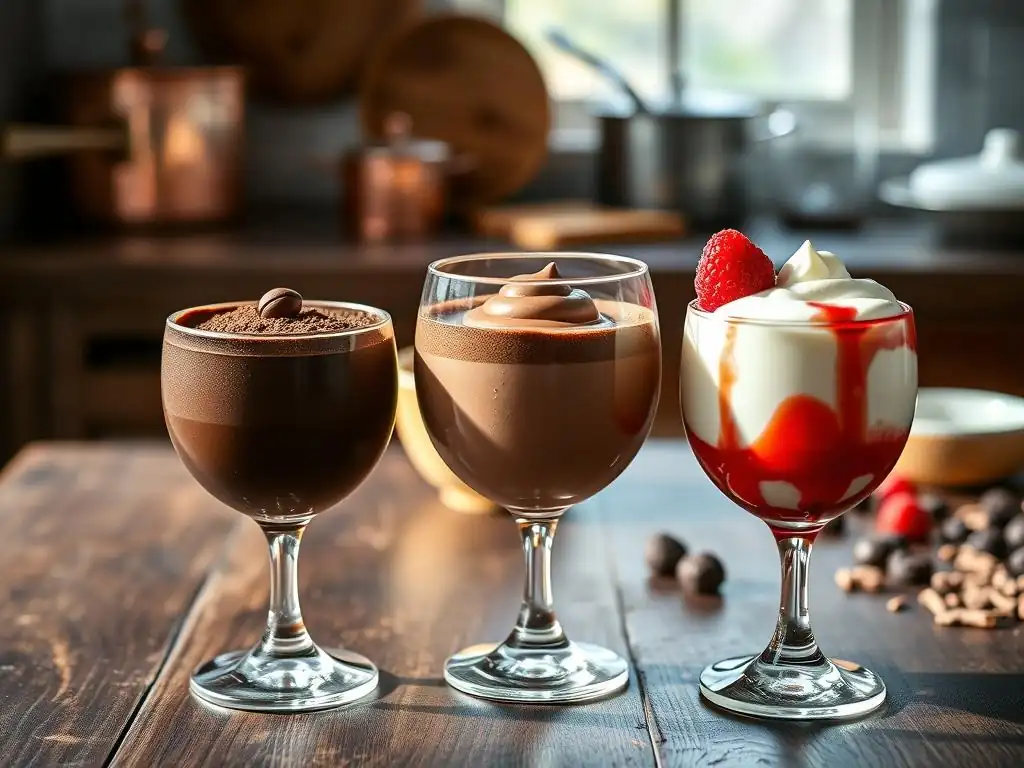
Dark chocolate mousse is perhaps the most classic variation, celebrated for its deep, intense flavor profile. Using high-quality dark chocolate with a cocoa percentage between 60% and 75% is ideal for achieving a balance of bitterness and sweetness. Chocolate with a higher percentage (like 80%+) will yield a very intense, less sweet mousse, which might require a slight adjustment in the amount of added sugar.
The richness of dark chocolate stands up well to classic pairings like raspberries, coffee, or a touch of orange zest. A dark velvety chocolate mousse recipe is often perceived as more sophisticated and is a favorite among true chocolate lovers. The higher cocoa butter content in quality dark chocolate also helps the mousse set firmly, contributing to a stable and luxurious texture.
Milk Chocolate Mousse: A Creamier, Sweeter Delight
Milk chocolate mousse offers a sweeter, milder, and often creamier alternative to its dark counterpart. It's typically favored by those who prefer a less intense chocolate flavor. When making a milk chocolate mousse, it's important to choose a good quality milk chocolate, as cheaper options can be overly sweet and lack depth of flavor. Milk chocolate contains more sugar and milk solids and less cocoa mass than dark chocolate.
Because milk chocolate is softer and contains more sugar, a milk velvety chocolate mousse recipe might require minor adjustments, such as slightly less added sugar or potentially a different ratio of ingredients to ensure it sets correctly. The resulting mousse will be lighter in color, sweeter, and wonderfully smooth, pairing beautifully with caramel, hazelnuts, or bananas.
White Chocolate Mousse: Delicate and Elegant
White chocolate mousse is the most delicate and sweetest of the variations, offering a creamy, vanilla-forward flavor rather than a traditional chocolate taste (as white chocolate contains cocoa butter but no cocoa solids). Like other variations, quality is key; choose white chocolate made with real cocoa butter, not just vegetable fats, for the best texture and flavor.
White chocolate mousse can be trickier to set due due to its composition, which is higher in sugar and milk solids and lower in cocoa butter compared to dark chocolate. It might require a slightly different technique, sometimes incorporating a touch of gelatin or a higher proportion of whipped cream to achieve stability. A velvety white chocolate mousse is elegant and pairs wonderfully with berries, citrus, or tropical fruits.
Serving and Garnish Ideas for Your Velvety Chocolate Mousse
Elegant Presentation Techniques
Presenting your velvety chocolate mousse beautifully enhances the dining experience. Serving individual portions in clear glasses or elegant dessert cups showcases the mousse's lovely texture and color. You can pipe the mousse into glasses using a piping bag fitted with a star tip for a professional, swirled effect, or simply spoon it in for a rustic look. Layering the mousse with complementary components like cookie crumbs, fruit compote, or a layer of cake at the bottom of the glass adds visual appeal and textural contrast.
For a classic presentation, you can chill the mousse in a larger bowl or mold and then scoop quenelles (oval shapes formed with two spoons) onto plates just before serving. Dusting the plate with cocoa powder or powdered sugar, or drizzling with a simple chocolate sauce, can also add an elegant touch. The key is to handle the chilled mousse gently to maintain its airy structure.
Complementary Flavors and Garnishes
Garnishes should complement, not overpower, the rich flavor of your velvety chocolate mousse. Fresh berries, such as raspberries, strawberries, or cherries, are classic pairings that add a touch of acidity and freshness, cutting through the richness. A sprinkle of cocoa powder or a few chocolate shavings add a simple, elegant finish and reinforce the chocolate theme.
Other delicious garnishes include a dollop of fresh whipped cream, a sprig of mint, toasted nuts (like hazelnuts or almonds), or a sprinkle of sea salt (especially with dark chocolate mousse). A drizzle of caramel sauce, a fruit coulis, or a sprinkle of crunchy elements like chocolate pearls or crushed cookies can also add textural interest and flavor complexity. Choose garnishes that enhance the specific type of chocolate mousse you've made.
Troubleshooting Your Velvety Chocolate Mousse Recipe
Mousse is Too Runny: Solutions and Tips
If your velvety chocolate mousse hasn't set properly and is too runny, several factors could be the cause. The most common issues relate to the chocolate base or the chilling time. Ensure you used enough high-quality chocolate; cheaper chocolate or using less than the recipe calls for can lead to an unstable mousse. Also, insufficient chilling time is a frequent culprit; the mousse needs adequate time in the refrigerator (at least 2-4 hours) for the fats to solidify.
Another reason could be over-folding the whipped cream or egg whites, which deflates the mixture and prevents it from setting firmly. If the mousse is only slightly runny, extended chilling might help. If it's very runny, you might be able to gently re-melt a portion of the unset mousse, whisk in a small amount of bloomed gelatin (prepared according to package directions), and then carefully fold this back into the remaining mousse before re-chilling. However, this can sometimes affect the texture. For future attempts at your velvety chocolate mousse recipe, double-check ingredient ratios and ensure proper chilling.
Mousse is Too Dense: Getting the Airiness Right
A dense chocolate mousse lacks that desirable velvety lightness. This usually happens when the air incorporated into the egg whites (if used) or whipped cream is lost during the folding process. Over-mixing is the primary reason for density. When combining the aerated components with the chocolate base, the folding motion must be gentle and minimal, stopping as soon as no streaks remain.
Ensure your egg whites (if using) are whipped to the correct stage (medium-stiff peaks) and your cream to soft peaks – over-whipped cream can also make the mousse heavy. The temperature of your chocolate base is also important; if it's too warm when adding the aerated components, it can melt the fat and deflate the mixture. Practice the gentle folding technique; it's the key to incorporating air without losing it, ensuring a light, ethereal velvety chocolate mousse.
Chocolate Mousse Tastes Bitter: Balancing the Flavors
If your velvety chocolate mousse tastes too bitter, it's likely due to the type of chocolate used and the amount of sugar. Using a very high percentage dark chocolate (e.g., 80% or more) without adjusting the sugar can result in excessive bitterness. The solution is often to balance the intense cocoa flavor with more sweetness.
For future batches of your velvety chocolate mousse recipe, consider using a slightly lower percentage dark chocolate (60-70%) or increasing the amount of sugar slightly (start with an extra 10-15 grams) to taste. A pinch of salt can also help balance bitterness and enhance sweetness. Additionally, incorporating a small amount of vanilla extract or a sweet liqueur can help round out the flavors and reduce the perception of bitterness, ensuring a perfectly balanced and delicious velvety chocolate mousse.
Frequently Asked Questions
What makes a chocolate mousse truly velvety?
The velvety texture comes from incorporating air effectively, usually through whipped cream or meringue, and using high-quality chocolate with a good fat content. This emulsification process is key.
Can I use any type of chocolate for this Velvety Chocolate Mousse recipe?
While any chocolate can be used, using a high-quality dark chocolate with a cocoa percentage between 60-70% is recommended for the best flavor and velvety texture. Lower quality chocolate can result in a grainy texture.
How important is the temperature of the ingredients when making Velvety Chocolate Mousse?
Temperature is crucial! Melted chocolate should be cooled slightly before incorporating other ingredients to prevent the eggs from scrambling. The whipped cream should be cold for optimal volume.
What are some common mistakes to avoid when making Velvety Chocolate Mousse?
Overmixing is a big one! Gently fold in the whipped cream or meringue to maintain the airiness. Also, avoid using chocolate that is too hot, as it can curdle the eggs.
How long does Velvety Chocolate Mousse need to chill before serving?
Ideally, chill the mousse for at least 4 hours, or preferably overnight. This allows the flavors to meld and the mousse to fully set, achieving the desired velvety consistency and stable structure.
Final Reflection: The Enduring Allure of Velvety Perfection
The pursuit of the perfect velvety chocolate mousse transcends mere culinary skill; it's a journey into the heart of indulgence and the art of precise execution. This article has explored the often-overlooked nuances of ingredient selection, highlighting how seemingly small details – the type of chocolate, the careful whipping of cream, even the temperature of your bowl – can dramatically impact the final texture and flavor. The quest for that impossibly smooth, melt-in-your-mouth experience is a testament to our enduring appreciation for simple pleasures elevated to an art form.
The impact of a truly exceptional chocolate mousse extends far beyond the individual experience. It's a shared moment of delight, a symbol of celebration, a comforting treat that connects us to cherished memories and traditions. The best things in life are simple,
a sentiment perfectly encapsulated by this deceptively straightforward dessert. The seemingly effortless elegance of a perfectly crafted mousse speaks to a deeper human desire for beauty and satisfaction, a desire that transcends cultural boundaries and resonates across generations. It's a reminder that even in the simplest of creations, there is immense potential for artistry and joy.
Now, I invite you to step into your kitchen, armed with this newfound knowledge. Don't be afraid to experiment, to tweak the ratios, to discover your own personal touch. The journey towards creating your signature velvety chocolate mousse is a rewarding one, filled with the promise of delicious discoveries and the satisfaction of mastering a classic. Embrace the process, savor the experience, and share the magic of your creation with those you love. The perfect mousse awaits – go create it!
Unlock Your Inner Pastry Chef: Master the Art of Chocolate Mousse!
Thanks for joining us on this delicious journey into the world of velvety chocolate mousse! We hope you've gained valuable insights into creating the perfect texture and rich flavor. Ready to take your skills to the next level?
- Whip up your own masterpiece! Put your newfound knowledge into action and create your own decadent chocolate mousse. Impress your friends and family with your newfound expertise.
- Share your success! Post a picture of your creation on social media and tag us @BakeWithEase – we'd love to see your culinary triumph!
- Experiment with flavor variations! Try adding a hint of espresso, orange zest, or even chili flakes to personalize your mousse. What unique twist will you create?
What unexpected ingredient will you add to your next chocolate mousse creation to surprise your tastebuds?