
Ready to Master Sourdough? Find the Best Books Here

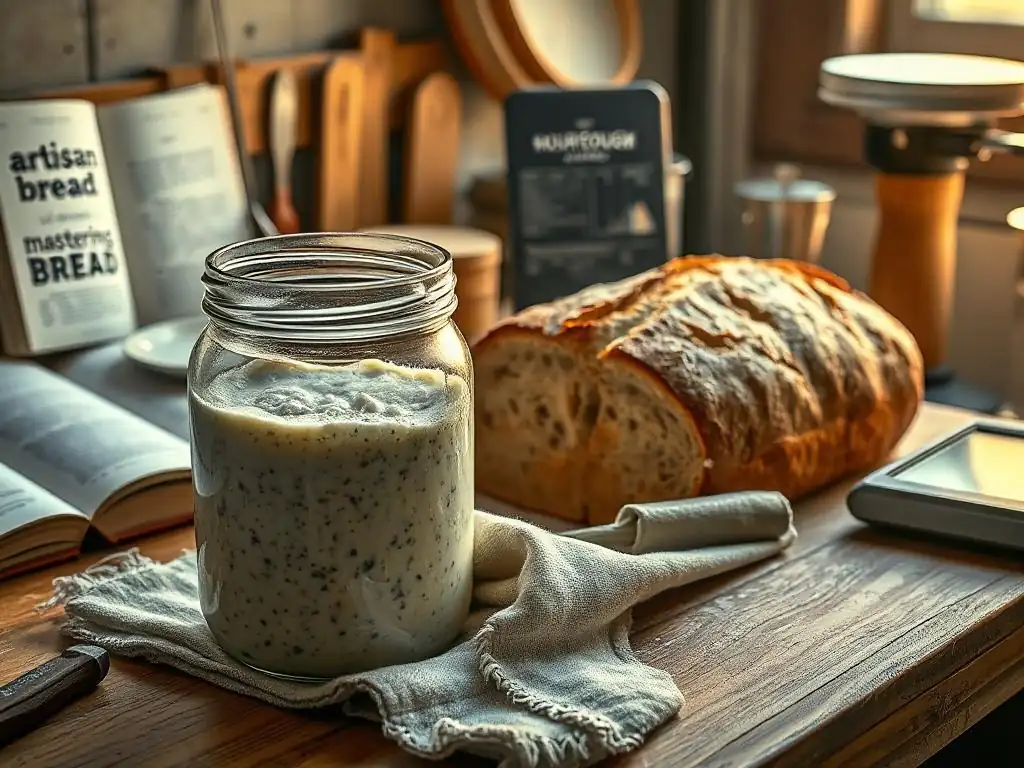
Welcome to BakeWithEase, your ultimate companion in the delightful world of baking! Are you ready to embark on a journey filled with delicious aromas and perfectly risen creations? Perhaps you're even wrestling with a finicky sourdough starter? Our Sourdough Starter Troubleshooting Guide is just the beginning. Discover invaluable baking insights and the resources you need to perfect your craft, including our curated selection of essential baking books, designed to elevate your skills from novice to expert. Intrigued? Let's dive in and unlock the secrets to baking success!
- Unlock Sourdough Success: Your Guide to the Best Sourdough Baking Books
- The Best Sourdough Baking Books for Beginners: A Simple Start
- Level Up Your Sourdough Game: Intermediate Sourdough Baking Books
- For the Sourdough Pro: Advanced Techniques and Flavor Exploration
- Sourdough Starter Troubleshooting Guide: Resources Beyond Books
- Choosing the Right Sourdough Book for You: A Summary
-
Frequently Asked Questions
- What is a sourdough starter, and why is it important for baking sourdough bread?
- What are some common signs that my sourdough starter is not healthy?
- How often should I feed my sourdough starter?
- What kind of flour is best for feeding my sourdough starter?
- What if my sourdough starter is too runny or too thick?
- Final Reflection: The Unexpected Joys (and Challenges) of Sourdough
- Unleash Your Inner Baker: Sourdough Awaits!
Unlock Sourdough Success: Your Guide to the Best Sourdough Baking Books
From Novice to Expert: Mastering Sourdough with the Right Books
Embarking on the sourdough journey can feel daunting, with its bubbling starters, mysterious bulk ferments, and elusive perfect crumb. Fortunately, a wealth of knowledge is available in books, guiding you from your very first loaf to complex artisan creations.
These resources break down the science and art of sourdough, explaining everything from how to initiate and maintain a healthy starter – a critical first step that many beginners struggle with – to shaping techniques that build tension for a beautiful rise. Finding the right book tailored to your current skill level is paramount to building confidence and achieving consistent results in your kitchen.
A good sourdough book does more than just provide recipes; it teaches the fundamental principles behind successful baking. It explains the role of time, temperature, hydration levels, and the specific microbes in your starter.
Understanding these elements is crucial for diagnosing problems, especially when you encounter issues like a starter that won't double or dough that doesn't rise. While this article focuses on books, recognizing common challenges is part of the learning process, and a solid foundational text can serve as a preliminary sourdough starter troubleshooting guide, helping you understand why something might be going wrong before you even need external help.
The Best Sourdough Baking Books for Beginners: A Simple Start

"Sourdough Made Easy" by Kirsten K. Shockey: Your First Step into Sourdough
Kirsten K. Shockey's "Sourdough Made Easy" is often recommended as an excellent starting point for those new to the world of naturally leavened bread. The book is designed with the absolute beginner in mind, offering clear, concise instructions and demystifying the process of creating and maintaining a sourdough starter. It provides a straightforward approach, often focusing on more forgiving recipes and techniques that build confidence early on. You'll find simple, step-by-step guides for basic loaves, often with accompanying photographs to illustrate key stages like mixing, kneading (or lack thereof), and shaping.
Beyond the foundational loaf, the book introduces easy ways to use discarded starter in delicious recipes, minimizing waste and adding flavour to everyday items like pancakes, crackers, or simple quick breads. This practical approach makes the sourdough journey less intimidating and more rewarding from the outset. The emphasis is on simplicity and achieving edible results quickly, rather than diving into complex scientific explanations or advanced techniques, making it a truly accessible guide for taking your first steps into sourdough baking.
"Sourdough Baking for Beginners" by Nicole Stevens: A Comprehensive Beginners' Guide
Nicole Stevens' "Sourdough Baking for Beginners" offers another fantastic entry point into the sourdough world. This book is known for its thorough explanations of the basic science behind sourdough, presented in an easy-to-understand format. It covers essential topics like understanding wild yeast and bacteria, the importance of feeding schedules, and recognizing the signs of an active, healthy starter. The book often includes detailed schedules for maintaining your starter, such as a typical 1:1:1 feeding ratio (flour:water:starter by weight) and guidance on how often to feed it based on whether it's stored at room temperature or in the refrigerator.
The recipes included are specifically curated for beginners, featuring simple dough formulations and techniques that require minimal special equipment initially. You'll find recipes for classic country loaves, but also simpler bakes like focaccia or straightforward sandwich bread. The troubleshooting section, though basic, addresses common early-stage issues like a starter that doesn't rise or dough that seems too wet, acting as a foundational sourdough starter troubleshooting guide within the book's context. It empowers new bakers to identify potential problems and encourages learning through observation and simple adjustments.
Level Up Your Sourdough Game: Intermediate Sourdough Baking Books
"Tartine Bread" by Chad Robertson: The Classic Sourdough Bible
Chad Robertson's "Tartine Bread" is widely considered a modern classic and a must-have for anyone serious about mastering artisan sourdough. While often listed as intermediate, its detailed approach and focus on technique make it suitable for ambitious beginners ready to deepen their understanding. The book is famous for its detailed explanation of the "basic country bread" method, which involves high hydration dough, gentle handling, long fermentation times, and baking in a Dutch oven. Robertson provides extensive guidance on developing a strong starter, understanding fermentation cycles, and achieving the signature open, airy crumb structure.
The book delves into concepts like autolyse (a resting period after mixing flour and water) and multiple folds over several hours to develop gluten strength gently. It also explores variations on the basic recipe using different flours like whole wheat and rye. While not explicitly a sourdough starter troubleshooting guide, the detailed explanations of ideal starter behaviour and dough development provide crucial context for diagnosing issues. For instance, understanding the visual cues of a properly fermented dough helps bakers identify if their bulk fermentation was too short or too long, leading to poor oven spring.
"Flour Water Salt Yeast" by Ken Forkish: Mastering Bread with Time and Technique
Ken Forkish's "Flour Water Salt Yeast" (FWSY) is another seminal work that bridges the gap between beginner and advanced sourdough baking, making it perfect for the intermediate baker looking to refine their skills. Forkish emphasizes the importance of using high-quality ingredients and, crucially, leveraging time for flavour development. His recipes often feature long, slow fermentation periods, sometimes overnight or even longer in the refrigerator, which contributes significantly to the complexity and flavour of the finished bread.
FWSY provides specific schedules and timelines for various recipes, helping bakers understand how temperature and time interact to influence fermentation. It covers different dough hydration levels and mixing techniques, including no-knead methods and stretch-and-fold approaches. The book is highly practical, with detailed instructions and many photographs illustrating techniques.
While it doesn't have a dedicated sourdough starter troubleshooting guide section, the precise instructions for starter maintenance and dough handling provide a solid framework. Deviations from the expected results, when compared against Forkish's detailed descriptions of success, often point directly to where a problem might lie, such as insufficient fermentation time or improper shaping.
For the Sourdough Pro: Advanced Techniques and Flavor Exploration
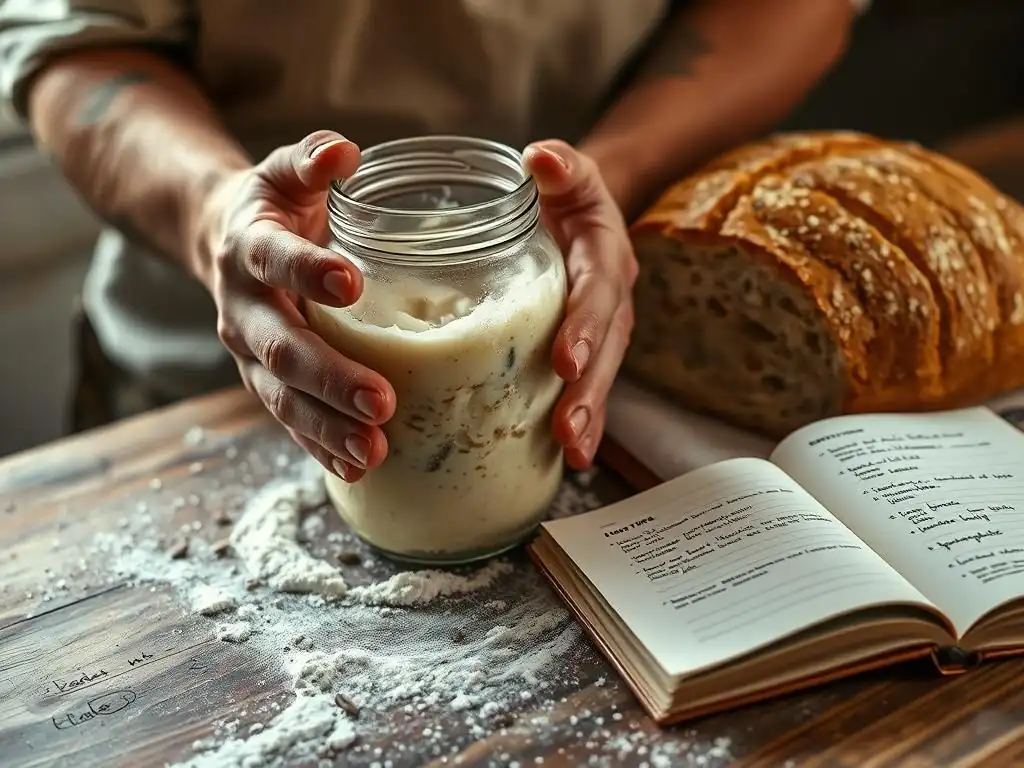
"Advanced Bread and Pastry" by Michel Suas: Dive Deep into Sourdough Science
For the truly dedicated sourdough baker or aspiring professional, Michel Suas' "Advanced Bread and Pastry" is an invaluable, encyclopedic resource. This comprehensive textbook delves deeply into the scientific principles underlying fermentation, dough structure, and baking processes. It goes far beyond simple recipes, explaining complex topics like enzyme activity, pH levels in sourdough starters and doughs, and the specific metabolic pathways of the wild yeasts and bacteria involved. This level of detail is essential for understanding precisely why certain techniques work and how to manipulate variables for specific outcomes.
The book covers a vast array of bread types, including numerous sourdough formulations using different preferments and techniques from around the world. It provides detailed formulas (often in baker's percentages) and precise instructions for large-scale production, which can be scaled down for home use. While not a simple sourdough starter troubleshooting guide for common home issues, its deep scientific explanations provide the ultimate foundation for diagnosing any problem encountered. Understanding the microbiology of a sluggish starter or the enzymatic breakdown leading to a gummy crumb becomes possible with the knowledge imparted in this text.
"Bread Revolution" by Peter Reinhart: Achieving the Perfect Crumb Structure
Peter Reinhart is a legendary figure in the baking world, and his book "Bread Revolution" focuses on innovative techniques to achieve superior bread quality, often incorporating sourdough principles. Reinhart explores methods like using "soaked grains" or "flour soakers" and employing delayed fermentation and specific proofing techniques to enhance flavour and achieve an exceptionally light and airy crumb. While not solely a sourdough book, it integrates sourdough starters and preferments into many of its revolutionary approaches.
The book provides detailed explanations of gluten development, hydration management, and proofing indicators. Reinhart's focus on the why behind each step makes this book highly educational for the advanced baker seeking to push boundaries. It encourages experimentation with different flours, hydration levels, and fermentation temperatures. When troubleshooting complex issues like inconsistent crumb structure or poor volume, the detailed insights into dough handling and fermentation provided in "Bread Revolution" offer advanced diagnostic tools, complementing the knowledge gained from a basic sourdough starter troubleshooting guide and taking it to a much higher level of scientific understanding.
Sourdough Starter Troubleshooting Guide: Resources Beyond Books

Online Courses and Communities: Expand Your Sourdough Knowledge
While books provide a solid foundation, the dynamic nature of sourdough often benefits from real-time interaction and visual learning. Online courses offer structured learning paths, often with video demonstrations that clarify techniques like shaping or stretch-and-folds far better than static images. Platforms like King Arthur Baking, Skillshare, or specific baking schools offer courses ranging from beginner basics to advanced sourdough variations. These courses frequently include dedicated modules on common issues, serving as a visual sourdough starter troubleshooting guide.
Furthermore, online communities, forums, and social media groups dedicated to sourdough baking are invaluable resources. Here, you can ask specific questions about a sluggish starter, a dense loaf, or a strange smell from your discard. Experienced bakers often share their own tips, failed attempts, and successful solutions. These communities act as a collective sourdough starter troubleshooting guide, providing diverse perspectives and immediate feedback on problems you might encounter, often faster than flipping through a book index. Sharing photos of your starter or dough can also help others diagnose issues more accurately.
Essential Tools for Sourdough Success: Enhance Your Baking Experience
Having the right tools can significantly improve your sourdough results and even help preempt some common problems. While you can start with minimal equipment, certain items make the process smoother and more consistent. A reliable digital scale is perhaps the most crucial tool, as sourdough recipes rely heavily on precise ratios, often measured by weight (e.g., grams). Using volume measurements can lead to inconsistent hydration and make troubleshooting difficult.
Other helpful tools include:
- A sturdy Dutch oven or baking stone for achieving good oven spring and crust development.
- Proofing baskets (bannetons) to hold the dough's shape during the final rise.
- A bench scraper for handling sticky dough.
- A lame or razor blade for scoring the dough before baking.
- An instant-read thermometer to check the internal temperature of the baked loaf.
Using accurate measurements and appropriate tools helps eliminate variables, making it easier to pinpoint the cause when something goes wrong. For instance, if your dough is consistently too wet or dry, checking your scale's calibration is an important step in a basic sourdough starter troubleshooting guide – sometimes the issue isn't the starter, but imprecise measurements.
Choosing the Right Sourdough Book for You: A Summary
Matching Your Baking Level to the Perfect Sourdough Resource
Selecting the ideal sourdough book depends entirely on where you are in your baking journey. If you're just starting out, feeling overwhelmed by the concept of keeping a living culture, a book like "Sourdough Made Easy" or "Sourdough Baking for Beginners" will provide the gentle introduction and simple recipes you need to build confidence. These books focus on foundational concepts and forgiving techniques, helping you establish a healthy starter and bake your first successful loaf without getting bogged down in complexity.
For those who have baked a few loaves and are ready to understand why things work and improve their crumb and flavour, intermediate books like "Tartine Bread" or "Flour Water Salt Yeast" are excellent choices. They introduce more sophisticated techniques, delve deeper into fermentation science, and offer recipes that require more attention to detail. If you aspire to professional-level baking or want a deep scientific understanding to solve complex issues (beyond a simple sourdough starter troubleshooting guide), advanced texts like "Advanced Bread and Pastry" offer unparalleled depth, though they are best approached with some prior baking experience.
Don't Forget: Practice and Patience are Key to Sourdough Success!
Regardless of which book you choose, remember that sourdough baking is a skill that develops with practice and patience. Your first loaf might not be perfect, and you will likely encounter challenges along the way. Issues like a slow starter, dense crumb, or gummy interior are common hurdles. Don't be discouraged!
Blockquote: Sourdough teaches patience. Embrace the process, learn from your failures, and trust your starter.
- A common sentiment among experienced bakers.
Keeping a baking journal can be incredibly helpful for troubleshooting. Note down the hydration level, fermentation times, temperatures, and any issues you encountered. This log serves as your personal sourdough starter troubleshooting guide, allowing you to identify patterns and make informed adjustments in future bakes. Celebrate your successes, learn from your setbacks, and enjoy the rewarding process of creating delicious, naturally leavened bread from scratch.
Task List:
- [ ] Choose a book based on your current skill level.
- [ ] Read the introductory sections carefully, especially about starter care.
- [ ] Follow recipes precisely at first.
- [ ] Observe your starter's behaviour daily.
- [ ] Keep a baking journal to track variables and results.
- [ ] Don't be afraid to seek help from online communities.
- [ ] Practice consistently.
- [ ] Be patient with yourself and your starter!
Frequently Asked Questions
What is a sourdough starter, and why is it important for baking sourdough bread?
A sourdough starter is a living culture of wild yeast and bacteria used to leaven bread. It's important because it provides the unique flavor and texture characteristic of sourdough.
What are some common signs that my sourdough starter is not healthy?
Signs of an unhealthy starter include lack of rising after feeding, a foul or moldy smell, or unusual colors like pink or orange.
How often should I feed my sourdough starter?
The feeding frequency depends on where it's stored. At room temperature, feed once or twice daily. In the refrigerator, feed once a week.
What kind of flour is best for feeding my sourdough starter?
A combination of unbleached all-purpose flour and whole wheat flour often yields the best results. Experiment to see what works best for your starter!
What if my sourdough starter is too runny or too thick?
Adjust the water-to-flour ratio during feeding. Add more flour if it's too runny, and more water if it's too thick.
Final Reflection: The Unexpected Joys (and Challenges) of Sourdough
The seemingly simple act of nurturing a sourdough starter has become a powerful metaphor for the unpredictable nature of life itself. From the initial excitement of bubbling activity to the occasional disheartening failures, the journey of sourdough baking mirrors our own personal growth, demanding patience, attention, and a willingness to learn from our mistakes. This isn't just about bread; it's about embracing the process.
The enduring appeal of sourdough lies not just in the delicious, tangy loaves it produces, but in the sense of connection it fosters. It's a tangible link to a centuries-old tradition, a reminder of simpler times and the satisfaction of creating something beautiful from humble ingredients. This connection resonates deeply, fostering a sense of community among bakers who share their triumphs and tribulations online and in person. Bread making is a metaphor for life. You put in the effort, you nurture it, and sometimes it doesn't turn out exactly as you planned, but the process is rewarding nonetheless.
- Unknown
So, as you embark on (or continue) your sourdough journey, remember that the perfect loaf is not the ultimate goal. Embrace the imperfections, celebrate the successes, and learn from the inevitable setbacks. Each bubbly rise, each slightly lopsided loaf, is a testament to your dedication and a step closer to mastering not just sourdough, but a deeper understanding of patience, perseverance, and the profound satisfaction of creating something truly special with your own two hands. Let the journey be as rewarding as the destination.
Unleash Your Inner Baker: Sourdough Awaits!
Thanks for joining us on this sourdough journey! We hope you've discovered the resources you need to bake amazing bread. Now it's time to put that knowledge into action.
- Dive into your favorite book: Pick one from our recommended list and start baking! This is your first step to truly mastering sourdough.
- Share your baking adventure: Tell us (and your friends!) about your sourdough experiences. What are you most excited to try?
- Explore new techniques: Once you've baked your first loaf, don't stop there! Experiment with different flours, hydration levels, and shaping techniques.
Ready to knead your way to delicious, crusty perfection? Let's hear about your first sourdough bake!