
Spatulas, Whisks, and More: Essential Hand Tools for Perfect Bakes

Welcome to BakeWithEase, your companion in the delightful world of baking! Ever wondered which spatula is actually best for folding in delicate meringue, or if your whisk is truly up to the challenge of a perfectly emulsified sauce? Dive into our comprehensive essential baking hand tools guide and unlock the secrets to achieving flawless bakes. Discover the must-have tools that will transform your kitchen into a baking haven and elevate your creations from good to extraordinary. Ready to equip yourself for baking success? Let's get started!
- Essential Baking Hand Tools Guide: Your Kitchen Companion for Perfect Bakes
- Spatulas: The Baker's Versatile Friend - A Guide to Choosing the Right One
- Whisks: Achieving Light and Airy Batters
- Measuring Tools: Precision for Perfect Recipes
- Rolling Pins: Achieving Uniform Dough Thickness
- Other Essential Baking Hand Tools & Accessories
- Choosing the Right Tools for Your Baking Style
-
Frequently Asked Questions
- What are the most essential baking hand tools a beginner should invest in?
- How do I choose the right type of spatula for different baking tasks?
- What are the benefits of using a high-quality whisk in baking?
- How important is it to have a variety of measuring tools for baking?
- Where can I find reliable information about using and maintaining baking hand tools?
- Final Reflection: The Heart of Baking Lies in Your Hands
- Unleash Your Inner Baker: Take the Next Step!
Essential Baking Hand Tools Guide: Your Kitchen Companion for Perfect Bakes
Mastering the Art of Baking Starts with the Right Tools
Embarking on the baking journey, whether you're a complete novice or looking to refine your skills, hinges significantly on having the right equipment. While ovens and mixers are crucial, it's the collection of essential baking hand tools that often makes the most immediate difference in your results. These fundamental implements aren't just accessories; they are extensions of your hands, enabling precise execution of techniques from gently folding delicate batters to accurately measuring ingredients, ensuring consistency and quality in every bake.
Think of these essential baking hand tools as your foundational kit. A well-chosen set allows you to approach any recipe with confidence. For instance, achieving a light and airy cake crumb requires properly aerating ingredients, a task made effortless with the right whisk. Similarly, smoothly frosting a cake relies on the unique design of an offset spatula. This guide will walk you through the must-have hand tools, explaining their specific uses and how selecting the appropriate ones can elevate your baking from good to truly great, making the process more enjoyable and less prone to errors.
Spatulas: The Baker's Versatile Friend - A Guide to Choosing the Right One
Understanding Different Spatula Types for Baking Success
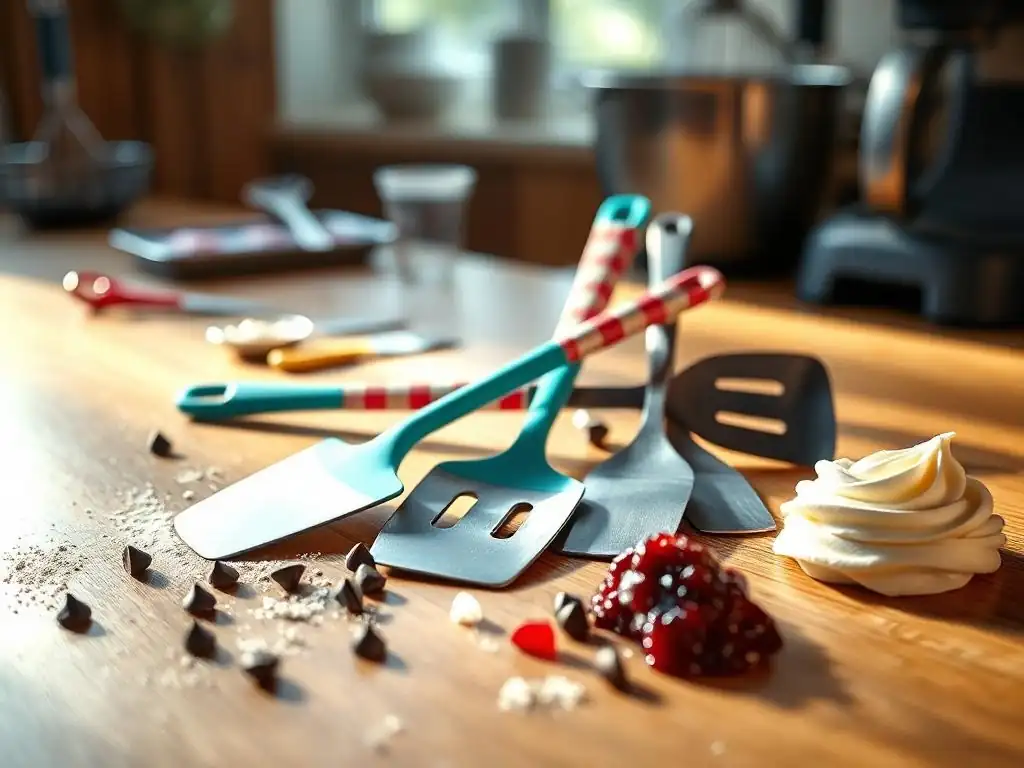
Spatulas are arguably the most ubiquitous and indispensable tools in a baker's arsenal. They come in various shapes, sizes, and materials, each designed for specific tasks. Understanding the subtle differences between them is key to maximizing their utility in your kitchen. From scraping down the sides of a mixing bowl to gently folding delicate ingredients, the right spatula can prevent waste, ensure uniform mixing, and handle temperature variations needed for different stages of a recipe.
This category of essential baking hand tools includes flexible silicone spatulas, stiff rubber scrapers, and metal offset spatulas. While they might seem similar at first glance, their construction dictates their primary function. A flexible scraper is perfect for getting every last bit of batter from a bowl, minimizing food waste, whereas a metal offset spatula is rigid and flat, ideal for spreading and leveling. Knowing which tool to grab for a specific job is a hallmark of an efficient baker and contributes significantly to successful outcomes.
Silicone Spatulas: Scraping, Folding, and Everything In-Between
Silicone spatulas are the workhorses of the baking world, prized for their flexibility, durability, and heat resistance. Many high-quality silicone spatulas can withstand temperatures up to 500°F (260°C), making them safe for stirring hot custards or scraping warm pots. Their flexible blades are perfect for conforming to the curves of mixing bowls, ensuring you scrape down all ingredients for even mixing and maximum yield from your batter or dough.
Beyond scraping, the gentle nature of silicone makes these spatulas ideal for folding delicate ingredients like whipped egg whites or whipped cream into a batter. The broad, soft surface allows you to incorporate air without deflating the mixture, which is crucial for achieving light textures in soufflés, mousses, and certain cakes. Their non-porous surface also means they don't absorb odors or colors, and they are typically dishwasher safe, making cleanup a breeze.
Offset Spatulas: Icing Like a Pro
Offset spatulas are specifically designed for the art of spreading and leveling, particularly when it comes to frosting cakes, cupcakes, and cookies. Their unique shape features a blade that is "offset" or angled away from the handle, keeping your knuckles clear of the frosting or cake surface. This design provides better control and allows you to create smooth, even layers of frosting or glaze with relative ease.
Available in various sizes, from small 4-inch blades perfect for handling intricate details or spreading frosting on cupcakes, to longer 8-inch or 10-inch blades ideal for covering the sides and tops of larger cakes, offset spatulas are essential baking hand tools for anyone serious about cake decorating. They are also useful for lifting and transferring delicate cookies or pastries from a baking sheet without breaking them, showcasing their versatility beyond just frosting.
Bench Scrapers: Dividing Dough with Precision
A bench scraper, also known as a dough scraper, is a simple yet incredibly useful tool for anyone working with dough. Typically featuring a rectangular stainless steel blade attached to a handle, its primary function is to gather, divide, and transfer dough. When working with sticky doughs, a bench scraper is invaluable for scraping your work surface clean and for portioning dough into equal pieces before shaping rolls, buns, or loaves.
Many bench scrapers come with measurement markings along the blade edge, allowing for precise division of dough based on weight or volume, essential for consistent results in bread baking. Standard sizes are often around 6 inches wide by 4 inches tall. Beyond dough, they are excellent for scooping up chopped vegetables or other ingredients from a cutting board to transfer them to a bowl or pot, proving their utility extends beyond just dough handling in the kitchen.
Whisks: Achieving Light and Airy Batters
The Importance of Whisks in Baking
Whisks are fundamental essential baking hand tools used to incorporate air into ingredients, emulsify liquids, and break up lumps in dry ingredients. The action of whisking introduces small air bubbles into mixtures like egg whites or cream, dramatically increasing their volume and creating light, airy textures crucial for meringue, soufflés, and whipped cream. They are also vital for smoothly combining wet ingredients or making lump-free sauces and custards.
Using the right whisk can prevent common baking pitfalls like dense cakes or grainy sauces. Unlike forks or spoons, the multiple wires of a whisk cover a larger surface area and create more turbulence in the mixture, leading to faster and more efficient aeration and blending. Understanding the different types of whisks available helps you select the best one for the specific task at hand, optimizing your results.
Balloon Whisks: Creating Volume in Egg Whites and Creams
The balloon whisk is perhaps the most recognizable type, characterized by its wide, bulbous shape and many thin wires. This design is specifically optimized for incorporating maximum air into liquids, making it the go-to tool for whipping egg whites to stiff peaks (which can increase their volume by 6 to 8 times) or whipping heavy cream into stable whipped cream. The large surface area created by the wires traps air effectively as you whisk.
Common sizes for balloon whisks range from 8 inches for small tasks to 12 inches or larger for whipping larger quantities. The flexibility of the wires allows them to flex against the sides and bottom of a bowl, ensuring even aeration throughout the mixture. For achieving light, voluminous results in meringues, mousses, and fluffy cakes, a good quality balloon whisk is an essential baking hand tool.
French Whisks: Versatility for Sauces and Batters
French whisks have a straighter, narrower profile compared to balloon whisks, with wires that are less flexible and more parallel. This design makes them excellent for reaching into the corners of pots and pans, making them versatile for tasks like emulsifying vinaigrettes, stirring sauces on the stovetop (preventing scorching), or incorporating dry ingredients into wet ones in a batter.
While they can incorporate air, French whisks are less efficient at whipping large volumes of air than balloon whisks. Their strength lies in their control and ability to handle thicker mixtures or those needing constant stirring. They are a valuable addition to your collection of essential baking hand tools for their versatility in both baking and general cooking applications.
Flat Whisks: Getting Into the Corners of Your Pans
Also known as a roux whisk, the flat whisk has wires arranged in a flat, fan shape. This unique design makes it perfect for scraping the bottom of shallow pans or skillets, ensuring that ingredients like flour for a roux or eggs for scrambled eggs don't stick or burn. In baking, they are particularly useful for making smooth gravies, custards, or pastry creams cooked directly on the stovetop.
The flat profile allows the whisk to cover a large surface area horizontally, effectively scraping across the bottom of a pan. While not designed for incorporating large amounts of air, they are excellent at breaking up lumps and ensuring even cooking and smooth textures in cooked mixtures. Adding a flat whisk to your essential baking hand tools expands your capability for stovetop preparations vital to many baking recipes.
Measuring Tools: Precision for Perfect Recipes
The Foundation of Baking Success: Accurate Measurements
Baking is often described as a science, and unlike cooking where a pinch of this or a dash of that might be acceptable, precision in measurement is paramount for consistent and successful results. The ratio of ingredients like flour, sugar, leavening agents, and liquids is carefully balanced to create specific chemical reactions that determine the texture, rise, and flavor of your baked goods. Even a slight inaccuracy, such as using too much flour (which can add 20-30 grams more than intended if scooped incorrectly), can lead to a dense or dry product.
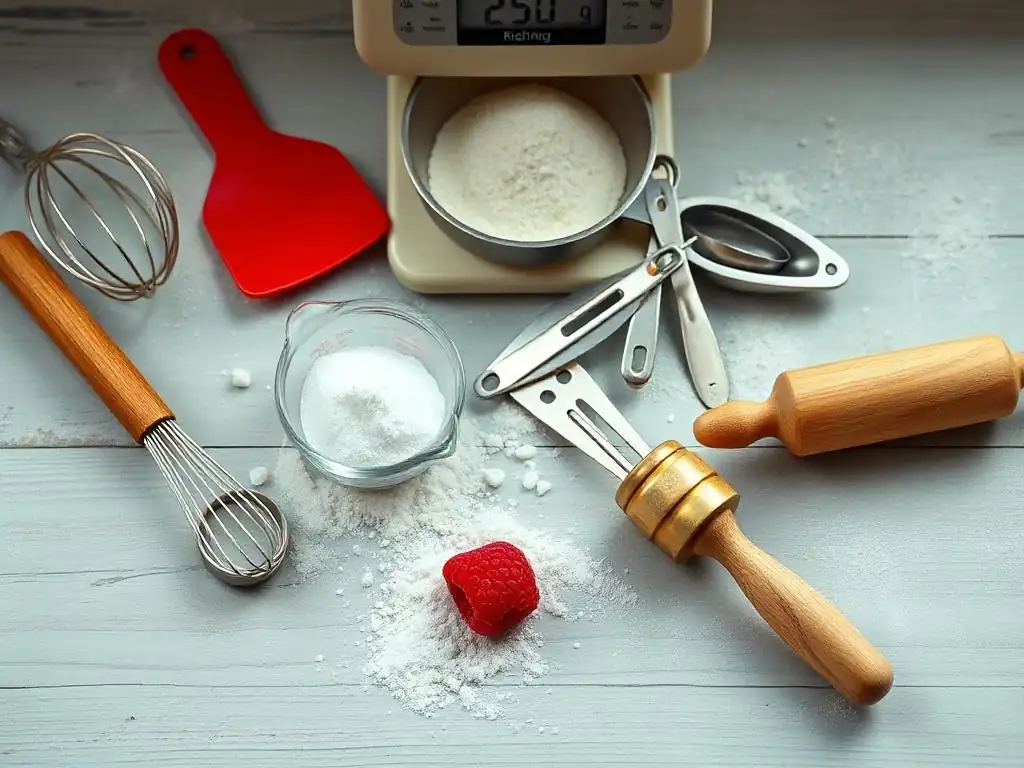
Relying on accurate measuring tools is perhaps the most critical step in mastering baking. This includes separate sets for dry and liquid ingredients, each designed for optimal precision. Using the wrong type of cup or spoon, or measuring incorrectly, is a common source of baking failures. Investing in a good set of measuring cups and spoons, alongside a kitchen scale, forms the absolute core of your essential baking hand tools kit.
Dry Measuring Cups: The Key to Consistent Results
Dry measuring cups are designed to be leveled off, ensuring you get an exact volume of ingredients like flour, sugar, oats, or cocoa powder. They typically come in nested sets of standard sizes: 1/4 cup, 1/3 cup, 1/2 cup, and 1 cup, often with larger sizes like 1 1/2 cup or 2 cup also available. To measure dry ingredients correctly, you should spoon the ingredient into the cup until it overflows slightly, then use a straight edge (like the back of a knife or a bench scraper) to level off the excess.
It's important not to pack down ingredients like flour when using dry measuring cups, unless specifically instructed by the recipe (like for brown sugar). Packing flour can add significantly more weight than intended, leading to heavy baked goods. Using the correct technique with these essential baking hand tools ensures repeatable results every time you follow a recipe.
Liquid Measuring Cups: Getting the Right Amount Every Time
Liquid measuring cups are distinct from dry measures. They are typically made of clear glass or plastic, have a spout for easy pouring, and feature measurement markings up the side, often in ounces, milliliters, and cups. The key to accurate liquid measurement is to place the cup on a flat surface and read the measurement at eye level. The space above the highest measurement line prevents spills when transporting liquids.
Common sizes include 1-cup, 2-cup, and 4-cup capacities. The headspace and spout make it easy to measure liquids like milk, water, oil, or syrup accurately without spills, which is crucial for maintaining the correct hydration balance in doughs and batters. Using a dry measuring cup for liquids is less accurate due to the lack of a spout and the difficulty of reading the meniscus at the top level. These are vital essential baking hand tools for maintaining recipe integrity.
Measuring Spoons: Adding Precise Amounts of Spices and Extracts
Measuring spoons are used for smaller quantities of ingredients, particularly potent ones like leavening agents (baking powder, baking soda), salt, spices, herbs, and extracts. Standard sets usually include 1/4 teaspoon, 1/2 teaspoon, 1 teaspoon, and 1 tablespoon, often with smaller increments like 1/8 teaspoon and larger ones like 1/2 tablespoon. Accuracy with these small measurements is just as critical as with larger volumes, as they significantly impact flavor and leavening.
Like dry measuring cups, measuring spoons should be filled and then leveled off for dry ingredients. For liquids like extracts, fill the spoon to the brim, being careful not to spill. Using precise measuring spoons ensures that your baked goods have the correct balance of flavors and rise properly. They are small but mighty essential baking hand tools that no baker should be without.
Rolling Pins: Achieving Uniform Dough Thickness
Different Rolling Pin Types for Different Baking Needs
Rolling pins are essential for tasks that require a uniform thickness of dough, such as making pie crusts, cookie dough, pastry dough, or pizza bases. Achieving even thickness is crucial for consistent baking – thin spots will burn while thick spots remain undercooked. Different types of rolling pins offer varying levels of control and are suited to different types of dough or personal preferences.
The material and design of a rolling pin affect its weight, maneuverability, and how well it handles sticky doughs. Options range from classic wooden pins with handles to handle-less French pins and modern adjustable versions. Selecting the right rolling pin from your collection of essential baking hand tools can make the difference between a perfectly flaky pie crust and one that's unevenly baked.
French Rolling Pins: Lightweight and Easy to Maneuver
French rolling pins are typically handle-less and tapered at the ends, thicker in the middle. They are often made of wood and are lighter than standard rolling pins with handles. The tapered design allows for more direct contact and feel of the dough, giving the baker greater control over pressure and direction. This makes them particularly popular for rolling out delicate pastry doughs like puff pastry or croissant dough, where precise control is needed.
The lack of handles means you use the palms of your hands directly on the pin, allowing you to feel the dough and adjust pressure easily. Common lengths are between 18 and 20 inches. Their simplicity and excellent maneuverability make them a preferred choice for many experienced bakers and a valuable addition to any set of essential baking hand tools.
Standard Rolling Pins: A Versatile Option for All Types of Dough
The standard rolling pin features a cylindrical barrel that rotates independently of the handles at either end. These are often made of wood, though marble, metal, or plastic versions also exist. The handles provide a comfortable grip and leverage, making it easier to apply even pressure across the dough. They are a versatile, all-purpose tool suitable for rolling out various types of dough, from sturdy cookie dough to more pliable bread dough.
Wooden versions are porous and may require flouring to prevent sticking, while marble pins, often kept cool, are excellent for temperature-sensitive doughs like pie crusts. Standard rolling pins are a classic and reliable choice, widely available and easy to use for beginners. A good quality standard rolling pin is a fundamental piece among your essential baking hand tools.
Adjustable Rolling Pins: Ensuring Consistent Dough Thickness
Adjustable rolling pins are designed to take the guesswork out of achieving uniform dough thickness. They come with removable rings or discs that attach to the ends of the pin, lifting the barrel to a specific height above the work surface. These rings typically offer several thickness options, such as 1/16 inch, 1/8 inch, 1/4 inch, and 3/8 inch.
This feature is incredibly useful for recipes where uniform thickness is critical for even baking and consistent texture, such as cutout cookies, crackers, or flatbreads. The rings act as a guide, preventing the dough from being rolled too thin in some areas and too thick in others. For bakers who value precision and consistency, an adjustable rolling pin is an excellent addition to their essential baking hand tools.
Other Essential Baking Hand Tools & Accessories
Pastry Brushes: Adding Shine to Your Bakes
Pastry brushes are used to apply washes or glazes to baked goods. Common uses include brushing egg wash onto bread or pastries for a golden, shiny crust, applying milk for a softer brown crust, or brushing melted butter onto rolls or scones for added flavor and tenderness. They are also useful for greasing baking pans or applying simple syrups to cakes for moisture.
Brushes come with either natural bristles or silicone heads. Natural bristles hold liquids well but can shed over time, while silicone brushes are more durable, easier to clean, resistant to temperatures up to around 400°F (200°C), and don't shed. Having one or two clean pastry brushes is essential for adding that professional finishing touch to many baked items, making them key essential baking hand tools.
Kitchen Scales: The Ultimate in Precision Baking
While measuring cups provide volume measurements, a digital kitchen scale provides weight measurements, which are generally considered more accurate in baking, especially for key ingredients like flour. A cup of flour can vary in weight from 120g to 150g depending on how it's scooped and packed, but 120g of flour is always 120g. Using a scale eliminates this variability, leading to more consistent results.
Most kitchen scales measure in grams, ounces, pounds, and milliliters, often with a capacity up to 5-10 kg and precision down to 1 gram. Many professional bakers and serious home bakers rely heavily on scales for recipes written by weight. For truly precise and repeatable baking, adding a digital kitchen scale to your essential baking hand tools is highly recommended.
Cookie cutters are simple tools used to cut dough into specific shapes before baking. They come in an endless variety of designs, from classic rounds and squares to festive holiday shapes and intricate patterns. They are typically made from metal (like stainless steel or tinplate) or plastic.
Using cookie cutters requires the dough to be rolled to a consistent thickness (where an adjustable rolling pin comes in handy) and often chilled (e.g., for 30 minutes in the refrigerator) to ensure clean cuts and shapes that hold during baking. Simple round cutters, perhaps in a set of graduated sizes (e.g., 1-inch to 4-inch diameters), are among the most basic and versatile essential baking hand tools for shaping cookies, pastries, or even biscuits.
Choosing the Right Tools for Your Baking Style
Consider Your Baking Needs and Preferences.
When building your collection of essential baking hand tools, the best approach is to consider what you love to bake most often. If you're a dedicated bread baker, a sturdy bench scraper and perhaps a French rolling pin might be higher priorities. If cakes and pastries are your passion, invest in a good set of offset spatulas and a versatile whisk. For those who enjoy precise cookie decorating, cookie cutters and accurate measuring tools are paramount.
Start with the basics discussed in this essential baking hand tools guide – reliable measuring tools, a couple of versatile spatulas, and a good whisk. As your skills grow and your baking repertoire expands, you can gradually add more specialized items like an adjustable rolling pin or a kitchen scale. These tools are an investment in your baking success and enjoyment, making the process easier and the results more rewarding.
Frequently Asked Questions
What are the most essential baking hand tools a beginner should invest in?
A beginner baker should prioritize a good flexible spatula, a sturdy whisk, and a set of measuring cups and spoons. These are the foundational items for most recipes.
How do I choose the right type of spatula for different baking tasks?
For scraping bowls, choose a flexible silicone spatula. For spreading frosting, an offset spatula is ideal. For mixing thick batters, a sturdy rubber spatula works best.
What are the benefits of using a high-quality whisk in baking?
A high-quality whisk will incorporate air into your mixtures efficiently, resulting in lighter and fluffier baked goods. It will also be more durable and last longer.
How important is it to have a variety of measuring tools for baking?
Accuracy is crucial in baking, so having a set of both dry and liquid measuring cups/spoons is essential. Using the wrong type can significantly impact the final result.
Where can I find reliable information about using and maintaining baking hand tools?
Websites like BakeWithEase.com offer step-by-step guides and tips on using and caring for your baking tools, ensuring they last longer and perform optimally.
Final Reflection: The Heart of Baking Lies in Your Hands
The pursuit of the perfect bake isn't just about precise measurements and oven temperatures; it's about the connection between your hands and the ingredients. A perfectly risen loaf, a flawlessly smooth buttercream, these aren't accidents; they're the result of mastering the essential hand tools that bridge the gap between recipe and reality. This guide has explored the fundamental tools, but their true power lies in your skilled use.
The impact of these seemingly simple tools extends far beyond the kitchen. They represent a tradition, a connection to generations of bakers who have used similar implements to create culinary magic. Baking is at once child's play and adult joy. And love, of course.
This quote perfectly encapsulates the feeling of creating something delicious with your own hands, using tools that have stood the test of time. The simple act of whisking, folding, or creaming becomes a meditative process, a mindful connection to the craft itself.
Now, consider your own baking journey. What tools do you already cherish? Which ones are calling to you from the shelves of your local kitchen store? Don't just bake; craft. Invest in a few high-quality tools, learn their nuances, and allow them to become extensions of your creativity. The journey to baking mastery begins not in a cookbook, but in the comfortable grip of a well-loved spatula. Embrace the process, and the rewards will be sweeter than any cake.
Unleash Your Inner Baker: Take the Next Step!
Thanks for taking the time to explore the world of essential baking tools! We hope you’ve gained valuable insights into creating those perfect bakes. Now, it's time to put your newfound knowledge into action. Ready to elevate your baking game?
- Invest in your favorite tool: Identify one tool from the article that excites you most and order it today. It's the first step to baking bliss!
- Share your baking journey: Show off your newly acquired skills – post a picture of your next baking masterpiece on social media and tag us! #BakeWithEase
- Explore new recipes: Try a new recipe using your favorite new tool and share your results in the comments below! Let's build a community of baking enthusiasts together.
What exciting baking project will you tackle first? Let us know in the comments!