
Essential Tools Every Beginner Baker Needs (and Exactly Why!)

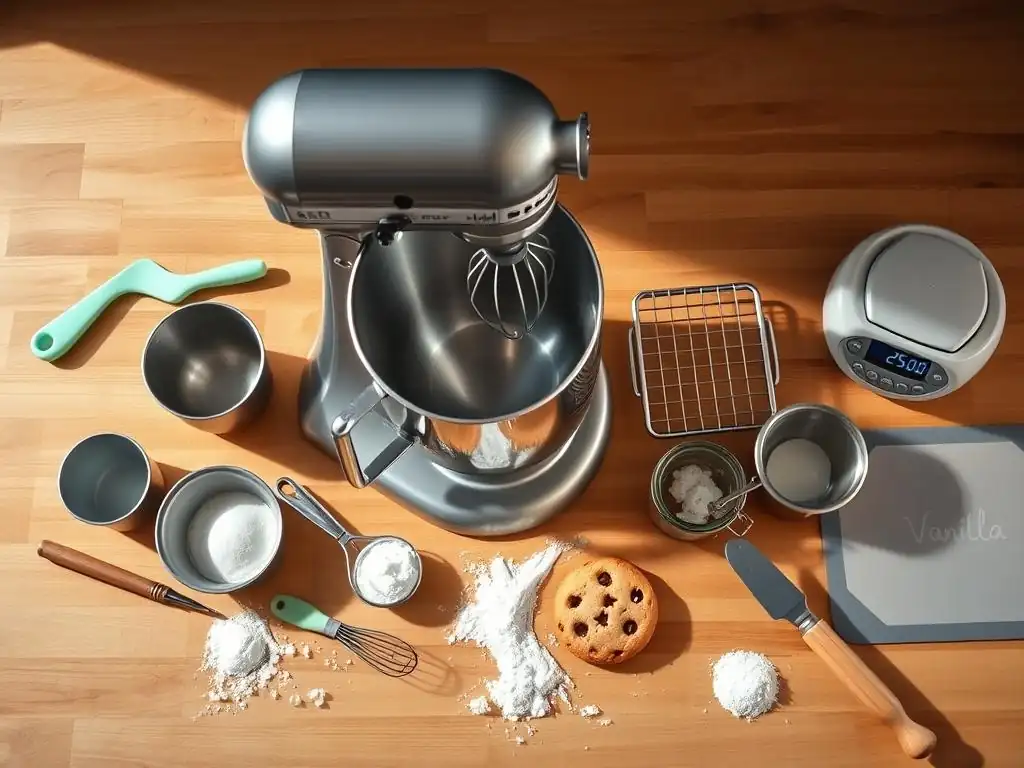
Welcome to BakeWithEase, your guide to unlocking the joys of baking! Are you ready to transform your kitchen into a haven of delicious aromas and delectable treats? This journey starts with the right tools. Discover our curated list of beginner baking essential tools and exactly why each one is crucial for your success. Intrigued? Let's dive in and equip you for baking brilliance!
- Essential Tools for Aspiring Home Bakers (and Why They Matter!)
- Welcome to Baking Basics: Your Adventure Starts Here
- Beginner Baking Essentials: Setting Up Your Kitchen for Success
- Must-Have Measuring Tools for Baking Accuracy
- Essential Mixing Bowls for Baking
- The Best Baking Utensils for Beginners
- Essential Baking Pans and Molds for Beginners
- Other Important Baking Tools for Beginners
- Cleaning and Maintaining Your Beginner Baking Tools
- Beyond the Basics: Expanding Your Baking Horizons
-
Frequently Asked Questions
- What are the absolute beginner baking essential tools I need to get started?
- I'm on a tight budget; can I skip any of the essential tools suggested?
- How do I choose the right measuring cups and spoons as a beginner baker?
- What type of baking sheet is best for a beginner?
- Where can I find reliable baking recipes and guidance when starting out?
- Final Reflection: The Sweet Science of Starting
- Unleash Your Inner Baker: Start Baking Today!
Essential Tools for Aspiring Home Bakers (and Why They Matter!)
Welcome to Baking Basics: Your Adventure Starts Here
Discover the Joy of Baking: A Beginner's Guide to Essential Tools
Embarking on your baking journey is an exciting step! It's a world of delightful aromas, creative expression, and delicious results. Whether you dream of perfectly risen bread, flaky pie crusts, or simply baking a batch of comforting cookies, having the right equipment is key. Think of your tools as your allies in the kitchen; they help ensure consistency and make the process smoother and more enjoyable. You don't need a professional setup to start; a few fundamental beginner baking essential tools are all it takes to unlock your potential.
Getting started in baking is less about having every gadget imaginable and more about acquiring a core set of reliable beginner baking essential tools that serve multiple purposes. These foundational pieces will allow you to tackle a wide variety of recipes, from simple muffins to more complex layer cakes, building your confidence with each successful bake. This guide will walk you through the absolute must-haves, explaining why each tool is important and how it contributes to successful baking outcomes right from your first attempt.
Beginner Baking Essentials: Setting Up Your Kitchen for Success
Why Invest in Quality Baking Tools?
Investing in quality beginner baking essential tools might seem like an added expense when you're just starting, but it pays off significantly in the long run. Well-made tools are often more durable, providing consistent results bake after bake. For instance, a sturdy measuring cup set will maintain accuracy over time, unlike flimsy ones that might bend or warp. A good-quality baking sheet with a reinforced rim is less likely to twist or buckle at high temperatures, ensuring even baking and preventing spills.
Furthermore, quality tools often perform better, making the baking process less frustrating. Non-stick surfaces on pans, for example, can drastically reduce issues with baked goods sticking, which is a common challenge for beginners. Sharp knives for prep work or a robust whisk that won't bend under pressure contribute to efficiency and safety. While you don't need the most expensive items, choosing reasonably priced, well-regarded beginner baking essential tools designed for longevity and performance will make your initial baking experiences much more positive and encourage you to keep practicing and improving.
Essential Baking Tools Checklist: A Quick Overview
Before diving into the details of each tool, here is a quick checklist of the beginner baking essential tools we'll cover. Having these items on hand will equip you for a wide range of basic baking recipes. Consider this your starting point for building your baking toolkit.
- [ ] Dry Measuring Cups (set typically includes 1/4, 1/3, 1/2, 1 cup)
- [ ] Measuring Spoons (set typically includes 1/4, 1/2, 1 tsp, 1 tbsp)
- [ ] Digital Kitchen Scale (measures in grams and ounces)
- [ ] Liquid Measuring Cups (with pour spout, 1-cup and 2-cup sizes are common)
- [ ] Mixing Bowls (various sizes, e.g., small, medium, large)
- [ ] Rubber or Silicone Spatulas/Scrapers (multiple sizes)
- [ ] Whisk (balloon whisk is versatile)
- [ ] Wooden Spoons (at least one)
- [ ] Baking Sheets (standard half-sheet size, approx. 18x13 inches)
- [ ] Cake Pans (e.g., 8-inch round, 9x13 inch rectangular)
- [ ] Muffin Tin (standard 12-cup)
- [ ] Rolling Pin
- [ ] Parchment Paper or Silicone Baking Mat
- [ ] Wire Cooling Rack
This list represents fundamental beginner baking essential tools. As you gain experience, you might add more specialized items, but these basics will get you started with confidence and allow you to explore many classic baking techniques and recipes.
Must-Have Measuring Tools for Baking Accuracy
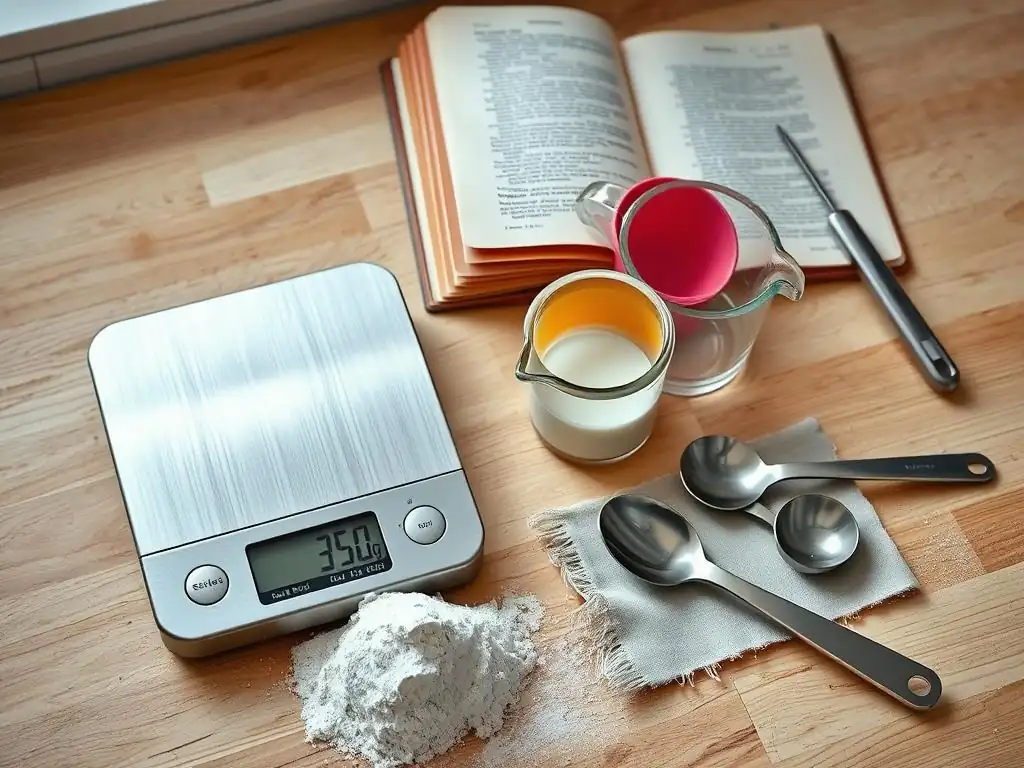
Dry Measuring Cups and Spoons: The Foundation of Every Recipe
Accurate measuring is perhaps the single most critical step in baking, especially for beginners. Unlike cooking, where you can often adjust ingredients as you go, baking relies on precise ratios for chemical reactions (like leavening) to occur correctly. Dry measuring cups are designed to be leveled off, ensuring you get the exact volume of ingredients like flour, sugar, cocoa powder, and oats.
A standard set usually includes cups in increments like 1/4 cup, 1/3 cup, 1/2 cup, and 1 cup. Using the wrong type of cup (like a liquid measuring cup) for dry ingredients can lead to significant measurement errors, often resulting in too much flour.
Similarly, measuring spoons are essential for smaller quantities of both dry and wet ingredients, such as baking powder, baking soda, salt, spices, and vanilla extract. A typical set includes 1/4 teaspoon, 1/2 teaspoon, 1 teaspoon, and 1 tablespoon. Accuracy here is paramount because even slight variations in leavening agents or salt can drastically affect the texture, rise, and flavor of your baked goods.
For instance, using too much baking powder can cause a cake to rise too quickly and then collapse, while too little might result in a dense, flat texture. Proper use of these beginner baking essential tools ensures your ingredients are measured consistently every time.
Digital Kitchen Scale: Achieving Precision in Baking Measurements
While dry measuring cups are standard, using a digital kitchen scale is often considered the most accurate method for measuring ingredients, particularly flour. Different people scoop flour differently, leading to variations of up to 20-30 grams per cup. Weighing ingredients eliminates this variability. Many professional bakers and modern recipes provide measurements in grams for this reason. A good digital scale can typically measure in both grams and ounces, often with precision down to 1 gram.
Using a scale is especially beneficial for ingredients like flour, sugar, and chocolate, where volume can vary based on packing density. For example, 1 cup of all-purpose flour is generally accepted to be around 120-130 grams when spooned lightly into a cup and leveled, but scooping directly from the bag can easily yield 150 grams or more.
This difference can significantly alter the hydration and structure of your dough or batter. Incorporating a digital scale into your set of beginner baking essential tools will elevate your accuracy and consistency, leading to more reliable and successful baking results, like perfectly textured bread or consistently tender cakes.
Liquid Measuring Cups: For Accurate Liquid Ingredient Measurement
Liquid measuring cups are distinctly different from dry measuring cups and are specifically designed for ingredients like water, milk, oil, and extracts. They typically have a pour spout to prevent spills and markings along the side, often in ounces, milliliters, and cups. The key to using a liquid measuring cup accurately is to place it on a flat, level surface and read the measurement at eye level. Reading from above can lead to over-measuring, while reading from below can lead to under-measuring.
Common sizes for liquid measuring cups include 1-cup, 2-cup, and 4-cup capacities. For most beginner recipes, a 1-cup or 2-cup size is sufficient. The clear material (usually glass or plastic) allows you to see the liquid level clearly against the markings.
Using a liquid measuring cup for liquids ensures that you are measuring by volume correctly, which is crucial for achieving the right consistency in batters and doughs. For example, using too little milk in a cookie dough can make it dry and crumbly, while too much can make it spread too much during baking. These beginner baking essential tools are indispensable for wet ingredients.
Essential Mixing Bowls for Baking
Mixing Bowl Materials: Choosing the Right Bowl for Your Needs (Glass, Stainless Steel)
Mixing bowls are fundamental containers used throughout the baking process, from combining dry ingredients to mixing batters and whipping cream. They come in various materials, each with its own advantages. Stainless steel bowls are lightweight, durable, non-reactive (meaning they won't interact with acidic ingredients), and easy to clean. They are excellent for general mixing and are particularly good for whipping egg whites or cream because their smooth surface allows for maximum volume.
Glass mixing bowls, while heavier and potentially breakable, have the advantage of being non-reactive and allowing you to see the ingredients from the side, which can be helpful when mixing or melting ingredients over a double boiler. Ceramic and plastic bowls are also options, though some plastic bowls can retain odors or stains, and some cheaper plastic or ceramic bowls may not be as durable. For a beginner set of baking essential tools, having a mix, perhaps one or two stainless steel and one glass, offers versatility for different tasks.
Different Sizes of Mixing Bowls: Why You Need a Variety
Having a selection of mixing bowl sizes is surprisingly important for efficient baking. You'll need small bowls for whisking a couple of eggs, melting butter, or holding pre-measured ingredients. Medium bowls are perfect for combining dry ingredients like flour, baking powder, and salt, or for mixing smaller batches of batter. Large bowls are essential for mixing larger quantities of dough (like bread or cookie dough), combining wet and dry ingredients for cakes, or whipping large amounts of cream.
Using a bowl that's too small can lead to spills and make it difficult to mix ingredients thoroughly without overworking them. Conversely, using a bowl that's too large for a small amount of ingredients can make whisking or incorporating ingredients challenging. A set of three bowls – small (around 1.5-2 quarts), medium (around 3-4 quarts), and large (around 5-6 quarts) – covers most basic baking needs. This variety ensures you have the right-sized container for every step of your recipe when building your collection of beginner baking essential tools.
The Best Baking Utensils for Beginners
Spatulas and Scrapers: Getting Every Last Bit
Spatulas and scrapers are incredibly versatile tools in the baking kitchen. Rubber or silicone spatulas with flexible heads are perfect for scraping down the sides of mixing bowls, ensuring all ingredients are incorporated into the batter or dough. This is crucial for consistent texture and preventing pockets of unmixed ingredients. They are also invaluable for folding delicate ingredients like whipped cream or egg whites into a batter without deflating them.
Beyond scraping, spatulas are used for frosting cakes, spreading batters evenly into pans, and gently handling delicate items. Having a couple of different sizes – a smaller one for tight spaces and a larger one for big bowls – is helpful. Silicone spatulas are heat-resistant, making them suitable for stirring hot mixtures like custards or melting chocolate. Investing in a few good quality silicone spatulas is a smart move for any collection of beginner baking essential tools.
Whisks: Achieving Light and Airy Mixtures
A whisk is the go-to tool for incorporating air into mixtures, breaking up lumps, and combining wet ingredients smoothly. A balloon whisk, with its many wires, is particularly effective at aerating egg whites or cream, which is necessary for making meringues, mousses, or simply adding lightness to batters. It's also great for quickly combining dry ingredients if you don't have a sifter, or for emulsifying liquids like salad dressings (though that's more cooking than baking! ).
For beginners, a medium-sized balloon whisk (around 10-12 inches) is a great starting point. It's versatile enough for most tasks, from whisking eggs for a custard to combining wet ingredients for muffins. While electric mixers exist, a hand whisk is essential for smaller tasks, provides better control for delicate processes like whipping small amounts of cream, and requires no electricity! It's a fundamental piece among beginner baking essential tools.
Wooden Spoons: A Baking Classic
Wooden spoons are traditional baking tools loved for their sturdiness and non-reactive nature. Unlike metal spoons, they won't scratch your mixing bowls, and they don't conduct heat as quickly, making them comfortable to use when stirring warm mixtures. They are particularly useful for stirring thick batters or doughs by hand, creaming butter and sugar (though a mixer is faster), or incorporating ingredients into a dense mixture where a spatula might be too flexible.
A good quality wooden spoon is durable and can last for years with proper care. They come in various sizes and shapes; a standard, sturdy spoon about 10-12 inches long with a comfortable handle is a good addition to your beginner baking essential tools. While spatulas have taken over some of their traditional roles, a wooden spoon remains a reliable and versatile tool for many baking tasks, especially when you need a bit of leverage or strength for stirring.
Essential Baking Pans and Molds for Beginners
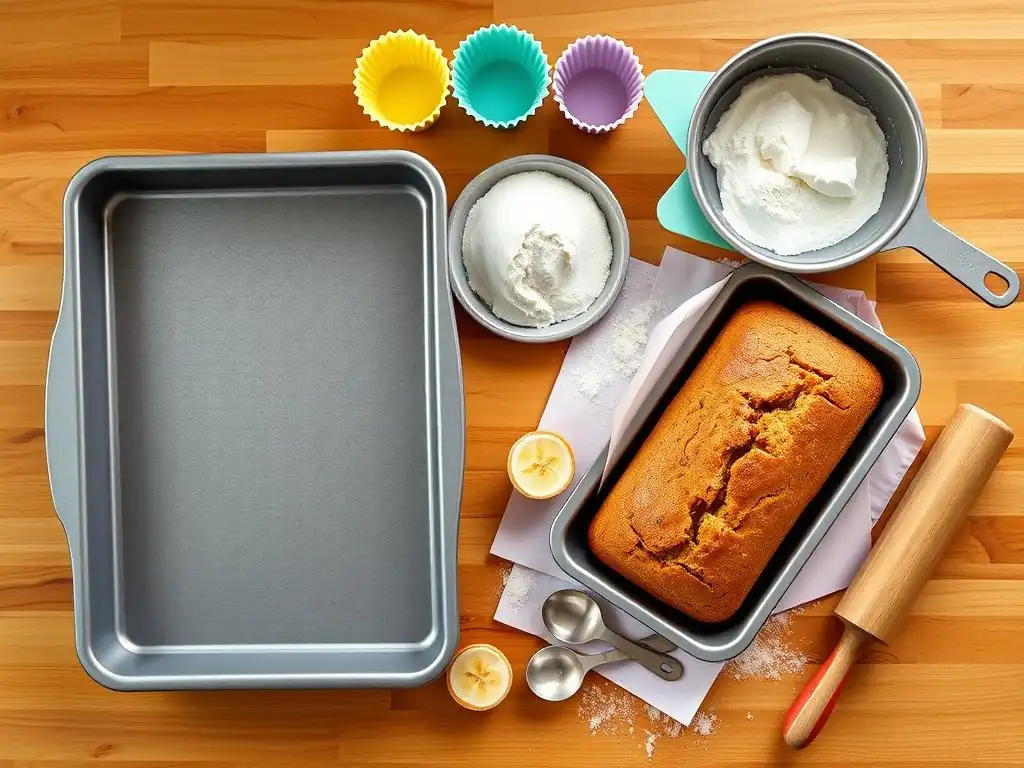
Baking sheets, also known as cookie sheets or sheet pans, are flat or shallow rectangular pans that are incredibly versatile. They are, of course, essential for baking cookies and biscuits, but they are also used for roasting nuts, baking sheet cakes, making granola, and even baking savory items like pizzas or roasted vegetables (though we're focusing on baking!). A standard size for home baking is the "half-sheet" pan, typically measuring around 18x13 inches with a 1-inch rim.
Having at least two baking sheets is highly recommended for beginners. This allows you to bake one batch of cookies while preparing the next, streamlining the process. Look for sturdy, heavy-gauge aluminum sheets, which conduct heat evenly for consistent baking results. Avoid dark-coated pans initially, as they can sometimes cause the bottoms of baked goods to brown too quickly. Baking sheets are truly fundamental beginner baking essential tools.
Cake Pans: Round, Square, and Loaf Pans Explained
To bake cakes, you'll need specific cake pans. The most common shapes for beginners are round, square, and loaf pans. Round pans, typically 8 or 9 inches in diameter and 2 inches deep, are used for layer cakes. Having two of the same size allows you to bake layers simultaneously. Square pans, often 8x8 or 9x9 inches, are great for brownies, cornbread, or simple snack cakes.
Loaf pans, usually 9x5 inches, are perfect for baking quick breads like banana bread, pound cake, or yeast bread loaves. These pans are designed to give structure to batters that are too soft to hold their shape on a baking sheet. The material can vary, including aluminum, non-stick metal, or glass. Non-stick is convenient, but proper greasing and flouring (or using parchment paper) are key regardless of the material. These shaped pans are vital beginner baking essential tools for expanding your repertoire beyond cookies.
Muffin Tins: Perfect for Cupcakes and Muffins
A standard muffin tin, designed to hold 12 regular-sized muffins or cupcakes, is a must-have for any beginner baker. These tins provide individual cavities that support the batter as it rises, resulting in perfectly shaped muffins or cupcakes. Beyond their obvious use, muffin tins can also be used for baking individual quiches, mini-frittatas, or even freezing portions of sauces.
Muffin tins are typically made of metal, often with a non-stick coating. While the non-stick surface helps, using paper liners or greasing and flouring each cup thoroughly is still recommended to ensure easy release of your baked goods. If you plan on baking frequently, having two muffin tins allows for larger batches. This simple pan is a gateway to countless delicious and easy-to-make treats, making it a core item in your beginner baking essential tools collection.
Other Important Baking Tools for Beginners
Rolling Pin: Essential for Dough and Pastry
A rolling pin is necessary for flattening doughs for cookies, pie crusts, biscuits, and pastries. It allows you to achieve an even thickness, which is crucial for consistent baking. If one part of your dough is thicker than another, the thinner part will burn before the thicker part is cooked through. Rolling pins come in various styles, including traditional wooden pins with handles, French-style tapered pins, and marble pins.
For beginners, a simple wooden rolling pin is a great, affordable choice. Look for one with a smooth surface and comfortable handles (if it has them). French-style pins offer more control as you feel the dough directly. Regardless of the style, learning to use flour sparingly to prevent sticking while rolling is a key technique. A rolling pin is a fundamental tool when working with any kind of dough, solidifying its place among beginner baking essential tools.
Parchment Paper and Silicone Baking Mats: Preventing Sticking and Easy Cleanup
Parchment paper and silicone baking mats (often known by the brand name Silpat) are absolute game-changers for preventing baked goods from sticking to pans and making cleanup a breeze. Parchment paper is disposable, heat-resistant paper that you line your baking sheets or cake pans with. It creates a non-stick surface and catches drips, simplifying the cleaning process.
Silicone baking mats are reusable alternatives made of food-grade silicone, often reinforced with fiberglass. They provide an excellent non-stick surface and distribute heat evenly. While a bit more of an upfront investment, they are durable and environmentally friendly compared to disposable paper. For beginners, having either parchment paper on hand or one or two silicone mats will dramatically improve your baking experience by ensuring your cookies slide right off the sheet and your cakes don't stick to the bottom of the pan. These are highly recommended beginner baking essential tools.
Wire Cooling Rack: Allowing Your Baked Goods to Cool Evenly
Once your baked goods come out of the oven, they need to cool properly. Placing hot pans directly on a solid surface can trap heat, causing the bottoms to become soggy or continue cooking unevenly. A wire cooling rack allows air to circulate freely around the entire item, promoting even cooling and preventing condensation buildup. This is especially important for cakes, breads, and cookies.
Look for a sturdy wire rack with a grid pattern that is tight enough to support smaller items like cookies without them falling through. Standard rectangular racks, often sized to fit over a half-sheet pan, are very useful. Having at least one cooling rack, preferably two if you bake multiple batches, is essential for achieving the desired texture in your finished products. It's a simple but critical component of your beginner baking essential tools.
Cleaning and Maintaining Your Beginner Baking Tools
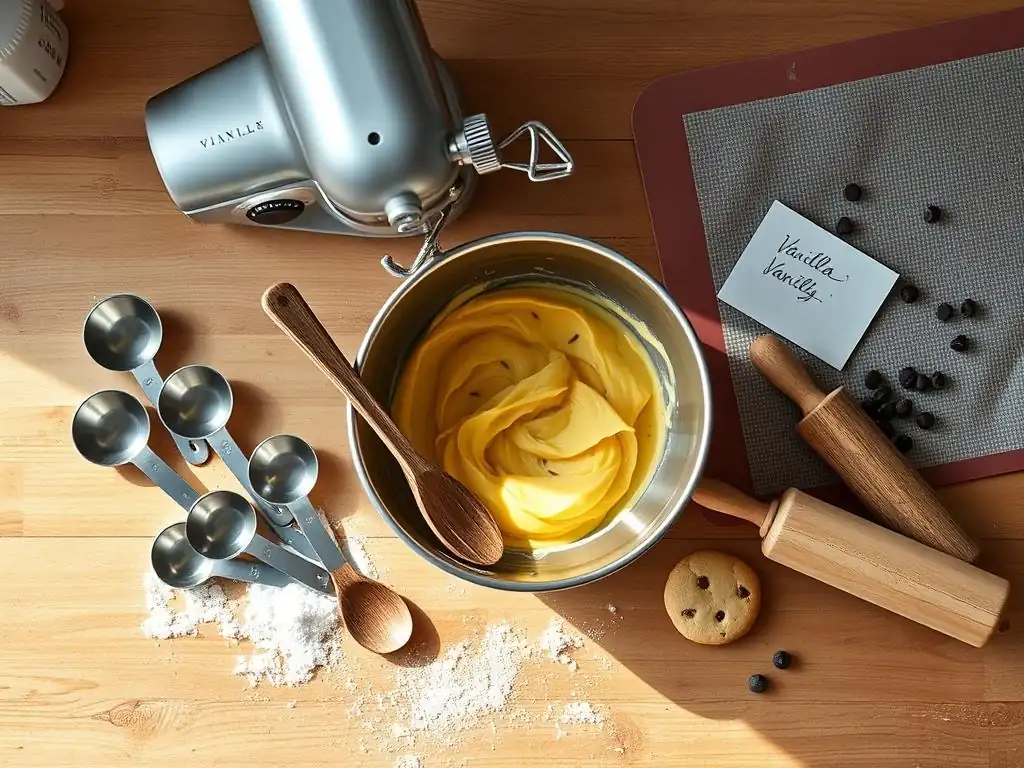
Proper Cleaning Techniques for Different Materials
Keeping your beginner baking essential tools clean is vital for hygiene and longevity. Different materials require different cleaning approaches. Stainless steel bowls and tools are generally dishwasher safe, but hand washing with warm, soapy water is also effective and often recommended for better care. Ensure they are dried thoroughly to prevent water spots or rust.
Glass mixing bowls can also go in the dishwasher or be hand washed. For baked-on residue, soaking in hot soapy water often helps. Wooden spoons and rolling pins should always be hand washed. Do not put them in the dishwasher, as this can cause them to crack or warp.
Wash them quickly, avoid prolonged soaking, and dry them immediately with a towel before letting them air dry completely. Silicone spatulas and baking mats are usually dishwasher safe, but hand washing is quick and ensures all residue is removed. Always consult manufacturer instructions for specific care recommendations for your beginner baking essential tools.
Storage Tips for Keeping Your Tools in Top Condition
Proper storage protects your beginner baking essential tools from damage and keeps them organized and ready for use. Measuring cups and spoons often come on rings or can be nested together in a drawer or container. Mixing bowls can typically be nested inside each other to save space.
Baking sheets and cooling racks can be stored vertically in a cupboard using dividers or horizontally stacked. Be careful not to stack heavy items on top of lighter pans that could warp. Rolling pins can be stored in a drawer, a utensil crock, or hung on hooks. Silicone baking mats can be rolled up or laid flat. Keeping your tools clean and stored properly will ensure they remain in good condition, making your baking experience smoother and extending the life of your beginner baking essential tools.
Beyond the Basics: Expanding Your Baking Horizons
Equipping yourself with these fundamental beginner baking essential tools is the perfect way to start your journey into the rewarding world of baking. Each tool serves a specific purpose, contributing to the accuracy, efficiency, and enjoyment of your time in the kitchen. From the precision of measuring cups and scales to the utility of spatulas and the necessity of proper pans, these items form the backbone of successful baking.
Remember, baking is a skill that improves with practice. Don't be discouraged by imperfect results initially. Focus on understanding the role each of your beginner baking essential tools plays and how to use them correctly. With a little patience, the right tools, and a willingness to learn, you'll be creating delicious baked goods to share with friends and family in no time. Gather your tools, choose a simple recipe, and start baking today!
Frequently Asked Questions
What are the absolute beginner baking essential tools I need to get started?
You'll need a few basics: a mixing bowl, measuring cups and spoons, a baking sheet, and a spatula. These will cover most simple recipes and allow you to learn fundamental techniques.
I'm on a tight budget; can I skip any of the essential tools suggested?
While all tools are helpful, you can initially prioritize a good mixing bowl and accurate measuring tools. A simple baking sheet and a flexible spatula are relatively inexpensive to start with.
How do I choose the right measuring cups and spoons as a beginner baker?
Look for sets made of stainless steel or durable plastic with clear, easy-to-read markings. Ensure they include both dry and liquid measuring cups for accurate ingredient proportions.
What type of baking sheet is best for a beginner?
A light-colored, non-stick baking sheet is a great starting point. They promote even baking and prevent sticking, making cleanup easier for beginner bakers.
Where can I find reliable baking recipes and guidance when starting out?
Resources like BakeWithEase.com provide step-by-step guides and easy-to-find ingredient lists. Look for recipes specifically designed for beginners to build confidence and skills.
Final Reflection: The Sweet Science of Starting
The humble kitchen tool, often overlooked, holds the key to unlocking a world of baking possibilities. From the perfectly crisp cookie to the fluffy, light-as-air cake, the right equipment isn't just helpful—it's transformative. This article highlighted the essential tools every beginner baker needs, demystifying the process and empowering you to confidently embark on your baking journey.
The impact of accessible baking knowledge is profound. It's more than just creating delicious treats; it's about fostering creativity, building confidence, and connecting with a rich culinary heritage. Baking is at once child's play and adult joy. And love, of course.
This quote perfectly encapsulates the joy and satisfaction derived from the process, a sentiment I've personally experienced countless times. The tools discussed here are not mere objects; they are instruments of self-expression, allowing you to translate your ideas into tangible, delicious realities.
Now, I invite you to consider your own baking aspirations. What sweet creation have you always dreamed of making? Perhaps it's a towering layer cake, delicate macarons, or rustic sourdough bread. Don't let a lack of the right tools hold you back. Take a moment to review the essential tools outlined in this article, and begin building your own baking arsenal. The journey of a thousand miles begins with a single step—or perhaps, a single perfectly measured cup of flour. Embrace the process, enjoy the journey, and most importantly, savor the delicious results.
Unleash Your Inner Baker: Start Baking Today!
Thanks for diving into the world of baking with us! We hope you've gained valuable insights into the essential tools that will help you create delicious treats. Now it's time to put that knowledge into action. Ready to get started?
- Begin your baking journey by grabbing your must-have tool: Think about the one tool from the list that excites you most – maybe it's that beautiful stand mixer or a set of perfectly sized mixing bowls – and purchase it! This is your first step towards baking confidence.
- Share your baking aspirations: Tell us which tool you chose and what you plan to bake first! We love hearing from our community.
- Challenge yourself with a new recipe: Pick a simple recipe and tackle it with your newfound knowledge. You might surprise yourself with how easily you can create something delicious!
What exciting recipe will you bake first, and which tool will be your trusty companion on this delicious journey?