
Master Enriched Doughs: Online Technique Classes for Brioche & Challah

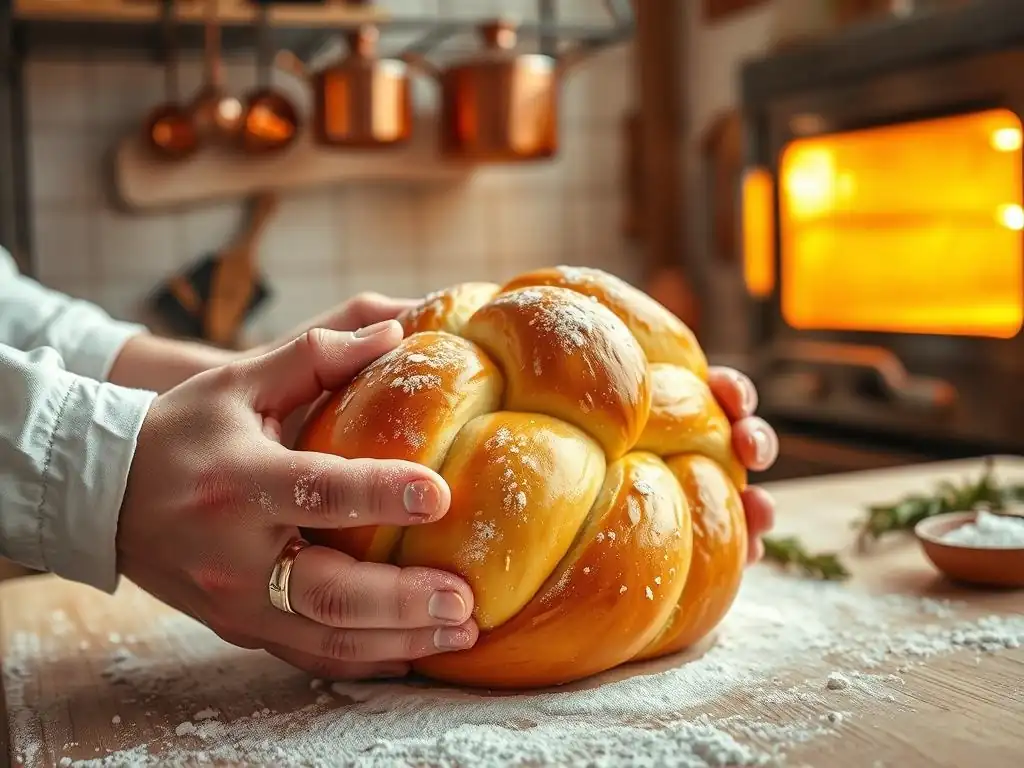
Welcome to BakeWithEase, your gateway to baking brilliance! Are you ready to elevate your baking game and unlock the secrets of perfectly enriched doughs? Dive into our expert Brioche dough recipe technique breakdown and discover how to create delectable, bakery-worthy breads and pastries from the comfort of your own kitchen. But that's just the beginning... Explore our curated selection of baking books and courses to further refine your skills and embark on a delicious journey of culinary discovery. What other secrets await within the world of enriched doughs? Let's find out!
- Master Enriched Doughs: Online Classes for Brioche & Challah - BakeWithEase
- Unlock the Secrets of Brioche and Challah Mastery
- Top Online Classes for Brioche and Challah Perfection
- Comparing the Best Online Brioche and Challah Classes: Which is Right for You?
- Essential Tools & Ingredients for Perfect Brioche & Challah
- Beyond the Basics: Advanced Brioche and Challah Techniques to Explore
- Maximizing Your Learning Experience: Tips for Success in Online Baking Classes
- Conclusion: Elevate Your Baking Skills with Expert Online Guidance
- Frequently Asked Questions
- Final Reflection: The Enduring Allure of Hand-Crafted Bread
- Unleash Your Inner Baker: Master the Art of Enriched Doughs!
Master Enriched Doughs: Online Classes for Brioche & Challah - BakeWithEase
Unlock the Secrets of Brioche and Challah Mastery
Enriched doughs like brioche and challah represent a pinnacle of baking achievement for many home bakers. Unlike lean doughs made with just flour, water, yeast, and salt, enriched doughs incorporate ingredients such as eggs, milk, sugar, and butter, which fundamentally change their structure and handling properties. Mastering the brioche dough recipe technique or the intricate braiding of challah requires specific skills and patience, yielding loaves with unparalleled richness, tenderness, and flavor.
These doughs are not just delicious; they are versatile. Brioche, with its buttery crumb, is perfect for everything from breakfast pastries and burgers to elegant desserts. Challah, traditionally baked for the Sabbath, offers a slightly less rich, often sweeter profile and is renowned for its beautiful braided form, making it a centerpiece for any table. Learning the proper techniques for these doughs opens up a world of culinary possibilities and deepens your understanding of how different ingredients interact in baking.
Why Brioche and Challah Deserve Your Attention
Brioche and challah stand out in the world of baking due to their unique composition and the luxurious results they produce. Brioche is characterized by its high fat content, often containing a significant amount of butter (sometimes up to 50% of the flour weight) and eggs, which give it a tender, cake-like crumb and a rich, golden color. This makes the brioche dough technique particularly challenging as the fat can inhibit gluten development if not handled correctly.
Challah, while also enriched with eggs and sometimes oil or butter, typically has less fat than brioche and often includes sugar or honey for sweetness. Its defining feature is the beautiful, often complex braiding, which isn't just for show – it affects the crumb and moisture retention of the finished loaf. Both doughs require specific kneading, proofing, and shaping methods that differ significantly from standard bread baking, offering a rewarding challenge for bakers looking to expand their repertoire beyond simple loaves.
The Challenges of Mastering Brioche and Challah at Home
Attempting to master the brioche dough recipe technique or perfect the challah braid at home can present several hurdles. The high fat content in brioche can make the dough incredibly sticky and difficult to knead, often requiring a stand mixer or a lot of patience with hand kneading. Achieving the right level of gluten development is crucial for the dough's structure, but too much handling can melt the butter, leading to a greasy, dense loaf.
Proofing enriched doughs also requires careful attention; they rise slower than lean doughs due to the added fat and sugar, and over-proofing can lead to a collapsed structure. Shaping, especially the intricate braiding of challah, takes practice and a clear understanding of the technique. Many home bakers struggle with uneven braids, loaves that spread too much during baking, or a crumb that isn't as light and airy as desired. These challenges highlight the value of structured learning, such as an online course, to guide you through each step.
Top Online Classes for Brioche and Challah Perfection
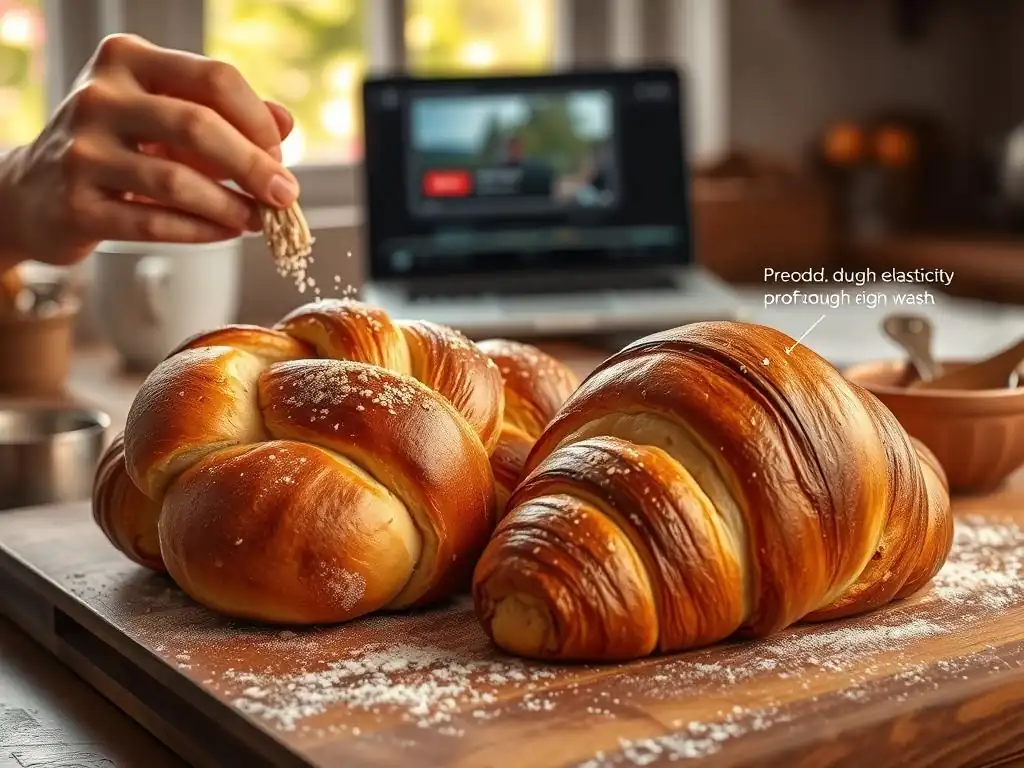
Option 1: BakeWithEase - Comprehensive Brioche & Challah Course
Our own BakeWithEase platform offers a dedicated course designed to help you master both the brioche dough recipe technique and the art of challah baking from start to finish. This course is structured into easy-to-follow modules, guiding you through the science behind enriched doughs, ingredient functions, proper mixing and kneading methods (both by hand and with a stand mixer), bulk fermentation, shaping techniques (including various brioche forms and challah braids), and optimal baking temperatures and times.
The BakeWithEase course includes detailed video demonstrations, downloadable recipes and guides, and access to a community forum where you can ask questions and share your results. We emphasize understanding why each step is important, not just how to do it, empowering you to troubleshoot common issues and adapt recipes. Whether you're struggling with sticky brioche dough or perfecting your challah braid, this course provides the foundational knowledge and practical skills you need.
Features of the BakeWithEase Course: A Deep Dive
The BakeWithEase Comprehensive Brioche & Challah Course is packed with features designed for effective online learning. It includes over 4 hours of high-definition video content, broken down into concise lessons averaging 5-15 minutes each, allowing you to learn at your own pace. The course covers multiple variations of the brioche dough technique, including classic French brioche, lighter versions, and even sweet variations, alongside instruction on traditional and modern challah braiding patterns, from simple three-strand to complex six-strand weaves.
Each lesson is accompanied by downloadable PDF guides that summarize key points, list ingredients and equipment, and provide troubleshooting tips. For example, the kneading section specifically details how to achieve the 'windowpane test' for gluten development in enriched doughs, a crucial step often missed in basic tutorials. The course also features a dedicated Q&A section monitored by experienced bakers, ensuring you get personalized help when you encounter challenges with your brioche dough recipe technique or challah shaping.
Pricing and Subscription Options for BakeWithEase
Access to the BakeWithEase Comprehensive Brioche & Challah Course is available through various subscription tiers on the BakeWithEase platform. A monthly subscription, priced at approximately $15-$20 per month, grants unlimited access to this course and our entire library of baking classes and resources. For those committed to long-term learning, an annual subscription is available at a discounted rate, typically around $150-$180 per year, offering significant savings.
We also occasionally offer lifetime access to individual courses, including the Brioche & Challah course, for a one-time fee, which can range from $50 to $80 depending on current promotions. This provides permanent access to all course materials and future updates without recurring charges. Our pricing structure is designed to be flexible, allowing bakers to choose the option that best fits their learning style and budget while providing full access to master the brioche dough recipe technique and challah artistry.
Why This Course Excels at Teaching Brioche and Challah
The BakeWithEase course excels at teaching brioche and challah mastery because it combines in-depth theoretical knowledge with practical, step-by-step video demonstrations. We don't just show you how to knead; we explain why proper kneading is essential for developing the specific structure needed in enriched doughs. This understanding is critical when dealing with a high-fat brioche dough recipe technique, which behaves very differently from lean bread dough.
Furthermore, the course addresses common pitfalls specific to these doughs, such as dealing with sticky dough, preventing butter leakage during proofing, and ensuring even browning. The inclusion of multiple shaping techniques for both brioche (like à tête or loaf pan) and challah (various braids) provides practical skills that are visually demonstrated from multiple angles. The combination of detailed instruction, visual aids, and community support makes it a robust resource for anyone serious about mastering these challenging yet rewarding doughs.
Option 2: King Arthur Baking School - Focused Challah Braiding Workshop
King Arthur Baking School is renowned for its high-quality baking education, and while they offer various classes, their focused Challah Braiding Workshop is particularly noteworthy. This specific workshop often runs as a live or pre-recorded online session, concentrating intensely on the art and technique of braiding challah dough. It's designed for bakers who may already have a reliable challah dough recipe technique but want to elevate their shaping skills.
These workshops typically last 1-2 hours and cover the fundamentals of preparing dough for braiding, handling the strands correctly, and demonstrating several braiding patterns, often including the classic six-strand braid and sometimes more complex variations like the round Rosh Hashanah challah. The focus is purely on the visual and tactile skill of braiding, offering detailed instruction and tips for achieving tight, even, and beautiful loaves ready for baking.
Benefits of a Focused Challah Baking Workshop
A focused workshop like the King Arthur Baking School's Challah Braiding offers several distinct benefits. Firstly, it allows bakers to hone in on a specific, often challenging, aspect of challah making without needing to cover the entire dough process from scratch. If your kneading and proofing are solid but your braiding is inconsistent, this targeted approach saves time and energy.
Secondly, these workshops often feature highly experienced instructors who can provide nuanced tips on dough handling during braiding – for example, how to keep strands uniform in thickness or prevent them from sticking. The concentrated format means you can dedicate a short block of time specifically to improving a key skill, leading to immediate improvements in the appearance of your challah loaves. While it doesn't teach a full brioche dough recipe technique, it's excellent for refining a critical challah skill.
King Arthur Baking School's Unique Approach to Challah Mastery
King Arthur Baking School's approach in their focused workshops is deeply rooted in their extensive experience as a flour company and baking resource. Their instructors are often professional bakers or culinary educators with years of hands-on experience. They emphasize precision and understanding the feel of the dough, which is particularly important when braiding.
The workshops typically provide clear, close-up camera angles on the hands demonstrating the braiding process, making it easy for participants to follow along in real-time or replay specific sections. They also often include tips on dough consistency ideal for braiding and how to troubleshoot common issues like uneven strands or gaps in the braid before baking. This practical, highly visual focus on the manual technique sets their workshops apart.
Cost and Schedule of the King Arthur Baking School Workshop
The cost for a focused online workshop like the King Arthur Baking School's Challah Braiding Workshop typically ranges from $25 to $40 per session. These are often one-time fees for access to a specific live or pre-recorded class. The schedule for live workshops varies, often offered seasonally or around holidays when challah is traditionally baked.
Pre-recorded versions may be available on demand for a set period after purchase. While this option doesn't cover the full brioche dough recipe technique or even a complete challah recipe, it's a cost-effective way to gain expert instruction on a single, critical skill. Check their website's baking school section for upcoming schedules and availability.
Option 3: Udemy - Beginner-Friendly Brioche and Challah Classes
Udemy, a large online learning platform, hosts a variety of baking courses, including options specifically focused on brioche and challah. These courses are often created by independent instructors and vary widely in depth and style, but many cater specifically to beginners looking for an accessible introduction to enriched doughs. You can find courses titled something like "Learn to Bake Brioche and Challah from Scratch" or "Easy Brioche Dough Technique for Beginners".
These courses typically cover the basics: understanding the ingredients, simple mixing and kneading methods, proofing fundamentals, basic shaping (often a simple loaf or a basic braid), and baking. They are designed to demystify the process and provide a successful first experience with enriched doughs, making them ideal for those who are intimidated by the complexity often associated with the brioche dough recipe technique or challah baking.
Udemy's Affordable Entry Point to Enriched Doughs
One of the main advantages of Udemy is its pricing model. Courses are often available for a one-time purchase fee, which can be significantly discounted during frequent site-wide sales. It's not uncommon to find comprehensive-looking baking courses for anywhere from $15 to $50, especially during promotional periods. This makes Udemy a very affordable way to get started with brioche and challah baking without a large upfront investment or a recurring subscription.
While the quality and depth can vary between instructors, the platform allows you to preview lessons and read student reviews, helping you choose a course that seems suitable for your level and learning style. This low barrier to entry makes it easy for beginners to experiment with learning the brioche dough technique or a simple challah recipe without committing to a more expensive, in-depth program.
Key Takeaways from Udemy's Brioche and Challah Lessons
Udemy courses focused on beginner brioche and challah typically emphasize fundamental techniques in an easy-to-understand way. You can expect to learn about the role of eggs, butter, and sugar in enriched doughs, basic yeast activation, simple hand-kneading or stand mixer techniques suitable for beginners, identifying when the dough has proofed correctly, and forming basic loaf shapes or simple braids (like a three-strand challah).
Many courses provide downloadable recipe cards and ingredient lists. While they might not delve into the nuances of advanced brioche dough recipe technique variations or complex challah braiding patterns, they successfully break down the initial steps, helping beginners overcome the initial intimidation factor. A common takeaway is gaining the confidence to successfully produce a tasty, if not perfectly shaped, brioche or challah loaf on your first attempt.
Ideal for: Bakers New to Brioche and Challah
Udemy is particularly ideal for bakers who are absolute newcomers to enriched doughs. If you've primarily baked lean breads or quick breads and are curious about brioche or challah but feel overwhelmed by traditional recipes or advanced techniques, a Udemy course can be a great starting point.
It's also suitable for those on a tight budget who want to test the waters before investing in more comprehensive training. The format allows for flexible learning, and the focus is often on achieving a successful, albeit basic, outcome, making it less intimidating than courses aimed at perfecting advanced techniques or commercial-quality results. It's a stepping stone into the world of mastering the brioche dough recipe technique and challah baking.
Comparing the Best Online Brioche and Challah Classes: Which is Right for You?
Choosing the right online class depends heavily on your current skill level, your budget, and what you specifically want to achieve. Are you a total beginner looking for a gentle introduction, someone who wants to master the brioche dough recipe technique comprehensively, or are you primarily interested in perfecting your challah braiding? Comparing the options based on these factors will help you make the best decision for your baking journey.
Consider the format of the course – do you prefer detailed video lessons, live interaction, or downloadable guides? Also, think about the level of support offered, such as Q&A sections or community forums. A comprehensive course like BakeWithEase covers both doughs in depth, while King Arthur offers specialized skill focus, and Udemy provides affordable introductions.
Brioche: BakeWithEase vs. Udemy
When comparing options specifically for learning the brioche dough recipe technique, BakeWithEase offers a much more comprehensive and in-depth approach than most beginner-focused Udemy courses. The BakeWithEase course delves into the science of high-fat doughs, covers multiple brioche variations (like pain au lait or richer brioche Nanterre), and provides detailed troubleshooting for common issues like dense crumb or greasy texture, often encountered with brioche.
Udemy courses, while affordable and beginner-friendly, typically stick to a single, simpler brioche recipe and technique. They are excellent for getting a feel for working with enriched dough but may not equip you with the knowledge to tackle more complex brioche challenges or variations. If your goal is to truly master the brioche dough recipe technique and understand its nuances, BakeWithEase offers a deeper dive. If you just want to bake one successful loaf to start, Udemy is a good entry point.
Challah: King Arthur Baking School vs. BakeWithEase
For challah, the choice between King Arthur Baking School and BakeWithEase depends on whether you need a full recipe and technique course or just focused skill development. The King Arthur Challah Braiding Workshop is highly specialized, perfect for bakers who have a solid challah recipe but struggle specifically with the braiding technique. It offers expert, concentrated instruction on shaping.
BakeWithEase, on the other hand, provides a complete challah course that covers everything from mixing the dough (including variations like oil-based or water-based challah) through proofing, shaping (including multiple braid types), and baking. If you need guidance on the entire challah process, including understanding the dough itself, BakeWithEase is more comprehensive. If you just need to perfect your braiding skills, the King Arthur workshop offers targeted expertise.
Key Considerations: Time Commitment, Budget, and Skill Level
Your available time is a significant factor. Comprehensive courses like BakeWithEase require a larger time investment (several hours of video content plus practice time) but offer deep mastery. Focused workshops (King Arthur) are shorter, ideal for targeting a single skill. Udemy courses vary but are generally flexible and self-paced.
Budget is also crucial. Udemy is typically the most affordable upfront, especially during sales. King Arthur workshops are moderately priced for a single session. BakeWithEase offers subscriptions or a higher one-time fee but provides access to a wider range of content. Finally, honestly assess your skill level: total beginner (Udemy, or the start of BakeWithEase), intermediate baker wanting deeper knowledge (BakeWithEase), or advanced baker needing to refine a specific technique (King Arthur workshop, or advanced sections of BakeWithEase). Choosing based on these considerations ensures you find the best fit to improve your brioche dough recipe technique and challah skills.
Essential Tools & Ingredients for Perfect Brioche & Challah
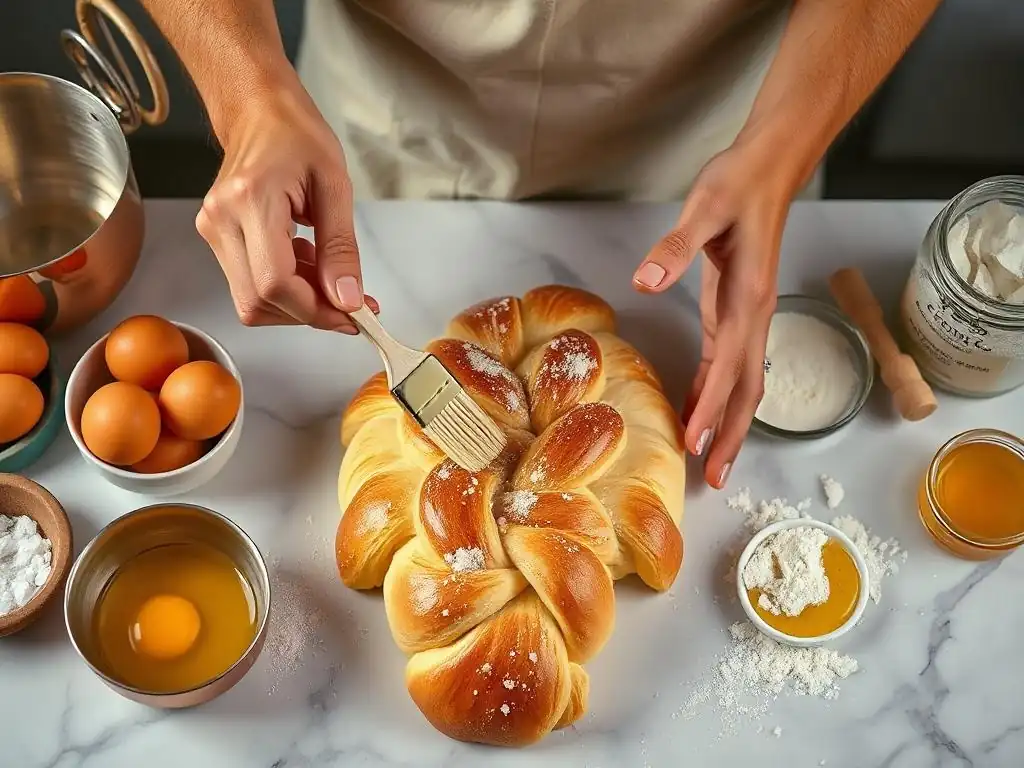
Achieving perfect brioche and challah isn't solely about mastering the technique; having the right tools and high-quality ingredients plays a crucial role. Enriched doughs are more demanding than lean bread doughs, and the equipment you use can significantly impact the outcome, particularly during the crucial kneading phase for developing gluten around all that fat and sugar. Similarly, ingredient quality directly affects flavor, texture, and the dough's behavior.
While you don't need a professional kitchen setup, a few key items can make the process much smoother and improve your results. Thinking about the type of flour, having reliable mixing equipment, and using appropriate baking surfaces are all part of setting yourself up for success when tackling challenging recipes like a classic brioche dough recipe technique or an elaborate challah braid.
High-Quality Flour for Enriched Doughs: King Arthur Flour Review
For enriched doughs like brioche and challah, using a high-quality bread flour is often recommended. Bread flour typically has a higher protein content (around 12-14%) compared to all-purpose flour (around 10-12%), which helps develop a stronger gluten network. This strength is essential for trapping the gases produced by yeast, allowing the rich, heavy dough to rise properly and achieve a light, airy crumb despite the added fat and sugar.
King Arthur Baking Company's Bread Flour is a widely respected option in the baking community. It's known for its consistent high protein content and reliability, which is particularly valuable when learning a new brioche dough recipe technique. While other brands of bread flour can work well, King Arthur's reputation for quality ensures you're starting with a strong foundation ingredient. Using a consistent, high-quality flour eliminates one potential variable when troubleshooting your enriched doughs.
Stand Mixers: KitchenAid vs. Cuisinart for Brioche and Challah
Kneading enriched doughs, especially brioche with its high butter content, can be a significant workout, making a stand mixer a valuable tool. The sticky nature of the dough and the need for thorough development require a mixer with a powerful motor and sturdy construction. Two popular brands are KitchenAid and Cuisinart.
KitchenAid stand mixers, particularly the Artisan or Professional series with wattages typically ranging from 325W to 575W, are workhorses in many home kitchens. They handle dense doughs well, though very large batches of stiff dough might challenge smaller models. Cuisinart stand mixers also offer robust options, often featuring powerful motors (e.g., 500W+) and different bowl capacities. Both brands offer dough hooks designed for efficient kneading. For mastering the brioche dough technique without the arm strain, a reliable stand mixer from either brand is a worthwhile investment.
Baking Stones & Sheets: Achieving a Crispy Crust with Emile Henry
While brioche and challah aren't typically known for a super crispy crust like lean sourdough, baking on the right surface can still improve the crust development and overall heat distribution. Baking stones or steel can absorb and radiate heat, providing a consistent temperature to the bottom of the loaf, which helps with oven spring and ensures the bottom crust isn't soggy.
Emile Henry, a French company, is known for its ceramic bakeware, including baking stones. Their stones are designed to withstand high temperatures and provide even heat. Alternatively, heavy-duty aluminum baking sheets are standard and effective, especially when lined with parchment paper for easy cleanup. For challah, a sheet is often preferred to accommodate the braided shape. While not strictly necessary for a basic brioche dough recipe technique or challah, a good baking surface contributes to more consistent and professional-looking results.
Beyond the Basics: Advanced Brioche and Challah Techniques to Explore
Once you've mastered the fundamental brioche dough recipe technique and can confidently bake a beautiful challah, a whole new world of advanced techniques awaits. These build upon your foundational skills, allowing you to experiment with different flavor profiles, textures, and visual presentations. Moving beyond simple recipes involves a deeper understanding of fermentation, ingredient variations, and creative shaping.
Exploring these advanced techniques can significantly elevate your baking and impress friends and family. From incorporating sourdough for added complexity to creating stunning, intricate braids, pushing the boundaries of your skills with enriched doughs is a rewarding endeavor. Online courses often offer advanced modules or separate classes dedicated to these specialized topics.
Sourdough Brioche: Adding Complexity to Your Dough
Integrating sourdough into a brioche dough recipe technique adds a layer of complexity and flavor that is distinct from yeast-leavened versions. Instead of commercial yeast, a sourdough starter (levain) is used as the primary leavening agent. This introduces beneficial bacteria and wild yeasts that contribute a subtle tang and unique aroma to the rich dough.
Working with sourdough brioche requires understanding sourdough fermentation cycles, which are slower and more sensitive to temperature than commercial yeast. The proofing times will be longer, and the dough may behave differently due to the starter's acidity. Mastering this involves managing your starter's activity and adjusting proofing schedules, resulting in a brioche with a more nuanced flavor profile and often a slightly different texture.
Creative Challah Braiding: Beyond the Traditional Six-Strand
While the three-strand and six-strand braids are classic challah forms, the art of challah braiding extends far beyond these basics. Advanced techniques involve creating braids with 4, 5, 8, or even 12 strands, resulting in stunning, intricate patterns that make the loaf a true work of art. These braids often require careful planning and coordination of hand movements.
Learning these advanced braids involves practicing specific weaving sequences and maintaining even tension on the dough strands. Online resources and videos are invaluable for visualizing these complex steps. Mastering creative challah braiding allows you to produce loaves that are not only delicious but also visually spectacular centerpieces for holidays and special occasions, showcasing your proficiency beyond a simple challah recipe technique.
Mastering the Proofing Process for Optimal Rise and Flavor
Proofing is arguably one of the most critical stages in mastering any enriched dough, and understanding it deeply is an advanced technique in itself. It's not just about waiting for the dough to double in size; it's about managing temperature and time to develop flavor compounds and ensure the gluten structure is strong enough to support the rise.
Advanced proofing techniques include cold fermentation (retarding the dough in the refrigerator for 12-48 hours), which significantly enhances flavor development in both brioche and challah. Understanding how to judge the readiness of the dough for baking – knowing the difference between under-proofed, perfectly proofed, and over-proofed dough – is a skill that comes with experience and careful observation. This level of control over the proofing process is key to achieving the perfect texture and depth of flavor in your enriched loaves, refining your brioche dough recipe technique and challah baking.
Maximizing Your Learning Experience: Tips for Success in Online Baking Classes
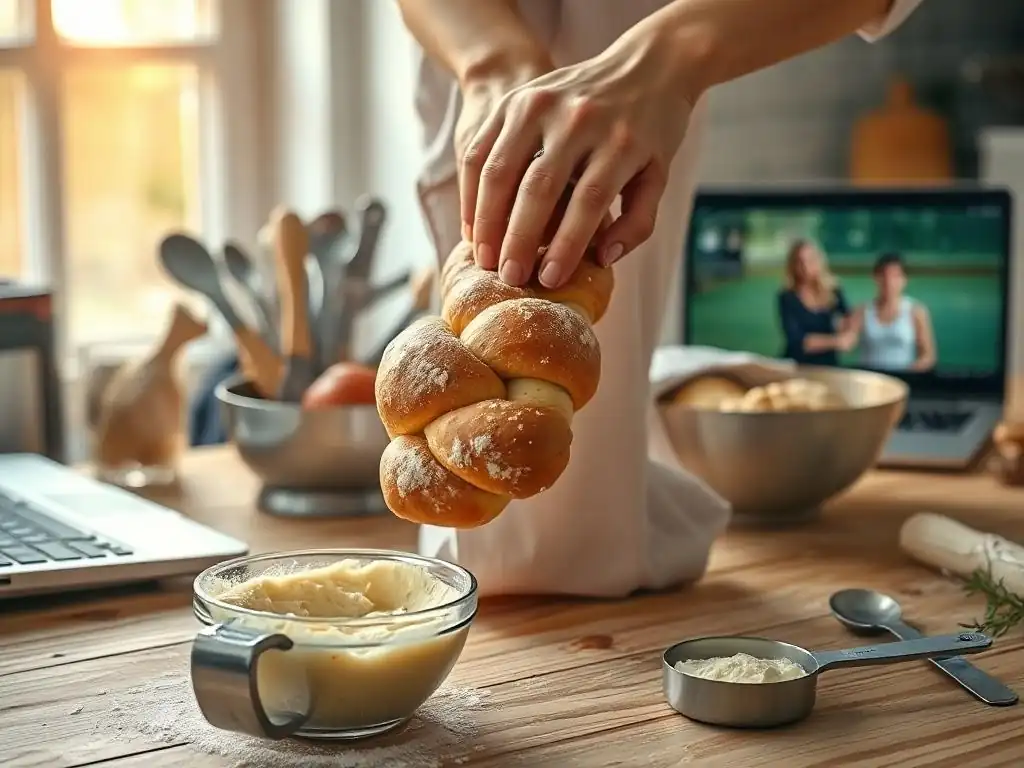
Taking an online baking class, whether focused on the brioche dough recipe technique, challah braiding, or both, offers flexibility but also requires a proactive approach to learning. To get the most out of your investment and truly master these techniques, simply watching the videos isn't enough. You need to engage with the material, prepare properly, and dedicate time to practice.
Think of your online class as a structured guide, but the actual learning happens when you apply what you've learned in your own kitchen. Creating a conducive learning environment and actively participating, even in a virtual setting, will significantly enhance your understanding and skill development with enriched doughs.
Setting Up Your Baking Station for Online Learning
Before you even start your first lesson on the brioche dough recipe technique, take time to set up your baking space. Ensure you have a clean, spacious work surface. Gather all the necessary ingredients and equipment before the class begins or before you start a recipe module. Having everything measured out (mise en place) and within easy reach prevents frantic searching and allows you to focus on the technique being taught.
Position your device (laptop, tablet, or phone) where you can easily see the screen while working, ideally at eye level to avoid straining your neck. Make sure you have reliable internet access. Clearing distractions and having a dedicated space helps you concentrate on the instructions, especially when dealing with sticky brioche dough or intricate challah braiding steps.
Asking the Right Questions and Engaging with Instructors
One of the benefits of many online courses, particularly those on platforms like BakeWithEase or King Arthur, is the opportunity to ask questions. Don't hesitate to use Q&A forums, comment sections, or live chat features if available. If you're struggling with a specific step in the brioche dough technique or your challah isn't rising as expected, formulate clear questions detailing what you did and what result you got.
Engaging with instructors or community members can provide valuable insights and troubleshooting tips that aren't covered in the core videos. Learning from others' questions and experiences in a shared forum can also deepen your understanding. Active participation turns passive viewing into interactive learning.
Practice Makes Perfect: Replicating Recipes and Experimenting
The most crucial tip for success in any online baking class is practice. Simply watching someone demonstrate the brioche dough recipe technique or a challah braid is not the same as doing it yourself. Plan to bake the recipes multiple times. Your first attempt might not be perfect, and that's okay!
Use the class materials as a guide to replicate the recipe exactly as shown. Once you feel confident with the basic technique, start experimenting. Try slightly different flours, adjust proofing times based on your kitchen temperature, or attempt a more complex challah braid. Each baking session is an opportunity to refine your skills, understand how variables affect the outcome, and truly master the art of enriched doughs.
Conclusion: Elevate Your Baking Skills with Expert Online Guidance
Mastering enriched doughs like brioche and challah is a significant step for any home baker, leading to incredibly rewarding results – from the rich, tender crumb of a perfectly executed brioche dough technique to the stunning visual appeal of a beautifully braided challah. While challenging, these doughs are within reach with the right guidance and practice. Online classes offer an accessible and flexible way to gain the expert knowledge needed to succeed.
Whether you choose a comprehensive platform like BakeWithEase for in-depth mastery of both doughs, a focused workshop from King Arthur Baking School to perfect your challah braiding, or a beginner-friendly introduction on Udemy, investing in structured learning can save you time, frustration, and wasted ingredients. These courses provide the foundational understanding and practical demonstrations needed to navigate the nuances of working with butter, eggs, and sugar in your dough.
Embrace the Art of Enriched Doughs and Create Delicious Brioche & Challah
Embarking on the journey to master enriched doughs means committing to learning specific techniques for mixing, kneading, proofing, and shaping that differ from standard bread. The effort is well worth it, yielding loaves that are not only delicious but also a testament to your growing baking skill. Successfully executing a challenging brioche dough recipe technique or a complex challah braid provides a deep sense of accomplishment and opens up a world of culinary possibilities for using these versatile breads.
From using brioche for gourmet sandwiches and French toast to serving challah as a beautiful accompaniment to meals or turning leftovers into bread pudding, these doughs are incredibly versatile. Embrace the challenge, enjoy the process, and savor the delicious results of your hard work. Online classes provide the roadmap; your dedication in the kitchen brings it to life.
Choosing the Right Online Class for Your Baking Journey
Selecting the ideal online class depends on your individual needs. Consider your current skill level – are you a beginner or looking to refine existing skills? Think about your budget and how much time you can commit. Do you want a complete course covering everything, or just help with a specific technique like challah braiding?
Review the course structures, instructor credentials, and available student feedback on platforms like BakeWithEase, King Arthur Baking School, or Udemy. By aligning the course's offerings with your personal baking goals, you can find the perfect online guide to help you master the brioche dough recipe technique, conquer challah, and elevate your enriched dough baking to new heights. Happy baking!
Frequently Asked Questions
What is brioche dough?
Brioche dough is a rich, buttery bread that has a soft texture, often used for sweet or savory dishes. It is an enriched dough, meaning it contains ingredients like eggs and butter for added flavor and richness.
How does the technique for making brioche differ from other breads?
The brioche dough recipe technique involves a unique mixing and kneading process that incorporates the butter gradually. This helps achieve the dough's signature light and airy structure that sets it apart from other breads.
Can beginners successfully make brioche at home?
Absolutely! With the right step-by-step guides and easy-to-find ingredients, even beginners can master the art of brioche. Our resources at BakeWithEase provide clear instructions to help you along the way.
What are some common mistakes when making brioche?
Common mistakes include not allowing the dough to rise sufficiently or adding the butter too quickly. Following our brioche dough recipe technique can help you avoid these pitfalls and achieve perfect results.
How can I use brioche dough in different recipes?
Brioche dough is versatile! It can be used for French toast, buns, or even as a base for desserts. Explore our site for various creative applications of brioche to elevate your baking.
Final Reflection: The Enduring Allure of Hand-Crafted Bread
The art of crafting enriched doughs, like brioche and challah, is experiencing a remarkable resurgence, driven by a renewed appreciation for traditional techniques and the undeniable satisfaction of creating something beautiful and delicious from scratch. This isn't just a fleeting trend; it's a testament to our enduring human need for connection to both our culinary heritage and the simple pleasures of mindful creation. The detailed techniques explored in this article, from precise ingredient measurements to the subtle nuances of kneading and proofing, are more relevant than ever in a world increasingly focused on mindful consumption and artisanal production.
The journey of mastering enriched doughs is far more than just learning a recipe; it's about understanding the delicate balance of ingredients, the patience required for proper fermentation, and the profound satisfaction of witnessing a simple mixture transform into something extraordinary. This process mirrors life itself, requiring dedication, attention to detail, and a willingness to embrace both successes and failures. As the renowned baker, Jim Lahey, once said: Bread baking is a metaphor for life. You put in the effort, you nurture it, and you reap the rewards.
This sentiment perfectly captures the essence of this culinary pursuit and its lasting impact on our lives.
Now, consider your own journey. What aspects of this process resonated most deeply with you? Perhaps it was the tactile experience of kneading the dough, the intoxicating aroma of yeast and butter, or the sheer joy of sharing your freshly baked creation with loved ones.
Whatever it may be, I encourage you to carry this newfound knowledge and appreciation forward. Experiment with different flavors, share your skills with others, and continue to explore the endless possibilities that lie within the world of enriched doughs. Let the art of bread making be a source of both culinary delight and personal growth.
Unleash Your Inner Baker: Master the Art of Enriched Doughs!
Thanks for joining us on this delicious journey into the world of brioche and challah! We hope you've gained valuable insights and inspiration to elevate your baking skills. Ready to put your newfound knowledge into practice?
- Dive into our free introductory video on shaping enriched doughs: We've prepared a short, easy-to-follow video with practical tips to help you master this crucial technique.
- Experiment with unique flavor combinations: Try adding different extracts, spices, or even fruits to your next batch of brioche or challah – the possibilities are endless!
- Share your baking creations with us on social media: Tag us and show off your beautiful loaves! Let’s inspire each other.
What unique twist will you add to your next enriched dough masterpiece?