
The Secret to NonSpreading Christmas Cookies


Welcome to BakeWithEase, your ultimate guide to baking bliss! Ever dreamt of crafting perfectly shaped, utterly delightful Christmas cookies that don't turn into a shapeless blob in the oven? You're in the right place! Discover the secret to our Nonspreading Christmas cookies recipe and unlock the joy of creating stunning holiday treats. Ready to bake cookies that are as beautiful as they are delicious? Let's get started...
- The Secret to Nonspreading Christmas Cookies: Bake Perfect Holiday Treats
- Introduction: Achieve Christmas Cookie Perfection with BakeWithEase
- Understanding Why Christmas Cookies Spread: The Science Behind the Spread
- The Ultimate Nonspreading Christmas Cookies Recipe: A Step-by-Step Guide
- Key Techniques for Nonspreading Christmas Cookie Dough
- Troubleshooting Common Christmas Cookie Problems
- Variations and Flavor Enhancements for Nonspreading Christmas Cookies
- Storing Your Christmas Cookies: Keeping Them Fresh and Delicious
- Conclusion: Mastering the Art of Nonspreading Christmas Cookies with BakeWithEase
-
Frequently Asked Questions
- What is the most important factor in preventing Christmas cookies from spreading?
- What type of fat works best in a nonspreading Christmas cookies recipe?
- Should I use baking powder or baking soda in my nonspreading Christmas cookies recipe?
- What temperature should my oven be to achieve nonspreading Christmas cookies?
- Can the type of flour affect whether my Christmas cookies spread?
- Final Reflection: The Enduring Legacy of the Perfect Christmas Cookie
- Unleash Your Inner Cookie Master!
Welcome to BakeWithEase! As the holiday season approaches, nothing brings more cheer than baking a batch of beautifully decorated Christmas cookies. But the joy can quickly turn to frustration when your carefully cut shapes spread into amorphous blobs in the oven. Achieving perfect, sharp-edged Christmas cookies that hold their shape is a common goal for home bakers, especially when attempting intricate designs or using cookie cutters. This article will unlock the secrets to baking a reliable nonspreading Christmas cookies recipe, ensuring your festive treats look as good as they taste.
We'll delve into the science behind cookie spread, explore the critical role of ingredients and techniques, and provide a step-by-step guide to a tried-and-true nonspreading Christmas cookies recipe. Whether you're aiming for perfectly detailed gingerbread men, crisp sugar cookies, or festive shortbread, mastering the art of preventing spread is key. By understanding the fundamental principles and applying simple yet effective methods, you'll be well on your way to baking a stunning array of holiday cookies that maintain their delightful form throughout the baking process. Let's get ready to bake some nonspreading Christmas cookies that will impress everyone!
Butter is a crucial component in most cookie recipes, contributing flavor, tenderness, and aiding in leavening. However, its state significantly impacts cookie spread. Butter is a complex emulsion containing fat, water (typically around 16-18%), and milk solids. When butter melts in the oven, the fat spreads outwards before the cookie structure sets. Using softened or melted butter results in more significant spread compared to cold, firm butter. The water content in butter turns to steam, contributing to lift, but the melting fat is the primary driver of expansion.
Consider a standard sugar cookie recipe calling for creaming softened butter and sugar. The air pockets created during this process, combined with the melting fat of softened butter, lead to cookies that spread considerably. In contrast, a shortbread recipe often uses cold butter cut into flour. This method creates small pockets of fat that melt slowly, resulting in less spread and a more crumbly texture. For a nonspreading Christmas cookies recipe, controlling the butter's temperature and state is paramount. Using cold, firm butter helps the cookies hold their shape longer before the fat eventually melts.
Sugar not only provides sweetness but also plays a vital role in cookie texture and spread. Different types of sugar behave differently. Granulated sugar, with its larger crystals, cuts into the fat during the creaming process, creating air pockets that contribute to spread and crispness. As granulated sugar melts at high temperatures, it contributes to the liquid phase in the dough, encouraging flow and thus spread.
Conversely, using a higher proportion of powdered sugar (also known as confectioners' sugar) can help reduce spread. Powdered sugar contains cornstarch (often 3-5%), which absorbs moisture and inhibits gluten development, leading to a softer, more tender cookie with less tendency to spread. While granulated sugar is essential for classic recipes, adjusting the ratio or using more powdered sugar can be a simple trick for a more reliable nonspreading Christmas cookies recipe. Some recipes specifically designed for minimal spread rely heavily on powdered sugar for this reason.
Flour provides the structural foundation for cookies through its protein content, primarily gluten. When liquid is added to flour and mixed, gluten develops, creating a network that gives the cookie shape and chewiness. The type of flour used can affect spread. All-purpose flour, a common choice, has a moderate protein content (around 10-12%). Using a flour with slightly higher protein can sometimes result in a firmer structure, potentially reducing spread, but too much can lead to tough cookies.
However, the amount of flour is often more critical for preventing spread than the type (within reason). An accurate nonspreading Christmas cookies recipe will call for a precise amount of flour. Too little flour means there isn't enough structure to hold the melting butter and sugar in place, leading to excessive spread.
Too much flour can result in dry, crumbly cookies. Using the correct measuring technique (spooning flour into the measuring cup and leveling it off) is crucial; scooping directly from the bag can compact the flour, adding too much and altering the desired outcome of your nonspreading Christmas cookies recipe.
Temperature is perhaps one of the most critical factors in controlling cookie spread, affecting both the dough and the oven environment. Cold dough is essential for a nonspreading Christmas cookies recipe. When cold dough enters a hot oven, the butter remains solid for a longer period. This gives the cookie structure (provided by the flour and egg) time to set before the fat melts. If the dough is warm, the butter melts almost immediately upon hitting the heat, causing the cookies to flatten and spread rapidly.
The oven temperature itself is equally important. An oven that is too cool or fluctuates in temperature will cause cookies to bake slowly, giving the butter more time to melt and spread before the structure sets. Baking at the correct, often slightly higher, temperature (commonly around 375°F or 190°C) ensures that the edges of the cookies set quickly, containing the spread. Preheating your oven thoroughly and potentially using an oven thermometer to verify accuracy can make a significant difference in the success of your nonspreading Christmas cookies.

Dry Ingredients: Flour, Baking Powder, Salt
For a reliable nonspreading Christmas cookies recipe, precise dry ingredient measurements are key. You will need all-purpose flour, typically around 3 cups (though this can vary slightly depending on the recipe and how you measure). It's crucial to measure flour correctly by spooning it into the measuring cup and leveling off with a straight edge, rather than scooping directly from the bag which can add up to 25% more flour.
Baking powder is often used in small amounts (perhaps 1/2 teaspoon) to provide a slight lift, but too much can cause excessive puffiness or spread. Salt (around 1/4 teaspoon) balances the sweetness and enhances flavor.
Using the specified amount of flour is vital for structure. For instance, a recipe yielding approximately 3 dozen cookies might use 3 cups of flour. Reducing this amount, even by just half a cup, could significantly increase spread because there isn't enough dry mass to hold the fat and sugar in place as they melt. Ensure your leavening agents (baking powder/soda) are fresh, though for minimal spread, baking powder is usually preferred over baking soda, which reacts more vigorously.
Wet Ingredients: Butter, Sugar, Eggs, Vanilla Extract
The wet ingredients contribute flavor, richness, and binding. The most critical wet ingredient for a nonspreading Christmas cookies recipe is butter, used cold and cut into small pieces, often 1 cup (2 sticks). Using cold butter prevents immediate melting and excessive spread in the oven. Sugar is typically a mix of granulated and powdered sugar; for minimal spread, a higher proportion of powdered sugar (like 1 cup powdered to 1/2 cup granulated) is beneficial compared to a recipe that might use equal parts or more granulated sugar.
Large eggs (usually 1 or 2) act as a binder, helping the dough hold together. Ensure your eggs are at room temperature, as this helps them emulsify better with the other ingredients, creating a smoother dough. Vanilla extract (1-2 teaspoons) adds essential flavor. Some nonspreading Christmas cookies recipes might also include a touch of milk or cream, but minimal liquid helps control spread, so use just enough to bring the dough together.
Step-by-Step Baking Instructions for Shape Retention
Preparing the Dough: The Importance of Cold Butter
The foundation of a nonspreading Christmas cookies recipe lies in the dough preparation, specifically the state of the butter. Begin by combining your dry ingredients (flour, baking powder, salt) in a bowl. In a separate large bowl, cream together the cold, cubed butter and sugar (both granulated and powdered if using a blend).
Unlike traditional cookie recipes where you cream softened butter until fluffy, here you are essentially cutting the cold butter into the sugar and potentially some of the flour. This method, similar to making pastry dough, coats the flour particles with fat, inhibiting gluten development and creating a dough with small pockets of butter that melt slowly.
Continue mixing until the mixture resembles coarse crumbs or small peas. This ensures the butter pieces are distributed throughout the dough but remain distinct. Then, add the egg(s) and vanilla extract. Mix until just combined. Finally, gradually add the dry ingredients to the wet ingredients, mixing on low speed or by hand until the dough just comes together. Avoid overmixing, which can develop gluten and lead to tough cookies that might still spread slightly. The dough should be firm but not crumbly.
Chilling the Dough: Essential for Preventing Spread
Chilling the dough is a non-negotiable step for a nonspreading Christmas cookies recipe. After preparing the dough, divide it into manageable portions (discs or rectangles), wrap each tightly in plastic wrap, and refrigerate for at least 2 hours, or preferably overnight. Some bakers even chill the dough for up to 2-3 days. This chilling period is crucial for several reasons: it allows the butter to firm up completely, solidifying the structure; it gives the flour time to hydrate fully, resulting in a more cohesive dough that is easier to roll; and it allows the flavors to meld.
Working with chilled dough prevents the butter from melting prematurely before baking. If the dough feels at all soft or warm during the rolling and cutting process, return it to the refrigerator for 10-15 minutes. Baking cookies from warm dough is the most common cause of excessive spread, even with a carefully formulated nonspreading Christmas cookies recipe. Plan your baking schedule to include ample chilling time.
Rolling and Cutting: Tips for Precise Shapes
Once the dough is thoroughly chilled, it's ready for rolling and cutting. Working with cold dough can be a bit challenging initially, but it's key for sharp shapes. Lightly flour your work surface and rolling pin. Take one portion of chilled dough from the refrigerator. If it's too hard to roll immediately, let it sit at room temperature for just 5-10 minutes, but no longer than necessary. Roll the dough to an even thickness, typically between 1/4 inch and 3/8 inch. A consistent thickness ensures even baking and prevents thinner edges from burning while the center remains underdone.
Use sharp cookie cutters to cut out your shapes. For the cleanest cuts, press the cutter straight down without twisting. Re-roll scraps only once or twice, as excessive handling can warm the dough and develop gluten, potentially leading to more spread. Place the cut-out shapes onto a baking sheet lined with parchment paper or a silicone baking mat. For maximum shape retention, place the baking sheet with the cut-out cookies back into the refrigerator for another 15-20 minutes before baking. This second chill is a powerful technique for ensuring a truly nonspreading Christmas cookies result.
Baking the Cookies: Maintaining Oven Temperature
Baking temperature and time are the final critical elements in achieving nonspreading Christmas cookies. Preheat your oven to the correct temperature, typically 375°F (190°C). Using an oven thermometer is highly recommended, as oven temperatures can vary significantly from the dial setting – sometimes by as much as 50°F (10°C). An accurate temperature ensures the cookies bake quickly and evenly, setting their shape before excessive spread occurs.
Place the chilled baking sheet with cookies into the preheated oven. Bake for the time specified in your nonspreading Christmas cookies recipe, usually 8-12 minutes, depending on the size and thickness of the cookies. You know they are done when the edges are lightly golden and the centers appear set, not wet or shiny. Avoid overcrowding the baking sheet, as this can lower the oven temperature and lead to uneven baking and potential spread. Allow the cookies to cool on the baking sheet for a few minutes before carefully transferring them to a wire rack to cool completely.
The Creaming Method: Mastering the Butter and Sugar Blend
While traditional cookie recipes often rely on creaming softened butter and sugar until light and fluffy to incorporate air for leavening and texture, a nonspreading Christmas cookies recipe often modifies or avoids this method in favor of techniques that limit air incorporation and keep butter cold. The goal isn't necessarily to create air pockets at this stage, but rather to distribute the cold butter evenly throughout the dry ingredients. This can be achieved by cutting cold, cubed butter into the flour and sugar mixture using a pastry blender, forks, or a food processor, similar to making pie crust.
Alternatively, if using a mixer, you might "cream" the cold butter and sugar just until combined and crumbly, not until light and fluffy. The key distinction for minimal spread is using cold butter and avoiding over-aeration. The cold butter pieces melt more slowly in the oven, providing structure until the flour and egg proteins can set the cookie's shape. Mastering this 'reverse creaming' or cutting-in method with cold butter is fundamental to a truly nonspreading Christmas cookies dough.
Precise Measurements: Avoid Inaccurate Ingredient Ratios
Accuracy in measuring ingredients is paramount for any baking project, but it is especially critical when aiming for a nonspreading Christmas cookies recipe. Small deviations in the flour-to-fat-to-sugar ratio can significantly impact how much your cookies spread. For instance, adding too little flour or too much butter or sugar will inevitably lead to flatter, more spread-out cookies. Using kitchen scales for weighing ingredients, especially flour, is the most accurate method (e.g., 3 cups of all-purpose flour typically weigh around 360-390 grams, depending on the flour and humidity).
If you don't have a scale, use the spoon-and-level method for flour: gently spoon flour into your dry measuring cup until it overflows, then level off the excess with a straight edge. Never scoop directly from the bag, as this can compact the flour and result in using significantly more than intended. For fats and sugars, use the correct measuring tools (dry measuring cups for granulated and powdered sugar, measuring spoons for extracts, etc.) and ensure they are level. Consistent, precise measurements are the backbone of a reliable nonspreading Christmas cookies recipe.
Using Parchment Paper or Silicone Mats: Preventing Sticking and Spread
Using the right surface for baking is another simple yet effective technique to aid in producing nonspreading Christmas cookies. Baking directly on an ungreased metal baking sheet can cause cookies to stick and potentially spread more unevenly. Greasing the pan, while preventing sticking, can also encourage spread due as the fat melts and spreads on the hot surface.
Parchment paper and silicone baking mats (like Silpat) provide a non-stick surface without adding extra fat. They allow the cookie dough to bake and set in place without the edges adhering to the pan and spreading outwards as readily. Furthermore, they ensure easy cleanup and consistent results batch after batch. Always line your baking sheets with parchment paper or a silicone mat when baking a nonspreading Christmas cookies recipe for the best possible shape retention.
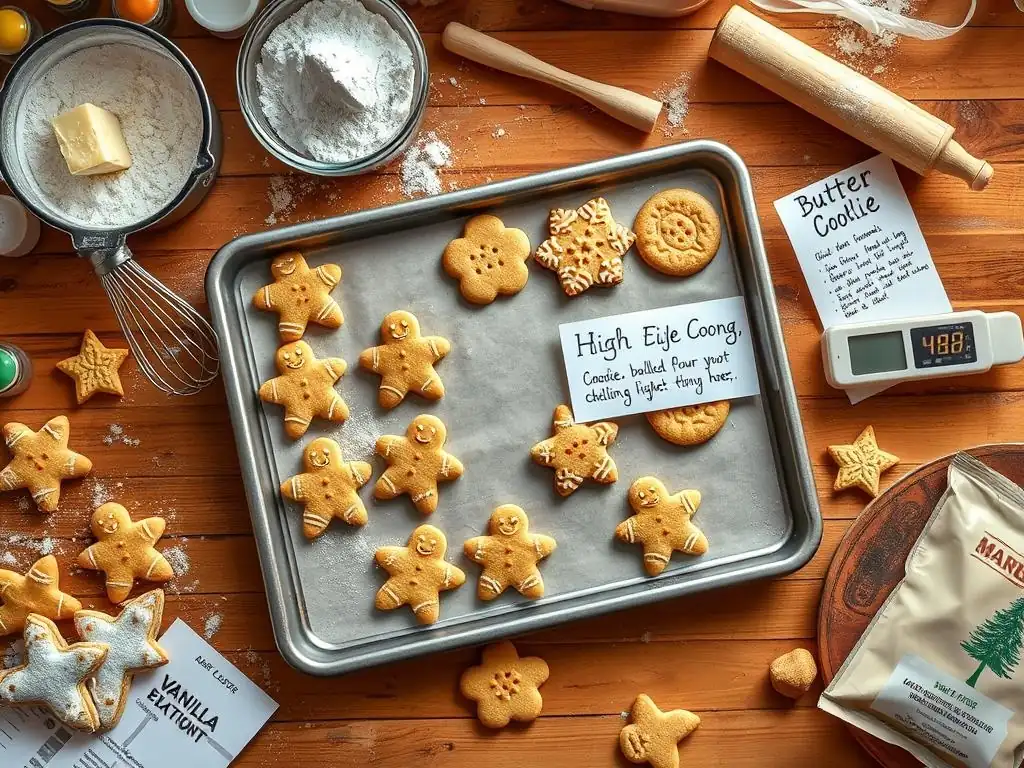
Even when following a nonspreading Christmas cookies recipe, you might encounter unwanted spread. The most common culprits are warm dough, inaccurate measurements (especially too little flour or too much butter/sugar), and an oven that isn't hot enough or is preheated properly. If your cookies spread, first check the dough temperature – was it well chilled before rolling and cutting? And were the cutouts chilled again before baking? Ensure you are measuring flour correctly (spooned and leveled or weighed).
Verify your oven temperature with a thermometer; it might be running cooler than you think. Also, check the recipe's leavening – too much baking powder can cause excessive rise and subsequent spread. If using softened butter instead of cold, that's a primary cause. For future batches, try slightly increasing the flour (by 1-2 tablespoons per cup), ensuring the butter is very cold, and chilling the cutouts longer (30+ minutes). Sometimes, even the surface you roll on matters – a warm counter can soften the dough quickly.
If your nonspreading Christmas cookies turn out dry or crumbly, it's usually due to too much flour or overbaking. While adding enough flour is crucial for shape retention, adding too much can absorb excessive moisture, resulting in a dry texture. Ensure you are measuring your flour accurately, preferably by weight (a standard nonspreading Christmas cookies recipe might use around 130-135 grams of flour per cup).
Overbaking also removes too much moisture from the cookies. Keep a close eye on the cookies in the oven; they should be set and lightly golden around the edges, but not deeply browned. Baking time is always an estimate and can vary based on your oven and cookie thickness. If your cookies are consistently dry, try reducing the flour slightly in the next batch (start with 1-2 tablespoons less per cup) or slightly reducing the baking time. Adding an extra egg yolk can also add richness and tenderness without significantly impacting spread in some recipes.
Sometimes, a nonspreading Christmas cookies recipe can result in cookies that are too puffy rather than flat and crisp, especially if using baking powder. While some puffiness is expected, excessive puffiness can obscure intricate cutter details. This is often caused by too much leavening (baking powder) or overworking the dough, which incorporates too much air during mixing.
If your cookies are too puffy, you can try gently pressing them down slightly with the bottom of a glass or a flat spatula immediately after they come out of the oven while they are still warm and pliable. Be careful not to press too hard and distort the shape entirely. For future batches, double-check the amount of baking powder in the recipe. Ensure you are not overmixing the dough, especially after adding the dry ingredients. Some recipes designed for minimal spread might use little to no chemical leavening.
Adding Extracts and Spices: Flavor Combinations that Work
A classic nonspreading Christmas cookies recipe is often based on a simple sugar cookie dough, providing a perfect canvas for various flavor enhancements. Vanilla extract is standard, but you can easily swap or combine it with other extracts like almond, lemon, or even a touch of peppermint extract for a festive twist. For example, a tablespoon of lemon zest added to the dough can brighten the flavor significantly without affecting spread.
Spices are wonderful additions for holiday cookies. Cinnamon, nutmeg, ground ginger, cloves, and cardamom can be incorporated into the dry ingredients. A nonspreading Christmas cookies recipe can be transformed into gingerbread by adding a few teaspoons of ground ginger, cinnamon, and a pinch of cloves, along with a tablespoon or two of molasses (being mindful that liquid additions can slightly increase spread, so balance is key). Citrus zest (orange or lemon) adds a lovely aromatic note. Start with 1/2 to 1 teaspoon of ground spices per batch and adjust to your preference.
One of the main reasons to bake nonspreading Christmas cookies is to create a perfect base for decorating with royal icing, glaze, or sprinkles. The sharp edges and defined shapes hold intricate piping work beautifully. Once your nonspreading Christmas cookies are completely cooled, they are ready to be decorated.
Royal icing, made from powdered sugar, meringue powder (or egg whites), and water, dries hard and smooth, making it ideal for detailed decorating. Glazes made from powdered sugar and a liquid (milk, lemon juice, or extract) are simpler and dry to a slightly softer finish. When applying icing, start with outlining the cookie to create a dam, then flood the interior.
The firm, non-spreading structure of the cookie prevents the icing from running over the edges, allowing for clean lines and vibrant designs. Ensure the icing is the correct consistency – too thin and it will spread off the cookie; too thick and it will be hard to pipe smoothly.
While traditionally sugar cookies or gingerbread, the principles of a nonspreading Christmas cookies recipe can be adapted to other types of cookies where shape retention is desired. For instance, if you want chocolate chip cookies that don't spread into thin puddles, you can modify a standard recipe using techniques from the nonspreading approach. This might involve using cold butter cut into the flour mixture, incorporating a higher ratio of flour to fat, and significantly chilling the dough (often shaped into balls or logs before chilling).
Adding solid inclusions like chocolate chips or chopped nuts to a nonspreading dough base works well. The key is to ensure the dough itself is formulated and handled to resist spread. While a classic chocolate chip cookie is meant to spread and have chewy edges, a nonspreading version offers a different texture – often thicker and more cake-like or crumbly, depending on the base recipe. Experimenting with adding mini chocolate chips or finely chopped nuts to your favorite nonspreading Christmas cookies recipe base can create a delightful holiday variation.

Proper Storage Techniques to Maintain Quality
After putting in the effort to bake perfect nonspreading Christmas cookies, proper storage is essential to keep them fresh and maintain their texture and flavor. Once completely cooled, store cookies in an airtight container at room temperature. Layering cookies between sheets of parchment paper can prevent them from sticking together and protect delicate decorations.
If you've decorated the cookies with royal icing, ensure the icing is completely dry (which can take several hours or even overnight) before stacking them. Store different flavors of cookies in separate containers, as flavors can meld over time. For longer storage, non-decorated cookies can be frozen in airtight containers or freezer bags for up to 3-6 months. Thaw frozen cookies at room temperature. Decorated cookies can also often be frozen, though delicate decorations might be compromised. Proper storage ensures your beautiful, nonspreading Christmas cookies remain delicious throughout the holiday season.
Baking nonspreading Christmas cookies that hold their shape beautifully is a rewarding skill that elevates your holiday baking. By understanding the science behind cookie spread – the role of cold butter, the impact of sugar types, the importance of flour structure, and the critical influence of temperature – you gain control over the baking process. Our guide to a reliable nonspreading Christmas cookies recipe, emphasizing cold dough, precise measurements, and proper baking techniques, provides a solid foundation for success.
Remember the key takeaways: use cold butter cut into the dry ingredients, measure your flour accurately (preferably by weight), chill your dough extensively before rolling and cutting, and chill the cutouts again before baking on parchment paper in a properly preheated oven. Troubleshooting common issues like excessive spread or dryness allows you to refine your technique. With practice and attention to these details, you'll consistently bake nonspreading Christmas cookies that are not only delicious but also perfect canvases for your festive decorating ideas. Happy baking from all of us at BakeWithEase!
Frequently Asked Questions
The most important factor is using chilled dough. Cold dough prevents the butter from melting too quickly in the oven, which is a primary cause of spreading.
Using solid fats like butter or shortening is crucial. Avoid liquid oils, as they contribute to a flatter cookie.
Generally, avoiding or minimizing baking powder is best. Baking powder contributes to the rise and spread of cookies. Baking soda in small amounts is often fine.
A slightly lower oven temperature (around 350°F or 175°C) can help. This allows the cookies to bake more evenly without spreading too quickly.
Yes, using all-purpose flour with a higher protein content can help. Cake flour, being lower in protein, can sometimes contribute to spreading.
The quest for the perfect, nonspreading Christmas cookie is more than just a culinary pursuit; it's a reflection of our desire for control and precision in a world often characterized by chaos and uncertainty. The seemingly simple act of baking a cookie becomes a microcosm of our hopes for a festive season filled with perfectly executed traditions and cherished memories. Mastering the art of the nonspreading cookie, as we've explored, is about understanding the science behind baking, paying attention to detail, and embracing the iterative process of refinement.
The impact of a perfectly baked cookie extends far beyond the plate. It's a symbol of care, a testament to the time and effort invested in creating something beautiful and delicious for loved ones. The joy of sharing these cookies, the anticipation in the eyes of those receiving them – these are the intangible rewards that elevate baking from a task to an act of love. The best things in life are homemade.
This simple sentiment encapsulates the enduring appeal of baking, and particularly the satisfaction of achieving that perfect, nonspreading cookie.
This holiday season, as you embark on your own baking adventures, remember the lessons learned. Don't be afraid to experiment, to tweak recipes, and to embrace the occasional imperfection. The journey itself, with its triumphs and minor setbacks, is part of the magic. More importantly, remember the spirit of giving and sharing that lies at the heart of the holiday season. Let the perfectly baked cookie be a symbol of your dedication, your love, and your commitment to creating lasting memories for yourself and those you cherish.
Thanks for taking the time to explore the secrets of non-spreading Christmas cookies! We hope you gained valuable insights and are ready to bake up a storm. Now, let's put that knowledge into action:
- Bake a batch of perfectly-shaped cookies using your newfound techniques – and let us know how it goes in the comments! This is your chance to perfect your favorite holiday recipe.
- Share your baking triumphs (or humorous fails!) on social media using #BakeWithEaseHoliday. We love seeing your creations!
- Challenge yourself to experiment with different cookie recipes and apply these tips – you might discover a new favorite!
What innovative flavor combinations will you create with your perfectly-shaped, non-spreading cookies this holiday season?