
Master Chocolate Tempering: Best Online Classes for Glossy Results

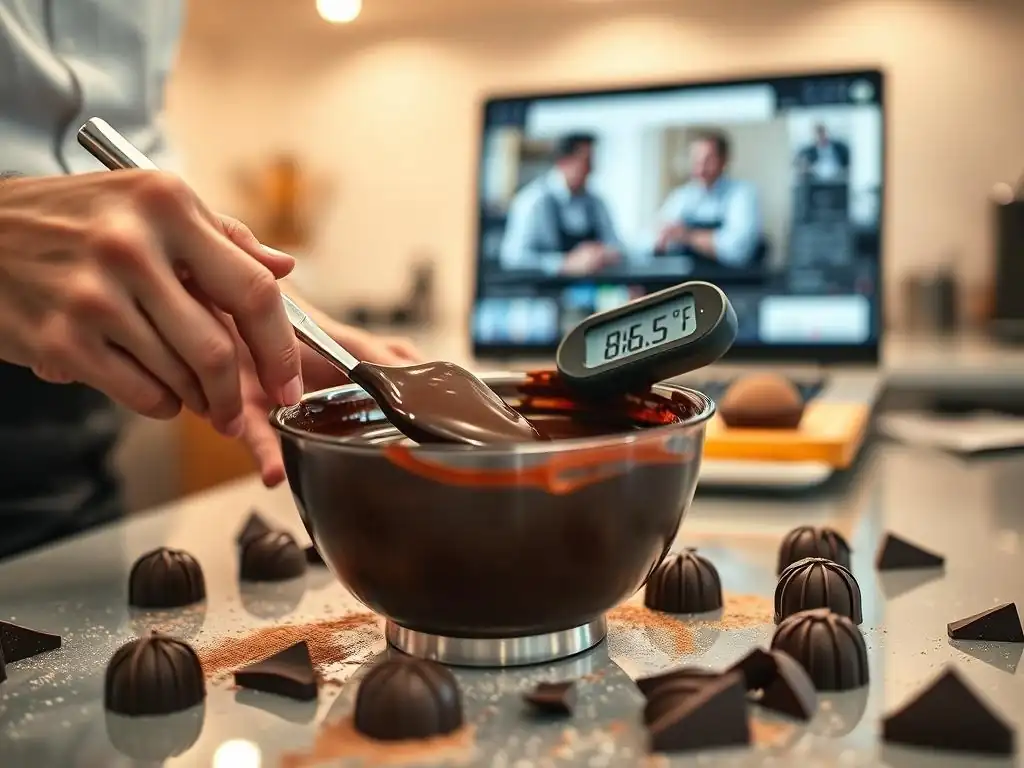
Welcome to BakeWithEase, your trusted guide to baking bliss! Unlock the secrets to flawlessly tempered chocolate with our comprehensive guide to the best chocolate tempering online classes. Ready to achieve that perfect, glossy finish every time? Dive in and discover the expert instruction that will elevate your chocolate creations from delicious to dazzling.
- Unlock Glossy Chocolate: Your Guide to Online Tempering Courses
- Top-Rated Chocolate Tempering Online Classes: A Comparative Review
- Our Top Picks for Chocolate Tempering Online Classes in 2024
- Choosing the Right Chocolate Tempering Class: Factors to Consider
- Beyond the Basics: Mastering Chocolate Tempering for Specific Applications
- Recommended Tools and Equipment for Chocolate Tempering (Affiliate Links)
- Troubleshooting Common Chocolate Tempering Problems
- Conclusion: Elevate Your Baking with Perfectly Tempered Chocolate
- Frequently Asked Questions
- Final Reflection: The Enduring Allure of Perfectly Tempered Chocolate
- Unlock Your Inner Chocolatier: Master the Art of Tempering!
Unlock Glossy Chocolate: Your Guide to Online Tempering Courses
Why Chocolate Tempering Matters: Achieving Professional Results at Home
Achieving that perfect, glossy finish on chocolate is a hallmark of professional confectionery. It's not just about aesthetics; properly tempered chocolate has a satisfying snap when broken, a smooth texture that melts beautifully in your mouth, and a longer shelf life compared to untempered chocolate. Think of a high-quality chocolate bar: its surface is shiny, and when you break off a piece, it makes a distinct cracking sound. This is the result of successful tempering. Without it, chocolate can appear dull, streaky (known as bloom), and feel soft or crumbly.
Mastering chocolate tempering allows you to elevate your homemade treats from good to truly exceptional. Whether you're making simple chocolate-covered strawberries, intricate bonbons, or decorative chocolate pieces for a cake, the difference between tempered and untempered chocolate is striking. Properly tempered chocolate sets firmly at room temperature, making it easy to handle and preventing it from melting on contact with your fingers. This crucial technique ensures your creations not only taste fantastic but also look and behave like those from a high-end patisserie.
Tempering Chocolate: Understanding the Science Behind the Shine
Tempering is essentially a controlled crystallization process of the cocoa butter within the chocolate. Cocoa butter contains different types of fat crystals, each melting at a different temperature. When you melt chocolate, all these crystals are destroyed. As it cools, the cocoa butter tries to form new crystals. Untempered chocolate allows unstable, undesirable crystal forms (like forms I, II, IV) to dominate, resulting in a soft, dull, and bloomed product.
Proper tempering involves heating, cooling, and sometimes reheating the chocolate to specific temperature ranges to encourage the formation of stable Beta V crystals. For example, dark chocolate is typically heated to around 115°F (46°C), cooled while agitating to about 88-90°F (31-32°C), and then slightly reheated to a working temperature of 89-91°F (31.5-32.5°C). Milk and white chocolates have lower temperature ranges, usually peaking around 105-110°F (40-43°C), cooling to 84-86°F (29-30°C), and working at 86-88°F (30-31°C). These precise temperature manipulations ensure that the Beta V crystals are the most prevalent, giving the chocolate its characteristic gloss, snap, and stability.
Top-Rated Chocolate Tempering Online Classes: A Comparative Review
Comparing Online Chocolate Tempering Courses: Find the Perfect Fit
The landscape of chocolate tempering online classes is diverse, offering options for every skill level and budget. You can find everything from short, focused workshops lasting just a couple of hours to extensive professional programs spanning weeks or months. Some courses are available on broad educational platforms with subscription models, while others are offered by dedicated culinary schools or renowned chocolatiers, often as standalone purchases. The cost can range dramatically, from potentially free content (like basic tutorials often included with platform subscriptions or free trial periods) up to several thousand dollars for comprehensive professional certification programs.
When comparing different chocolate tempering online classes, consider not just the duration and price but also the format and level of interaction. Some courses are pre-recorded video lessons you can watch at your own pace, offering flexibility. Others might include live Q&A sessions, community forums, or even one-on-one feedback opportunities, providing a more interactive learning experience. Think about how you learn best and what level of support you might need as you tackle this sometimes finicky technique.
Key Features to Look For in a Chocolate Tempering Course: Instructor Experience, Curriculum, and Cost
A great chocolate tempering online class is often distinguished by the expertise of its instructor. Look for courses taught by experienced chocolatiers or pastry chefs who have real-world experience working with chocolate professionally. An instructor with practical knowledge can offer invaluable insights, troubleshooting tips, and nuances that go beyond basic theory. Their background can often be found in the course description or instructor bio.
Beyond the instructor, scrutinize the curriculum. Does the course cover multiple tempering methods, such as seeding, tabliering (marble slab), and using Mycryo cocoa butter? Does it address tempering different types of chocolate (dark, milk, white, ruby)?
A comprehensive course should also delve into common problems like seizing or bloom and provide clear troubleshooting steps. Finally, evaluate the cost in relation to the depth of the content, the instructor's reputation, and any included materials or support. A higher price might be justified for a detailed, professional-level course with expert guidance, while a budget-friendly option might be perfect for getting started with the basics.
Our Top Picks for Chocolate Tempering Online Classes in 2024
Option 1: Ecole Chocolat's Professional Chocolatier Program - A Comprehensive Guide to Chocolate Tempering Techniques
Ecole Chocolat's Professional Chocolatier Program is a renowned, in-depth course designed for individuals serious about pursuing chocolate making professionally or mastering it as a high-level hobby. While it covers much more than just tempering, this fundamental technique is extensively taught and practiced throughout the curriculum. The program provides a deep dive into the world of chocolate, from its origins to advanced confectionery techniques, ensuring graduates have a solid foundation in all aspects of working with chocolate, including achieving perfect temper consistently.
This program stands out for its rigorous curriculum and focus on the science and artistry of chocolate. Students learn various tempering methods, understand the critical role of temperature and crystal structure, and practice techniques for different applications like molding bonbons and creating ganaches. The course structure often includes theoretical lessons combined with practical assignments, offering a comprehensive learning experience that builds both knowledge and hands-on skill in tempering and beyond.
Ecole Chocolat's Features: From Bean to Bar, Learn Every Step
Ecole Chocolat's program is extensive, covering everything from the history of chocolate and the cocoa bean to advanced production techniques. You'll learn about chocolate origins, sensory evaluation, making ganaches, caramels, and other fillings, and the crucial process of tempering different types of chocolate. The course typically includes detailed modules on tempering methods, troubleshooting common issues, and applying tempered chocolate in various confectionery applications like enrobing and molding. It's designed to provide a holistic understanding of chocolate making, with tempering as a core, foundational skill integrated throughout.
Ecole Chocolat's Pricing and Value: Is This Course Worth the Investment?
Ecole Chocolat's Professional Chocolatier Program represents a significant investment, typically costing several thousand dollars. However, its value lies in its depth, professional focus, and reputation within the chocolate industry. It's designed for those seeking a comprehensive education, potentially aiming to start a chocolate business or work professionally. The curriculum is detailed, the instructors are experienced, and the program often includes resources and community support. For someone looking for a superficial introduction to tempering, this would be excessive, but for aspiring professionals or serious enthusiasts, it offers substantial value for the cost.
Affiliate Opportunity: Sign Up for Ecole Chocolat and Get Exclusive Access to Advanced Modules
Considering a professional path in chocolate? Sign up for Ecole Chocolat's Professional Chocolatier Program! As a special offer, enrolling through our link provides exclusive access to advanced modules focusing on complex chocolate tempering troubleshooting and niche applications, giving you an edge in mastering chocolate tempering techniques.
Skillshare hosts numerous creative classes, and you can often find excellent beginner-friendly chocolate tempering online classes on their platform. These courses are typically structured as shorter masterclasses, focusing specifically on the tempering technique and making it accessible to home bakers who might be new to working with chocolate beyond melting chips. They are designed to demystify the process and provide clear, visual instructions that are easy to follow, even if you have no prior experience with professional chocolate work.
Skillshare's model is based on a subscription, which means once you're a member, you have access to a wide library of classes, including several different options for learning chocolate tempering. This allows beginners to sample different teaching styles or focus on specific methods without committing to a high upfront cost. The courses often use straightforward language and focus on practical, achievable results for home kitchens, such as tempering chocolate for dipping or simple molded shapes.
Skillshare's Course Highlights: Easy-to-Follow Lessons and Visual Demonstrations
Many Skillshare chocolate tempering online classes excel at breaking down the tempering process into simple, step-by-step instructions. The video lessons are often well-produced, offering clear close-ups of the chocolate as it's heated, cooled, and worked, making it easy for visual learners to grasp the physical changes happening. Instructors typically demonstrate methods like seeding or using Mycryo with standard home kitchen equipment, making the techniques feel achievable. Course projects often involve tempering a small batch for dipping or simple molding, providing immediate practical application of the learned skills.
Skillshare's Cost and Accessibility: A Budget-Friendly Option for Learning Tempering
Skillshare operates on a subscription model, offering monthly or annual plans. While specific prices vary, a typical monthly subscription might be in the range of $15-30, with annual plans offering a lower per-month cost. This makes learning chocolate tempering highly accessible and budget-friendly, especially if you plan to explore other creative topics on the platform. Compared to standalone courses, the subscription provides great value for those who want to dabble in various baking or crafting skills.
Affiliate Opportunity: Try Skillshare Free for 14 Days!
Ready to try tempering without a big commitment? Try Skillshare free for 14 days! Get unlimited access to a variety of chocolate tempering online classes and hundreds of other creative courses during your trial period. It's a fantastic way to see if learning chocolate tempering online is right for you.
Option 3: The Advanced Chocolate Tempering Workshop with Chef Martin Diez
For intermediate to advanced bakers looking to refine their chocolate tempering skills and tackle more complex applications, a specialized workshop with a renowned chocolatier like the hypothetical Chef Martin Diez can be invaluable. These workshops often focus on advanced techniques, working with different types of couverture chocolate, mastering specific methods like intensive tabliering for large quantities, or troubleshooting challenges encountered in professional settings. They are designed for those who have some basic tempering experience but want to achieve a higher level of precision and consistency.
Such workshops might be offered directly by the chef through their own platform, a specialized culinary school, or as part of a masterclass series on a premium learning site. The content is typically more technical, delving deeper into the nuances of cocoa butter crystallization and how environmental factors like humidity affect tempering success. The instructor's expertise is a key draw, offering insights gained from years of professional practice in high-end kitchens or chocolate shops.
Chef Martin Diez's Expertise: Learn from a Renowned Chocolatier
Workshops led by acclaimed chocolatiers like Chef Martin Diez (used here as an example of a high-level professional) offer the unique opportunity to learn directly from someone who has mastered the craft at the highest level. These chefs often have years of experience in top restaurants, patisseries, or their own chocolate businesses. They can share insider tips, demonstrate advanced techniques with precision, and provide a deeper understanding of the art and science of chocolate tempering, offering a perspective rooted in professional practice.
Advanced Techniques Covered: Tempering with Different Methods and Chocolate Types
An advanced workshop typically goes beyond the basics, covering techniques suitable for larger batches or specific types of chocolate, such as single-origin couvertures with unique cocoa butter profiles. You might learn advanced tabliering methods for efficiency, working with tempering machines, or using Mycryo cocoa butter for specific applications. The curriculum could also include tempering techniques optimized for airbrushing, creating thin chocolate shells for intricate molds, or dealing with challenging environmental conditions, pushing your chocolate tempering skills to a professional standard.
Chef Martin Diez's Course Cost and Target Audience: Ideal for Experienced Bakers
Workshops with renowned chefs are generally more expensive than beginner courses on subscription platforms, potentially ranging from $100 to $500+ depending on the duration and exclusivity. The target audience is typically experienced home bakers, culinary students, or professionals looking for continuing education. The investment is justified by the high level of instruction, the depth of advanced techniques covered, and the opportunity to learn from a leading expert in the field of chocolate.
Affiliate Opportunity: Join Chef Martin Diez's Exclusive Tempering Community
Elevate your skills! Join Chef Martin Diez's Advanced Chocolate Tempering Workshop. Enroll now through our site to gain access to Chef Diez's exclusive online community, where you can connect with fellow advanced learners and get direct Q&A opportunities on complex tempering challenges.
Choosing the Right Chocolate Tempering Class: Factors to Consider
Your Skill Level: Beginner, Intermediate, or Advanced?
Determining your current skill level is perhaps the most crucial factor in choosing the right chocolate tempering online class. If you've never attempted tempering before or have only had limited success, a beginner-focused course is essential. These classes start with the fundamentals, explaining the science simply and demonstrating basic, reliable methods like seeding. Trying to jump into an advanced workshop focused on professional machinery or complex applications will likely lead to frustration.
Conversely, if you have some experience with tempering but want to improve consistency, learn new methods, or tackle more challenging projects like intricate molded bonbons, an intermediate or advanced course is a better fit. These classes assume basic knowledge and build upon it, introducing more nuanced techniques and troubleshooting for common issues that arise once you move beyond simple dipping. Be honest about where you are in your tempering journey to find a course that will genuinely help you grow.
Your Budget: Free vs. Paid Courses
Your budget will also significantly influence your options for chocolate tempering online classes. There is a wealth of free content available online, particularly on platforms like YouTube, which can be a great starting point for understanding the basic concept and seeing demonstrations. However, free content often lacks structure, depth, and personalized support. It can be difficult to verify the instructor's expertise, and troubleshooting help is usually non-existent.
Paid courses, whether through subscriptions or standalone purchases, generally offer a more structured curriculum, expert instruction, and better production quality. While a comprehensive professional program can cost thousands, many excellent beginner and intermediate courses are available for under a hundred dollars or through affordable subscription models. Consider how much you're willing to invest in developing this skill and what level of quality and support you expect for that investment.
Tempering Methods: Which Technique Suits You Best? (Seeding, Tabliering, Mycryo)
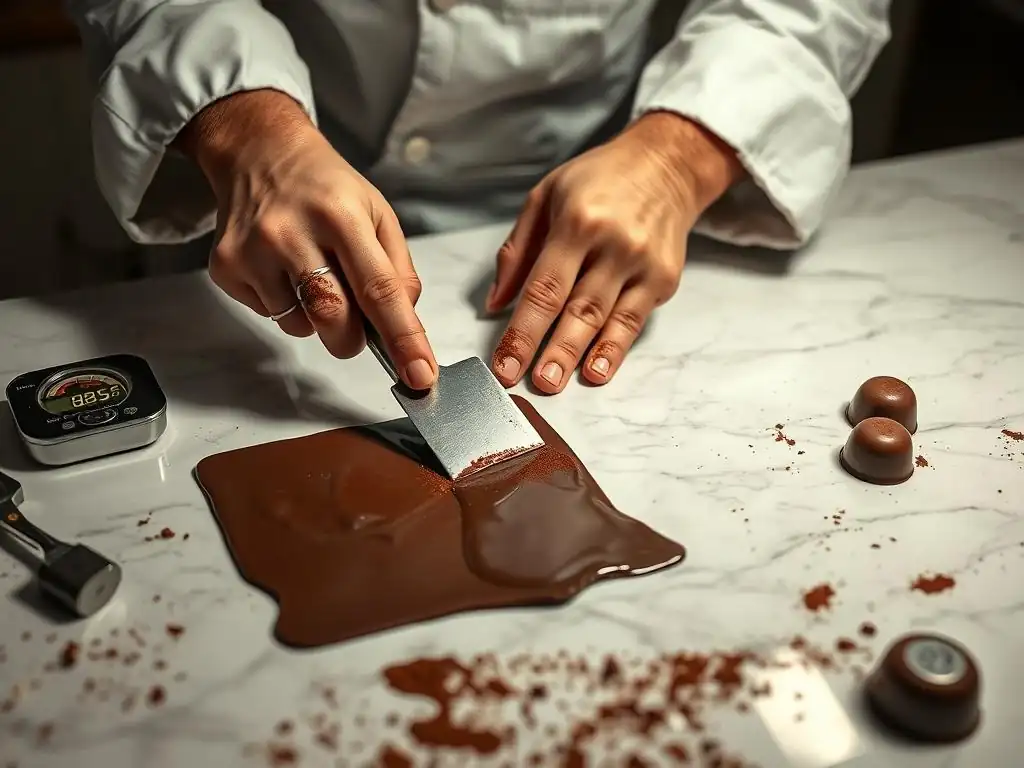
Different chocolate tempering online classes will emphasize different tempering methods, and understanding these can help you choose a course that aligns with your preferred approach or available equipment. The seeding method (adding finely chopped tempered chocolate to melted chocolate) is popular for home bakers as it requires minimal special equipment beyond a thermometer and bowl. The tabliering method (cooling chocolate on a marble or granite surface) requires a suitable cold surface and scrapers but is often preferred by professionals for larger quantities and precise control.
The Mycryo method uses powdered cocoa butter crystals to seed the chocolate, offering a relatively easy and less messy way to temper. Some courses may focus on just one or two methods, while more comprehensive ones will cover all three. Consider which method you are most interested in learning or which best suits the type of chocolate work you plan to do when evaluating course curriculums.
Beyond the Basics: Mastering Chocolate Tempering for Specific Applications
Tempering Chocolate for Bonbons and Truffles: Achieve a Perfect Snap
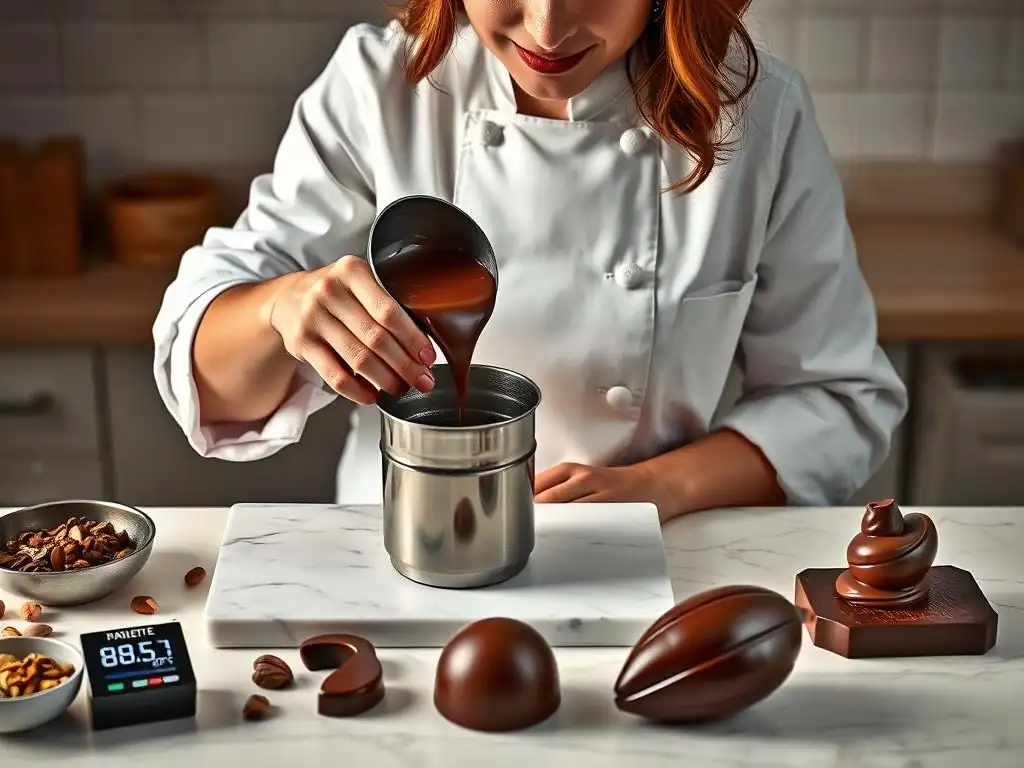
Tempering chocolate is absolutely critical when making molded bonbons or dipped truffles. For molded bonbons, you need chocolate that will shrink slightly as it cools, allowing it to release cleanly from the mold and produce a perfectly smooth, shiny shell. This requires precise tempering to ensure the Beta V crystals form correctly. A good temper also provides the necessary strength for the thin shell and, crucially, that satisfying crisp snap when you bite into the bonbon.
Similarly, for dipped truffles, tempered chocolate creates a thin, even coating that sets quickly and firmly. This prevents the soft ganache center from deforming and gives the truffle a pleasant texture contrast between the crisp shell and the creamy filling. Without proper tempering, the chocolate coating would be soft, dull, sticky, and prone to melting in your hand, detracting significantly from the quality of your homemade confectionery.
Tempering Chocolate for Chocolate-Covered Strawberries: Prevent Blooming
One of the most common uses of tempered chocolate for home bakers is dipping fruits like strawberries or pretzels. While you can simply melt chocolate and dip, the result is often dull, soft, and quickly develops gray streaks or spots known as fat bloom. This happens because untempered chocolate doesn't have a stable crystal structure, causing the cocoa butter fats to migrate to the surface over time.
Properly tempered chocolate, when used for dipping, sets quickly with a beautiful gloss and holds its shine and color much longer. The stable Beta V crystals prevent fat migration, effectively preventing bloom under normal storage conditions. This means your chocolate-covered strawberries will look appealing for hours, making them perfect for gifts or special occasions where presentation matters. Learning to temper specifically for dipping is a valuable skill taught in many chocolate tempering online classes.
Tempering Chocolate for Decorations: Creating Stunning Chocolate Art
Tempered chocolate is the medium of choice for creating professional-looking chocolate decorations, from simple piped designs to elaborate chocolate curls, shards, or sculpted pieces. Untempered chocolate is too soft and unstable to hold intricate shapes; it would simply melt or deform at room temperature. Tempered chocolate, however, sets hard and brittle, allowing you to create delicate structures that hold their form.
Whether you're piping intricate patterns onto parchment paper, spreading chocolate thinly to create elegant shards, or molding complex 3D shapes, proper tempering is non-negotiable. It ensures the chocolate releases cleanly from molds or surfaces, maintains sharp edges, and has a consistent, appealing appearance. Many chocolate tempering online classes include modules specifically dedicated to using tempered chocolate for decorative purposes, unlocking a new level of creativity for your cakes and desserts.
Recommended Tools and Equipment for Chocolate Tempering (Affiliate Links)
Essential Tools: Chocolate Thermometer, Scrapers, and Double Boiler
Precise temperature control is paramount in chocolate tempering, making a reliable chocolate thermometer the single most essential tool. Unlike a meat thermometer, a chocolate thermometer (often a digital probe or infrared thermometer) needs to be accurate within a degree or two and react quickly to temperature changes. Achieving the specific heating, cooling, and working temperatures for different chocolate types is impossible without one. Investing in a good thermometer is crucial for consistent tempering success.
For the tabliering method, metal scrapers or spatulas and a marble or granite slab are necessary. The cold surface of the stone helps rapidly cool the chocolate while you work it with the scrapers to encourage crystal formation. Even if you primarily use other methods, scrapers are useful for handling and cleaning up chocolate. A double boiler setup (a bowl placed over simmering water) or a microwave on low power is needed for gently melting the chocolate initially, avoiding scorching which can ruin the chocolate and make tempering impossible.
Chocolate Choices: Selecting High-Quality Chocolate for Tempering Success
The type and quality of chocolate you use significantly impact your tempering success. For proper tempering, you must use couverture chocolate. Couverture chocolate is specifically formulated with a higher percentage of cocoa butter (typically 30-39%) compared to standard baking or eating chocolate. This higher cocoa butter content provides the necessary fat structure to undergo the tempering process and achieve that desired snap and shine.
Avoid using compound chocolate (also known as confectionery coating or candy melts), which contains vegetable oils instead of cocoa butter. Compound chocolate melts easily and doesn't require tempering to set firmly, but it lacks the flavor, texture, and melting properties of real chocolate and cannot be tempered in the traditional sense. While convenient for some uses, it won't give you the professional results achieved with tempered couverture chocolate. Look for couverture chocolate in callets, wafers, or blocks from reputable brands.
Troubleshooting Common Chocolate Tempering Problems
Dealing with Seizing Chocolate: Prevention and Recovery
Seizing is one of the most frustrating problems encountered when working with chocolate. It occurs when chocolate suddenly thickens and becomes a stiff, unusable mass. The most common culprit is the introduction of even a tiny amount of water or steam into melted chocolate. Water causes the sugar particles in the chocolate to clump together, leading to the seized texture. Overheating the chocolate can also cause it to seize or burn, making it grainy and unusable.
Prevention is the best strategy: ensure all your tools and bowls are completely dry before melting chocolate and avoid getting any steam or water droplets into your chocolate, especially when using a double boiler. If your chocolate does seize from water, you may be able to recover it by stirring in a tablespoon or two of hot vegetable oil or melted cocoa butter until it becomes a smooth, albeit thinner, liquid. However, it won't be suitable for tempering into a glossy finish and is best used for sauces or ganaches. Seized chocolate from overheating is typically unrecoverable.
Fixing Bloomed Chocolate: Understanding the Causes and Solutions
Chocolate bloom refers to the appearance of grayish streaks or a dull, dusty surface on chocolate. There are two main types: fat bloom (most common, caused by improper tempering or temperature fluctuations, leading to cocoa butter crystals migrating and recrystallizing on the surface) and sugar bloom (less common, caused by exposure to moisture, dissolving sugar crystals which then recrystallize on the surface as a gritty layer). While bloomed chocolate is safe to eat, its appearance and texture are compromised.
The primary cause of fat bloom is improper tempering – either not tempering at all or not achieving a stable Beta V crystal structure. Storing chocolate at fluctuating temperatures (like moving it from a warm room to a cold refrigerator repeatedly) or in humid conditions can also cause bloom. Unfortunately, there's no way to "fix" bloom directly on the chocolate piece itself. The solution is to remelt the bloomed chocolate and properly retemper it. Sugar bloom is harder to fix and often means the chocolate is best used in applications where texture isn't critical, like baking.
Achieving the Perfect Temper: Tips and Tricks from the Experts
Achieving a consistent, perfect temper requires practice and attention to detail, but there are several expert tips that can help. First, start with enough chocolate – tempering small amounts (less than 8-10 ounces) is often more difficult. Use high-quality couverture chocolate, as it's designed for tempering. Always use a precise thermometer and follow the specific temperature curve for the type of chocolate you're using (dark, milk, or white).
Crucially, ensure there is constant movement or agitation during the cooling phase, especially if using the tabliering or seeding methods; this helps distribute the stable crystals throughout the chocolate. When using the seeding method, make sure your seed chocolate is finely chopped and truly tempered itself. Finally, always test your temper before proceeding with your project.
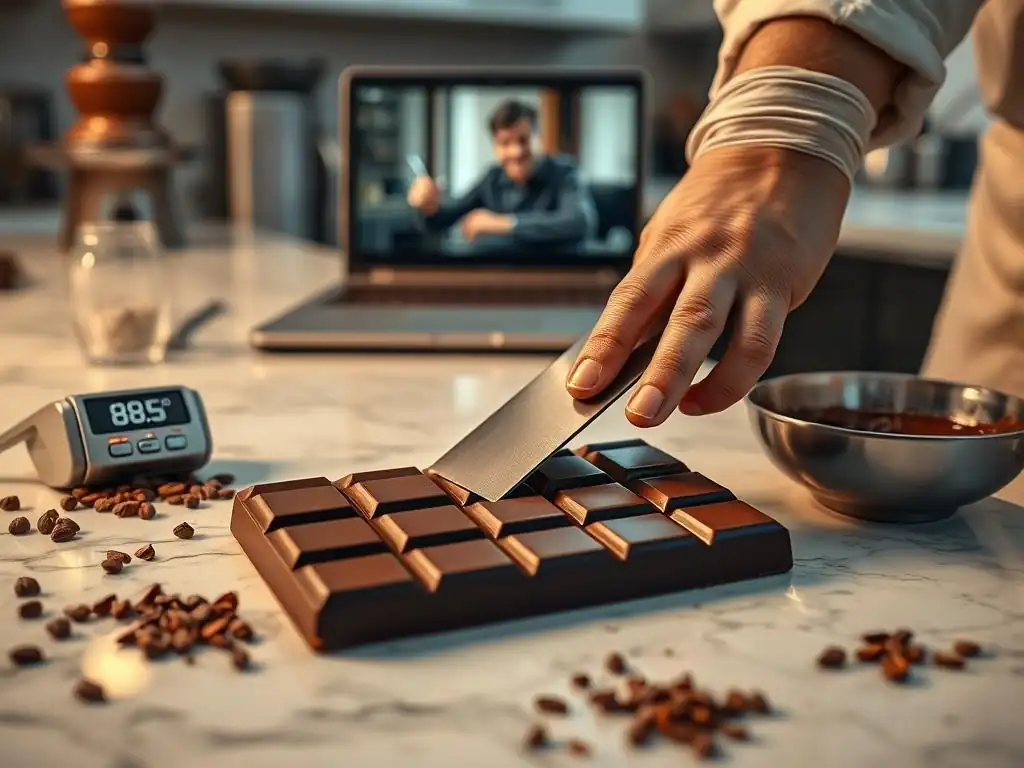
Dip the tip of a knife or a piece of parchment paper into the chocolate and let it set at room temperature for a few minutes. If it sets quickly (within 3-5 minutes), is shiny, and snaps cleanly, your chocolate is in temper. If it's still soft, streaky, or dull, you need to adjust the temperature and re-temper.
Conclusion: Elevate Your Baking with Perfectly Tempered Chocolate
Mastering Chocolate Tempering: A Skill Worth Investing In.
Mastering chocolate tempering is a transformative skill for any home baker or aspiring chocolatier. It unlocks the ability to create confectionery with a professional finish – that coveted glossy shine, the satisfying snap, and a smooth, melt-in-your-mouth texture. Beyond aesthetics, proper tempering improves the stability and shelf life of your chocolate creations, making them more durable and enjoyable. While it might seem intimidating at first, understanding the science and practicing the techniques makes it entirely achievable.
Investing time and effort into learning chocolate tempering, perhaps through dedicated chocolate tempering online classes, is a worthwhile endeavor. Whether you choose a beginner-friendly course to get started, a comprehensive program for a deep dive, or an advanced workshop to refine your skills, structured learning can provide the knowledge and guidance needed to overcome common challenges. With the right instruction and practice, you'll soon be producing beautiful, perfectly tempered chocolate treats that impress everyone who tastes them.
Frequently Asked Questions
What is chocolate tempering?
Chocolate tempering is the process of melting and cooling chocolate to stabilize it, achieving a smooth, glossy finish and a firm snap. Proper tempering ensures that the chocolate sets correctly and has a beautiful sheen.
Why is tempering important for chocolate?
Tempering is crucial because it helps to form stable cocoa butter crystals, which result in chocolate that is shiny and has a good texture. Without tempering, chocolate can become dull and develop a white bloom.
What online classes are recommended for chocolate tempering?
There are several highly-rated online classes available that focus specifically on chocolate tempering. These classes provide step-by-step instructions and tips for achieving the perfect temper.
Can beginners learn chocolate tempering through online classes?
Absolutely! Many online classes cater to bakers of all levels, including beginners. They offer easy-to-follow techniques and guidance to help you master the art of chocolate tempering.
What equipment do I need for chocolate tempering?
For successful chocolate tempering, you will need basic equipment like a double boiler or microwave, a thermometer, and a spatula. Some classes may provide specific recommendations for tools that enhance the tempering process.
Final Reflection: The Enduring Allure of Perfectly Tempered Chocolate
The pursuit of the perfect chocolate finish—that glossy sheen, that satisfying snap—is more than just a culinary quest; it's a testament to the enduring power of precision and artistry. The online classes explored in this article highlight a growing trend: the democratization of advanced culinary techniques, bringing professional-level instruction to home kitchens worldwide. This accessibility not only elevates the home baking experience but also fosters a deeper appreciation for the meticulous process behind seemingly simple pleasures.
The impact of readily available online chocolate tempering courses extends beyond individual skill development. It's fostering a vibrant online community of passionate chocolatiers, sharing tips, troubleshooting challenges, and inspiring each other to reach new heights of confectionery excellence. The best things in life are worth the effort,
a sentiment perfectly encapsulates the dedication required to master chocolate tempering, and the immense satisfaction it brings. This shared passion, nurtured through online learning platforms, is enriching the broader culinary landscape, pushing boundaries, and inspiring innovation.
Now, consider your own journey. Perhaps you've been intimidated by the complexities of chocolate tempering, believing it to be an unattainable skill. But this article has hopefully shown you that with the right guidance and a little patience, the glossy, perfectly tempered chocolate of your dreams is within reach. I encourage you to take the leap, explore the online classes highlighted, and embark on your own chocolate tempering adventure. The rewards—both in skill and satisfaction—are truly worth the effort.
Unlock Your Inner Chocolatier: Master the Art of Tempering!
Thanks for taking the time to explore the world of chocolate tempering with us! We hope you’ve gained valuable insights into achieving that perfect, glossy shine. Now it’s time to put your newfound knowledge into practice. Ready to elevate your baking game?
- Enroll in your chosen online class today! Dive in and start mastering the techniques we’ve discussed. This is your chance to create truly stunning chocolate creations.
- Share your chocolate-making journey! Post photos of your tempered masterpieces on social media and tag us – we’d love to see your progress!
- Experiment with different chocolate types and recipes. Don't be afraid to get creative and explore beyond the basics!
What unique chocolate creation will you craft first, now that you're equipped with the skills to achieve that perfect temper?