
Build Your Sourdough Skills: Best Books for Progression

Welcome to BakeWithEase, where your baking journey transforms from daunting to delightful! Are you ready to elevate your sourdough game? This week, we delve into resources to sharpen your skills. While you're here, perhaps you've encountered a few hiccups with your Sourdough Starter? Discover expert tips and solutions with our Sourdough starter troubleshooting guide – an essential resource for a foolproof bake. Ready to unlock the secrets to baking success? Let's explore!
- Level Up Your Sourdough: The Ultimate Guide to Baking Success
- Understanding Your Sourdough Starter: The Foundation for Success
- Best Sourdough Books for Beginners: Building a Solid Foundation
- Intermediate Sourdough Baking: Refining Your Techniques
- Advanced Sourdough Techniques: Pushing the Boundaries of Flavor and Texture
- Troubleshooting Sourdough Starter Problems: A Comprehensive Guide
- Choosing the Right Sourdough Book for Your Needs
- Enhance Your Sourdough Journey: Essential Baking Tools & Accessories
- Final Thoughts: Embarking on Your Sourdough Adventure
-
Frequently Asked Questions
- What makes a sourdough starter unsuccessful according to BakeWithEase?
- Where can I find easy-to-find ingredients for sourdough recipes mentioned on BakeWithEase.com?
- Does BakeWithEase offer a sourdough starter troubleshooting guide for common issues?
- What kind of baking experience is needed to benefit from BakeWithEase.com's sourdough content?
- What types of recipes are featured on BakeWithEase.com besides sourdough?
- Final Reflection: The Ever-Rising Dough of Sourdough Mastery
- Unleash Your Inner Baker: Level Up Your Sourdough Game!
Level Up Your Sourdough: The Ultimate Guide to Baking Success
Embarking on the sourdough journey is a rewarding experience, transforming simple flour and water into loaves bursting with complex flavor and texture. Whether you're just starting out or aiming to perfect your open crumb, having the right resources is key. While online guides and communities offer invaluable support, there's a unique depth of knowledge and structured learning found within the pages of a well-written sourdough book. These guides provide foundational principles, detailed step-by-step instructions, and often insightful sourdough starter troubleshooting guide sections to help you navigate common challenges.
This article explores some of the best sourdough books available, categorized by skill level, to help you progress from a tentative beginner to a confident, advanced baker. We'll look at what makes each book stand out and how they can assist you at different stages of your sourdough adventure, including tackling those inevitable sourdough starter issues.
Understanding Your Sourdough Starter: The Foundation for Success
At the heart of every sourdough loaf is the starter – a living culture of wild yeast and bacteria. Nurturing and understanding your starter is the absolute first step in successful sourdough baking. It's the engine that provides leavening and flavor, and its health directly impacts your bread. Learning to read its signs – its activity level, aroma, and texture – is crucial.
Developing this intuition for your starter takes practice, but having a solid understanding of its needs and common behaviors can save you from frustration. Many excellent books dedicate significant portions to explaining the science and care of the starter, acting as a valuable sourdough starter troubleshooting guide in themselves.
Identifying Common Sourdough Starter Problems: A Quick Troubleshooting Overview
Even the most diligent baker will encounter sourdough starter problems at some point. Recognizing these issues early is vital for keeping your culture healthy and active. One common problem is lack of activity; a starter might stop doubling or showing significant bubbles, often due to inconsistent feeding, incorrect temperature, or using chlorinated water. For instance, a starter fed daily at 24°C (75°F) should typically double or triple within 4-8 hours, showing numerous bubbles and a domed surface before slowly deflating. If this isn't happening after a week or two of regular feeding, it's likely sluggish.
Another frequent issue is separation, where a layer of liquid (often called 'hooch') forms on top. This isn't necessarily a problem but indicates the starter is hungry and has consumed all available food. A thick, dark hooch suggests it's been neglected for a while.
Mold is a more serious concern, usually appearing as fuzzy spots of various colors (green, black, orange, pink) on the surface. Unlike hooch, mold means the starter is compromised and often needs to be discarded, though some specific cases might allow for careful intervention if the mold is only on the surface and not deeply rooted. Consulting a detailed sourdough starter troubleshooting guide within a reliable book can provide specific visual cues and steps for addressing these situations.
"Tartine Bread" by Chad Robertson: Mastering the Sourdough Starter
While not exclusively a beginner's book, "Tartine Bread" by Chad Robertson is revered for its foundational approach, starting with the heart of sourdough: the starter. Robertson provides detailed instructions for creating and maintaining a healthy starter from scratch, emphasizing the importance of using organic flour and filtered water. He describes the starter's lifecycle, from its nascent bubbling phase to its peak activity, and how to tell when it's ready to be used for baking.
The book's section on the starter isn't just about feeding ratios (like the common 1:1:1 ratio of starter, water, and flour by weight, though Robertson often uses different hydration levels); it's about observing its behavior, smell, and texture. Robertson stresses the feel of the starter, noting its consistency and how it changes over time.
While it might not have a dedicated sourdough starter troubleshooting guide chapter title, the detailed descriptions of a healthy starter implicitly guide the reader in identifying when something is off. His method, often involving feeding twice a day when building up to a bake, aims for a very active culture, minimizing potential sourdough starter issues like sluggishness due to underfeeding.
Best Sourdough Books for Beginners: Building a Solid Foundation
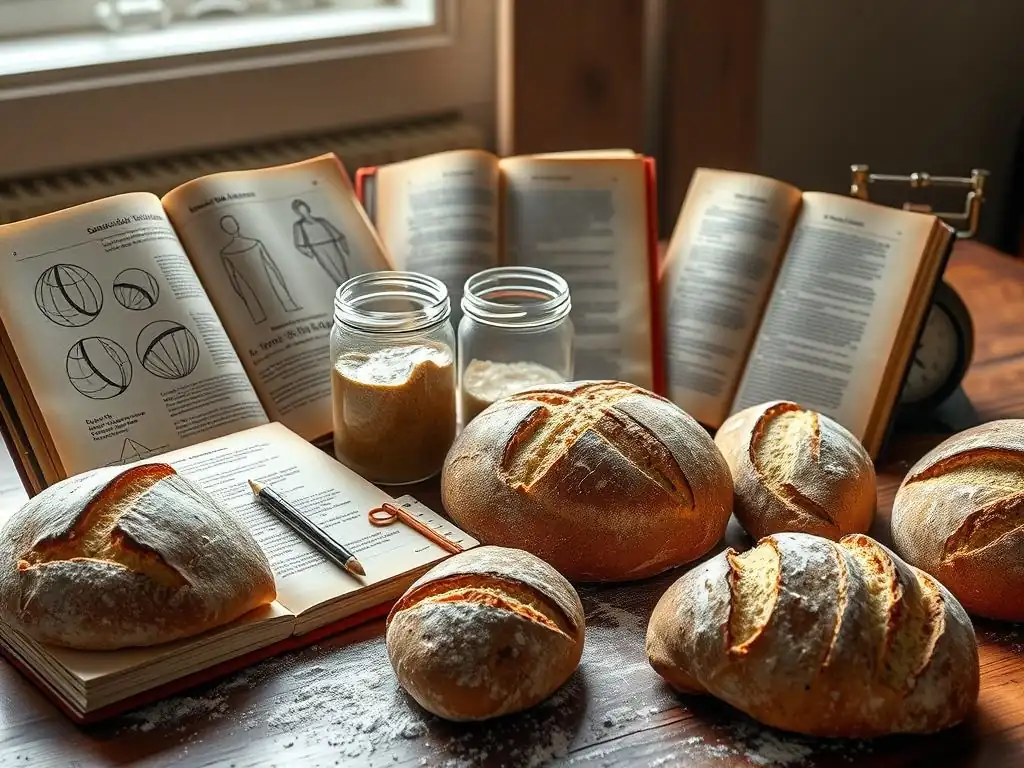
Starting sourdough can feel intimidating with terms like 'autolyse,' 'bulk fermentation,' and 'levain.' The right beginner book demystifies these concepts, offering clear instructions and encouragement. These books focus on building confidence through simple, reliable recipes and explaining the 'why' behind each step. They are your first line of defense when you encounter minor sourdough starter problems or unexpected dough behavior.
A good beginner book will often include a basic sourdough starter troubleshooting guide within its initial chapters, addressing common pitfalls like a starter that won't rise or dough that doesn't develop properly. They prioritize success with classic recipes, ensuring you get a feel for the process before tackling more complex variations.
"Sourdough Baking for Beginners" by Lisa Grant: Your Step-by-Step Guide to Sourdough Success
"Sourdough Baking for Beginners" by Lisa Grant (creator of the popular blog Farmhouse on Boone) is explicitly designed for those taking their first steps. The book excels in its simplicity and clear, encouraging tone. It begins with the absolute basics: how to create and maintain a sourdough starter, breaking down the process day-by-day for the first week or two. This step-by-step approach helps demystify what can seem like a magical, unpredictable process.
Grant provides simple, reliable recipes for classic loaves, often using straightforward techniques that don't require specialized equipment beyond the essentials. For instance, her basic loaf recipe typically uses around 500g flour and achieves good results even without complex folds. The book also includes a dedicated section for troubleshooting common beginner issues, including a concise sourdough starter troubleshooting guide that addresses questions like "Why isn't my starter bubbling?" or "What is that liquid on top?". This practical advice, presented in an easy-to-understand format, makes it an invaluable resource for newcomers navigating the initial challenges.
"The Perfect Loaf" by Maurizio Leo: A Beginner-Friendly Approach with Detailed Explanations
Maurizio Leo's "The Perfect Loaf" (based on his acclaimed website of the same name) offers a comprehensive yet accessible entry point into sourdough baking. While it progresses to more advanced techniques, the initial chapters and recipes are perfect for beginners. Leo is known for his meticulous testing and detailed explanations, providing the scientific rationale behind techniques like fermentation temperatures and hydration levels.
The book features beautifully illustrated step-by-step guides for creating and maintaining a starter, explaining the microbial activity in an understandable way. Leo provides specific visual cues for recognizing a healthy, active starter, which is crucial for preventing or diagnosing sourdough starter issues.
His basic sourdough recipe, often using around 75-80% hydration, is presented with variations and detailed timelines, allowing beginners to understand how factors like room temperature (e.g., 20°C vs. 25°C) impact fermentation speed. The book includes substantial troubleshooting advice integrated throughout, offering a practical sourdough starter troubleshooting guide within the context of specific recipes and techniques, helping bakers understand how starter health affects the final loaf.
Intermediate Sourdough Baking: Refining Your Techniques
Once you've mastered the basic loaf and reliably maintain a healthy starter, you're ready to explore intermediate techniques. This stage involves experimenting with different flour types, hydration levels, shaping methods, and fermentation schedules. Intermediate books help you understand how these variables affect the final crumb structure, crust development, and flavor profile.
These resources often delve deeper into the nuances of dough handling and provide more complex recipes. They assume you have a working knowledge of starter maintenance but may still offer advanced tips or a more in-depth sourdough starter troubleshooting guide for less common issues or optimizing starter performance for specific bread types.
"Bread Ahead: The Expert Home Baker" by Matthew Jones: Expanding Your Sourdough Repertoire
Matthew Jones, founder of London's renowned Bread Ahead bakery, brings professional insights to the home baker in "Bread Ahead: The Expert Home Baker." While covering various bread types, the sourdough section is particularly strong for intermediate bakers looking to expand beyond the basic country loaf. Jones introduces recipes for sourdough baguettes, ciabatta, and enriched doughs like brioche, all leavened with sourdough.
The book provides clear instructions for adapting sourdough techniques to different shapes and dough consistencies. For example, shaping baguettes requires a different touch than a round boule, and Jones's step-by-step photos and explanations are very helpful. He also touches upon managing bulk fermentation times for different dough types and ambient temperatures, offering practical advice that helps prevent common problems like over-proofing. While not solely a sourdough starter troubleshooting guide, the book's emphasis on understanding dough behavior provides bakers with the knowledge to identify when issues arise from the starter versus other stages of the process.
"Open Crumb Mastery" by Trevor J. Wilson: Achieving the Perfect Open Crumb in Sourdough
For many intermediate bakers, achieving a beautiful, open crumb is a significant goal. Trevor J. Wilson's "Open Crumb Mastery" is dedicated almost entirely to this pursuit. This book dives deep into the techniques necessary to develop strong gluten structure and manage fermentation for airy interiors. Wilson, known for his online presence and focus on high-hydration doughs (often 80% or higher), explains the principles behind stretch and folds, coil folds, and lamination in detail.
The book provides specific formulas and methods designed to enhance crumb openness. It emphasizes understanding dough strength and extensibility, crucial factors often overlooked by beginners. Wilson's approach involves precise timing and temperature control during fermentation. While the book's primary focus is on dough handling and fermentation, maintaining a highly active starter is fundamental to his methods. He provides guidance on ensuring your starter is vigorous enough to lift these high-hydration doughs effectively, implicitly offering tips relevant to a sourdough starter troubleshooting guide by detailing the characteristics of a peak-performance starter needed for his recipes.
Advanced Sourdough Techniques: Pushing the Boundaries of Flavor and Texture

Advanced sourdough baking is about experimentation, nuance, and a deep understanding of fermentation science. Books at this level explore less common grains, complex fermentation schedules (like retarding dough for extended periods in the refrigerator, sometimes 24-48 hours), and techniques for maximizing flavor development.
These resources cater to bakers who are comfortable with the basics and want to explore the outer limits of what's possible with sourdough. While sourdough starter troubleshooting guide sections might still be present, they often focus on optimizing starter performance for specific outcomes rather than fixing fundamental issues.
"Modern Sourdough" by Michelle Eshkeri: Exploring Unique Grains and Fermentation Methods
Michelle Eshkeri's "Modern Sourdough" takes the experienced baker on a journey beyond standard wheat loaves, exploring a wide array of alternative grains like spelt, rye, and kamut. The book provides formulas and techniques for incorporating these grains, which behave very differently from strong white wheat flour due to their gluten structure or lack thereof.
Eshkeri delves into managing fermentation times and hydration levels when working with these diverse flours, offering insights into how they impact dough handling and final texture. She also includes recipes for enriched sourdoughs and pastries. The book encourages experimentation and offers guidance on adapting formulas. While the focus is on grains and recipes, maintaining a versatile and adaptable starter is key to working with such variety. The implicit knowledge shared about how different flours affect fermentation rates can indirectly serve as an advanced sourdough starter troubleshooting guide when working with non-traditional starter flours.
"Sourdough Science" by Karyn Lynn Newman: Understanding the Science Behind Sourdough
For the truly dedicated advanced baker or baking enthusiast, "Sourdough Science" by Karyn Lynn Newman offers a deep dive into the microbiology and chemistry of sourdough. This book is less about recipes and more about the why behind everything that happens from starter creation to the final bake. It explains the roles of different yeast and bacterial species, the impact of temperature and hydration on their activity, and the chemical reactions that create flavor and structure.
Newman discusses topics like pH levels in the starter and dough, enzymatic activity, and the Maillard reaction during baking. Understanding these scientific principles allows bakers to troubleshoot issues at a fundamental level and intentionally manipulate variables to achieve specific results. While it doesn't provide a simple "if X, do Y" sourdough starter troubleshooting guide, the scientific knowledge empowers the reader to diagnose complex sourdough starter problems and fine-tune their process based on a deep understanding of the living culture and dough dynamics.
Troubleshooting Sourdough Starter Problems: A Comprehensive Guide
Even with the best books, encountering sourdough starter issues is part of the learning process. A healthy, active starter is the cornerstone of good sourdough, and knowing how to identify and fix problems is essential. This section provides a focused sourdough starter troubleshooting guide, consolidating common issues and solutions.
Remember, a starter is a living ecosystem. Its behavior is influenced by temperature, feeding consistency, the type of flour used, and even the water quality. Patience and observation are your best tools when troubleshooting your sourdough starter.
Diagnosing Common Starter Issues: From Inactivity to Mold
Diagnosing sourdough starter problems starts with observation. Is your starter rising and falling predictably? A healthy starter, when fed regularly at room temperature (say, 22°C), should typically double or triple in volume within 4-12 hours, depending on the feeding ratio and flour type. If it's consistently sluggish or shows minimal rise after feeding for several days, it's inactive. Causes include insufficient feeding, too-cold temperatures (below 18°C significantly slows activity), or using chlorinated water which can harm the microbes.
Another issue is separation, forming a liquid layer (hooch). Light hooch is normal if the starter is hungry; just stir it in or pour it off before feeding. Dark hooch indicates prolonged neglect.
Mold is a serious problem, identifiable by fuzzy or colored patches. White fuzzy spots that resemble flour might be Kahm yeast, which is generally harmless and can be scraped off, but any other color (green, black, pink, orange) usually means the starter is contaminated and should be discarded to avoid health risks. A metallic or acetone smell can also indicate a hungry starter or one that needs more frequent feeding to build beneficial bacteria populations.
Reviving a Sluggish Starter: Techniques for Boosting Activity
If you're facing a sluggish starter that isn't rising well, don't despair! It can often be revived. The most common method for fixing sourdough starter problems like inactivity is more frequent feeding, often called "rehabilitation."
Here's a task list for reviving a sluggish starter:
- [ ] Discard a significant portion, leaving only a small amount (e.g., 20-30 grams).
- [ ] Feed with a higher ratio of fresh flour and water than usual, perhaps 1:3:3 or even 1:4:4 (starter:water:flour by weight). This provides abundant food.
- [ ] Use warm water (around 25-28°C or 78-82°F) to encourage microbial activity.
- [ ] Use strong, unbleached bread flour or a mix including some rye flour, as these are rich in nutrients the microbes love.
- [ ] Place the starter in a warm spot, ideally 24-27°C (75-80°F). An oven with the light on (but the oven off) often works well.
- [ ] Feed every 8-12 hours, or as soon as the starter shows any sign of activity (even small bubbles) and before it completely collapses.
- [ ] Continue this frequent feeding regime for 2-3 days until the starter is reliably doubling or tripling within 4-8 hours after feeding.
This intensive feeding helps to quickly increase the population of active yeast and bacteria, effectively bringing your starter back to life.
Maintaining a Healthy Sourdough Starter: Tips and Best Practices
Preventing sourdough starter problems is easier than fixing them. Consistent maintenance is key. The basic principle is regular feeding, providing fresh flour and water to replenish the food source and remove waste products. For a starter kept at room temperature (20-24°C), daily feeding is generally recommended using a 1:1:1 ratio by weight. This ensures a consistent supply of active culture for baking.
If you don't bake frequently, storing your starter in the refrigerator is an excellent way to slow down activity and reduce feeding frequency. A refrigerated starter typically only needs to be fed once a week. Before baking, you'll need to revive it by feeding it at room temperature 1-3 times until it's active and bubbly again. Always use unbleached flour and filtered or non-chlorinated water. Clean your starter jar periodically to prevent buildup and potential contamination. By following these practices, you minimize the chances of encountering common sourdough starter issues and keep your culture strong and ready for baking.
Choosing the Right Sourdough Book for Your Needs
With so many excellent sourdough books available, deciding which one is right for you depends on your current skill level, learning style, and baking goals. Are you looking for simple, guaranteed success with basic loaves, or do you want to understand the intricate science behind fermentation?
Consider how a book addresses sourdough starter troubleshooting guide information – is it a dedicated section, or is it woven into the recipes? Do you prefer detailed step-by-step photos, or are you comfortable with written instructions? Matching the book's approach to your needs is crucial for a positive learning experience.
Comparing Sourdough Books: Features, Focus, and Expertise
When comparing sourdough books, look at several factors:
- Target Audience: Is it written for beginners, intermediate, or advanced bakers?
- Scope: Does it cover only basic sourdough loaves, or does it include enriched doughs, pastries, or alternative grains?
- Approach to Starter: How detailed are the instructions for creating and maintaining a starter? Is there a specific sourdough starter troubleshooting guide?
- Recipe Style: Are recipes written clearly with weights, percentages, or both? Are there step-by-step photos?
- Depth of Explanation: Does the book explain the 'why' behind the techniques, or is it primarily recipe-focused?
- Author's Background: Is the author a home baker, a professional baker, or a scientist? Their expertise shapes the book's focus.
For instance, a beginner might prioritize clear steps and a simple sourdough starter troubleshooting guide like that found in Lisa Grant's book. An intermediate baker aiming for an open crumb might gravitate towards Trevor J. Wilson's specialized approach. Someone interested in the science might prefer Karyn Lynn Newman's detailed explanations, understanding that this knowledge serves as a comprehensive sourdough starter troubleshooting guide from a scientific perspective.
Recommendations Based on Your Baking Goals
Based on common baking goals, here are some recommendations:
- Goal: Bake your first successful sourdough loaf.
- Recommendation: "Sourdough Baking for Beginners" by Lisa Grant or the initial chapters of "The Perfect Loaf" by Maurizio Leo. Both offer clear, step-by-step guidance and address initial sourdough starter issues.
- Goal: Consistently achieve an open crumb.
- Recommendation: "Open Crumb Mastery" by Trevor J. Wilson. This book is dedicated to the techniques required for high-hydration doughs and open structures.
- Goal: Bake a wider variety of sourdough goods (baguettes, enriched doughs).
- Recommendation: "Bread Ahead: The Expert Home Baker" by Matthew Jones. It expands your repertoire with classic bakery items adapted for the home kitchen.
- Goal: Understand the science and troubleshoot complex issues.
- Recommendation: "Sourdough Science" by Karyn Lynn Newman. Provides the foundational knowledge to understand sourdough starter problems and dough behavior at a microbial and chemical level.
- Goal: Master foundational techniques and classic country loaves.
- Recommendation: "Tartine Bread" by Chad Robertson or "The Perfect Loaf" by Maurizio Leo. Both offer deep dives into the core principles and classic formulas.
Choosing a book that aligns with your current skills and aspirations will provide the most effective sourdough starter troubleshooting guide and overall learning experience for your specific journey.
Enhance Your Sourdough Journey: Essential Baking Tools & Accessories
While a good book is invaluable, having the right tools can significantly improve your sourdough results and make the process more enjoyable. You don't need a professional bakery setup, but a few key items can make a world of difference, particularly in achieving consistent outcomes and minimizing sourdough starter problems related to inaccurate measurements or poor baking environments.
These tools complement the knowledge gained from your chosen sourdough book, helping you execute techniques precisely and create the ideal conditions for both your starter and your dough.
Dutch Oven: Creating the Perfect Baking Environment
A Dutch oven is arguably the most transformative tool for home sourdough baking. It mimics the environment of a professional steam-injected oven on a smaller scale. Placing your dough into a preheated Dutch oven creates a sealed environment where the moisture released by the dough turns into steam. This steam keeps the surface of the loaf pliable during the initial phase of baking, allowing for maximum oven spring (the final burst of expansion before the crust sets).
Without sufficient steam, the crust forms too quickly, restricting the loaf's ability to rise fully and preventing the development of a beautiful ear. The cast iron or ceramic material also retains and radiates heat exceptionally well, ensuring even baking and a deep, caramelized crust. Using a Dutch oven is a technique frequently recommended in sourdough books because it reliably produces professional-quality results and helps overcome issues like poor oven spring that can sometimes be mistaken for sourdough starter problems.
Digital Kitchen Scale: Precise Measurements for Consistent Results
Precision is paramount in sourdough baking, and a digital kitchen scale is essential for consistent results. Sourdough recipes, especially those in more advanced books, are almost always written using baker's percentages and require measuring ingredients by weight, not volume. A small variation of just 20-30 grams of flour or water can significantly alter the hydration level and, consequently, the dough's handling properties and the final outcome.
Measuring by weight ensures you are using the exact ratios intended by the recipe writer. This is particularly important when feeding your starter; maintaining consistent feeding ratios (like 1:1:1 or 1:2:2 by weight) is critical for its health and predictable behavior. Using a scale eliminates the variability inherent in cup measurements due to differences in how flour is scooped or packed. Accurate measurements are a fundamental step in preventing many sourdough starter problems and dough issues, making a digital scale a non-negotiable tool for serious sourdough bakers.
Final Thoughts: Embarking on Your Sourdough Adventure
Building your sourdough skills is a journey of learning, practice, and delicious discovery. Choosing the right books to guide you, from understanding your starter's needs to mastering advanced techniques, will provide the knowledge and confidence you need to succeed. Don't be discouraged by initial setbacks or sourdough starter problems – they are a normal part of the process. Every under-proofed loaf or sluggish starter is an opportunity to learn and improve.
Armed with reliable resources, practical tools, and a little patience, you'll soon be baking beautiful, flavorful sourdough loaves that you can be proud of. Embrace the process, experiment with different flours and techniques, and enjoy the rewarding experience of creating something truly special with your own hands and your thriving sourdough starter.
Frequently Asked Questions
What makes a sourdough starter unsuccessful according to BakeWithEase?
A sourdough starter is considered unsuccessful when it fails to double in size after feeding, exhibits signs of mold or off-putting smells, or remains inactive despite consistent care.
Where can I find easy-to-find ingredients for sourdough recipes mentioned on BakeWithEase.com?
BakeWithEase.com focuses on recipes using ingredients readily available at most grocery stores. If specialty flours are required, suggestions for online retailers are often provided.
Does BakeWithEase offer a sourdough starter troubleshooting guide for common issues?
Yes, BakeWithEase.com offers a detailed sourdough starter troubleshooting guide designed to help bakers address problems with their starters and get them back on track to optimal fermentation.
What kind of baking experience is needed to benefit from BakeWithEase.com's sourdough content?
BakeWithEase.com caters to all skill levels, from beginners just starting their baking journey to experienced bakers looking to refine their sourdough techniques.
What types of recipes are featured on BakeWithEase.com besides sourdough?
BakeWithEase.com features a wide array of recipes, including pastries, breads, cakes, and cookies, all designed with clear instructions and helpful tips for successful baking.
Final Reflection: The Ever-Rising Dough of Sourdough Mastery
The quest for the perfect sourdough loaf is a journey, not a destination, and troubleshooting is an integral part of that journey. The seemingly simple act of baking sourdough reveals a complex interplay of science and art, demanding patience, observation, and a willingness to learn from both successes and failures. This exploration of the best books for sourdough progression highlights the importance of consistent learning in mastering this challenging yet rewarding craft.
The enduring appeal of sourdough lies not just in the delicious bread it produces, but in the connection it fosters between baker and nature. The living, breathing starter demands attention and care, mirroring the cyclical rhythms of life itself. It's a humbling experience, one that teaches resilience and the acceptance of imperfection. The best bread is made with love, patience, and a little bit of sourdough magic.
– Unknown. This quote, while simple, encapsulates the heart of the sourdough journey, emphasizing the emotional investment and the unexpected rewards along the way.
So, reader, I invite you to embrace the challenges, celebrate the triumphs, and never stop learning. Whether you're a seasoned baker or just beginning your sourdough adventure, remember that every rise, every fall, every crumb contributes to your growing expertise. Pick up a book, experiment fearlessly, and let the journey of sourdough baking enrich your life, one delicious loaf at a time. The perfect sourdough loaf awaits – but more importantly, the journey to get there will be a rewarding one.
Unleash Your Inner Baker: Level Up Your Sourdough Game!
Thanks for joining us on this sourdough journey! We hope you've discovered some amazing resources to help you perfect your bread-making skills. Ready to take the next step?
- Dive deeper: Grab your favorite book from our recommendations and start baking! Which recipe are you most excited to try?
- Share the love: Show off your freshly baked sourdough masterpiece on social media using #BakeWithEaseSourdough – we’d love to see your creations!
- Join the conversation: What’s your biggest sourdough challenge? Let’s discuss it in the comments below!
What exciting sourdough experiment will you embark on next?