
The Science of a Perfect Vanilla Cake Crumb

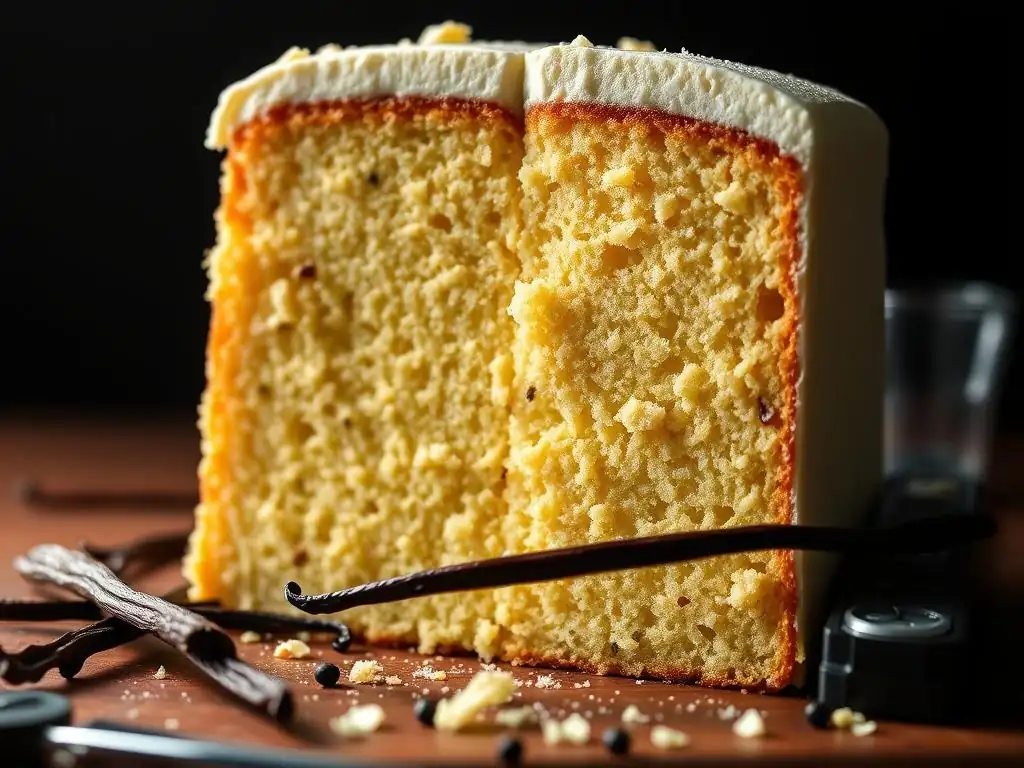
Welcome to BakeWithEase, your guide to unlocking baking bliss! Ever wondered how to achieve that perfect, melt-in-your-mouth texture in your vanilla cake? We're diving deep into the science of a perfect vanilla cake crumb, revealing the secrets behind those tender, airy results. Prepare to unlock the magic and elevate your baking game – the journey to cake perfection starts now!
- Understanding the Science Behind a Delicious Vanilla Cake Crumb
- Key Ingredients and Their Impact on Vanilla Cake Crumb
- Baking Techniques for Achieving Perfect Vanilla Cake Crumb
- Troubleshooting Common Vanilla Cake Crumb Problems
- Advanced Vanilla Cake Crumb Techniques
- Perfect Vanilla Cake Crumb: Recipe and Step-by-Step Guide
-
Frequently Asked Questions
- What is the most important factor in achieving a perfect vanilla cake crumb?
- How does gluten development affect the crumb of a vanilla cake?
- Why is the type of flour important for the "perfect vanilla cake crumb science"?
- How does the fat content in a vanilla cake recipe affect the crumb?
- What role does oven temperature play in achieving the ideal vanilla cake crumb?
- Final Reflection: The Enduring Allure of the Perfect Crumb
- Unlock Your Inner Cake Artist: Master the Crumb!
Understanding the Science Behind a Delicious Vanilla Cake Crumb
What is Cake Crumb and Why Does it Matter?
Cake crumb refers to the internal structure of a cake, specifically the texture, size, and distribution of the air pockets within the baked matrix. It's what you see when you slice into a cake – the network of baked batter surrounding tiny air bubbles. Think of it as the cake's "skeleton."
A perfect vanilla cake crumb is typically described as fine, even, tender, and moist, collapsing gently when pressed rather than crumbling apart. The quality of the crumb is paramount because it directly impacts the cake's mouthfeel and overall eating experience. A cake might taste delicious, but if the crumb is dry, dense, or uneven, it detracts significantly from the enjoyment.
Understanding the science behind achieving the ideal crumb is key to consistent baking success. It involves controlling the chemical reactions and physical processes that occur when ingredients are mixed and heated. For instance, the size and distribution of air cells, which form the crumb structure, are largely determined by how air is incorporated during mixing and how leavening agents produce gas during baking. Mastering the science of cake crumb allows bakers to troubleshoot problems and consistently produce cakes with a light, delicate texture that melts in your mouth, embodying the essence of a truly perfect vanilla cake crumb.
The Importance of Crumb Structure in Vanilla Cakes
The structure of the crumb is fundamental to a vanilla cake's appeal. Vanilla cake, being a relatively simple flavor profile, relies heavily on its texture to stand out. A well-structured crumb provides a pleasant tenderness that complements the sweet, aromatic vanilla notes. If the crumb is too tight and dense, the cake feels heavy and can taste doughy. Conversely, if it's too open and coarse, the cake can feel dry and fall apart easily. The ideal crumb has a fine, uniform texture with small, evenly distributed air pockets, indicating proper aeration and gluten development control.
This delicate balance ensures that the cake is moist, tender, and holds together just enough to be sliced and frosted without crumbling excessively. Achieving this precise structure is part of the perfect vanilla cake crumb science. It's about managing the interaction between flour proteins forming the structure, fats tenderizing it, sugars retaining moisture, eggs binding everything together, and leavening agents creating lift. When these elements work in harmony, the resulting crumb is not just visually appealing but also delivers that sought-after melt-in-your-mouth experience that defines a truly great vanilla cake.
Key Ingredients and Their Impact on Vanilla Cake Crumb
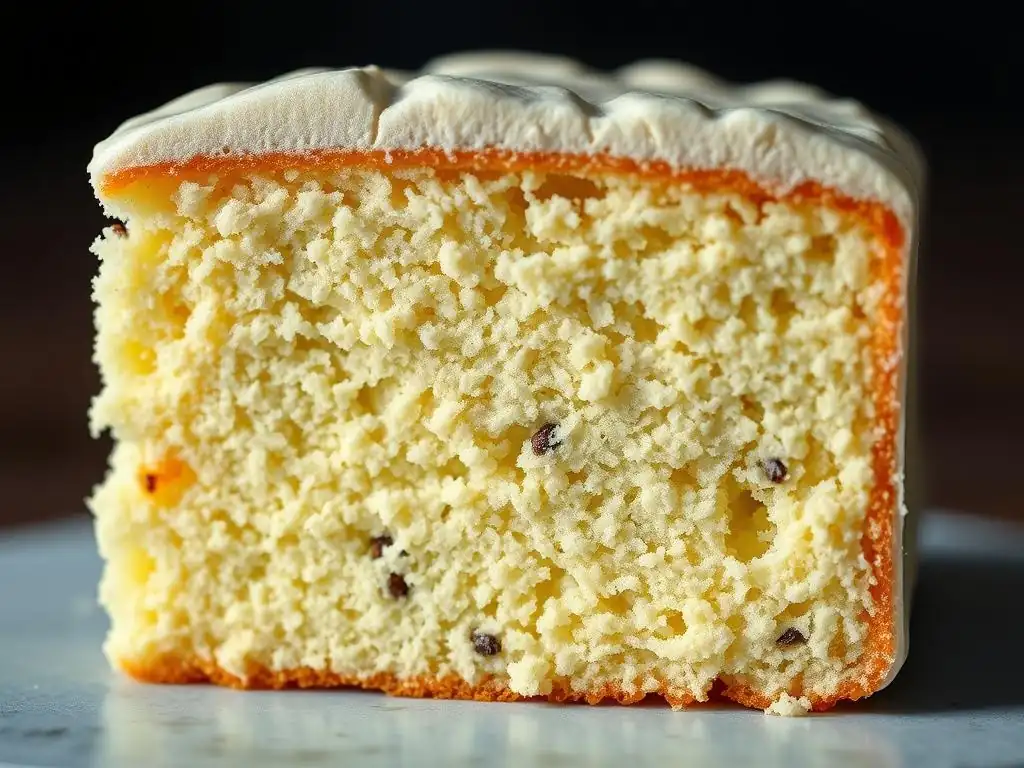
Flour's Role in Achieving the Ideal Crumb Texture
Flour is the primary structural component of most cakes. It contains proteins, primarily glutenin and gliadin, which form gluten when hydrated and mixed. Gluten creates a network that gives the cake structure and allows it to hold its shape as it bakes and rises. However, for a tender cake crumb, you typically want to limit gluten development. Too much gluten results in a tough, chewy texture, which is undesirable in a delicate vanilla cake. The type of flour used and how it is mixed significantly influence the degree of gluten development and, consequently, the final crumb texture.
The starch in flour also plays a crucial role. As the cake bakes, the starch granules absorb liquid and swell, eventually gelatinizing around 140-180°F (60-82°C). This gelatinized starch contributes to the cake's structure and helps set the crumb. Understanding the protein content and starch characteristics of different flours is a vital part of mastering the perfect vanilla cake crumb science. Using a lower-protein flour and employing gentle mixing techniques are key strategies to minimize gluten development and promote a tender, fine crumb.
Understanding Different Types of Flour for Vanilla Cake
Different flours contain varying amounts of protein, which directly impacts gluten formation. All-purpose flour, commonly used in baking, has a moderate protein content, typically ranging from 10-12%. This makes it versatile but can lead to a slightly tougher crumb if not handled carefully. Cake flour, on the other hand, is specifically milled from soft wheat and has a lower protein content, usually around 6-8%. This lower protein level means less potential for gluten development, resulting in a more tender and delicate crumb, often favored for achieving a perfect vanilla cake crumb texture.
Using cake flour is a common technique among professional bakers aiming for a very fine crumb. Some recipes might even call for a blend of cake flour and all-purpose flour to find a balance between tenderness and structural integrity. Pastry flour falls between cake and all-purpose flour in protein content (around 8-9.5%) and can also be used for tender baked goods. Choosing the right flour is the first step in controlling gluten and setting the stage for a beautiful, tender vanilla cake crumb.
How Gluten Development Affects Crumb Structure
Gluten develops when the proteins glutenin and gliadin in flour are mixed with liquid and agitated. The more mixing or kneading that occurs, the stronger and more elastic the gluten network becomes. In bread baking, this strong network is desired for chewiness and structure. However, in cakes, especially vanilla cakes where tenderness is paramount, excessive gluten development leads to a tough, dense crumb. The elastic gluten network restricts the expansion of air cells created by leavening, resulting in a tighter, less tender texture.
To achieve a tender vanilla cake crumb, the goal is to minimize gluten development while still allowing enough structure for the cake to hold its shape. This is achieved through several methods: using lower-protein flour, incorporating fats and sugars (which interfere with gluten formation), using liquids that are slightly acidic (like buttermilk), and employing gentle mixing techniques. Controlling this aspect of the perfect vanilla cake crumb science is crucial for that melt-in-your-mouth texture.
Sugar's Influence on Moisture and Cake Crumb
Sugar does more than just sweeten a cake; it significantly impacts its texture and moisture. Sugar is hygroscopic, meaning it attracts and holds onto water. This property helps keep the cake moist and tender over time. By competing with flour proteins for water, sugar also inhibits gluten development, further contributing to tenderness. Additionally, sugar crystals cut through the fat during the creaming process, creating small air pockets that contribute to the cake's rise and crumb structure.
During baking, sugar also participates in the Maillard reaction and caramelization, contributing to crust color and flavor. However, its primary role in crumb science is related to tenderness and moisture retention. The amount of sugar relative to other ingredients is critical; too little sugar can result in a dry, tough cake, while too much can make the cake overly soft, sticky, or even collapse. Mastering the balance is part of the perfect vanilla cake crumb science.
The Sweetness Factor: Sugar's Impact on Tenderness
Sugar is a tenderizer in cakes. It achieves this primarily by interfering with gluten development and by being hygroscopic. When sugar is present, it dissolves in the liquid components of the batter and competes with the flour proteins for hydration. Less water available to the glutenin and gliadin means less gluten formation, resulting in a more tender cake. Think of it as sugar getting in the way of the gluten party.
Furthermore, sugar raises the temperature at which starch gelatinizes and proteins coagulate. This delay allows the cake to expand more before the structure sets, contributing to a lighter texture. The amount of sugar in a recipe is often proportional to the amount of flour and fat to maintain this delicate balance for a tender crumb. A typical ratio might see sugar weighing roughly the same as or slightly more than the flour. This balance is fundamental to the science of cake crumb tenderness.
Different Types of Sugar and Their Unique Effects
While granulated sugar is the most common choice for vanilla cakes, different types of sugar can subtly alter the crumb. Granulated sugar's fine crystals cream well with fat, creating numerous small air pockets essential for a fine crumb. Superfine sugar (caster sugar) has even smaller crystals, which dissolve faster and can lead to an even more uniform, fine crumb, though the effect might be subtle in many recipes.
Brown sugar, which contains molasses, adds moisture and a slightly different flavor profile. It tends to make cakes moister and slightly denser than those made solely with granulated sugar. Powdered sugar (confectioners' sugar) contains cornstarch to prevent clumping and dissolves instantly, but its use is less common in cake batters themselves, being more suited for frostings or glazes. For a classic perfect vanilla cake crumb, granulated sugar is usually the standard, providing the right balance of tenderness, moisture, and structure.
Fat's Contribution to a Tender Vanilla Cake Crumb
Fat, whether butter or oil, is a critical tenderizer in cakes. Fat coats the flour particles, preventing them from fully hydrating and thus inhibiting gluten development. The more fat present, generally the more tender the cake crumb will be. Fat also contributes to moisture and richness, enhancing the overall mouthfeel. The type of fat used significantly impacts both the flavor and the texture of the crumb.
Beyond tenderness, fat plays a role in aeration, particularly when using solid fats like butter through the creaming method. As butter is creamed with sugar, the sharp sugar crystals cut into the butter, creating tiny air pockets. These air pockets expand during baking, contributing to the cake's rise and creating a lighter crumb structure. Understanding how different fats behave is essential to the science of cake crumb texture.
Butter vs. Oil: Which Fat is Best for Your Cake?
The choice between butter and oil significantly impacts the perfect vanilla cake crumb. Butter is a solid fat at room temperature and contains water and milk solids in addition to fat (typically around 80-82% fat in unsalted butter). When creamed with sugar, butter excels at incorporating air, leading to a cake with good structure and a fine, even crumb. Butter also provides superior flavor compared to most oils.
Oil, being a liquid fat (like vegetable or canola oil), coats flour particles more effectively than solid fat, resulting in a very tender and moist crumb. Cakes made with oil tend to stay moist longer than butter-based cakes. However, oil does not contribute to aeration in the same way butter does via creaming, so cakes made with oil often rely more heavily on chemical leaveners for lift.
While oil can produce an incredibly moist and tender crumb, butter is often preferred in classic vanilla cakes for its flavor and its ability to create a fine, airy crumb structure through creaming. Many recipes seek a balance, sometimes using a combination of both.
How Fat Content Affects Crumb Softness
The amount of fat in a cake recipe has a direct correlation with the softness and tenderness of the crumb. A higher fat content generally leads to a more tender cake because the fat effectively shortens the strands of gluten, interfering with the protein network's ability to toughen. Recipes labeled as "butter cakes" or "pound cakes" often have a high ratio of fat to flour, resulting in a rich, dense, yet incredibly tender and moist crumb.
Conversely, a low-fat cake recipe will have less interference with gluten development, potentially leading to a tougher, drier crumb unless other ingredients like sugar or liquid are increased to compensate. Finding the right fat ratio is part of achieving that desired perfect vanilla cake crumb texture. For a standard vanilla layer cake, the fat (often butter) might weigh roughly half as much as the flour, providing a good balance of tenderness and structure.
Eggs and Their Role in Binding and Structure
Eggs are multifaceted contributors to cake crumb structure. They contain proteins that coagulate when heated, forming part of the cake's structural framework alongside the gluten from the flour and the gelatinized starch. Eggs also provide moisture and richness (from the yolks) and contribute to leavening when beaten (especially egg whites, which can trap air).
Furthermore, egg yolks contain lecithin, a natural emulsifier. Emulsifiers help to evenly disperse fat and liquid throughout the batter, preventing separation and contributing to a smooth, uniform batter. This even distribution is crucial for achieving a fine, even crumb texture. Without sufficient eggs or proper emulsification, a cake batter can be unstable, leading to a coarse or uneven crumb. Eggs are truly binders and builders in the perfect vanilla cake crumb science.
The Power of Emulsification: Eggs and a Fine Crumb
Emulsification is the process of combining ingredients that don't naturally mix, like oil and water, into a stable mixture. In cake batter, eggs, particularly the lecithin in the yolks, act as emulsifiers, helping to bind the fats and liquids together. This creates a smooth, homogeneous batter where fat droplets are evenly distributed.
Why is this important for crumb? An evenly emulsified batter means that the fat is uniformly dispersed throughout the flour, effectively coating the starch and protein particles and inhibiting gluten development consistently. It also ensures that air bubbles incorporated during mixing are evenly distributed and stable. This uniformity in the batter translates directly to a fine, even crumb texture in the baked cake, a hallmark of a perfect vanilla cake crumb. A poorly emulsified batter can result in tunnels, large air pockets, or a greasy, uneven texture.
Understanding the Impact of Egg Yolk vs. Egg White
Egg yolks and egg whites contribute differently to cake crumb. Egg yolks are rich in fat and lecithin. The fat adds richness, moisture, and tenderness by interfering with gluten. The lecithin is the primary emulsifier, crucial for creating a smooth, stable batter and a fine crumb. Yolks contribute to a moist, tender, and slightly richer crumb texture.
Egg whites are primarily protein and water. When beaten, egg whites can trap a significant amount of air, contributing to the cake's volume and providing a lighter, more open structure. Their proteins coagulate firmly when heated, adding strength and structure to the cake. Recipes that use more egg whites (like angel food cake) are typically light and airy but can be drier due to the lower fat content. In a standard vanilla cake, using whole eggs provides a balance of tenderness, richness, structure, and emulsification, contributing to the desired perfect vanilla cake crumb texture.
Leavening Agents: Baking Powder and Baking Soda
Leavening agents are responsible for creating the gas that makes cakes rise, forming the air pockets that define the crumb structure. The most common chemical leaveners are baking powder and baking soda. These ingredients produce carbon dioxide gas through chemical reactions, causing the batter to expand in the oven. The distribution and size of these gas bubbles are critical for the final crumb texture.
Baking powder is a complete leavener containing an acid and a base (usually baking soda) and a starch filler. Most baking powders are double-acting, meaning they produce some gas when mixed with liquid and release more gas when heated in the oven. Baking soda is a base and requires an acid ingredient (like buttermilk, yogurt, brown sugar, or cocoa powder) to react and produce carbon dioxide. Understanding how these agents work and interact with other ingredients is key to the science of cake crumb lift and texture.
Achieving the Right Rise: Leavening and Crumb Density
Proper leavening is essential for a light and airy crumb. Insufficient leavening results in a dense, heavy cake because not enough gas is produced to expand the batter. Too much leavening can cause the cake to rise too quickly and then collapse, leading to a coarse, unstable crumb or a sunken center. The amount of leavening needed depends on the amount of flour, fat, and liquid in the recipe, as well as the presence of acidic ingredients.
For instance, a typical vanilla cake recipe using all-purpose flour might call for about 1 to 1.5 teaspoons of double-acting baking powder per cup of flour. If the recipe also contains acidic ingredients like sour cream or buttermilk, baking soda might be used in addition to or instead of some baking powder to neutralize the acid and contribute to lift. The size and distribution of the air cells formed by the leavening gas directly influence the fineness and evenness of the final perfect vanilla cake crumb.
Balancing Acidity and Alkalinity for Optimal Results
Baking soda (sodium bicarbonate) is an alkaline substance. It reacts with acids to produce carbon dioxide gas. Common acidic ingredients in cakes include buttermilk, yogurt, sour cream, molasses (found in brown sugar), honey, fruit juices, and vinegar. When baking soda is used, the recipe must contain enough acid for it to react fully. If there isn't enough acid, unused baking soda can leave a metallic or soapy taste and contribute to a yellowish tint in the cake.
Baking powder, particularly double-acting baking powder, contains both an acid and a base and doesn't rely solely on external acidic ingredients for its lift, although acid can influence its reaction rate. Recipes using baking powder often have a neutral pH. When both baking powder and baking soda are used, the baking soda typically reacts with acids for initial lift and to tenderize (by breaking down proteins), while the baking powder provides sustained lift during baking. Getting this acid-base balance right is part of the intricate perfect vanilla cake crumb science.
Baking Techniques for Achieving Perfect Vanilla Cake Crumb
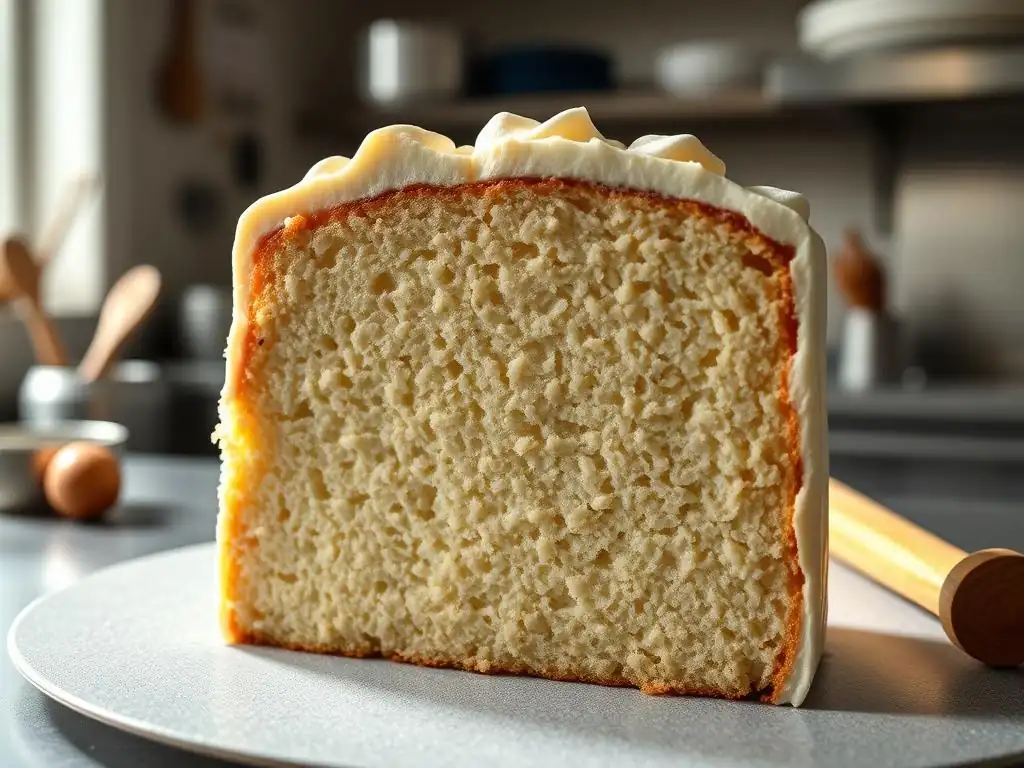
The Importance of Creaming Butter and Sugar
The creaming method is a fundamental technique for many cakes, especially butter-based ones. It involves beating softened butter with sugar until the mixture is light, fluffy, and pale yellow. This process serves two critical purposes: it incorporates air into the butter matrix, and the sharp sugar crystals cut into the fat, creating numerous tiny air pockets. These air pockets are the initial structure for the cake's rise and contribute significantly to a fine, tender crumb.
Proper creaming is non-negotiable for achieving a perfect vanilla cake crumb in butter-based recipes. It lays the foundation for a light texture before any chemical leaveners even kick in. The volume of the creamed mixture should increase noticeably, becoming aerated and less dense. This trapped air expands in the oven, helping the cake rise and creating that desirable delicate structure.
Achieving Proper Aeration for a Light and Airy Crumb
Aeration through creaming is a physical leavening process. As softened butter (around 65-68°F or 18-20°C) is beaten with sugar, the sugar crystals mechanically force air bubbles into the fat. The warmer the butter (within the soft range, not melted), the better it can trap air. Over time, as beating continues, these initial air pockets are further dispersed and expanded. The goal is to incorporate a significant amount of tiny, evenly distributed air bubbles.
This process typically takes several minutes using an electric mixer, often 3 to 5 minutes or even longer, depending on the mixer speed and the amount of butter and sugar. The mixture should transition from dense and yellowish to light, fluffy, and pale cream in color. This visual change indicates that sufficient air has been incorporated, setting the stage for a light and airy perfect vanilla cake crumb.
Avoiding Over-Creaming: Potential Pitfalls
While proper creaming is essential, over-creaming can actually be detrimental. Creaming for too long, especially at high speed, can incorporate too much air or create air pockets that are too large and uneven. This can lead to a cake that rises dramatically and then sinks in the center, or one with a coarse, open crumb structure rather than a fine one.
Additionally, over-creaming can sometimes lead to the mixture separating or becoming greasy if the butter warms too much. It's about finding the sweet spot: creaming until the mixture is light and fluffy but stopping before it becomes unstable or incorporates excessively large air bubbles. Paying attention to the visual cues – the color and texture change – is key to avoiding this pitfall in your quest for the perfect vanilla cake crumb science.
Mixing Techniques: Folding vs. Beating
How ingredients are combined after the creaming stage significantly impacts gluten development and the distribution of ingredients. Once dry ingredients (flour, leavening, salt) and wet ingredients (eggs, milk, extracts) are added, the goal is to mix just enough to combine them without overworking the batter. Over-mixing is a common cause of tough cake crumb.
Techniques like alternating adding dry and wet ingredients, starting and ending with dry, and using gentle folding motions are designed to minimize the time flour is mixed with liquid, thereby limiting gluten formation. Beating, on the other hand, introduces more agitation and promotes gluten development, which is generally avoided in cake batters after the initial creaming. The method used after creaming is a critical step in controlling the science of cake crumb texture.
Gentle Folding: Maintaining a Delicate Crumb
Folding is a gentle mixing technique used to combine ingredients, typically lighter mixtures into heavier ones (like folding whipped egg whites into batter) or to incorporate dry ingredients into a wet base with minimal agitation. When adding flour to a creamed butter-sugar mixture, using a low speed on a mixer or folding by hand with a spatula is preferred over vigorous beating.
The aim of folding is to just moisten the dry ingredients and distribute them evenly. Over-mixing develops gluten, leading to toughness. Folding helps to preserve the air incorporated during creaming and prevents the formation of a strong gluten network, thereby maintaining a delicate and tender crumb structure. This gentle handling is crucial for achieving that desirable perfect vanilla cake crumb texture.
Over-Mixing: The Enemy of a Tender Cake
Over-mixing cake batter is one of the most common reasons for a tough, dense crumb. When flour is mixed vigorously in the presence of liquid, the gluten proteins (glutenin and gliadin) link up and form a strong, elastic network. While necessary for bread, this network is undesirable in cakes.
Signs of over-mixing include a batter that becomes elastic, sticky, or develops a sheen. The resulting cake will have a tough, often chewy texture, a tight, sometimes tunneled crumb, and can be dry. The rule of thumb for incorporating dry ingredients into cake batter is to mix just until no dry streaks of flour remain. A few small lumps are preferable to a smooth, elastic batter. Avoiding over-mixing is a critical lesson in the perfect vanilla cake crumb science.
Oven Temperature and Baking Time: Critical Factors
The oven provides the heat energy needed for the chemical reactions (leavening, protein coagulation, starch gelatinization) and physical changes (water evaporation, expansion of gases) that transform batter into a cake. Oven temperature and baking time are critical for setting the crumb structure correctly. Too high a temperature can cause the cake to set too quickly on the outside while the inside is still raw, leading to a dome and potentially a dry crust. Too low a temperature can result in a cake that doesn't rise properly or has a pale, gummy texture.
Baking time is equally important. Baking for the correct duration ensures the cake is cooked through, the structure is set, and moisture is retained. Over-baking is a primary cause of dry, crumbly cake. Monitoring the cake's progress and using indicators like a toothpick test are essential for achieving a moist, tender perfect vanilla cake crumb.
Understanding the Maillard Reaction and its Impact
The Maillard reaction is a complex chemical process that occurs when proteins and sugars are heated together, typically above 300°F (150°C). It's responsible for the browning of the cake's crust and the development of rich, complex flavors. While it primarily affects the exterior, the heat distribution that drives the Maillard reaction on the outside is also cooking the inside and setting the crumb.
The oven temperature influences the rate and extent of the Maillard reaction. A hotter oven leads to faster browning. While crust color is part of the cake's appeal, excessive browning can indicate that the cake is being over-baked, which will negatively impact the internal crumb moisture and tenderness. A balanced oven temperature ensures the crust browns nicely while the interior bakes through evenly to achieve a moist and tender perfect vanilla cake crumb.
Avoiding Over-Baking: Keeping Your Cake Moist
Over-baking is arguably the most common culprit behind a dry, tough cake crumb. As a cake bakes, moisture evaporates. While some moisture loss is necessary for the structure to set, excessive baking time or temperature dries out the cake. Once the cake's internal temperature reaches the point where proteins are fully coagulated and starches fully gelatinized, further baking only removes moisture without improving structure.
To avoid over-baking, rely on visual cues and tests rather than just the clock. The cake should pull slightly away from the sides of the pan, and a toothpick inserted into the center should come out clean or with just a few moist crumbs attached, not wet batter. Baking times provided in recipes are often approximate due to variations in ovens and pans. Checking the cake a few minutes before the minimum suggested time is a good practice to ensure you preserve the moisture needed for a tender perfect vanilla cake crumb texture.
Troubleshooting Common Vanilla Cake Crumb Problems
Dry and Crumbly Cake: Causes and Solutions
A dry and crumbly vanilla cake is a common disappointment. This typically happens when there isn't enough moisture or fat in the cake, or when the cake has been over-baked, causing excessive moisture loss. The crumb feels coarse and falls apart easily rather than holding together. Identifying the specific cause is the first step to fixing it in future bakes.
Common culprits include using too much flour (which absorbs moisture), not enough fat or liquid, incorrect measurement of ingredients, or simply leaving the cake in the oven for too long. Even chilling a cake uncovered in the refrigerator can dry it out. Understanding these potential issues is part of the perfect vanilla cake crumb science of troubleshooting.
Identifying the Culprit: Insufficient Fat, Over-Baking, or Incorrect Flour
Several factors can lead to a dry, crumbly cake.
- Insufficient Fat/Liquid: Fat tenderizes, and liquid provides moisture. If the ratio of fat and liquid to dry ingredients (especially flour) is too low, the cake will be dry.
- Over-Baking: As mentioned earlier, this is a major cause. Heat evaporates water. Baking too long removes too much moisture.
- Incorrect Flour: Using a high-protein flour (like bread flour) instead of all-purpose or cake flour can lead to a tougher, drier crumb due to increased gluten development.
- Improper Measuring: Scooping flour directly with a measuring cup can pack it, resulting in significantly more flour than intended (often 20-25% more by weight), throwing off the ingredient balance and leading to dryness. Weighing ingredients with a scale is the most accurate method.
- Ingredients Too Cold: Using cold butter or eggs can affect emulsification and creaming, potentially leading to a less tender result.
Pinpointing which of these factors (or a combination) is causing the issue is key to improving your perfect vanilla cake crumb.
Hydration Strategies: Adding More Liquid, Using Sour Cream, or Brushing with Simple Syrup
If you suspect your recipe is inherently a little dry, or you've identified a factor like slightly over-measuring flour, you can try hydration strategies.
- Adding More Liquid: A tablespoon or two of extra milk or buttermilk can sometimes add needed moisture without significantly altering structure, especially if the batter seems very thick.
- Using Sour Cream or Yogurt: Substituting some of the liquid with sour cream or full-fat yogurt adds fat and moisture, and the acidity can help tenderize the crumb and activate baking soda if present. Their thick texture also contributes to a moist mouthfeel.
- Brushing with Simple Syrup: After baking and while the cake is still warm, you can brush or drizzle it with a simple syrup (equal parts sugar and water, heated until dissolved, optionally flavored with vanilla). The cake will absorb the syrup, adding moisture and ensuring a moist crumb. This is a common technique for keeping cake layers tender, particularly useful if slight over-baking occurred.
These techniques can help salvage a slightly dry cake or improve a recipe's inherent moisture level, contributing to a better perfect vanilla cake crumb texture.
Dense and Heavy Cake: Reasons and Remedies
A dense, heavy vanilla cake lacks the desirable lightness and tenderness. This problem usually stems from issues with leavening, aeration, or over-developing the structure. The crumb is tight, with small, uneven, or collapsed air pockets. It feels heavy in the hand and can taste gummy or doughy.
Causes include insufficient leavening agents, inactive leavening agents, not incorporating enough air during creaming, over-mixing the batter, ingredients being too cold, or opening the oven door too early during baking causing the cake to collapse. Addressing these issues is vital for achieving a light perfect vanilla cake crumb.
Overcoming Density: Proper Aeration, Correct Leavening, and Avoiding Over-Mixing
To combat density, focus on these areas:
- Proper Aeration: Ensure your butter is softened correctly (not melted) and that you cream the butter and sugar until truly light and fluffy, incorporating sufficient air. This provides the initial lift.
- Correct Leavening: Verify your baking powder and baking soda are fresh (they lose potency over time). Test baking powder by adding a spoonful to hot water – it should fizz vigorously. Test baking soda by adding a spoonful to vinegar – it should fizz immediately. Ensure you are using the correct type and amount specified in the recipe.
- Avoiding Over-Mixing: Mix the dry ingredients into the wet ingredients just until combined. Stop as soon as no dry flour streaks are visible. Gentle folding is preferred.
Following these steps helps ensure the batter has enough lift and a tender structure, preventing a dense outcome and contributing to a lighter perfect vanilla cake crumb science.
Leavening Issues: Ensuring Proper Measurement and Freshness
Leavening agents are potent chemicals, and their accurate measurement is critical. Using too little will result in a dense cake; using too much can cause rapid rising followed by collapse or an unpleasant taste. Always measure baking powder and baking soda carefully, preferably leveling off the spoon.
Equally important is ensuring your leaveners are fresh. Baking powder typically has a shelf life of 6-12 months once opened, and baking soda lasts longer but can absorb odors. Check the expiration date on the container, but also perform the freshness tests mentioned earlier if in doubt. Using active leavening agents is fundamental to achieving the proper rise and airy structure of a perfect vanilla cake crumb.
Uneven Crumb Texture: Identifying the Root Cause
An uneven crumb texture means the air pockets within the cake are not uniform in size or distribution. You might see large tunnels in some areas and dense spots in others. This is less visually appealing and can affect the eating experience, making the cake feel inconsistent.
Uneven crumb is often a sign of improper mixing techniques or temperature issues. It indicates that the air bubbles or leavening gases were not evenly distributed throughout the batter before baking, or that the cake baked unevenly. Correcting mixing habits is usually the key to a uniform perfect vanilla cake crumb.
Understanding Variations in Crumb Structure
Variations in crumb size can manifest as large tunnels running through the cake (often a sign of over-mixing or uneven mixing speed), dense pockets (where ingredients weren't fully incorporated or flour wasn't hydrated), or a coarse, open texture (sometimes from over-creaming or too much leavening). The ideal is a consistently fine network of small air cells.
Observing the type of unevenness can help diagnose the problem. Tunnels are almost always related to mixing speed and duration. Dense spots can be related to cold ingredients not emulsifying properly or pockets of unmixed dry ingredients. Addressing the cause ensures a consistent, fine crumb texture throughout the cake, contributing to the overall perfect vanilla cake crumb.
Mixing Issues: Uneven Distribution of Ingredients or Inconsistent Mixing
The most common cause of uneven crumb is inconsistent or improper mixing.
- Uneven Distribution: If ingredients, particularly dry ingredients or leavening agents, are not evenly dispersed throughout the batter, some areas will have more structure-building elements or leavening than others, leading to variations in texture. Sifting dry ingredients together helps ensure they are evenly combined before adding them to the wet ingredients.
- Inconsistent Mixing: Using varying mixer speeds or not scraping down the sides and bottom of the bowl frequently can lead to some parts of the batter being over-mixed and others under-mixed. This creates areas of differing gluten development and ingredient concentration.
- Adding Ingredients Too Quickly: Dumping all dry ingredients in at once, rather than adding them gradually or in stages, can make it harder to incorporate them evenly without over-mixing.
Using a consistent, relatively low speed when incorporating dry ingredients, scraping the bowl often, and mixing just until combined are essential techniques for achieving a uniform and perfect vanilla cake crumb texture.
Advanced Vanilla Cake Crumb Techniques
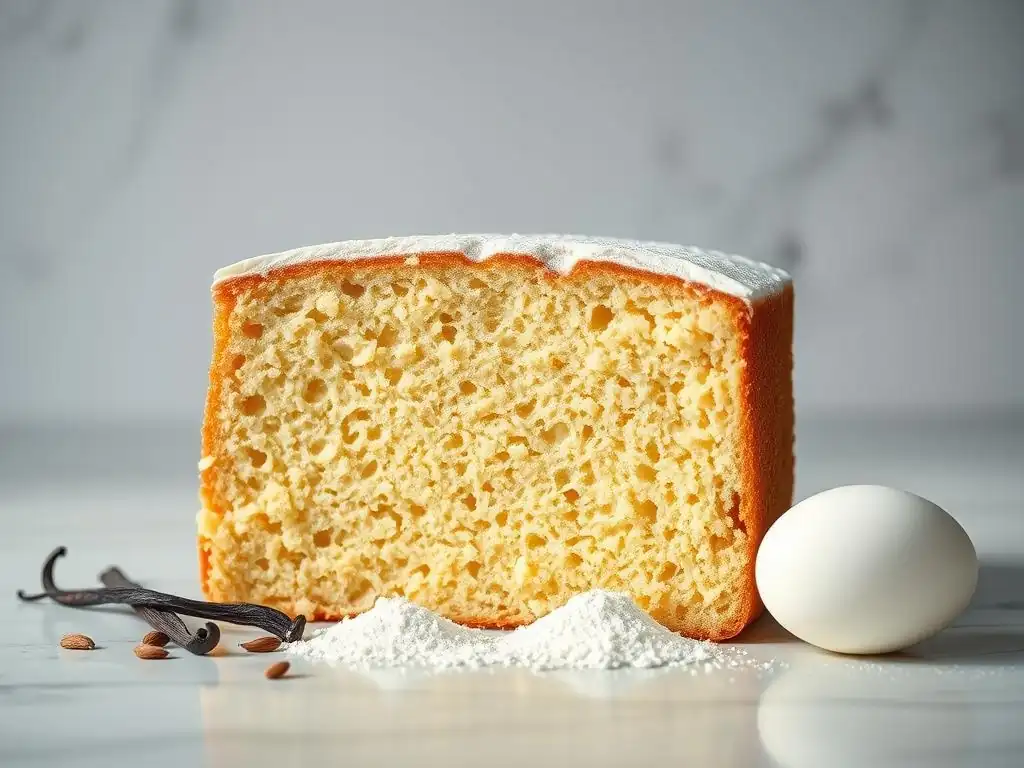
Using Cake Flour for a Finer Crumb
As discussed earlier, cake flour has a lower protein content (6-8%) compared to all-purpose flour (10-12%). This lower protein means less potential for gluten development, even with some mixing. Using cake flour is one of the most direct ways to achieve a significantly finer, more tender crumb in a vanilla cake.
Recipes specifically designed for cake flour will account for its lower protein and potentially higher starch content. If adapting a recipe that calls for all-purpose flour, you might substitute cake flour cup-for-cup, although sometimes a slight adjustment in liquid is needed as cake flour can be more absorbent due to processing. The result is typically a cake that feels lighter and more delicate, showcasing a truly fine perfect vanilla cake crumb.
Incorporating Sour Cream or Buttermilk for Added Moisture
Adding acidic dairy products like sour cream or buttermilk is a popular technique for enhancing cake moisture and tenderness. These ingredients contribute fat (especially full-fat versions) and liquid, but their acidity plays a special role in the perfect vanilla cake crumb science.
The acid in sour cream or buttermilk tenderizes the crumb by partially breaking down proteins (both gluten and egg proteins). If the recipe uses baking soda, the acid reacts with it, producing carbon dioxide gas for leavening and neutralizing the baking soda's alkaline flavor. The fat and unique texture of these ingredients also contribute to a moist, rich mouthfeel and a slightly denser but incredibly tender crumb that stays moist longer. Substituting some of the milk or liquid in a standard recipe with sour cream or buttermilk is an excellent way to improve crumb moisture and tenderness.
The Tangzhong Method for an Ultra-Soft Crumb
The Tangzhong method, originating from Asian baking, is an advanced technique specifically designed to create extremely soft, moist, and tender baked goods, including cakes. It involves cooking a small portion of the flour with a liquid (usually milk or water) to form a thick, paste-like roux before adding it to the main batter.
When flour and liquid are heated to about 149°F (65°C), the starch granules in the flour gelatinize and absorb significantly more liquid than they would at room temperature. This pre-gelatinized starch holds onto moisture throughout the mixing and baking process, preventing the starch from competing for moisture later and keeping the cake incredibly moist and tender. The result is a cake with an exceptionally soft, almost cottony perfect vanilla cake crumb that resists staling. While adding an extra step, the Tangzhong method is a powerful tool for achieving unparalleled crumb softness.
Perfect Vanilla Cake Crumb: Recipe and Step-by-Step Guide
Classic Vanilla Bean Cake Recipe
(Note: This is a simplified outline focusing on crumb technique. Specific quantities will vary.)
Here's a general structure for a classic vanilla bean cake focusing on crumb:
- Ingredients:
- Cake flour (sifted)
- Granulated sugar
- Baking powder
- Salt
- Unsalted butter, softened
- Large eggs, room temperature
- Milk, room temperature
- Pure vanilla extract or vanilla bean paste
- Method Overview:
- Combine dry ingredients (flour, baking powder, salt).
- Cream softened butter and sugar until light and fluffy.
- Add eggs one at a time, mixing well after each. Add vanilla.
- Alternately add dry ingredients and milk, starting and ending with dry. Mix just until combined.
- Pour into prepared pans and bake at the correct temperature until a toothpick comes out clean.
- Cool properly before frosting.
Following these steps with attention to the science of cake crumb principles outlined above is key.
Achieving the Ultimate Crumb: A Detailed Guide
Let's break down the steps for achieving that perfect vanilla cake crumb using the classic method:
- Prepare Ingredients: Ensure all cold ingredients (butter, eggs, milk) are at room temperature (around 65-70°F / 18-21°C). This is crucial for proper emulsification and creaming. Weigh your flour for accuracy. Sift dry ingredients together to distribute leavening and prevent lumps.
- Cream Butter and Sugar: Beat softened butter in a mixer until smooth. Gradually add sugar and beat on medium-high speed for 3-5 minutes until the mixture is pale, light, and fluffy. Scrape down the bowl sides periodically. This is where you build your primary aeration for the perfect vanilla cake crumb.
- Add Eggs and Vanilla: Add eggs one at a time, beating well after each addition until fully incorporated. The mixture might look slightly curdled initially, but continue beating until it emulsifies and becomes smooth again. Add vanilla and mix briefly.
- Alternate Dry and Wet Ingredients: With the mixer on low speed, add about one-third of the dry ingredients, mix just until barely combined. Add about half of the milk, mix just until barely combined. Repeat with another third of the dry ingredients, the remaining milk, and finally the last third of the dry ingredients.
- Mix Just Until Combined: This is critical. Stop mixing as soon as you no longer see streaks of dry flour. Do not overmix! A few small lumps are acceptable. Over-mixing develops gluten and leads to a tough crumb, ruining your perfect vanilla cake crumb science efforts.
- Bake Properly: Pour batter into prepared pans (greased and floured or lined with parchment). Bake in a preheated oven at the specified temperature (often around 325-350°F or 160-175°C) until the cake is golden around the edges, springs back lightly when touched, and a toothpick inserted into the center comes out clean.
- Cool Correctly: Allow the cake to cool in the pan for 10-15 minutes before inverting it onto a wire rack to cool completely. Cooling on a wire rack allows air circulation, preventing moisture from accumulating and making the bottom soggy. Ensure the cake is fully cooled before frosting to prevent melting and structural issues.
By meticulously following these steps and understanding the perfect vanilla cake crumb science behind each one, you can consistently bake cakes with a wonderfully tender, moist, and fine crumb.
- [ ] Use room temperature ingredients.
- [ ] Weigh flour for accuracy.
- [ ] Cream butter and sugar sufficiently (3-5 mins).
- [ ] Add eggs one at a time, mixing well.
- [ ] Alternate dry/wet additions, mixing just until combined.
- [ ] Avoid over-mixing at all costs.
- [ ] Bake at the correct temperature until a toothpick test is clean.
- [ ] Cool cake properly on a wire rack.
Frequently Asked Questions
What is the most important factor in achieving a perfect vanilla cake crumb?
The most important factor is understanding the ratio of wet to dry ingredients. Too much or too little of either can drastically affect the crumb's texture. Consider also the mixing time as overmixing also can lead to a tough crumb.
How does gluten development affect the crumb of a vanilla cake?
Gluten development is crucial. Proper gluten development, achieved through precise mixing, provides structure. However, overmixing creates too much gluten, resulting in a tough and dense crumb.
Why is the type of flour important for the "perfect vanilla cake crumb science"?
Different flours contain varying amounts of protein, which directly impacts gluten formation. Cake flour, with its lower protein content, is generally preferred for a tender and delicate crumb compared to all-purpose flour.
How does the fat content in a vanilla cake recipe affect the crumb?
Fat tenderizes the cake by coating the flour particles, inhibiting gluten development. A sufficient amount of fat contributes to a moist and soft crumb. Using the right type of fat, like butter or oil, also impacts flavor.
What role does oven temperature play in achieving the ideal vanilla cake crumb?
Consistent oven temperature is critical for even baking and proper crumb development. An incorrect oven temperature can lead to uneven rising, a dense texture, or a dry, crumbly cake. Ensure your oven is accurately calibrated.
Final Reflection: The Enduring Allure of the Perfect Crumb
The pursuit of the perfect vanilla cake crumb is more than just a culinary quest; it's a testament to the power of precision and the enduring human desire for sensory perfection. This article has explored the intricate science behind achieving that ideal texture – from the precise ratios of ingredients to the nuanced impact of mixing techniques and baking temperatures. But the implications extend far beyond the simple act of baking a cake.
The quest for the perfect crumb reflects a broader cultural fascination with mastery and detail. We strive for excellence in all aspects of our lives, and the seemingly simple act of baking a cake provides a tangible, accessible pathway to understanding and achieving that excellence. Perfection is not attainable, but if we chase perfection we can catch excellence.
– Vince Lombardi. This quote, while applied to a different field, perfectly encapsulates the spirit of this exploration. The journey towards the perfect crumb, even if unattainable in its absolute form, teaches us valuable lessons about patience, precision, and the beauty of the process itself.
Now, I invite you to consider your own pursuit of perfection, whatever form it may take. Whether it's in your professional life, personal relationships, or even your next baking endeavor, remember the lessons learned here: attention to detail, a willingness to experiment, and the understanding that the journey itself is often as rewarding as the destination. Embrace the science, embrace the art, and most importantly, embrace the joy of creating something truly delicious – and perfectly crumbly.
Unlock Your Inner Cake Artist: Master the Crumb!
Thanks for diving into the science of the perfect vanilla cake crumb! You've now got the knowledge to bake cakes that are not only delicious but also visually stunning. Ready to put your new skills to the test?
- Bake your masterpiece: Try out the techniques we covered today and see how your next vanilla cake transforms! Pay close attention to those crucial mixing steps.
- Share your creation: Snap a picture of your perfectly crumbed cake and share it with the BakeWithEase community – we'd love to see your results!
- Explore our other baking guides: Want to level up your baking game? Discover more expert tips and tricks on our site.
Ready to unlock the secrets to even more baking perfection? What's your next baking adventure?