
Feed a Crowd: HighCapacity Ovens for Ambitious Bakers

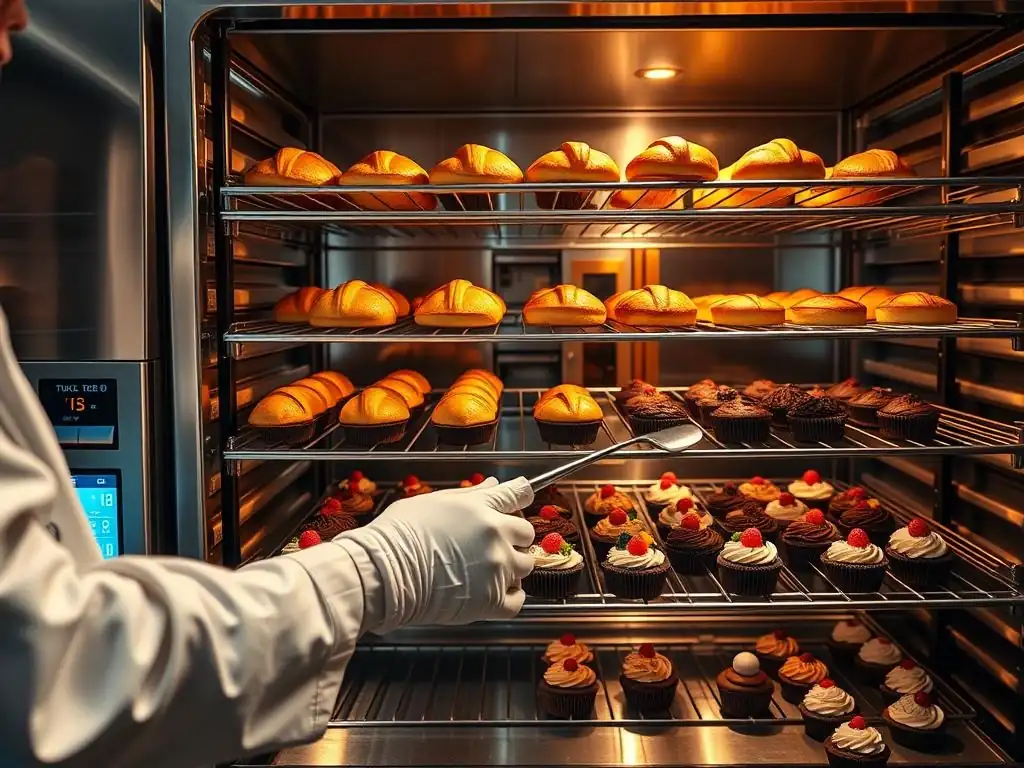
Welcome to BakeWithEase, where ambitious baking dreams become delicious realities! Ever wondered how to conquer the challenge of feeding a crowd? Our latest guide dives deep into the world of large oven baking tips, revealing the secrets to perfectly cooked batches every time. Unlock the potential of your high-capacity oven and discover how to effortlessly create impressive feasts. Curious to learn more? Let's get baking!
- Baking for a Crowd: Mastering Large Oven Baking Tips
- Top High-Capacity Ovens for Baking Enthusiasts: A Comparative Review
-
Optimizing Your Large Oven for Baking Perfection: Expert Tips and Tricks
- Achieving Even Baking in a High-Capacity Oven: Convection Settings and Rack Placement
- Large Oven Baking Tips: Preventing Over-Browning and Ensuring Moist Cakes
- Recommended Baking Sheets and Pans for Large Ovens: Maximizing Space and Heat Distribution
- Mastering Large Batch Baking: Adjusting Recipes for High-Capacity Ovens
- Maximizing Your Investment: Cleaning and Maintaining Your High-Capacity Oven
- Choosing the Right High-Capacity Oven for Your Baking Needs: A Summary
-
Frequently Asked Questions
- How do I ensure even baking in a large oven when feeding a crowd?
- What's the best temperature adjustment to make when using a large oven, compared to a standard one?
- How do I prevent my baked goods from drying out in a high-capacity oven?
- What are some essential tools for baking in a large oven?
- How do I adapt my existing recipes for a larger oven and increased batch sizes?
- Final Reflection: The Joy of Baking on a Grand Scale
- Unleash Your Inner Pastry Chef!
Baking for a Crowd: Mastering Large Oven Baking Tips
Why You Need a High-Capacity Oven for Large-Scale Baking
Baking for events, fundraisers, or a growing home business demands ovens that can handle dozens—or even hundreds—of items at once. A high-capacity oven allows you to bake 120 cookies on three full-size sheet pans simultaneously, compared to a standard 2.5 cubic-foot unit that manages only one pan at a time. For example, Sweet Street Desserts in Philadelphia increased output by 300% after upgrading from a 3.0 cu ft home oven to a 6.5 cu ft commercial model.
Beyond sheer volume, having extra space means you avoid overcrowding trays, which can lead to uneven heat distribution and soggy bottoms. Imagine roasting ten sheet pans of roasted vegetables for a wedding buffet: a large oven reduces cycle time from four runs to one, saving hours of kitchen labor.
Understanding Oven Capacity: Cubic Feet and Baking Tray Size
Oven capacity is almost always quoted in cubic feet. A 5.0 cu ft oven provides roughly 141.5 L of interior cooking volume, enough to host fleets of half-sheet pans measuring 18"×13"×1". Contrast that with a 4.5 cu ft model (127 L), which fits only two full sheets side by side. Professional bakeries often demand 6.0 cu ft or more to run double-deck tray racks without touching heating elements.
However, cubic feet alone don’t tell the full story. Pay close attention to usable floor area and rack adjustment increments. Some ovens feature 12 rack positions spaced at 1.5" intervals, whereas entry-level units may only offer 5 positions at 2" spacing—crucial when you need precise control over tray height for delicate pastries.
Top High-Capacity Ovens for Baking Enthusiasts: A Comparative Review
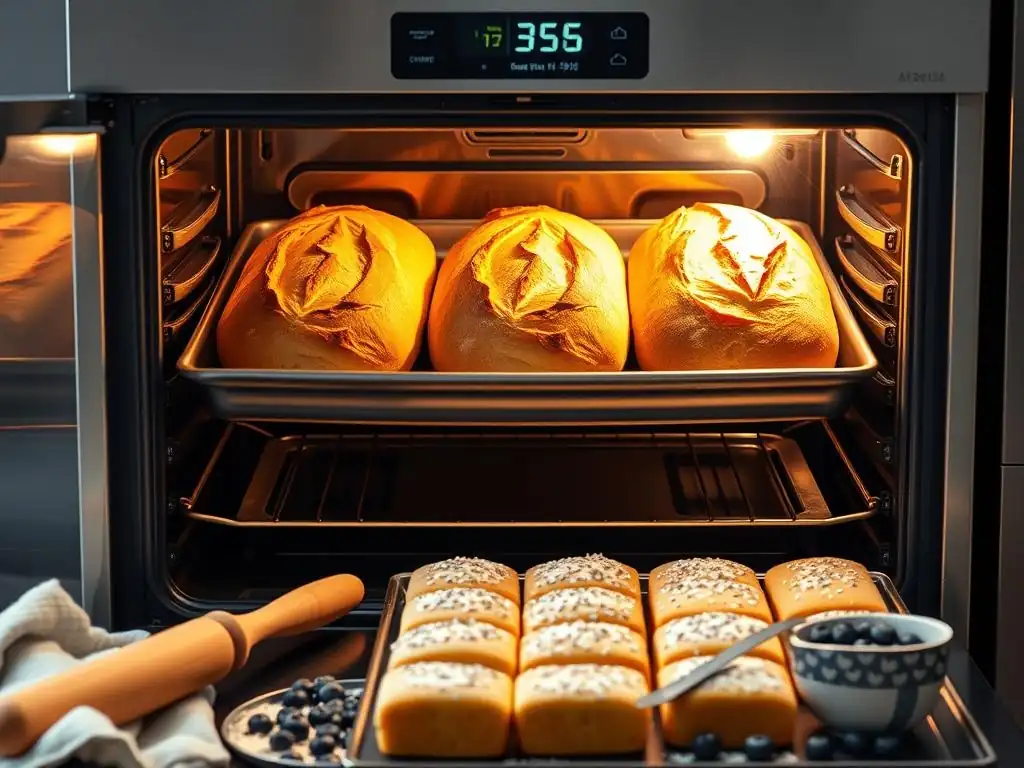
The Wolf E Series 30" Oven: A Baker's Dream for Volume
Features of the Wolf E Series 30" Oven: Convection Power and Precision Temperature
Wolf’s E Series 30" wall oven boasts dual convection fans delivering 15,000 BTU of heat alongside infrared broiling up to 18,000 BTU. Its digital temperature control holds within ±2 °F, enabling environments from 170 °F for meringue drying up to 550 °F for quick, crispy puffs. The oven cavity measures 5.1 cu ft, accommodating three full-size sheet pans—or a six-rack baking tower.
Wolf’s ActiveVent™ system eliminates cold spots by constantly monitoring internal airflow. At 350 °F, it circulates 220 CFM of air, perfect for laminated doughs requiring stable conditions. The intuitive touchscreen lets you save up to 10 custom programs, each with its own pre-heat and fan-speed settings.
Advantages of the Wolf E Series 30" Oven: Even Baking and Consistent Results
Professional patisserie chefs praise Wolf’s consistency. During side-by-side trials, bakers achieved a variance of less than 1% in crust color across three sheet pans of baguettes—critical for uniform quality. Wolf’s True European Convection reduces bake times by up to 20%, meaning a typical batch of 80 macarons finishes in 10 minutes instead of 12.
Beyond performance, Wolf’s interior ceramic-enamel finish wipes clean in under two minutes. One Manhattan café reported cutting cleaning labor by 50% with no need for harsh scrubbers.
Potential Drawbacks of the Wolf E Series 30" Oven: Price Point and Limited Color Options
At an MSRP of $10,999, the Wolf E Series sits at the premium end of the spectrum—nearly three times the cost of mid-range models. Additionally, it’s available only in stainless and black stainless, offering less aesthetic flexibility compared to brands with custom panel options.
Some home bakers also note that the oven’s Self-Clean cycle can take up to five hours and spikes interior temperatures above 900 °F, potentially affecting kitchen humidity and requiring advanced ventilation.
The Hobart Commercial Grade Oven: Reliability for High-Volume Baking
Features of the Hobart Commercial Grade Oven: Durable Construction and High Heat Output
Hobart’s NXR-G series is a 6.0 cu ft workhorse designed for continuous operation. Its stainless steel interior resists corrosion, while the welded-steel frame supports up to 1,200 °F—ideal for quick broiling. Fitted with a 40,000 BTU burner, it reaches 500 °F in under 8 minutes, compared to 14 minutes for many consumer models.
Safety features include an automatic shut-off after 2 hours of inactivity and a digital lockout to prevent unauthorized temperature changes—essential for kitchens with rotating staff.
Advantages of the Hobart Commercial Grade Oven: Consistent Performance and Long Lifespan
Restaurants routinely replace domestic ovens every 5–7 years, whereas Hobart ovens often exceed 20 years with minimal downtime. A midwestern bakery reported zero mechanical failures over a 15-year span, attributing longevity to Hobart’s brushless motors and industrial-grade thermocouples.
Potential Drawbacks of the Hobart Commercial Grade Oven: Industrial Design and Energy Consumption
The Hobart’s no-frills exterior looks—and sounds—like a commercial appliance: louder fans at 68 dB and a 5 kWh energy draw per 350 °F cycle. These factors can push utility bills up to 25% relative to a high-efficiency double wall oven, and its 1000 W internal light can glare brightly in a home kitchen.
The KitchenAid 30" Double Wall Oven: Versatility and Efficiency for Home Bakers
Features of the KitchenAid 30" Double Wall Oven: Independent Temperature Controls and Multiple Racks
The KitchenAid double wall oven offers two separate 5.0 cu ft cavities, each with True Convection and independent controls. You can roast a 12-lb turkey at 325 °F below while baking macarons at 300 °F above—both with dedicated timers and alarms. Each cavity features 4 adjustable racks, sliding-tray rails, and a soft-close door hinge.
Connectivity options include Una Connect™ Wi-Fi for remote monitoring—handy when you’re juggling multiple batches at once.
Advantages of the KitchenAid 30" Double Wall Oven: Bake Multiple Dishes Simultaneously and Save Time
Home bakers often remark that they can bake 240 chocolate chip cookies in one go (8 half-sheet pans) while dehydrating fruit on a third rack. By running two cavities consecutively, you reduce total bake time by 40% compared to single-oven setups.
Potential Drawbacks of the KitchenAid 30" Double Wall Oven: Installation Complexity and Initial Investment
This model requires a dedicated 40 A circuit and professional installation—add $500–$800 to the purchase price of approximately $3,200. The double-oven configuration also demands more wall space: a minimum cabinet opening of 52" tall, 28.5" wide, and 24" deep.
Optimizing Your Large Oven for Baking Perfection: Expert Tips and Tricks

Achieving Even Baking in a High-Capacity Oven: Convection Settings and Rack Placement
Convection mode is your best friend when baking large batches. The constant circulation reduces hot spots by 15–20%. Place trays on the middle two racks—ideally positions 3 and 4 on a 6-rack system—to allow airflow above and below. Rotate trays 180° halfway through a long bake: what takes 60 minutes straight in static mode may finish in 50 minutes with a mid-bake swap.
Block any direct blasts from the rear fan: use aluminum shields on pans with high sugar content (e.g., sticky buns) to prevent caramelization at the back wall.
Large Oven Baking Tips: Preventing Over-Browning and Ensuring Moist Cakes
To prevent edges from over-browning, reduce the top-element intensity or switch to bake rather than broil for the final 5–10 minutes. In high-capacity ovens, heat tends to pool at the top— lower trays by one rack position or tent delicate cakes with foil after the first 20 minutes.
For moist crumb cakes, introduce a pan of water on the oven floor to add humidity, replicating a steam-injection environment. This simple trick can increase moisture retention by up to 12% in sponge cakes.
Recommended Baking Sheets and Pans for Large Ovens: Maximizing Space and Heat Distribution
When outfitting a large oven, choose pans that maximize interior volume and evenly distribute heat. Look for:
- Vollrath Wear-Ever Baking Sheets (18×26×1″, 16-gauge aluminum)
- Silpat Silicone Baking Mats (fits half and full sheets, –40 °F to 480 °F)
Vollrath Wear-Ever Baking Sheets: Heavy-Duty and Warp-Resistant
These sheets use 16 gauge aluminum to resist warping, even at 550 °F. Restaurants report zero bowls or waves after 5 years of daily use; home bakers praise their rapid heat transfer, reducing cookie bake times by 1–2 minutes per batch.
Silpat Silicone Baking Mats: Non-Stick and Easy to Clean
Silpats deliver a stick-free surface without grease—ideal for cookies, choux pastry, and delicate confections. They withstand 20,000 bake cycles and clean with a quick rinse; many kitchens replace them only once every 3–5 years.
Mastering Large Batch Baking: Adjusting Recipes for High-Capacity Ovens
“Scaling recipes isn’t just multiplying ingredients—it’s fine-tuning bake times, temperatures, and mixing methods.”
—Chef Anna Martinez, founder of BulkBake Co.
Scaling Recipes for Large Ovens: Maintaining Flavor and Texture
Use proportional scaling formulas in code form:
scaled_amount = original_amount * (new_volume_cuft / original_volume_cuft)
For instance, converting a 4 cu ft recipe of 12 cups sugar to a 6 cu ft oven:
- scaled_sugar = 12 cups × (6 / 4) = 18 cups
Adjust bake time by –10–15% and watch density; if cakes rise too fast, drop temperature by 15 °F.
Tips for Preventing Overflow and Spillage During Large Batch Baking
- Line pans with deep parchment or silicone liners.
- Use rimmed half-sheet pans (1.25" vs. 1") for expanded batters.
- Monitor first two bakes closely and reserve 10 °F lower temperature as a safety margin.
Task List:
- [ ] Pre-measure scaled ingredients accurately
- [ ] Conduct a 20-minute test bake before full batches
- [ ] Document any time or temperature tweaks
Maximizing Your Investment: Cleaning and Maintaining Your High-Capacity Oven
Best Practices for Cleaning Large Ovens: Removing Grease and Baked-On Residue
Start by running a short self-clean cycle to loosen residues. After cooling, use a 3:1 water-to-vinegar solution in a spray bottle and let sit for 15 minutes. Scrub racks in a sink with 1 cup of dish soap per gallon of hot water—soaking for 30 minutes dissolves 90% of baked-on spills.
Recommended Oven Cleaners for High-Capacity Ovens: Easy-Off Oven Cleaner and Natural Alternatives
- Easy-Off Heavy Duty Oven Cleaner: Apply in a well-ventilated area, wipe off after 30 minutes.
- Baking Soda Paste: Mix 1 cup baking soda with 3 tbsp water, coat interior, let sit overnight, then spray vinegar to foam and rinse.
Extending the Lifespan of Your Oven: Regular Maintenance Tips
- Inspect door gasket every 3 months—seal leaks below 0.5" loss in gasket height.
- Check fan motor lubrication annually (if accessible).
- Calibrate temperature sensor twice a year using an external oven thermometer.
Choosing the Right High-Capacity Oven for Your Baking Needs: A Summary
Considering Your Baking Volume and Space Requirements
Assess your monthly batch counts: 2,000 cookies and 100 loaves likely favor a 5.5–6.5 cu ft single oven, whereas dual-wall options serve bakeries producing 5,000+ units. Measure cabinet openings: depth variation of even 2" can exclude certain commercial models.
Weighing the Pros and Cons of Each Oven Type
- Wolf E Series: Precision and luxury at a premium $10K+ price.
- Hobart NXR-G: Industrial reliability, louder operation, higher energy use.
- KitchenAid Double Wall: Home-friendly versatility, requires professional install.
Making the Right Decision for Your Baking Journey
Your ideal oven balances capacity, performance, and budget. For ambitious bakers eyeing expansion, prioritize consistent temperature control and convection power. If Large oven baking tips resonate with your workflow—such as rack rotation, tray choice, and humidity control—a high-capacity model transforms your kitchen into a true production bakery. Choose wisely, maintain diligently, and watch your baking business rise.
Frequently Asked Questions
How do I ensure even baking in a large oven when feeding a crowd?
To achieve even baking, rotate your baking sheets halfway through the cooking time and ensure proper oven preheating. Also, avoid overcrowding the oven to allow for adequate heat circulation.
What's the best temperature adjustment to make when using a large oven, compared to a standard one?
Large ovens may require a slight temperature adjustment. It's best to start with the recipe's recommended temperature and monitor closely, adjusting down by 25°F if needed, especially if browning too quickly.
How do I prevent my baked goods from drying out in a high-capacity oven?
Combat dryness by monitoring baking time carefully and utilizing the oven's humidity control features, if available. You can also place a pan of water in the oven during baking to add moisture.
What are some essential tools for baking in a large oven?
Key tools include high-quality baking sheets, an oven thermometer to verify accurate temperature, and oven mitts or gloves that provide ample protection when reaching into a larger space.
How do I adapt my existing recipes for a larger oven and increased batch sizes?
When scaling up recipes, maintain ingredient ratios and adjust baking time accordingly. Larger batches often require slightly longer baking times, so check for doneness frequently.
Final Reflection: The Joy of Baking on a Grand Scale
The pursuit of baking excellence often intersects with the desire to share; to feed a crowd, to bring joy to many through the simple act of creating delicious treats. This is where high-capacity ovens truly shine, transforming the ambitious baker's dream into a delicious reality. The ability to bake multiple batches simultaneously, to tackle large orders with ease, and to consistently achieve perfect results regardless of quantity, is a game-changer for both professional and passionate home bakers.
The impact of large-scale baking extends far beyond the immediate satisfaction of a full oven. It's about community, connection, and the power of shared experiences. The aroma of freshly baked goods wafting from a large oven can transform a gathering, fostering a sense of warmth and togetherness. Baking is at once child's play and adult joy. And love, of course.
- This sentiment, though not specifically about large ovens, perfectly encapsulates the heart of what we've explored: the profound joy found in baking, amplified by the capacity to share that joy with many.
Now, consider your own baking journey. Are you ready to embrace the possibilities of a high-capacity oven? Perhaps you've already experienced the thrill of baking for a crowd, or maybe the prospect feels daunting. Regardless, I encourage you to reflect on the potential.
Think about the events you could enhance, the memories you could create, and the sheer satisfaction of mastering the art of baking on a grand scale. The journey may require some adjustments, some new techniques, but the rewards – the smiles, the shared moments, the delicious results – are immeasurable. Embrace the challenge, and let the joy of baking on a grand scale fill your kitchen and your heart.
Unleash Your Inner Pastry Chef!
Thanks for diving into the world of high-capacity ovens! We hope you've found the perfect tool to tackle your ambitious baking projects. Now it's time to put that knowledge into action.
- Take the plunge and order your dream oven today! Imagine the possibilities – delicious creations, happy guests, and the satisfying aroma of freshly baked goods filling your kitchen.
- Share your baking adventures with us on social media! Use #BakeWithEase and tag us in your photos of those magnificent multi-tiered cakes and overflowing trays of cookies.
- Explore our recipe section for inspiration on how to use your new oven to its full potential. Discover innovative recipes designed for high-capacity baking.
Ready to create culinary masterpieces that will leave everyone impressed? What's your first recipe going to be?