
Our Top Picks: The Best Sourdough Baking Books

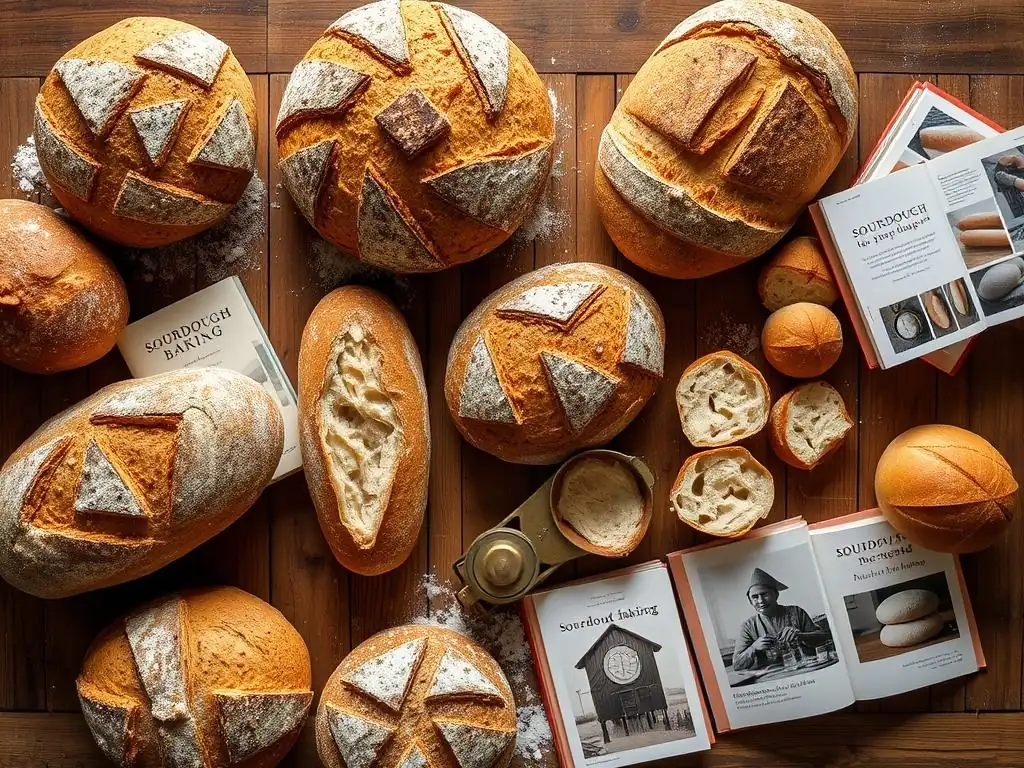
Welcome to BakeWithEase, where the delightful world of baking awaits you! Whether you're a novice eager to whip up your first loaf or an experienced baker aiming to perfect your sourdough skills, we’ve curated a treasure trove of resources just for you. In our latest article, "Our Top Picks: The Best Sourdough Baking Books," we dive deep into the essential reads that will elevate your baking game. Curious about which books can unlock the secrets of perfecting that crusty, flavorful loaf? Join us as we explore these must-have guides and empower your baking journey!
- Our Top Picks: The Best Sourdough Baking Books for Mastering the Art
- Finding the Best Sourdough Baking Books: A Comprehensive Review
-
Top Sourdough Baking Books Review: Our Expert Recommendations
- 1. Tartine Bread by Chad Robertson: A Sourdough Baking Bible
- 2. Sourdough: Recipes for Rustic Fermented Breads, Sweets, Savories, and More by Sarah Owens: A Beginner-Friendly Approach
- 3. The Perfect Loaf: The Craft and Science of Sourdough Breads, Pastries, and More by Maurizio Leo: A Deep Dive into Sourdough Science
- 4. Bread Baking for Beginners: The Easiest Way to Bake Kneaded, No-Knead, and Sourdough Breads by Bonnie Ohara: Simplifying the Sourdough Process
- 5. Flour Water Salt Yeast: The Fundamentals of Artisan Bread and Pizza by Ken Forkish: Mastering the Basics for Sourdough Success
- Comparing the Best Sourdough Bread Books: Which One is Right for You?
- Choosing the Right Sourdough Book: Factors to Consider
- Beyond the Books: Essential Sourdough Baking Tools and Resources
- Mastering Sourdough: Tips and Techniques from the Best Books
- Conclusion: Elevate Your Baking with the Best Sourdough Baking Books
-
Frequently Asked Questions
- What are the key criteria used to select the "Best Sourdough Baking Books"?
- Are the books recommended suitable for beginners with no prior sourdough experience?
- Do the books primarily focus on basic sourdough bread, or do they cover more advanced recipes?
- Are the ingredients called for in the recipes readily available in most grocery stores?
- How do these books differ from online sourdough baking resources like BakeWithEase.com?
- Final Reflection: The Ever-Rising Crust of Sourdough Knowledge
- Unleash Your Inner Baker: Sourdough Awaits!
Our Top Picks: The Best Sourdough Baking Books for Mastering the Art
Finding the Best Sourdough Baking Books: A Comprehensive Review
Why Choose Sourdough? The Benefits of Baking with a Starter
Baking with sourdough offers a truly unique experience and results compared to using commercial yeast. The slow fermentation process, driven by wild yeast and lactic acid bacteria present in a sourdough starter, develops incredibly complex flavors that are tangy, nuanced, and deeply satisfying. This fermentation also breaks down starches and gluten more effectively than quick yeast methods, often resulting in bread that is easier to digest for many people.
Furthermore, the characteristic chewy crumb and crisp, often blistered crust achieved through sourdough baking are highly sought after by bakers and bread enthusiasts alike. Many of the best sourdough baking books delve into the science behind these transformations, explaining how factors like fermentation time and temperature influence the final product.
Beyond the sensory delights, there are tangible benefits to embracing sourdough baking. The starter itself is a living ecosystem, and maintaining it fosters a connection to the ingredients and the process that goes beyond simply mixing flour and water. The beneficial bacteria in the starter contribute to the bread's nutritional profile, potentially increasing the bioavailability of certain vitamins and minerals and reducing phytic acid, which can inhibit nutrient absorption.
While the probiotic benefits in baked bread are debated due to high temperatures, the fermentation process itself transforms the grain. Finding the best sourdough baking books can guide you through nurturing your starter and understanding the science, making the journey both rewarding and educational. The satisfaction of pulling a perfectly baked, naturally leavened loaf from your oven is unparalleled.
Top Sourdough Baking Books Review: Our Expert Recommendations
1. Tartine Bread by Chad Robertson: A Sourdough Baking Bible
Features of Tartine Bread
Tartine Bread is often hailed as a foundational text in the modern sourdough movement. Authored by Chad Robertson of the famous Tartine Bakery in San Francisco, the book meticulously details his specific method for baking high-hydration sourdough loaves. It features comprehensive step-by-step photographs illustrating techniques like mixing, folding, shaping, and baking.
The initial chapters build a strong theoretical foundation before moving into detailed recipes, primarily focusing on his basic country loaf – a blend of white and whole wheat flour. The book's impact on home and professional bakers since its release in 2010 has been significant, popularizing techniques like the "stretch and fold" method and baking in a Dutch oven.
One of the defining features of Tartine Bread is its blend of precise instruction and emphasis on developing a baker's intuition. While providing detailed schedules and measurements, Robertson also encourages readers to learn to feel the dough and understand its behavior. The book includes recipes for variations on the basic loaf, as well as other baked goods like pizzas and pastries, though the core focus remains on the foundational sourdough loaf.
Its large format and stunning photography make it not just a cookbook but also a beautiful object, though some find the detailed, sometimes lengthy, descriptions challenging initially. It's certainly one of the most iconic sourdough baking books available.
Why Tartine Bread is Great for Intermediate Bakers
For bakers who have moved beyond their very first sourdough loaves and are comfortable maintaining a starter and handling basic dough, Tartine Bread offers the perfect next step. The techniques described, such as handling high-hydration doughs and achieving optimal fermentation, require a level of finesse and understanding that beginners might find overwhelming.
Intermediate bakers are typically ready to invest more time and attention into the process, and Robertson's detailed instructions provide a roadmap for refining existing skills and tackling more challenging aspects of sourdough, like managing bulk fermentation temperature or achieving consistent oven spring. It assumes some prior baking knowledge, making it less suitable as a first sourdough baking book for someone completely new.
This book excels at helping intermediate bakers understand the why behind the how. It goes beyond simple recipes to explain the principles of fermentation, dough development, and baking physics. By working through the Tartine method, bakers can gain a deeper appreciation for variables like ambient temperature, flour type, and starter activity, learning to adjust their process accordingly.
This level of understanding is crucial for consistently producing high-quality sourdough bread. While demanding, the rewards of mastering the techniques in this book are significant, often leading to a noticeable improvement in crumb structure, crust development, and flavor complexity, making it one of the most impactful sourdough baking books for those ready to deepen their craft.
Monetization Opportunity: Link to Tartine Bread on Amazon (Affiliate)
2. Sourdough: Recipes for Rustic Fermented Breads, Sweets, Savories, and More by Sarah Owens: A Beginner-Friendly Approach
Features of Sourdough by Sarah Owens
Sarah Owens' Sourdough stands out for its approachable style and broad range of recipes that extend far beyond basic bread. While it includes excellent instructions for rustic sourdough loaves, the book also explores using sourdough starter in a variety of other applications, from pastries like croissants and scones to savory items like pasta and crackers. Owens often incorporates whole grains and emphasizes simple, intuitive techniques, making the process feel less intimidating than some other comprehensive sourdough baking books. The book has a warm, inviting tone that encourages experimentation and connection with ingredients.
A key feature is the book's focus on seasonal ingredients and incorporating them into the sourdough process. Recipes often feature fruits, vegetables, and herbs, weaving them into both sweet and savory fermented creations. This provides a refreshing perspective on using sourdough starter daily, not just for the weekly bread bake.
The aesthetic of the book is beautiful, with photography that reflects a rustic, natural style. While the bread recipes are reliable and accessible, the variety of non-bread recipes truly sets this book apart, demonstrating the versatility of a well-maintained sourdough starter. This makes it a valuable addition to any baker's collection, particularly those looking to explore the full potential of sourdough.
Why Sourdough is Ideal for New Sourdough Bakers
For individuals just starting their sourdough journey, Sarah Owens' Sourdough offers a welcoming and less intimidating entry point. Unlike some dense, technique-heavy sourdough baking books, this book presents the process in a clear, encouraging manner. The recipes for basic loaves are designed to be accessible, often employing simpler folding or handling techniques than found in more advanced texts. Owens demystifies the process of maintaining a starter and using it effectively, focusing on building confidence through straightforward instructions and achievable results.
The sheer variety of recipes is a significant advantage for beginners. Maintaining a sourdough starter requires regular feeding, which produces "discard" or necessitates using the active starter frequently. This book provides numerous ways to use the starter in recipes beyond just bread – think pancakes, waffles, quick breads, and even desserts.
This encourages new bakers to use their starter consistently, helping them get familiar with its behavior and reducing waste, without requiring them to commit to baking a full loaf every few days. This practical approach makes learning sourdough less about mastering a single complex technique and more about integrating fermentation into everyday baking.
Monetization Opportunity: Link to Sourdough on Bookshop.org (Affiliate)
3. The Perfect Loaf: The Craft and Science of Sourdough Breads, Pastries, and More by Maurizio Leo: A Deep Dive into Sourdough Science
Features of The Perfect Loaf
Based on the highly respected blog of the same name, Maurizio Leo's The Perfect Loaf is a monumental work that blends scientific understanding with practical baking instruction. The book is renowned for its precision, offering detailed formulas, schedules, and explanations for every step of the sourdough process. Leo meticulously breaks down concepts like fermentation kinetics, dough hydration, and starter health, providing the reader with a deep understanding of the underlying science. It's organized logically, starting with foundational knowledge before moving into increasingly complex recipes. This scientific rigor sets it apart from many other sourdough baking books.
The Perfect Loaf covers an extensive range of recipes, from foundational country loaves and whole wheat breads to enriched doughs like brioche, bagels, pizza, and even pastries like croissants. Each recipe is presented with incredible detail, often including notes on potential issues, variations for different flours, and troubleshooting tips. The book is packed with useful charts and graphs, making it a valuable reference guide. Its comprehensive nature means it can serve as a single, in-depth resource for bakers looking to master a wide variety of sourdough applications, all grounded in a solid understanding of the science.
Why The Perfect Loaf Appeals to Experienced Bakers
Experienced sourdough bakers who have mastered the basics and are seeking to elevate their understanding and results will find The Perfect Loaf invaluable. The book's deep dive into the science of sourdough fermentation, enzyme activity, and gluten development provides the technical knowledge needed to truly troubleshoot and optimize the baking process. For bakers who meticulously track variables and want to understand the why behind every step, Leo's detailed explanations and precise formulas offer the level of depth they crave. This isn't just a recipe book; it's a technical manual for achieving mastery.
Furthermore, the challenging and diverse range of recipes appeals to seasoned bakers looking to expand their repertoire. Tackling sourdough croissants, panettone, or highly specialized bread formulas requires a solid foundation and a willingness to follow detailed instructions, which experienced bakers possess. The book's troubleshooting guides and discussions on adjusting for different flours or environmental conditions empower experienced bakers to adapt recipes and achieve consistent results even with complex bakes.
It provides the tools and knowledge to move beyond standard loaves and explore the full potential of sourdough in advanced baking applications. For those serious about understanding and perfecting sourdough, this is one of the best sourdough baking books to add to their collection.
Monetization Opportunity: Promote The Perfect Loaf with a discount code (Affiliate)
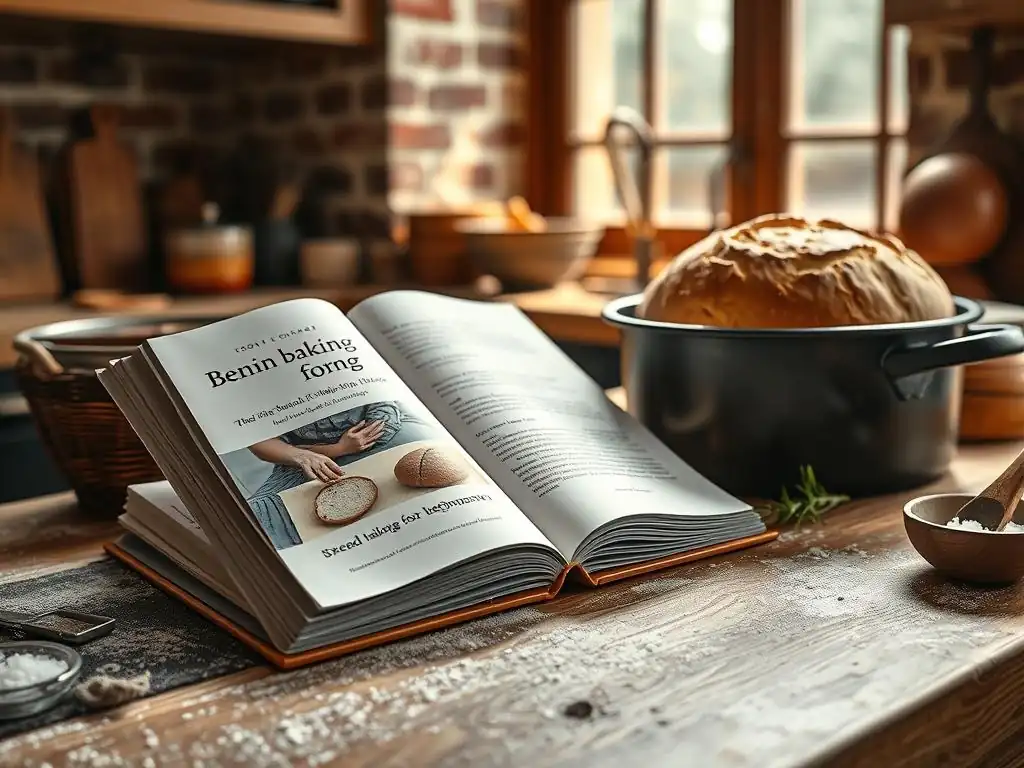
4. Bread Baking for Beginners: The Easiest Way to Bake Kneaded, No-Knead, and Sourdough Breads by Bonnie Ohara: Simplifying the Sourdough Process
Features of Bread Baking for Beginners
Bonnie Ohara's Bread Baking for Beginners is specifically designed to make the world of baking accessible to complete novices. While it covers various bread types, including kneaded and no-knead yeast breads, its inclusion of a simple, straightforward approach to sourdough is a key feature. The book breaks down the process into incredibly manageable steps, focusing on minimal equipment and basic techniques that don't require prior baking experience. The language is clear and encouraging, aiming to build confidence rather than overwhelm with technical jargon, making it a strong contender among sourdough baking books for those just starting out.
The book's format is geared towards ease of use for beginners. Instructions are typically concise and follow a logical flow, often accompanied by helpful illustrations or photographs. It emphasizes using standard kitchen equipment and readily available ingredients. The sourdough section introduces the concept of a starter and its maintenance in a simplified way, followed by recipes that are forgiving and designed to produce successful results early on. This focus on foundational success helps new bakers avoid common pitfalls and build the confidence needed to explore more complex recipes later.
Why Bread Baking for Beginners is Perfect for Those New to Baking
For someone who has never baked bread before, the idea of creating and maintaining a sourdough starter can feel incredibly daunting. Bread Baking for Beginners is specifically crafted to eliminate this intimidation factor. It introduces sourdough in a phased approach, often after covering simpler yeast breads, allowing beginners to gain basic baking competence first.
The sourdough instructions are stripped down to the essentials, focusing on the core steps needed to get a starter going and bake a basic loaf without requiring specialized knowledge or advanced techniques. It's designed to be a low-pressure introduction, unlike some comprehensive sourdough baking books that assume a certain level of kitchen comfort.
The book's overall structure, which includes various bread types, provides flexibility for the absolute beginner. They can start with a simple no-knead yeast bread to get comfortable with mixing, proofing, and baking in an oven, then transition to the sourdough section once they feel ready. Alternatively, they can dive straight into the sourdough recipes, confident that the instructions are tailored for someone with no prior experience.
The focus is on achieving tangible results quickly, which is crucial for keeping new bakers motivated. It's truly one of the best sourdough baking books if your primary goal is a gentle, successful introduction to the craft.
Monetization Opportunity: Bundle Bread Baking for Beginners with a Sourdough Starter Kit (Affiliate)
5. Flour Water Salt Yeast: The Fundamentals of Artisan Bread and Pizza by Ken Forkish: Mastering the Basics for Sourdough Success
Features of Flour Water Salt Yeast
Ken Forkish's Flour Water Salt Yeast (FWSY) is a critically acclaimed book that emphasizes the power of simple ingredients and long fermentation to achieve incredible flavor and texture in bread. While it covers both commercial yeast and sourdough methods, its foundational principles and detailed schedules are highly applicable to sourdough baking. The book is structured around different dough types and fermentation times, guiding the baker through processes that can take hours or even days.
It champions minimal kneading and using time and temperature to develop dough strength and flavor, a philosophy that resonates strongly with sourdough techniques. It's considered a fundamental text among artisan bread baking books.
FWSY provides extremely detailed schedules and instructions for each recipe, often specifying target dough temperatures and proofing times down to the hour. This precision helps bakers understand how fermentation progresses and how different factors influence the final loaf. The book covers a range of breads, including various sourdough recipes, as well as pizzas. Forkish's emphasis on mastering a few core techniques and understanding the interaction of flour, water, salt, and yeast (or starter) provides a solid theoretical and practical foundation applicable to virtually all forms of bread baking, including more advanced sourdough.
Why Flour Water Salt Yeast Provides a Strong Foundation for Sourdough
Although Flour Water Salt Yeast isn't solely dedicated to sourdough, the principles it teaches are absolutely fundamental to achieving success with wild yeast. Forkish's detailed explanations of long fermentation, dough development through time rather than intensive kneading, and the critical role of temperature are directly applicable to managing sourdough starters and doughs. By working through the recipes in FWSY, particularly the yeast-based ones with long fermentation, bakers gain invaluable experience in understanding dough behavior over extended periods, which is essential for mastering sourdough. It builds the muscle memory and observational skills needed for sourdough baking.
For bakers who want to approach sourdough with a solid understanding of general bread science, FWSY is an excellent starting point or companion book. It demystifies concepts like autolyse, bulk fermentation, and proofing in a way that makes transitioning to pure sourdough formulas much easier.
The precision it instills in following schedules and understanding environmental factors directly benefits sourdough baking, where these elements are even more critical due to the variability of a live starter. Many bakers who start with FWSY find that their sourdough journey is smoother and more successful because they've built a strong foundation in artisan bread techniques, making it one of the best 'gateway' sourdough baking books available.
Monetization Opportunity: Link to Flour Water Salt Yeast and offer a free sourdough starter recipe (Lead Magnet for Email List - Potential Future Monetization)
Comparing the Best Sourdough Bread Books: Which One is Right for You?
Sourdough Baking Book Comparison Chart: Features, Skill Level, and Focus
Deciding on the absolute best sourdough baking book is highly personal, as the ideal choice depends heavily on your current skill level, baking goals, and preferred learning style. Some books excel at introducing the very basics, while others dive deep into the science or explore a vast array of recipes beyond simple loaves. To help you navigate these options and select the perfect guide for your sourdough journey, it's useful to compare their key features side-by-side.
A comparative look at the top contenders reveals distinct strengths. For instance, Bread Baking for Beginners or Sarah Owens' Sourdough might be highlighted for their accessibility and beginner-friendly approaches, ideal if you're just starting out. Tartine Bread stands out for those ready to tackle classic, high-hydration loaves and refine their technique.
If a deep understanding of the science is your goal, The Perfect Loaf would be the top pick, while Sarah Owens' book or The Perfect Loaf offer the most recipe variety beyond standard bread. Considering features like the level of detail, the types of recipes included, and the assumed skill level is crucial when choosing among the best sourdough baking books reviewed here.
Choosing the Right Sourdough Book: Factors to Consider
Understanding Your Baking Skill Level: Beginner, Intermediate, or Advanced
One of the most critical factors in selecting among the best sourdough baking books is an honest assessment of your current baking skill level. Are you an absolute beginner who has never touched a sourdough starter? Or perhaps you've successfully baked a few loaves and are ready to refine your technique?
Or are you an experienced baker looking to deeply understand the science and tackle complex pastries? Choosing a book that aligns with where you are in your journey is essential. A book that's too advanced can be frustrating, leading to failed bakes and discouragement, while a book that's too basic might not offer the challenge or depth you seek.
Different sourdough baking books are explicitly written with different skill levels in mind. Bread Baking for Beginners and Sarah Owens' Sourdough are excellent entry points for novices, offering gentle introductions and simpler techniques. Tartine Bread is widely considered suitable for intermediate bakers ready to commit to a specific, influential method.
Maurizio Leo's The Perfect Loaf, with its scientific rigor and complex recipes, is often best appreciated by experienced bakers looking for mastery. Identifying your current comfort level with dough handling, fermentation, and general baking principles will significantly narrow down the options and help you find a book that will be both educational and enjoyable.
Identifying Your Baking Goals: Crust, Crumb, Flavor Profile
What do you hope to achieve with your sourdough baking? Are you obsessed with attaining that perfect, airy, open crumb structure often seen on social media? Do you prioritize a deeply caramelized, crackling crust? Or is the complex, tangy flavor profile the most important aspect for you? Perhaps your goal is to use your starter in a variety of recipes beyond just loaves, like pastries or pizza. Your specific baking goals should heavily influence which sourdough baking books you consider, as different authors and books emphasize different outcomes or types of bakes.
Some of the best sourdough baking books are particularly strong in certain areas. Tartine Bread is renowned for its method that often yields a fantastic crust and a beautiful, moderately open crumb in its signature country loaf. The Perfect Loaf delves deeply into the science behind crumb structure and flavor development, offering precise methods for achieving specific textures and tastes, and also excels in covering a wide range of baked goods.
Sarah Owens' book is ideal if you want to explore the versatility of sourdough in sweets and savories alongside rustic bread. Clarifying what you want to get out of your baking will help you find a book whose focus aligns with your aspirations.
Budget Considerations: Price Range of Sourdough Baking Books
While investing in knowledge is always worthwhile, the cost of sourdough baking books can be a factor for some bakers. Comprehensive, hardcover books with extensive photography and detailed instructions often fall into the $30 to $50+ price range. Factors like the book's size, the quality of the paper and printing, and whether it's a well-known author or a niche publication can all influence the price. It's worth noting that the most highly-regarded sourdough baking books tend to be on the pricier side due to their depth and production quality.
For bakers on a tighter budget, there are ways to access valuable information. Checking your local library is an excellent option, as many popular baking books are available there. Purchasing used copies online or from local bookstores can also significantly reduce the cost. Some books might also be available in less expensive paperback or digital formats. While the initial cost might seem high, consider a good sourdough baking book an investment in your skills and enjoyment. The knowledge gained can save you money in the long run by reducing failed bakes and the need to buy artisanal bread.
Beyond the Books: Essential Sourdough Baking Tools and Resources
The Best Sourdough Starter Jars and Crocks
Monetization Opportunity: Review and recommend specific jars with affiliate links.
Recommended Baking Scales for Accurate Sourdough Recipes
Monetization Opportunity: Compare and contrast different baking scales with affiliate links.
The Best Dutch Ovens for Achieving a Perfect Sourdough Crust
Monetization Opportunity: Promote different Dutch oven brands and sizes with affiliate links.
Mastering Sourdough: Tips and Techniques from the Best Books
Sourdough Starter Maintenance: Feeding, Hydration, and Troubleshooting
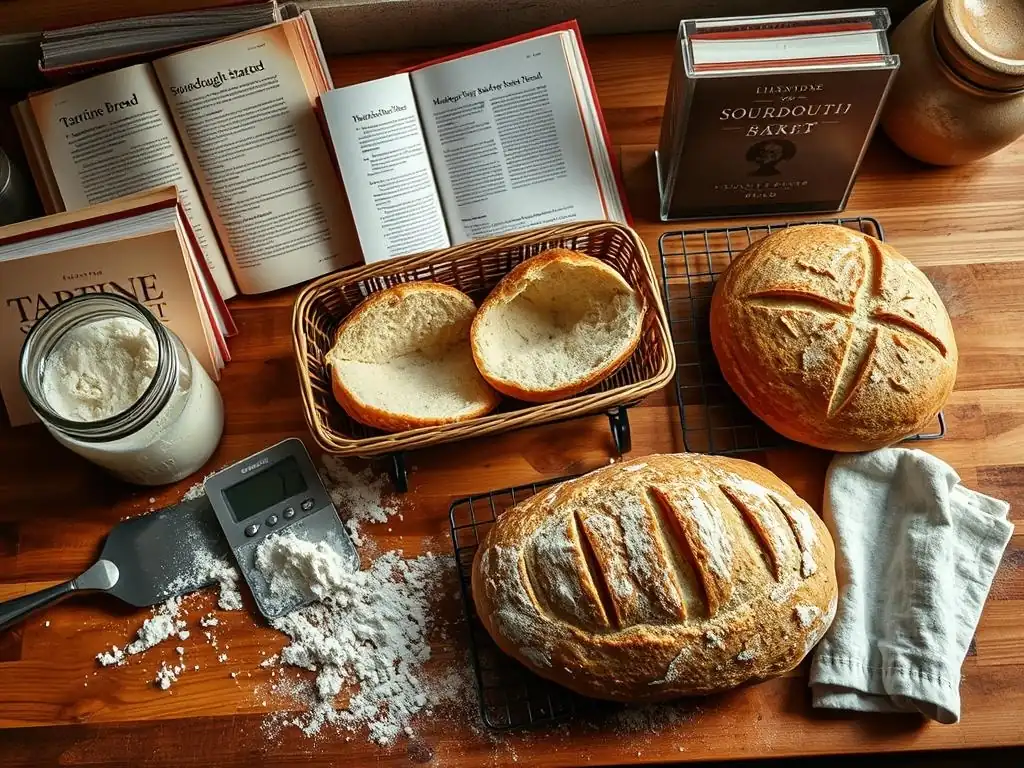
A vibrant, active sourdough starter is the heart of successful sourdough baking, and maintaining it properly is a recurring theme in all the best sourdough baking books. Consistent feeding is key, typically using a ratio of starter, flour, and water (like 1:1:1 by weight). Understanding your starter's hydration level – often 100% hydration, meaning equal parts flour and water by weight – is crucial for predicting its behavior.
A healthy starter should show visible signs of activity: forming bubbles, significantly increasing in volume after feeding, and eventually falling back down. Learning to recognize these signs, often called peak readiness, is fundamental.
Even with careful attention, you might encounter common starter issues, such as the separation of liquid ("hooch"), mold growth (a sign something is wrong), or a sluggish starter that doesn't rise well. Good sourdough baking books often provide troubleshooting guides for these problems. They also explain different storage methods, like keeping it at room temperature for frequent baking or refrigerating it for less frequent use, and how to revive it. Proper maintenance ensures your starter is strong enough to leaven your bread effectively and consistently.
Shaping Techniques for Sourdough Loaves: Boule, Batard, and More
Shaping is a critical step in the sourdough process, directly impacting the final structure, appearance, and oven spring of your loaf. The goal is to create tension on the surface of the dough while degassing it gently, forming a skin that will hold its shape during proofing and baking. Two of the most common shapes covered in sourdough baking books are the boule (a round loaf) and the batard (an oval loaf). Mastering these shapes requires practice and learning to handle the often-wet and extensible sourdough dough without tearing the gluten network.
Different sourdough baking books may illustrate slightly varied techniques for achieving these shapes, but the underlying principle of building surface tension remains consistent. Beyond the basic boule and batard, books might also include instructions for shaping pan loaves, rolls, or even more elaborate forms. Developing good shaping skills allows you to control the final form of your bread and contributes significantly to achieving that desirable open crumb and beautiful crust. Consistent practice, following the guidance in your chosen sourdough baking book, is the key to mastering this essential technique.
Baking Temperatures and Times for Perfect Sourdough
Achieving a perfect sourdough crust and maximizing oven spring typically requires baking at high temperatures, often ranging from 450°F to 500°F (230°C to 260°C). This initial burst of heat helps the dough expand rapidly before the crust sets. Many sourdough baking books recommend baking in a preheated Dutch oven or on a baking stone with steam, as trapping steam around the loaf in the initial baking phase keeps the crust soft, allowing for maximum expansion. The high heat also contributes to the desirable dark, caramelized crust.
Sourdough baking often involves a two-stage process: an initial period with the loaf covered (in a Dutch oven or with steam) to encourage oven spring, followed by baking uncovered to develop the crust color and finish cooking the interior. Total baking times vary depending on the size and shape of the loaf, but typically range from 30 to 50 minutes.
Good sourdough baking books provide specific temperature and time guidelines for each recipe, often including visual cues for doneness, such as internal temperature (around 200-210°F or 93-99°C) and crust color. Following these parameters carefully, as detailed in your chosen book, is crucial for a successful bake.
Conclusion: Elevate Your Baking with the Best Sourdough Baking Books
Your Path to Sourdough Mastery Starts Here.
Embarking on the journey of sourdough baking is a rewarding experience, and arming yourself with one of the best sourdough baking books is arguably the most effective way to ensure success and enjoyment. As we've explored, the ideal book for you depends on your starting point, whether you're a complete novice or looking to deepen your expertise. Each of the books reviewed offers unique strengths, from beginner-friendly simplicity and recipe variety to rigorous scientific depth and classic artisan techniques. Choosing the right guide can demystify the process and help you consistently bake beautiful, flavorful loaves.
Don't let the perceived complexity of sourdough deter you. With a good sourdough baking book in hand, alongside a healthy starter and basic tools, mastering this ancient craft is well within reach. Select a book that resonates with your learning style and baking aspirations, commit to practicing the techniques, and enjoy the process of creating something truly special from just flour, water, salt, and your starter.
The knowledge and inspiration found within these pages will undoubtedly elevate your baking and open up a world of delicious possibilities. Your path to sourdough mastery begins the moment you open the right book and start baking.
Frequently Asked Questions
What are the key criteria used to select the "Best Sourdough Baking Books"?
We focused on books with clear instructions, reliable recipes, and comprehensive information covering all aspects of sourdough baking, from starter creation to advanced techniques.
Are the books recommended suitable for beginners with no prior sourdough experience?
Yes, many of the books reviewed include beginner-friendly sections that explain the basics of sourdough baking, such as creating and maintaining a starter.
Do the books primarily focus on basic sourdough bread, or do they cover more advanced recipes?
The selected books offer a range of recipes, from classic sourdough loaves to more complex creations like sourdough pastries and pizzas, catering to various skill levels.
Are the ingredients called for in the recipes readily available in most grocery stores?
The books generally utilize common ingredients, making sourdough baking accessible. Some recipes might require specialized flours, but alternatives are often suggested.
How do these books differ from online sourdough baking resources like BakeWithEase.com?
While websites like BakeWithEase.com offer quick tips and recipes, books provide a more in-depth and structured learning experience, often including extensive background information and troubleshooting advice.
Final Reflection: The Ever-Rising Crust of Sourdough Knowledge
The pursuit of the perfect sourdough loaf is a journey, not a destination, and the right guide can make all the difference. This exploration of the best sourdough baking books highlights the incredible diversity of approaches and expertise available to home bakers, from beginner-friendly introductions to advanced techniques for seasoned professionals. The sheer volume of excellent resources available underscores the enduring popularity and captivating complexity of sourdough baking.
The impact of these books extends beyond simply improving baking skills; they foster a connection to a centuries-old tradition, a mindful practice that connects us to the natural world through fermentation and the simple act of creating something delicious from scratch. Bread is the staff of life,
they say, and in the case of sourdough, that staff is imbued with a unique character, shaped by time, patience, and the careful guidance found within the pages of these carefully selected books. The community built around sourdough, fostered by these shared resources, is a testament to the power of shared passion and the enduring appeal of this ancient craft.
Now, it's your turn. Which book resonates most with your baking style and aspirations? Don't be afraid to experiment, to embrace the inevitable failures, and to learn from each loaf, each rise, each perfectly browned crust. The journey of sourdough baking is a rewarding one, filled with the satisfaction of creating something truly special, and the right book can be your invaluable companion along the way. So, grab your starter, choose your guide, and let the baking begin!
Unleash Your Inner Baker: Sourdough Awaits!
Thanks for joining us on this sourdough journey! We hope you've discovered some incredible resources to help you bake amazing loaves. Now it's time to put that knowledge to work!
- Dive into your favorite book: Which recipe are you most excited to try first? Get those hands floury and start baking!
- Share your sourdough story: Tell us (and others!) about your baking adventures on social media! Use #BakeWithEaseSourdough to connect with our community.
- Explore other BakeWithEase articles: Discover more baking tips, tricks, and recipes to expand your culinary skills.
Ready to transform your kitchen into a sourdough haven? What's the first step you'll take today?