
Secrets to Perfect Royal Icing: Online Decorating Courses for Cookies

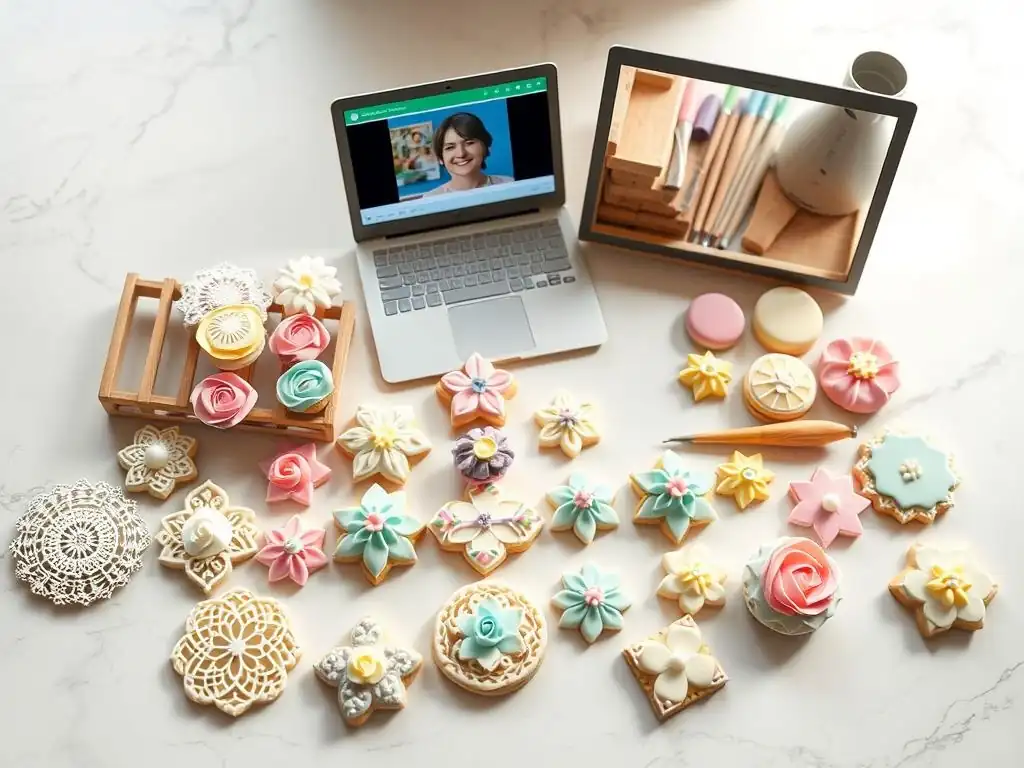
Welcome to BakeWithEase, your trusted guide to baking brilliance! Ever wondered how professional bakers achieve those flawlessly decorated cookies? Unlock the secrets with our article on Royal Icing Decorating Courses and transform your baking into edible art. Discover expert techniques, step-by-step tutorials, and the inside scoop on the best online resources to elevate your cookie decorating skills. Ready to create stunning designs that will impress everyone? Let's get started!
- Mastering Royal Icing: Your Guide to the Best Online Decorating Courses
- Top Royal Icing Decorating Courses Online: Our Expert Picks
-
Comparing Royal Icing Decorating Courses: Which One is Right for You?
- Beginner-Friendly Options: Cookie Decorating with Royal Icing - Beginner to Advanced vs. Holiday Cookie Decorating with Royal Icing
- Advanced Technique Training: The Ultimate Guide to Royal Icing Flowers & Decorations vs. Cookie Decorating with Royal Icing - Beginner to Advanced
- Budget-Friendly Royal Icing Courses: Options Under
- Essential Royal Icing Supplies and Tools (Affiliate Opportunities)
- Royal Icing Troubleshooting: Common Problems and How to Fix Them (Plus Recommended Tools)
- Take Your Cookie Decorating to the Next Level with Royal Icing Courses
-
Frequently Asked Questions
- What are Royal Icing decorating courses, and why should I take one?
- What skill level is required to take a Royal Icing decorating course?
- What tools and ingredients do I need to participate in a Royal Icing decorating course?
- How do online Royal Icing decorating courses differ from traditional in-person classes?
- Can I really improve my cookie decorating skills by taking an online Royal Icing decorating course?
- Final Reflection: Mastering the Art of Royal Icing
- Unleash Your Inner Royal Icing Artist!
Mastering Royal Icing: Your Guide to the Best Online Decorating Courses
Diving into the world of cookie decorating opens up a universe of creative possibilities, and at the heart of many stunning designs lies royal icing. This versatile medium allows for intricate details, smooth flooding, and vibrant colors, transforming a simple cookie into a miniature work of art. While mastering royal icing can seem daunting, especially achieving the right consistency and technique, the good news is that expert guidance is readily available.
Online royal icing decorating courses offer a flexible and accessible way to acquire these valuable skills, right from the comfort of your own kitchen. Whether you dream of perfect polka dots, delicate floral patterns, or smooth, glossy surfaces, finding the right instruction is the first step on your journey to becoming a royal icing pro.
Navigating the options for online baking courses can feel overwhelming, but focusing specifically on royal icing decorating courses helps narrow the field. These specialized programs cater directly to the techniques and nuances required for working with this unique icing.
They typically cover everything from mixing the perfect batch and achieving various consistencies (like outline, flood, and detail) to essential piping techniques, color mixing, and troubleshooting common issues. By investing in a structured online course, you gain access to step-by-step video tutorials, expert tips, and often downloadable resources that accelerate your learning curve significantly compared to trying to piece together information from various sources online.
Royal icing is arguably the most popular choice for professionally decorated sugar cookies due to its ability to dry hard and smooth, creating a durable, paintable surface. This unique characteristic allows for layering designs, adding fine details, and packaging decorated cookies without smudging the artwork. Developing strong royal icing skills is fundamental for anyone serious about cookie decorating, whether for personal enjoyment, gifting, or starting a small business. Without a solid understanding of consistency control, proper piping pressure, and drying techniques, achieving clean lines, even flooding, and preventing common problems like craters can be challenging.
Consider the popular trend of creating intricate holiday cookies or personalized wedding favors. These designs demand precision and consistency, qualities that are directly tied to your proficiency with royal icing. For instance, achieving a smooth, flawless flooded surface on a cookie requires knowing exactly what "15-second icing" looks and acts like – meaning it takes about 15 seconds for a line of icing dropped back onto itself to disappear.
Mastering these specific consistencies and techniques is what separates a good-looking cookie from a truly professional-looking one. Online royal icing decorating courses break down these concepts into manageable lessons, often demonstrating techniques up close with clear visuals, making complex skills much easier to grasp than relying solely on written instructions.
What to Look for in a Royal Icing Decorating Course
When choosing an online royal icing decorating course, several factors are crucial to ensure you find the best fit for your learning style and goals. First and foremost, consider your current skill level. Are you a complete beginner who needs to learn the basics of mixing and flooding, or are you an experienced decorator looking to master advanced techniques like pressure piping, brush embroidery, or creating delicate royal icing flowers?
Courses are often explicitly marketed for beginners, intermediate, or advanced students, or sometimes cover a range of levels. Look for a course description that clearly outlines the prerequisites and the skills you will learn.
Secondly, evaluate the course content and structure. A comprehensive course should cover essential topics such as ingredients, mixing methods, achieving different consistencies (outline, flood, medium, stiff), coloring icing effectively, basic piping techniques, flooding techniques (including wet-on-wet and wet-on-dry), drying methods, and troubleshooting common issues like bleeding colors or craters. The instructor's teaching style is also important – watch preview videos if available to see if their approach resonates with you.
Look for clear, well-lit video demonstrations, easy-to-follow instructions, and potentially downloadable resources like recipes, consistency guides, and practice sheets. Some of the best royal icing decorating courses also offer community forums or Q&A sessions, which can be invaluable for getting help and feedback as you learn.
Top Royal Icing Decorating Courses Online: Our Expert Picks

Finding the perfect online royal icing course can significantly accelerate your journey from novice to skilled decorator. Based on comprehensive content, clear instruction, and positive feedback within the baking community, several courses stand out. These courses cater to different skill levels and interests, ensuring there's an option for everyone looking to improve their cookie decorating with royal icing. Our selection highlights courses that offer practical, actionable techniques demonstrated by experienced instructors, providing a solid foundation or helping you build upon existing skills.
Whether you're aiming for simple, elegant designs or complex, multi-layered cookie art, investing in structured learning through one of these top royal icing decorating courses can make all the difference. We've evaluated these options based on their curriculum depth, teaching quality, and overall value, focusing on how well they equip students with the practical knowledge needed to confidently work with royal icing. Read on to discover our expert picks and find the course that will help you unlock your full cookie decorating potential.
This comprehensive online course is designed as a complete journey through royal icing, starting with foundational knowledge and progressing to more complex techniques. It's structured to build skills incrementally, making it suitable for someone who has never touched a piping bag as well as those with some experience looking to refine their methods. The course typically includes dozens of lessons, often totaling over 5 hours of video content, covering everything from making royal icing from scratch to advanced piping and layering techniques.
The curriculum often begins with understanding ingredients like meringue powder or egg whites and powdered sugar, moving through achieving different consistencies for outlining, flooding, and detailing. Students learn essential piping control, how to color icing vibrantly without affecting consistency, and techniques for smooth flooding. Later modules might cover wet-on-wet designs, simple flowers, adding sprinkles or edible glitter, and basic troubleshooting. This broad scope ensures that students gain a well-rounded understanding of royal icing applications on cookies.
Key Features of Cookie Decorating with Royal Icing - Beginner to Advanced
A standout feature of this type of course is its step-by-step approach, breaking down complex processes into manageable steps. For example, a lesson on flooding might show multiple cookie shapes and demonstrate how to outline and fill each one efficiently, emphasizing techniques to avoid air bubbles. The course often provides downloadable resources, such as recipes for different icing types (e.g., one using meringue powder, another using royal icing mix), consistency guides with visual examples or timing tests (like the 10-second rule for flood consistency), and practice sheets for piping control exercises.
Another key feature is the emphasis on practical application through guided projects. Students typically work on decorating several cookies throughout the course, applying the techniques learned in each module. This hands-on practice, guided by the instructor, reinforces the lessons and helps build confidence. Some courses offer access to a student community or Q&A section where learners can share their progress, ask questions, and get feedback from the instructor or fellow students. This interactive element can be incredibly valuable for troubleshooting specific issues encountered during practice.
Benefits of Taking Cookie Decorating with Royal Icing - Beginner to Advanced
The primary benefit of enrolling in a comprehensive beginner-to-advanced royal icing course is gaining a strong, structured foundation in cookie decorating. Instead of trying to piece together information from various sources, you receive a cohesive curriculum developed by an experienced decorator. This systematic approach ensures you don't miss critical steps or foundational knowledge. For instance, understanding the difference between outline and flood consistency is fundamental, and a good course will explain why these differences matter and how to achieve them reliably.
Furthermore, learning from an expert often means gaining insights into best practices and common pitfalls to avoid. Instructors share tips on everything from preventing color bleed (e.g., letting dark colors dry longer before adding light colors) to achieving a smooth, glossy finish (e.g., using a fan while drying). This kind of practical advice, honed through years of experience, saves you countless hours of trial and error. Completing such a course equips you with the confidence and skills to tackle a wide range of cookie designs, moving beyond simple patterns to more complex creations.
Pricing and Subscription Options for Cookie Decorating with Royal Icing - Beginner to Advanced
Pricing for comprehensive online royal icing decorating courses like this can vary widely depending on the platform and the instructor. Standalone courses might be priced anywhere from $30 to $100 or more for lifetime access. Platforms that offer subscription models, such as Skillshare or Udemy, might include this course as part of a monthly or annual fee, which could range from $15 to $40 per month, offering access to this and many other creative courses. Some instructors offer their courses through their own websites, potentially with different pricing tiers or bundle options.
It's worth checking if the course offers a preview or a free trial period, which allows you to gauge the teaching style and production quality before committing financially. Look for platforms that offer a money-back guarantee if you're not satisfied. While the initial cost might seem like an investment, consider the value of structured learning and expert guidance compared to the cost of wasted ingredients and frustration from trying to figure things out on your own. Many students find that the skills gained quickly justify the expense, whether they are decorating for fun or aiming to sell their cookies.
Who is Cookie Decorating with Royal Icing - Beginner to Advanced Best For?
This type of comprehensive course is ideal for several types of learners. It's perfect for the absolute beginner who is excited about cookie decorating but feels intimidated by royal icing. The step-by-step progression from basics to more advanced techniques provides a clear path to mastery. Someone who has tried royal icing before but struggled with consistency, piping control, or common problems like craters would also benefit greatly, as the course likely addresses these issues in detail.
Furthermore, this course is suitable for intermediate decorators looking to fill gaps in their knowledge or refine their techniques. While it starts with basics, the advanced modules can introduce new methods or provide deeper insights into achieving professional results. Hobbyist bakers who want to elevate their cookie game for gifts or special occasions will find the skills learned invaluable. Essentially, anyone seeking a structured, thorough education in royal icing for cookie decorating, regardless of their starting point, would find this course highly beneficial.
Course 2: The Ultimate Guide to Royal Icing Flowers & Decorations
Stepping into the realm of advanced royal icing techniques opens up possibilities for breathtaking cookie artistry. Courses titled "The Ultimate Guide to Royal Icing Flowers & Decorations" are typically tailored for decorators who have a solid grasp of basic royal icing consistency and piping control and are ready to tackle more intricate designs.
These courses often focus on creating dimensional elements and complex textures that elevate cookies from flat designs to sculptural pieces. The curriculum delves into techniques like pressure piping, creating various types of royal icing flowers (roses, leaves, blossoms), brush embroidery, stenciling with royal icing, and working with very stiff icing consistencies for structural elements.
Such a course might involve several detailed modules, each dedicated to a specific advanced technique. For instance, a module on royal icing flowers could show how to pipe different petal shapes using various tips, assemble multi-petal flowers, and color them realistically. A section on pressure piping might demonstrate how to create intricate lattice work, basketweave patterns, or delicate filigree. The depth of instruction goes beyond simple outlines and flooding, requiring a higher level of dexterity and understanding of icing properties at different stiffnesses.
Mastering Complex Designs with The Ultimate Guide to Royal Icing Flowers & Decorations
The core focus of this type of course is enabling students to execute complex and visually stunning designs. This includes learning how to plan multi-layered decorations, manage drying times between layers to prevent damage, and combine different techniques on a single cookie. For example, a lesson might demonstrate how to flood a background layer, wait for it to dry completely (which can take 12-24 hours depending on humidity), then add intricate pressure-piped details on top, followed by delicate brush embroidery on another section.
Mastery in this context means achieving clean, sharp lines with stiff icing, creating realistic-looking petals with subtle shading, and executing techniques like brush embroidery smoothly without lifting the icing. The course guides students through these processes step-by-step, often providing close-up views of the piping action and explaining the nuances of hand pressure and tip angle. Successful completion of this type of advanced royal icing decorating course means you can confidently create cookies that look like they belong in a high-end bakery display.
Learning Advanced Piping Skills: Pressure Piping, Brush Embroidery, and More
Advanced online royal icing courses place a strong emphasis on refining piping skills beyond basic outlines and fills. Pressure piping, for instance, is a technique where the amount of pressure applied to the piping bag dictates the thickness and flow of the icing, allowing for continuous lines that can form intricate patterns like lattices, scrolls, and even written text with fine tips (like a PME #1.5 or Wilton #1). The course would provide extensive practice exercises and demonstrations specifically for developing consistent pressure control.
Brush embroidery is another key advanced skill often taught. This technique involves piping a line or shape of icing and then using a damp brush to pull and feather the edges, creating a soft, embroidered look. Mastering this requires controlling the amount of icing piped, the dampness of the brush, and the direction of the stroke. Other advanced skills might include creating dimensional elements like leaves, berries, or complex borders using specific tips and icing consistencies, or using stencils with thick royal icing for raised patterns.
Materials and Equipment Recommended in The Ultimate Guide to Royal Icing Flowers & Decorations
While basic royal icing requires powdered sugar, meringue powder (or egg whites), and water, advanced techniques often call for specific tools and materials. An advanced course on royal icing flowers and decorations would typically recommend a wider array of piping tips, including various petal tips (like Wilton #101, #102, #104), leaf tips (like Wilton #352), round tips in very small sizes (like Wilton #1, #2, PME #0, #1.5), and specialty tips for specific borders. It might also recommend different sizes of couplers for easy tip changes.
Other recommended materials often include fine-tipped brushes specifically for brush embroidery, scribe tools or toothpicks for manipulating icing, various food coloring gels or pastes for achieving vibrant and subtle shades, and potentially specialized drying equipment like a small fan or dehydrator to speed up drying times and prevent craters, especially for large flooded areas or dimensional pieces. While a course won't sell these items directly (due to the 'no links' constraint), it will provide detailed descriptions and usage instructions, guiding you on what to look for when purchasing your supplies.
Is The Ultimate Guide to Royal Icing Flowers & Decorations Worth the Investment? (For Experienced Decorators)
For experienced cookie decorators who have already mastered the fundamentals of royal icing and are looking to expand their repertoire with complex, visually striking techniques, an advanced course like this is generally a worthwhile investment. The cost, which could range from $50 to over $150 depending on depth and instructor prestige, grants access to specialized knowledge and detailed demonstrations that are difficult to replicate through casual online searching.
The value lies in the structured learning path for advanced skills. Instead of spending hours experimenting and potentially wasting ingredients trying to perfect a pressure-piped lattice or a realistic royal icing rose, the course provides clear instruction, troubleshooting tips specific to these techniques, and practice exercises. For those who plan to sell decorated cookies or create elaborate pieces for special events, mastering these advanced skills can significantly increase the perceived value and complexity of their work, potentially allowing them to charge more for their creations. It's an investment in skill development that can pay dividends.
Focused online courses like "Holiday Cookie Decorating with Royal Icing" offer a fantastic way to apply royal icing skills within a specific, popular theme. These courses often combine fundamental royal icing techniques with creative designs tailored to holidays such as Christmas, Halloween, Easter, or Valentine's Day. They are excellent for seasonal decorators or those looking for specific design inspiration and guidance for popular cookie occasions.
The curriculum typically covers making and coloring royal icing, achieving appropriate consistencies, and basic piping and flooding, but quickly moves into demonstrating designs relevant to the chosen holiday. For a Christmas course, this might include decorating gingerbread men, snowflakes, ornaments, or Santa shapes using techniques like wet-on-wet for swirls, layering for dimension, and adding details with stiff icing. The emphasis is on creating festive, appealing cookies that are perfect for gifting or holiday parties.
Focus on Holiday Cookie Decorating
The primary benefit of a holiday-themed royal icing course is the specific, timely project focus. Instead of generic shapes, you work with cutters and designs that are immediately applicable to an upcoming celebration. This makes the learning process highly engaging and provides clear, tangible results – a batch of beautifully decorated cookies ready for the holiday season. The course often provides templates or guides for the specific cookie shapes used, making it easy to follow along.
Instructors in these courses often share tips specific to holiday decorating, such as how to create realistic-looking gingerbread texture with icing, achieving vibrant holiday colors (like deep reds and greens), or incorporating festive elements like edible glitter, sprinkles, or candy pieces effectively. The projects are designed to be achievable within a reasonable timeframe, making these courses perfect for busy bakers preparing for a specific event or season.
Royal Icing for Wedding and Celebration Cookies
While specifically titled "Holiday," the techniques taught in such a course often translate well to other celebration cookies, including those for weddings, birthdays, or baby showers. The core skills of outlining, flooding, layering, and adding details are universal. For example, learning to create delicate details on a Christmas ornament using fine tips is directly applicable to adding monograms or intricate patterns on a wedding favor cookie.
Many holiday courses also touch upon color palette selection and design planning, skills crucial for any themed cookie set, including those for weddings or other significant events. Learning how to create a cohesive look across a set of cookies for Christmas, for instance, prepares you to plan a coordinated collection for a wedding reception or a birthday party. The focus on specific themes helps refine your ability to adapt techniques to different shapes and design requirements.
Learning to Customize Colors and Flavors with Holiday Cookie Decorating with Royal Icing
A key aspect of holiday cookie decorating, and often covered in these courses, is mastering color mixing to match specific themes or aesthetics. While basic courses cover coloring, holiday courses often delve into creating specific shades like cranberry red, forest green, or icy blue. Instructors might demonstrate how to use different types of food coloring (gels, pastes, powders) to achieve desired hues and intensities without negatively impacting the icing consistency.
Some courses also touch upon flavoring royal icing, although less common than coloring. While vanilla or almond extract are standard, a holiday course might suggest adding a touch of peppermint extract for candy cane designs or ginger for gingerbread cookies, explaining how flavor extracts can affect consistency and how to adjust accordingly. This customization aspect allows decorators to create truly unique and delicious themed cookies.
Who Benefits Most from Holiday Cookie Decorating with Royal Icing's Themed Approach?
This type of themed course is particularly beneficial for hobbyist bakers who primarily decorate cookies for specific events or seasons. If your main goal is to create stunning cookies for Christmas gifts, Halloween parties, or Easter baskets, a course focused on these themes provides immediate, relevant instruction and inspiration. It's also great for beginners who want a fun, project-based way to learn royal icing basics, as the holiday theme adds an extra layer of motivation.
Someone looking to sell cookies seasonally could also benefit, as the course provides ready-to-use design ideas and techniques for high-demand periods. While it might not offer the same comprehensive foundational knowledge as a beginner-to-advanced course, its targeted approach makes it highly effective for achieving proficiency in specific, popular cookie decorating styles. It's less about mastering every single royal icing technique and more about applying core skills to create beautiful, themed cookie sets.
Comparing Royal Icing Decorating Courses: Which One is Right for You?
Choosing the right online royal icing course depends heavily on your current skill level, learning goals, and budget. Comparing courses based on these factors helps you make an informed decision and find the best fit for your needs. Think about what you want to achieve: Are you starting from scratch and need a complete overview? Do you have the basics down but want to specialize in intricate details? Or are you looking for inspiration and guidance for a specific type of cookie project, like holiday designs?
Consider the structure and content of each course. Look at the syllabus or course outline if available and compare the topics covered. Does it include troubleshooting? Are there practice exercises? Is there community support? By evaluating these elements side-by-side, you can determine which course aligns best with your learning objectives and provides the resources you need to succeed in mastering royal icing for cookie decorating.
For someone new to royal icing, both a comprehensive "Beginner to Advanced" course and a "Holiday" themed course can serve as entry points, but they cater to slightly different learning preferences. The "Beginner to Advanced" course offers a systematic, foundational approach. It typically spends more time on the absolute basics: mixing icing from scratch, understanding the science behind consistency, basic piping control exercises, and flooding techniques across various shapes. It aims to build a strong, general skill set applicable to any cookie design.
The "Holiday" course, while often covering basics like mixing and flooding, is more project-driven. It teaches techniques in the context of decorating specific holiday shapes (e.g., applying wet-on-wet swirls on a Christmas tree cookie, outlining a gingerbread man). It's excellent for hands-on learners who are motivated by completing specific, themed projects. If you want a broad understanding of all royal icing applications, the comprehensive course is better. If you want to learn enough to make beautiful cookies for upcoming holidays and are happy learning techniques as they apply to specific designs, the holiday course is a great choice.
For decorators looking to push their skills beyond basic outlining and flooding, the choice between an advanced-focused course and the later modules of a comprehensive beginner-to-advanced course depends on the desired depth of specialization. A course specifically titled "The Ultimate Guide to Royal Icing Flowers & Decorations" is designed for deep dives into complex techniques like pressure piping, brush embroidery, and creating intricate flowers. It assumes you already have solid basic skills and dedicates significant time and detailed instruction to these advanced methods. You'll likely learn multiple ways to pipe a rose or create various types of leaves.
A "Beginner to Advanced" course will cover some advanced techniques in its later sections, but typically not with the same level of detail or breadth as a specialized advanced course. It might introduce concepts like simple brush embroidery or basic dimensional elements, but won't provide the extensive practice and variations found in a course dedicated solely to these skills.
If your goal is to become an expert in a specific advanced area, like creating realistic royal icing florals, the specialized course is the better investment. If you want a taste of advanced techniques as part of a broader skill set, the comprehensive course might suffice.
Budget-Friendly Royal Icing Courses: Options Under $50
Finding affordable online royal icing decorating courses is definitely possible, especially if you know where to look. Many platforms offer courses priced under $50, sometimes even under $30, particularly for shorter, topic-specific tutorials or introductory classes. Platforms with subscription models can also be budget-friendly if you plan to take multiple courses, as a monthly fee might grant access to a large library including several royal icing options.
When considering budget-friendly courses, look closely at the course length and the specific topics covered. A course under $50 might focus on just one or two key areas, like mastering flood consistency or basic piping shapes. While it might not be a complete guide, it can be a great way to learn a specific skill or get started without a large financial commitment. Read reviews from other students to gauge the quality and value offered at a lower price point. Sometimes, shorter, focused courses by reputable instructors can be more valuable than lengthy, but poorly produced, content.
Essential Royal Icing Supplies and Tools (Affiliate Opportunities)

Having the right tools and ingredients is just as crucial as mastering the techniques when it comes to achieving perfect royal icing decorated cookies. While online royal icing decorating courses teach you the how, they also guide you on the what – which supplies will help you get the best results. Stocking your kitchen with quality ingredients and appropriate tools will make the process smoother and your final cookies look more professional.
From the base ingredients for the icing itself to the tools you use for application and decoration, each item plays a role. Understanding the purpose of different supplies and choosing wisely can significantly impact your success and enjoyment in working with royal icing. While we can't provide direct links here, knowing what to look for is key.
The Best Royal Icing Sugar Powders for Smooth Consistency
The foundation of great royal icing is high-quality powdered sugar (also known as confectioners' sugar or icing sugar). For the smoothest consistency, look for powdered sugar that is finely milled and contains anti-caking agents, usually cornstarch. Some brands are known for being lumpier than others, which can lead to clogged piping tips and a grainy texture in your dried icing.
While any brand of powdered sugar can be used, some experienced decorators swear by specific brands available in their region for their consistent fine texture. Sifting your powdered sugar before mixing your royal icing is always a good practice, regardless of the brand, to remove any potential clumps and ensure a silky-smooth icing base. Using a high-quality powdered sugar helps in achieving stable consistencies for both outlining and flooding.
Food Coloring Gels and Pastes for Vibrant Royal Icing Designs
To achieve vibrant, true-to-color royal icing without thinning it out, food coloring gels or pastes are essential. Unlike liquid food coloring, gels and pastes are highly concentrated, meaning you only need a small amount to achieve intense colors. This is crucial because adding too much liquid can disrupt the delicate balance of your royal icing consistency.
Popular brands of gel food coloring are widely available and offer a vast spectrum of colors. Look for sets that include primary colors (red, blue, yellow) plus black and white, allowing you to mix almost any shade. Adding color a little at a time and mixing thoroughly is key to achieving the desired hue. Remember that royal icing colors can deepen slightly as they dry, so it's often best to mix to a shade slightly lighter than your target color.
Piping Bags and Tips: Choosing the Right Tools for the Job
Piping bags and tips are your primary tools for applying royal icing. Disposable piping bags are convenient for easy cleanup, while reusable bags are an eco-friendly option. You'll want bags in various sizes, typically 10-inch or 12-inch, depending on the amount of icing you're working with. For detailed work or multiple colors, smaller bags are often easier to handle.
Piping tips come in countless shapes and sizes, each creating a different effect. For royal icing, essential tips include small round tips (sizes #1 to #3) for outlining and fine details, medium round tips (sizes #4 to #6) for thicker lines or dots, and sometimes larger round tips for flooding large areas if not using a squeeze bottle. Specialty tips like small star tips or petal tips are needed for specific designs like borders or flowers. Using a coupler allows you to switch tips on the same bag of icing, which is incredibly useful.
Beyond bags and tips, several other tools are indispensable for royal icing decorating. A scribe tool (a needle mounted in a handle) or even a simple toothpick is crucial for manipulating flooded icing – popping air bubbles, nudging icing into corners, and creating wet-on-wet designs by dragging through wet icing. Having several on hand is always a good idea.
Stencils can be used to add patterns or images to cookies with royal icing, either by spreading a thick consistency icing over the stencil or airbrushing thinned icing. Offset spatulas in small sizes are helpful for spreading icing evenly over cookies or for the stencil technique. A turntable makes decorating easier by allowing you to rotate the cookie smoothly. Finally, a fan is highly recommended for speeding up drying time and promoting a smooth, shiny finish while minimizing craters.
Royal Icing Troubleshooting: Common Problems and How to Fix Them (Plus Recommended Tools)

Working with royal icing can sometimes present challenges, even with the best techniques. Understanding common problems and knowing how to fix them is a vital part of mastering this medium. Many issues relate to icing consistency or drying conditions, but with a few simple adjustments and the right tools, you can overcome most hurdles.
Don't get discouraged if your first few batches or decorating attempts aren't perfect. Troubleshooting is a normal part of the learning process. By identifying the root cause of the problem and applying the correct solution, you'll gain valuable experience and achieve better results on subsequent batches. Many online royal icing decorating courses include dedicated troubleshooting sections, which are incredibly helpful resources.
Royal Icing Too Thick? Solutions and Tips
If your royal icing is too thick for the task at hand – perhaps it's tearing when you try to outline or won't flood smoothly – the solution is simple: add more liquid. The key is to add liquid very gradually. Start by adding just half a teaspoon of water (or the liquid used in your recipe, like lemon juice or vanilla extract) at a time. Mix thoroughly, scraping down the sides of the bowl, and then test the consistency.
For outlining or detail work, you want icing that holds a defined shape but flows smoothly from the tip without breaking. For flooding, you're aiming for a consistency that settles flat within 10-20 seconds after you draw a line on the surface. Continue adding tiny amounts of liquid and testing until you reach the desired consistency. Over-thinning is harder to fix than over-thickening, so always err on the side of adding too little liquid at first. A spray bottle filled with water can be a convenient way to add micro-amounts of liquid for fine-tuning consistency.
Royal Icing Too Thin? Adjusting Consistency for Perfect Piping
If your royal icing is too thin – maybe your outlines are spreading, or your flooded areas are running over the edges – you need to thicken it. The easiest way to do this is by adding more powdered sugar. Again, do this gradually to avoid making it too stiff. Start by adding a tablespoon or two of sifted powdered sugar and mixing it in completely.
After mixing, test the consistency. For outlines, it should hold a stiff peak when lifted with a spoon. For flooding, the ribbon test (timing how long it takes for a line of icing to disappear back into the bowl) should be longer than 20 seconds, depending on how thin it is. Keep adding sifted powdered sugar, a tablespoon at a time, until you achieve the desired thickness. It's helpful to have extra sifted powdered sugar ready when mixing royal icing for these adjustments.
Preventing Cratering and Air Bubbles in Royal Icing
Craters (holes that appear as the icing dries) and air bubbles are common frustrations. Craters often occur in flooded areas and are linked to the icing drying too quickly on the surface before the underlying layer has dried, or sometimes due to trapped air. Air bubbles are simply air incorporated during mixing or handling.
To prevent craters, ensure your icing consistency for flooding isn't too thin, and use a fan to help the icing dry evenly from the surface downwards. Gently tilting and tapping the cookie immediately after flooding helps the icing settle and brings some bubbles to the surface. For air bubbles, mix your royal icing on a low speed after the ingredients are combined – high speed whips in too much air.
After coloring and thinning your icing, let it sit covered for 10-15 minutes to allow bubbles to rise, then stir gently with a spoon, scraping the sides, before transferring to piping bags. Using a scribe tool to gently swirl through flooded icing or poke visible bubbles also helps eliminate them.
Mastering royal icing is a significant step in elevating your cookie decorating skills from simple to spectacular. It unlocks the potential for intricate designs, vibrant colors, and polished finishes that are characteristic of professional-looking cookies. While practice is undoubtedly key, guided learning through online royal icing decorating courses can dramatically speed up your progress and help you avoid common frustrations.
Whether you're aiming to perfect smooth flooded surfaces, pipe delicate details, create stunning royal icing flowers, or tackle themed cookie sets for holidays and celebrations, there's an online course designed to help you achieve your goals. Investing in your education provides you with structured knowledge, expert techniques, and the confidence to experiment and develop your unique decorating style.
The Power of Online Learning for Royal Icing Mastery
Online learning offers unparalleled flexibility, making it an ideal way to master royal icing techniques. You can learn at your own pace, rewatching video demonstrations as many times as needed. This is particularly beneficial for hands-on skills like piping, where seeing the technique performed multiple times from different angles can be incredibly helpful. You can fit lessons into your schedule, whether you have 20 minutes during a lunch break or a few hours on a weekend.
Furthermore, reputable online royal icing decorating courses are taught by experienced professionals who share insights gained over years of practice. They cover not just the 'how-to' but also the 'why,' explaining the science behind icing consistencies, drying times, and troubleshooting. Access to this expert knowledge, often coupled with community support, creates a comprehensive learning environment that is both effective and convenient for aspiring and experienced cookie decorators alike.
From Beginner to Pro: A Royal Icing Journey with the Right Course
Embarking on a royal icing journey with the right online course can truly take you from a beginner struggling with basic flooding to a confident decorator creating intricate, professional-quality cookies. A well-structured course provides a clear path, starting with foundational skills and gradually introducing more complex techniques. This progression ensures you build a solid understanding before tackling advanced designs.
By diligently following the lessons, practicing the techniques demonstrated, and utilizing the resources provided, you'll see a significant improvement in your royal icing work. The investment in a quality online royal icing decorating course is an investment in your skill set, creativity, and ability to produce beautiful, edible art that will impress friends, family, or customers. Choose a course that fits your current level and aspirations, dedicate time to practice, and enjoy the rewarding process of mastering royal icing.
Frequently Asked Questions
What are Royal Icing decorating courses, and why should I take one?
Royal icing decorating courses are online programs designed to teach you how to effectively use royal icing for cookie decoration. They offer step-by-step guidance, helping you achieve professional-looking results and unlock your creative potential.
What skill level is required to take a Royal Icing decorating course?
Most courses cater to various skill levels, from absolute beginners to those with some experience. Look for courses that explicitly state their target audience to ensure it matches your current abilities.
What tools and ingredients do I need to participate in a Royal Icing decorating course?
Typically, you'll need ingredients like powdered sugar, meringue powder or egg whites, and food coloring. Essential tools include piping bags, decorating tips, and spatulas, all of which are often listed in the course syllabus.
How do online Royal Icing decorating courses differ from traditional in-person classes?
Online courses offer flexibility and convenience, allowing you to learn at your own pace and from the comfort of your home. They often include downloadable resources and video tutorials, providing a self-guided learning experience.
Yes! With structured lessons, expert guidance, and practical exercises, online courses can significantly enhance your skills. You'll learn essential techniques like outlining, flooding, and detailing, leading to impressive results.
Final Reflection: Mastering the Art of Royal Icing
The pursuit of perfect royal icing is more than just a hobby; it's a journey of precision, creativity, and ultimately, self-expression. In today's digital age, the accessibility of online courses has democratized this once-exclusive art form, opening up a world of possibilities for aspiring bakers and seasoned decorators alike. The detailed techniques and nuanced approaches explored throughout this article highlight the transformative power of learning and practice in achieving truly stunning results.
The impact of online royal icing decorating courses extends far beyond the kitchen table. It fosters a global community of passionate individuals, sharing tips, tricks, and inspiration across geographical boundaries. The best things in life are the people we love, the places we've been, and the memories we've made along the way.
This sentiment rings true for the online learning experience, where connections forged through shared passion enrich the learning process and create lasting bonds. The ability to learn at your own pace, revisit lessons as needed, and engage with instructors and fellow students creates a supportive and enriching environment that nurtures growth and confidence.
Now, it's your turn. Consider what you've learned about the intricacies of royal icing and how you can apply these techniques to your own creative endeavors. Don't be afraid to experiment, to push your boundaries, and to embrace the inevitable imperfections along the way. Each cookie, each flower, each intricate design is a testament to your dedication and skill. The journey to mastering royal icing is a continuous one, filled with joy, learning, and the sweet satisfaction of creating something beautiful. So, grab your piping bag, choose your colors, and let your creativity flow!
Unleash Your Inner Royal Icing Artist!
Thanks for diving into the world of perfect royal icing! We hope you've picked up some valuable tips and tricks to elevate your cookie decorating game. Now it's time to put your newfound knowledge into action!
- Master the art of royal icing: Dive deeper into our comprehensive online courses, designed to take your skills from beginner to expert. We cover everything from consistency to advanced techniques! This is your chance to truly perfect your craft.
- Share your creations: Show off your beautiful, flawlessly iced cookies on social media and tag us – we'd love to see your masterpieces! Let's build a community of passionate bakers.
- Explore our recipe collection: Discover even more delightful cookie recipes and expand your baking horizons with our extensive and ever-growing recipe library. Find your next baking adventure!
What incredible cookie designs will you create next?