
Commercial Yeast Explained: How It Powers Your Baking

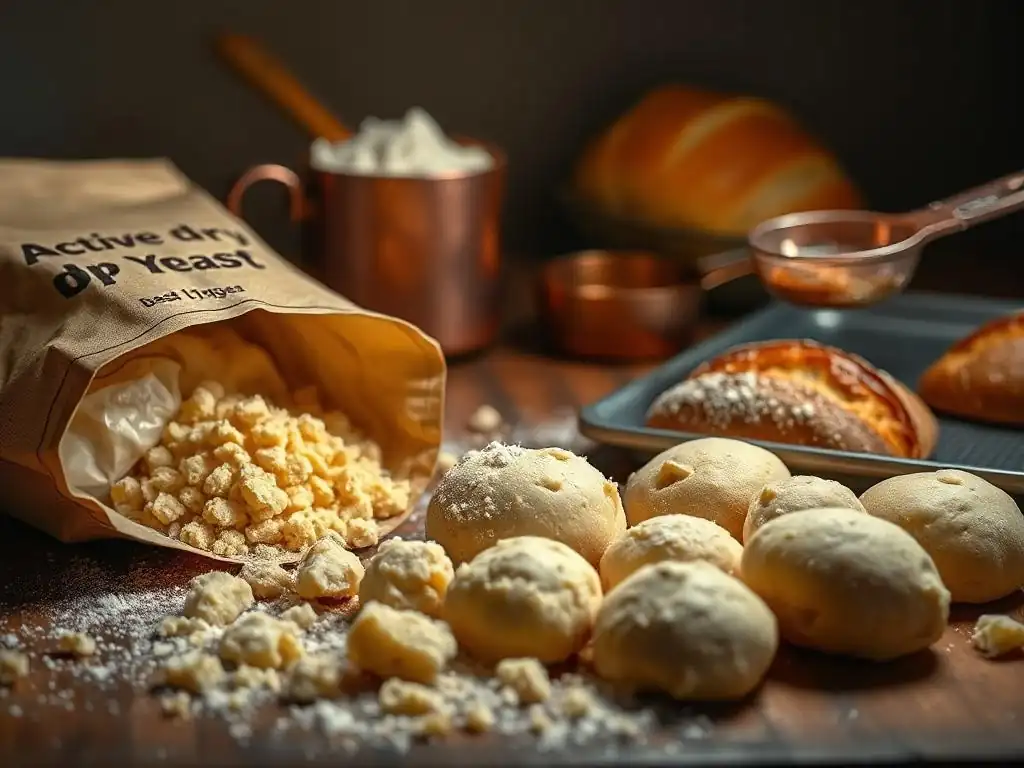
Welcome to BakeWithEase, where unlocking baking success is our mission! Ever wondered exactly how those tiny granules of commercial yeast bring your bread to life? This Commercial Yeast Baking Guide dives deep into the science behind this essential ingredient, demystifying the process and empowering you to create incredible baked goods. Prepare to discover the secrets of yeast, from activation to proofing, and elevate your baking game to a whole new level. Let's get started and see how it powers your baking!
- Understanding Commercial Yeast: A Baker's Guide
-
Frequently Asked Questions
- What exactly is commercial yeast, and how does it work in baking?
- What are the different types of commercial yeast available, and when should I use each?
- How do I properly store commercial yeast to maintain its effectiveness?
- How do I test if my commercial yeast is still active before using it in a recipe?
- Can I substitute different types of commercial yeast for each other in a recipe, and if so, what adjustments do I need to make?
- Final Reflection: The Humble Yeast: A Tiny Powerhouse in Our Kitchens
- Unleash Your Inner Baker: Take Your Baking to the Next Level!
Understanding Commercial Yeast: A Baker's Guide

What is Commercial Yeast and Why Use It?
Commercial yeast, scientifically known primarily as Saccharomyces cerevisiae, is a single-celled microorganism belonging to the fungus family. For bakers, it's a powerful leavening agent cultivated specifically for its ability to produce carbon dioxide gas, which makes dough rise. Unlike wild yeasts found naturally in the environment, commercial yeast is selected and grown under controlled conditions, resulting in a product that is highly reliable, consistent, and predictable in its activity. This consistency is a major reason why it's the backbone of so much home and professional baking today, providing a dependable path forward in any commercial yeast baking guide.
The widespread use of commercial yeast began to truly take off in the mid-19th century with advancements in fermentation science and production techniques. Before this, bakers relied on natural starters or residual yeast from brewing, which could be inconsistent and slower.
The availability of standardized commercial yeast transformed baking, making it possible to produce bread and other leavened goods more quickly and with greater certainty of success. Its ease of use, relatively long shelf life (especially in dry forms), and predictable performance make it an indispensable tool for bakers looking for reliable results, whether they are beginners following a simple recipe or experienced hands working on complex doughs.
The Role of Commercial Yeast in Baking
The primary role of commercial yeast in baking is leavening. When yeast is mixed with flour, water, and sugar (either added directly or present naturally in the flour), it begins to consume the sugars through a process called fermentation. This anaerobic process produces two main byproducts: ethanol (alcohol) and carbon dioxide gas (CO2).
The magic happens as the CO2 gas is trapped within the elastic network formed by gluten proteins in the dough. As more gas is produced, the dough expands, increasing significantly in volume – this is the "rise" we observe. A well-risen dough is crucial for achieving a light, airy texture in the final baked product.
Beyond simply providing lift, commercial yeast also contributes significantly to the flavor and aroma of baked goods. During fermentation, yeast produces a variety of complex organic compounds in addition to CO2 and ethanol, including esters, aldehydes, and higher alcohols.
These compounds develop over time and contribute to the nuanced, often slightly tangy or complex flavors characteristic of yeasted breads and pastries. While chemical leavening agents like baking powder produce only gas for lift, yeast fermentation adds both structure and flavor, making it essential for the depth of taste found in traditional baked items and a key focus in any comprehensive commercial yeast baking guide.
Frequently Asked Questions
What exactly is commercial yeast, and how does it work in baking?
Commercial yeast is a single-celled microorganism specifically cultivated for baking. It works by consuming sugars in the dough and producing carbon dioxide, which causes the dough to rise and become airy.
What are the different types of commercial yeast available, and when should I use each?
The main types are active dry yeast, instant yeast, and fresh yeast. Active dry needs proofing, instant can be added directly to dry ingredients, and fresh yeast is less stable and requires refrigeration.
How do I properly store commercial yeast to maintain its effectiveness?
Always store yeast in an airtight container in a cool, dry place. Opened active dry or instant yeast is best kept in the refrigerator or freezer to prolong its shelf life.
How do I test if my commercial yeast is still active before using it in a recipe?
You can proof your yeast by mixing it with warm water and a little sugar. If it foams and bubbles within 5-10 minutes, it's active and ready to use in your baking recipe.
Can I substitute different types of commercial yeast for each other in a recipe, and if so, what adjustments do I need to make?
Yes, substitutions are possible, but adjustments are needed. For example, you can usually replace active dry yeast with instant yeast using the same amount, but skip the proofing step. Fresh yeast will require a conversion calculation from the recipe.
Final Reflection: The Humble Yeast: A Tiny Powerhouse in Our Kitchens
The seemingly simple act of baking bread is, in reality, a testament to the incredible power of microscopic life. Understanding the role of commercial yeast, as explored in this guide, allows us to appreciate not only the science behind a fluffy loaf but also the long and fascinating history of human ingenuity in harnessing nature's power for culinary creation. This knowledge empowers us to become more confident and creative bakers, pushing the boundaries of our own kitchen experiments.
The impact of yeast extends far beyond the simple rising of dough. It represents a continuous thread connecting ancient civilizations with modern baking practices. From the earliest discoveries of fermentation to the sophisticated strains available today, yeast has shaped our culinary traditions and continues to inspire innovation. Bread is the staff of life,
a proverb often repeated, but rarely considered in the context of the microscopic organisms that make it possible. This simple truth underscores the profound influence of this tiny organism on our culture and our lives.
Now, consider your own baking journey. What new experiments will you undertake, armed with this deeper understanding of commercial yeast? Will you explore different strains, experiment with temperatures, or perhaps even attempt a sourdough starter? The possibilities are endless. Embrace the challenge, explore the science, and most importantly, enjoy the delicious results. The journey of baking, fueled by the humble yeast, is a rewarding one, filled with discovery and the satisfaction of creating something truly special with your own hands.
Unleash Your Inner Baker: Take Your Baking to the Next Level!
Thanks for diving into the world of commercial yeast with us! We hope you now feel more confident and empowered in your baking journey. Ready to put your newfound knowledge into practice?
- Experiment with different yeast types: Try substituting active dry yeast with instant yeast in your favorite recipe and see the difference! This is a fantastic way to test your skills and discover what works best for you.
- Share your baking triumphs (and challenges!) with our community: Let's connect and inspire each other in the comments below. We love hearing your stories!
- Explore advanced baking techniques: Now that you understand yeast's role, why not try a sourdough starter or delve into proofing techniques?
What new baking adventure will you embark on, armed with your fresh yeast knowledge?