
Achieve Perfect Crumb: Sourdough Techniques Online for Open Structure

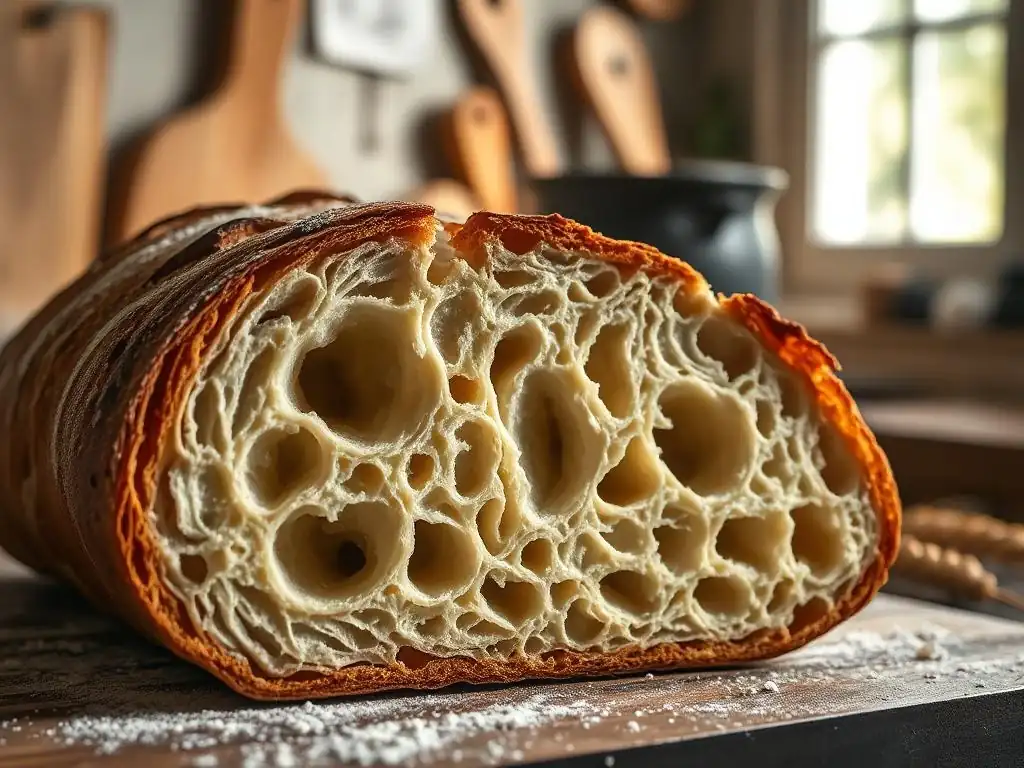
Welcome to BakeWithEase, your guide to unlocking baking brilliance! Ever wondered how to achieve that perfect, airy sourdough crumb structure you see in artisan bakeries? We're diving deep into the secrets behind open, flavorful loaves. Discover expert techniques and simple tweaks that will transform your sourdough baking, starting right here. Ready to elevate your bread game? Let's get baking!
- Unlocking the Secrets to Sourdough's Open Crumb
- Mastering Sourdough Crumb Structure: Top Online Courses & Resources
- Essential Sourdough Tools for Achieving Perfect Crumb
- Sourdough Crumb Troubleshooting: Common Problems & Solutions
- Advanced Sourdough Techniques for a More Open Crumb
- Case Studies: Real-World Examples of Perfect Sourdough Crumb Achieved Online
- Conclusion: Your Journey to Sourdough Crumb Perfection Starts Now
-
Frequently Asked Questions
- What is the most important factor in achieving an open sourdough crumb structure?
- How does hydration level affect the sourdough crumb structure?
- What role does scoring play in achieving an open crumb?
- Why is bulk fermentation important for sourdough crumb structure?
- What is the ideal oven temperature for baking sourdough with an open crumb?
- Final Reflection: The Enduring Allure of the Perfect Sourdough Crumb
- Unleash Your Inner Baker: Master the Sourdough Crumb
Unlocking the Secrets to Sourdough's Open Crumb
What is Sourdough Crumb Structure & Why Does it Matter?
The crumb structure of sourdough bread refers to the internal texture – specifically, the size, shape, and distribution of the air pockets within the loaf. A desirable sourdough crumb structure often features irregularly shaped, large air bubbles interspersed with smaller ones, creating an open, airy interior. This contrasts with a dense crumb, which has many small, uniform holes or appears heavy and tight. Understanding the nuances of sourdough crumb structure is fundamental to baking truly exceptional bread.
Achieving a beautiful, open crumb isn't just about aesthetics; it significantly impacts the bread's texture and flavor. An open structure contributes to a lighter, more tender mouthfeel. The larger air pockets allow the complex flavors developed during the long fermentation process to shine through and interact with toppings or spreads. Mastering sourdough crumb structure tips is a key goal for many home bakers, transforming a simple loaf into a work of art and a delicious culinary experience.
Understanding the Key Factors Influencing Sourdough Crumb
Several critical factors interact throughout the sourdough baking process to determine the final crumb structure. These include the strength and activity of your sourdough starter, the hydration level of your dough, the quality of the flour used, and the techniques employed during mixing, bulk fermentation, shaping, and proofing. Each step plays a vital role, and inconsistencies in any one area can lead to a less-than-ideal crumb. For instance, a weak starter won't produce enough carbon dioxide to create large bubbles, resulting in a dense interior.
Furthermore, managing gluten development and fermentation timing are paramount for achieving an open sourdough crumb structure. Proper gluten development provides the network needed to trap the gases produced by the starter, allowing the dough to expand and form those desirable air pockets. Over-proofing or under-proofing can collapse this structure or prevent it from fully developing. Temperature also plays a significant role; warmer temperatures accelerate fermentation, requiring careful monitoring, while cooler temperatures slow it down, potentially requiring longer times. Mastering these variables is central to improving your sourdough crumb structure.
Mastering Sourdough Crumb Structure: Top Online Courses & Resources
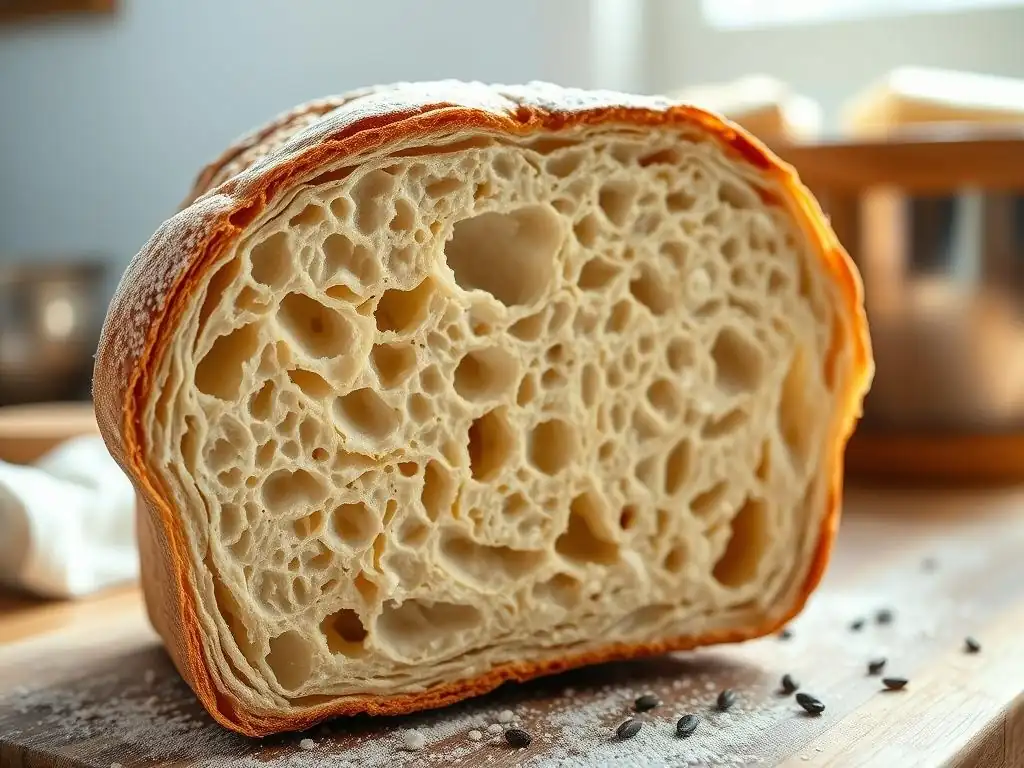
Key Features: Focus on Hydration, Fermentation, and Scoring for Optimal Crumb
This type of course typically breaks down the complex process of sourdough baking into manageable steps, with a strong emphasis on achieving the desired crumb structure. Modules often delve deep into understanding hydration ratios – the amount of water relative to flour – explaining how higher hydration can contribute to a more open crumb, provided the dough is handled correctly. Techniques for managing fermentation, both bulk fermentation and proofing, are detailed, covering visual cues and timing to ensure the dough develops sufficient gas production without collapsing the gluten network.
Scoring, or the art of cutting the dough surface just before baking, is also a key focus. Proper scoring allows the bread to expand predictably in the oven, guiding the oven spring and contributing significantly to the final shape and openness of the crumb. Instructors often demonstrate various scoring patterns and explain how they influence the loaf's expansion, providing sourdough crumb structure tips related to this crucial final step before baking.
Why We Recommend It: In-depth instruction and personalized feedback
Online courses like this offer a structured learning environment that can be invaluable for mastering sourdough crumb structure. Unlike simply following a recipe, these courses often provide detailed explanations of the why behind each step, building a deeper understanding of the science of baking. This level of detail, combined with visual demonstrations, helps clarify techniques that can be challenging to grasp from text alone, such as assessing dough readiness or performing specific folds.
Many platforms also offer features for students to ask questions or submit photos of their bakes for feedback. This personalized guidance from experienced instructors is a significant advantage. Receiving specific advice on issues like a gummy interior or dense crumb can help bakers identify exactly where their process went wrong and make targeted adjustments, accelerating their progress toward consistently achieving an excellent sourdough crumb structure.
Monetization: Affiliate link to Skillshare course registration
"Sourdough Starter Secrets" Workshop with Maurizio Leo
Key Features: Live demonstrations and Q&A sessions on starter maintenance for consistent results
Workshops focusing specifically on sourdough starters, especially with renowned bakers, offer a unique opportunity to learn directly from experts. These sessions often include live demonstrations of feeding, assessing starter activity, and troubleshooting common issues like mold or inconsistent rises. The health and vigor of your starter are perhaps the most foundational elements influencing sourdough crumb structure; a weak starter simply cannot produce the lift needed for an open interior.
The interactive nature of live workshops allows participants to ask specific questions about their own starter challenges in real-time. This direct access to an expert's knowledge is incredibly valuable for home bakers struggling with their starter's performance. Learning precise feeding ratios, optimal temperatures, and visual cues for peak activity directly from a master can demystify the process and lead to a consistently strong starter, which is essential for improving sourdough crumb structure.
Why We Recommend It: Direct interaction with an expert, crucial for troubleshooting
Troubleshooting sourdough issues, particularly those related to starter health, can be frustrating when relying solely on written guides. A live workshop provides immediate clarification on concepts and techniques. Seeing an expert handle dough or starter and hearing their rationale in real-time builds confidence and understanding. For example, an expert can visually demonstrate what a starter at peak activity looks like or how to adjust feeding based on ambient temperature.
The ability to ask questions and get immediate answers tailored to your specific situation is a significant benefit. If your starter isn't doubling or smells off, getting instant feedback from someone with extensive experience can save weeks of trial and error. This direct interaction is highly effective for refining the most fundamental skill in sourdough baking – maintaining a robust starter – and directly impacts your ability to achieve an excellent sourdough crumb structure.
Monetization: Affiliate link to Maurizio Leo's workshop registration
Advanced Sourdough Baking Techniques: Open Crumb Masterclass
Key Features: Focus on specific techniques like coil folds and lamination for enhanced gluten development
Masterclasses aimed at achieving an exceptionally open crumb often dive into advanced dough handling techniques beyond basic stretch and folds. Techniques like coil folds and lamination are explored in detail, demonstrating how they contribute to building dough strength and developing a robust gluten network capable of trapping large gas bubbles. These methods are particularly beneficial for higher hydration doughs, which are often associated with more open crumbs but require careful handling.
The courses explain the timing and execution of these techniques – when to perform them during bulk fermentation and how to do so gently yet effectively to avoid tearing the delicate gluten structure. Understanding the nuances of dough consistency and feel at different stages is crucial, and masterclasses often provide visual and tactile cues to guide bakers. Mastering these advanced maneuvers is key for bakers looking to elevate their sourdough crumb structure to the next level.
Why We Recommend It: For bakers looking to refine their skills and achieve a truly exceptional crumb
For bakers who have moved beyond the basics and are consistently producing edible sourdough but desire that professional-level open crumb, an advanced masterclass is often the next step. These courses don't just repeat fundamental principles; they build upon them, offering deeper insights into dough rheology, fermentation science, and precise handling. They challenge bakers to refine their intuition and technique.
The focus on specific, advanced methods provides actionable steps for improving crumb structure. For example, learning how to properly laminate dough can dramatically change the internal structure, creating distinct layers that bake into a more open, airy crumb. Investing time in understanding these refined techniques can be the breakthrough needed to consistently achieve the stunning, open sourdough crumb structure that is the hallmark of artisanal bread.
Monetization: Premium online course with affiliate commission
Essential Sourdough Tools for Achieving Perfect Crumb
The Importance of High-Quality Dough Scrapers for Handling High-Hydration Dough
Product Recommendation: Ateco Stainless Steel Dough Scraper - Review and Affiliate Link
Why it's Crucial: Prevents tearing and facilitates shaping for optimal crumb development
Handling high-hydration sourdough dough – dough with a high percentage of water relative to flour, often 75% hydration or more – can be incredibly sticky and challenging. A high-quality dough scraper, particularly a sturdy stainless steel bench scraper, is indispensable. It allows you to manipulate the dough on your work surface without it sticking excessively to your hands or the counter. Gentle handling is paramount when working with developed gluten, as tearing can deflate gas bubbles and damage the structure needed for an open crumb.
Using a bench scraper allows for techniques like "stretch and fold" or "coil folding" to be performed more cleanly and effectively, building dough strength without excessive sticking. It's also crucial for dividing dough and shaping loaves. A good scraper helps you gather and shape the dough gently, maintaining the tension and structure built during bulk fermentation, which directly impacts how the loaf holds its shape and expands during baking, ultimately influencing the sourdough crumb structure.
The Role of Banneton Baskets in Shaping and Crumb Development
Product Recommendation: Brotform Round Banneton Basket Set - Review and Affiliate Link
Why it's Crucial: Provides support and shape during proofing, leading to a more open crumb
Banneton baskets, typically made from rattan or cane, serve a vital purpose during the final proofing stage of sourdough bread. After shaping, the dough is placed seam-side up (or down, depending on the desired final look) in a floured banneton. The basket provides structural support to the dough as it undergoes its final rise, preventing it from spreading outwards into a flat disc. This upward support encourages the loaf to develop vertical strength, which translates to better oven spring and a more open crumb structure.
The material of the banneton also helps wick away a small amount of moisture from the surface of the dough, creating a slight skin. This skin contributes to a crispier crust and helps the loaf hold its shape better when transferred to the baking vessel. The coil pattern often seen on the crust of artisanal loaves comes from the banneton itself. Using a banneton is a simple yet effective way to ensure your shaped dough maintains its form and builds the necessary tension for an excellent sourdough crumb structure during proofing.
Optimize Your Baking with a Dutch Oven
Product Recommendation: Lodge Cast Iron Dutch Oven - Review and Affiliate Link
Why it's Crucial: Creates a steamy environment for maximum oven spring and open crumb structure
Baking sourdough in a preheated Dutch oven is one of the most widely recommended techniques for achieving an exceptional crust and an open crumb. The heavy lid traps the moisture released from the dough as it heats up, creating a steamy micro-environment around the loaf during the initial phase of baking. This steam is crucial because it keeps the surface of the dough moist and pliable, allowing the loaf to expand fully before the crust sets.
Without sufficient steam, the crust forms too quickly, restricting the dough's ability to achieve maximum oven spring – the final burst of expansion in the hot oven. This restricted expansion often results in a denser crumb. Baking with the lid on for the first 20-25 minutes, then removing it to allow the crust to brown, mimics the conditions of a professional bakery oven with steam injection. This method is arguably one of the most effective sourdough crumb structure tips for home bakers.
Sourdough Crumb Troubleshooting: Common Problems & Solutions
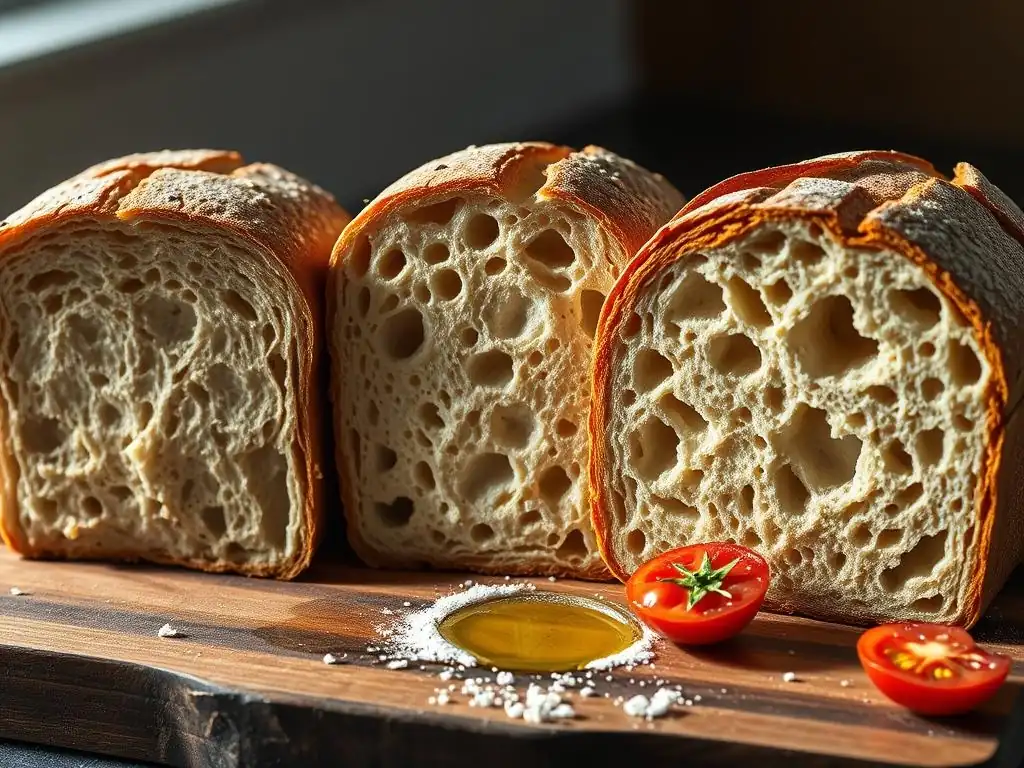
Dense Crumb: Identifying the Root Cause
Problem: Under-fermentation
Under-fermentation is a common culprit behind a dense, heavy sourdough crumb structure. This occurs when the dough hasn't had enough time or warmth for the starter to produce sufficient carbon dioxide gas. The dough might not have increased significantly in volume during bulk fermentation, and when poked, the indentation springs back immediately. The resulting baked loaf will be small, with a tight, uniform crumb texture and often a less complex flavor profile.
Solution: Extend bulk fermentation time, consider a warmer environment.
To combat under-fermentation, the primary solution is to allow the dough more time during the bulk fermentation phase. Pay close attention to the dough's volume increase – aim for a 30-50% rise depending on hydration and temperature, accompanied by visual cues like small bubbles on the surface. If your kitchen is cool (below 70°F or 21°C), fermentation will be slower.
Consider finding a warmer spot for your dough (like inside a turned-off oven with the light on) or extending the fermentation time significantly, perhaps by several hours or even overnight at cooler room temperatures. Learning to read your dough, rather than strictly following a clock, is key to improving your sourdough crumb structure.
Problem: Weak Starter
A weak or inactive starter cannot provide the necessary leavening power for a good rise and open sourdough crumb structure. If your starter isn't consistently doubling or tripling in volume within 4-8 hours after feeding (depending on temperature and feeding ratio), it may not be strong enough. Using a weak starter will inevitably lead to a poor rise during both bulk fermentation and proofing, resulting in a dense loaf.
Solution: Refresh your starter more frequently, use higher quality flour.
To strengthen a weak starter, focus on consistent, regular feeding, ideally once or twice a day if kept at room temperature. Ensure you are using a consistent feeding ratio (e.g., 1:1:1 starter:water:flour by weight). Switching to a higher protein flour, particularly a bread flour or a mix with some whole wheat or rye, can sometimes give the starter a boost. Ensure the water you use is non-chlorinated. Give it a few days of consistent, warm feeding (75-80°F or 24-27°C) before using it for baking. A robust starter is foundational for achieving an open sourdough crumb structure.
Gummy Crumb: Understanding the Issue
Problem: Under-baking
A gummy or slightly wet texture in the center of your sourdough loaf is often a clear sign of under-baking. The bread might look golden brown on the outside, but the interior hasn't reached the necessary internal temperature for the starches to fully gelatinize and the moisture to properly distribute. This leaves a sticky, sometimes translucent, texture in the crumb.
Solution: Increase baking time, use a thermometer to ensure internal temperature reaches 210 degrees.
To avoid a gummy crumb, ensure you are baking the loaf for a sufficient amount of time. While crust color is an indicator, the most reliable method is to check the internal temperature of the bread using an instant-read thermometer. Insert the thermometer into the center of the loaf from the bottom or side.
The bread is considered fully baked when the internal temperature reaches at least 210°F (99°C). You may need to increase your baking time by 5-15 minutes, especially if baking larger loaves or higher hydration doughs. Adjusting the bake time is a crucial sourdough crumb structure tip for texture.
Problem: Insufficient cooling
Cutting into a warm loaf of sourdough bread is tempting, but doing so prematurely can result in a gummy texture, even if the bread was perfectly baked. As the bread cools, moisture continues to distribute throughout the crumb and the internal structure sets. Cutting it while hot interrupts this process, trapping steam and leading to a damp, sticky interior.
Solution: Allow the bread to cool completely before slicing.
The solution is simple but requires patience: allow your sourdough loaf to cool completely on a wire rack for several hours before slicing. For a standard-sized loaf (around 800-1000g), this typically means cooling for at least 2-4 hours, or even longer for very large loaves. The wire rack ensures air circulation around the entire loaf, facilitating even cooling. While difficult to wait, proper cooling is essential for the final texture and crumb structure to stabilize, preventing that undesirable gummy quality and revealing your beautiful sourdough crumb structure.
Advanced Sourdough Techniques for a More Open Crumb
Autolyse: The Secret to Enhanced Hydration and Gluten Development
Autolyse is a simple yet powerful technique involving mixing just the flour and water from your recipe and letting the mixture rest for a period (typically 20 minutes to an hour, but sometimes longer) before adding the starter and salt. This resting period allows the flour to fully hydrate and enzymes naturally present in the flour begin to break down proteins. This process jumpstarts gluten development without any mechanical effort (like kneading).
The benefits of autolyse for sourdough crumb structure are significant. The initial hydration makes the dough easier to handle later, especially high-hydration doughs. More importantly, the enzyme activity and resting period lead to a more extensible dough. This means the dough can be stretched thinner without tearing, allowing it to expand more readily from the gases produced during fermentation. A more extensible dough supports the development of larger, more irregular air pockets, contributing directly to a more open sourdough crumb structure.
Levain Management: Building a Strong and Active Starter
Effective levain management is foundational to achieving a consistently open sourdough crumb structure. A levain is essentially a build of your main starter, often using a specific ratio of starter, water, and flour, designed to be used at its peak activity for baking. Building a levain ensures you are using a vibrant, powerful culture at its most potent point of leavening. This contrasts with using a starter directly from the fridge, which may be sluggish.
Proper levain management involves understanding the feeding ratio, temperature, and timing required for your starter to reach its peak – typically when it has doubled or tripled in volume and is full of bubbles. Using the levain at this peak ensures maximum gas production during bulk fermentation and proofing, providing the lift necessary for an airy crumb. Consistent levain builds are one of the most impactful sourdough crumb structure tips for reliable results.
Shaping Techniques: Gentle Handling for Optimal Crumb Structure
The way you shape your sourdough loaf has a profound impact on its final crumb structure. The goal of shaping is to create tension on the surface of the dough while being careful not to degas the interior too much or tear the gluten network. Proper tension helps the loaf hold its shape during proofing and baking, directing the oven spring upwards rather than outwards.
Techniques like gentle folding, stitching the seam, and creating surface tension without excessive handling are key. Overworking the dough during shaping can collapse the delicate structure of air bubbles built during fermentation, leading to a tighter crumb. Conversely, insufficient tension can result in a flat loaf with a less open interior. Learning to shape efficiently and gently, feeling the dough's resistance and knowing when you've created enough tension, is a skill that significantly enhances your sourdough crumb structure.
Case Studies: Real-World Examples of Perfect Sourdough Crumb Achieved Online
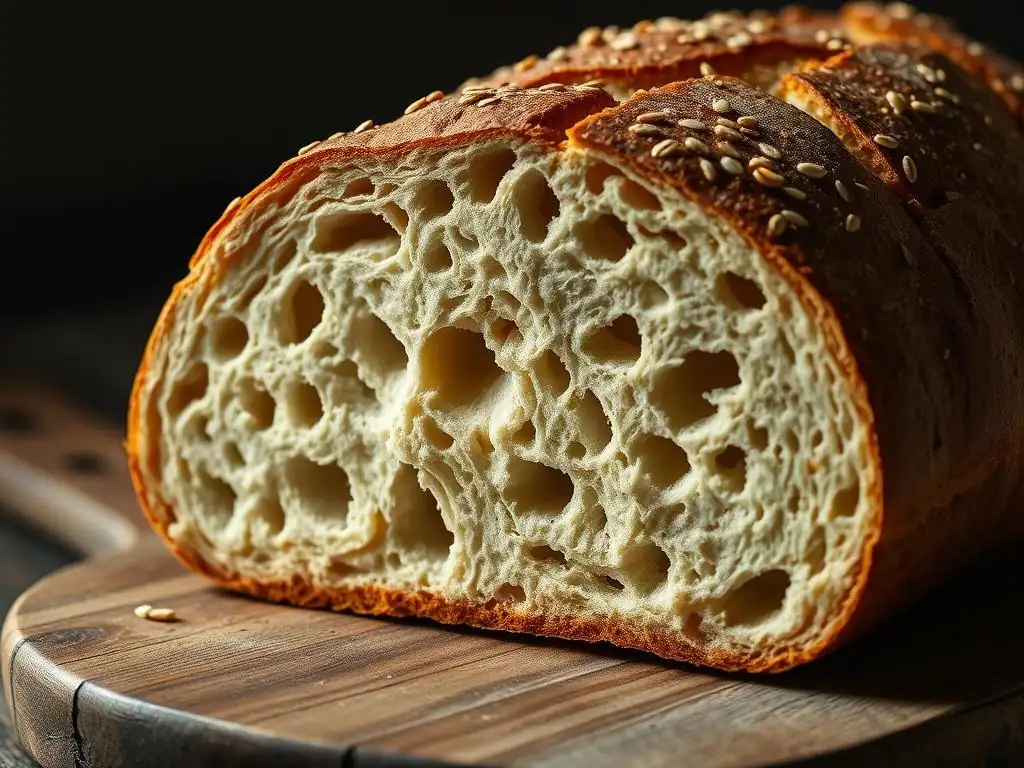
Sarah, a home baker from Oregon, had been struggling with consistently dense sourdough for months. Her loaves were edible but lacked the airy, open crumb she admired in bakery bread. She had tried numerous recipes but couldn't pinpoint the issue. Feeling frustrated, she decided to enroll in an online sourdough course focusing on foundational techniques and troubleshooting, similar to those found on platforms like Skillshare.
Through the course, Sarah gained a deeper understanding of fermentation indicators beyond just time, learning to assess dough volume increase and texture. She also refined her shaping technique, realizing she was degassing her dough too much. By implementing the specific sourdough crumb structure tips from the course, such as paying closer attention to bulk fermentation signs and practicing gentler shaping, she saw a dramatic improvement. Within weeks, her loaves began showing the irregular, open crumb she had been aiming for, transforming her baking results.
Case Study 2: David Lee - Perfecting Hydration with Tips from Maurizio Leo's Workshop
David, living in humid Florida, found that his high-hydration sourdough recipes often resulted in dough that was too slack and difficult to manage, leading to flat loaves with inconsistent crumb. He suspected the issue might be related to how hydration interacted with his local environment and flour, but he wasn't sure how to adjust. He attended an online workshop led by a well-known sourdough expert, focusing on dough handling and hydration, similar to workshops offered by bakers like Maurizio Leo.
The workshop provided specific insights into adjusting hydration based on flour type and environmental factors. David learned techniques for building strength in high-hydration doughs, such as targeted stretching and folding and utilizing the autolyse method effectively. He also received tips on assessing dough strength visually and tactually. By applying these specific sourdough crumb structure tips learned from the expert, David was able to confidently work with higher hydration levels, resulting in loaves that had better structure, more height, and a significantly more open and airy crumb.
Conclusion: Your Journey to Sourdough Crumb Perfection Starts Now
Recap of Key Takeaways and Actionable Steps
Achieving that coveted open sourdough crumb structure is a journey involving understanding key factors like starter health, hydration, fermentation timing, and dough handling. We've explored how a strong starter provides the necessary lift, how proper hydration and gluten development create the framework for air pockets, and how techniques like autolyse and gentle shaping preserve the structure. Troubleshooting common issues like dense or gummy crumb involves addressing under-fermentation, weak starter, or insufficient baking/cooling.
Your actionable steps should include assessing your current process and identifying areas for improvement. Focus on strengthening your starter if needed, paying close attention to fermentation cues rather than just the clock, refining your dough handling techniques, and ensuring your baking environment (like using a Dutch oven) is optimized for oven spring. Remember that consistent practice and careful observation are your best tools for mastering sourdough crumb structure tips.
Encouragement to Explore Online Resources and Experiment
The path to perfect sourdough crumb structure is highly rewarding, and there are abundant resources available online to support your learning. Whether through structured courses, expert workshops, or detailed guides, you can access a wealth of knowledge and visual demonstrations that break down complex techniques. Don't be discouraged by loaves that don't turn out exactly as planned; each bake is an opportunity to learn and refine your process.
Embrace experimentation with different hydration levels, fermentation times, and handling methods. Keep notes on your bakes to track what works and what doesn't. The sourdough community online is also a great source of support and shared knowledge. With dedication and by leveraging the excellent online resources available, you are well on your way to consistently baking loaves with a beautiful, open sourdough crumb structure that you'll be proud to share.
Frequently Asked Questions
What is the most important factor in achieving an open sourdough crumb structure?
The most important factor is strong gluten development. This allows the dough to trap gases effectively, leading to the desired airy texture.
How does hydration level affect the sourdough crumb structure?
Higher hydration levels generally result in a more open and irregular crumb. More water creates steam during baking, expanding the air pockets.
What role does scoring play in achieving an open crumb?
Proper scoring controls the direction of expansion during baking, preventing the loaf from bursting in undesirable locations and creating a more even crumb.
Why is bulk fermentation important for sourdough crumb structure?
Bulk fermentation is crucial for developing flavor and gas production. Adequate fermentation creates the bubbles that will eventually become the open crumb.
What is the ideal oven temperature for baking sourdough with an open crumb?
A high initial oven temperature, often around 450-500°F (232-260°C), is crucial for creating steam and promoting rapid expansion of the dough.
Final Reflection: The Enduring Allure of the Perfect Sourdough Crumb
The quest for the perfect sourdough crumb isn't merely about aesthetics; it's a reflection of our deeper connection to the craft of baking and the transformative power of fermentation. The seemingly simple act of shaping dough and coaxing it into life reveals a complex interplay of technique, timing, and intuition, a process that mirrors our own journeys of growth and discovery. The open, airy crumb we strive for is a testament to patience and precision, a reward for understanding the subtle nuances of this ancient art.
The online sourdough community has exploded in recent years, a testament to the enduring appeal of this process. It's more than just bread; it's a shared passion, a source of creativity, and a connection to a timeless tradition. Bread is the staff of life,
they say, and in the case of sourdough, it's a staff crafted with care, patience, and a deep understanding of the natural world. The pursuit of the perfect crumb reflects this dedication, this commitment to excellence in a world that often prioritizes speed over substance.
Consider your own baking journey. What have you learned from the successes and failures in your sourdough endeavors? Don't be afraid to experiment, to push boundaries, and to embrace the imperfections. The journey towards the perfect crumb is a continuous process of learning and refinement, a reflection of our own personal growth. Each loaf, regardless of its crumb structure, represents a step forward, a testament to your dedication and passion. Embrace the process, celebrate the journey, and savor the reward.
Unleash Your Inner Baker: Master the Sourdough Crumb
Thanks for joining us on this sourdough journey! You've now unlocked secrets to achieving that perfect open crumb structure – a testament to patience and precision. Ready to take your baking to the next level?
- Dive deeper into our Sourdough Masterclass: This exclusive online course unlocks even more advanced techniques to perfect your loaves. (Think: shaping secrets, scoring mastery, and advanced hydration control!)
- Share your baking triumphs! Post a picture of your perfectly crumbed sourdough on social media using #BakeWithEaseSourdough – we’d love to see your results!
- Join our online community: Connect with fellow sourdough enthusiasts, share tips, and ask questions in our dedicated forum.
What unique sourdough creation will you bake next?