
Go Beyond Basics: Intermediate Online Baking Techniques to Refine Your Skills


Welcome to BakeWithEase, your guide to unlocking baking mastery! Ready to level up your skills and venture beyond the basics? This week, we dive deep into intermediate sourdough baking techniques online. Discover the secrets to achieving that perfect crust, open crumb, and complex flavor profile you've always dreamed of, and prepare to impress with your newfound expertise. Keep reading to refine your sourdough skills and take your baking to the next level!
- Go Beyond Basics: Intermediate Sourdough Baking Techniques to Refine Your Skills
- Level Up Your Sourdough: Mastering Intermediate Baking Techniques
- Understanding the Fundamentals: Key Concepts for Intermediate Sourdough Bakers
- Mastering Intermediate Sourdough Techniques Through Online Courses
- Troubleshooting Common Intermediate Sourdough Problems
- Beyond the Loaf: Exploring Intermediate Sourdough Recipes
- Conclusion: Continuing Your Sourdough Journey with Online Education
-
Frequently Asked Questions
- What kind of intermediate sourdough baking techniques are covered in the online resources from BakeWithEase?
- Are the online resources suitable for someone who has only baked sourdough a few times?
- Does BakeWithEase offer personalized feedback on my sourdough baking attempts?
- What ingredients are considered essential for mastering the intermediate sourdough baking techniques shown online?
- How can I access the online resources and recipes for intermediate sourdough baking from BakeWithEase?
- Final Reflection: The Ever-Rising Crust of Sourdough Mastery
- Unleash Your Inner Pastry Chef: Take Your Baking to the Next Level!
Go Beyond Basics: Intermediate Sourdough Baking Techniques to Refine Your Skills
Level Up Your Sourdough: Mastering Intermediate Baking Techniques
Introduction: From Beginner's Loaf to Artisan Bread with Online Courses
Transitioning from baking your first successful sourdough loaf to consistently producing artisan-quality bread is an exciting journey. While the basics cover creating a lively starter, mixing dough, and a simple bake, intermediate sourdough baking techniques online delve deeper into the nuances that elevate a good loaf to a truly great one.
This stage involves understanding dough behavior more intimately, mastering precise handling, and exploring different baking methods to achieve specific textures and appearances. It's about gaining control over variables like fermentation time, temperature, and dough hydration to produce bread with a beautiful open crumb, a crackling crust, and complex flavor.
Online baking courses offer an accessible and flexible way to learn these more advanced skills. Unlike static recipes, many online platforms provide video demonstrations of intricate techniques like shaping or scoring, which can be challenging to grasp from text alone.
They often include detailed explanations of the science behind the processes, helping bakers understand why certain steps are crucial. Engaging with intermediate sourdough baking techniques online allows you to learn at your own pace, revisit lessons as needed, and often connect with instructors or a community for support, making the path to artisan baking clearer and more achievable from your own kitchen.
Understanding the Fundamentals: Key Concepts for Intermediate Sourdough Bakers
Hydration Levels: Achieving the Perfect Dough Consistency
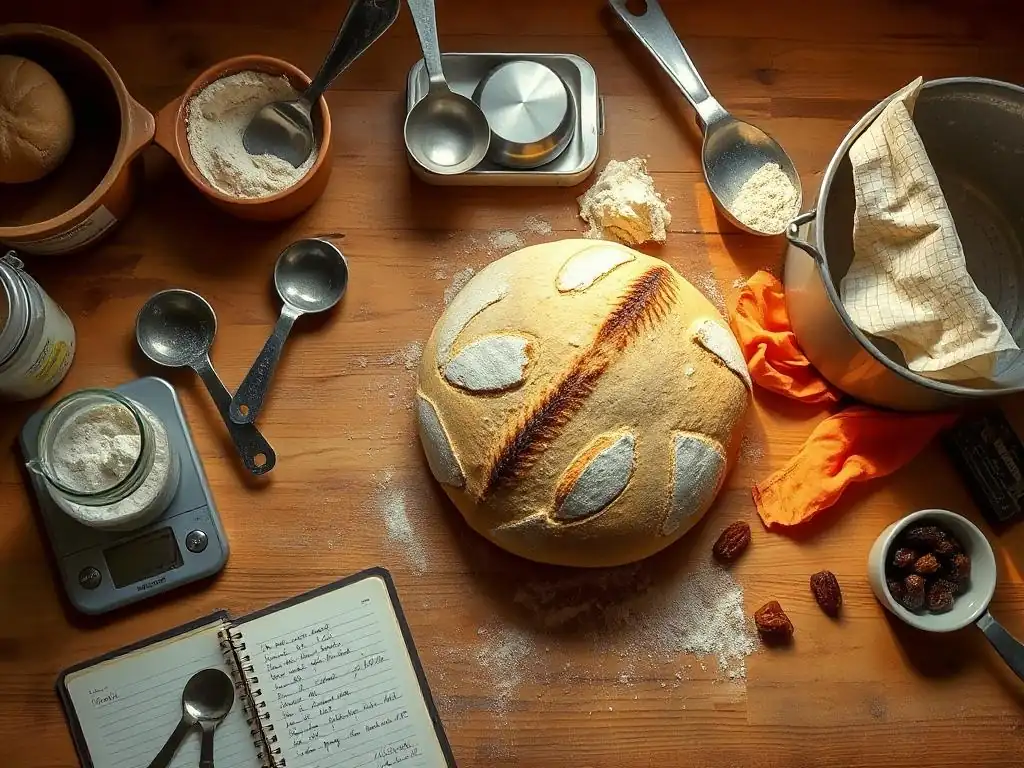
Hydration refers to the ratio of water to flour in your dough, expressed as a percentage of the flour weight. For instance, a dough made with 500g of flour and 375g of water has a hydration of 75% (375/500 * 100). While beginner recipes often start with lower hydration levels, perhaps 65-70%, intermediate sourdough baking techniques online explore higher hydration doughs, sometimes reaching 80% or even 90% or more. Higher hydration doughs are stickier and more challenging to handle but typically result in a more open, airy crumb structure and a thinner, crispier crust.
Mastering different hydration levels is crucial for intermediate bakers. A 70% hydration dough will feel significantly different from an 85% hydration dough. Learning to work with these wetter doughs requires developing a feel for the dough's strength and elasticity through techniques like stretch and folds or coil folds. Online resources often provide visual guides on how dough at various hydration levels should look and feel at different stages of fermentation and handling, helping bakers understand how to adjust their technique based on the dough's consistency rather than just following a recipe blindly.
Autolyse Techniques: Enhancing Dough Strength and Flavor
Autolyse is a simple yet powerful technique introduced by Professor Raymond Calvel, involving mixing only the flour and water from a recipe and letting it rest before adding the salt and starter. This resting period, which can range from 20 minutes to several hours, allows the flour to fully hydrate and enzymes naturally present in the flour to begin breaking down starches into sugars. This process helps develop gluten structure without mechanical kneading and makes the dough more extensible and easier to handle later on.
Implementing autolyse into your routine is a key intermediate sourdough baking technique. By allowing the gluten network to start forming on its own, subsequent kneading or folding becomes more efficient. The dough becomes smoother, more pliable, and less sticky.
Furthermore, the enzymatic activity during the autolyse phase can contribute to improved flavor development in the final loaf. Many online sourdough courses for intermediate bakers dedicate modules to explaining the science and practical application of autolyse, often recommending specific rest times based on flour type and hydration level, demonstrating how this initial step significantly impacts the final dough handling and bread quality.
Mastering Intermediate Sourdough Techniques Through Online Courses
Shaping Techniques: Creating Beautiful and Consistent Loaves
Beyond the basic boule (round loaf), intermediate sourdough baking involves mastering shaping techniques for different loaf types, such as batards (oval), baguettes, or pan loaves. Proper shaping is critical for developing surface tension, which helps the loaf hold its structure during proofing and baking, contributing significantly to oven spring and the final appearance of the bread. Techniques like stitching the dough, creating a taut surface, and ensuring even distribution of tension are vital skills.
Learning these shaping methods through intermediate sourdough baking techniques online is highly effective because video demonstrations can clearly show the required hand movements and dough manipulation. For example, shaping a batard often involves folding the dough into thirds, then rolling it tightly to create tension along the length. An online video can provide a clear view of this process, showing how the dough should feel and look at each step. Mastering these techniques allows bakers to produce consistently shaped loaves that not only look professional but also bake more predictably with better crumb structure.
Scoring Techniques: Unleashing Oven Spring and Artistic Flair
Scoring, or making cuts in the dough's surface just before baking, serves both a functional and an artistic purpose. Functionally, scores act as controlled vents, allowing the rapidly expanding dough during oven spring to escape without bursting unpredictably. Artistically, scoring allows bakers to create intricate patterns on the crust, which open up beautifully as the bread bakes. Intermediate scoring involves understanding how the depth, angle, and placement of cuts influence oven spring and the formation of an "ear" – the desirable flap of crust that lifts along a score line.
Developing proficiency in scoring is a hallmark of intermediate sourdough baking techniques. Techniques range from simple single cuts for a batard to elaborate patterns using multiple cuts or specialized tools like a lame. Online resources often provide detailed tutorials on various scoring patterns, explaining the best angle (often around 30-45 degrees for an ear) and depth (typically about ¼ to ½ inch) for different dough types and loaf shapes. Visual guides are invaluable here, demonstrating the precise motion and confidence needed to execute clean, effective scores that result in stunning baked loaves.
Baking in Different Vessels: Dutch Ovens, Baking Stones, and More
The vessel you bake your sourdough in significantly impacts the final crust and crumb. While many beginners start with a Dutch oven, known for trapping steam around the loaf and promoting excellent oven spring and a thick crust, intermediate bakers often explore other methods. Baking on a preheated baking stone or steel, often in conjunction with creating steam in the oven (e.g., by placing a tray of hot water or ice cubes below), can produce a different crust texture, often thinner and crisper than a Dutch oven bake.
Exploring these variations is part of mastering intermediate sourdough baking techniques online. Understanding the pros and cons of each method allows bakers to choose the best approach for a desired result. For example, baking baguettes is typically done on a stone with steam, not in a Dutch oven. Online courses can detail the specific steps for preheating, steaming techniques, and bake times for various vessels, providing guidance on how to achieve optimal results whether you're using a cast iron pot, a ceramic baker, a baking stone, or even specialized bread cloches.
Troubleshooting Common Intermediate Sourdough Problems
Dense Crumb and Lack of Oven Spring: Diagnosing and Solving the Issues
One frustrating issue encountered by intermediate sourdough bakers is a loaf with a dense, heavy crumb and minimal oven spring. This problem often stems from issues related to fermentation or dough strength. Common culprits include an inactive or weak starter, underproofing (not allowing the dough enough time to develop gases), overproofing (where the gluten structure collapses after rising), or insufficient dough development (lack of proper folding or kneading).
Diagnosing the exact cause requires careful observation of the dough throughout the process. An intermediate sourdough baking techniques online course might provide checklists or visual cues to help identify these issues. For instance, if the dough doesn't increase significantly in volume during bulk fermentation or proofing, underproofing or a weak starter might be the cause.
If the dough spreads out rapidly on the peel before baking, it's likely overproofed and lacks sufficient structure. Solutions involve ensuring your starter is robust, adjusting fermentation times based on ambient temperature, improving dough handling to build strength, and learning to read the dough's readiness for baking.
Gummy Texture: Identifying and Addressing the Root Causes
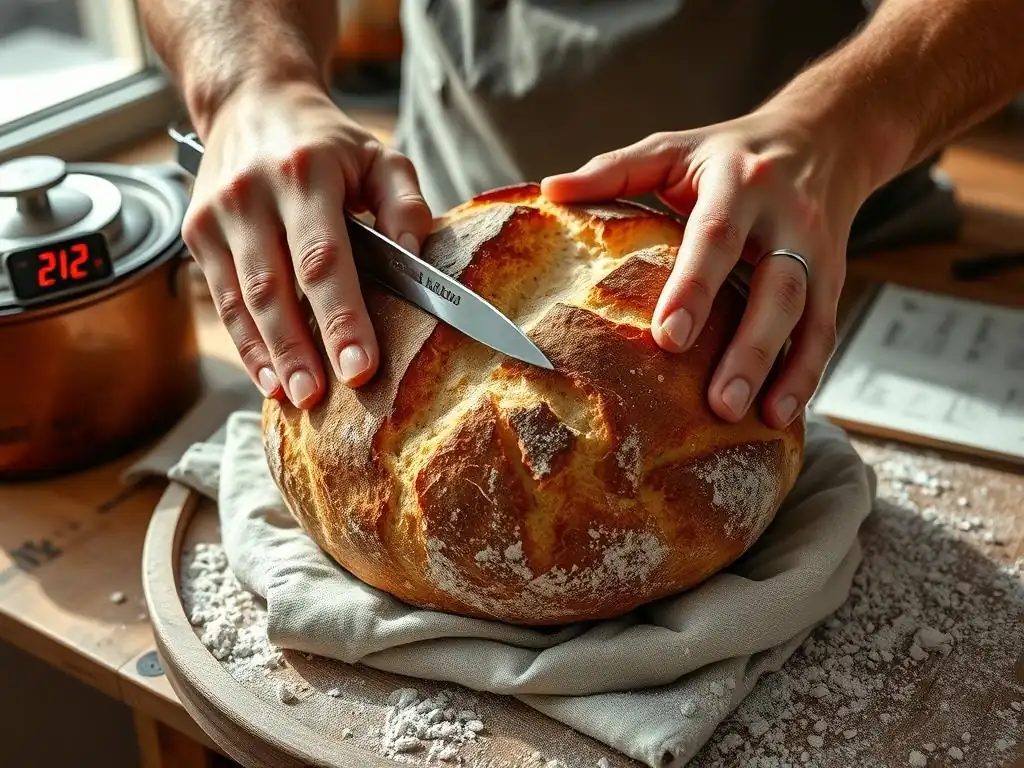
A gummy or wet texture inside the baked loaf, even after cooling, is another common intermediate challenge. This is most frequently caused by underbaking. The internal temperature of sourdough bread should reach around 205-210°F (96-99°C) to be fully cooked. If the bread is removed from the oven too soon, the starches haven't fully set, resulting in a wet, sometimes shiny, and unpleasantly chewy interior.
Other factors contributing to gumminess can include slicing the bread too soon after baking (it needs time to cool completely so moisture can redistribute) or excessively high hydration levels without adequate baking time or temperature. Intermediate sourdough baking techniques online often emphasize the importance of internal temperature checks and recommend sufficient cooling times, typically at least 1-2 hours for a standard loaf. They also discuss how to adjust baking times or temperatures for higher hydration doughs to ensure they are thoroughly cooked through, preventing that undesirable gummy texture.
Beyond the Loaf: Exploring Intermediate Sourdough Recipes
Sourdough Discard Recipes: Minimizing Waste and Maximizing Flavor
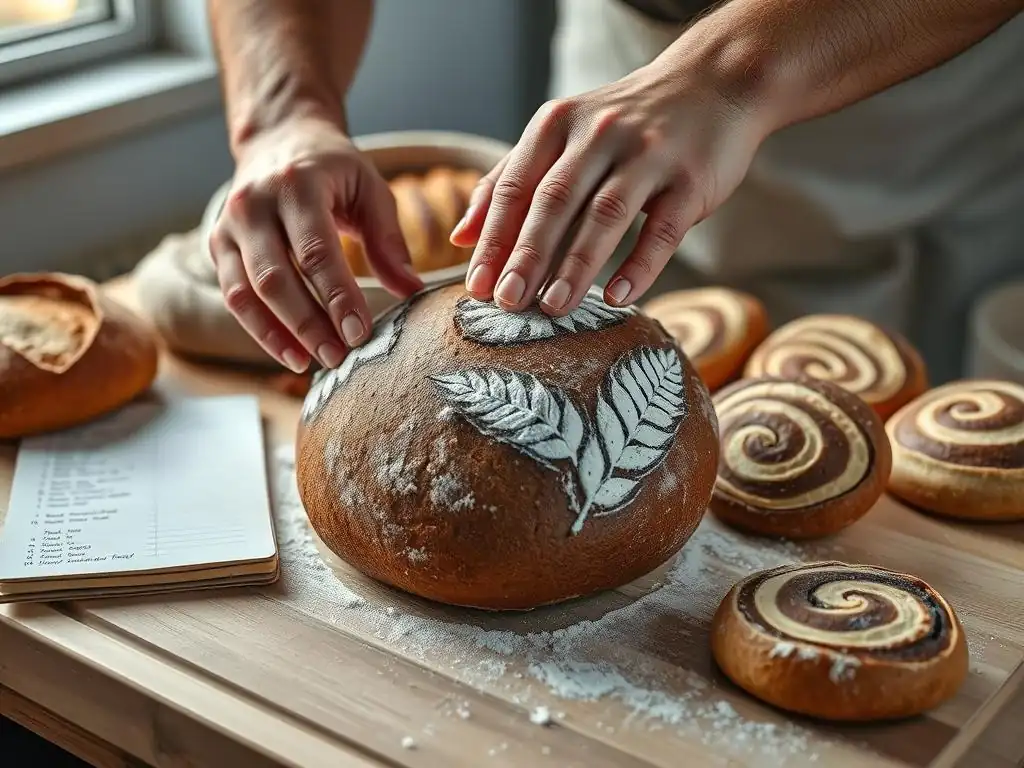
Maintaining an active sourdough starter inevitably generates "discard" – the portion removed before feeding. Instead of throwing this away, intermediate bakers learn to use discard in a variety of delicious recipes. Sourdough discard, while not active enough to leaven bread on its own, contributes a wonderful tangy flavor and can improve the texture of baked goods.
Exploring intermediate sourdough baking techniques online often includes modules dedicated to discard recipes. These can range from simple items like crackers or pancakes, which benefit from the tang, to more complex bakes like muffins, scones, or even pasta dough. Utilizing discard is an economical and flavorful way to reduce waste in your kitchen and expand your sourdough repertoire beyond just loaves, making the entire sourdough process more sustainable and rewarding. A standard recipe might use 100-150g of discard in a batch of crackers, for example.
Sourdough Focaccia and Other Specialty Breads
Once comfortable with basic sourdough loaves, intermediate bakers can venture into specialty breads that incorporate sourdough starter or discard. Sourdough focaccia, for instance, uses a high-hydration dough that is dimpled and topped with olive oil and various toppings before baking. The sourdough adds a subtle tang and a unique texture compared to commercial yeast versions.
Other specialty breads include enriched doughs like brioche or challah made with sourdough, or incorporating inclusions like cheese, herbs, or dried fruits into standard sourdough loaves. These intermediate sourdough baking techniques often require adjusting fermentation times and hydration levels compared to a basic lean dough. Online courses provide specific recipes and guidance for these variations, explaining how the sourdough affects the rise and flavor profile in richer or more complex doughs, allowing bakers to expand their skills and create a wider variety of delicious sourdough products.
Conclusion: Continuing Your Sourdough Journey with Online Education
Mastering intermediate sourdough baking techniques is a rewarding step that bridges the gap between a home baker and an artisan. By focusing on concepts like hydration control, autolyse, precise shaping and scoring, and adapting baking methods, you gain greater command over the sourdough process. Troubleshooting common issues becomes easier as you learn to read your dough and understand the underlying causes of problems like dense crumb or gumminess.
Furthermore, exploring recipes beyond the basic loaf, such as using discard or baking specialty breads, adds versatility and reduces waste. Pursuing intermediate sourdough baking techniques online offers a flexible and comprehensive way to acquire these skills, providing the detailed explanations and visual guidance needed to refine your craft and consistently bake exceptional bread.
Frequently Asked Questions
What kind of intermediate sourdough baking techniques are covered in the online resources from BakeWithEase?
The resources focus on techniques like hydration adjustments, autolyse optimization, and scoring patterns to improve your sourdough.
Are the online resources suitable for someone who has only baked sourdough a few times?
While the resources are for intermediate bakers, they assume a basic understanding of sourdough. Prior experience with a starter is recommended.
Does BakeWithEase offer personalized feedback on my sourdough baking attempts?
While BakeWithEase provides general guidance, they currently do not offer personalized feedback or one-on-one coaching specifically.
What ingredients are considered essential for mastering the intermediate sourdough baking techniques shown online?
Beyond basic flour, water, and salt, you'll likely need high-quality bread flour and potentially whole wheat or rye flour for more complex recipes.
How can I access the online resources and recipes for intermediate sourdough baking from BakeWithEase?
Visit BakeWithEase.com and navigate to the sourdough section or search for "intermediate sourdough baking techniques online" to find relevant content.
Final Reflection: The Ever-Rising Crust of Sourdough Mastery
The pursuit of perfect sourdough is a journey, not a destination, and mastering intermediate techniques is the key to unlocking truly exceptional loaves. This isn't just about baking bread; it's about understanding a living organism, a delicate dance between flour, water, and time. The techniques explored in this article – from advanced shaping to controlled fermentation – are vital for elevating your baking beyond the basics and achieving consistent, delicious results.
The impact of sourdough baking extends far beyond the kitchen. It's a deeply satisfying process that connects us to ancient traditions and fosters a sense of accomplishment. The slow, mindful nature of sourdough encourages patience and precision, qualities that translate beautifully to other aspects of life. The best bread is made with love, and that love is reflected in every crumb.
This sentiment, though simple, encapsulates the heart of the sourdough experience, highlighting the connection between intention and outcome.
Now, it's your turn. Consider the techniques discussed – the nuances of bulk fermentation, the art of shaping, the subtleties of scoring. Experiment, adapt, and don't be afraid to fail. Each loaf, whether a triumph or a learning experience, contributes to your growing understanding of this fascinating craft. Embrace the journey, savor the process, and let the aroma of freshly baked sourdough fill your home with the warmth of accomplishment. Your next loaf awaits.
Unleash Your Inner Pastry Chef: Take Your Baking to the Next Level!
Thanks for joining us on this baking journey! We hope you've discovered some new techniques to elevate your skills. Ready to put your newfound knowledge into practice?
- Master a New Recipe: Choose one intermediate recipe from the article and bake it this week. Challenge yourself!
- Share Your Creations: Post a picture of your baked goods on social media and tag us using #BakeWithEaseIntermediate. Let's see your masterpieces!
- Explore Advanced Techniques: Browse our website for more advanced baking tutorials—what new skill are you most excited to learn?
So, what delicious challenge awaits you in the kitchen this week?