
Dutch Oven vs. Baking Steel: Choosing the Best for Your Bread

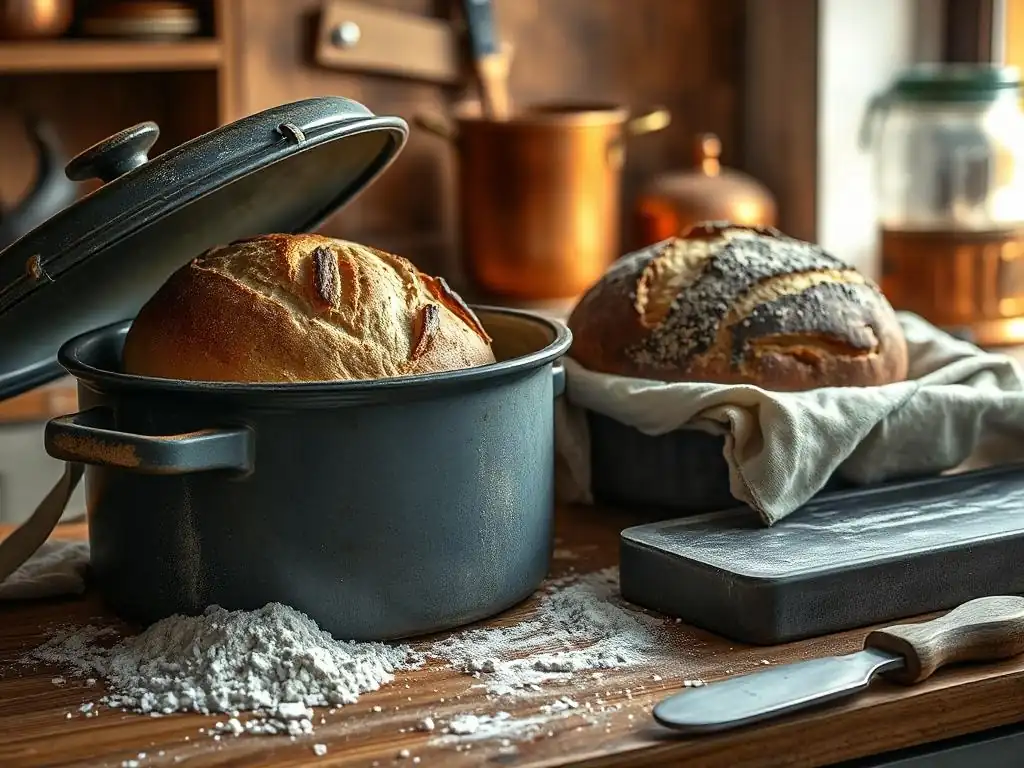
Welcome to BakeWithEase, your guide to effortless baking! Ever wondered if your Dutch oven is truly the best tool for achieving that perfect crust and airy crumb? Or could a baking steel be the secret weapon you've been missing? Dive in as we explore Dutch oven baking bread tips and compare the effectiveness of these two popular baking titans, helping you choose the ultimate champion for your homemade loaves! Prepare to elevate your bread-baking game!
- Introduction: Level Up Your Bread Baking Game
- Understanding Dutch Oven Bread Baking: Tips and Techniques
- Exploring Baking Steel for Bread: A Modern Alternative
- Dutch Oven vs. Baking Steel: A Head-to-Head Comparison
- The Verdict: Choosing the Right Tool for Your Bread Baking Needs
- Conclusion: BakeWithEase and the Perfect Loaf.
-
Frequently Asked Questions
- What are the main advantages of using a Dutch oven for baking bread?
- Can I use any Dutch oven for baking bread, or are there specific features to look for?
- What are some essential Dutch oven baking bread tips for beginners?
- How does baking bread in a Dutch oven compare to using a baking steel?
- Are there any Dutch oven baking bread tips for achieving a better rise in my loaf?
- Final Reflection: The Perfect Crust: Finding Your Bread-Baking Soulmate
- Unleash Your Inner Baker: Which Will Elevate Your Bread?
Introduction: Level Up Your Bread Baking Game
Embarking on the journey of baking your own artisan bread at home is incredibly rewarding. There's nothing quite like the aroma of a freshly baked loaf filling your kitchen. As you progress from simple no-knead recipes to more complex sourdoughs, you'll discover that specialized equipment can make a significant difference in the final outcome, particularly when it comes to achieving that coveted golden-brown crust and airy interior. Two popular tools often recommended for achieving professional-quality results in a home oven are the Dutch oven and the baking steel.
Both a Dutch oven and a baking steel serve the primary purpose of providing intense, consistent heat to your dough, mimicking the conditions of a professional bread oven. However, they achieve this in different ways and each comes with its own set of techniques and benefits.
Understanding how each tool works and what results you can expect will help you decide which is the best fit for your baking style, your budget, and the types of bread you love to bake. Let's dive into the specifics of each to help you make an informed choice and truly level up your home bread baking game.
Understanding Dutch Oven Bread Baking: Tips and Techniques
What is a Dutch Oven? A Baker's Best Friend?
A Dutch oven is essentially a heavy cooking pot with a tight-fitting lid, traditionally made from cast iron, though ceramic or enameled versions are also common. Its thick walls and lid retain and distribute heat exceptionally well, making it a versatile piece of cookware used for everything from stews to roasts. For bread baking, its key advantage lies in its ability to create a steamy environment around the dough during the initial phase of baking.
When cold dough is placed in a preheated Dutch oven and the lid is closed, the moisture evaporating from the dough is trapped inside the pot. This trapped steam keeps the surface of the bread moist, allowing it to expand fully before the crust sets. This crucial step, known as oven spring, results in a loaf with better volume and a more open crumb structure. After the initial steaming period, the lid is removed, allowing the bread to brown and develop a thick, crispy crust from the direct, intense heat of the cast iron.
Dutch Oven Bread Baking Tips: Achieving the Perfect Crust
Achieving a perfect crust when Dutch oven baking bread tips are followed involves mastering heat and moisture. One of the most important tips is to preheat the Dutch oven thoroughly in your oven, typically at a high temperature like 450°F (230°C) or even 500°F (260°C) for at least 30-60 minutes. This ensures the pot is radiating enough heat to give the dough an immediate boost. Carefully transferring the dough into the scorching hot pot is key; many bakers use parchment paper as a sling to avoid burns and simplify the process.
Another essential tip for baking bread in a Dutch oven is managing the lid-on and lid-off timing. A common approach for a standard 1-2 lb loaf is to bake with the lid on for the first 20-25 minutes, which is when most of the oven spring occurs due to the trapped steam.
After this initial phase, remove the lid and continue baking for another 20-30 minutes, or until the crust is deeply colored and the internal temperature reaches around 200-210°F (93-99°C). This two-stage process allows the crust to set and brown beautifully after the loaf has achieved its maximum volume, a hallmark of effective Dutch oven baking bread tips.
Dutch Oven Baking Bread Recipes: Examples of Success
Many classic bread recipes thrive when baked in a Dutch oven, especially those with high hydration levels that benefit greatly from steam. The ubiquitous No-Knead Bread recipe popularized by Jim Lahey of Sullivan Street Bakery is a prime example. This recipe, which requires minimal effort and relies on a long fermentation, consistently produces a beautiful, crusty loaf when baked in a preheated 5-6 quart Dutch oven. The high heat and trapped steam are perfectly suited to its wet, sticky dough, resulting in impressive oven spring and a shatteringly crisp crust.
Sourdough bread is another type of loaf that sees significant improvement from Dutch oven baking. The naturally leavened dough often has a higher hydration and requires robust steam in the initial baking phase to achieve maximum rise and develop its characteristic blistered crust.
Baking a 1.5-2 lb sourdough loaf in a preheated Dutch oven at around 450-475°F (230-245°C) for the first 20-25 minutes with the lid on, followed by 25-35 minutes with the lid off, consistently yields loaves with excellent structure, open crumb, and a deep, satisfying crust. These examples highlight how effective Dutch oven baking bread tips can be for various dough types.
Advantages of Dutch Oven Bread Baking
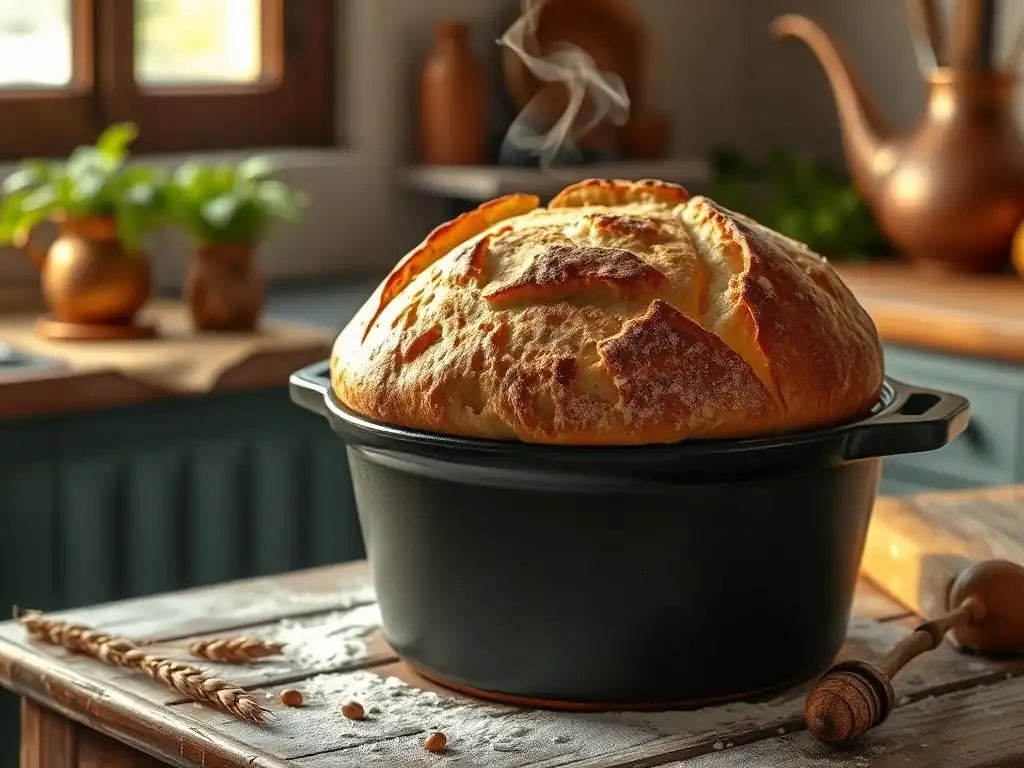
The primary advantage of using a Dutch oven for baking bread is its ability to create and trap steam around the loaf. Home ovens typically lack the steam injection capabilities of professional ovens, and attempting to create steam by placing water trays or ice cubes often results in insufficient and uneven steam distribution. The sealed environment of the Dutch oven effectively solves this problem, ensuring the dough stays moist and flexible for longer, leading to superior oven spring and a thinner, crispier crust compared to baking on a standard baking sheet or stone without steam.
Another significant benefit is the even and intense heat transfer provided by the heavy cast iron or ceramic. Once preheated, the pot maintains a consistent high temperature that surrounds the loaf, promoting even baking and browning. This radiant heat, combined with the conductive heat from the base of the pot, helps achieve a uniformly cooked interior and a well-developed crust. It simplifies the process of getting good results, making it a favorite tool for many home bakers following Dutch oven baking bread tips.
Despite its many benefits, baking bread in a Dutch oven does have some drawbacks. The most significant is the difficulty and potential danger involved in handling a scorching hot, heavy piece of cookware. Transferring wet dough into a preheated 450°F+ pot requires careful maneuvering to avoid burns, even when using parchment paper. The weight of a standard 5 or 6-quart cast iron Dutch oven can range from 12 to over 15 pounds, making it cumbersome to lift in and out of a hot oven, especially if you're baking multiple loaves.
Furthermore, the shape and size of the Dutch oven can limit the shape and size of the bread you bake. Most standard Dutch ovens are round or oval and best suited for baking a single, similarly shaped loaf that fits comfortably inside. Baking multiple loaves simultaneously usually requires multiple Dutch ovens. While some bakers manage to bake baguettes or other shapes, the technique is less straightforward than with a flat surface. Finally, the initial cost of a good quality Dutch oven can be a barrier for some, although prices vary widely.
Exploring Baking Steel for Bread: A Modern Alternative
What is a Baking Steel?
A baking steel is a thick plate made from steel, designed to be placed in an oven and preheated to a very high temperature. Unlike a baking stone (which is porous and made of ceramic or cordierite), steel is an excellent conductor of heat, meaning it absorbs and transfers thermal energy much faster and more efficiently. This property makes it incredibly effective at transferring intense heat directly to the base of the dough.
Developed relatively recently as an alternative or improvement upon baking stones, baking steels are typically 1/4 to 1/2 inch thick and weigh anywhere from 15 to 30 pounds or more depending on size and thickness. Their ability to store and transfer a large amount of heat makes them ideal for achieving a rapid, powerful bake, particularly for items that benefit from intense bottom heat, such as pizzas, flatbreads, and, of course, certain types of bread.
Baking Steel Bread Baking Tips: Maximizing Heat Transfer
To maximize the effectiveness of a baking steel for bread, preheating is absolutely crucial, and it generally requires a longer time than a baking stone or even a Dutch oven. A common recommendation is to preheat the steel in your oven at its highest setting (often 500-550°F or 260-290°C) for a full hour, or even longer, to ensure the heat is fully saturated throughout the thick metal plate. This extended preheating time is one of the key baking steel bread baking tips to follow.
Another vital aspect when using a steel for bread is managing steam, as the steel itself doesn't create a steamy environment like a Dutch oven. You'll need to introduce external steam into the oven during the initial baking phase. This can be done by placing a tray of hot water or ice cubes on a rack below the steel, or by using specialized steam-generating setups.
Sliding the dough onto the hot steel also requires practice; using a pizza peel dusted with flour or cornmeal is the standard technique to ensure a smooth transfer. Maintaining that high oven temperature throughout the bake is also important for achieving the desired crust development.
Baking Steel Bread Recipes: Unleash the Crispiness
Baking steels excel with breads that benefit from intense bottom heat and a quick, hot bake, often resulting in a particularly crispy base. Ciabatta, with its open structure and rustic crust, is a fantastic candidate for baking steel. The high heat from the steel helps set the base quickly, allowing the airy dough to expand upwards. Focaccia is another bread type that benefits, developing a beautifully golden and slightly crispy bottom when baked on steel.
While baking steels are often associated with pizza, they can produce excellent results with leaner, artisan-style bread doughs when combined with adequate steam. Breads like pain de campagne or even baguettes (if you can manage the shape on the flat surface) can develop deep, satisfying crusts thanks to the efficient heat transfer. The key is ensuring sufficient steam during the first part of the bake to allow for proper oven spring before the crust hardens, which is critical for successful baking steel bread recipes.
Advantages of Baking Steel Bread Baking
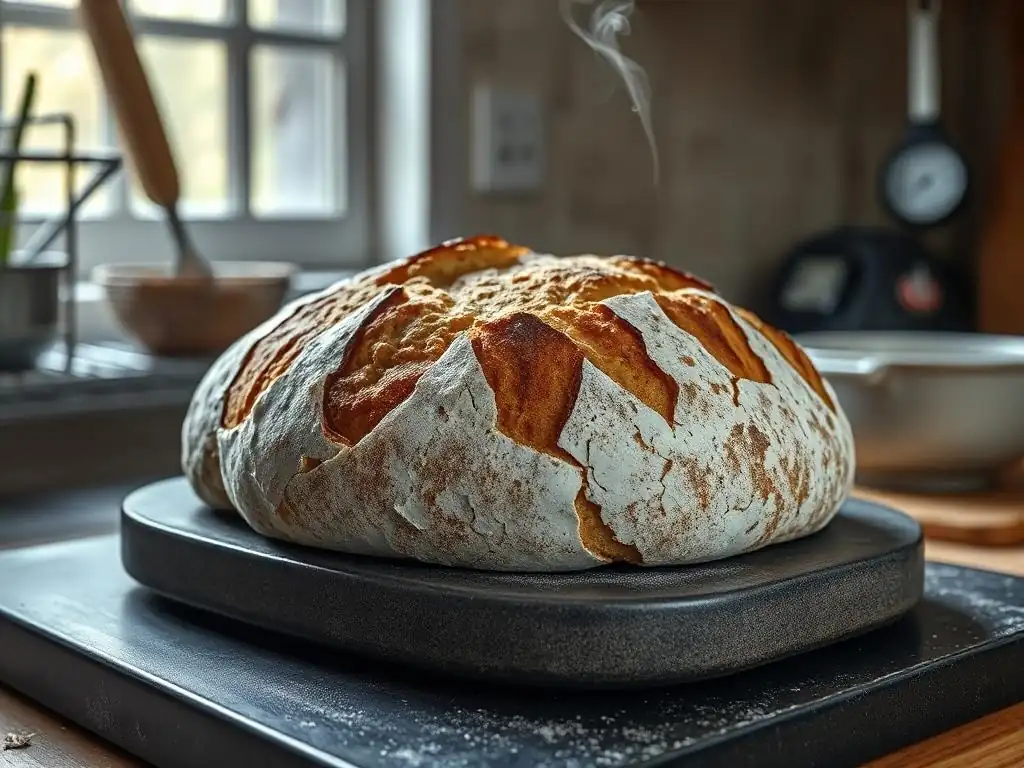
One of the major advantages of a baking steel is its exceptional heat conductivity and capacity. Steel transfers heat to the dough much faster and more effectively than ceramic stones or even cast iron, leading to a rapid and powerful oven spring. This intense heat from below helps create a deeply browned and crispy bottom crust, which is particularly desirable for certain bread types and pizzas. The steel recovers temperature quickly after the dough is placed on it, maintaining consistent heat throughout the bake.
Furthermore, baking steels are incredibly durable. Unlike baking stones, they are virtually indestructible; they won't crack from thermal shock or accidental drops. They also offer a large, flat surface, which can be more versatile for baking different shapes and multiple smaller items simultaneously compared to the confines of a Dutch oven. Once you've mastered generating external steam, a baking steel can consistently produce loaves with excellent structure and a distinctively crisp crust.
The main disadvantage of using a baking steel for bread is the necessity of creating external steam in your oven. This adds an extra step to the baking process and can be less effective or harder to manage consistently than the steam trapped within a Dutch oven. Achieving sufficient steam in a standard home oven can be tricky and may require specialized equipment or techniques like using lava rocks or chain mail in a steam pan, which adds complexity and potentially cost.
Another drawback is the weight and size of baking steels. Like Dutch ovens, they are very heavy, often weighing 20 pounds or more, which can make them difficult to handle and store.
They also require a significant amount of time to preheat thoroughly – often an hour or more at the oven's highest temperature – consuming more energy and requiring patience before you can start baking. Finally, while they provide intense bottom heat, they don't radiate heat around the top of the loaf in the same way a lidded Dutch oven does, which can affect overall browning unless your oven's top element is very effective.
Dutch Oven vs. Baking Steel: A Head-to-Head Comparison
| Feature | Dutch Oven | Baking Steel |
|---|---|---|
| Primary Benefit | Trapped Steam for Oven Spring | Intense Conductive Heat for Crust & Spring |
| Steam Method | Self-steaming (from dough moisture) | Requires external steam generation |
| Heat Transfer | Radiant + Conductive (from pot walls/base) | Primarily Conductive (from surface) |
| Preheating Time | 30-60 minutes | 60+ minutes |
| Handling | Heavy, hot pot; careful dough transfer | Heavy plate; careful dough transfer with peel |
| Versatility | Braising, stews, roasts + bread | Pizza, flatbreads, some breads, pastries |
| Typical Price | \$50 - \$300+ | \$80 - \$200+ |
Crust Quality: Which Wins the Crispiness Battle?
Both tools can produce exceptional crusts, but they do so differently. A Dutch oven excels at creating a thin, evenly blistered, and shatteringly crisp crust all around the loaf. The trapped steam prevents the crust from setting too early, allowing for maximum expansion, and then the intense heat once the lid is removed provides even browning. Many bakers find the all-around crispness from a Dutch oven particularly satisfying for rustic loaves.
A baking steel, on the other hand, provides incredibly intense conductive heat to the base of the loaf. This often results in a deeply browned, thick, and very crispy bottom crust. While the top and sides can also become crispy, their development relies more on the oven's ambient heat and the effectiveness of your external steam method. For those who prioritize a substantial, crispy base, perhaps for a loaf intended for slicing and topping, the baking steel has a slight edge in that specific area, provided sufficient steam is used initially.
Ease of Use: Beginner-Friendly Baking
When it comes to ease of use, particularly for beginners, the Dutch oven often gets the nod. Its self-steaming ability simplifies one of the most challenging aspects of home bread baking – creating effective steam. You simply preheat the pot, carefully place the dough inside, put the lid on, and bake. There's no need to worry about setting up trays of water or generating external steam, which can be variable and sometimes less effective. This straightforward process makes it easier for newcomers to consistently achieve good oven spring and a decent crust right from their first few attempts.
The baking steel requires a bit more finessing. The need to generate external steam adds a step that requires learning and potentially experimenting with different methods to find what works best in your specific oven. Transferring dough onto a flat, hot surface with a peel also has a learning curve compared to dropping dough into a pot. While neither tool is entirely effortless due to their weight and heat, the simplified steam process makes the Dutch oven slightly more beginner-friendly for achieving classic artisan bread results.
Versatility: Beyond Bread Baking
Beyond their primary use for baking bread, both tools offer additional versatility in the kitchen, though in different ways. A Dutch oven is a highly versatile piece of cookware suitable for a wide range of cooking methods on both the stovetop and in the oven. It's excellent for braising meats, simmering stews, making soups, frying, and even roasting vegetables. Its ability to go from stovetop searing to oven finishing makes it a workhorse for many different cuisines and cooking techniques.
A baking steel's versatility is primarily focused on high-heat baking applications. While its main claim to fame is incredible pizza (often producing results comparable to a commercial pizza oven), it's also great for baking other flatbreads, pastries like croissants or scones (which benefit from intense bottom heat), and even crisping up leftovers. It's less useful for stovetop cooking or dishes that require deep pots, making its versatility more specialized compared to the all-around utility of a Dutch oven.
Price Point: Investing in Your Baking Passion
The cost of both a Dutch oven and a baking steel can vary significantly based on brand, material, and size. A basic cast iron Dutch oven from a reputable brand might start around \$50-\$80, while premium enameled versions from brands like Le Creuset or Staub can easily exceed \$300 or even \$400 for larger sizes. For Dutch oven baking bread tips on a budget, finding a good quality, non-enameled cast iron pot or a more affordable enameled brand can be a cost-effective entry point.
Baking steels also have a range of prices, typically starting around \$80-\$100 for a standard 1/4-inch thick plate and going up to \$150-\$250 or more for thicker 1/2-inch versions or custom sizes. While the initial investment for either tool can be notable compared to a simple baking sheet, both are durable pieces of equipment designed to last for many years, making them worthwhile long-term investments for serious home bakers looking to improve their bread quality.
The Verdict: Choosing the Right Tool for Your Bread Baking Needs
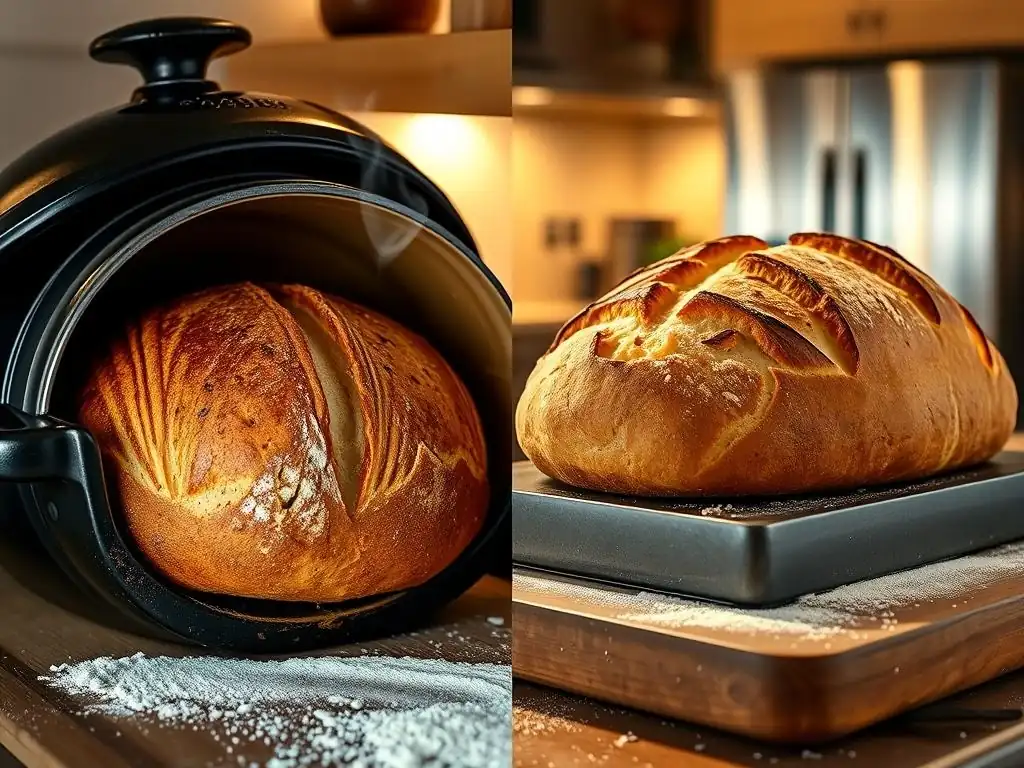
Deciding between a Dutch oven and a baking steel depends largely on your baking goals, the types of bread you most want to bake, and your comfort level with different techniques. Both can produce excellent results, but they cater to slightly different preferences and processes.
When to Choose a Dutch Oven for Baking Bread
Choose a Dutch oven if your primary goal is to consistently bake beautiful, rustic, freeform loaves with a thin, evenly crisp crust and excellent oven spring, especially high-hydration doughs like sourdough or no-knead bread. The built-in steam system makes the process simpler and more reliable for achieving great results without needing external steam setups. It's often considered the more beginner-friendly option for achieving that classic artisan look and feel.
If you also want a versatile pot for cooking stews, roasts, and other dishes, a Dutch oven offers significant value beyond just bread baking. Mastering Dutch oven baking bread tips is straightforward and rewarding for many home bakers.
When to Choose a Baking Steel for Baking Bread
Opt for a baking steel if you are serious about achieving the absolute crispiest bottom crust, particularly if you also bake a lot of pizza. The intense conductive heat transfer is unmatched for developing a deeply browned base.
While it requires managing external steam for optimal bread results, if you are comfortable with that extra step or already have a good steaming method, a steel can produce fantastic loaves with powerful oven spring. It's also a good choice if you want a large, flat surface for baking multiple smaller items or different shapes of bread that might not fit neatly inside a pot.
[Optional: Hybrid Approach - Using Both!]
For the truly dedicated home baker who wants the best of both worlds, using both a Dutch oven and a baking steel is an option, though perhaps an indulgence! Some advanced techniques involve starting a loaf in a Dutch oven for the steam phase and then transferring it directly onto a preheated baking steel for the final browning phase to maximize crust development.
Alternatively, if you bake different styles of bread, you might find a Dutch oven perfect for your sourdough and a baking steel ideal for your ciabatta or focaccia. Having both tools in your kitchen arsenal allows you to choose the optimal method for each specific recipe, offering ultimate flexibility in your pursuit of the perfect loaf.
Conclusion: BakeWithEase and the Perfect Loaf.
Whether you choose a Dutch oven or a baking steel, investing in quality equipment can significantly elevate your home bread baking results. Both tools provide the essential intense heat needed to transform simple dough into a magnificent loaf with a beautiful crust and airy interior. The Dutch oven simplifies the crucial steam step, making it a go-to for many classic artisan breads and an excellent starting point for bakers focusing on Dutch oven baking bread tips. The baking steel offers unparalleled conductive heat for exceptional crust development, especially on the base, and is a must-have for pizza lovers.
At BakeWithEase, our goal is to provide you with the knowledge and guidance to bake confidently. Understanding the strengths and techniques associated with tools like the Dutch oven and baking steel is a key part of mastering the craft. Whichever tool you choose, remember that practice and patience are your best allies. Experiment with temperatures, timings, and recipes, and soon you'll be consistently pulling perfect, golden-brown loaves from your oven, ready to be shared and savored. Happy baking!
Frequently Asked Questions
What are the main advantages of using a Dutch oven for baking bread?
Dutch ovens excel at trapping steam and creating a crispy crust, while also providing even heat distribution for a perfectly baked loaf.
Can I use any Dutch oven for baking bread, or are there specific features to look for?
Ideally, you want a Dutch oven that's oven-safe, has a tight-fitting lid, and is large enough to accommodate your dough with some room for expansion.
What are some essential Dutch oven baking bread tips for beginners?
Always preheat your Dutch oven thoroughly, use parchment paper for easy removal, and avoid opening the lid too frequently during baking to maintain the steamy environment.
How does baking bread in a Dutch oven compare to using a baking steel?
A Dutch oven provides a closed, steamy environment whereas a baking steel offers direct heat for a crispier bottom crust, making the choice depend on your desired result.
Are there any Dutch oven baking bread tips for achieving a better rise in my loaf?
Ensure your dough has sufficient gluten development, allow for a proper proofing period, and maintain a consistent oven temperature for optimal rise.
Final Reflection: The Perfect Crust: Finding Your Bread-Baking Soulmate
The quest for the perfect bread crust is a timeless pursuit, and the choice between a Dutch oven and a baking steel significantly impacts the outcome. This journey through the intricacies of Dutch oven and baking steel baking has revealed that the "best" choice isn't universal; it's deeply personal, dependent on your baking style, desired crust characteristics, and available resources. Ultimately, understanding the nuances of each method empowers you to achieve bread-baking bliss.
The impact of these two baking methods extends beyond simply achieving a good crust; they represent different approaches to the craft itself. The Dutch oven's enclosed environment fosters a gentler, more even bake, reminiscent of traditional methods. The baking steel, on the other hand, delivers a crispier, more intensely browned crust, reflecting a modern, high-heat approach. This difference speaks to a broader shift in baking culture, a constant evolution between tradition and innovation. The best bread is the bread you enjoy baking the most.
– This simple truth underscores the importance of finding the method that resonates with your personal baking journey.
Now, consider your own baking aspirations. Do you crave a rustic, deeply flavorful loaf, or a crisp, crackling crust that shatters with each bite? This article has equipped you with the knowledge to make an informed choice. Experiment! Try both methods, explore different flours and techniques, and most importantly, savor the process. The journey of perfecting your bread-baking is as rewarding as the final product itself. Embrace the challenge, and discover the method that truly unlocks your potential as a baker.
Unleash Your Inner Baker: Which Will Elevate Your Bread?
Thanks for exploring the world of incredible bread baking with us! You've now armed yourself with the knowledge to choose the perfect tool for your baking journey. Ready to take the next step?
- Invest in your ideal baking surface: Whether it's the versatility of a Dutch oven or the crisp crust potential of a baking steel, making this investment will transform your bread baking. Think about your baking style and budget to make the best choice for you.
- Share your baking triumphs (and challenges!): We'd love to see your first loaf baked with your new equipment. Share a picture on social media using #BakeWithEaseDutchOven or #BakeWithEaseSteel!
- Explore our other bread recipes: Discover even more delicious bread recipes and techniques on our website – we've got everything from sourdough to focaccia waiting for you!
So, which baking surface will you choose to elevate your baking game? Let us know in the comments below!