
The Most Essential (and Often Overlooked) Decorating Tools

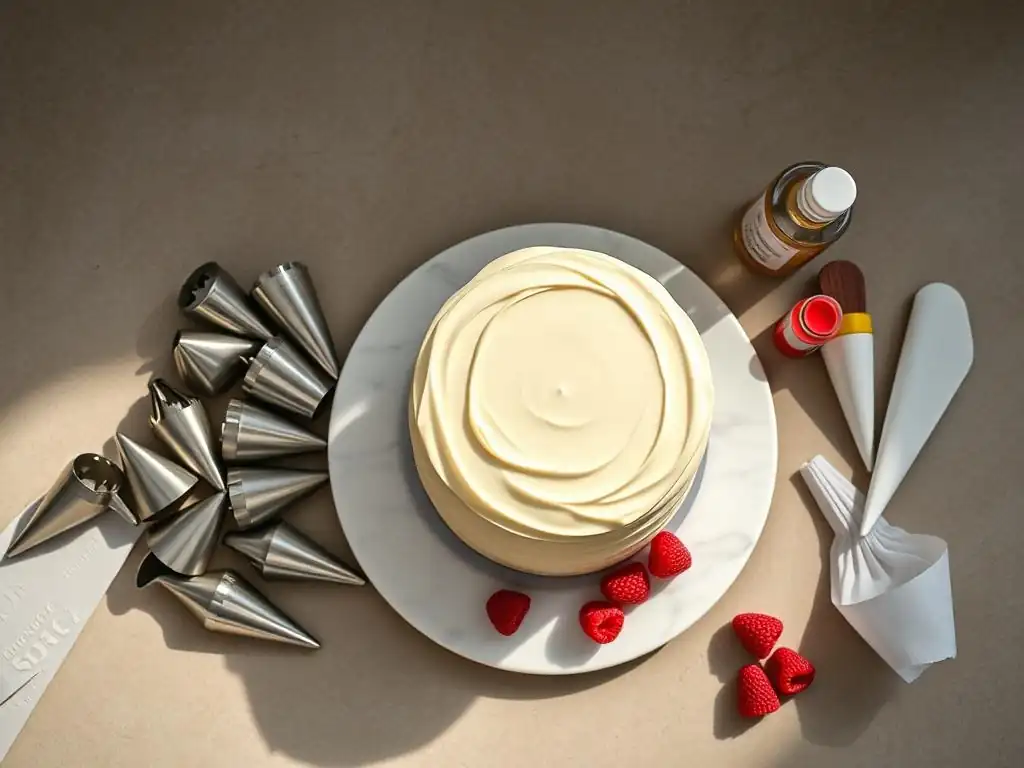
Welcome to BakeWithEase, your haven for all things baking! Ever wondered how the pros achieve those flawlessly decorated cakes? You might be surprised to discover it's not just skill, but having the right equipment. Dive into our essential cake decorating tools guide to unlock the secrets behind stunning creations, and learn which often-overlooked items can truly elevate your baking game. Are you ready to transform your cakes from simple to spectacular? Let's get started!
The Turntable: Your Cake's Best Friend for Smooth Frosting
Achieving that perfectly smooth, professional finish on your cake's frosting is a goal for many home bakers. While a steady hand helps, the true secret weapon is often a simple, yet incredibly effective tool: the cake turntable. This rotating stand allows you to easily turn your cake as you apply and smooth frosting, ensuring even coverage and sharp edges without having to constantly shift your body or the cake itself. It minimizes the risk of accidental bumps or uneven pressure, which are common culprits behind lopsided frosting.
Using a turntable transforms the frosting process from a wrestling match into a graceful dance. It provides a stable base and smooth rotation, making it significantly easier to apply frosting with an offset spatula or scraper. For example, when applying a crumb coat, the turntable lets you quickly cover the entire surface. When applying the final coat, you can spin the cake slowly while holding your spatula or scraper steady, allowing the tool to remove excess frosting and create a uniform layer. This is a fundamental piece of equipment in any essential cake decorating tools guide.
Why a Rotating Cake Stand is a Must-Have: Even Frosting Every Time
The primary benefit of a rotating cake stand is the unparalleled control it gives you over the frosting process. As you spin the cake, you can maintain consistent pressure and angle with your frosting tools, leading to a much smoother and more uniform finish than you could achieve by trying to manually turn the cake. This is especially crucial when working with buttercreams or ganaches that set relatively quickly.
Think about applying frosting to a cake without a turntable – you'd have to pick it up, turn it awkwardly, or lean over it at odd angles. This often results in inconsistent frosting thickness, visible stop-and-start marks, and difficulty getting crisp edges. A good turntable eliminates these issues, allowing you to work quickly and efficiently, which is vital for achieving a beautiful result. It's truly one of the most essential tools for cake decorating.
Recommended Turntable
When choosing a turntable, consider its stability and the smoothness of its rotation. A heavy-duty metal turntable with ball bearings generally offers the smoothest spin and the most stability, especially for larger or heavier cakes. Plastic turntables are more affordable, often priced under $20, but can sometimes wobble or have a less fluid rotation, which can make achieving a perfect finish more challenging. A quality metal turntable, often found in the $30-$50 range, is a worthwhile investment for anyone serious about cake decorating, offering durability and performance that significantly improves the frosting process.
Offset Spatulas: Mastering the Art of Smooth Finishes
Offset spatulas are the unsung heroes of cake decorating. Their unique angled blade keeps your hand elevated and away from the cake's surface, providing crucial clearance and control when spreading frosting or lifting delicate items. Unlike a straight spatula or knife, the offset design allows you to apply frosting smoothly and evenly across large surfaces or slide under cakes and layers without disturbing the frosting or the cake itself.
These versatile tools come in various sizes, typically measured by the length of the blade, ranging from small 4-inch spatulas perfect for cupcakes or small details, to large 12-inch spatulas ideal for covering the sides and tops of multi-tiered cakes. Having a selection of sizes is incredibly useful, as each offers specific advantages for different tasks. They are indispensable items in any comprehensive essential cake decorating tools guide.
Angled vs. Straight: Choosing the Right Offset Spatula for Your Needs
While both offset and straight spatulas exist, the offset design is generally preferred for cake decorating. The angled handle provides the necessary clearance mentioned earlier, making it far easier to spread frosting smoothly and consistently across the top and sides of a cake without your knuckles dragging through the frosting.
Straight spatulas, while useful for other kitchen tasks, don't offer this hand clearance, making them less effective for achieving professional-looking smooth finishes on cakes. For most cake decorating tasks, an offset spatula is the superior choice, offering better leverage and control for spreading, smoothing, and even lifting.
Our Top Pick: Why We Love It
If we had to pick one, a medium-sized offset spatula, around 8 inches in blade length, is often the most versatile tool in an essential cake decorating tools guide. This size is large enough to efficiently cover the surface of most standard cakes but small enough to handle comfortably for detailing or smaller projects. Look for one with a sturdy, yet flexible stainless steel blade and a comfortable handle. The flexibility allows the blade to conform slightly to the cake's surface, aiding in smooth application, while the stainless steel ensures durability and is easy to clean.
Piping Bags and Tips: Creating Beautiful Designs
Piping bags and tips are your artistic brushes for cake decorating, allowing you to create everything from simple borders and dots to intricate swirls, rosettes, leaves, and even detailed writing. Piping bags hold the frosting or other material (like ganache or melted chocolate), while the tips, inserted into the end of the bag, shape the flow of the material as it's squeezed out. This combination opens up a world of decorative possibilities.
Mastering piping takes practice, but even beginners can achieve impressive results with just a few basic tips. Understanding how to fill and handle a piping bag correctly, along with choosing the right consistency of frosting, are key skills that unlock the potential of these essential cake decorating tools. They are fundamental for adding flair and personality to any baked creation.
Choosing the Right Piping Bag: Disposable vs. Reusable
Piping bags come in two main types: disposable and reusable. Disposable bags, typically made of plastic, are convenient as they require no cleaning – simply use and discard. They are often sold in rolls or boxes of 50 or 100 and are great for using multiple colors or for quick projects.
Reusable bags are usually made from coated cotton, nylon, or silicone. They are more environmentally friendly and can be more durable, often providing a better grip. However, they require thorough cleaning after each use, which can sometimes be tricky depending on the frosting used. A good starter set might include a few reusable bags, perhaps 12-inch or 14-inch sizes, which are versatile for various tasks. Many bakers keep both types on hand for different situations.
Essential Piping Tips for Beginners: Round, Star, and Leaf Tips
For those starting out with an essential cake decorating tools guide, a few basic piping tip shapes are indispensable. Focusing on round, star, and leaf tips will allow you to create a wide range of classic decorations.
Round Tip Recommendations: Perfect for Outlines and Writing
Round tips create smooth, circular lines of frosting. Small round tips, like sizes #1 to #3, are perfect for fine details, writing messages on cakes, or creating dots. Medium round tips, such as #5 to #12, are excellent for piping outlines, filling in areas, creating beads or pearls, and simple borders. Larger round tips, like #1A or #2A, are used for piping large dots or mounds, often seen on cupcakes.
Star Tip Recommendations: For Classic Star Borders
Star tips produce lines of frosting with ridges, resulting in the classic star shape. Open star tips (like #18, #21, or #32) create defined star shapes and are ideal for borders, rosettes, and swirls. Closed star tips (like #1M or #2D) produce more intricate, ruffled designs, often used for cupcake swirls or large rosettes. The popular #1M tip creates a beautiful, swirly top for cupcakes with ease.
Leaf Tip Recommendations: Creating Realistic Leaves
Leaf tips, like tip #67 or #352, are specifically designed to create realistic-looking leaves with a distinct vein down the center. By varying the pressure as you pipe and pulling the tip away from the cake, you can create leaves of different sizes and shapes, adding a natural, organic touch to your floral cake designs. While maybe not the very first tip you'd buy, it's essential for adding natural accents.
Cake Scrapers: Achieving Perfectly Smooth Sides
Achieving perfectly smooth, straight sides on a frosted cake can be surprisingly challenging. This is where cake scrapers become invaluable. These flat tools are held against the side of a rotating cake to remove excess frosting and create a smooth, even surface. They are crucial for achieving that sharp, professional look that elevates a simple frosted cake.
Scrapers come in various materials and edge designs, each offering slightly different results. Using a scraper in conjunction with a turntable is the most effective way to get those enviable smooth sides. Simply apply ample frosting to the sides, hold the scraper steady against the cake at a slight angle, and rotate the turntable. The scraper will shear off the excess frosting, leaving a beautifully smooth surface behind.
Different Types of Cake Scrapers: Metal, Plastic, and Comb
Cake scrapers are typically made from metal (usually stainless steel) or plastic. Metal scrapers tend to be thinner and heavier, offering a very straight, rigid edge that excels at creating sharp, smooth finishes, particularly with firmer frostings. Plastic scrapers are lighter, more flexible, and generally more affordable. While they can achieve smooth sides, they may not give as crisp an edge as metal ones.
Additionally, 'comb' scrapers are available, which have textured edges instead of a smooth one. These are used to create decorative patterns, grooves, or waves around the sides of the cake after the initial smooth layer is applied. A set including both smooth and comb edges offers the most versatility in your essential cake decorating tools collection.
The Metal Scraper Advantage: Achieving a Professional Finish
For truly professional-looking, smooth sides, a metal scraper is often the preferred tool among experienced decorators. The weight and rigidity of a stainless steel scraper provide superior control and allow you to apply consistent pressure along the cake's height. This results in incredibly smooth, vertical sides with sharp corners where the top meets the side – a hallmark of a well-decorated cake. While plastic scrapers are great for beginners and basic smoothing, the difference a good metal scraper makes is noticeable.
Our Go-To Scraper
A sturdy, stainless steel bench scraper, often used for dough work, doubles perfectly as a fantastic cake scraper. Its straight, rigid edge and comfortable handle make it ideal for achieving those super smooth sides. Look for one that is at least 6 inches tall to accommodate standard cake heights. Many of these multi-purpose scrapers can be found for around $10-$20 and are a highly recommended addition to your essential cake decorating tools guide.
Cake Leveler and Slicer: Ensuring Even Cake Layers
Baking a cake is one thing, but preparing it for decorating requires perfectly level layers. A cake leveler or slicer is a tool designed specifically for this purpose, ensuring that each cake layer is uniform in thickness. Trying to slice layers with just a knife often results in uneven cuts, leading to a lopsided cake that is difficult to stack and frost smoothly.
Even layers are fundamental to a stable and aesthetically pleasing stacked cake. They ensure that the filling is evenly distributed and that the cake stands straight. Using a leveler takes the guesswork out of slicing, providing a consistent height across the entire layer. This is an essential step before you even start applying frosting with your other essential cake decorating tools.
Why Even Layers Matter: Preventing Uneven Frosting and Structure
Uneven cake layers are a common source of frustration in cake decorating. If one side is thicker than the other, your stacked cake will lean. When you try to frost it, the uneven height makes it nearly impossible to achieve smooth, straight sides with a scraper. You'll end up with areas where the frosting is too thick or too thin, compromising both the look and the taste.
Moreover, uneven layers can affect the structural integrity of a stacked cake, making it more prone to collapsing, especially with heavier fillings or multiple tiers. Starting with perfectly level layers provides a solid foundation for all your subsequent decorating efforts, ensuring your cake is stable and looks fantastic.
Adjustable Cake Leveler Recommendations: Easy and Precise
An adjustable wire cake leveler is a highly recommended tool for beginners and experienced bakers alike. These tools feature a thin wire stretched across a frame, with notches or adjustable feet on the sides that allow you to set the height of the cut. You simply place the wire over your cake and saw back and forth gently, letting the wire do the work.
Look for a leveler with clearly marked height settings (often in half-inch increments) and a sturdy frame. Models that can adjust to different cake diameters are particularly versatile. An adjustable leveler typically costs between $10 and $25 and is a small investment that makes a huge difference in the final appearance and stability of your cakes. It's a key item in any essential cake decorating tools guide focused on foundational techniques.
Cake Decorating Comb: Add Texture and Style to Your Cakes
Once you've mastered the art of smooth frosting with your scraper and turntable, you might want to add some texture for visual interest. This is where cake decorating combs come into play. These are plastic or metal tools with various patterned edges – think waves, zigzags, or straight lines – that are dragged around the side of a frosted cake to create decorative patterns.
Using a decorating comb is a simple way to elevate the look of your cake beyond a plain smooth finish. It's done after the final coat of frosting has been applied and is still soft. By holding the comb against the side of the rotating cake (using your turntable, of course! ), the patterned edge imprints the design into the frosting.
Unique and Creative Textures: Create unique designs with a cake decorating comb
Cake decorating combs allow you to quickly and easily add unique textures and patterns to the sides of your cake. Instead of a simple smooth finish, you can create elegant waves, modern geometric lines, or classic ridged patterns. This adds an extra layer of visual appeal and can complement the overall design or theme of your cake.
Having a set of combs with different patterns gives you creative flexibility. You can use a fine-tooth comb for subtle lines, a wide-tooth comb for dramatic grooves, or a wavy comb for a softer look. Experimenting with different combs and frosting consistencies is part of the fun and helps you develop your own decorating style.
Our Go-To Set
A good starter set of cake decorating combs typically includes three or four combs with different patterns on each of their four sides, giving you a variety of options. Look for sturdy plastic or metal combs that are easy to grip. Many sets include patterns like wide and narrow stripes, waves, and zigzags. A versatile set like this can often be found for under $15 and is a great way to start exploring textured finishes as part of your essential cake decorating tools collection.
- The Turntable: Your Cake's Best Friend for Smooth Frosting
- Offset Spatulas: Mastering the Art of Smooth Finishes
- Piping Bags and Tips: Creating Beautiful Designs
- Cake Scrapers: Achieving Perfectly Smooth Sides
- Cake Leveler and Slicer: Ensuring Even Cake Layers
- Cake Decorating Comb: Add Texture and Style to Your Cakes
- What are the most essential cake decorating tools for a beginner?
- Why is a rotating cake stand so important for cake decorating?
- What's the difference between offset and straight spatulas in cake decorating?
- Are piping bags reusable, and what are the benefits of using them?
- Besides the basics, what's one often overlooked decorating tool that can significantly improve cake decorating results?
Understanding Cake Decorating Tool Materials: What to Look For
The materials your essential cake decorating tools are made from significantly impact their performance, durability, and ease of cleaning. Understanding the properties of common materials like stainless steel, silicone, and plastic will help you make informed choices when building or expanding your toolkit. Each material has its advantages and is often best suited for specific types of tools or tasks in the world of cake decorating.
Choosing tools made from appropriate, high-quality materials ensures they will last longer, perform better, and be safe for use with food. For instance, a flexible silicone spatula is ideal for scraping down a bowl, while a rigid stainless steel scraper is best for smoothing frosting. Considering the material is a crucial part of selecting the right essential cake decorating tools for your needs.
Stainless Steel: Durability and Hygiene
Stainless steel is a workhorse material in cake decorating tools, prized for its durability, strength, and resistance to rust and corrosion. Tools like offset spatulas, bench scrapers, and some piping tips are frequently made from stainless steel. It provides rigidity where needed, like for achieving sharp edges with a scraper, or flexibility in thinner blades for spreading frosting.
One of the biggest advantages of stainless steel is its hygiene. It's non-porous, meaning it doesn't harbor bacteria or absorb odors and flavors from frosting or other ingredients. It's also easy to clean and can withstand high temperatures, making it suitable for use with warm ganache or chocolate. Investing in stainless steel essential cake decorating tools is often a wise choice for longevity and performance.
Silicone: Flexibility and Non-Stick Properties
Silicone is another popular material, particularly for spatulas, piping bags, and mats. Its key properties are flexibility, non-stick surface, and heat resistance. Silicone spatulas are excellent for scraping bowls clean without scratching them and for folding delicate ingredients like whipped cream or meringue.
Silicone piping bags offer a good grip and are reusable. Silicone mats are useful for working with fondant or chocolate. The non-stick nature of silicone makes cleanup relatively easy compared to some other materials. While not as rigid as stainless steel, silicone provides essential flexibility and a gentle touch for certain decorating tasks.
Plastic: Affordability and Versatility
Plastic is widely used for various essential cake decorating tools due to its affordability, lightweight nature, and versatility. Piping tips, couplers (used to change piping tips easily), measuring spoons, certain scrapers, and some turntables are commonly made from food-grade plastic. Plastic tools are a great way to start building your collection without a significant initial investment.
While generally less durable than metal or silicone, high-quality plastics are sturdy enough for many decorating tasks. They are easy to clean and come in a wide range of colors and designs. Plastic scrapers, for instance, are softer than metal ones, which can be more forgiving for beginners while still allowing for decent smoothing results.
Budget-Friendly Cake Decorating: Building Your Toolkit Without Breaking the Bank
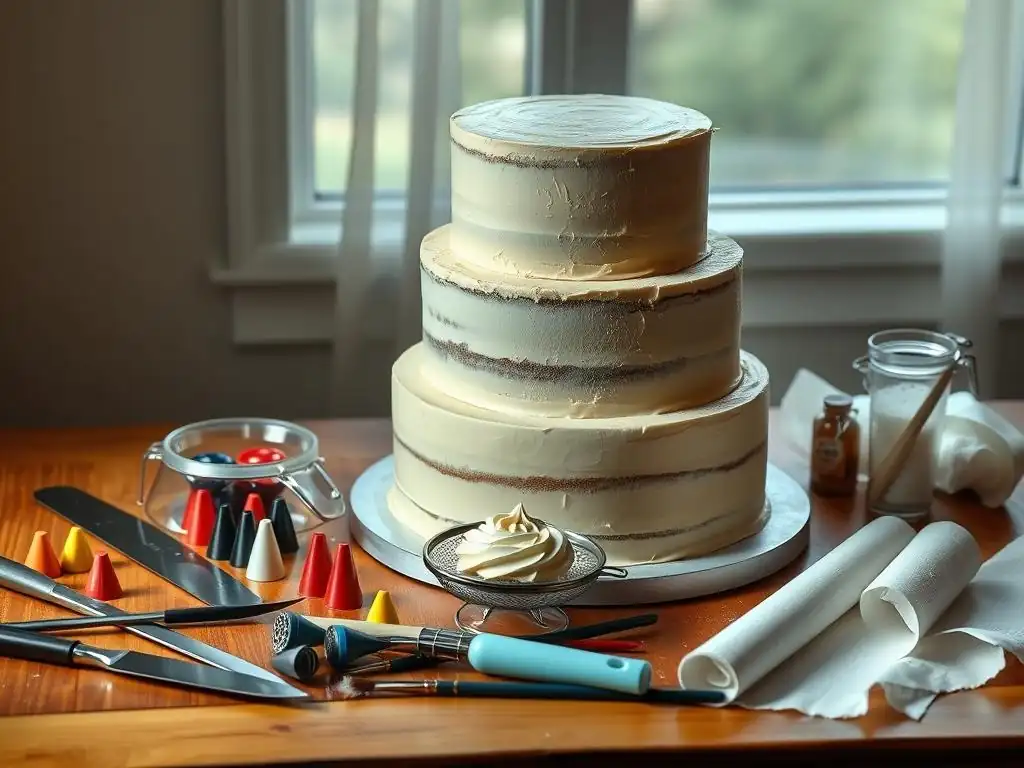
Getting started with cake decorating doesn't have to require a massive financial outlay. While professional-grade tools can be expensive, many essential cake decorating tools are quite affordable, and smart shopping can help you build a functional toolkit without breaking the bank. Prioritizing the most impactful tools and looking for value can make this creative hobby accessible.
Focusing on multi-purpose tools and starter sets designed for beginners is a great way to manage costs. Remember, you don't need every single gadget right away. Start with the absolute essentials and add more specialized tools as your skills grow and your decorating needs evolve. Building your essential cake decorating tools guide doesn't mean buying everything at once.
Essential Tools on a Budget: Prioritizing Your Purchases
When you're on a budget, focus on the tools that provide the most significant improvement to your basic decorating techniques. A good turntable is high on this list, even if it's a sturdy plastic one to start. A couple of essential offset spatulas (one small, one medium) are crucial. A basic set of piping bags (disposable are often cheaper upfront) and a few key piping tips (like a medium round, a medium open star, and a large closed star like #1M) will cover many designs.
Don't forget a basic cake leveler or a long serrated knife, and a simple plastic smooth-edged scraper. These items collectively provide the foundation for leveling, frosting, and basic piping, and you can often acquire them for a total cost significantly less than $100, allowing you to start practicing with essential cake decorating tools effectively.
Finding Deals and Discounts on Cake Decorating Supplies
Saving money on essential cake decorating tools often involves looking for sales, using coupons, and comparing prices across different retailers. Craft stores frequently have coupons or loyalty programs that can be applied to baking supplies. Online retailers often have sales events, particularly around holidays.
Consider purchasing starter kits or sets, which often bundle several essential tools at a lower price than buying them individually. While you might end up with one or two tools you don't use immediately, the overall savings can be substantial. Signing up for newsletters from baking supply stores can also alert you to upcoming discounts and promotions on essential cake decorating tools.
Advanced Cake Decorating Tools: Taking Your Skills to the Next Level
Once you've mastered the basics using your essential cake decorating tools, you might find yourself wanting to explore more complex techniques and designs. This is where advanced tools come into play. These specialized pieces of equipment allow for intricate details, dramatic effects, and professional finishes that go beyond standard frosting and piping.
Investing in advanced tools typically comes later in your decorating journey, as they often require more skill to use effectively and represent a larger financial commitment. However, they open up exciting new possibilities for creativity and can truly elevate your cakes to edible works of art.
Airbrush Systems: Achieving Stunning Color Gradients
Airbrush systems use compressed air to spray edible food coloring onto cakes, allowing for smooth, even color coverage, gradients, and stenciled designs. They are particularly useful for creating vibrant colors, shading effects, and realistic-looking details that are difficult to achieve with traditional frosting or painting methods.
A basic airbrush kit includes a compressor, an airbrush gun, and food-grade colors. While there's a learning curve to controlling the airbrush and preventing overspray, the results can be stunning, from subtle washes of color to bold, graphic patterns. This tool is a significant step up from basic coloring techniques in your essential cake decorating tools repertoire.
Fondant Tools: Creating Intricate Designs
Working with fondant requires a specific set of tools for rolling, cutting, shaping, and smoothing. Essential fondant tools include rolling pins (often non-stick or silicone), smoothing tools (for achieving sharp edges), various cutters (including circle cutters, impression mats, and specialized shape cutters), and modeling tools (for creating figures or intricate details).
Fondant allows for a very clean, smooth finish on cakes and is ideal for sculptural elements. While it's a different medium than buttercream, having the right fondant tools is essential for manipulating it effectively and creating detailed, professional-looking decorations like bows, ruffles, or sculpted figures.
Sugar Flower Supplies: Crafting Realistic Floral Decorations
Creating realistic sugar flowers is a highly specialized area of cake decorating that requires dedicated tools. Essential supplies include floral wire, petal dusts (edible colors applied dry for shading), veiners (molds that imprint natural petal textures), specialized cutters for different flower shapes, and forming pads or balls for shaping petals.
Crafting sugar flowers is a time-consuming but incredibly rewarding skill. These delicate, lifelike blooms can transform a cake into a stunning centerpiece. The tools for sugar flowers are quite specific and are typically added to your collection once you decide to delve into this particular decorating technique, complementing your core essential cake decorating tools.
Maintaining Your Essential Cake Decorating Tools: Cleaning and Storage Tips
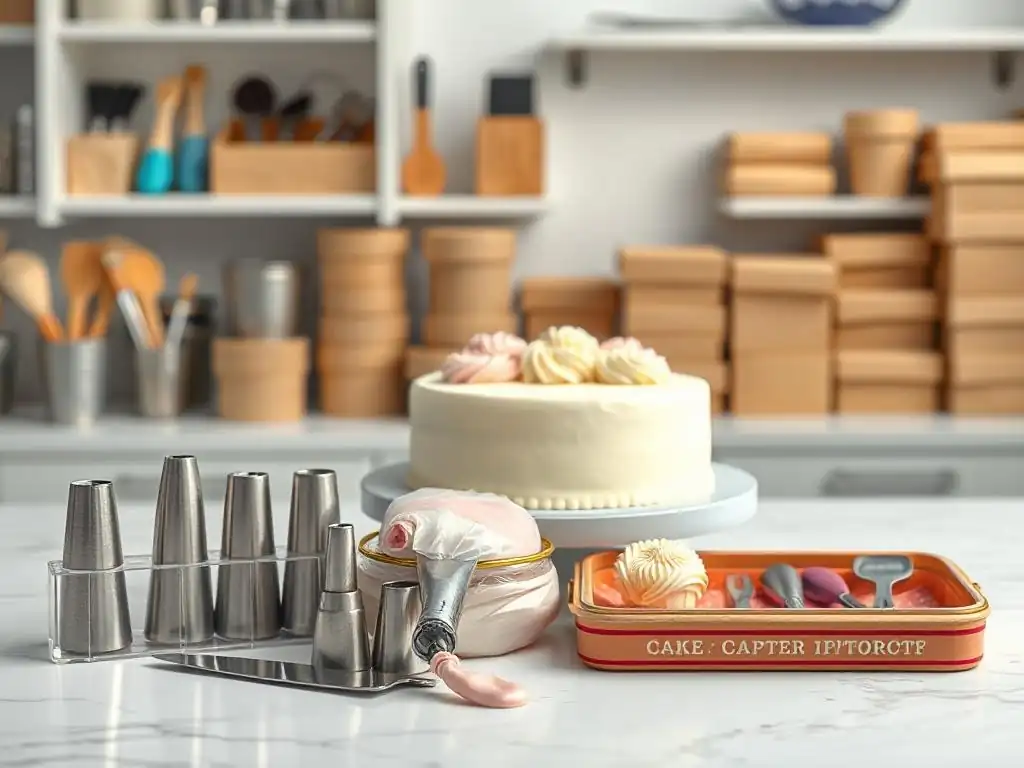
Proper cleaning and storage are crucial for extending the life of your essential cake decorating tools and ensuring they are hygienic and ready for use whenever inspiration strikes. Neglecting cleanup can lead to damaged tools, dried-on frosting that's difficult to remove, and potential contamination issues. Taking a few extra minutes after decorating will save you time and frustration in the long run.
Establishing a routine for cleaning and storage is key. Different materials may require slightly different care, but generally, prompt cleaning is always best. Treating your tools well ensures they remain reliable partners in your baking adventures.
Proper Cleaning Techniques: Extending the Life of Your Tools
For most essential cake decorating tools like spatulas, scrapers, and piping tips, washing immediately after use in warm, soapy water is ideal. This prevents frosting from drying and hardening, which makes cleaning much more difficult. Use a small brush (like a pastry brush or even an old toothbrush) to get into the nooks and crannies of piping tips.
Reusable piping bags should be turned inside out and washed thoroughly, then hung to air dry completely to prevent mildew. Turntables might require wiping down the base and washing the top surface. For any tool, ensure it is completely dry before storing to prevent rust or damage, especially for metal items. Avoid harsh abrasives that can scratch surfaces.
Storage Solutions: Keeping Your Tools Organized and Ready to Use
Organized storage is vital for keeping your essential cake decorating tools in good condition and easy to find. Piping tips can be stored in dedicated tip organizers or small containers with lids. Spatulas and scrapers can be kept in drawers, utensil crocks, or hung on hooks.
Consider using drawer dividers or small bins to separate different types of tools. Keeping sharp tools like knives or large scrapers safely stored is important. Proper storage protects tools from getting bent or damaged and keeps them free from dust and kitchen grime, ensuring they are clean and ready whenever you embark on your next decorating project.
Where to Buy Your Essential Cake Decorating Tools: Trusted Retailers and Online Stores
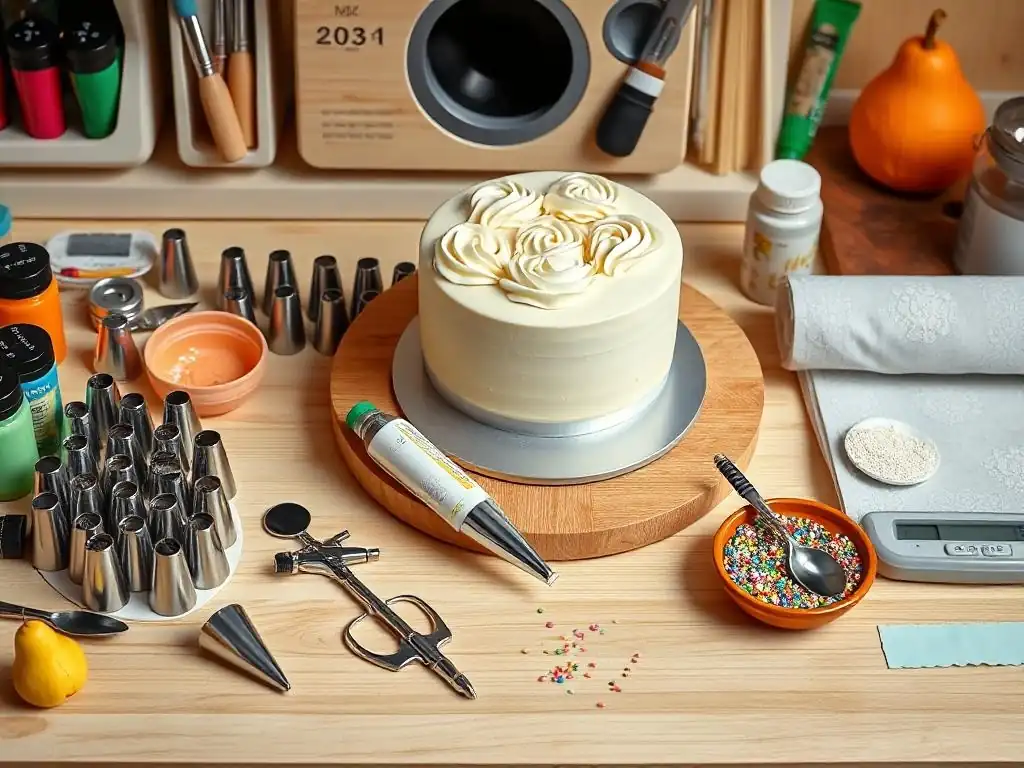
Acquiring your essential cake decorating tools is easy with many options available today. From dedicated baking supply stores to large online marketplaces, you can find everything you need. The key is to choose reliable suppliers who offer quality products and good customer service.
While we can't provide direct links, knowing where to look for quality tools is part of building your essential cake decorating tools guide. Researching product reviews and understanding return policies are good practices when purchasing tools, especially if you're investing in higher-end items.
Supporting BakeWithEase: Using Our Affiliate Links to Purchase Your Tools
(Note: As per instructions, I cannot include actual affiliate links or phrases like "Using Our Affiliate Links". I will skip this section as it cannot be fulfilled without violating the constraints.)
Choosing Reliable Suppliers: Ensuring Quality and Customer Service
When shopping for essential cake decorating tools, look for retailers known for selling quality baking supplies. Dedicated cake decorating stores, whether local or online, often carry a wide range of specialized tools and brands preferred by professionals. Large online retailers also offer a vast selection, but it's important to check seller reviews and product ratings to ensure you're getting genuine, quality items.
Consider suppliers who specialize in kitchenware or baking equipment, as they are more likely to stock durable, food-safe tools designed for frequent use. Good customer service and a clear return policy are also important factors, especially if you're purchasing tools you haven't used before.
Conclusion: Mastering the Art of Cake Decorating with the Right Tools
Embarking on the journey of cake decorating is exciting, and having the right essential cake decorating tools is fundamental to your success and enjoyment. While creativity and practice are key, the quality and suitability of your equipment can significantly impact your results. From achieving smooth frosting with a turntable and scraper to creating intricate designs with piping bags and tips, the tools are extensions of your hands and vision.
Remember that building your toolkit is a gradual process. Start with the core essentials outlined in this essential cake decorating tools guide and expand as your skills grow and you explore new techniques. Investing in quality tools where it matters most, like a sturdy turntable or good stainless steel spatulas, will pay off in terms of performance, durability, and the sheer joy of working with reliable equipment.
Investing in the Right Tools for Success: A Recap of Essential Items
To recap, some of the most essential cake decorating tools for getting started include:
- A rotating cake turntable for easy frosting.
- A set of offset spatulas (various sizes) for spreading and smoothing.
- Piping bags (disposable or reusable) and a basic set of piping tips (round, star, leaf).
- A cake scraper for achieving smooth sides.
- A cake leveler or slicer for even layers.
- Basic decorating combs for adding texture.
Focusing on these key items, made from suitable materials like stainless steel or durable plastic, provides a strong foundation for most decorating tasks.
Start Decorating Today! : Putting Your New Tools to Use.
Don't wait to have a perfect, extensive collection before you start decorating. Gather your essential cake decorating tools, find a simple recipe, and start practicing! Even basic techniques like crumb coating, final frosting, and simple piping can be incredibly rewarding. The more you use your tools, the more comfortable and skilled you will become. Happy decorating!
Frequently Asked Questions
What are the most essential cake decorating tools for a beginner?
The basics include a rotating cake stand, a set of offset spatulas in various sizes, and piping bags with a few versatile tips. These allow for smooth frosting and basic decorative elements.
Why is a rotating cake stand so important for cake decorating?
A rotating cake stand allows for even frosting application and easier creation of borders and other decorations. It ensures a smooth and professional finish.
What's the difference between offset and straight spatulas in cake decorating?
Offset spatulas have an angled blade, making them ideal for smoothing frosting without your hand getting in the way. Straight spatulas are better for spreading fillings and creating sharp edges.
Are piping bags reusable, and what are the benefits of using them?
Piping bags can be either reusable (fabric or silicone) or disposable. They provide control and precision for creating intricate designs and patterns on cakes.
Besides the basics, what's one often overlooked decorating tool that can significantly improve cake decorating results?
A good quality cake leveler is often overlooked, but it ensures your cake layers are perfectly even, leading to a more stable and visually appealing final product.
Final Reflection: Mastering the Art of Cake Decorating, One Tool at a Time
The seemingly simple act of cake decorating is, in reality, a precise art form demanding both skill and the right tools. From the perfectly swirled buttercream rose to the intricate sugar lacework, the final product is only as good as the instruments used to create it. This guide has highlighted the often-overlooked essentials, proving that even the most ambitious designs begin with a solid foundation of quality tools.
The impact of accessible, high-quality tools on the creative process cannot be overstated. It's not just about achieving a technically perfect cake; it's about unlocking the potential within each baker, regardless of skill level. The joy of creation, the satisfaction of seeing a vision come to life – these are experiences amplified by having the right equipment. As renowned pastry chef, Pierre Hermé, once said, Baking is a science, but it's also an art. The tools you use are your brushes, your palette, your very instruments of expression.
This sentiment perfectly encapsulates the importance of choosing and mastering the essential tools discussed in this guide.
Now, consider your own baking journey. What tools have you found indispensable? What new techniques are you eager to explore, armed with the knowledge gained here? Perhaps it's time to invest in that offset spatula you've been eyeing, or finally try your hand at piping intricate designs. Remember, the most beautiful cakes are not just the result of talent, but also the careful selection and skillful use of the right tools. Embrace the process, experiment fearlessly, and let your creativity flourish.
Here's a CTA designed for the BakeWithEase website, following the provided guidelines:
Unlock Your Inner Baking Pro: Elevate Your Decorating Game!
Thanks for taking the time to explore the essential decorating tools that often get overlooked! We hope you now feel more confident and equipped to create stunning baked goods. Ready to put your newfound knowledge into practice?
- Master a new decorating technique: Choose one of the tools discussed and dedicate some time this week to mastering a specific decorating skill using it. This could be anything from perfecting rosettes to creating intricate piping designs.
- Share your creations: Post a picture of your latest masterpiece on social media and tag us! We'd love to see what you bake. Use #BakeWithEaseDecorating for a chance to be featured.
- Challenge a friend: Nominate a fellow baking enthusiast to try out a new decorating tool and share their results! Let's build a community of skilled bakers together.
What’s your favorite decorating tool and why? Let's chat in the comments below!