
Essential Tools for Every Cake Decorating Technique

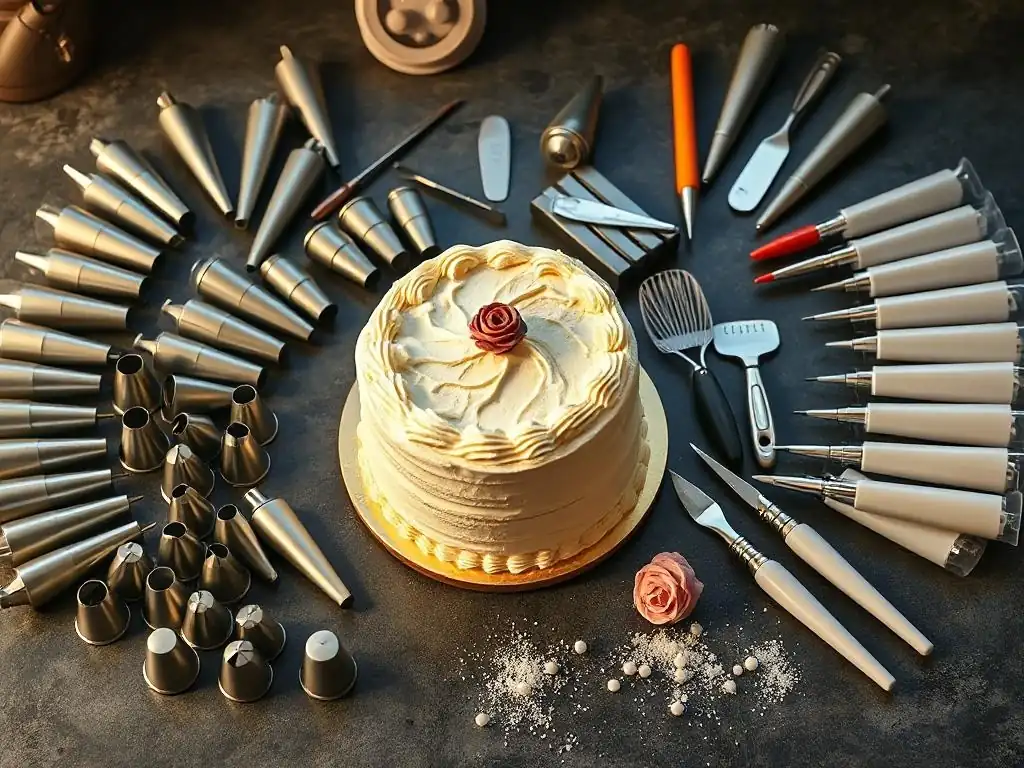
Welcome to BakeWithEase, your haven for all things baking! Ever wondered if the right cake decorating tool kit can truly transform your creations from simple to spectacular? Discover the essential instruments that unlock a world of artistic possibilities, and learn how to choose the perfect set to elevate your cake decorating game. Read on to uncover the secrets behind professional-looking cakes and find out which tools will become your new best friends in the kitchen!
- Mastering Cake Decorating: Building Your Ultimate Tool Kit
- The Core Tools: A Detailed Guide
- Specialized Tools: Taking Your Skills to the Next Level
- Building Your Tool Kit on a Budget
- Cleaning and Maintaining Your Tools
- Mastering Specific Techniques with the Right Tools
- Building Your Tool Kit on a Budget
- Cleaning and Maintaining Your Tools
- Mastering Specific Techniques with the Right Tools
- Choosing the Right Tool Kit for Your Skill Level
- Conclusion: Elevate Your Baking with the Right Tool Kit
-
Frequently Asked Questions
- What is a cake decorating tool kit, and why is it essential for bakers?
- What are some of the most essential tools that should be included in a basic cake decorating tool kit, as suggested by BakeWithEase?
- How does having the right cake decorating tools impact the final result of a decorated cake, according to BakeWithEase?
- Where can beginners find affordable cake decorating tool kits that are still high quality, according to BakeWithEase?
- What are some advanced cake decorating techniques that require specialized tools not typically found in a basic kit, according to BakeWithEase?
- Final Reflection: Mastering the Art of Cake Decorating
- Unleash Your Inner Cake Artist!
Mastering Cake Decorating: Building Your Ultimate Tool Kit
Why a Comprehensive Tool Kit is Essential
Embarking on the journey of cake decorating, whether as a hobbyist or aspiring professional, requires more than just a passion for sweets. A well-assembled cake decorating tool kit is the foundational element that empowers you to transform simple baked goods into edible works of art.
Think of it like a painter needing brushes and a palette – without the right instruments, executing techniques from smooth buttercream finishes to intricate fondant details becomes significantly more challenging, if not impossible. Having a variety of reliable tools at your disposal ensures you can tackle different design challenges, achieve precise results, and explore a wider range of creative possibilities.
Investing in a quality cake decorating tool kit saves time and reduces frustration. Attempting to smooth icing with a dinner knife or pipe delicate flowers with a makeshift bag will likely lead to disappointing outcomes. Dedicated decorating tools are designed for specific purposes, offering ergonomic grips, precise tips, and durable materials that make the process smoother and more efficient.
For instance, a proper offset spatula allows for effortless spreading of frosting, while a sturdy turntable ensures even coating and sharp edges. Building your essential cake decorating tool kit step-by-step allows you to gradually expand your capabilities and confidence with each new technique you master.
Understanding the Fundamentals: Essential Supplies for Beginners
For those just starting out, the sheer variety of cake decorating tools can seem overwhelming. However, a beginner's cake decorating tool kit doesn't need to be extensive or expensive. The focus should be on core items that enable you to perform basic but crucial tasks like leveling cakes, applying smooth frosting layers, and piping simple designs. These foundational tools provide a solid basis upon which you can build as your skills and ambitions grow. Prioritizing multi-purpose tools initially is a smart way to get started without breaking the bank.
A typical starter cake decorating tool kit should include items such as a cake leveler or serrated knife, an offset spatula (medium size is versatile), a bench scraper for smoothing sides, a few basic piping bags (disposable are convenient for beginners), and a small selection of essential piping tips (like a round tip for lines and dots, and a star tip for borders). Adding a simple cake turntable will also significantly improve your ability to frost evenly.
Starting with these fundamental decorating tools allows you to practice core techniques like crumb coating, final icing, and basic piping, setting you up for more complex projects down the line.
The Core Tools: A Detailed Guide
Turntables: Achieving Smooth Finishes
A cake turntable is arguably one of the most transformative tools for achieving professional-looking cake finishes. It allows you to easily rotate the cake as you apply frosting or decorate, ensuring smooth, even coverage on the sides and top without having to constantly move around the cake yourself. This continuous, fluid motion is essential for creating sharp edges, consistent textures, and seamless designs like swirls or stripes around the circumference.
Turntables come in various materials and designs, from simple plastic models to more robust metal or heavy-duty plastic versions with ball bearings for extra smooth rotation. The key benefit is the ability to work efficiently and precisely. For example, when applying a crumb coat, a quick spin allows you to cover the entire surface rapidly. For the final coat, a slow, controlled rotation while holding a spatula steady is how you achieve that perfectly smooth, polished look. A good turntable is a cornerstone of any serious cake decorating tool kit.
Product Spotlight: Wilton Cake Decorating Turntable - Features and Benefits
The Wilton Cake Decorating Turntable is a popular choice, especially for beginners and intermediate decorators, and is a staple in many a cake decorating tool kit. Typically made from durable, food-safe plastic, it features a non-slip base that keeps it stable on your countertop while you work. The smooth-rotating mechanism allows for effortless turning, essential for applying even layers of frosting and creating detailed designs on the sides of your cake.
A key benefit of this type of turntable is its elevated design, which raises the cake off the counter, allowing your spatula or scraper to move freely below the cake board. Many models can comfortably accommodate cakes up to 12 inches in diameter, making them versatile for standard cake sizes. While not offering the same heavy-duty feel as professional metal turntables, a good plastic model from a reputable brand like Wilton provides excellent functionality and durability for its price point, making it a valuable addition to your decorating tools.
Alternatives: Budget-Friendly Options
While professional turntables can be a significant investment, several budget-friendly alternatives still offer decent performance for your cake decorating tool kit. Simple plastic turntables with friction-based rotation are widely available at lower price points. While they may not spin as smoothly or for as long as models with ball bearings, they still provide the essential function of rotating the cake, which is a vast improvement over trying to decorate a stationary cake.
Another very affordable option is to use a lazy Susan or a stack of two concentric cake boards with marbles or ball bearings in between. While these DIY solutions might lack stability or perfectly smooth rotation, they can serve as a temporary stand-in for your decorating tools if you're just starting out or on a very tight budget. However, for the best results and least frustration, investing in even a basic dedicated cake turntable is highly recommended for your cake decorating tool kit.
Spatulas & Scrapers: Essential Tools for Icing Perfection
Spatulas and scrapers are the workhorses of cake icing, indispensable tools in any cake decorating tool kit. They are used for spreading, smoothing, and shaping frosting, achieving everything from rustic swirls to perfectly sharp edges. Having a variety of shapes and sizes allows you to tackle different tasks with precision and ease.
The key to achieving smooth, even frosting lies in the proper use of these tools. An offset spatula is perfect for applying frosting to the top and sides, while a bench scraper is crucial for smoothing the sides and creating sharp corners. Mastering the technique of holding the scraper at the correct angle while rotating the cake on a turntable is fundamental for a professional finish. These decorating tools are simple in design but essential for elevating your cake's appearance.
Offset Spatulas: Different Sizes and Uses
Offset spatulas are characterized by their angled blade, which keeps your hand elevated above the cake surface, preventing you from accidentally dragging your knuckles through the frosting. They are available in various lengths, typically ranging from 4 inches to 12 inches. A 6-inch or 8-inch offset spatula is a versatile size for most standard cakes, suitable for both applying and smoothing frosting on tops and sides.
Smaller offset spatulas (4-inch) are excellent for detailed work, filling pastry bags, or handling smaller cakes and cupcakes. Larger spatulas (10-inch or 12-inch) are ideal for covering large cake surfaces quickly or working with sheet cakes. Having a couple of different sizes in your cake decorating tool kit allows you to choose the best tool for the specific task at hand, improving efficiency and finish quality.
Bench Scrapers: Achieving Sharp Edges
A bench scraper, also known as a straight scraper or side scraper, is a flat, rectangular tool with a straight, sharp edge. While often used in bread making for dividing dough, it is an indispensable tool for achieving perfectly smooth sides and sharp edges on iced cakes. Holding the bench scraper perpendicular to the cake board and flat against the side of the cake while rotating the turntable allows you to scrape away excess frosting and create a perfectly flat surface.
Bench scrapers are typically made of metal or plastic. Metal scrapers offer more rigidity and a sharper edge, often preferred for achieving crisp, professional corners. Plastic scrapers are lighter and more flexible. Some bench scrapers also feature textured edges (like combs) for creating decorative patterns on the sides of the cake. Including a sturdy bench scraper in your cake decorating tool kit is essential for mastering smooth finishes.
Product Spotlight: Ateco Icing Spatula Set - A Versatile Choice
An Ateco Icing Spatula Set often includes a selection of offset and straight spatulas in various sizes, providing a versatile collection for your cake decorating tool kit. A common set might feature a small offset spatula (around 4.5 inches), a medium offset spatula (around 7.5 inches), and a straight spatula (around 7.5 inches). These sizes cover a wide range of tasks, from small touch-ups to icing standard layer cakes.
Ateco spatulas are known for their high-quality stainless steel blades, which are flexible yet durable, allowing for smooth application and easy cleaning. The handles are often made of wood or plastic and are ergonomically designed for comfortable use. Investing in a good set like this provides you with reliable, multi-purpose decorating tools that will be useful for countless projects, offering excellent value for any baker building their essential supplies.
Piping Bags & Tips: Unleashing Your Creative Potential
Piping bags and tips are the primary tools for adding decorative elements to cakes, cupcakes, and cookies. They allow you to create borders, write messages, pipe intricate flowers, fill pastries, and much more. The combination of different bag types and a vast array of tips offers endless possibilities for creative expression, making them a cornerstone of any comprehensive cake decorating tool kit.
Mastering piping techniques requires practice, but having the right bags and tips makes the learning process much smoother. Whether you're aiming for simple swirls or complex floral arrangements, the correct tools provide the control and precision needed to bring your vision to life. They are essential decorating tools for anyone wanting to go beyond simple frosting.
Types of Piping Bags: Disposable vs. Reusable
Piping bags come in two main categories: disposable and reusable. Disposable piping bags are typically made from thin plastic and are designed for single use. They are convenient because there's no washing required – simply use and discard. This is particularly useful when working with multiple colors or flavors of frosting, or when cleaning facilities are limited. They are an easy addition to any cake decorating tool kit.
Reusable piping bags are usually made from sturdy cotton, nylon, or silicone. They are more environmentally friendly and can be more comfortable to grip for extended periods. However, they require thorough washing and drying after each use to prevent bacterial growth. Many professional decorators prefer reusable bags for their durability and feel, but disposable bags are excellent for convenience, especially for home bakers or large projects.
Essential Piping Tips: A Beginner's Guide
Piping tips are small nozzles inserted into the piping bag that shape the frosting as it's squeezed out. Tips are numbered and categorized by the type of opening they have. For a beginner's cake decorating tool kit, focusing on a few essential tip types will cover a wide range of basic decorations.
Round Tips: Creating Lines and Dots
Round tips have a simple circular opening and are identified by numbers ranging from very small (like #1 or #2 for fine writing) to very large (like #12 or #1A for large dots and filling). They are fundamental decorating tools used for piping smooth lines, outlines, dots, beads, and filling in areas. A medium-sized round tip (e.g., #5 or #8) is a great starting point for writing and piping simple borders or dots.
Star Tips: Making Rosettes and Borders
Star tips have a serrated opening, creating ribbed patterns. Open star tips produce defined ridges, while closed star tips create more intricate, ruffled patterns. They are available in various sizes (e.g., #18, #21, #1M). Star tips are incredibly versatile and are commonly used for piping stars, rosettes, shells, and decorative borders around the top and bottom of cakes. A medium open star tip like the #21 or a large closed star tip like the #1M (often called a drop flower tip) are excellent additions to a beginner's cake decorating tool kit.
Leaf Tips: Crafting Realistic Leaves
Leaf tips have a V-shaped opening that is pinched in the middle. By varying the pressure and angle as you pipe, you can create realistic-looking leaves to complement piped flowers. They are typically numbered in the 300 series (e.g., #352). While perhaps not the very first tip a beginner needs, a small leaf tip quickly becomes essential once you start piping buttercream flowers, adding a crucial element for botanical designs with your decorating tools.
Product Spotlight: Wilton Master Decorating Tip Set - A Comprehensive Collection
The Wilton Master Decorating Tip Set is a popular and comprehensive collection that significantly expands the capabilities of a cake decorating tool kit. While the exact number of tips varies by set, a common version includes dozens of different piping tips covering a wide range of designs: round, star (open and closed), petal, leaf, basketweave, and specialty tips. This set often comes in a convenient storage case.
This type of set provides immediate access to tips for virtually any piping technique, encouraging experimentation and skill development. It typically includes a coupler (allowing you to change tips without changing the bag) and sometimes flower nails (for piping flowers). While a larger investment than buying individual tips, a comprehensive set like this offers excellent value and ensures you have the right decorating tools for almost any piped design you can imagine.
Cake Levelers & Slicers: Ensuring Even Layers
Creating level cake layers is fundamental to building stable, professional-looking tiered or multi-layer cakes. Uneven layers can lead to a lopsided cake and make applying smooth frosting significantly more difficult. Cake levelers and slicers are specialized decorating tools designed to cut cakes horizontally into uniform layers, ensuring consistency in height and structure.
Using a cake leveler or slicer takes the guesswork out of dividing your cake. It provides a clean, straight cut, which is essential for a smooth surface when stacking layers. Without these tools, relying solely on a knife can result in wobbly, uneven layers that compromise the final appearance and stability of your finished cake. They are simple but effective additions to your cake decorating tool kit.
Adjustable Cake Levelers: Achieve Consistent Thickness
Adjustable cake levelers are wire-based tools with height markers along the sides, allowing you to set the wire at a specific height to cut through the cake. The wire is pulled through the cake while the feet of the leveler rest on the counter. This ensures a consistent cutting height across the entire diameter of the cake. Many models offer multiple height settings, typically allowing you to cut layers between 1/2 inch and 2 inches thick.
The adjustability is key, as it allows you to easily create multiple layers of the same thickness from a single cake or adjust the thickness based on your recipe or design needs. Using an adjustable leveler is much easier and provides more consistent results than trying to eyeball a straight cut with a knife, making it a valuable part of your cake decorating tool kit for achieving uniformity.
Cake Slicing Guides: Creating Professional Layers
Cake slicing guides are another tool for achieving even layers, often used in conjunction with a long serrated knife. These guides typically consist of frames or rings with slots at regular intervals. The cake is placed within the frame or ring, and the knife blade is guided through the slots to make a level cut. Some guides are adjustable, allowing for different layer thicknesses.
While perhaps less common than wire levelers for home bakers, slicing guides can be very effective, especially for larger cakes or those with delicate textures where a wire might snag. They provide a clear path for the knife, minimizing the risk of an uneven or jagged cut. Both levelers and guides serve the same purpose: ensuring your cake layers are perfectly flat and uniform, a critical step in building a sturdy and attractive cake structure with your decorating tools.
Product Spotlight: Cake Boss Cake Leveler - Achieving Even Layers
The Cake Boss Cake Leveler is an example of a popular adjustable wire leveler designed to help bakers achieve perfectly even cake layers. This type of leveler typically features a sturdy frame, often made of metal or durable plastic, and a taut cutting wire. The legs or feet rest on the work surface, providing stability as you slice.
A key benefit of a leveler like the Cake Boss model is its ease of use and adjustable height settings, which are usually clearly marked. This allows you to quickly and reliably set the wire to cut layers of your desired thickness, up to a certain diameter (often around 10 or 12 inches). Using this tool helps eliminate the frustration of uneven layers, making the assembly and icing process much smoother and contributing significantly to a professional finish for your cakes using your cake decorating tool kit.
Specialized Tools: Taking Your Skills to the Next Level
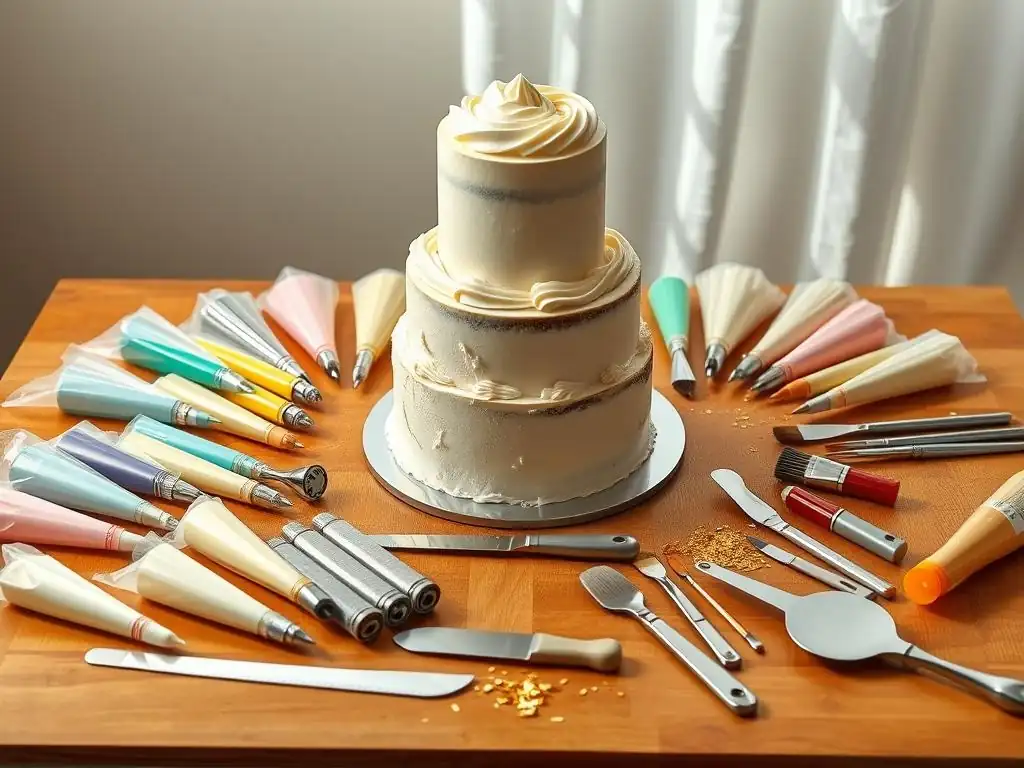
Fondant Tools: Working with Fondant Like a Pro
Working with fondant opens up a world of smooth, polished finishes and intricate sculptural decorations. While buttercream is forgiving, fondant requires a specific set of tools to roll, smooth, cut, and shape it effectively. These specialized tools are essential for achieving that flawless, often gravity-defying look that fondant allows, making them a necessary expansion for any cake decorating tool kit focused on this medium.
From achieving a perfectly smooth surface free of imperfections to cutting precise shapes and creating delicate details, the right fondant tools streamline the process and elevate the quality of your work. They allow you to manipulate the fondant without damaging it, ensuring a professional and clean result.
Rolling Pins: Achieving a Smooth Surface
Rolling fondant requires a specialized rolling pin different from those used for dough. Fondant rolling pins are typically smooth, non-stick, and often made of plastic or silicone. They are usually longer and heavier than standard rolling pins, allowing you to roll out large sheets of fondant evenly and thinly without lines or textures being transferred.
Some fondant rolling pins come with guide rings that fit onto the ends, ensuring the fondant is rolled to a consistent thickness across the entire sheet. This consistency is crucial for even coverage on the cake and for working with cutters and molds. A good quality, smooth rolling pin is the very first tool needed in your fondant cake decorating tool kit.
Smoothing Tools: Eliminating Imperfections
Fondant smoothers are flat, paddle-shaped tools, often with rounded edges, made of plastic. They are used to gently rub over the surface of fondant after it has been applied to the cake. This process helps to eliminate air bubbles, smooth out any wrinkles or imperfections, and create a perfectly taut, seamless finish.
Using two smoothers together – one on the top edge and one on the side – is the standard technique for achieving sharp, professional corners on a fondant-covered cake. These simple tools are indispensable for achieving that signature smooth, flawless look associated with fondant and are vital components of a fondant-focused cake decorating tool kit.
Cutters & Molds: Shaping Fondant
Fondant cutters and molds allow you to create a vast array of shapes and decorative elements. Cutters come in countless shapes, from simple circles and squares to intricate flowers, leaves, and geometric patterns. They function similarly to cookie cutters but are specifically designed for the thinner consistency of rolled fondant or gum paste.
Molds, made of silicone or plastic, allow you to press fondant or gum paste into detailed shapes like pearls, chains, borders, figures, and more. Using cutters and molds saves significant time compared to hand-shaping and ensures uniformity for repetitive designs. A collection of various cutters and molds adds immense creative potential to your cake decorating tool kit.
Product Spotlight: PME Fondant Tool Set - Everything You Need
A PME Fondant Tool Set often provides a comprehensive collection of essential tools for working with fondant and gum paste, making it an excellent addition to a dedicated cake decorating tool kit. Such a set might include a non-stick rolling pin, various sized fondant smoothers, a cutting wheel (for trimming excess fondant), modeling tools (for shaping figures and details), and sometimes a selection of basic cutters.
PME tools are generally regarded as high quality and durable, designed specifically for sugarcraft. Having a dedicated set ensures you have all the necessary implements at hand for rolling, cutting, shaping, and smoothing fondant, allowing you to tackle complex designs with confidence. This type of kit provides a solid foundation for anyone serious about mastering fondant techniques with their decorating tools.
Airbrush Systems: Adding Depth and Dimension
Airbrush systems are specialized tools used to apply thin, even layers of edible color to cakes, creating gradients, shading, and vibrant finishes that are difficult to achieve with traditional icing methods. An airbrush uses compressed air to spray a fine mist of liquid food coloring, allowing for smooth transitions and subtle effects.
While not a beginner tool, an airbrush system is a powerful addition to an advanced cake decorating tool kit, enabling decorators to add depth, dimension, and photorealistic details to their creations. They are particularly useful for creating realistic effects like sky, grass, or metallic finishes, or for quickly coloring large areas of fondant or buttercream.
Choosing the Right Airbrush System
An airbrush system typically consists of an air compressor, an air hose, and the airbrush gun itself. Compressors vary in power and noise level; a good cake decorating compressor should provide consistent pressure and be relatively quiet. Airbrush guns come in different types (single-action vs. dual-action) and feed types (gravity feed vs. siphon feed).
For cake decorating, a gravity-feed, dual-action airbrush is often preferred. Gravity feed cups sit on top, using gravity to draw color, which is efficient for small amounts of color. Dual-action allows you to control both air flow (by pressing down) and color flow (by pulling back the trigger), offering greater precision and control over the spray pattern. Choosing a reliable system designed for food use is crucial for your cake decorating tool kit.
Airbrush Colors and Techniques
Airbrushing requires specially formulated liquid food colors that are thin enough to pass through the fine nozzle of the airbrush gun without clogging. These colors are highly concentrated and designed for vibrant results. Techniques range from simple overall color application to intricate stenciling, freehand shading, and creating gradients by layering colors.
Proper technique involves holding the airbrush at a consistent distance and angle from the cake and moving it smoothly. Practice on paper or dummy cakes is essential before working on a final cake. Cleaning the airbrush thoroughly after each use is critical to prevent clogs and maintain functionality. Mastering airbrushing adds a unique skill set to your repertoire of decorating tools.
Product Spotlight: Paasche Airbrush Kit for Cake Decorators
A Paasche Airbrush Kit designed for cake decorators is an example of a professional-grade system suitable for advanced work. Such a kit typically includes a reliable air compressor, a quality airbrush gun (often dual-action), an air hose, and sometimes a starting set of food-grade airbrush colors. Paasche is a well-respected brand in the airbrush industry.
The benefits of investing in a quality system like this for your cake decorating tool kit include consistent air pressure for smooth spraying, durable components, and precise control over color application. While a significant investment, a professional airbrush system allows for a higher level of detail and finish, opening up possibilities for complex and artistic cake designs that are difficult to achieve with other decorating tools.
Impression Mats & Texture Sheets: Adding Intricate Details
Impression mats and texture sheets are simple yet effective decorating tools used to transfer patterns and textures onto the surface of fondant, gum paste, or even thick buttercream. They allow decorators to quickly and easily add intricate details like wood grain, brick patterns, lace, fabric textures, or geometric designs to cakes, adding visual interest and realism.
Using these tools is relatively straightforward: the mat or sheet is pressed firmly onto the rolled-out fondant or applied onto a fondant-covered cake, transferring the pattern. They save immense time compared to piping or sculpting similar details by hand and ensure uniformity across the entire surface.
Creating Realistic Textures
Impression mats designed to mimic natural textures like wood bark, stone, or fabric can add a significant level of realism to novelty or themed cakes. For example, a wood grain mat can transform a simple tier into a realistic log, while a brick pattern can create the look of a wall. These textures provide a base layer of detail that can then be enhanced with edible dusts or airbrushing.
Using a texture sheet allows you to cover large areas with a consistent pattern quickly. This is particularly useful for creating backgrounds or adding subtle interest to cake tiers without overpowering other decorations. They are invaluable decorating tools for adding depth and character to your cake designs.
Different Impression Mat Designs
The variety of impression mat designs available is vast, ranging from natural textures to intricate lace patterns, geometric shapes, argyle, basketweave, and more. Lace mats are particularly popular for creating elegant and delicate designs on wedding or formal cakes. Geometric patterns can add a modern or abstract feel.
Some mats are flexible silicone, allowing them to wrap around curved surfaces, while others are rigid plastic, best suited for flat sides or panels. Choosing the right design allows you to quickly and consistently apply complex patterns that would be incredibly time-consuming to create by hand, making these mats a time-saving addition to your cake decorating tool kit.
Product Spotlight: Innovative Sugarworks Impression Mat Set
An Innovative Sugarworks Impression Mat Set is an example of high-quality texture sheets designed for sugarcraft. Such a set might include several different patterns, perhaps focusing on popular textures like wood, stone, or fabric weaves, or offering a variety of geometric or lace designs. These mats are typically made from durable, food-grade silicone or plastic.
The benefit of using quality impression mats like those from Innovative Sugarworks is the clarity and depth of the transferred pattern. They are designed to release easily from the fondant without sticking, ensuring a clean impression. Having a set of different designs in your cake decorating tool kit provides flexibility and allows you to quickly add professional-looking textures to your cakes, enhancing their visual appeal with minimal effort using your decorating tools.
Building Your Tool Kit on a Budget
Creating a functional cake decorating tool kit doesn't require buying every gadget on the market right away. It's possible to build a capable collection of decorating tools gradually, prioritizing essential items and seeking out affordable options. Smart shopping and focusing on versatility are key strategies for building your kit without overspending.
Starting with the basics and adding specialized tools as you need them for specific projects or techniques is a practical approach. This allows you to spread the cost over time and ensures you're only investing in tools you will actually use, making your cake decorating tool kit grow organically with your skills.
Essential Tools to Invest in First
When starting your cake decorating journey on a budget, focus on the core tools that will enable you to perform fundamental techniques well. The first items to invest in for your cake decorating tool kit should include a reliable cake leveler or long serrated knife, at least one good quality offset spatula (around 6-8 inches), a sturdy bench scraper, a set of basic piping bags (disposable or one reusable), and a small selection of essential piping tips (a few round and star tips).
Adding a basic, smooth-spinning cake turntable early on is also highly recommended, as it dramatically improves icing technique. These initial decorating tools provide the foundation for smoothing, piping, and leveling – the building blocks of most cake designs. Expect to spend perhaps \$30-\$60 on these initial items, depending on the brands chosen.
Affordable Alternatives and DIY Options
For some tools, there are more affordable alternatives or even DIY options that can serve as temporary solutions for your cake decorating tool kit. Instead of a dedicated cake leveler, a long serrated bread knife and a steady hand can suffice for leveling layers (though results may vary). A ruler can be used as a guide.
While not ideal, you can make a makeshift piping bag from a sturdy zip-top bag with a corner snipped off. For smoothing sides, a credit card or a stiff piece of plastic can sometimes substitute for a bench scraper in a pinch. While dedicated decorating tools offer better results and ease of use, these alternatives can help you practice techniques without immediate investment. However, for better outcomes, upgrade when possible.
Finding the Best Deals
Finding the best deals on cake decorating tools involves a few strategies. Keep an eye out for sales at craft stores, baking supply shops, and online retailers, especially around holidays or during special promotions. Buying tool kits or sets can sometimes be more cost-effective than purchasing individual items, provided the set contains tools you will actually use.
Consider checking discount stores or the baking aisle of large supermarkets for basic tools like spatulas and piping tips, though quality can vary. Signing up for newsletters from baking supply websites can alert you to sales. While it's tempting to buy the cheapest options, reading reviews can help ensure you're getting tools that are durable and functional, even on a budget, ensuring your cake decorating tool kit is built with value in mind.
Cleaning and Maintaining Your Tools
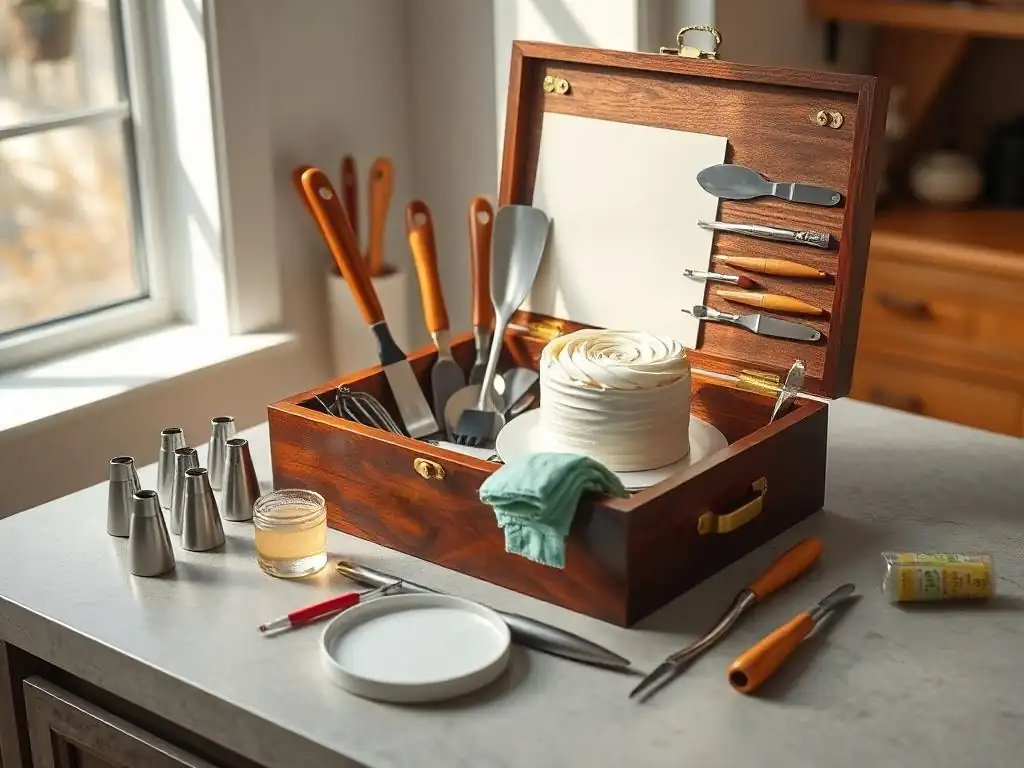
Proper cleaning and maintenance are crucial for extending the life of your cake decorating tools and ensuring food safety. Lingering food particles or grease can affect the performance of tools, especially piping tips and airbrushes, and can harbor bacteria. Taking a few minutes to clean your tools correctly after each use will keep your cake decorating tool kit in top condition.
Well-maintained tools perform better and last longer, saving you money in the long run. Neglecting cleaning can lead to clogged piping tips, sticky spatulas, or even damaged equipment like airbrush guns. Make cleaning a standard part of your baking routine.
Proper Cleaning Techniques
Most cake decorating tools made of metal or sturdy plastic can be washed with warm, soapy water. Use a small brush, like a bottle brush or a dedicated cleaning brush for cake tools, to remove stubborn frosting or fondant from intricate areas like piping tips. Ensure all crevices are clean.
For piping tips, a small wire brush or pipe cleaner can help dislodge dried icing from the inside. Airbrush components require immediate and thorough cleaning with water or a specialized airbrush cleaner after every use, following the manufacturer's instructions precisely to prevent clogging. Reusable piping bags need to be turned inside out and washed thoroughly, then hung to dry completely to prevent mold. Always dry metal tools completely to prevent rust.
Storage Tips
Proper storage protects your cake decorating tools from damage, keeps them organized, and ensures they are clean and ready for the next use. Store piping tips in a dedicated container or organizer with dividers; many tip sets come with storage cases. This prevents them from getting lost and keeps the openings from being bent.
Spatulas and scrapers can be stored in a utensil crock or drawer organizer. Fondant tools, especially delicate modeling tools or cutters, should be stored in a way that protects their edges and shapes – often, the cases they come in are ideal. Airbrush systems require careful storage to protect the gun and hose. Keeping your cake decorating tool kit organized not only makes it easier to find what you need but also helps maintain the condition of your valuable decorating tools.
Mastering Specific Techniques with the Right Tools
Different cake decorating techniques call for specific tools to achieve the best results. While a basic cake decorating tool kit provides versatility, mastering particular styles often requires adding specialized items. Matching the right tool to the technique is key to success and efficiency in your decorating endeavors.
Understanding which tools are best suited for techniques like piping intricate flowers, creating smooth ganache drips, or achieving a flawless naked cake finish will significantly improve your outcomes and allow you to expand your decorating repertoire effectively using your collection of decorating tools.
Buttercream Flowers: Tools and Techniques
Piping realistic buttercream flowers requires specific piping tips and techniques. Petal tips (like the #104 or #127) are essential for creating rose petals, ruffles, and other floral elements. Leaf tips (#352) add realistic foliage. Drop flower tips (like #2D or #1M) create quick, simple flowers directly on the cake.
Using a flower nail (a small, flat-topped metal or plastic disc on a stem) is crucial for piping many types of flowers, allowing you to rotate the flower as you add petals. A coupler is also highly recommended for buttercream flowers, enabling you to switch between petal and leaf tips on the same bag of green frosting easily. These specific decorating tools are vital for anyone focusing on floral cake designs.
Piping Bag and Tip Combinations
For buttercream flowers, the size of the piping bag should be comfortable to hold and large enough to contain enough frosting for one or two flowers, but not so large that the frosting warms up too much from your hand. A 12-inch or 14-inch bag is often suitable. Using a coupler allows you to pipe multiple types of flowers or add leaves using the same color frosting by simply swapping tips.
Common combinations include using a petal tip (#104-#127) with a flower nail for roses, a drop flower tip (#1M or #2D) directly on the cake for rosettes or swirls, and a leaf tip (#352) with green frosting to finish floral sprays. Having a selection of these specific tips in your cake decorating tool kit is essential for creating varied buttercream botanicals.
Product Spotlight: Russian Piping Tip Set
Russian piping tips are a type of large piping tip that allows you to create entire buttercream flowers (like tulips, roses, or blossoms) in a single squeeze. A Russian Piping Tip Set typically includes a variety of these large, intricately cut tips, sometimes with a coupler designed for their size.
The main benefit of Russian tips is speed and ease of use – they significantly reduce the time and skill needed to produce a full flower compared to traditional petal tips. While they produce a distinct, often bulkier style of flower, they are fantastic for quickly decorating cupcakes or adding bold floral elements to cakes. Adding a set of these unique decorating tools to your cake decorating tool kit offers a fast-track to impressive floral displays.
Drip Cakes: Achieving the Perfect Drip Effect
Drip cakes, where ganache, glaze, or colored candy melts drip down the sides of the cake, are a popular trend. Achieving a controlled, aesthetically pleasing drip requires specific tools and techniques, primarily related to applying the liquid topping.
While you can technically use a spoon, dedicated tools provide better control over the placement and length of the drips. The consistency of the ganache or glaze is paramount, but the application method using the right decorating tools is what determines the final look.
Tools and Techniques
The simplest tool for creating drips is a squeeze bottle with a fine tip. This allows you to apply the ganache or glaze precisely along the edge of the cake, controlling the flow and where the drips start. Another effective tool is a piping bag with a small round tip (like a #3 or #4).
Technique involves applying a bead of the liquid around the top edge, allowing it to naturally flow down the sides to create the drip. You can also apply specific drips by hand using a spoon or the tip of an offset spatula for a more controlled, irregular pattern. Practice is key to getting the consistency and application just right with your decorating tools.
Product Spotlight: Ganache Drip Icing
While not a physical tool, a high-quality, specifically formulated Ganache Drip Icing product (often found pre-made or as a mix) is a "tool" in the sense that it provides the perfect consistency needed for successful drips. Many pre-made drizzles are designed to set up nicely and provide vibrant color.
Using a product specifically intended for drips eliminates the guesswork of getting homemade ganache or glaze to the right pouring consistency – not too thick to drip, not too thin to run uncontrollably. This ensures reliable results when applying with your squeeze bottle or piping bag, making the process much easier than constantly adjusting a homemade mixture. Consider these specialized ingredients as functional components of your cake decorating tool kit for specific techniques.
Naked Cakes: Showcasing the Natural Beauty
Naked cakes, where the cake layers and filling are intentionally visible with only a thin "scrape" or minimal amount of frosting on the outside, require tools that help achieve smooth, even cake layers and precise filling application. While they appear simple, achieving a clean, minimalist look demands precision.
The focus for a naked cake decorating tool kit is on preparing the cake itself and applying a very controlled amount of frosting or filling. Tools for leveling and stacking are paramount, as uneven layers are highly visible.
Essential Tools
For naked cakes, a reliable cake leveler or slicing guide is absolutely essential to ensure perfectly flat, uniform layers. An offset spatula is used to apply a thin layer of frosting (the "crumb coat" or "scrape coat") and then carefully scrape most of it away, leaving just a hint of frosting that allows the cake layers to show through.
A bench scraper is also crucial for achieving straight, clean sides, even if only a minimal amount of frosting is present. Piping bags can be used to neatly pipe filling between layers, ensuring even distribution. Precision in cake preparation and application of minimal frosting with these decorating tools is key to the naked cake aesthetic.
Fondant Cakes: Creating Smooth Finishes
As discussed earlier, working with fondant to achieve smooth, flawless finishes requires a dedicated set of tools. These tools are designed to manipulate the fondant without tearing or creating imperfections, resulting in that signature polished look.
A dedicated set of fondant decorating tools is non-negotiable for anyone wanting to regularly cover cakes with fondant. They provide the means to roll, cover, smooth, and finish the fondant layer professionally, making them core components of a fondant-focused cake decorating tool kit.
Essential Tools for Working with Fondant
The essential tools for covering a cake with fondant include a large, smooth, non-stick rolling pin, fondant smoothers (preferably a set of two), a sharp cutting wheel or pizza cutter (dedicated to fondant), and a cornstarch pouch or non-stick mat to prevent sticking.
For more detailed work, modeling tools (like ball tools, veining tools, and pointed tools) are needed for shaping figures or adding details. A dusting pouch filled with cornstarch and powdered sugar mixture is helpful for preventing fondant from sticking to surfaces and tools. These specific decorating tools ensure a smooth, professional finish when working with fondant.
Building Your Tool Kit on a Budget
We touched on this earlier, but it bears repeating: building a functional cake decorating tool kit is an ongoing process that doesn't require immediate, massive investment. By being strategic and focusing on core, versatile decorating tools, you can start creating beautiful cakes without emptying your wallet. Prioritizing quality for the most frequently used items is a wise approach.
Remember that your skills are just as important as your tools. A skilled decorator can often achieve impressive results with a basic set of tools, while even the most expensive kit won't compensate for a lack of technique. Invest wisely and practice often to maximize the potential of your cake decorating tool kit.
Cleaning and Maintaining Your Tools
Maintaining your cake decorating tool kit through proper cleaning and storage is vital for hygiene, tool longevity, and consistent performance. Dirty or damaged tools can ruin a cake finish or even pose a health risk. Make cleaning a non-negotiable part of your decorating routine.
Proper care ensures your decorating tools are always ready for your next project and that you get the most value out of your investment. It's a small effort that pays off significantly in the quality of your work and the lifespan of your valuable tools.
Mastering Specific Techniques with the Right Tools
Exploring different cake decorating techniques is one of the most exciting parts of the hobby. As you venture into new styles, you'll discover that specific tools are tailored to help you achieve the best results for those techniques. Having the right decorating tools for the job makes complex tasks more manageable and enjoyable.
Whether it's the precision needed for piping delicate flowers or the control required for applying a perfect ganache drip, the specialized tools discussed provide the means to execute these techniques effectively, expanding the possibilities of your cake decorating tool kit and your creative output.
Choosing the Right Tool Kit for Your Skill Level
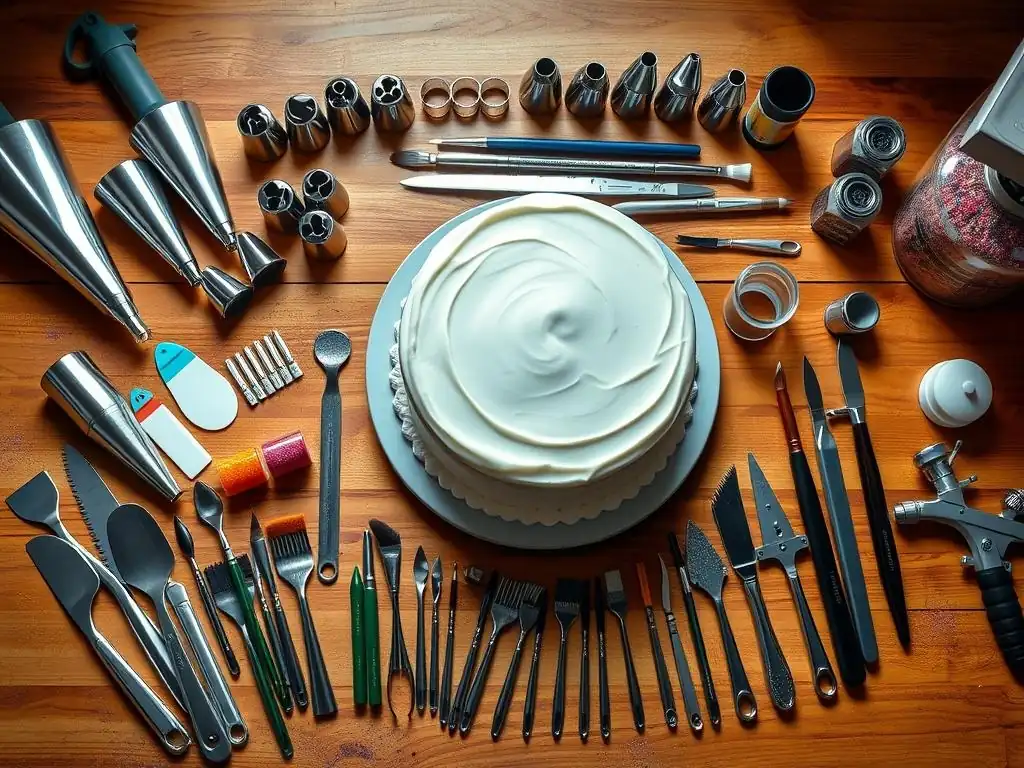
Selecting the appropriate cake decorating tool kit depends heavily on your current skill level and what you hope to achieve. A beginner needs a solid foundation, while an advanced decorator might invest in specialized equipment. Tailoring your decorating tools to your experience ensures you have what you need without unnecessary clutter or expense.
As your skills grow, your tool kit will naturally expand. Start simple, master the basics, and then gradually add more advanced decorating tools as you tackle more complex projects and techniques.
Beginner Tool Kit: Essential Supplies
A beginner's cake decorating tool kit should focus on the absolute essentials for basic icing, leveling, and simple piping. This typically includes a cake leveler or serrated knife, a medium offset spatula, a bench scraper, a few disposable piping bags or one reusable bag, a coupler, and 3-5 basic piping tips (e.g., a small round #3, a medium round #8, a medium open star #21, a large closed star #1M).
Adding a basic plastic cake turntable is also highly recommended. These initial decorating tools allow you to practice core techniques like crumb coating, final icing, smoothing sides, and piping basic stars, shells, and lines, providing a solid foundation for learning. The total cost for these items is usually quite manageable, perhaps between \$40 and \$80 depending on brands.
Intermediate Tool Kit: Expanding Your Skills
An intermediate cake decorating tool kit builds upon the beginner set, adding tools that allow for more detailed work and slightly more complex techniques. This might include a wider range of piping tips (petal tips, leaf tips, basketweave tips), more spatulas of different sizes, a set of basic fondant tools (small rolling pin, smoothers, simple cutters), and perhaps a set of impression mats.
Investing in a slightly better quality turntable (perhaps one with smoother bearings) can also be beneficial at this stage. These additional decorating tools enable you to explore techniques like piping buttercream flowers, covering cakes with fondant, and adding basic textures, significantly expanding your creative capabilities.
Advanced Tool Kit: Mastering Complex Designs
An advanced cake decorating tool kit includes a comprehensive collection of tools for tackling intricate, professional-level designs. This would encompass a wide variety of piping tips and couplers, multiple sizes and types of spatulas and scrapers, a full range of fondant and gum paste tools (including modeling tools and various cutters/molds), impression mats, and potentially specialized equipment like an airbrush system.
Advanced decorators might also invest in higher-quality, more durable versions of core tools, such as a heavy-duty metal turntable. This level of cake decorating tool kit supports complex techniques like sugar flowers, intricate piping, airbrushing, and detailed sculptural work, providing the full range of decorating tools needed to bring ambitious cake designs to life.
Conclusion: Elevate Your Baking with the Right Tool Kit
Building a comprehensive cake decorating tool kit is a journey that parallels your growth as a baker and decorator. Starting with essential, versatile decorating tools provides the foundation, and gradually adding specialized items as you learn new techniques expands your creative horizons. The right tools don't just make decorating easier; they enable you to achieve results that would otherwise be impossible, transforming your baked goods into stunning edible art.
Investing in Quality Tools
While it's wise to start with affordable options, investing in quality decorating tools for the items you use most frequently will pay off in the long run. Durable tools perform better, last longer, and can withstand repeated use and cleaning. A good quality spatula that feels comfortable in your hand or a turntable that spins smoothly makes a noticeable difference in your decorating experience and the final outcome of your cakes. View your cake decorating tool kit as an investment in your passion and skill development.
Embrace Experimentation and Creativity
Ultimately, your cake decorating tool kit is a collection of instruments for creativity. Don't be afraid to experiment with different tools and techniques. Try using piping tips in unconventional ways, combine textures from different impression mats, or see how various spatulas create different frosting finishes. The best way to master your decorating tools is through practice and play. With the right tools and a willingness to experiment, there's no limit to the beautiful cakes you can create.
Frequently Asked Questions
What is a cake decorating tool kit, and why is it essential for bakers?
A cake decorating tool kit is a collection of essential tools used to embellish cakes. It is essential because it provides the baker with the necessary equipment for various decorating techniques.
What are some of the most essential tools that should be included in a basic cake decorating tool kit, as suggested by BakeWithEase?
A basic cake decorating tool kit should include items like offset spatulas, piping bags and tips, and a turntable for easy cake rotation. These tools allow for smooth frosting application and detailed designs.
How does having the right cake decorating tools impact the final result of a decorated cake, according to BakeWithEase?
The right cake decorating tools significantly improve the precision and quality of the decoration. They allow for clean lines, consistent textures, and more intricate designs, leading to a professional-looking cake.
Where can beginners find affordable cake decorating tool kits that are still high quality, according to BakeWithEase?
Beginners can find affordable, high-quality cake decorating tool kits at online retailers and specialty baking supply stores. Look for kits that prioritize essential tools and durable materials.
What are some advanced cake decorating techniques that require specialized tools not typically found in a basic kit, according to BakeWithEase?
Advanced cake decorating techniques like sugar flower creation or airbrushing require specialized tools. These might include gum paste tools, airbrush systems, and specialty piping tips.
Final Reflection: Mastering the Art of Cake Decorating
The tools you choose are as crucial as the recipe itself. A well-stocked cake decorating toolkit isn't just about having the right equipment; it's about unlocking your creative potential and transforming ordinary cakes into edible masterpieces. This article explored the essential tools for various cake decorating techniques, highlighting the versatility and importance of each piece. But beyond the practical, it's about embracing the journey of learning and self-expression.
The impact of cake decorating extends far beyond the simple act of adorning a dessert. It's a powerful form of artistic expression, a way to connect with others through shared celebrations, and a skill that can bring immense joy and satisfaction. The best things in life are the people we love, the places we've been, and the memories we've made along the way.
While this quote doesn't directly relate to cake decorating, it speaks to the heart of what makes this craft so rewarding: the connections and memories created around beautifully decorated cakes. The tools are merely the instruments; the artistry comes from the heart.
Now, I invite you to consider your own cake decorating journey. What tools resonate most with your style? What new techniques are you eager to explore? Don't be afraid to experiment, to embrace imperfections, and to let your creativity flow. The world of cake decorating is vast and endlessly inspiring; the only limit is your imagination. So, gather your tools, embrace the process, and create something truly beautiful.
Unleash Your Inner Cake Artist!
Thanks for diving into the world of cake decorating with us! We hope you've discovered some exciting new techniques and tools to elevate your baking game. Ready to put your newfound knowledge into practice?
- Master a New Technique: Choose one of the decorating methods we covered and try it out today! Even a small step forward makes a big difference.
- Share Your Creations: Show us your cake masterpieces! Use #BakeWithEase on social media to share your progress and inspire others.
- Explore More Tutorials: Dive deeper into specific techniques on our website. We have tons more tutorials ready for you!
What’s the first cake decorating technique you'll master? Let us know in the comments!