
Temperature Control: Essential Thermometers for Perfect Bread Baking

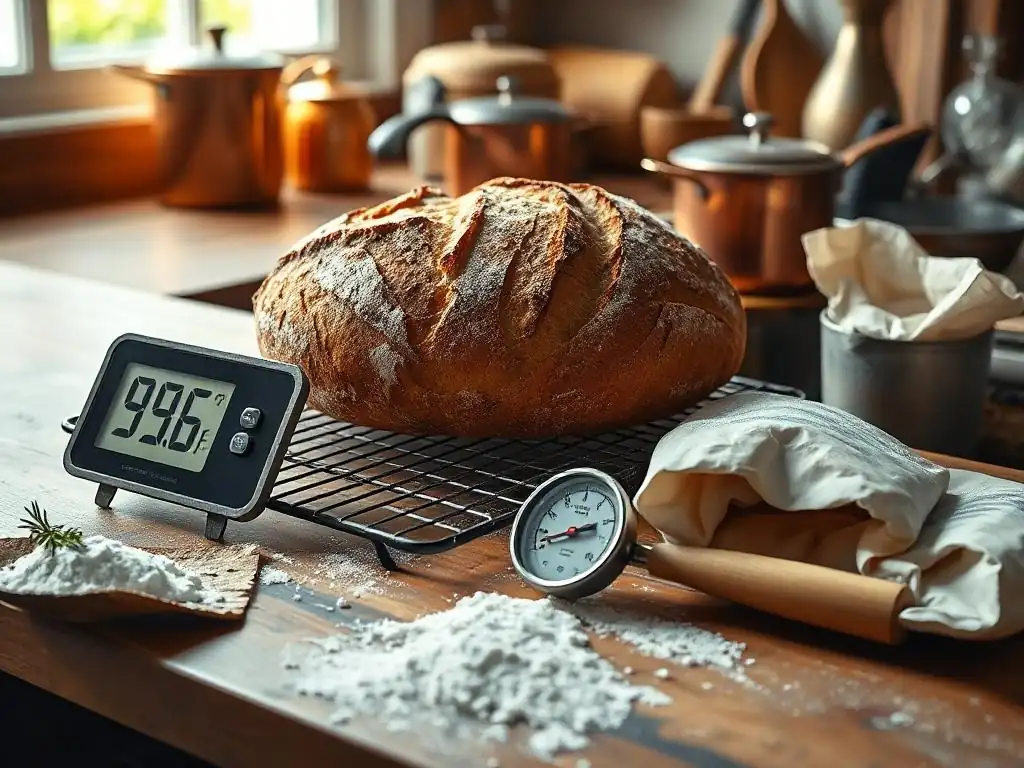
Welcome to BakeWithEase, your partner in achieving baking brilliance! Are you ready to unlock the secrets to perfectly baked bread, every single time? This guide delves into the often-overlooked key to consistent success: temperature control. Discover how a best bread baking thermometer can be your secret weapon, transforming your loaves from good to glorious. Intrigued? Let's explore the essential tools and techniques you need to bake with confidence!
- Why Temperature Matters for Baking Bread: Achieving Baking Perfection
- The Best Bread Baking Thermometers: A 2024 Guide for BakeWithEase Bakers
- Top Thermometer Picks for Bread Baking: Reviews & Recommendations
- Using Your Bread Baking Thermometer: Tips and Tricks for Perfect Results
- Maximizing Bread Baking Success: Beyond the Thermometer
- Conclusion: Master Temperature and Bake with Ease
-
Frequently Asked Questions
- What type of thermometer is generally considered the best for bread baking?
- Why is using a thermometer so important when baking bread?
- Where is the best place to insert the thermometer into the bread to get an accurate reading?
- What temperature range should I be looking for when baking most types of bread?
- Can I use the same thermometer I use for meat to bake bread?
- Final Reflection: The Heart of the Loaf: Precision in Bread Baking
- Unlock Your Inner Baker: Master the Art of Temperature
Why Temperature Matters for Baking Bread: Achieving Baking Perfection
The Crucial Role of Temperature in Yeast Activation
Temperature is arguably the most critical factor influencing yeast activity in bread dough. Yeast are living organisms that consume sugars and produce carbon dioxide gas, which is what makes bread rise. Their activity is highly dependent on temperature. Too cold, and they become sluggish or dormant; too hot, and they can die. The optimal temperature range for most commercial baker's yeast (Saccharomyces cerevisiae) is generally between 75°F and 95°F (24°C to 35°C). Maintaining a consistent dough temperature within this range ensures vigorous and predictable fermentation, leading to a well-risen loaf with good structure.
Outside of this optimal range, yeast performance declines significantly. Below 50°F (10°C), yeast activity slows down dramatically, useful for long, slow cold fermentation but not for standard bulk fermentation. Above 100°F (38°C), yeast activity accelerates rapidly, potentially leading to over-proofing and undesirable flavors. Crucially, yeast begins to die off rapidly above 120°F (49°C), and most yeast is killed by temperatures reaching 140°F (60°C). Monitoring dough temperature with a reliable best bread baking thermometer ensures your yeast are happy and working effectively, preventing issues like under-proofing or the death of your leavening agents before they've done their job.
Understanding Dough Temperature for Optimal Gluten Development
Beyond yeast activity, dough temperature significantly impacts the enzymatic processes that occur during fermentation, which in turn affects gluten development and the overall structure of your bread. Enzymes like proteases are naturally present in flour and, when activated by moisture and warmth, break down proteins. While some breakdown is necessary for extensibility, excessive enzymatic activity due to high dough temperatures can weaken the gluten network, resulting in a slack, sticky dough that's difficult to handle and produces a dense loaf.
Conversely, if the dough is too cold, enzymatic activity is too slow, potentially hindering proper gluten development and the breakdown of complex starches into simpler sugars that yeast can consume. Achieving a specific "desired dough temperature" (DDT), often calculated based on room temperature, flour temperature, water temperature, and a friction factor, is a technique used by professional bakers to ensure consistent results batch after batch. Using a precise best bread baking thermometer allows you to hit this target DDT, promoting balanced enzymatic activity and optimal gluten development for a strong yet extensible dough structure.
Oven Temperature Accuracy: The Key to Consistent Baking
Once your perfectly proofed dough is ready for the oven, accurate oven temperature becomes paramount. The initial heat hit, often referred to as "oven spring," is a critical phase where the dough rapidly expands due to the final burst of yeast activity and the vaporization of water within the dough. If the oven temperature is too low, oven spring will be weak, resulting in a flatter, denser loaf. The crust will also develop too slowly, potentially preventing the formation of a crisp, golden exterior.
On the other hand, an oven that is too hot can cause the crust to set too quickly, restricting oven spring and potentially leading to a dense interior. High heat can also scorch the crust before the interior is fully cooked. Most home ovens can be notoriously inaccurate, often varying by 25°F (14°C) or more from the set temperature. Using an accurate oven thermometer, often a component of the best bread baking thermometer setup, is essential to verify your oven's actual temperature and make necessary adjustments, ensuring consistent bakes with beautiful crusts and fully cooked interiors every time.
The Best Bread Baking Thermometers: A 2024 Guide for BakeWithEase Bakers
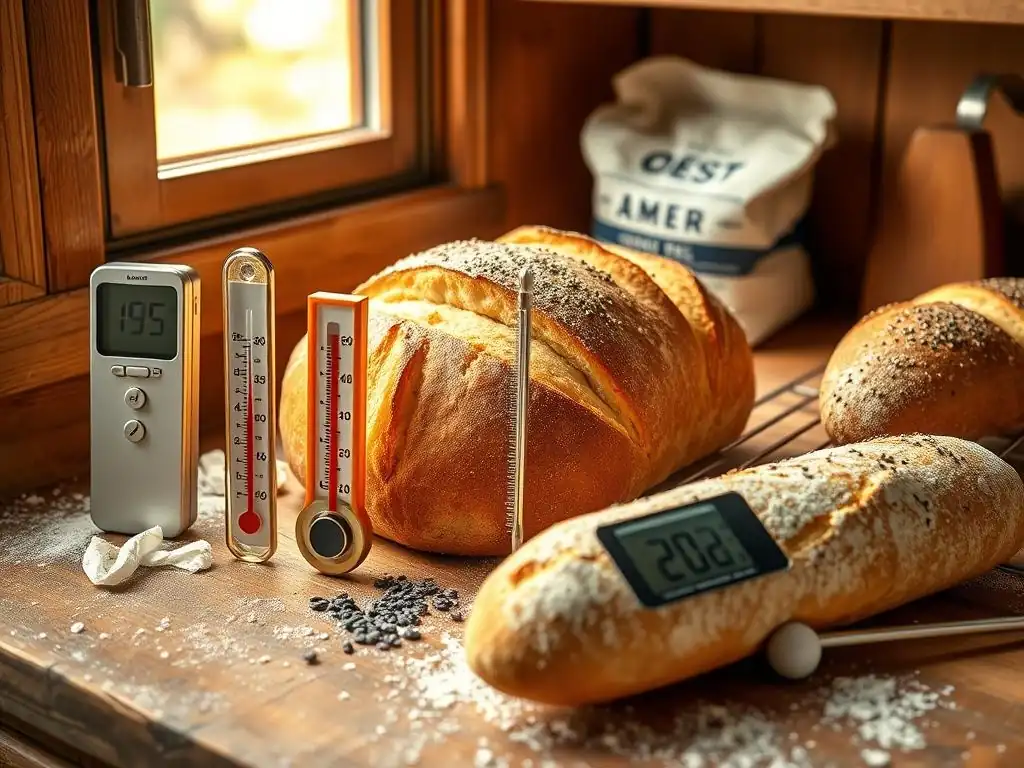
Finding the Right Thermometer: Factors to Consider
Accuracy and Calibration: Ensuring Reliable Readings
The primary function of any thermometer is to provide an accurate reading. For bread baking, where even a few degrees can impact yeast activity or final doneness, accuracy is paramount. A truly best bread baking thermometer will offer precision, often stated in degrees Fahrenheit or Celsius (e.g., ±0.5°F or ±0.3°C). This level of accuracy ensures that when you measure your dough temperature at 78°F, it is indeed 78°F, allowing you to make informed decisions about fermentation time.
Reliable thermometers should also be calibratable. Over time, even the best instruments can drift slightly. Calibration allows you to reset the thermometer to a known standard, such as the freezing point of water (32°F or 0°C) or the boiling point of water (212°F or 100°C at sea level). Knowing how to calibrate and periodically checking your thermometer's accuracy guarantees that your temperature readings remain trustworthy, which is fundamental for consistent baking results.
Response Time: Quick Reads for Perfect Timing
In the fast-paced world of baking, especially when checking the internal temperature of a loaf that's rapidly cooling, response time matters. An instant-read thermometer should live up to its name, providing a stable temperature reading within a few seconds. For checking dough temperature during kneading or fermentation, a quick response allows you to easily monitor temperature changes without disrupting the process for too long.
When checking the internal temperature of a loaf fresh out of the oven, speed is crucial. The loaf continues to cook slightly as it cools, and waiting too long for a reading means the temperature will drop, potentially giving you an inaccurate assessment of doneness at the peak internal temperature. A best bread baking thermometer with a fast response time, ideally under 3 seconds, ensures you get a reliable reading right when you need it, helping you pull your bread at the perfect moment.
Durability and Waterproofing: Thermometers Built to Last
A thermometer used in the kitchen, especially for baking, will inevitably encounter moisture, flour dust, and potentially drops. Durability is a key factor for a best bread baking thermometer. Look for models constructed from robust materials like stainless steel and impact-resistant plastics. The probe should be sturdy enough to be inserted into dense dough or a finished loaf without bending.
Waterproofing or water resistance is also highly beneficial. Dough is wet, and cleaning a thermometer probe often involves washing. A thermometer rated as waterproof (e.g., IP67 standard) can withstand splashes and even brief immersion, making cleanup simple and preventing internal components from being damaged by moisture ingress. This ensures your thermometer remains functional and hygienic for years of baking.
Ease of Use and Display: User-Friendly Designs
Even the most accurate and durable thermometer is frustrating if it's difficult to use or read. A good bread baking thermometer should feature a clear, easily readable display, preferably with large digits and backlighting for visibility in varying kitchen light conditions. Buttons should be intuitive and minimal, allowing for quick operation.
Consider the form factor: is it comfortable to hold? Is the probe length sufficient for your needs (e.g., long enough to reach the center of a large loaf or deep into a mixing bowl)? Features like auto-rotating displays or magnetic backs for storage can add convenience. The best bread baking thermometer combines precision with user-friendly design, making temperature measurement a simple and integrated part of your baking workflow.
Top Thermometer Picks for Bread Baking: Reviews & Recommendations
1. ThermoWorks Thermapen ONE: The Gold Standard for Instant-Read Thermometers
Features of the Thermapen ONE: Accuracy, Speed, and Durability
The ThermoWorks Thermapen ONE is widely regarded as the top-tier instant-read thermometer available, and it excels in the demanding environment of bread baking. Its headline feature is its incredible speed, providing a stable temperature reading in just one second. This is paired with exceptional accuracy, typically specified at ±0.5°F (±0.3°C), making it one of the most precise thermometers you can own. The slim, tapered probe easily penetrates dough and bread without causing significant damage.
Beyond speed and accuracy, the Thermapen ONE is built to last. It features a robust, splash-proof casing (rated IP67 waterproof) that can withstand drops and is easy to wipe clean. The display is large, automatically rotating for easy reading regardless of how you hold it, and features a backlight for dim conditions. Powered by a standard AAA battery, it boasts an impressive battery life of 2000 hours of continuous use. Its construction and performance justify its higher price point for serious bakers.
Why BakeWithEase Recommends: Perfect for Dough and Internal Bread Temperature
The Thermapen ONE is our top recommendation for bakers who demand the best bread baking thermometer for versatile use. Its lightning-fast speed and pinpoint accuracy make it ideal for quickly checking dough temperature during mixing or fermentation without losing momentum. A quick poke into the dough can tell you exactly where you stand in seconds.
Furthermore, its accuracy and speed are invaluable for checking the internal temperature of your finished loaf. Simply insert the probe into the thickest part of the bread, away from the crust, and get an immediate reading. For lean bread, aiming for 200-210°F (93-99°C) is common. The Thermapen ONE gives you this critical information instantly, ensuring your bread is perfectly cooked through without being overbaked, consistently delivering professional-level results.
2. ThermoWorks DOT: Reliable Leave-In Oven Thermometer
Features of the DOT: Simple Monitoring for Consistent Results
The ThermoWorks DOT is designed for continuous temperature monitoring, making it an excellent tool for tracking internal food temperature or ambient oven temperature over time. It consists of a simple base unit with a clear display and a wired probe that can be inserted into your bread or placed in the oven. Its primary strength lies in its simplicity and reliability for set-it-and-forget-it monitoring.
The DOT features a programmable high-temperature alarm, which is incredibly useful for bread baking. You can set the alarm to trigger when your loaf reaches its target internal temperature (e.g., 205°F), alerting you precisely when it's done. The probe cable is durable and designed to withstand oven temperatures. While not as fast as an instant-read thermometer, the DOT provides a constant, accurate reading throughout the baking process.
Why BakeWithEase Recommends: Ideal for Monitoring Oven Temperature During Baking
While the Thermapen ONE is great for quick checks, the DOT shines when you need continuous monitoring, making it a strong contender for the best bread baking thermometer for specific tasks. Its wired probe can be placed inside your oven using a clip, giving you a reliable, real-time reading of the actual air temperature inside the oven, which is often different from the oven's thermostat setting. This helps you confirm your oven is holding the correct temperature throughout the bake.
Alternatively, for larger loaves like sourdough boules or enriched breads, you can insert the probe into the center of the dough before it goes into the oven and track its internal temperature rise. Setting the alarm ensures you pull the loaf at the precise moment it reaches perfect doneness, preventing under- or over-baking. The DOT complements an instant-read thermometer perfectly, providing monitoring capabilities that quick-read probes don't offer.
3. CDN ProAccurate Quick-Read Thermometer: Affordable Accuracy for Bread Baking
Features of the CDN ProAccurate: Budget-Friendly Temperature Monitoring
The CDN ProAccurate Quick-Read Thermometer is a popular choice that offers a good balance of performance and affordability. While not as instantaneous as the top-tier models, it typically provides a stable reading within 6-8 seconds, which is significantly faster than traditional dial thermometers. It offers accuracy generally within ±2°F (±1°C), which is sufficient for most home bread baking applications.
This thermometer features a durable stainless steel probe and a clear digital display. Many models are also designed with features like a protective sheath that doubles as an extension handle or a clip for attaching to a pocket. It's built to be reasonably robust for kitchen use and is often water-resistant, making it easy to clean after use in dough or cooked bread.
Why BakeWithEase Recommends: A Great Entry-Level Option for New Bakers
For bakers just starting out or those on a tighter budget, the CDN ProAccurate is an excellent entry point into using a best bread baking thermometer. It provides the essential function of accurately measuring dough and internal bread temperatures at a much lower cost than professional-grade options. Its speed, while not instant, is quick enough for practical use in a home kitchen.
Using this thermometer helps new bakers develop a feel for correct temperatures and understand their impact on the baking process without a significant investment. It allows you to reliably check if your dough has reached its desired temperature after mixing or if your loaf is fully cooked, eliminating guesswork. For many home bakers, this level of performance is more than adequate to achieve consistently good results.
4. Infrared Thermometer for Bread Baking: No-Contact Surface Temperature Measurement
Features of Infrared Thermometers: Quick Surface Readings
Infrared thermometers measure surface temperature from a distance using infrared radiation. They provide an almost instantaneous reading by simply pointing the device at the target surface and pressing a button. They do not require physical contact, making them ideal for measuring the temperature of hot surfaces like baking stones or steels.
These thermometers typically have a wide temperature range, often capable of measuring temperatures far exceeding those needed for baking (e.g., up to 500°F or even 1000°F+). They usually feature a laser pointer to help aim at the desired spot on the surface. It's important to note that they only measure the surface temperature and cannot read the internal temperature of dough or bread.
Why BakeWithEase Recommends: Useful for Checking Stone or Steel Temperature
While not a primary tool for measuring dough or internal bread temperature, an infrared thermometer can be a valuable addition to a bread baker's toolkit, representing a different type of best bread baking thermometer for a specific need. Their main utility in bread baking is accurately measuring the temperature of your baking surface, such as a pizza stone or baking steel.
Achieving a properly preheated stone or steel is crucial for a good oven spring and crust development, especially for artisan loaves. Ovens often indicate they've reached temperature, but the stone may take longer to absorb and retain heat. An infrared thermometer allows you to quickly verify that your stone or steel has reached the target temperature (often 450-550°F or 230-290°C) before loading your dough, ensuring maximum thermal transfer and a superior bake.
Using Your Bread Baking Thermometer: Tips and Tricks for Perfect Results
Taking Accurate Dough Temperature Readings
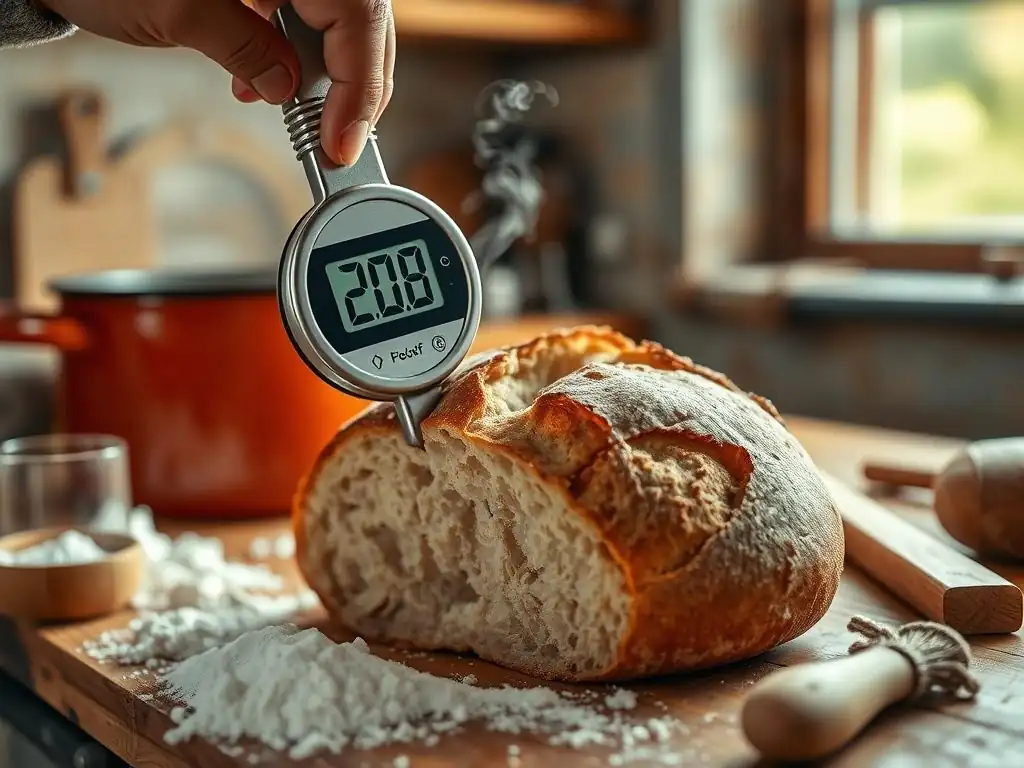
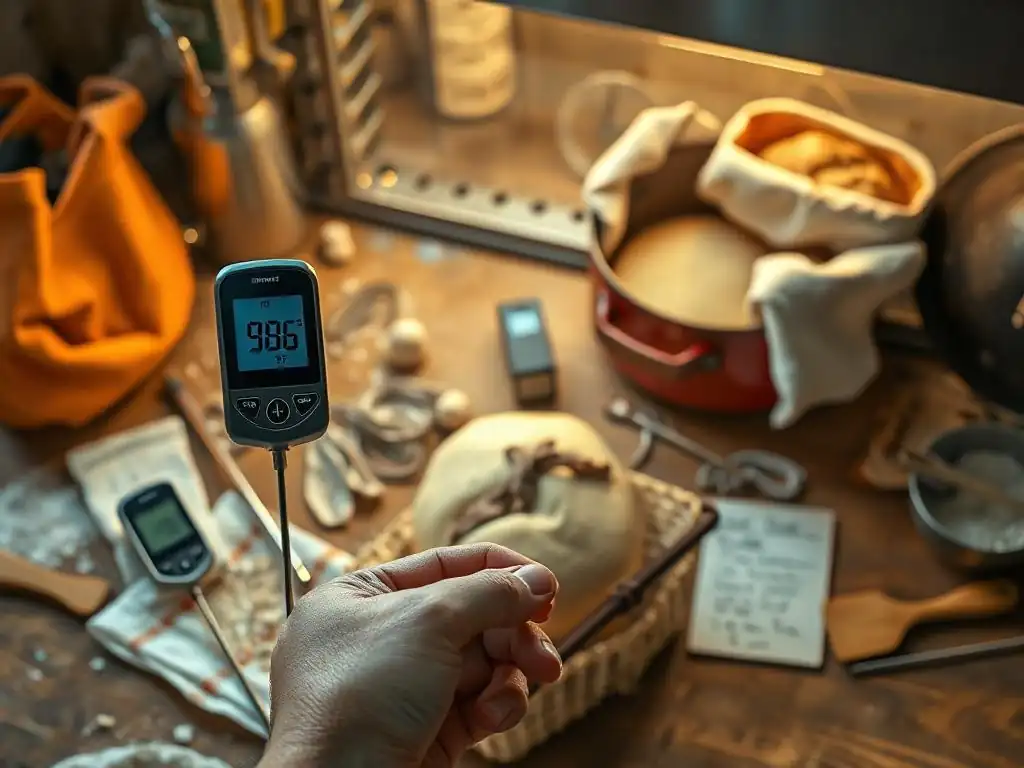
To get an accurate reading of your dough temperature, insert the thermometer probe into the thickest part of the dough mass. Avoid inserting it too close to the surface, the edge of the bowl, or your hand, as these areas can be warmer or cooler than the bulk of the dough. If measuring temperature during kneading, stop the mixer briefly or work quickly by hand.
Insert the probe at least 1-2 inches deep for a representative reading of the core temperature. If measuring a small batch of dough, you might need to fold it around the probe slightly to ensure the tip is fully surrounded. Wait for the thermometer's reading to stabilize, especially with quick-read models, before noting the temperature. Taking multiple readings in different spots can also help confirm consistency throughout the dough.
Checking Internal Bread Temperature for Doneness
Checking the internal temperature is the most reliable way to determine if your bread is fully baked. For most lean bread (like baguettes, ciabatta, or sourdough), the ideal internal temperature is between 200°F and 210°F (93°C and 99°C). Enriched breads (like challah or brioche) with eggs, milk, or sugar often finish at a slightly lower temperature, around 190°F to 195°F (88°C to 90°C).
Insert the probe into the thickest part of the loaf, typically from the bottom or side, aiming for the very center. Ensure the probe tip is not touching the hard crust on the opposite side, as this will give a false reading. Gently remove the loaf from the oven (using oven mitts!) to take the reading quickly, then return it to the oven if the temperature hasn't been reached. A reliable best bread baking thermometer makes this crucial step quick and accurate.
Calibrating Your Thermometer for Accuracy
Even the best bread baking thermometer can lose accuracy over time, so periodic calibration is recommended. A simple method is the ice bath test: fill a glass with crushed ice and add a little cold water. Stir it for a minute, then immerse the thermometer probe into the center of the ice-water mixture, making sure the tip doesn't touch the glass bottom. A properly calibrated thermometer should read 32°F (0°C).
Another method is the boiling water test (use caution!). Bring water to a rolling boil. Immerse the probe tip into the boiling water, ensuring it's not touching the bottom or sides of the pot. At sea level, a properly calibrated thermometer should read 212°F (100°C). If your thermometer reads consistently high or low in these tests, check its manual for calibration instructions. Some digital thermometers have a calibration function, while others may indicate it's time for replacement if they are significantly off.
Maintaining Your Thermometer for Long-Lasting Performance
Proper maintenance ensures your best bread baking thermometer remains accurate and functional. After each use, especially with dough or cooked bread, clean the probe thoroughly. Use warm, soapy water and wipe it clean, being careful not to immerse the entire unit unless it is rated for full waterproofing. Rinse and dry the probe completely before storing.
Store your thermometer in a safe place where it won't be subjected to extreme temperatures or physical damage. Many instant-read thermometers come with a protective sheath or case. Check the battery periodically and replace it when the display starts to dim or function becomes erratic. Following these simple maintenance steps will help extend the lifespan of your thermometer and ensure reliable readings for countless bakes.
Maximizing Bread Baking Success: Beyond the Thermometer
Understanding Different Types of Flour and Their Temperature Sensitivity
The type of flour you use plays a significant role in how your dough behaves at different temperatures. Flours vary in protein content and the type and amount of enzymes they contain. High-protein flours, like bread flour, develop stronger gluten networks but can be more sensitive to high dough temperatures, which can accelerate protease activity and potentially weaken the gluten if not managed carefully.
Whole wheat and other whole grain flours contain more bran and germ, which can interfere with gluten development. They also often have higher enzymatic activity than refined flours. Managing dough temperature is crucial with these flours to balance enzyme action – too warm can lead to excessive breakdown, while too cool might slow down necessary processes. Using a best bread baking thermometer helps you keep the dough within the optimal range recommended for your specific flour type and recipe.
Controlling Ambient Temperature for Optimal Fermentation
While dough temperature is primary, the ambient temperature of your kitchen or proofing area also significantly impacts fermentation speed and consistency. Yeast activity is influenced by the surrounding environment. A warm kitchen (say, 75-80°F / 24-27°C) will cause dough to ferment much faster than a cool one (65-70°F / 18-21°C).
Understanding and controlling ambient temperature allows for more predictable fermentation times. If your recipe calls for a 2-hour bulk ferment at room temperature, but your kitchen is cold, it might take 3 or 4 hours. Conversely, a warm kitchen can speed things up unexpectedly. Using a simple room thermometer alongside your best bread baking thermometer for dough helps you anticipate fermentation times and adjust accordingly, or find a consistently warm spot for proofing.
Combining Temperature Control with Other Baking Techniques
Temperature control is not a standalone technique but works in concert with other crucial elements of bread baking, such as hydration, kneading, and proofing time. The desired dough temperature often dictates the temperature of your mixing water – colder water is needed if your flour and kitchen are warm, warmer water if they are cool, to hit the target DDT.
Properly developed gluten (achieved through kneading) provides the structure to hold the gases produced by yeast at the correct temperature. Understanding the relationship between temperature and yeast activity allows you to manipulate proofing times – colder temperatures mean longer, slower ferments which can develop more complex flavors, while warmer temperatures speed up the process for quicker results. Mastering temperature control using your best bread baking thermometer empowers you to intentionally influence these other variables for superior bread.
Conclusion: Master Temperature and Bake with Ease
Choosing the Best Bread Baking Thermometer for Your Needs.
Achieving consistently perfect bread requires attention to detail, and perhaps no detail is more critical than temperature. From activating yeast and developing gluten in the dough to ensuring a proper oven spring and a perfectly cooked interior, temperature plays a vital role at every stage. Guessing temperatures can lead to unpredictable results – over-proofed dough, dense loaves, or gummy interiors.
Investing in a reliable best bread baking thermometer is one of the most impactful steps you can take to improve your baking consistency. Whether you opt for a lightning-fast instant-read for quick checks, a leave-in probe for continuous monitoring, or a budget-friendly option to get started, having an accurate way to measure temperature empowers you to take control of your bake. By understanding and managing temperature with the right tools, you'll unlock new levels of precision and confidence, truly allowing you to bake with ease.
Frequently Asked Questions
What type of thermometer is generally considered the best for bread baking?
The best bread baking thermometer is generally a digital instant-read thermometer. This provides the most accurate and fastest readings, crucial for determining doneness.
Why is using a thermometer so important when baking bread?
A thermometer ensures your bread is fully cooked internally, preventing a gummy texture. It helps you achieve the optimal internal temperature for your specific type of bread.
Where is the best place to insert the thermometer into the bread to get an accurate reading?
Insert the thermometer into the thickest part of the loaf, avoiding any air pockets or the bottom crust. This provides the most representative internal temperature.
What temperature range should I be looking for when baking most types of bread?
Generally, most breads are done when the internal temperature reaches between 190°F and 210°F (88°C and 99°C). The specific temperature depends on the type of bread being baked.
Can I use the same thermometer I use for meat to bake bread?
Yes, you can use the same thermometer for both, but ensure it's thoroughly cleaned between uses. A dedicated bread thermometer can prevent any cross-contamination of flavors.
Final Reflection: The Heart of the Loaf: Precision in Bread Baking
The pursuit of the perfect loaf hinges on more than just flour and water; it demands precision, and that precision begins with temperature control. A seemingly small detail, the accurate measurement of temperature during bread baking dramatically impacts the final product, transforming a dense, disappointing result into a light, airy masterpiece. This isn't just about following a recipe; it's about understanding the science behind the rise, the crust, and the crumb.
The impact of accurate temperature monitoring extends far beyond the individual baker's kitchen. It represents a deeper connection to the craft, a respect for the process, and an appreciation for the subtle nuances that elevate baking from a task to an art. Baking is a science, but it's also an art. The more you understand the science, the better you can express your art.
This quote perfectly encapsulates the importance of tools like a reliable thermometer, enabling us to master the science and unleash our creative potential. The quest for the perfect temperature is a continuous journey, one that deepens our understanding and appreciation for the ancient art of bread making.
Now, consider your own baking journey. What tools do you currently use? Are you satisfied with the results? Perhaps it's time to invest in a high-quality thermometer, to elevate your baking to the next level. Don't just bake; master the art of bread making. Embrace the precision, the science, and the artistry. The perfect loaf awaits.
Unlock Your Inner Baker: Master the Art of Temperature
Thanks for taking the time to explore the world of baking thermometers! You've now got the knowledge to create perfectly textured bread every time. Ready to put your new expertise to the test?
- Invest in a high-quality thermometer: This is the single most crucial step to consistently amazing bread. Consider the types discussed and choose one that fits your baking style.
- Share your baking triumphs (and challenges!): We'd love to see your bread creations – post photos on social media using #BakeWithEaseBread.
- Experiment with different bread recipes: Now you can confidently adjust temperatures based on your flour, oven, and desired outcome.
Ready to transform your baking game? What's the first bread recipe you're going to perfect with your new thermometer skills?