
Simple Techniques for Baking Large Batches of Pastries

Welcome to BakeWithEase, your guide to effortless baking!
Ever dreamt of effortlessly creating a stunning array of pastries for your next gathering? Baking large pastry batches doesn't have to be a daunting task. Discover simple, yet surprisingly effective techniques that will transform your baking process from stressful to smooth. Intrigued? Let's unlock the secrets to perfectly scaled-up pastries and make your next baking adventure a resounding success!
- Introduction to Baking Large Pastry Batches for Gatherings
- Preparing for Successful Large Batch Pastry Baking
- Techniques to Streameline Baking Large Pastry Batches
- Oven Management and Baking Tips for Large Pastry Quantities
- Storage and Handling of Large Pastry Batches Post-Baking
- Troubleshooting Common Issues When Baking Large Pastry Batches
- Tips and Tricks to Improve Efficiency in Baking Large Pastry Batches
- Conclusion: Mastering the Art of Baking Large Pastry Batches with Ease
-
Frequently Asked Questions
- How can I ensure even baking when making large pastry batches?
- What's the best way to store large quantities of baked pastries?
- Can I scale up a pastry recipe without affecting the quality?
- What equipment is most helpful when baking large pastry batches?
- How do I prevent pastries from becoming soggy when baking in bulk?
- Final Reflection: Scaling Up Sweet Success
- Unleash Your Inner Pastry Chef!
Introduction to Baking Large Pastry Batches for Gatherings
Baking for a crowd can be incredibly rewarding, filling your home or event space with delightful aromas and satisfying treats. Whether it's a family reunion, a holiday party, or a community event, being able to produce a significant quantity of delicious pastries efficiently is a valuable skill.
This guide is designed to help you navigate the process of baking large pastry batches successfully, turning what might seem like a daunting task into an enjoyable and manageable one. We'll explore everything from initial planning and preparation to execution and post-baking handling, ensuring your large-scale baking endeavors are met with ease and delicious results.
Tackling the production of many dozens of cookies, muffins, or other baked goods requires a different approach than whipping up a single batch. It involves careful consideration of time, space, equipment, and technique. By understanding the nuances of scaling recipes and optimizing your workflow, you can significantly reduce stress and increase your output. This article aims to provide you with practical, easy-to-follow advice to make baking large pastry batches not just possible, but genuinely simple and effective, leaving you more time to enjoy the occasion with your loved ones.
Importance of Efficient Baking Techniques for Large Pastry Quantities
When faced with the need for significant amounts of baked goods, employing efficient techniques is paramount. It's not just about speeding up the process; it's about ensuring consistency across potentially hundreds of individual items and managing your resources effectively. Efficient methods minimize wasted time, ingredients, and energy, which is crucial when you're focused on baking large pastry batches for an event or gathering. Think about the difference between baking one dozen cookies and ten dozen – the scaled-up operation demands a more streamlined approach to handle the volume.
Efficiency in baking large pastry batches also directly impacts the quality of the final product. Consistent mixing times, controlled proofing environments, and optimized oven usage all contribute to uniform texture, appearance, and flavor across the entire lot. Without efficiency, you risk variations in doneness, uneven browning, or structural issues. Mastering these techniques allows you to confidently produce a high volume of pastries that all meet the same delicious standard, ensuring everyone at your gathering enjoys a perfect treat.
Overview of Challenges in Baking Large Pastry Batches
Scaling up a favorite recipe presents unique challenges that go beyond simply multiplying ingredients. One significant hurdle in baking large pastry batches is maintaining consistency. Factors like mixing time may not scale linearly; doubling a recipe doesn't necessarily mean doubling the mixing time. Over- or under-mixing large quantities of dough or batter can lead to significant textural differences compared to a standard batch, resulting in some pastries being tough while others are crumbly.
Another common challenge involves oven space and temperature management. Home ovens are designed for smaller volumes, and filling them to capacity with multiple trays can impede air circulation, leading to uneven baking. Some items might brown too quickly on the outside while remaining undercooked inside, or vice versa. Additionally, managing multiple batches through a single oven requires careful timing and coordination to prevent dough from overproofing or batter from sitting too long, adding complexity to the process of baking large pastry batches.
Preparing for Successful Large Batch Pastry Baking
Successful baking large pastry batches starts long before you turn on the oven. Thorough preparation is the foundation upon which efficiency and quality are built. This involves careful planning, selecting appropriate recipes, gathering the necessary equipment, and precisely calculating and scaling your ingredients. Taking the time to prepare adequately minimizes surprises and allows for a smoother baking process, even when dealing with significant quantities.
Thinking through each step – from ingredient sourcing to the final cooling rack – is key. Consider the total volume of dough or batter you'll be working with, the space required for preparation, and how you will manage multiple trays moving in and out of the oven. A well-thought-out plan ensures you have everything you need at hand and that your workspace is organized for maximum efficiency when baking large pastry batches.
Selecting the Right Pastry Recipes for Bulk Baking
Not all recipes are created equal when it comes to scaling them up for baking large pastry batches. Some recipes, particularly delicate ones like soufflés or intricate laminated doughs, can be challenging to scale successfully without specialized equipment or techniques. Simple, robust recipes for items like cookies, muffins, scones, or simple cakes are generally the easiest to adapt for larger volumes. Look for recipes with straightforward mixing methods and forgiving dough or batter consistencies.
When selecting recipes, also consider the yield and the desired outcome. If you need 100 cookies, choose a recipe that yields a decent amount per batch (e.g., 2-3 dozen) to minimize the number of individual mixing cycles required. Test the recipe in a standard batch first to ensure you're happy with the results before attempting to scale it up. Prioritizing stable and predictable recipes simplifies the process significantly when undertaking baking large pastry batches.
Essential Equipment and Tools for Baking Large Quantities of Pastries
Having the right tools is critical for efficient baking large pastry batches. While you can often make do with standard kitchen equipment for small batches, scaling up requires larger capacities and specialized items. A stand mixer with a large bowl capacity (often 6 quarts or more) is almost essential for handling large amounts of dough or batter without overworking your machine or yourself. Multiple large mixing bowls are also necessary for different ingredients or successive batches.
Beyond mixing, consider baking surfaces and cooling space. You'll need numerous baking sheets – ideally commercial-sized ones if they fit your oven, or simply many standard half-sheet pans. Parchment paper or silicone baking mats are invaluable for quick cleanup and consistent results across many batches. Sufficient cooling racks that can accommodate all your baked goods simultaneously (or in manageable waves) are also key to preventing condensation and ensuring proper cooling when baking large pastry batches.
Ingredient Planning and Scaling Recipes for Large Pastry Batches
Accurate ingredient scaling is perhaps the most critical step in preparing for baking large pastry batches. Simply multiplying ingredient quantities can sometimes lead to unexpected results, especially with leavening agents like baking soda and baking powder, or intense flavorings like salt and spices. It's often recommended to slightly reduce the scaled amount of leaveners and strong flavorings initially and adjust based on a test batch, as their impact can become more pronounced in larger volumes.
Measuring by weight is highly recommended when scaling recipes for baking large pastry batches. Using a digital kitchen scale ensures far greater accuracy and consistency than volume measurements, especially for flour, sugar, and fats. For example, 500 grams of flour will always be 500 grams, but 4 cups of flour can vary significantly depending on how it's scooped. Calculate the total required quantity for each ingredient and measure precisely before you begin mixing to streamline the process and minimize errors.
Techniques to Streameline Baking Large Pastry Batches
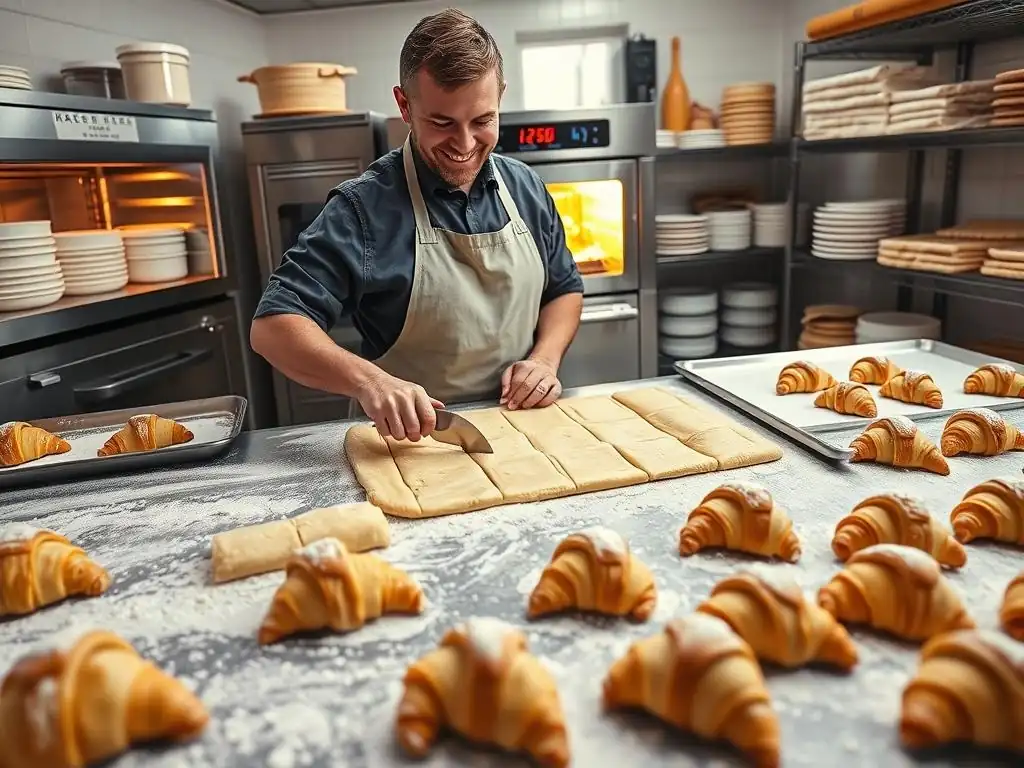
Executing the bake efficiently requires mastering specific techniques adapted for volume. From preparing the dough to managing the initial stages of baking, optimizing each step ensures consistency and saves valuable time. These techniques focus on handling larger quantities of ingredients and intermediate products smoothly and effectively throughout the process of baking large pastry batches.
Adopting a production-line mindset can be beneficial. Think about how you can perform repetitive tasks, like portioning dough or scooping batter, in one go for a large quantity rather than stopping and starting for each small batch. This approach reduces setup and cleanup time between cycles, making the overall process of baking large pastry batches much more efficient.
Dough Preparation Methods for Consistency in Large Batches
When preparing dough for baking large pastry batches, consistency is key. For yeasted doughs, ensure the water temperature is consistent across all batches if you're mixing sequentially. Use a thermometer to check. For cookie or scone doughs, avoid overworking the gluten, which can happen easily in a powerful stand mixer with a large amount of dough. Mix just until ingredients are combined, scraping down the bowl frequently to ensure everything is incorporated evenly.
Consider preparing dough in manageable sub-batches if your equipment capacity is limited or if the recipe is particularly sensitive. For instance, if your mixer can handle a double batch but you need a quadruple batch, mix two doubles separately. This prevents overloading the mixer and allows for better control over mixing time and dough development. For doughs requiring chilling, shape them into flat discs or rectangles before chilling to speed up the cooling process, which is essential when handling large volumes for baking large pastry batches.
Effective Mixing and Kneading Tips for Bulk Pastry Dough
Mixing large quantities of ingredients requires attention to detail. Start with dry ingredients combined thoroughly before adding wet ones, unless the recipe specifies otherwise. When using a stand mixer for baking large pastry batches, begin on a low speed to prevent flour from flying everywhere, gradually increasing speed as ingredients come together. Monitor the dough's consistency closely; it may reach the desired state faster or slower than a standard batch due to the increased volume and friction.
For kneading bulk pastry dough, whether by machine or by hand (though machine is highly recommended for volume), focus on developing just the right amount of gluten for the specific pastry. Over-kneading large quantities is a common issue that results in tough baked goods. For items like bread or pizza dough where gluten development is key, knead until the dough passes the windowpane test. For biscuits or scones, minimize kneading to keep them tender. Using a dough hook on a stand mixer is efficient for kneading large volumes when baking large pastry batches.
Optimal Proofing Strategies to Handle Multiple Pastry Portions
Proofing large amounts of yeasted dough for baking large pastry batches requires careful management of space and temperature. If you have multiple large bowls of dough, find a warm, draft-free spot that can accommodate all of them. A slightly warmed oven (turned off after reaching a low temperature, around 75-85°F or 24-30°C) can serve as a makeshift proofing box for multiple bowls. Cover the bowls tightly with plastic wrap to prevent the surfaces from drying out.
Consider staggering your dough preparation if oven space for baking is limited. Prepare one batch of dough, let it complete its first rise, and then punch it down and refrigerate it while the first items from the second batch are baking. Cold fermentation can add flavor and allows you flexibility in timing when baking large pastry batches. Monitor proofing time closely, as larger masses of dough may take slightly longer to rise initially, but subsequent proofs of shaped items might go faster in a warm environment.
Oven Management and Baking Tips for Large Pastry Quantities
Managing oven space and temperature is perhaps the most critical aspect of successfully baking large pastry batches. Home ovens have limitations in terms of capacity and heat distribution, and simply filling them up can lead to disappointing results. Strategic placement of trays, adjusting temperatures and times, and potentially using multiple ovens are all techniques to master.
Efficient oven use ensures that every pastry bakes evenly and reaches the desired level of doneness and browning. Poor oven management can result in some items being burnt while others are still pale, or a whole batch having an inconsistent texture. Paying close attention to how heat circulates and adjusting accordingly is key when baking large pastry batches.
Arranging Pastries in the Oven for Even Baking of Large Batches
When loading your oven for baking large pastry batches, avoid overcrowding. Leave sufficient space between items on the baking sheet and between the baking sheets themselves to allow hot air to circulate freely. If using multiple racks, position them to allow adequate vertical space above and below each tray. Typically, placing racks in the upper-middle and lower-middle positions works well, avoiding the very top and bottom where heat can be most intense or inconsistent.
Rotate your trays during the baking process. For most items when baking large pastry batches, rotating trays from front to back and swapping racks (moving the top tray to the bottom rack and vice versa) halfway through the estimated baking time helps ensure even browning and cooking. This compensates for hot or cool spots that naturally occur in ovens, especially when they are heavily loaded. Set a timer for the halfway point to remind yourself to perform the rotation.
Temperature Control and Timing Adjustments for Bulk Pastry Baking
Baking large quantities can sometimes slightly lower the oven temperature, as the cooler dough or batter absorbs heat. While you shouldn't drastically change the temperature called for in the recipe, be aware that baking time may need to be extended. A good rule of thumb for baking large pastry batches is to anticipate adding 10-20% to the original baking time, but always start checking for doneness at the original time.
Use an oven thermometer placed inside the oven to verify the actual temperature, as oven thermostats can be inaccurate. This is particularly important when baking large pastry batches where precise temperature is needed for consistent results across many items. If you notice significant unevenness despite rotating, you might consider slightly lowering the temperature (e.g., by 10-15°F or 5-8°C) and extending the baking time further to allow the pastries to cook through before the outsides burn.
Using Multiple Racks and Ovens: Maximizing Baking Capacity
To maximize your output when baking large pastry batches, utilize as many oven racks as your oven design allows for proper air circulation. Most standard ovens can accommodate two racks effectively for items like cookies or muffins. For taller items like cakes or loaves of bread, you might be limited to one or two depending on their height. Always ensure there is at least 1-2 inches of space around all sides of the baking sheet and the oven walls.
If you frequently bake large quantities or are facing a very tight deadline for baking large pastry batches, consider using multiple ovens if available. This could be a second home oven, a toaster oven for smaller items, or even a friend's or neighbor's oven if feasible. Using two ovens allows you to bake twice the volume simultaneously, dramatically cutting down the total baking time and helping to manage the flow of dough or batter waiting to be baked. Coordinate timing carefully between ovens for consistency.
Storage and Handling of Large Pastry Batches Post-Baking
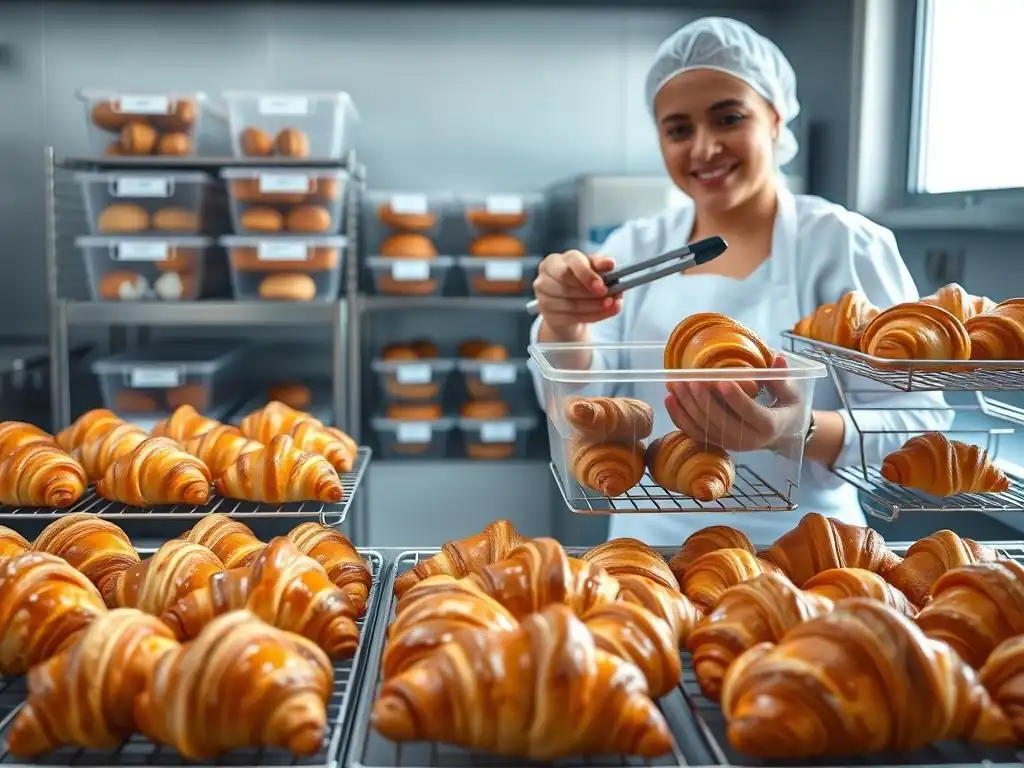
Once your delicious pastries are out of the oven, proper cooling, storage, and handling are crucial, especially when dealing with large volumes. Mishandling at this stage can compromise texture, freshness, and appearance, undoing all your hard work in baking large pastry batches. Planning for post-bake logistics is just as important as the baking itself.
Ensuring adequate space for cooling and packaging will prevent overcrowding, which can lead to pastries steaming and becoming soggy. Having the right storage containers or packaging materials ready will also streamline the process and keep your baked goods fresh for your gathering.
Best Practices for Cooling and Storing Large Quantities of Pastries
Cooling is a critical step. As soon as pastries are out of the oven, transfer them from hot baking sheets to cooling racks. Leaving them on the hot sheet continues the cooking process and can make bottoms soggy. Ensure cooling racks are spaced out to allow air circulation around all sides of the pastries. For baking large pastry batches, you will need significantly more cooling space than usual. Clear counter space or use multiple surfaces to lay out racks.
Once completely cool, store pastries appropriately to maintain freshness. Airtight containers are best for most cookies, muffins, and quick breads to prevent them from drying out. Layer items carefully, perhaps with parchment paper in between layers, to prevent sticking or crushing. Store different types of pastries separately to avoid flavor transfer. If storing overnight or longer when baking large pastry batches, consider whether refrigeration is necessary (for items with perishable fillings) or if room temperature is sufficient.
Packaging and Transporting Pastries for Large Gatherings
When preparing baking large pastry batches for an event away from your home, consider how you will package and transport them. Sturdy containers that protect the pastries from being squashed are essential. Depending on the type of pastry, this could be stackable plastic containers, cardboard bakery boxes, or even layered in large tins. Ensure items are packed snugly enough to prevent shifting during transport but not so tightly that they get damaged.
For delicate items, single layers or individual packaging might be necessary. Use cupcake carriers for muffins or cupcakes, and layer cookies carefully in tins or boxes. If transporting on a hot day, consider how to keep items cool, especially those with chocolate or perishable components. Packing cool bags or insulated carriers can help maintain quality during transport after baking large pastry batches.
Troubleshooting Common Issues When Baking Large Pastry Batches
Despite careful planning, issues can sometimes arise when baking large pastry batches. Identifying problems quickly and knowing how to address them can save a batch from being ruined. Common issues include uneven baking, texture problems, and proofing inconsistencies.
Understanding the likely causes of these problems when dealing with volume helps you implement targeted solutions. Often, issues stem from factors related to scaling, mixing, or oven management that are less prominent in smaller batches.
Identifying and Fixing Uneven Baking or Texture Problems
Uneven baking when baking large pastry batches is frequently due to inconsistent oven temperature or poor air circulation. If some items on a tray or some trays in the oven are browning faster than others, it's a clear sign of hot spots. Ensure you are rotating trays diligently halfway through baking. If the problem persists, your oven might have significant temperature variations; using an oven thermometer can confirm this, and you might need to adjust rack positions or slightly lower the temperature for future batches.
Texture problems, such as toughness or dryness, can often be traced back to mixing or scaling errors. Overmixing dough, particularly for items like cookies or scones, develops too much gluten, resulting in a tough texture. Ensure you are mixing just until combined when scaling up. Dryness might indicate inaccurate scaling of dry ingredients (too much flour) or insufficient liquid. Double-check your scaled measurements, preferably by weight, when preparing for baking large pastry batches.
Solutions for Dough Overproofing and Underproofing in Bulk Baking
Managing proofing time for large quantities of dough during baking large pastry batches can be tricky, especially if you're working in shifts through the oven. Overproofing occurs when dough rises too much and then collapses, resulting in dense, heavy baked goods. This often happens if shaped items sit too long waiting for oven space, especially in a warm environment. If dough is overproofing, you can sometimes gently reshape it or bake it slightly sooner if possible.
Underproofing, where dough hasn't risen enough, leads to dense, tight-crumbed pastries. This can happen if the environment is too cool or if the dough hasn't had sufficient time. If you notice dough isn't rising as expected when baking large pastry batches, find a warmer spot for it or give it more time. Using an instant-read thermometer to check the dough's internal temperature (aiming for around 75-80°F or 24-27°C during proofing) can help gauge activity. Staggering your baking schedule or using refrigeration to slow down proofing can prevent these issues.
Tips and Tricks to Improve Efficiency in Baking Large Pastry Batches
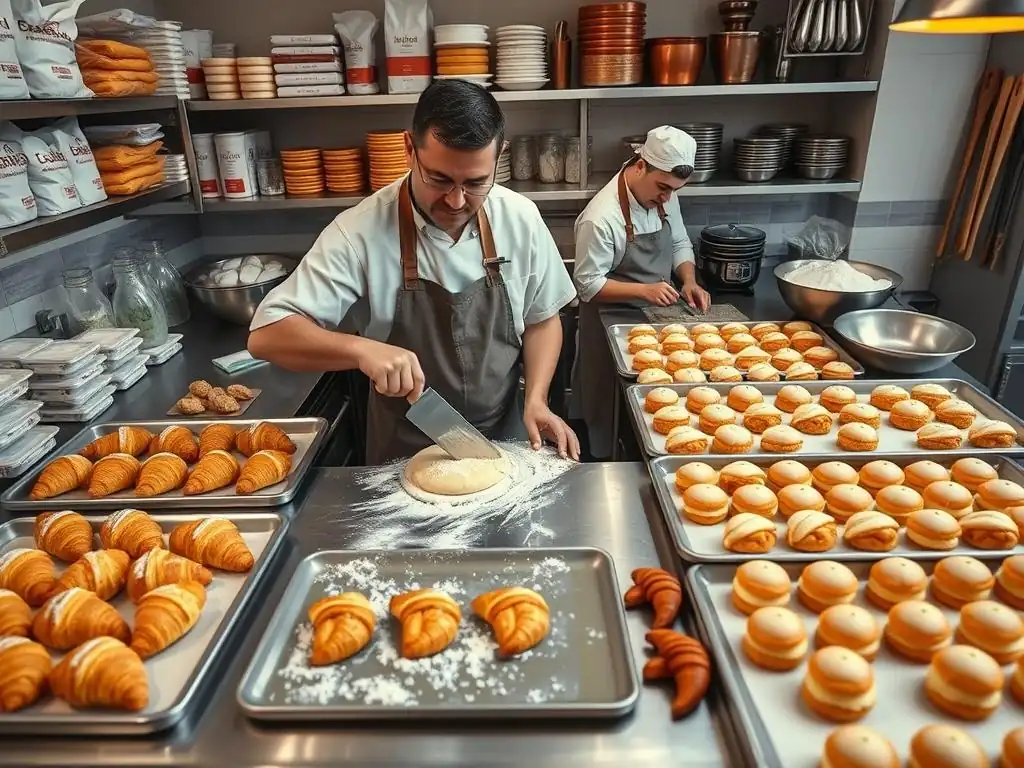
Beyond fundamental techniques, several strategies can significantly boost your efficiency when baking large pastry batches. These tips focus on optimizing your workflow, managing your time effectively, and potentially leveraging help to make the process smoother and faster.
Implementing these organizational and collaborative tactics can transform the experience of baking large pastry batches from a potential marathon into a well-managed sprint, allowing you to produce more with less stress.
Batch Preparation Scheduling for Time Management
Effective time management is crucial for baking large pastry batches. Break down the entire process into smaller, manageable tasks. Create a schedule that outlines when you will mix each batch of dough or batter, when it needs to proof (if applicable), when it will be shaped, and when it will go into the oven.
Work backward from when the pastries are needed. For example, if cookies take 12 minutes to bake and you have oven capacity for 3 dozen at a time, and you need 12 dozen, you know you'll need at least four oven cycles, totaling about 48 minutes of baking time, plus time for loading/unloading.
Consider preparing components in advance where possible. For instance, cookie dough can often be mixed a day or two ahead and refrigerated (or even frozen) before scooping and baking. Pie crusts can be made and chilled. This allows you to spread the workload over a longer period, making the actual baking day less hectic. A well-planned schedule for baking large pastry batches minimizes bottlenecks and ensures a steady flow from mixing bowl to cooling rack.
Utilizing Helpers and Workflow Optimization in Large Scale Baking
Don't hesitate to enlist help if you have it available! Baking large pastry batches is a task that lends itself well to having extra hands. Assign specific tasks to helpers, such as measuring ingredients (by weight! ), scooping cookie dough, lining baking sheets with parchment paper, transferring baked goods to cooling racks, or washing dishes. Clearly defined roles prevent confusion and ensure everyone is contributing effectively.
Optimize your workflow by setting up stations. Have a mixing station, a shaping/portioning station, a baking sheet loading station, and a cooling station. Keep ingredients and tools for each step readily accessible in their respective areas. Clean as you go to prevent clutter from building up, which can slow you down. Think about the most logical sequence of operations and arrange your workspace accordingly to streamline the process of baking large pastry batches. For example, position your cooling racks near the oven exit path.
Conclusion: Mastering the Art of Baking Large Pastry Batches with Ease
Successfully baking large pastry batches for gatherings is an achievable goal with the right preparation, techniques, and mindset. It requires a shift from the casual approach of single-batch baking to a more organized, production-oriented process. By focusing on accurate scaling, efficient mixing and handling of large volumes, strategic oven management, and proper post-bake care, you can consistently produce delicious results for any crowd.
Remember that practice makes perfect. Each time you undertake baking large pastry batches, you'll learn more about your equipment, your oven's quirks, and how different recipes behave when scaled. Embrace the challenge, plan meticulously, and don't be afraid to adjust your methods based on your experiences. With these techniques in your baking arsenal, you're well on your way to mastering the art of baking large pastry batches and sharing the joy of your homemade treats with everyone.
Recap of Key Techniques for Successful Bulk Pastry Baking
To recap, mastering baking large pastry batches involves several key areas. Firstly, careful preparation is paramount, including selecting robust recipes suitable for scaling and accurately measuring ingredients by weight. Secondly, adapting mixing and dough handling techniques for larger volumes, paying attention to consistency and avoiding overworking. Thirdly, strategic oven management is critical, involving proper tray arrangement, rotation, and potential adjustments to temperature and timing to ensure even baking across many items.
Finally, effective post-bake handling through proper cooling and storage is essential for maintaining quality when baking large pastry batches. Implementing workflow optimizations like scheduling and utilizing help can further enhance efficiency. These techniques, when applied together, create a framework for tackling large-scale baking projects with confidence and producing consistently excellent results.
Encouragement to Experiment and Perfect Large Batch Pastry Baking Skills
Don't be intimidated by the prospect of baking large pastry batches. Start with a manageable goal, perhaps doubling or tripling a familiar recipe, and gradually work your way up to larger quantities. Pay attention to what works well and what presents challenges in your specific kitchen environment. Keep notes on adjustments you make to baking times or temperatures when scaling up; this information will be invaluable for future large-scale bakes.
Every large batch is an opportunity to refine your process. Experiment with different organizational strategies or try slightly different timings. The more you practice baking large pastry batches, the more intuitive the process will become. Enjoy the process of creating delicious treats for many people, and take pride in your growing ability to bake with ease, no matter the quantity!
Frequently Asked Questions
How can I ensure even baking when making large pastry batches?
To achieve even baking, rotate your baking sheets halfway through the baking time. This helps to compensate for oven hot spots and ensures consistent browning across all pastries.
What's the best way to store large quantities of baked pastries?
Proper cooling is essential. Allow pastries to cool completely before storing them in airtight containers at room temperature or in the freezer for longer-term storage.
Can I scale up a pastry recipe without affecting the quality?
Yes, but it's crucial to accurately scale all ingredients, especially leavening agents like baking powder or yeast. Small variations can significantly impact the final texture and rise of the pastries.
What equipment is most helpful when baking large pastry batches?
Consider investing in a stand mixer for efficient dough mixing and a larger capacity oven if possible. Having multiple baking sheets also streamlines the baking process.
How do I prevent pastries from becoming soggy when baking in bulk?
Avoid overcrowding the baking sheets, allowing for proper air circulation. Also, ensure your oven temperature is accurate, as a lower temperature can lead to soggy pastries.
Final Reflection: Scaling Up Sweet Success
The ability to bake large batches of pastries efficiently isn't just about feeding a crowd; it's about unlocking a world of culinary possibilities and entrepreneurial potential. Whether you're catering a large event, supplying a local bakery, or simply love sharing the joy of homemade treats, mastering the art of scaling up your baking is a valuable skill that translates to significant time and resource savings.
The impact of efficient large-batch baking extends far beyond the kitchen. It allows for consistent quality and reduces the stress associated with large-scale baking projects. The secret to success is to make your vocation your vacation.
This quote, though not directly about baking, speaks to the joy and fulfillment that can be found when a passion is pursued effectively. My own experience in scaling up recipes has shown me the importance of meticulous planning and preparation, transforming what could be a daunting task into a streamlined and rewarding process.
Now, it's your turn. Consider how you can apply these techniques to your own baking endeavors. Whether you're a seasoned baker looking to refine your methods or a beginner eager to expand your capabilities, remember that mastering large-batch baking is a journey of continuous learning and improvement. Embrace the challenge, experiment with different recipes and techniques, and most importantly, enjoy the sweet rewards of your hard work!
Unleash Your Inner Pastry Chef!
Thanks for taking the time to explore these simple techniques for baking large batches of pastries! We hope you've gained valuable insights and newfound confidence in your baking abilities. Now it's time to put your knowledge into practice.
- Master the Art of Scaling: Begin by scaling up your favorite pastry recipe, using the ratios and tips we've discussed. This is the most important step toward baking larger batches successfully!
- Share Your Success: Snap a photo of your amazing creations and post it on social media—tag us @BakeWithEase! We'd love to see your delicious results.
- Challenge Yourself: Try adapting a new pastry recipe to a larger batch, and share your experience in the comments below. What unexpected challenges did you overcome?
Ready to transform your kitchen into a pastry paradise? What's the first large-batch pastry you're going to tackle?