
Gifts That Will Actually Improve Their Baking Skills

Welcome to BakeWithEase, your guide to unlocking the joy of baking! Are you searching for the perfect way to inspire a budding baker? Then you're in the right place. This article dives deep into the best baking gifts for beginners, offering curated selections that will not only delight but also genuinely elevate their skills. Intrigued? Let's uncover the tools and gadgets that will transform their baking journey, one delicious creation at a time!
- Gifts That Will Actually Improve Their Baking Skills: The Ultimate Guide for Home Bakers
- Finding the Best Baking Gifts for Intermediate Bakers: Leveling Up Their Skills
- Must-Have Baking Tools for Skill Development
- Baking Gift Ideas that Enhance Technique and Knowledge
- Elevating the Baking Experience: Unique & Practical Gifts
- Assembling the Perfect Baking Gift Basket: A Themed and Personalized Approach
- Conclusion: Giving the Gift of Baking Expertise
-
Frequently Asked Questions
- What are some essential baking tools that make great gifts for beginners?
- Where can I find simple and easy-to-follow baking recipes for someone just starting out?
- Are there any specific types of baking books that would benefit a novice baker?
- What are some affordable baking gifts that still offer significant value to a beginner?
- How can I ensure the baking gift I choose will actually help improve the recipient's baking skills?
- Final Reflection: The Sweetest Gift of All: Cultivating a Lifelong Love of Baking
- Unleash Their Inner Baker: Gift the Gift of Skill!
Gifts That Will Actually Improve Their Baking Skills: The Ultimate Guide for Home Bakers
Finding the Best Baking Gifts for Intermediate Bakers: Leveling Up Their Skills
Understanding the Needs of an Experienced Home Baker
An intermediate home baker has moved beyond simple cookie mixes or basic cake recipes. They likely have a solid grasp of fundamental techniques but are eager to tackle more complex projects like sourdough bread, laminated pastries, challenging celebration cakes, or delicate macarons. Their challenges often lie in achieving consistent, professional-level results. They understand the importance of ingredients and technique but may be limited by basic equipment or a lack of specific knowledge in advanced areas. They crave precision, efficiency, and tools that enable them to push their boundaries and refine their craft.
These bakers are often experimenting, troubleshooting, and learning from mistakes. They might be frustrated by inconsistent oven temperatures, doughs that don't develop properly, or pastries that lack flakiness. Gifts for this level should address these pain points directly, providing tools and resources that offer greater control, improve efficiency, and unlock the ability to execute more demanding recipes successfully. Think of gifts that bridge the gap between enthusiastic amateur and skilled artisan.
Why Specialized Baking Gifts Matter: Precision and Efficiency
For the intermediate baker, generic kitchen tools often fall short. Specialized baking gifts aren't just upgrades; they are essential instruments that enable techniques requiring a higher degree of precision and control. For example, a sensitive digital scale is crucial for measuring ingredients by weight, which is vital for consistent bread hydration or delicate pastry doughs where even a few grams can make a difference. Similarly, specialized pans or thermometers allow for controlled heat transfer and precise temperature monitoring, critical for achieving perfect caramel or evenly baked intricate cakes.
Beyond precision, specialized tools significantly enhance efficiency. Kneading tough bread dough by hand is possible but time-consuming and physically demanding; a powerful stand mixer automates this, freeing up the baker to focus on other aspects of the recipe. A proofing box provides a stable environment regardless of ambient conditions, ensuring predictable fermentation times. These gifts save time, reduce frustration, and ultimately allow the baker to tackle more ambitious projects with greater confidence and a higher probability of success.
Must-Have Baking Tools for Skill Development
Stand Mixers: A Kitchen Workhorse for Complex Recipes
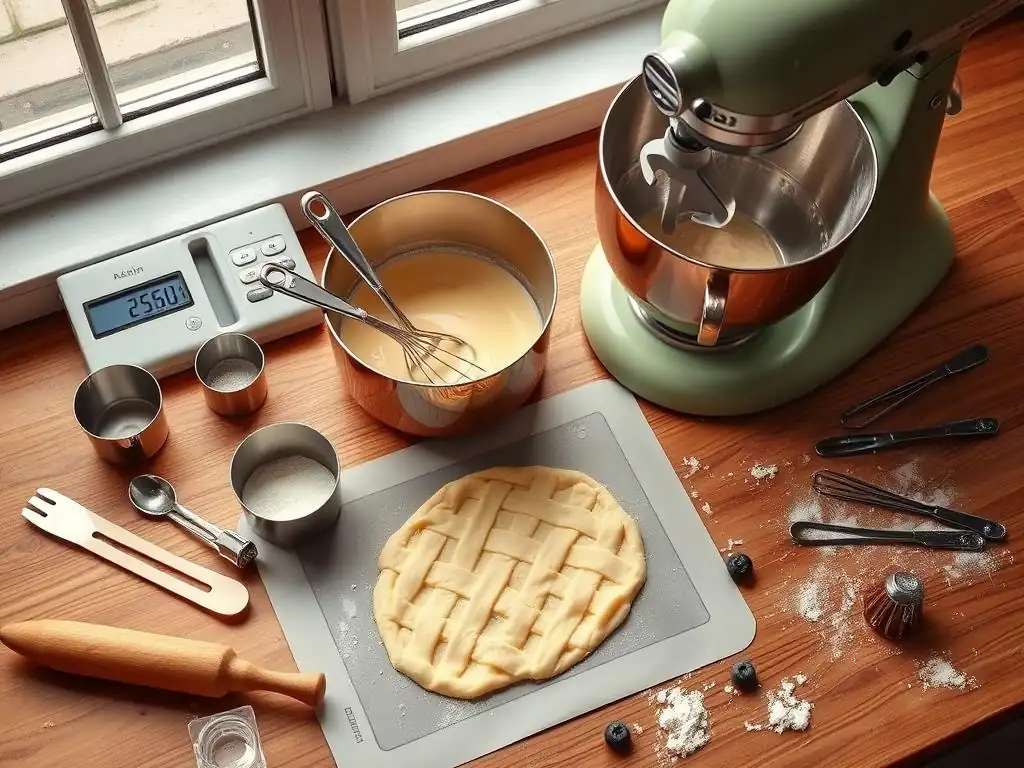
A stand mixer is often considered the cornerstone appliance for any serious home baker, especially those moving into more complex areas like bread making or large-batch baking. Unlike hand mixers, stand mixers provide consistent power and speed for extended periods, capable of handling stiff doughs that would overwhelm a handheld device.
They are invaluable for thoroughly creaming butter and sugar, whipping stable meringues or large quantities of cream, and ensuring proper gluten development in bread doughs through efficient kneading. This saves significant physical effort and ensures more consistent results, which is particularly important when scaling up recipes or working with finicky doughs.
The stability and power of a good stand mixer allow bakers to focus on the timing and technique of adding ingredients, rather than the strenuous task of mixing itself. Features like multiple speed settings, planetary mixing action (where the beater rotates on its axis while orbiting the bowl), and various attachments (dough hook, whisk, paddle) make it versatile for a wide range of baking tasks, from aerating light sponge cakes to developing strong dough for artisan bread.
While a significant investment, it's one of the best baking gifts for beginners who are serious about growing their skills, as it immediately opens up a new realm of recipes.
KitchenAid Professional 600 Series: High Capacity and Powerful Motor
The KitchenAid Professional 600 Series is a popular choice for serious home bakers and is often cited among the best baking gifts for beginners looking to make a significant leap in their capabilities. This model typically features a sturdy bowl-lift design and is powered by a motor around 575 watts. Its 6-quart stainless steel bowl capacity is generous enough to handle large batches, such as dough for multiple loaves of bread or double batches of cookie dough.
The gear-driven transmission is known for its durability and ability to maintain speed under heavy loads, making it particularly effective for kneading dense doughs for extended periods without overheating. This power and capacity are essential for bakers regularly tackling challenging recipes.
Breville Bakery Chef Hub: Integrated Scale and Light
The Breville Bakery Chef Hub offers a modern take on the stand mixer, incorporating features designed specifically to enhance precision and ease for the home baker. While its motor power is often around 550 watts with a 5-quart bowl, comparable to mid-range KitchenAid models, its standout features are the integrated digital scale and the bowl light. The built-in scale allows ingredients to be weighed directly into the mixing bowl or on the included attachment, streamlining the process and ensuring accuracy, which is critical for successful baking.
The bowl light illuminates the contents, providing better visibility to monitor the mixing process and scrape down the sides effectively. These thoughtful additions make complex recipes more manageable and contribute to greater consistency, making it a unique and practical option among top baking gifts for beginners ready to invest in quality.
Precision Scales: Mastering Hydration and Ratios
Moving from volume measurements (cups, spoons) to weight measurements (grams, ounces) is a fundamental step for any baker aiming for consistency and accuracy, especially in intermediate to advanced recipes. Precision scales are non-negotiable for techniques like bread baking, where hydration levels (the ratio of water to flour by weight) are critical, or for delicate confections like macarons or ganaches that require exact ingredient ratios.
Measuring by weight eliminates the variability inherent in volume measurements (e.g., how packed the flour is in the cup), ensuring that a recipe turns out the same way every time. A good digital scale should be accurate to at least 1 gram or 0.1 ounces and have a sufficient capacity for typical batch sizes.
Beyond basic ingredient measurement, precision scales are invaluable for tasks like portioning dough evenly for rolls or pastries, or weighing ingredients directly into a mixing bowl using the tare function. Some advanced recipes even call for measuring leavening agents or spices in very small increments, sometimes requiring a scale accurate to 0.1 grams.
While scales with this level of micro-precision are more specialized, a standard kitchen scale accurate to 1 gram is a significant upgrade for any baker serious about improving their results and understanding the science behind their recipes. It's one of the most impactful yet affordable best baking gifts for beginners transitioning to more serious baking.
AWS Digital Kitchen Scale: High Precision and Tare Function
The AWS (American Weigh Scales) Digital Kitchen Scale is a widely available and reliable example of a scale that offers the precision needed for intermediate baking. Many models in their kitchen range provide accuracy to 1 gram or 0.1 ounces, with typical capacities up to 11 lbs or 5 kilograms, which is sufficient for most home baking needs.
The essential tare function allows the user to zero out the weight of a container or previously added ingredients, enabling the baker to measure multiple ingredients sequentially in the same bowl. This combination of precision, capacity, and tare functionality makes it an excellent tool for mastering recipes that rely on exact ratios, such as sourdough hydration or precise ingredient blends for delicate batters.
Why Precision Matters: Consistency in Advanced Baking
In advanced baking, minor variations in ingredient amounts can lead to significant differences in the final product. For instance, adding just a few extra grams of water to a high-hydration sourdough dough can make it overly slack and difficult to handle, affecting oven spring and crumb structure. Conversely, too little water results in a dense loaf.
Similarly, in delicate pastries like macarons, the ratio of almond flour, powdered sugar, and egg whites must be exact to achieve the desired texture and prevent cracking. Using a precision scale ensures that these critical ratios are met every time, eliminating a major variable in recipe outcomes. This consistency allows bakers to troubleshoot other factors (like oven temperature or mixing technique) more effectively and reliably replicate successful bakes.
Quality Baking Pans: Investing in Specialized Shapes and Materials
The quality and type of baking pan can profoundly impact the final result of a baked good. Investing in high-quality pans made from materials that conduct heat evenly helps prevent burnt edges or undercooked centers. Beyond material, specialized pan shapes are often necessary for specific types of cakes, breads, or pastries, influencing not just the appearance but also the baking time and texture.
For intermediate bakers tackling new challenges, having the right pan for the job is crucial for success and achieving the intended outcome of a recipe. Durable pans also tend to have better non-stick properties (even with proper preparation), ensuring clean release and intact baked goods.
Specific pan designs are engineered for particular purposes. For example, dark metal pans absorb more heat and are good for achieving crisp crusts, while lighter metal pans reflect heat and are better for even browning of cakes. Insulated pans help prevent over-browning. Choosing the correct pan material and shape, from intricate Bundt molds to perforated sheets for airflow or heavy-duty loaf pans for bread, is an essential part of mastering different baking techniques. Gifting a high-quality, specialized pan is a thoughtful way to support a baker's journey into new areas.
Nordic Ware Platinum Collection Anniversary Bundt Pan: For Intricate Cakes
The Nordic Ware Platinum Collection, particularly the iconic Anniversary Bundt Pan, exemplifies a high-quality, specialized pan perfect for intermediate bakers looking to create stunning cakes. Made from heavy cast aluminum, these pans are renowned for their exceptional heat conductivity, ensuring cakes bake evenly and develop a beautiful, consistent crust. The intricate designs characteristic of Nordic Ware Bundt pans create visually impressive cakes straight from the oven, minimizing the need for complex decoration.
The durable non-stick coating, when properly greased and floured, ensures clean release, preserving the detailed pattern. This pan is a joy to use and elevates the presentation of even simple cake recipes.
Perforated Baking Sheets: Achieving Crispy Bottoms
Perforated baking sheets are a specialized tool designed to improve air circulation around baked goods, specifically targeting the bottom crust. Unlike solid sheets, the small holes allow moisture to escape and hot air to reach the underside of the item being baked. This is particularly beneficial for achieving crispy crusts on pizzas, tarts, rustic breads (like baguettes or ciabatta), or even cookies.
When used with parchment paper or a silicone mat, they provide support while still allowing air to circulate. For a baker striving for that perfect, crackling bread crust or a consistently crisp tart base, a set of quality perforated baking sheets can make a noticeable difference in results.
Baking Gift Ideas that Enhance Technique and Knowledge
Baking Classes & Workshops: Advanced Techniques and Masterclasses
Sometimes the best gift isn't a physical tool but the opportunity to learn and refine skills directly from experts. Baking classes and workshops, whether in-person or online, offer intermediate bakers the chance to delve into specific techniques, master challenging recipes, and understand the "why" behind baking processes in a structured environment.
They provide hands-on practice with guidance from experienced instructors, allowing bakers to troubleshoot in real-time and gain confidence in areas they might find intimidating on their own. From mastering the delicate art of French macarons to understanding the complexities of sourdough fermentation, a class can unlock new levels of expertise.
Workshops often focus on specific skill sets, such as sugar work, chocolate tempering, or decorative piping, providing concentrated learning experiences. Masterclasses taught by renowned bakers can offer insights into professional techniques and philosophies. The value of seeing a technique demonstrated correctly, receiving personalized feedback, and being able to ask questions is immense for a baker looking to improve. It's an investment in their knowledge and skill set that pays dividends in future baking successes. These experiences are highly valued among the best baking gifts for beginners or intermediate bakers eager to learn.
Online Pastry Courses: Mastering French Pastry Techniques
Online pastry courses offer a flexible way for intermediate bakers to learn complex and often delicate techniques like those found in classic French patisserie. These courses can cover a wide range of topics, including creating stable emulsions for ganaches and mousses, mastering pâte à choux for éclairs and cream puffs, achieving perfect lamination for puff pastry, or working with sugar and chocolate for decorative elements.
Platforms vary, with some offering structured curricula similar to culinary school modules, while others provide individual masterclasses on specific desserts. Learning these techniques requires precision and often specialized methods that are best understood through visual instruction and detailed explanation, making online video-based courses particularly effective.
Bread Lamination Workshops: Creating Perfect Croissants
Bread lamination is one of the most challenging yet rewarding techniques in baking, essential for creating flaky pastries like croissants, pain au chocolat, and puff pastry. A dedicated bread lamination workshop provides the focused instruction needed to master this intricate process. These workshops typically cover creating the détrempe (the dough), incorporating the butter block (beurrage), and executing the precise series of folds and rolls (turns) required to create hundreds of paper-thin layers of dough and butter.
Achieving perfect lamination requires careful temperature control, precise handling, and patience. A workshop allows bakers to practice under expert supervision, troubleshoot common issues like butter breaking through the dough, and gain the feel and understanding necessary to consistently produce light, airy, and flaky results.
Baking Books: Advanced Recipes, Techniques, and Science
While the internet offers a wealth of recipes, high-quality baking books provide a depth of knowledge, detailed explanations of techniques, and insights into the science behind baking that are often harder to find online. For the intermediate baker, books that go beyond simple recipes to explain why ingredients react in certain ways, how different techniques affect texture, and how to troubleshoot common problems are invaluable resources. These books can serve as foundational texts, reference guides, and sources of inspiration for challenging new projects. A well-chosen baking book is a gift that keeps on giving, offering continuous learning opportunities.
Look for books written by experienced bakers, pastry chefs, or food scientists that cover specific areas of interest, such as artisanal bread, viennoiserie, classical French pastry, or the science of baking. Books with detailed step-by-step photos, clear explanations of methods, and variations on techniques are particularly useful. They can provide the theoretical knowledge needed to complement hands-on practice and help a baker truly understand their craft, moving beyond simply following instructions to understanding the principles involved.
"Advanced Bread and Pastry" by Michel Suas: A Comprehensive Guide for Professionals
"Advanced Bread and Pastry" by Michel Suas is widely regarded as a definitive textbook for culinary students and serious home bakers alike. This comprehensive volume covers a vast range of topics, from fundamental bread doughs and fermentation techniques to enriched doughs, viennoiserie (croissants, brioche), tarts, cakes, creams, and sugar work.
It delves deep into the science and theory behind each process, providing detailed formulas (recipes) and explanations of techniques. While dense and technical, it's an unparalleled resource for a baker who is serious about mastering a wide spectrum of baking skills and understanding the professional standards and methods used in top bakeries and patisseries.
"Modernist Bread" by Nathan Myhrvold: A Multi-Volume Exploration of Bread Baking
"Modernist Bread" by Nathan Myhrvold is a monumental, multi-volume work that takes a highly scientific and exhaustive approach to bread baking. This isn't just a cookbook; it's a deep dive into the history, science, and techniques of bread making, backed by extensive research and experimentation. The volumes cover everything from the role of ingredients at a molecular level to detailed explorations of different ovens, mixing techniques, and fermentation methods.
While expensive and requiring significant dedication to read through, it offers an unprecedented level of detail and understanding for the baker fascinated by the science and history of bread. It's a gift for the truly dedicated enthusiast seeking to understand bread at its most fundamental level.
Proofing Chambers: Controlling Fermentation for Optimal Results
For bread bakers, particularly those working with yeast or sourdough, controlling the fermentation environment is critical for consistent and optimal results. Temperature and humidity significantly impact yeast activity and dough development. An uncontrolled environment can lead to inconsistent rise times, poor gluten development, and suboptimal flavor. A dedicated proofing chamber provides a stable, controlled environment, allowing the baker to proof dough at precise temperatures and often humidity levels, regardless of ambient kitchen conditions. This level of control is essential for mastering techniques like cold fermentation, retarding dough, or ensuring consistent proofing times for multiple batches.
While some bakers create makeshift proofing boxes using ovens with pilot lights or warm water baths, a dedicated proofing chamber offers far greater precision and ease of use. It eliminates guesswork and allows the baker to confidently follow recipes that specify particular proofing temperatures and times. This leads to more predictable outcomes, better dough structure, improved flavor development, and ultimately, more successful loaves. It's a specialized tool that significantly enhances the quality and consistency of yeasted and sourdough baked goods.
Brod & Taylor Folding Proofer: Precise Temperature and Humidity Control
The Brod & Taylor Folding Proofer is a popular and highly-rated home appliance designed specifically for controlling the proofing environment. It allows bakers to set a precise temperature, typically ranging from around 70°F to 120°F (21°C to 49°C), maintaining it consistently throughout the proofing period. Many models also include a humidity tray, allowing the creation of a humid environment that prevents the dough from drying out and encourages a better rise.
Its key feature is that it folds flat for easy storage, making it practical for home kitchens. This precise control is invaluable for recipes requiring specific fermentation temperatures, such as enriched doughs, sourdough starters, or yogurt.
The Importance of Proofing: Understanding Fermentation Science
Proofing is the final rise of the dough before baking, a critical stage where fermentation continues, producing carbon dioxide gas that expands the dough. The temperature and duration of proofing significantly impact the final texture, flavor, and appearance of bread and other yeasted baked goods. At warmer temperatures (around 75-85°F), yeast is highly active, leading to faster proofing.
Lower temperatures (cold proofing in a refrigerator) slow fermentation, allowing enzymes to break down starches into sugars, which contributes to more complex flavors and can improve crust browning. Controlling humidity prevents a skin from forming on the dough surface, which could restrict expansion. Understanding and controlling these factors through a proofing chamber allows bakers to manipulate fermentation science to achieve specific desired outcomes, from a light, airy crumb to a deep, complex flavor profile.
Elevating the Baking Experience: Unique & Practical Gifts
High-Quality Chocolate & Cocoa: For Rich and Decadent Desserts
The quality of ingredients, particularly flavor-contributing ones like chocolate and cocoa, can dramatically elevate the final taste and texture of baked goods. Using premium chocolate and cocoa designed specifically for baking ensures better flavor, smoother melting, and consistent results compared to standard supermarket options. For a baker who loves making brownies, cakes, cookies, or ganaches, a selection of high-quality chocolate and cocoa is a luxurious and practical gift that allows them to create truly decadent desserts. It highlights the impact that superior ingredients can have on the finished product.
Different types of chocolate and cocoa offer distinct flavor profiles and properties. Couverture chocolate, with its high cocoa butter content (typically 30-35% or higher), melts smoothly and is ideal for tempering, ganaches, and mousses. High-quality baking bars or discs with specific cacao percentages offer nuanced flavors. Cocoa powder varies too; Dutch process and natural cocoa react differently with leavening agents and have distinct colors and tastes. Gifting a selection allows the baker to experiment and taste the difference quality makes.
Valrhona Chocolate: A Premium Choice for Baking
Valrhona is a French chocolate manufacturer highly esteemed by professional pastry chefs worldwide, making it a premium and desirable gift for a serious home baker. Known for its high-quality couverture chocolate, Valrhona offers a range of products with specific cocoa percentages and flavor profiles, often sourced from particular regions. Their chocolate is designed to melt smoothly and consistently, making it excellent for tempering, creating glossy ganaches, rich mousses, and intensely flavored baked goods.
Varieties like Guanaja (70% cacao, intense bitter notes), Manjari (64% cacao, fruity notes), or Dulcey (blond chocolate with biscuity notes) offer distinct characteristics that can significantly impact the flavor complexity of desserts. Gifting Valrhona is giving the experience of working with truly exceptional chocolate.
Dutch Process Cocoa: Intense Flavor and Dark Color
Dutch process cocoa, also known as alkalized cocoa, is cocoa powder that has been treated with an alkalizing agent to reduce its acidity. This process results in a cocoa powder that is darker in color, has a smoother, less bitter flavor, and is less reactive with baking soda (which requires an acid to activate). It typically has a pH between 6.8 and 8.1, compared to natural cocoa's pH of 5.2-5.8.
Using Dutch process cocoa is essential for recipes that specifically call for it, as substituting natural cocoa can affect the leavening and final texture. Its intense color and mellow flavor make it perfect for rich, dark chocolate cakes, brownies, and frostings. Gifting a high-quality Dutch process cocoa (like Guittard, Ghirardelli, or Callebaut) introduces a baker to a key ingredient that can significantly alter the outcome of chocolate recipes.
Decorating Tools: Mastering Advanced Techniques
Once a baker has mastered the fundamentals of creating delicious cakes, cookies, or pastries, they often turn their attention to presentation. Advanced decorating techniques require specialized tools that go beyond basic piping bags and tips. Gifting these tools can open up a new avenue of creativity and skill development, allowing the baker to achieve professional-looking finishes and intricate designs. These tools often require practice and precision to master, offering a new challenge and rewarding results.
From achieving perfectly smooth frosting finishes to creating delicate sugar flowers or complex airbrushed designs, the right tools make these techniques possible. Specialized spatulas, precise measuring tools for decoration components, airbrush kits, and thermometers for working with sugar or chocolate are all examples of gifts that support a baker's journey into decorative arts. They enable the transition from simply baking a dessert to creating a true showstopper.
Airbrush Kit for Cake Decorating: Creating Stunning Effects
An airbrush kit for cake decorating allows bakers to apply color and design to cakes and cookies with a level of control and subtlety not possible with traditional methods. Using food-safe colors, an airbrush sprays a fine mist, enabling the creation of smooth color gradients, shading, stenciled patterns, and even freehand designs.
This tool is fantastic for achieving vibrant, even coverage, creating realistic effects (like wood grain or marble), or adding delicate details. While there is a learning curve, mastering an airbrush opens up a wide range of creative possibilities for cake decoration, allowing a baker to elevate their sugar art skills significantly.
Sugar Thermometer: Achieving Perfect Caramel and Sugar Work
A sugar thermometer is a critical tool for any baker attempting recipes that involve heating sugar to precise temperatures, such as making caramel, nougat, toffee, or Italian meringue. Sugar goes through different stages (thread, soft ball, firm ball, hard ball, soft crack, hard crack, caramel) at specific temperatures, and being even a few degrees off can result in a failed product (e.g., brittle caramel instead of chewy, or grainy fudge).
A reliable thermometer, often clipped to the side of the pot, allows for continuous, accurate temperature monitoring, ensuring the sugar reaches the exact stage required by the recipe. This precision is essential for successful sugar work and tempering chocolate, making a good sugar thermometer an indispensable gift for bakers exploring confections.
Baking Steel: Achieving Pizza Oven Results at Home
While primarily associated with pizza, a baking steel is also an excellent tool for serious bread bakers looking to improve their crust and oven spring at home. Made from thick steel (typically 1/4" or 3/8" thick), it has a much higher thermal mass than a ceramic baking stone. This means it absorbs and retains significantly more heat.
When preheated in a hot oven, it provides an intense, even heat source from below that is rapidly transferred to the dough upon contact. This blast of heat is crucial for achieving a strong oven spring in bread and creating a wonderfully crisp bottom crust on loaves and pizzas, mimicking some of the effects of a professional deck oven.
Using a baking steel requires preheating the oven to a high temperature (often 500°F or higher) for an extended period (45-60 minutes or more) to allow the steel to fully heat up. Placing the dough directly onto the preheated steel (often using a pizza peel) facilitates rapid heat transfer. The intense heat from below helps the crust set quickly while the interior continues to expand.
For bread, the steel is often placed on a lower rack to provide strong bottom heat. For pizza, it's usually on a higher rack to ensure the top cooks simultaneously with the bottom. It's a simple but highly effective tool for improving crust development.
Original Baking Steel: Even Heat Distribution for Crispy Crusts
The Original Baking Steel, often credited with popularizing the use of steel over stone for home baking, is a prime example of this tool. Typically made from 1/4" or 3/8" thick steel, its key advantage lies in its superior thermal conductivity and heat retention compared to traditional ceramic baking stones. Steel transfers heat approximately 18 times faster than ceramic.
This rapid heat transfer to the base of the dough results in a quicker set of the bottom crust, preventing sogginess and promoting a crisp, well-developed texture. Its even heat distribution across its surface also helps prevent hot spots, leading to more uniform baking results for both bread and pizza crusts.
Using a Baking Steel: Tips for Optimal Results
To get the best results from a baking steel, proper preheating is essential. Place the steel in the oven and preheat at the highest possible temperature (ideally 500°F or more) for at least 45 minutes to an hour to ensure it is fully saturated with heat. Use a pizza peel dusted with flour, cornmeal, or semolina to transfer dough onto the hot steel quickly and safely.
For bread, consider adding steam to the oven during the initial baking phase to promote oven spring before the crust sets. For pizza, placing the steel higher in the oven helps the top ingredients cook quickly while the bottom crisps. Always use caution when handling the extremely hot steel.
Assembling the Perfect Baking Gift Basket: A Themed and Personalized Approach
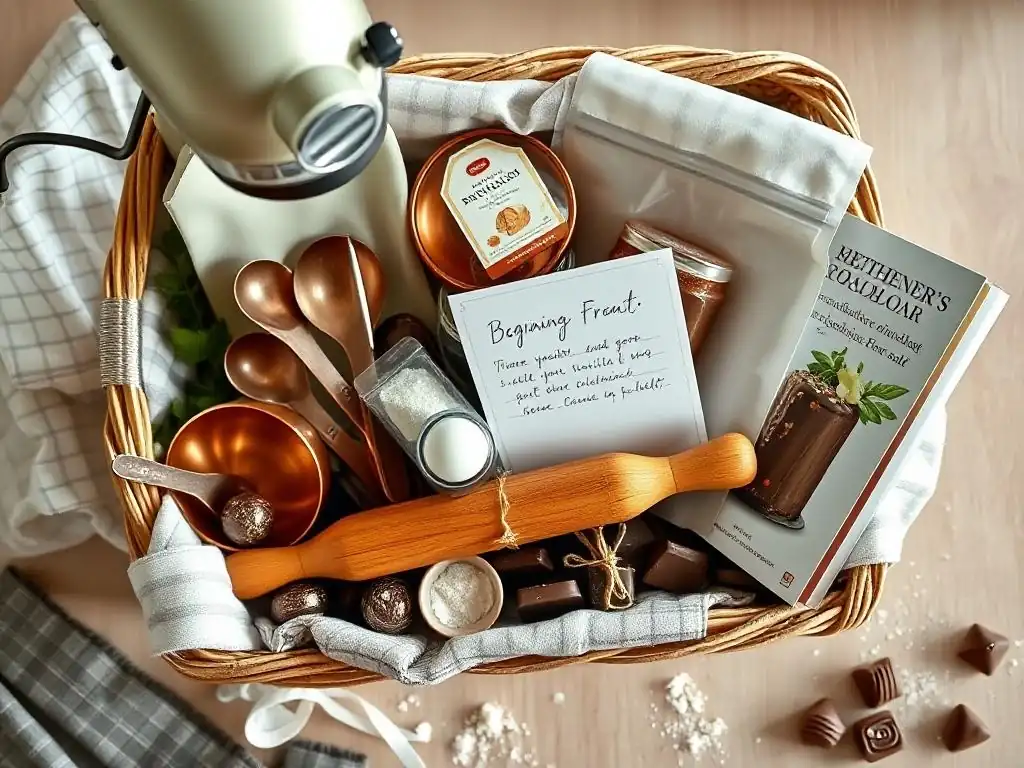
A thoughtful and impressive gift for an intermediate baker is a curated gift basket filled with items tailored to their interests and level of skill. Rather than just gathering random baking items, focusing the basket around a specific theme elevates the gift and demonstrates a deeper understanding of the baker's passion.
This approach allows for the inclusion of complementary tools, ingredients, and resources that support a particular area of baking they are interested in exploring or mastering. It's a fantastic way to combine several smaller, useful items into one cohesive and exciting present, potentially including some of the best baking gifts for beginners who are ready to specialize.
Curating a theme makes the gift more impactful and useful. A basket centered around sourdough mastery might include a precision scale, a proofing basket (banneton), a lame for scoring, a high-quality bench scraper, and a book on sourdough baking. A French pastry theme could feature specialized tart molds, piping tips for intricate designs, a sugar thermometer, high-quality chocolate, and a classic French pastry cookbook. A chocolate lover's basket might contain a selection of premium chocolates and cocoas, a double boiler or melting pot, a chocolate-specific recipe book, and perhaps some unique chocolate molds.
Curating a Theme: Chocolate Baking, Sourdough Mastery, or French Pastry
Choosing a specific theme allows you to select items that work together and support a particular type of baking. For a baker fascinated by complex chocolate work, a themed basket could include several types of high-quality couverture chocolate (like Valrhona or Callebaut) with different cacao percentages, a block of high-quality Dutch process cocoa, a digital thermometer for tempering, a set of polycarbonate chocolate molds, and a book dedicated to chocolate desserts or confections. This provides both the premium ingredients and the specialized tools needed to explore this area.
Alternatively, for someone passionate about artisanal bread, particularly sourdough, a "Sourdough Mastery" theme is ideal. A basket could contain a reliable digital scale (accurate to 1g), two or three different-sized proofing baskets (bannetons) with liners, a sharp lame with extra blades for scoring patterns, a flexible bench scraper for handling sticky dough, a digital probe thermometer for checking internal temperature, and a highly-regarded book on sourdough techniques. This combination provides the essential tools for consistent sourdough production and shaping.
Adding Personal Touches: Rare Ingredients and Custom Tools
Adding personal touches makes a gift basket truly special. Include rare or specialty ingredients that the baker might not typically buy for themselves but would enjoy experimenting with. This could be a bottle of high-quality vanilla bean paste or extract, a selection of unique extracts (like almond, fennel, or rosewater), specialty flours (such as Italian Tipo 00 for pasta/pizza, or specific rye/whole wheat flours for bread), single-origin cocoa powder, or high-quality finishing salts or sugars. These small luxuries can inspire new recipes and add unique flavors.
Custom or personalized tools also add a special touch. This could be an apron embroidered with their name or a fun baking quote, a set of measuring spoons or a bench scraper engraved with a personal message, or even a beautiful, handcrafted wooden lame or dough whisk. These items become cherished tools in their collection. Including a handwritten card explaining why you chose the theme or specific items, perhaps mentioning a recipe you'd like them to try, adds warmth and personalization to the overall gift.
Ensuring Quality and Value: Investing in Professional-Grade Equipment
When assembling a gift basket, prioritize the quality of the items over the sheer quantity. A few well-chosen, high-quality tools and ingredients are far more valuable to an intermediate baker than a basket overflowing with flimsy, low-cost gadgets.
Look for brands known for their durability, precision, and performance, even if they are slightly more expensive. For instance, choosing a sturdy stainless steel bench scraper over a plastic one, investing in durable non-stick cake pans from reputable brands (like USA Pan or King Arthur Baking), or selecting a precise digital scale makes a significant difference in the baker's experience and results.
Investing in professional-grade equipment, even for home use, ensures that the tools are reliable and will perform consistently over time. This reduces frustration caused by equipment failure or inaccuracy and allows the baker to trust their tools as they refine their techniques. High-quality ingredients provide superior flavor and texture.
While it might mean fewer items in the basket, focusing on quality demonstrates thoughtfulness and a genuine desire to support their baking journey with tools that will truly help them improve and enjoy their craft for years to come. This approach ensures the gift basket truly contains some of the best baking gifts for beginners or intermediate enthusiasts.
Conclusion: Giving the Gift of Baking Expertise
Giving a gift to a baker is about more than just providing tools; it's about supporting their passion, encouraging their growth, and enabling them to reach new levels of skill and creativity in the kitchen. For the intermediate baker, this means providing them with the specialized equipment, refined ingredients, and valuable knowledge resources that allow them to tackle more complex challenges, achieve greater consistency, and elevate the quality of their baked goods. The best baking gifts for beginners who are serious about the craft are often those that introduce them to precision, efficiency, and new techniques.
Whether it's the power of a stand mixer, the accuracy of a digital scale, the targeted heat of a baking steel, the control of a proofing chamber, the luxury of premium chocolate, the precision of decorating tools, or the invaluable knowledge gained from books and classes, these gifts are investments in a baker's journey. They provide the means to overcome obstacles, experiment with confidence, and find even greater joy in the process of transforming simple ingredients into delicious and beautiful creations.
Encouraging Experimentation and Innovation in the Kitchen
Providing a baker with high-quality tools and advanced resources naturally encourages them to experiment and innovate. A precision scale allows them to confidently tweak hydration levels in bread or adjust ratios in pastry. A specialized pan might inspire them to try a new type of cake they previously couldn't make. Access to premium ingredients encourages them to taste the difference quality makes and understand how different flavors interact. Knowledge gained from books or classes provides the foundation to adapt recipes, troubleshoot issues creatively, and even develop their own unique formulas.
These gifts empower bakers to move beyond simply following recipes step-by-step. They provide the understanding and the capability to modify techniques, substitute ingredients intelligently, and develop their own signature style. The ability to experiment with confidence, knowing that their tools and knowledge are reliable, is a significant step in a baker's development and leads to a more fulfilling and creative baking experience. It transforms baking from a task into an art form.
The Long-Term Benefits of Investing in Advanced Baking Gifts
Investing in advanced baking gifts for an intermediate baker offers significant long-term benefits. High-quality tools are durable and reliable, providing years of consistent performance. This consistency is crucial for honing skills and achieving predictable results, which builds confidence and reduces frustration. Specialized equipment, like a stand mixer or a proofing chamber, makes complex tasks more manageable and efficient, allowing the baker to dedicate more time and energy to refining their technique and exploring new recipes.
Furthermore, gifts of knowledge, such as advanced books or classes, provide a foundation for continuous learning and improvement. They offer insights and techniques that can be applied to countless future baking projects. Ultimately, these gifts contribute to the baker's mastery of their craft, leading to consistently better baked goods, a deeper understanding of the science and art of baking, and increased enjoyment of their passion. The best baking gifts for beginners and intermediate bakers alike are those that support this journey of learning, practice, and achievement.
Frequently Asked Questions
What are some essential baking tools that make great gifts for beginners?
A great gift for a beginner is a high-quality measuring set. Precise measurements are crucial in baking, and this will help them achieve consistent results. A digital kitchen scale is also a must-have.
Where can I find simple and easy-to-follow baking recipes for someone just starting out?
Websites like BakeWithEase.com offer beginner-friendly recipes with step-by-step instructions. Look for recipes with clear instructions and readily available ingredients.
Are there any specific types of baking books that would benefit a novice baker?
Look for books that focus on baking fundamentals and techniques. Avoid overly complicated recipes initially and prioritize those with detailed explanations.
What are some affordable baking gifts that still offer significant value to a beginner?
A silicone baking mat is an excellent affordable gift. These mats prevent sticking and make cleanup easier. Also, a bench scraper is a versatile tool for working with dough.
How can I ensure the baking gift I choose will actually help improve the recipient's baking skills?
Focus on gifts that address fundamental techniques like measuring, mixing, and shaping. Ensure the gift comes with instructions, or consider pairing it with a beginner baking class.
Final Reflection: The Sweetest Gift of All: Cultivating a Lifelong Love of Baking
The pursuit of culinary excellence, particularly in the art of baking, is more than just a hobby; it's a journey of precision, creativity, and self-discovery. This exploration of the best baking gifts for beginners highlights the transformative power of the right tools and resources in unlocking a passion for this rewarding craft. More than just acquiring equipment, gifting baking essentials is about fostering a love for the process, encouraging experimentation, and building confidence in the kitchen.
The impact of baking extends far beyond the delicious results; it's a practice that fosters patience, attention to detail, and a deep appreciation for the simple pleasures in life. It's a skill that connects us to generations past, and a creative outlet that allows for endless experimentation and self-expression. As Julia Child wisely said, Find something you're passionate about and keep tremendously interested in it.
Baking, with its precise measurements and rewarding outcomes, is a perfect example of this philosophy, and the right gifts can ignite that passion in a beginner baker.
So, consider this your call to action. Don't just buy a gift; invest in someone's potential to discover a new passion, a creative outlet, and a source of joy. Whether it's a stand mixer, a quality set of measuring cups, or a beautifully illustrated cookbook, your gift has the power to spark a lifelong love of baking. Choose wisely, and watch as your gift transforms into a delicious journey of culinary exploration and self-discovery.
Unleash Their Inner Baker: Gift the Gift of Skill!
Thanks for taking the time to explore amazing gift ideas that go beyond the typical baking gadgets. We hope you found some inspiration to truly elevate someone's baking journey!
Ready to make this holiday season extra sweet? Here's how:
- Surprise them with a high-quality baking tool: Consider a professional-grade whisk, a stand mixer attachment they’ve always wanted, or a beautiful, sturdy rolling pin. This is your chance to make a real difference in their baking experience.
- Share this article with a friend: Let them discover the perfect gift for their own baking enthusiast! Spread the baking love!
- Leave a comment below: What's your go-to gift for a baker? Share your favorite baking gift ideas to inspire others!
What unique baking gift will you choose to inspire someone's passion this year?