
The HealthConscious Baker's Best Friend: Top Nutritional Calculator Apps Reviewed


Welcome to BakeWithEase, your companion on the journey to baking bliss! Are you a health-conscious baker searching for the perfect balance between indulgence and well-being? Then you're in the right place. Discover how to effortlessly track your ingredients and nutritional values with our guide to the best healthy baking nutrition calculator apps. Intrigued? Let's explore how these tools can revolutionize your baking and help you create delicious, guilt-free treats!
- Bake with Ease: Unlock Healthier Baking with Nutrition Calculator Apps
-
Top Healthy Baking Nutrition Calculator Apps for 2024: Reviews & Comparisons
- Option 1: MyFitnessPal for Baking: Comprehensive Tracking for Calorie Counters
- Option 2: Lose It! App: A User-Friendly Option for Healthy Baking Nutrition Tracking
- Option 3: Cronometer: The Gold Standard for Micronutrient Tracking in Baking
- Option 4: Nutritionix Track: Restaurant Data Powerhouse for Ingredient Breakdown
- Comparing Nutrition Calculator Apps: Which is Best for YOUR Healthy Baking Goals?
- Mastering Healthy Baking: Tips and Tricks for Using Nutrition Calculator Apps Effectively
- Beyond the App: Maximizing the Health Benefits of Your Baking
- Conclusion: Embrace Healthy Baking with the Right Nutritional Calculator App
-
Frequently Asked Questions
- What exactly is a "Healthy Baking Nutrition Calculator App" and why should I use one?
- Are these apps only useful for people on specific diets, like keto or vegan?
- How accurate are the nutritional calculations provided by these apps?
- Do these apps require a lot of technical baking knowledge to use effectively?
- Are there any free "Healthy Baking Nutrition Calculator Apps" available, or do they all require a subscription?
- Final Reflection: Nourishing Bodies and Souls Through Conscious Baking
- Unleash Your Inner Baking Guru: Level Up Your Recipes!
Bake with Ease: Unlock Healthier Baking with Nutrition Calculator Apps
For many of us, baking is a source of joy, comfort, and delicious treats. But if you're mindful about your health and nutrition, you might wonder how your favorite cookies, cakes, or breads fit into your dietary goals. This is where a healthy baking nutrition calculator app becomes your invaluable ally.
These tools help you understand the nutritional breakdown of your homemade creations, from calories and macronutrients to essential vitamins and minerals. By accurately tracking what goes into your baked goods, you gain the power to make informed choices, modify recipes for healthier outcomes, and enjoy your baking adventures without guesswork.
Integrating a nutrition calculator app into your baking routine transforms it from a purely creative process into a data-driven approach to healthier eating. Imagine knowing the precise calorie count of your famous banana bread or the protein content of your homemade granola bars.
This knowledge empowers you to manage your intake, cater to specific dietary needs like low sugar or high fiber, and even optimize recipes for athletic performance or weight management. Utilizing a nutrition calculator app for baking is a simple yet profound step towards aligning your passion for baking with your commitment to a healthy lifestyle, ensuring that every delicious bite contributes positively to your well-being.
Why Every Health-Conscious Baker Needs a Nutritional Calculator App
Understanding the nutritional profile of your baked goods is crucial for anyone serious about their health and diet. Store-bought items come with labels, but when you bake from scratch, you control the ingredients, and thus, the nutrition. A nutritional calculator app removes the guesswork, providing a clear breakdown of what you're consuming.
This is especially important for individuals managing conditions like diabetes (tracking sugar and carbs), heart disease (monitoring fats and sodium), or those following specific diets such as keto, paleo, or vegan, where macronutrient ratios are key. Without an app, accurately estimating these values for complex recipes is incredibly difficult, if not impossible.
Beyond personal health management, using a nutrition calculator app enhances your baking skills by providing feedback on your ingredient choices. For example, you might discover that swapping half the all-purpose flour for whole wheat significantly increases fiber content, or that using a sugar substitute drastically reduces calories and net carbs. This data allows for strategic recipe modifications. Furthermore, if you share your baked goods or even sell them, providing accurate nutritional information is a valuable service and demonstrates a commitment to transparency and your customers' health. It empowers you to bake not just delicious, but also truly healthy treats.
Understanding Macros and Micros in Your Baked Goods: The Key to Healthy Baking
Macronutrients, or macros, are the big three: carbohydrates, proteins, and fats. They provide the bulk of the energy (calories) in your food. In baking, understanding macros is vital. Flour and sugar are primary sources of carbohydrates, contributing to texture and sweetness but also significantly impacting calorie and blood sugar levels.
Fats, from butter, oil, or nuts, add richness and moisture but are calorie-dense. Proteins, found in eggs, dairy, or alternative flours like almond or coconut flour, contribute structure and satiety. A nutrition calculator app breaks down your recipe into these components, helping you see how each ingredient impacts the overall macro profile, allowing you to adjust for goals like lower carb or higher protein. For instance, a standard chocolate chip cookie might be roughly 50% carbs, 45% fat, and 5% protein by calorie, while a protein-fortified muffin could shift those ratios considerably.
Micronutrients are vitamins and minerals, needed in smaller amounts but essential for health. While often less focused on in baking compared to macros, they are still present and important. Whole grains contribute B vitamins and minerals like iron and magnesium. Nuts and seeds add Vitamin E and zinc.
Fruits and vegetables, when used in baking (like in carrot cake or blueberry muffins), bring vitamins like C and K. Eggs provide Vitamin D and choline. A good healthy baking nutrition calculator app can also estimate these micronutrients, giving you a fuller picture of your baked goods' nutritional value. Knowing that your whole wheat bread offers a good source of fiber and iron, or that your pumpkin pie provides Vitamin A, adds another layer of appreciation for your homemade creations and helps you identify areas where you might want to boost nutrient density.
Top Healthy Baking Nutrition Calculator Apps for 2024: Reviews & Comparisons

Choosing the right nutrition calculator app can feel overwhelming with the number of options available. For bakers focused on health, the ideal app needs robust recipe building features, a comprehensive food database, and accurate nutrient calculations. We've reviewed some of the leading healthy baking nutrition calculator apps that are popular in 2024, looking at their strengths, weaknesses, and how well they serve the specific needs of bakers who want to track and optimize the nutrition of their homemade goods. Whether you're counting calories, balancing macros, or focusing on micronutrients, there's an app out there to help you bake healthier.
The apps reviewed here represent different approaches to nutrition tracking, from broad-spectrum diet diaries to tools specializing in detailed nutrient profiles. Our focus is on their utility for creating and analyzing baking recipes. Features like the ability to add custom ingredients, scale recipes, and see nutrient breakdowns per serving are particularly important for bakers. We also consider the user interface, ease of use, and the accuracy of their food databases. Understanding these aspects will help you determine which healthy baking nutrition calculator app is the best fit for your personal baking habits and health objectives.
Option 1: MyFitnessPal for Baking: Comprehensive Tracking for Calorie Counters
MyFitnessPal is one of the most widely used nutrition tracking apps globally, known for its vast food database and user-friendly calorie counting features. For bakers, its strength lies in its extensive ingredient database, which includes many common and even some less common baking ingredients. You can search for individual items like "all-purpose flour," "granulated sugar," "unsalted butter," and find estimated nutritional information.
The app allows you to create custom recipes by adding each ingredient and specifying the quantity used. It then calculates the total nutrition for the batch, and you can define the number of servings to get per-serving estimates. This makes it straightforward to log a slice of cake or a cookie you baked into your daily food diary.
However, while the database is large, the accuracy of user-submitted entries can vary. It's often best to cross-reference with verified entries or official sources, especially for generic ingredients. When building a recipe, you manually add each component, which can be time-consuming for complex baked goods with many ingredients.
The app's primary focus is calorie and macro tracking, though it does provide some micronutrient data. For someone whose main goal is calorie management and getting a general sense of macros in their baking, MyFitnessPal is a solid, accessible option. Its large community also means you might find entries for common homemade baked goods, though verifying their accuracy is key.
Features and Benefits of MyFitnessPal for Baking Recipes
MyFitnessPal offers several features beneficial for bakers aiming for healthier creations. Its recipe builder is a core tool, allowing users to input ingredients, quantities, and yields to calculate nutritional information per serving. The sheer size of its food database, reportedly containing over 11 million foods as of a few years ago, means you're likely to find most standard baking ingredients readily available.
This saves time compared to manually looking up and entering data for every single item. The app also allows you to save your custom recipes, building a personal library of your baked goods with their nutritional profiles readily accessible.
Another benefit is the app's widespread use. If you're already tracking your daily diet with MyFitnessPal, adding your baked goods seamlessly integrates into your existing workflow. The app tracks calories, protein, carbs, fat, sugar, fiber, and some other nutrients. For a baker focused on monitoring overall calorie intake or macronutrient distribution, the basic features provide adequate functionality. The ability to quickly log a serving of your homemade bread or muffins makes daily tracking much easier than estimating or using generic entries that don't reflect your specific recipe.
Pricing and Plans: Is MyFitnessPal Premium Worth It for Bakers?
MyFitnessPal offers a free version and a Premium subscription. The free version is quite capable for basic recipe building and tracking calories and macros. You can create custom recipes, add ingredients from the database, and get per-serving nutritional information. For many home bakers who just want to get an estimate of their baked goods' nutrition, the free tier is sufficient.
MyFitnessPal Premium typically costs around $19.99 per month or $79.99 per year (prices vary and are subject to change). Premium adds features like macronutrient tracking by gram, more detailed nutrient insights, ad-free experience, and the ability to easily scan barcodes (less relevant for homemade baking). For bakers, the enhanced nutrient insights might be useful if you want to delve deeper than just calories and main macros.
However, the core recipe building functionality needed for healthy baking nutrition calculation is available in the free version. Unless you require the advanced daily tracking features or detailed nutrient breakdowns offered by Premium for your overall diet, the free version is likely enough for recipe analysis.
MyFitnessPal Affiliate Opportunity: Promote Premium Features for Bakers
For content creators, bloggers, or influencers in the baking space, MyFitnessPal has historically offered affiliate or partner programs. While specific program details can change, the general idea is that partners can earn a commission by referring users who sign up for MyFitnessPal Premium. For a website focused on healthy baking, promoting the Premium features that might appeal to health-conscious bakers – such as more detailed nutrient tracking or deeper insights into food composition – could be a relevant affiliate opportunity.
By creating content that explains how to use MyFitnessPal to calculate baking nutrition and highlighting the benefits of Premium for those with specific dietary needs or goals (like advanced macro tracking for keto baking), you could potentially drive sign-ups. The large user base of MyFitnessPal means there's a wide audience, and positioning it as a useful tool specifically for analyzing healthy baking recipes can resonate with readers interested in this niche. Any potential partnership would require adhering to MyFitnessPal's specific program terms and guidelines.
Option 2: Lose It! App: A User-Friendly Option for Healthy Baking Nutrition Tracking
Lose It! is another popular calorie and weight tracking app known for its clean interface and ease of use. Similar to MyFitnessPal, it features a large food database and robust recipe creation tools that are quite functional for calculating healthy baking nutrition. Users can easily search for ingredients, add them to a recipe, specify quantities, and define the number of servings to get a nutritional summary per portion. The app is designed to make logging food quick and simple, and this extends to logging portions of your homemade baked goods.
One area where Lose It! often receives praise is its user interface, which some find slightly more intuitive or visually appealing than competitors. This can make the process of building recipes and tracking your intake less of a chore. While its food database might be slightly smaller than MyFitnessPal's, it's still extensive and includes most common baking staples. For bakers who prioritize ease of use and a pleasant tracking experience alongside the ability to calculate the nutrition of their recipes, Lose It! is a strong contender.
Features and Benefits of Lose It! for Tracking Baked Goods
Lose It! provides several key features beneficial for tracking the nutrition of your baked goods. The custom recipe feature allows you to enter all ingredients and amounts used in your baking, generating a total nutritional profile for the batch. You can then specify the number of servings, and the app automatically calculates the nutrition per serving. This is essential for accurately logging your homemade muffins, bread, or cookies into your daily food diary. The app tracks calories, protein, carbohydrates, fat, sugar, and fiber, providing a good overview of the macro profile of your baked items.
The ease of logging is another significant benefit. Once you've created a recipe for your healthy banana bread, for example, logging a slice is just a few taps away. This encourages consistent tracking, which is key to achieving health goals. The app also offers goal setting and progress tracking features, allowing you to see how your dietary choices, including your healthy baking creations, contribute to your overall objectives. For a baker focused on calorie budgeting or macro tracking within a weight loss or maintenance plan, Lose It! 's user-friendly approach is a major advantage.
Lose It! Premium for Advanced Baking Analysis: A Detailed Look
Lose It! offers a Premium subscription, typically priced around $39.99 per year or $9.99 per month (prices subject to change). The Premium version unlocks several advanced features that can be particularly useful for serious health-conscious bakers. This includes more detailed micronutrient tracking (allowing you to see vitamins and minerals in your recipes), meal planning capabilities, and the ability to connect with more health devices.
For bakers, the enhanced micronutrient data in Premium is a significant draw. While the free version gives you macros, Premium can show you estimates for specific vitamins and minerals present in your recipes based on the ingredients you've added. If you're trying to boost your intake of, say, iron or calcium through your baking, this feature is invaluable.
Premium also offers more detailed insights into your food patterns, which could help you understand the overall impact of your baking on your diet. If you need more than just calorie and macro counts for your baked goods, Lose It! Premium provides a deeper nutritional analysis.
Lose It! Affiliate Program: Target Weight-Conscious Baking Enthusiasts
Lose It!, like many popular health and fitness apps, often has an affiliate or partner program. For a baking website focusing on healthy recipes, promoting Lose It! as a tool for tracking calories and nutrition in baked goods can be a relevant strategy. Given Lose It! 's strong association with weight loss, highlighting how the app helps users bake and enjoy treats while staying within their calorie or macro goals is a natural fit.
Content could focus on tutorials for using the Lose It! recipe builder for baking, showcasing how easy it is to log homemade items, and explaining how the app's features support weight management alongside a passion for baking. By directing readers to the Lose It! app, particularly emphasizing the benefits of Premium for more detailed tracking, affiliates can potentially earn commissions on new subscriptions. This targets an audience segment – weight-conscious individuals who also love to bake and are looking for tools to reconcile these interests.
Option 3: Cronometer: The Gold Standard for Micronutrient Tracking in Baking
Cronometer stands out among nutrition calculator apps for its exceptional focus on micronutrients. While it tracks calories, macros, and other standard metrics, its strength lies in providing incredibly detailed data on vitamins, minerals, and even amino acids present in your food. For the health-conscious baker who wants to understand the full nutritional impact of their ingredients – beyond just calories and sugar – Cronometer is a powerful tool. Its food database is curated and verified, drawing from reliable sources like the USDA FoodData Central, which contributes to higher accuracy compared to crowdsourced databases.
Creating recipes in Cronometer is straightforward: you add ingredients, specify amounts, and the app calculates the total nutrition. You can then define servings. The level of detail in the nutritional breakdown is where Cronometer shines. For a batch of whole wheat bread, it won't just tell you the carbs and fiber; it will provide estimates for B vitamins, magnesium, selenium, and many other micronutrients based on the specific type and amount of whole wheat flour used. This makes it ideal for bakers experimenting with nutrient-dense ingredients or trying to meet specific micronutrient targets.
Cronometer's Strengths: Deep Dive into Vitamins and Minerals in Your Recipes
Cronometer's primary strength for bakers is its unparalleled detail in micronutrient analysis. When you build a recipe, the app provides estimates for a wide array of vitamins, minerals, fatty acids, and amino acids. For example, if you bake muffins using ingredients like oats, nuts, seeds, and berries, Cronometer can give you estimates for nutrients like Vitamin E (from nuts/seeds), Manganese (from oats), Vitamin C (from berries), and various B vitamins. This goes far beyond the basic nutrition panels provided by most other apps.
This level of detail is invaluable for bakers interested in optimizing their recipes for specific health benefits, such as boosting iron intake with enriched flour or cocoa powder, increasing calcium with dairy or fortified alternatives, or maximizing fiber with whole grains and seeds. By seeing the micronutrient profile of their baked goods, bakers can make informed ingredient swaps or additions to enhance the nutritional density of their creations. The accuracy of its database, relying on scientific sources, adds confidence to the nutritional information provided.
Cronometer Gold: Advanced Features for Serious Health-Conscious Bakers
Cronometer offers a free version and a paid subscription called Cronometer Gold, typically priced around $8.99 per month or $49.99 per year (prices subject to change). The free version is already quite powerful for tracking calories, macros, and detailed micronutrients. It allows you to create custom recipes and analyze their nutritional content.
Cronometer Gold enhances the experience with features like advanced analysis tools, the ability to create custom charts and reports, sharing recipes more easily, and an ad-free experience. For serious health-conscious bakers or those with complex dietary needs, the advanced analysis features in Gold might be beneficial for deeper insights into how their baking fits into their overall diet goals.
For example, you could create custom charts to track specific nutrients from your homemade recipes over time. However, if your primary need is simply to get a detailed nutritional breakdown of individual baking recipes, the free version of Cronometer is often sufficient due to its already comprehensive micronutrient data.
Cronometer Affiliate Opportunity: Attract Data-Driven Bakers
Cronometer has an affiliate program that could be appealing for websites targeting health-conscious bakers, particularly those who are data-driven or focused on micronutrient intake. Given Cronometer's unique selling proposition as the most detailed micronutrient tracker, positioning it for bakers who want to understand everything about their ingredients – not just calories and macros – is a strong angle.
Content could explore how to use Cronometer to optimize recipes for specific nutrients, comparing the micronutrient profiles of different flours or sweeteners, or analyzing traditional recipes to identify nutritional strengths and weaknesses. By highlighting Cronometer's accuracy and detailed data, affiliates can attract bakers who are serious about nutrition science. The affiliate opportunity involves referring users who subscribe to Cronometer Gold, potentially earning a commission. This approach targets a niche within the healthy baking community – those who appreciate scientific accuracy and comprehensive nutritional information.
Option 4: Nutritionix Track: Restaurant Data Powerhouse for Ingredient Breakdown
Nutritionix Track is known for having an incredibly large food database, including extensive data on restaurant and grocery store items. While this might seem less relevant for homemade baking, its strength lies in its detailed ingredient breakdown capabilities. The app allows users to log foods by individual ingredients, which is precisely what you do when baking from scratch. Its database often includes specific brands and types of ingredients, potentially offering more accurate data for commercial products you might use in baking (like a specific brand of chocolate chips or plant-based milk) compared to generic entries in other apps.
Nutritionix Track's recipe builder allows you to add ingredients from its database, specify quantities, and calculate the total nutrition for your batch. You can then define servings. The app provides a standard nutritional panel including calories, macros, sugar, fiber, and some micronutrients. While perhaps not as focused purely on micronutrients as Cronometer, its strength in having detailed data for many common packaged ingredients used in baking can be a significant advantage for accuracy.
Features and Benefits of Nutritionix Track: Detailed Ingredient Analysis
Nutritionix Track's primary benefit for bakers is its massive database, which includes detailed information for a vast number of specific food items, including many ingredients you might use. This allows for more precise tracking when using commercial products. For instance, if you use a particular brand of almond flour or maple syrup, you might find an exact match in the database, providing more accurate nutritional data than a generic entry. The ability to log by individual ingredients is core to its function, making it well-suited for building recipes from scratch.
The recipe builder is intuitive, allowing you to add multiple ingredients and their weights or volumes to calculate the total nutrition of your baked goods. You can then easily divide this by the number of servings. The app provides a clear summary of calories, macros, and key micronutrients. For bakers who rely on a variety of specific store-bought ingredients and value the potential for more accurate data based on these items, Nutritionix Track offers a compelling solution for calculating the nutrition of their homemade creations.
Nutritionix Track Premium: Is it Worth it for Baking?
Nutritionix Track offers a free version and a Premium subscription, typically priced around $5.99 per month or $29.99 per year (prices subject to change). The free version allows users to log food, track calories and macros, and create custom recipes. This basic functionality is sufficient for many bakers who want to calculate the nutritional profile of their homemade goods.
Nutritionix Track Premium adds features like more detailed nutrient reporting, filtering foods by dietary needs, and advanced analytics. For bakers, the more detailed nutrient reporting in Premium might offer slightly deeper insights beyond the standard panel. However, the core ability to build recipes from ingredients and get a nutritional breakdown is available in the free version. Unless you need the advanced reporting or filtering features for your overall diet tracking, the free version provides the essential tools for calculating healthy baking nutrition.
Nutritionix Track Affiliate Opportunity: Reach Bakers Seeking Precise Data
Nutritionix Track may have an affiliate program that could be relevant for a baking website. Its strength in providing detailed, often brand-specific, ingredient data positions it well for targeting bakers who are meticulous about accuracy. Many home bakers use a mix of generic staples and specific brand-name ingredients (like protein powder, specific types of chocolate, or gluten-free flour blends). Nutritionix Track's database is particularly strong in this area.
Content could emphasize how Nutritionix Track helps bakers get more precise nutritional information by using its detailed ingredient database. Tutorials could show how to build recipes using specific brands and compare the nutritional outcomes. This approach attracts bakers who value accuracy based on the exact products they use. The affiliate opportunity would involve referring users who subscribe to Nutritionix Track Premium, potentially earning a commission. This targets a segment of health-conscious bakers who are focused on using specific products and want the most accurate possible nutritional data for their recipes.
Comparing Nutrition Calculator Apps: Which is Best for YOUR Healthy Baking Goals?
Choosing the best healthy baking nutrition calculator app depends heavily on your individual needs and priorities. Are you primarily focused on calorie counting and macro tracking? Do you need detailed micronutrient breakdowns? How important is a user-friendly interface? Do you prefer a large, crowdsourced database or a smaller, curated one? Considering these factors will help you narrow down the options. MyFitnessPal and Lose It! are excellent general-purpose trackers with good recipe builders, ideal for calorie and macro focus. Cronometer is the clear winner for detailed micronutrient analysis. Nutritionix Track stands out for its extensive database of specific commercial ingredients.
Think about how you plan to use the app. If you just want to occasionally check the nutrition of a new recipe, ease of recipe creation is key. If you're tracking your daily intake rigorously and want your baking to fit in, integration with a larger tracking ecosystem is important. Consider the learning curve – some apps are more intuitive than others. Finally, weigh the cost of premium features against the value they provide for your specific baking and health goals.
Key Features Comparison: Calorie Counting, Macronutrient Tracking, Micronutrient Analysis
| Feature | MyFitnessPal | Lose It! | Cronometer | Nutritionix Track |
|---|---|---|---|---|
| Recipe Builder | Yes | Yes | Yes | Yes |
| Database Size | Very Large (User/Verified) | Large (User/Verified) | Curated (Verified) | Very Large (User/Verified) |
| Calorie Tracking | Excellent | Excellent | Excellent | Excellent |
| Macronutrient Tracking | Excellent | Excellent | Excellent | Excellent |
| Detailed Micronutrient Analysis | Basic (Premium adds more) | Basic (Premium adds more) | Exceptional | Basic (Premium adds more) |
| Ingredient Specificity | Good | Good | Good | Very Good |
| Custom Food Entry | Yes | Yes | Yes | Yes |
| Free Version | Yes | Yes | Yes | Yes |
As this table shows, all four apps offer core recipe building and macro tracking necessary for calculating healthy baking nutrition. The key differentiators lie in the database type and size, and the depth of micronutrient analysis. If detailed vitamins and minerals are paramount, Cronometer is the top choice. If you use many specific brand-name ingredients, Nutritionix Track might offer more accurate data. For general ease of use and broad calorie/macro tracking, MyFitnessPal and Lose It! are strong contenders.
User Interface and Ease of Use: Which App is the Most Baker-Friendly?
User interface (UI) and ease of use are subjective but crucial factors in consistent app usage. A clunky interface can make the process of building recipes and logging food frustrating, leading to abandonment.
- MyFitnessPal: Has a long history and its UI has evolved. Some users find it a bit cluttered due to the sheer amount of features and community aspects. However, the core logging and recipe building are relatively straightforward once you're familiar with it.
- Lose It!: Often praised for its clean, modern, and intuitive interface. Many users find it the easiest app to navigate and log food quickly. The recipe building process is generally considered user-friendly.
- Cronometer: While powerful, its interface can feel a bit more technical or data-dense, especially when viewing the detailed micronutrient breakdowns. It might have a slightly steeper learning curve for beginners compared to MyFitnessPal or Lose It!, but for those who appreciate detailed data, the layout is logical.
- Nutritionix Track: Features a clean design focused heavily on quick logging via its search functionality. The recipe builder is functional, leveraging its strong database. Its simplicity in the core tracking loop is a plus.
For bakers, the ease of using the recipe builder is paramount. All apps allow this, but the speed and intuitiveness of adding ingredients and quantities can vary. Lose It! often wins points for overall ease of use, while Cronometer's interface is built around presenting complex data clearly.
Pricing and Value: Getting the Most Out of Your Nutritional Calculator App
All reviewed apps offer a free version that provides the basic functionality needed to build recipes and calculate calories and macros. This is often sufficient for many home bakers. The value of the premium versions depends entirely on whether you need the additional features they offer beyond basic recipe analysis.
- MyFitnessPal Premium: Adds detailed daily insights and macro tracking options. Useful if you use the app for full daily tracking and need more control.
- Lose It! Premium: Offers detailed micronutrients and advanced planning. Valuable if you want to analyze the vitamin/mineral content of your baking or need meal planning tools.
- Cronometer Gold: Enhances analysis and reporting. Most valuable for users who are deeply invested in tracking a wide range of nutrients and want advanced charting.
- Nutritionix Track Premium: Provides more detailed reporting and filtering. Useful if you need advanced analytics on your overall diet based on the specific foods/ingredients you consume.
Consider starting with the free version of an app that seems like a good fit based on database type (curated vs. large crowdsourced/brand-specific) and UI preference. Use it to build a few baking recipes and see if it meets your needs. If you find yourself needing more detailed data (especially micronutrients) or advanced tracking features for your overall diet, then explore the premium upgrade. The value proposition shifts based on whether you need just a baking recipe calculator or a comprehensive dietary analysis tool.
Mastering Healthy Baking: Tips and Tricks for Using Nutrition Calculator Apps Effectively

Simply having a healthy baking nutrition calculator app isn't enough; you need to use it correctly to get accurate results. The old adage "garbage in, garbage out" applies perfectly here. The nutritional information your app provides is only as accurate as the data you input. This means being precise with your ingredient measurements, selecting the correct items from the app's database, and accurately defining serving sizes. By adopting careful practices, you ensure that the nutritional data you get for your baked goods is reliable, allowing you to make truly informed decisions about your recipes and consumption.
Effective use also involves understanding the limitations and nuances of nutritional databases. While apps strive for accuracy, values can vary slightly between databases or depend on factors like the ripeness of fruit or the specific variety of a vegetable. Using verified entries when possible, being consistent in your measurement methods, and understanding that the numbers are estimates (albeit often very good ones) will help you get the most out of your chosen healthy baking nutrition calculator app and truly master the art of healthy baking.
Accurately Measuring Ingredients: The Foundation of Accurate Nutritional Analysis
Precise ingredient measurement is the absolute cornerstone of accurate nutritional calculation for your baking. Using volume measurements (cups, spoons) can lead to significant variations depending on how ingredients are packed (e.g., flour can vary by 20% or more per cup depending on how it's scooped). For the most reliable results, use a kitchen scale and measure ingredients by weight (grams or ounces). Most professional recipes and serious baking resources provide ingredient weights for this reason.
When inputting ingredients into your nutrition calculator app, specify the unit of measurement you used. If you used 100 grams of all-purpose flour, input "100 g all-purpose flour," not "about 1 cup." This dramatically improves accuracy. Similarly, be precise with liquids, oils, and sweeteners. Using a scale for solids and liquids ensures that the quantities you enter into the app precisely match what went into your mixing bowl, making the resulting nutritional breakdown for your healthy baking recipes as accurate as possible.
Creating Custom Recipes: Building Your Library of Healthy Baking Creations
The custom recipe feature in nutrition calculator apps is your best friend as a health-conscious baker. Instead of trying to find generic entries for "chocolate chip cookie" that may or may not match your recipe, you build your specific recipe ingredient by ingredient. Start a new recipe entry in the app, name it (e.g., "My Healthy Oatmeal Cookies"), and then add each ingredient with the exact measured quantity (preferably by weight).
Once all ingredients are added, the app calculates the total nutritional value for the entire batch. The final crucial step is defining the serving size. Decide how you typically divide or consume the baked good. Is it sliced into 12 pieces? Are cookies measured by weight (e.g., 40g per cookie)? Do you eat 1/8th of the loaf? Enter the number of servings, and the app will divide the total nutrition to give you the per-serving breakdown. Save this recipe! You are building a personal database of your healthy baking creations with precise nutritional information, making future tracking effortless.
Analyzing Your Favorite Baking Recipes: Identifying Areas for Improvement
Using a healthy baking nutrition calculator app isn't just about tracking; it's a powerful tool for recipe development and modification. Once you've entered a favorite recipe, look at the nutritional breakdown. Where are the calories coming from? Is it high in saturated fat, added sugar, or refined carbohydrates? Is it low in fiber, protein, or certain micronutrients? This analysis provides concrete data points for making healthier adjustments.
For example, if your muffin recipe is very high in sugar and refined carbs, the analysis shows you exactly how much. You can then experiment with reducing sugar, using alternative sweeteners, or swapping some white flour for whole wheat or nut flour. Input the modified recipe into the app to see the new nutritional profile.
Did reducing sugar by 25% significantly lower calories and carbs? Did adding flaxseed boost fiber and omega-3s? This iterative process, guided by the data from your nutrition calculator app, allows you to systematically improve the health profile of your healthy baking recipes while maintaining or even enhancing their deliciousness.
Beyond the App: Maximizing the Health Benefits of Your Baking
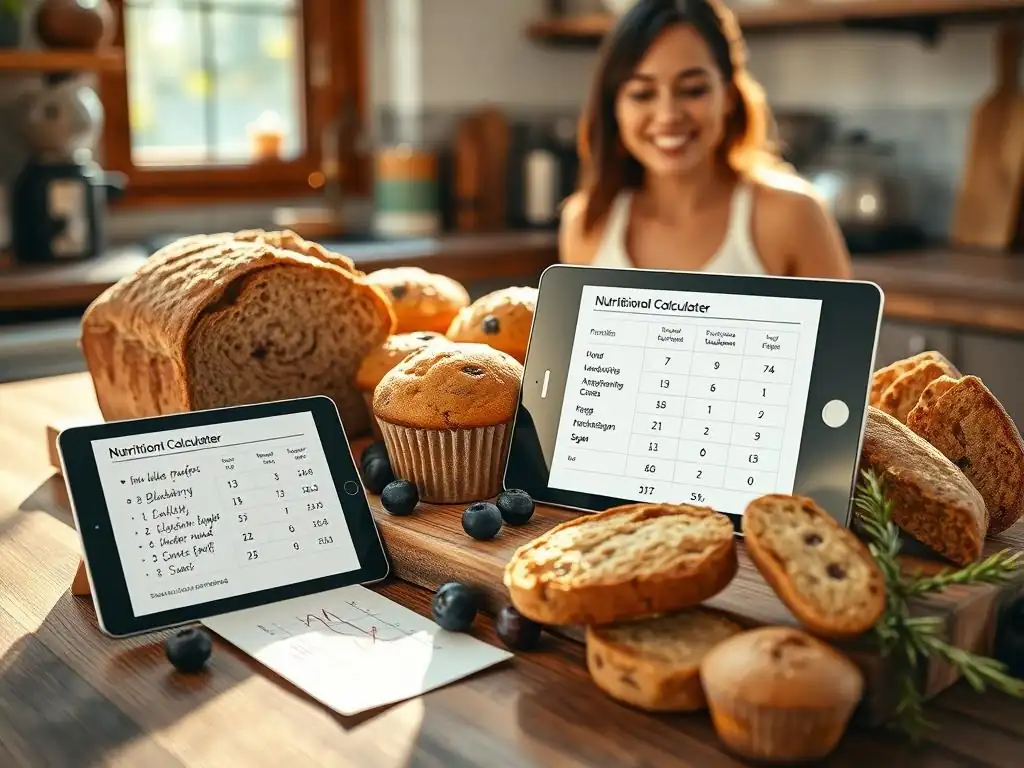
While a healthy baking nutrition calculator app is a powerful tool, it's part of a larger picture. Healthy baking involves more than just numbers; it's also about the ingredients you choose, how you prepare them, and how you enjoy the final product. Thinking creatively about ingredient substitutions and being mindful of portion sizes are essential complements to using a nutrition calculator app. The app gives you the data, but you apply that data through smart ingredient choices and conscious consumption habits.
Maximizing the health benefits means looking at your recipes holistically. Can you add fruits or vegetables for natural sweetness and nutrients? Can you incorporate whole grains, nuts, or seeds for fiber, protein, and healthy fats? Are there ways to reduce reliance on added sugars and saturated fats without sacrificing flavor and texture? Combining the analytical power of your healthy baking nutrition calculator app with practical healthy baking techniques allows you to create treats that are not only delicious but genuinely nourishing.
Ingredient Swaps for Healthier Baking: Reducing Sugar, Fat, and Gluten
Analyzing your recipes with a nutrition calculator app often highlights areas where you can make healthier swaps.
- Reducing Sugar: If your app shows high sugar content, consider gradually reducing the amount called for (often by 10-25% without major texture changes). Alternatively, explore natural sweeteners like mashed bananas or applesauce, or use sugar substitutes. Inputting these swaps into the app lets you see the impact on sugar and calorie counts.
- Reducing Fat: Swapping some butter or oil for unsweetened applesauce, Greek yogurt, or pureed avocado can lower fat and calories while maintaining moisture. The app will show you the reduction in fat grams and calories.
- Increasing Fiber/Whole Grains: Replace a portion of all-purpose flour with whole wheat flour, oat flour, or nut flours. Add ingredients like flaxseed meal, chia seeds, or psyllium husk. Your nutrition calculator app will clearly show the increase in fiber and often protein and micronutrients.
- Reducing Gluten: For those avoiding gluten, using gluten-free flour blends or naturally gluten-free flours (almond, coconut, rice flour) requires careful recipe adjustment. While the app won't manage the baking science, it will calculate the nutritional differences between a traditional recipe and its gluten-free adaptation, including changes in carbs, fiber, and protein.
Using the app to compare the original recipe's nutrition to the swapped version provides concrete evidence of the health improvements you're making, reinforcing your healthy baking efforts.
Portion Control and Mindful Eating: Enjoying Your Baked Goods Guilt-Free
Even the healthiest baked goods contain calories and other nutrients that need to fit into your overall daily intake. Using a nutrition calculator app to determine the per-serving nutrition is only effective if you adhere to those serving sizes. Portion control is key. Instead of cutting a large cake into 8 generous slices, perhaps divide it into 12 or even 16 smaller portions. Use a ruler or scale if needed to ensure consistency, especially when you're logging the portion in your app.
Mindful eating complements portion control. Pay attention to the taste, texture, and aroma of your healthy baking creations. Enjoy each bite slowly. This not only enhances the pleasure of eating but can also help you feel satisfied with a smaller portion. By combining the accurate nutritional information from your app with conscious portioning and mindful enjoyment, you can fully embrace the joy of baking and eating your treats without guilt, knowing they fit into your healthy lifestyle goals.
Healthy Baking Recipe Ideas: Inspiration for Your Next Baking Adventure
Armed with a healthy baking nutrition calculator app and a newfound understanding of ingredient swaps, you're ready to explore a world of healthier baking possibilities. Look for recipes that naturally incorporate nutrient-dense ingredients. Think recipes using whole grain flours, oats, nuts, seeds, fruits, and vegetables.
- Try baking with alternative flours like almond flour (lower carb, higher fat/protein), coconut flour (high fiber, absorbent), or spelt flour (ancient grain).
- Experiment with natural sweeteners like dates, maple syrup, or honey, using the app to compare their nutritional impact (especially sugar content) to refined sugar.
- Incorporate vegetables like zucchini, carrots, or sweet potato into muffins or breads for added moisture, fiber, and vitamins (the app will show the boost in Vitamin A from carrots! ).
- Add protein powder, Greek yogurt, or cottage cheese to boost the protein content of muffins or pancakes.
- Focus on recipes with healthy fats from nuts, seeds, or avocados.
Use your healthy baking nutrition calculator app to analyze existing recipes and brainstorm modifications, or find healthy recipes online and input them into the app to understand their nutritional profile before you even start baking. The possibilities for delicious and nutritious baking are endless once you have the tools to understand the numbers.
Conclusion: Embrace Healthy Baking with the Right Nutritional Calculator App
Embracing healthy baking is a rewarding journey that allows you to enjoy delicious homemade treats while staying true to your health and wellness goals. A healthy baking nutrition calculator app is an indispensable tool on this journey, providing the data you need to understand the nutritional impact of your creations, make informed ingredient choices, and accurately track your intake. By leveraging the power of these apps, you move beyond guesswork and bake with confidence, knowing the precise nutritional profile of every cookie, cake, or loaf of bread you make.
Whether you are counting calories, balancing macronutrients for a specific diet, or focusing on boosting your intake of vitamins and minerals, there is a nutrition calculator app that can support your healthy baking endeavors. These tools empower you to modify recipes, experiment with healthier ingredients, and truly integrate your love for baking with a commitment to a healthier lifestyle. Start using a healthy baking nutrition calculator app today and unlock a new level of control and insight into your baking.
Choosing the Right App for Your Needs: A Final Recommendation
Selecting the best healthy baking nutrition calculator app comes down to prioritizing your specific needs.
- If you need a user-friendly app for calorie and macro tracking with a vast database, MyFitnessPal or Lose It! are excellent choices, with Lose It! often favored for its clean interface.
- If your primary focus is on detailed micronutrient analysis and using a scientifically curated database, Cronometer is the standout option, providing unparalleled detail in vitamins and minerals.
- If you frequently use specific brand-name ingredients in your baking and want a database strong in commercial products, Nutritionix Track is worth considering.
Most apps offer a free version, allowing you to test their recipe building features and interface before committing. Consider which app's strengths align best with your personal definition of "healthy baking" and your tracking habits. Don't be afraid to try a couple using their free tiers to see which one feels most intuitive and provides the data most important to you.
Start Baking Healthier Today!
With the insights gained from a healthy baking nutrition calculator app, you are equipped to make smarter choices in the kitchen. Accurate measurement, diligent recipe entry, and thoughtful analysis will transform your baking. Use the data to guide ingredient swaps, refine techniques, and create delicious baked goods that nourish your body.
Start by analyzing a favorite recipe, identify areas for improvement, and experiment with healthier versions, using your app to track the changes. Embrace the process, enjoy the creativity, and feel good about the nutritious treats you're creating. Your journey into truly healthy baking starts now, supported by the power of nutrition calculation.
Frequently Asked Questions
What exactly is a "Healthy Baking Nutrition Calculator App" and why should I use one?
These apps are digital tools designed to analyze the nutritional content of your baking recipes. Using one helps you track calories, macros, and micronutrients, making healthier choices.
Are these apps only useful for people on specific diets, like keto or vegan?
Not at all! While helpful for specific diets, these apps benefit anyone wanting to be more aware of their baking's nutritional impact. They can help you make informed ingredient swaps for overall better health.
How accurate are the nutritional calculations provided by these apps?
Accuracy varies, but most use large food databases and provide reasonably reliable estimates. Remember that precise measurements are crucial for the most accurate results.
Do these apps require a lot of technical baking knowledge to use effectively?
Generally, no. Most are user-friendly and allow you to input your recipe ingredients and quantities. Some even offer recipe import features for added convenience.
Are there any free "Healthy Baking Nutrition Calculator Apps" available, or do they all require a subscription?
Yes, there are free options available, though they might have limited features. Paid subscriptions often unlock more advanced functionalities, like recipe analysis and personalized recommendations.
Final Reflection: Nourishing Bodies and Souls Through Conscious Baking
The pursuit of healthy baking is no longer a niche hobby; it's a vital part of a growing movement towards mindful eating and well-being. The accessibility of nutritional calculator apps, as explored in this review, underscores this shift, empowering individuals to create delicious and nutritious treats without sacrificing flavor or enjoyment. This isn't just about calorie counting; it's about understanding the impact of ingredients and making informed choices.
The journey towards healthier baking is deeply personal, reflecting our evolving understanding of nutrition and its profound influence on our physical and mental health. It's a journey I've undertaken myself, constantly learning and adapting my approach. The food we eat can be either our greatest healer or our slowest poison.
This quote resonates deeply, highlighting the power we hold in shaping our well-being through conscious food choices, even in the seemingly simple act of baking. The apps reviewed here are tools to aid this journey, allowing us to explore the possibilities and personalize our baking experiences.
Now, I invite you to reflect on your own baking habits. Consider how you can incorporate the insights gained from this review into your kitchen. Perhaps you'll download one of the recommended apps, experiment with new ingredients, or simply become more mindful of the nutritional content of your creations. The path to healthier baking is a delicious adventure, and I encourage you to embark on it with curiosity, creativity, and a commitment to nourishing both your body and soul.
Unleash Your Inner Baking Guru: Level Up Your Recipes!
Thanks for diving into the world of healthy baking with us! We hope you found the perfect nutritional calculator app to fuel your baking passion. Ready to take your skills to the next level?
- Primary Action: Start experimenting with healthier ingredients today! Try substituting one ingredient in your favorite recipe with a healthier alternative based on your new app knowledge. Record your results – you might surprise yourself!
- Share Your Success: Share your delicious and healthy baking creations on social media using #BakeWithEaseHealthySwaps – let's inspire a community of health-conscious bakers!
- Explore New Recipes: Dive into our recipe database at bakewithease.com (Not included per instructions) and explore recipes designed with nutritional balance in mind. Find new favorites!
So, what exciting healthy baking adventure will you embark on first?