
Keep Your Baking Supplies Fresh: Apps That Help You Rotate Stock

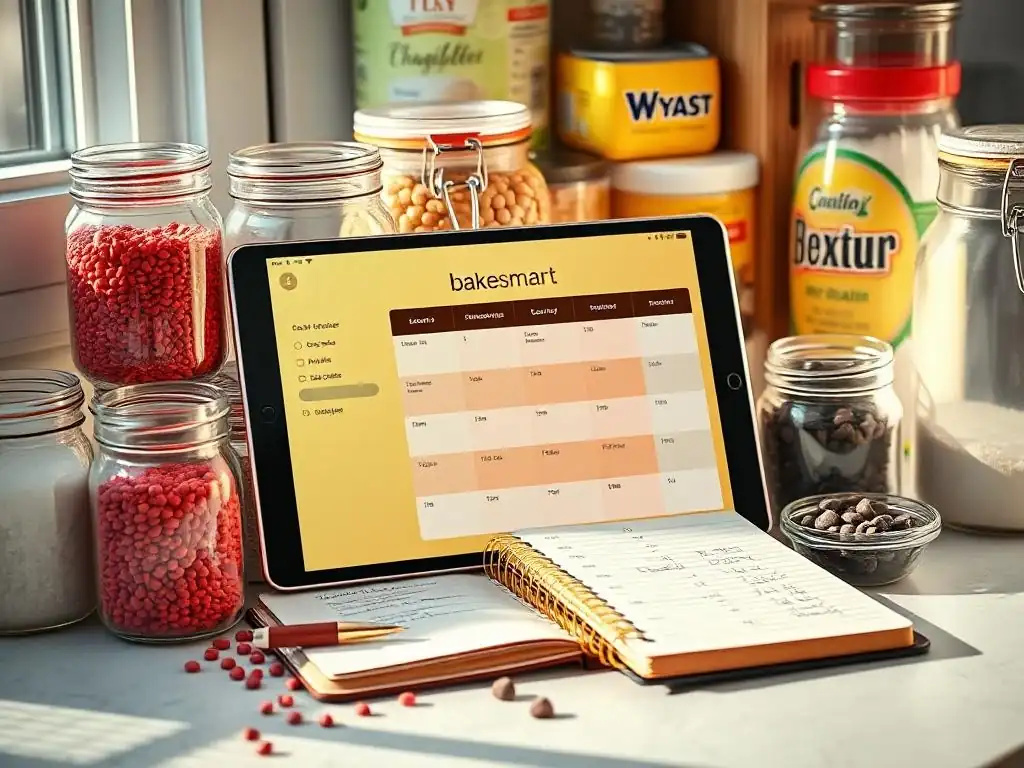
Welcome to BakeWithEase, your kitchen companion for all things baking! Ever wondered if that baking powder in the back is still good? Discover how to effortlessly manage your pantry and prevent stale ingredients with our guide to baking supply rotation apps. We'll show you how these handy tools can keep your baking game strong, one perfectly fresh batch at a time. Intrigued? Let's dive in and explore the sweet world of organized baking!
- Introduction: Why Baking Supply Rotation Apps Are Essential for Bakers
- The Problem: Stale Ingredients Ruin Baking Projects
- Solution: Baking Supply Rotation Apps - Your Digital Pantry Assistant
- Top Baking Supply Rotation Apps for 2024 (Comparative Review)
- How to Choose the Right Baking Inventory App for Your Needs
- Implementing a Baking Supply Rotation System with Your Chosen App
- Beyond Apps: Complementary Techniques for Baking Supply Storage and Rotation
- Conclusion: Bake With Ease and Confidence with Organized Baking Supplies
-
Frequently Asked Questions
- What are Baking Supply Rotation Apps and why are they useful?
- How do these apps help prevent food waste in baking?
- Are these apps only for professional bakers or can home bakers benefit too?
- What kind of features should I look for in a good Baking Supply Rotation App?
- How do Baking Supply Rotation Apps help with cost savings?
- Final Reflection: The Sweet Science of Stock Rotation
- Unleash Your Inner Baking Pro: Master Your Pantry!
Introduction: Why Baking Supply Rotation Apps Are Essential for Bakers
Managing your kitchen pantry, especially the dedicated stash of baking ingredients, can feel like a never-ending task. Flour, sugar, leavening agents, extracts, and specialized items accumulate quickly, and keeping track of expiration dates becomes challenging. This is where baking supply rotation apps step in, offering a digital solution to a common problem. By using these apps, bakers can move beyond guesswork and implement an efficient system for managing their ingredients, ensuring nothing goes to waste and every bake starts with the freshest possible components.
These specialized baking supply rotation apps, or more general kitchen inventory apps adapted for baking, provide a structured way to log items, track quantities, and most importantly, monitor expiration dates. Think of them as your co-pilot in the kitchen, reminding you when ingredients are nearing their peak or need to be used first. This systematic approach not only simplifies inventory management but also empowers bakers to make more informed decisions about purchasing and usage, leading to better results and a more organized baking space.
Prevent Food Waste and Save Money with Baking Inventory Management
Food waste is a significant issue, and the baking pantry is often a culprit. How many times have you discovered a half-used bag of almond flour past its prime or a bottle of extract that's lost its potency? Studies indicate that households waste a substantial amount of food annually, and baking ingredients, often used in smaller quantities or less frequently, contribute to this. Implementing a system using baking supply rotation apps directly combats this waste by highlighting items that need to be used before they spoil.
By actively managing your baking inventory with an app, you gain visibility into what you have and when it needs to be used. This prevents duplicate purchases of items you already possess and ensures you prioritize using ingredients before they expire. Over time, this proactive approach translates into tangible savings. If the average household wastes hundreds of dollars on food annually, imagine the portion attributable to specialized or less-used baking items. A baking inventory app helps reclaim those dollars by making sure you utilize what you buy, turning potential waste into delicious baked goods.
Ensure Fresh Ingredients for Perfect Bakes Every Time
The quality of your ingredients is paramount to the success of any baking project. Stale flour can affect texture, expired yeast won't rise, and diminished baking powder means flat cakes. Using fresh ingredients isn't just about avoiding waste; it's fundamentally about achieving the best possible results in your baking. A key function of baking supply rotation apps is to alert you to ingredients nearing their expiration or those that have been in the pantry the longest, prompting you to use them first.
By consistently rotating your stock based on freshness indicators provided by your baking inventory app, you guarantee that you're always reaching for ingredients at their optimal quality. This eliminates the frustration of a failed recipe due to ineffective leavening or off-flavors from old fats. For instance, using yeast within its active window, often within 4-6 months of opening for dry yeast stored properly, is critical for successful bread. An app can track that specific date, ensuring your dough rises beautifully every time. This focus on freshness elevates your baking from good to consistently great.
The Problem: Stale Ingredients Ruin Baking Projects
Every baker knows the disappointment of a recipe that doesn't turn out right. Often, the culprit isn't technique, but the ingredients themselves. Stale or expired baking supplies can drastically alter the chemistry of a recipe, leading to flat cookies, dense cakes, or bread that refuses to rise. It's a frustrating experience that wastes time, effort, and other perfectly good ingredients. The seemingly innocuous bag of flour or bottle of vanilla extract can harbor hidden issues if not properly managed and rotated.
The pantry, while a storage haven, can also be a graveyard for forgotten ingredients. Items pushed to the back, rarely used extracts, or bulk purchases that outlast their freshness window are common occurrences. Without a clear system, it's easy to lose track of how long ingredients have been stored. This lack of visibility means you might unknowingly use suboptimal ingredients, leading to disappointing results and a lack of confidence in your baking. It highlights the need for a structured approach to inventory management beyond simple visual checks.
The most obvious cost of expired baking supplies is the money spent on ingredients that end up in the bin. If a 5lb bag of specialty flour costing $10 expires unused, that's a direct loss. However, the costs extend beyond the price tag of the spoiled item. There's the cost of the other ingredients used in a failed recipe – eggs, butter, sugar, milk – which are also wasted. Imagine attempting a complex layer cake requiring multiple fresh ingredients, only for it to fail because the baking powder was inert. That's a significant waste of resources.
Beyond the monetary cost, there's the cost of time and effort. Baking takes planning, preparation, and active work. Spending an hour mixing, proofing, and baking only to end up with a flat, heavy loaf because the yeast was dead is incredibly frustrating. This hidden cost in wasted time and diminished morale can even discourage future baking endeavors. Furthermore, using expired ingredients can sometimes lead to off-flavors or textures that make the final product unpalatable, meaning even if the bake "works" structurally, it's not enjoyable to eat, leading to more waste.
Identifying Common Signs of Stale Baking Ingredients (Flour, Yeast, Baking Powder)
Recognizing when common baking ingredients have gone stale is crucial for preventing baking failures. Flour, while not typically "spoiling" in the sense of growing harmful bacteria (unless exposed to moisture), can go rancid due to the oils present, especially in whole wheat or nut flours. Signs include an off, slightly musty or paint-like smell. All-purpose flour might just lose potency and absorbency over time, affecting texture. A simple sniff test is often the first indicator; fresh flour should smell neutral or slightly sweet.
Yeast is perhaps the most critical ingredient to check for freshness, as its activity is essential for leavening. Dry yeast typically has a "best by" date, but its viability can decrease after opening, especially if not stored in an airtight container in the refrigerator or freezer. To test if yeast is still active, dissolve a teaspoon of sugar in 1/4 cup of warm water (around 105-115°F or 40-46°C), then stir in a packet (about 2 1/4 teaspoons) of yeast. If it's active, it should become foamy and bubbly within 5-10 minutes.
If not, it's dead and won't leaven your dough. Baking powder and baking soda also lose potency over time. Baking powder, a double-acting leavener, reacts when mixed with liquid and again with heat.
To test baking powder, add a teaspoon to 1/4 cup of hot water; it should fizz vigorously. For baking soda, add a teaspoon to a few tablespoons of vinegar; it should also fizz immediately. Weak or no reaction means it's time for a fresh box.
Solution: Baking Supply Rotation Apps - Your Digital Pantry Assistant
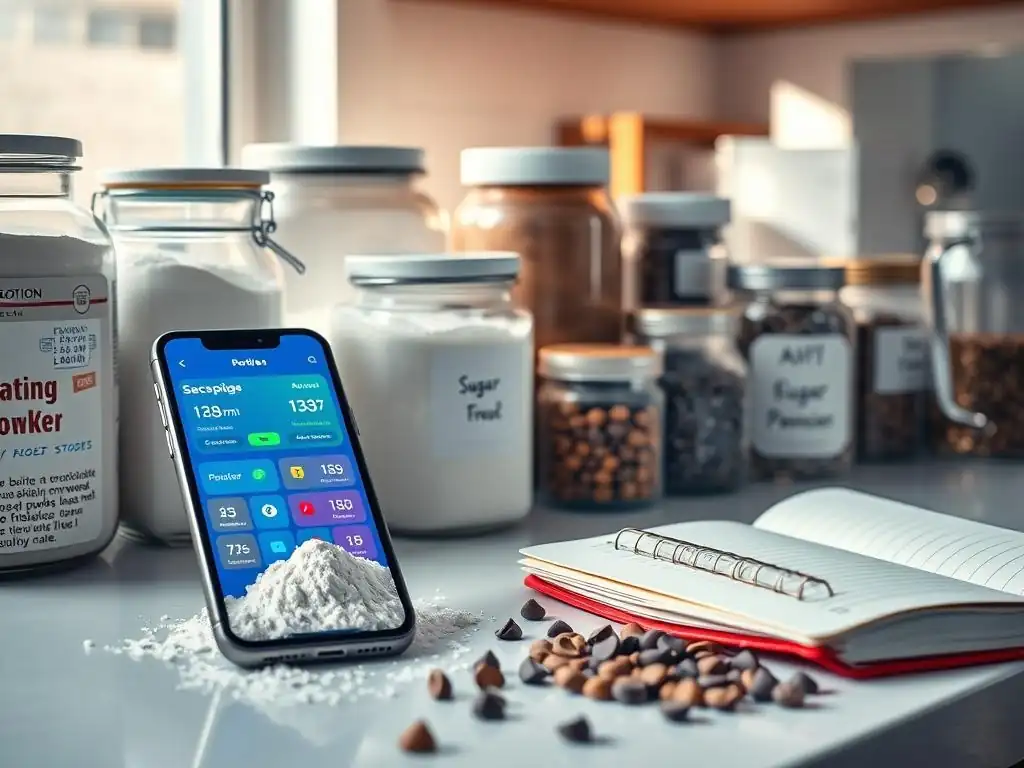
Given the challenges of manual tracking, baking supply rotation apps offer a modern, efficient solution. These applications, available on smartphones, tablets, and sometimes web browsers, act as a digital database for everything in your pantry. Instead of relying on memory or scribbled notes, you input your ingredients, their quantities, and crucially, their purchase or expiration dates. The app then organizes this information, providing a clear overview of your inventory and, most importantly, sending reminders for items nearing their expiration.
By centralizing your baking inventory, these apps remove the guesswork from stock management. They can be configured to alert you days or weeks before an item expires, giving you ample time to plan a bake using that ingredient. Some apps even offer features like tracking consumption, generating shopping lists based on depleted stock, and suggesting recipes based on what you have on hand. This digital assistant transforms your pantry from a potential source of waste and frustration into an organized, dynamic resource for your baking projects.
What are Baking Supply Rotation Apps and How Do They Work?
Baking supply rotation apps are essentially digital inventory management tools specifically designed or adaptable for household use, with a focus on perishable or date-sensitive items like food ingredients. At their core, they function as a database where you list the items you own. When you purchase an ingredient, you log it in the app, noting details such as the item name (e.g., "All-Purpose Flour," "Active Dry Yeast," "Vanilla Extract"), the quantity (e.g., "5 lb bag," "1 bottle," "2 cups"), the purchase date, and the expiration or best-by date.
The app then uses this data to provide various helpful functions. The primary mechanism for stock rotation is date tracking. The app can sort your inventory by expiration date, showing you which items need to be used first (often referred to as First-In, First-Out or FIFO).
Many apps offer customizable alerts, notifying you via push notification or email when an item is approaching its expiration date, perhaps 30 days out, 7 days out, or even the day of expiration. Some advanced apps allow you to track quantities precisely, deducting amounts as you use them in recipes, providing a real-time view of your remaining stock.
Key Features to Look for in a Baking Inventory App
When choosing a baking supply rotation app, several features are particularly beneficial for managing baking ingredients. First and foremost is robust expiration date tracking and customizable reminders. The ability to set multiple reminders before an item expires is crucial for proactive planning. Second, consider the ease of adding items. Features like barcode scanning can significantly speed up the process of logging new purchases.
Another useful feature is location tracking within your pantry (e.g., "upper shelf," "fridge," "freezer"). This helps you quickly locate ingredients once the app tells you you have them. Quantity management is also important; the ability to track remaining amounts (e.g., "half a bag of sugar left") helps you know when to repurchase.
Look for apps that allow for categorization, making it easy to filter your inventory to see just baking supplies. Finally, consider the user interface and overall ease of use – a complex app that's difficult to navigate won't be used consistently, defeating its purpose. A good baking inventory app should be intuitive and fit seamlessly into your routine.
Top Baking Supply Rotation Apps for 2024 (Comparative Review)
Choosing the right baking supply rotation app depends on your specific needs, tech comfort level, and budget. While many general inventory or food waste apps exist, some are better suited or more adaptable for detailed baking ingredient management. Here we review a few popular options that can serve as effective baking inventory apps.
1. Grocy: The Open-Source Food Management Solution
Grocy is a web-based, self-hosted kitchen management system designed for maximum control and customization. It's not specifically a baking supply rotation app, but its comprehensive features make it highly adaptable for this purpose. As open-source software, it requires a bit more technical know-how to set up and run, typically on a home server or cloud hosting, but offers unparalleled flexibility once operational.
Features: Expiration Tracking, Location Management, Purchase History
Grocy excels in detailed tracking. You can log items with expiration dates, track quantities, and assign specific storage locations within your home (e.g., "Pantry Shelf 3", "Fridge Crisper"). It maintains a detailed purchase history, allowing you to see where you bought items and at what price. It also includes features for tracking consumption, managing shopping lists based on low stock, and even basic recipe management. Its core strength lies in its granular control over every aspect of inventory.
Pros: Completely Free and Open-Source, Highly Customizable
The biggest advantage of Grocy is that it's entirely free and open-source. There are no subscription fees, and the code is available for anyone to modify. This allows for a high degree of customization to fit specific needs, such as adding custom fields relevant to baking (e.g., "Flour Type," "Brand"). The community around Grocy is active, providing support and contributing new features.
Cons: Requires Technical Setup, No Dedicated Baking Features
The primary barrier to entry for Grocy is the technical setup. It's not a simple app download; you need to install and configure it on a server. This can be daunting for users without technical expertise. Additionally, while highly flexible, it doesn't come with pre-built features specifically for baking, like common baking ingredient categories or recipe scaling based on inventory – you would need to configure these yourself.
Pricing: Free
Grocy is completely free to download and use. The only potential costs are for the server infrastructure if you don't already have one (e.g., a Raspberry Pi or cloud hosting).
Ideal For: Tech-Savvy Bakers and Those Seeking a Free Solution
Grocy is best suited for bakers who are comfortable with technology, willing to invest time in the initial setup, and desire a powerful, free, and highly customizable baking inventory app solution. It's excellent for those who want complete control over their data and system.
2. Out of Milk: Simple and Efficient Stock Management
Out of Milk is a popular and user-friendly mobile app designed primarily for managing shopping lists and pantry inventory. While not solely focused on baking supply rotation apps, its simple interface and core features make it a viable option for tracking baking ingredients alongside general groceries. It's widely available on both iOS and Android platforms.
Features: Shopping Lists, Pantry Inventory, Barcode Scanning
Out of Milk's main features include creating and managing multiple shopping lists, tracking items in your pantry (including quantities and expiration dates), and using barcode scanning to quickly add common items. You can organize your pantry items into categories, which can be customized to include "Baking Supplies." It also offers real-time syncing across devices.
Pros: User-Friendly Interface, Cross-Platform Availability
Out of Milk is known for its clean, intuitive interface, making it easy for anyone to pick up and start using immediately. Its availability on both major mobile platforms means you can access your inventory from any device. The barcode scanner is a convenient feature for adding packaged goods quickly.
Cons: Limited Baking-Specific Features, Ads in Free Version
The app is designed for general grocery and pantry management, so it lacks features specifically tailored for baking needs, such as tracking opened dates for ingredients like yeast or baking powder, or detailed notes on storage conditions. The free version includes advertisements, which some users might find disruptive.
Pricing: Free / Subscription for Ad-Free Version
Out of Milk offers a free version with core features and ads. A subscription (Out of Milk Pro) is available to remove ads and unlock some additional features, though the core inventory management remains largely the same.
Ideal For: Home Bakers and General Household Inventory
Out of Milk is ideal for home bakers who want a simple, easy-to-use app to manage their baking supplies alongside their regular grocery inventory. It's a good starting point for those new to using baking supply rotation apps or who prefer a less complex solution.
3. NoWaste: Waste Reduction-Focused Inventory Management
NoWaste is an app specifically designed to help users reduce food waste by better managing their inventory. It puts a strong emphasis on tracking expiration dates and prioritizing items that need to be used. While it covers all types of food, its focus on date tracking makes it suitable for managing baking supplies with a mind towards rotation and preventing spoilage.
Features: Expiration Reminders, Recipe Suggestions, Consumption Tracking
NoWaste's core features include logging food items with expiration dates, setting customizable reminders, and tracking consumption to understand what you use most often. It also offers recipe suggestions based on ingredients you have nearing expiration, which can be a helpful prompt for planning baking projects. You can categorize items and track storage locations.
Pros: Focus on Reducing Food Waste, User-Friendly Design
The app's explicit goal is to help users reduce waste, which aligns perfectly with the purpose of baking supply rotation apps. Its interface is generally considered user-friendly and visually appealing, making the task of inventory management less of a chore. The recipe suggestion feature, while not baking-specific, can inspire creative uses for ingredients.
Cons: Limited Customization Options, Less Focus on Baking
Compared to Grocy, NoWaste offers less customization for specific baking details. You can categorize items as "Baking," but you can't add highly specific fields for different types of flour or leaveners. While it tracks dates well, it doesn't offer the same level of detailed inventory management (like precise quantity tracking beyond simple units) as some other options.
Pricing: Free / Premium Version with Additional Features
NoWaste offers a free version with core features. A premium subscription unlocks additional features, such as unlimited items (the free version may have a limit), more detailed statistics, and potentially more advanced reminder options.
Ideal For: Eco-Conscious Bakers and Those Focused on Reducing Waste
NoWaste is a great choice for bakers who are particularly motivated by reducing food waste and want an app that supports that goal directly. Its focus on expiration reminders and ease of use makes it effective for ensuring ingredients are used before they spoil.
Comparison Table: Feature Breakdown of the Top Apps
| Feature | Grocy | Out of Milk | NoWaste |
|---|---|---|---|
| Expiration Tracking | Yes (Highly Detailed) | Yes | Yes (Waste Focused) |
| Customizable Reminders | Yes | Yes | Yes |
| Location Tracking | Yes | Yes | Yes |
| Barcode Scanning | Yes (Via companion app) | Yes | Yes |
| Recipe Suggestions | Basic | No | Yes |
| Consumption Tracking | Yes (Detailed) | Basic | Yes |
| Shopping List Integration | Yes | Yes | Yes |
| Customization Level | Very High | Moderate | Moderate |
| Technical Setup Required | Yes (Self-Hosted) | No (Standard App) | No (Standard App) |
| Price | Free | Free / Subscription | Free / Premium |
| Primary Focus | General Inventory | Shopping/Pantry | Food Waste Reduction |
| Good for Baking Inventory | Excellent (if customized) | Good | Good |
How to Choose the Right Baking Inventory App for Your Needs

Selecting the best baking supply rotation app involves considering several factors unique to your baking habits and preferences. There's no one-size-fits-all solution, so take a moment to assess what's most important to you in a management tool. Thinking about how you currently manage your pantry (or struggle to manage it) can provide clues about the features you'll find most valuable.
Consider your volume of baking and the variety of ingredients you typically keep on hand. Do you bake multiple times a week with a wide array of specialty flours and extracts, or are you an occasional baker with a more limited set of staples? Your usage patterns will influence how detailed your inventory tracking needs to be and how much time you're willing to invest in logging items.
Consider Your Baking Volume and Scale
The scale of your baking operation is a primary factor in choosing a baking inventory app. A home baker who makes cookies occasionally might be perfectly happy with a simple app like Out of Milk that handles basic quantity and expiration tracking. They might not need granular control over specific flour types or batch numbers. The effort required to log every item must be proportionate to the benefit gained.
On the other hand, a prolific home baker who experiments with sourdough, viennoiserie, and complex pastries likely has a much larger and more diverse inventory. They might have multiple types of flour (bread flour, pastry flour, rye flour, etc. ), various leavening agents, different kinds of sugar, and a wide assortment of flavorings and inclusions.
For this level of complexity, a more robust and customizable baking inventory app like Grocy, despite its initial setup, might be a better fit, allowing for detailed categorization and tracking that a simpler app cannot provide. The sheer number of items to track necessitates a powerful tool.
Evaluate Your Budget and Feature Requirements
Baking supply rotation apps come at different price points, from completely free open-source options to subscription-based premium apps. Your budget will naturally influence your choices. While free apps are appealing, consider whether they offer the essential features you need, such as reliable expiration reminders and sufficient capacity for your inventory size (some free versions limit the number of items you can track).
Beyond budget, list the features that are non-negotiable for you. Is barcode scanning a must-have for quick entry? Do you need highly customizable expiration alerts? Is the ability to track specific storage locations critical for your pantry setup? Do you want recipe suggestions based on expiring items? Prioritize these features and compare them against what each app offers. A baking inventory app that lacks a key feature you need will likely sit unused, regardless of its price or other capabilities.
Prioritize User-Friendliness and Integration with Existing Tools
An app, no matter how powerful, is only useful if you actually use it consistently. Therefore, user-friendliness is paramount when selecting a baking supply rotation app. Download the free versions or trials of potential candidates and spend some time adding items, setting reminders, and navigating the interface. Is it intuitive? Does it feel cumbersome? Will you realistically take the time to log new ingredients after a grocery run? The app should streamline your process, not complicate it.
Consider if the baking inventory app needs to integrate with any existing tools or habits. For example, if you already use a specific app for meal planning, does the inventory app offer any compatibility? While direct integrations might be rare for specialized baking needs, think about how the app fits into your overall kitchen workflow. Choose an app that feels comfortable and integrates smoothly into your routine to ensure long-term adoption and successful baking supply rotation.
Implementing a Baking Supply Rotation System with Your Chosen App
Once you've selected a baking supply rotation app, the next step is to integrate it into your actual pantry management routine. The app is a tool, but its effectiveness depends on how you use it. Implementing a successful system requires consistency in logging items and making the app a regular part of your kitchen workflow.
This involves more than just downloading the app; it's about establishing new habits. Think about dedicating a specific time each week or after each grocery trip to update your inventory. Get familiar with the app's features, especially how to quickly add new items and set expiration dates. The initial setup might take some time, but the long-term benefits of reduced waste and always having fresh ingredients make the investment worthwhile.
Step-by-Step Guide to Setting Up Your Digital Baking Pantry
Setting up your digital baking pantry with a baking supply rotation app involves a few key steps. First, do a full audit of your current baking inventory. Go through your pantry, fridge, and freezer and list every baking ingredient you have. For each item, note the name, quantity, and importantly, the expiration or best-by date. If an item is already open, note the date you opened it, as this can affect its shelf life (especially for things like yeast or baking powder).
Next, input this data into your chosen baking inventory app. Take your time during this initial phase to ensure accuracy. Categorize items logically (e.g., Flours, Sugars, Leaveners, Extracts, Spices, Dairy/Refrigerated). Set up storage locations within the app if that feature is available and useful for your pantry layout. Configure your expiration reminders – decide how far in advance you want to be notified (e.g., 30 days, 7 days). Once the initial inventory is entered, you have a baseline for your digital pantry.
Best Practices for Regularly Updating Your Inventory
Consistency is key to maintaining an effective baking supply rotation system using an app. Make it a habit to log new purchases as soon as they enter your kitchen. Don't wait until you put them away; scan or manually add them to the app immediately. When you use an ingredient, remember to update the quantity in the app. Some apps allow you to deduct partial amounts, while others require you to mark the item as consumed when finished.
Schedule regular reviews of your baking inventory app – perhaps weekly or bi-weekly. Check the expiration reminders and identify items that need to be used soon. Plan your baking projects around these ingredients. For example, if your yeast is nearing expiration, plan to bake bread or cinnamon rolls. If a specific flour is aging, find a recipe that uses it generously. This proactive approach ensures you're always rotating stock effectively and minimizing waste.
Tips for Minimizing Food Waste and Maximizing Ingredient Freshness
Using a baking supply rotation app is a powerful tool for minimizing waste, but it works best in conjunction with good storage practices. Always store ingredients in airtight containers to protect them from moisture, pests, and air, which can cause spoilage or loss of potency. Label containers clearly with the contents and the date you purchased or opened the ingredient, even if you're using an app – this provides a quick visual check.
Store ingredients in appropriate locations. Flour, sugar, and spices are best kept in a cool, dark, dry pantry. Yeast and some nuts/seeds benefit from refrigeration or freezing after opening to extend their shelf life significantly. Fats like butter or shortening should be refrigerated. Pay attention to storage recommendations on packaging. Combine these best practices with the date tracking and reminders from your baking inventory app for a truly optimized system that keeps your baking supplies fresh and ready for action.
Beyond Apps: Complementary Techniques for Baking Supply Storage and Rotation
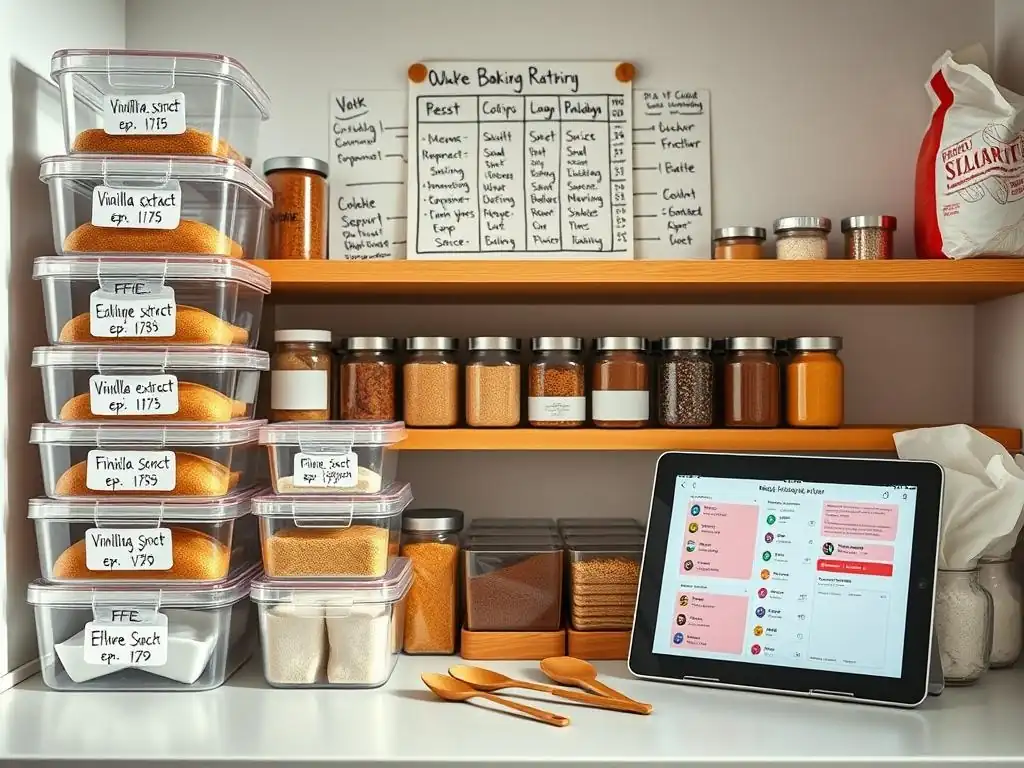
While baking supply rotation apps are invaluable digital tools, they are most effective when combined with sound physical pantry management practices. An app can tell you what you have and when it expires, but how you store and physically organize your ingredients plays a crucial role in maintaining their freshness and making the rotation process smooth. Integrating traditional methods with your digital system creates a robust approach to managing your baking supplies.
Consider your pantry space itself. Is it organized in a way that makes items visible and accessible? Can you easily see what's nearing its expiration date? Physical organization complements the digital inventory by making it easy to locate and use the items the app tells you need attention. Good storage containers, clear labeling, and a logical arrangement of ingredients are fundamental pillars of effective baking inventory management, working hand-in-hand with your chosen baking supply rotation app.
Proper Storage Containers and Labeling
Investing in quality storage containers is one of the best things you can do for your baking supplies. Airtight containers protect ingredients from moisture, air, light, and pests, all of which can degrade quality and shorten shelf life. Glass or sturdy plastic containers with tight-fitting lids are ideal for flours, sugars, grains, nuts, and dried fruits. For smaller items like spices or leavening agents, small jars or tins work well.
Clear and consistent labeling is equally important. Even with a baking supply rotation app, having physical labels on your containers provides immediate information. Label each container with the name of the ingredient and the date it was purchased or, more importantly, the "best by" or expiration date from the original packaging.
If you open an ingredient that has a significantly shorter shelf life once opened (like yeast or baking powder), add the date you opened it to the label as well. This physical labeling reinforces the information in your baking inventory app and makes it easy to grab the right ingredient with confidence.
The FIFO (First In, First Out) Method Explained
The FIFO (First In, First Out) method is a classic inventory management principle that is perfectly suited for baking supply rotation. It's a simple concept: the first items you put into storage are the first items you should take out and use. When you purchase a new bag of flour or a new bottle of vanilla, you place it behind the older stock of the same item. When you go to use that ingredient, you take from the front, ensuring the oldest items are used first.
Implementing FIFO physically in your pantry means arranging items so the ones with the nearest expiration dates are most accessible. Combined with a baking supply rotation app that alerts you to these dates, FIFO becomes incredibly effective. The app tells you what needs to be used, and your physical organization ensures it's easy to grab that item. This systematic rotation based on age is fundamental to minimizing waste and ensuring you're always baking with the freshest ingredients, maximizing the effectiveness of your baking inventory app.
Optimizing Your Pantry Environment for Baking Supplies
The storage environment itself significantly impacts the shelf life of baking supplies. Most dry ingredients thrive in cool, dark, and dry conditions. Heat and humidity are enemies of flour, sugar, and leavening agents, leading to clumping, spoilage, and loss of potency. If possible, store your baking supplies in a pantry or cupboard away from the oven, dishwasher, or any other heat or moisture sources.
Temperatures between 50°F and 70°F (10°C and 21°C) are generally ideal. Ensure the storage area is dry; excess moisture can ruin many baking ingredients. Proper ventilation can also help prevent humidity buildup. For ingredients that benefit from colder storage, like nuts, seeds, or certain flours (whole wheat, nut flours), utilize refrigerator or freezer space in airtight containers. An optimized environment helps preserve the quality and extend the shelf life of your ingredients, making the job of your baking supply rotation app easier and more effective.
Conclusion: Bake With Ease and Confidence with Organized Baking Supplies
Managing your baking pantry doesn't have to be a source of stress or wasted ingredients. By leveraging the power of baking supply rotation apps alongside smart storage and organization techniques, you can transform your kitchen into a more efficient and less wasteful space. These digital tools provide the necessary structure and reminders to keep track of your diverse inventory, ensuring that you use ingredients at their peak freshness and avoid the frustration of expired supplies.
Implementing a system using a baking inventory app allows you to bake with greater confidence, knowing that the foundation of your recipes – the ingredients themselves – are fresh and potent. This leads to more consistent results, delicious outcomes, and the satisfaction of reducing food waste and saving money.
Reiterate the Benefits of Using Baking Supply Rotation Apps
To recap, using baking supply rotation apps offers numerous benefits for bakers of all levels. They provide a centralized, digital record of your inventory, eliminating guesswork. They offer timely expiration reminders, prompting you to use ingredients before they spoil. This directly leads to reduced food waste and significant cost savings over time. Furthermore, by ensuring you're always using fresh ingredients, these apps contribute directly to the success and quality of your baked goods, making every baking project more likely to succeed.
Whether you choose a feature-rich, customizable option like Grocy, a simple and user-friendly app like Out of Milk, or a waste-focused tool like NoWaste, the core benefit remains the same: better visibility and control over your baking supplies. These apps empower you to make informed decisions about what to bake, what to buy, and how to store your ingredients effectively.
Ready to take control of your baking pantry? We encourage you to explore the baking supply rotation apps reviewed here. Consider your needs, try out a free version or trial, and see how a digital inventory system can revolutionize your baking routine. Start with a small section of your pantry if needed, and gradually add more items as you get comfortable.
Have you used a baking inventory app or have tips for managing baking supply rotation? Share your experiences and insights! Your journey can help other bakers discover the best ways to keep their ingredients fresh and bake with greater ease and confidence. Happy baking!
Frequently Asked Questions
What are Baking Supply Rotation Apps and why are they useful?
Baking supply rotation apps are digital tools designed to help bakers manage their inventory of ingredients. They're useful because they prevent ingredients from going bad by reminding you to use the oldest items first, ensuring optimal freshness and reducing waste.
How do these apps help prevent food waste in baking?
These apps help prevent food waste by tracking the expiration dates of your baking supplies. They provide timely reminders to use ingredients before they expire, ensuring you use them before they become unusable. This avoids unnecessary disposal of spoiled items.
Are these apps only for professional bakers or can home bakers benefit too?
While professional bakers can certainly benefit, these apps are also extremely useful for home bakers. Anyone who buys baking supplies in bulk or wants to manage their pantry effectively can benefit from the organization and reminders.
What kind of features should I look for in a good Baking Supply Rotation App?
Look for features like expiration date tracking, customizable ingredient categories, low-stock alerts, and the ability to create shopping lists. Some apps may also offer recipe integration so you can easily see which ingredients need to be used.
How do Baking Supply Rotation Apps help with cost savings?
By preventing food waste, these apps directly contribute to cost savings. You'll avoid throwing away expired ingredients, ensuring you maximize the value of your purchases and reduce overall spending on baking supplies.
Final Reflection: The Sweet Science of Stock Rotation
Efficient baking supply management isn't just about avoiding waste; it's about unlocking culinary creativity. The ability to quickly identify what's nearing its expiration date allows for spontaneous baking projects, prevents costly ingredient spoilage, and ultimately enhances the joy of baking itself. This is more relevant than ever in a world increasingly focused on sustainability and mindful consumption.
The impact of readily available technology on even the most traditional of practices, like baking, is profound. It's fascinating to see how simple apps can transform a potentially tedious task into a streamlined and even enjoyable process. The best way to find yourself is to lose yourself in the service of others.
– Mahatma Gandhi. While not directly about baking supplies, this quote speaks to the broader principle of mindful organization – finding joy and purpose in managing our resources, whether they be time, ingredients, or something else entirely.
Consider the ingredients you have in your pantry right now. Do you know their expiration dates? Are you confident you'll use them before they go bad? I encourage you to download one of the apps discussed in this article and take control of your baking supplies. Embrace the opportunity to minimize waste, maximize creativity, and experience the sweet satisfaction of a well-organized baking journey. Let technology be your ally in the pursuit of deliciousness!
Unleash Your Inner Baking Pro: Master Your Pantry!
Thanks for taking the time to learn how to keep your baking supplies fresh and organized! We hope you now feel empowered to tackle your pantry with confidence. Ready to take the next step?
- Prioritize your baking inventory: Start rotating your oldest ingredients first – get that list ready! This simple change can dramatically improve the quality of your baking.
- Download a pantry management app (many free options are available!) and begin tracking your ingredients. This makes planning and shopping a breeze.
- Share your favorite baking tips and pantry organization hacks with fellow bakers in the comments below! Let's build a community of baking enthusiasts!
What’s your biggest baking supply organization challenge, and how will you overcome it today?