
Impress with Ease: Simple Classic Cookie Recipes for Beginners

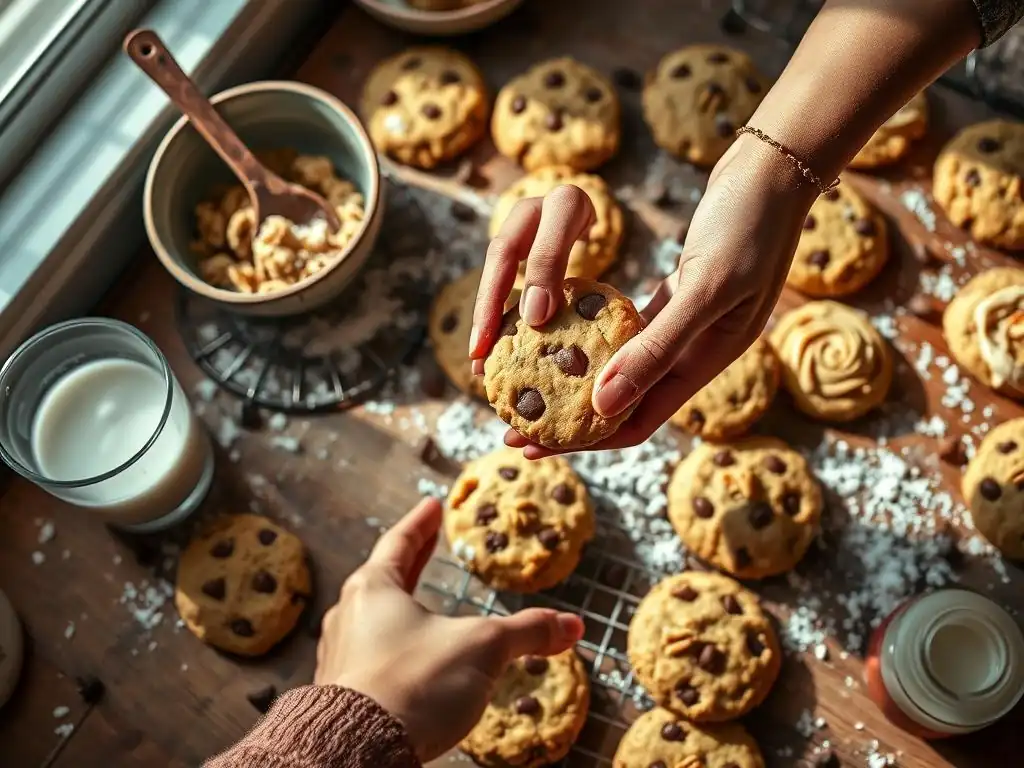
Welcome to BakeWithEase, your trusted guide to unlocking the joys of baking! Are you ready to create melt-in-your-mouth treats without the fuss? This week, we're diving into the world of easy classic beginner cookie recipes. Forget complicated techniques and hard-to-find ingredients – we'll show you how to bake delicious cookies that are guaranteed to impress. Curious to know the secrets to perfect cookies every time? Let's get baking!
- BakeWithEase Presents: The Easiest Classic Cookies for New Bakers
- Why Classic Cookies are Perfect for Beginner Bakers
- Top 3 Easy Classic Beginner Cookie Recipes
- Essential Baking Tools for Easy Cookie Recipes
- Baking Tips for Perfect Beginner Cookies
- Troubleshooting Common Cookie Baking Problems
- Beyond the Basics: Expanding Your Beginner Cookie Repertoire
- Conclusion: Baking Easy Classic Cookies with Confidence
-
Frequently Asked Questions
- What makes these cookie recipes "easy" for beginners?
- What are some examples of "classic" cookies I can expect to find?
- Do I need any specialized equipment to bake these cookies?
- Can I easily adapt these recipes for dietary restrictions, like gluten-free or vegan?
- Where can I find even more simple baking tips and recipes from BakeWithEase?
- Final Reflection: The Enduring Allure of Simple Sweets
- Unlock Your Inner Baker: Start Baking Today!
This guide from BakeWithEase.com offers simple and foolproof classic cookie recipes perfect for beginner bakers. Learn to bake delicious cookies with easy-to-find ingredients and step-by-step instructions. Discover the joy of creating impressive treats right from your kitchen with our selection of easy classic beginner cookie recipes. We'll walk you through everything you need to know to get started on your baking journey, from gathering ingredients to troubleshooting common hiccups.
One of the biggest advantages of starting your baking adventure with classic cookies is the simplicity and accessibility of the ingredients. Most easy classic beginner cookie recipes rely on pantry staples that you likely already have on hand or can easily find at any grocery store. Think about the core components: all-purpose flour, granulated sugar, brown sugar, butter, eggs, vanilla extract, baking soda, and salt.
These are fundamental building blocks in baking, and learning to work with them in a simple cookie dough provides a fantastic foundation. You don't need specialty flours or exotic extracts to create something truly delicious and impressive.
Furthermore, these basic ingredients are generally quite affordable. For example, a standard batch of chocolate chip cookies, yielding perhaps 2-3 dozen treats, requires about 1.5 cups of flour, 1 cup of sugar, 1 stick of butter, and 1-2 eggs. The total cost of these core ingredients for a batch is often less than $5-7, depending on current prices and location. This makes practicing your skills with easy classic beginner cookie recipes not only simple but also budget-friendly, allowing you to experiment and bake multiple batches without a significant investment.
Foolproof Recipes: Building Confidence in the Kitchen
Easy classic beginner cookie recipes are specifically designed to be forgiving, making them ideal for building confidence in new bakers. Unlike delicate cakes or complex pastries that require precise techniques and timing, many cookie doughs are quite robust. If you accidentally overmix slightly or don't measure exactly perfectly (though accurate measuring is still important! ), you can often still end up with a perfectly enjoyable cookie. The structure of a basic drop cookie, for instance, is less susceptible to catastrophic failure from minor errors compared to, say, a soufflé.
These recipes often involve straightforward processes like creaming butter and sugar, adding wet ingredients, and then mixing in dry ingredients. The steps are linear and easy to follow, minimizing confusion. Success with these simple cookie recipes for beginners provides immediate positive reinforcement, encouraging you to try more challenging bakes in the future. When your first batch of perfectly baked chocolate chip cookies comes out of the oven, the sense of accomplishment is immense, proving to yourself that you can bake!
Baking easy classic beginner cookie recipes is an excellent way to practice and master fundamental baking techniques that are transferable to countless other recipes. You'll learn the importance of accurately measuring dry ingredients using the "scoop and level" method to avoid adding too much flour, which can result in dry, tough cookies. You'll practice creaming softened butter and sugar together until light and fluffy – a crucial step for incorporating air and achieving the right texture in many baked goods.
You'll also get hands-on experience with techniques like incorporating eggs one at a time, understanding the role of leavening agents like baking soda or baking powder, and learning how to properly fold in additions like chocolate chips or nuts without deflating the dough. Even simple actions like recognizing when cookie dough is mixed just enough or understanding how different baking times and temperatures affect the final cookie texture (chewy vs. crisp) are valuable skills gained from making simple cookie recipes for beginners.
These foundational techniques, honed through making classic cookies, will serve you well as you explore more complex baking projects.
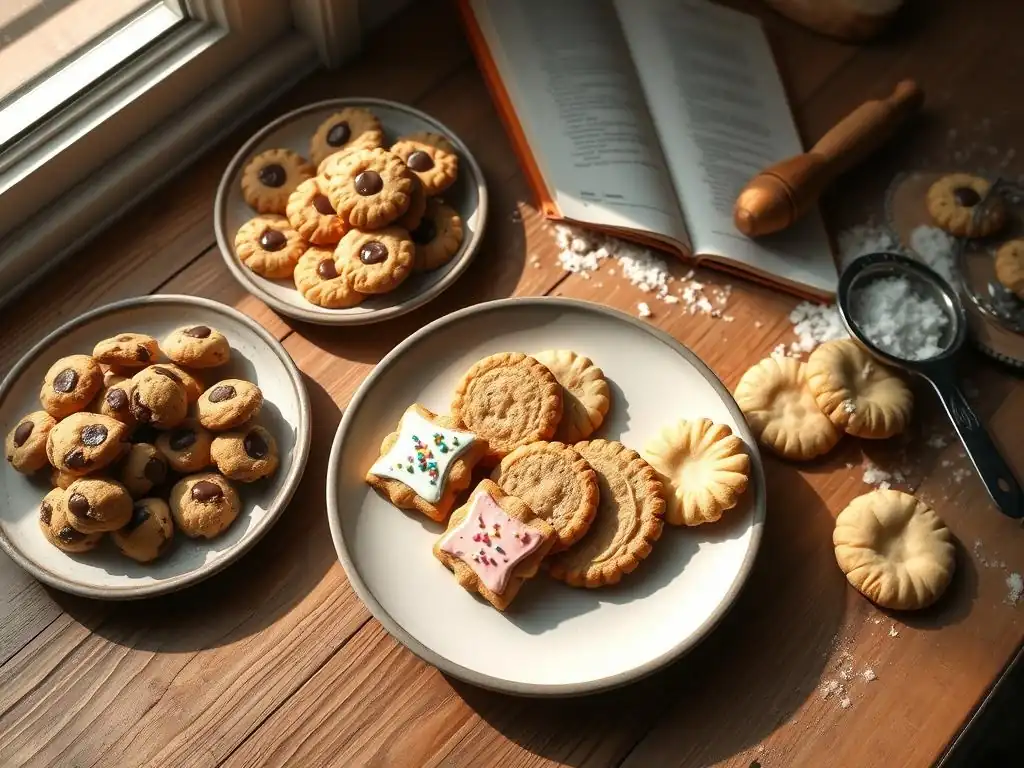
Ingredients for Beginner-Friendly Chocolate Chip Cookies
This beloved classic uses common ingredients like butter, granulated sugar, brown sugar, eggs, vanilla extract, flour, baking soda, salt, and of course, chocolate chips.
Step-by-Step Instructions: Baking Perfect Chocolate Chip Cookies
The process typically involves creaming the butter and sugars, adding the wet ingredients, mixing in the dry ingredients, and finally folding in the chocolate chips before dropping spoonfuls onto a baking sheet.
Tips for Perfect Chocolate Chip Cookies Every Time
Ensure your butter is softened but not melted. Use a mix of granulated and brown sugar for chewiness. Don't overmix the dough after adding the flour. For best results, chill the dough for at least 30 minutes before baking.
Ingredients for Easy Peanut Butter Cookies
A very simple version requires just three ingredients: peanut butter, granulated sugar, and eggs. More traditional recipes might add flour, baking soda, and butter.
Baking Peanut Butter Cookies: A Beginner's Guide
Mix the ingredients together to form a dough. Roll the dough into balls and place them on a baking sheet. Use a fork to create the classic criss-cross pattern on top before baking.
Variations: Adding Chocolate Chips or Sprinkles to Your Peanut Butter Cookies
Once you've mastered the basic peanut butter cookie, try folding in about 1/2 cup of mini chocolate chips or rolling the dough balls in colorful sprinkles before pressing with a fork for added flavor and fun.
Ingredients for Simple Sugar Cookies
Basic sugar cookies require softened butter, granulated sugar, eggs, vanilla extract, flour, baking powder, and salt.
Step-by-Step Guide to Baking Sugar Cookies
Cream the butter and sugar, add the wet ingredients, then mix in the dry ingredients until just combined. The dough can be chilled, rolled out, and cut into shapes, or simply portioned and baked as drop cookies.
Decorating Your Sugar Cookies: A Beginner's Guide to Icing
A simple glaze icing (powdered sugar and milk or lemon juice) is easy for beginners. Once cookies are cool, dip tops in glaze or drizzle on top. For slightly more control, use a simple buttercream frosting applied with a knife or spatula.
To successfully bake easy classic beginner cookie recipes, you don't need a kitchen full of gadgets. A few essential tools will get you started. A set of dry measuring cups and spoons is crucial for accuracy, as is a liquid measuring cup.
You'll need at least one large mixing bowl, preferably two, one for dry ingredients and one for wet. A hand mixer or a sturdy whisk and wooden spoon are necessary for combining ingredients. Baking sheets (also called cookie sheets) are, of course, essential, and parchment paper or silicone baking mats are highly recommended to prevent sticking and ensure even baking.
Other useful tools include a rubber spatula for scraping down the sides of the bowl, a cooling rack for letting your cookies cool properly, and an oven thermometer to ensure your oven is heating accurately – oven temperatures can vary significantly, sometimes by as much as 25-50 degrees Fahrenheit, and knowing the true temperature is key to preventing burnt or underbaked cookies. A cookie scoop is also incredibly helpful for portioning dough evenly, leading to uniform cookies that bake at the same rate.
Starting out doesn't require expensive equipment. Many essential baking tools are quite affordable. You can find basic sets of measuring cups and spoons for under $10. Mixing bowls can be purchased individually or in sets for reasonable prices, often starting around $15-20 for a few sizes. A reliable hand mixer can be found for $25-40, or you can opt for a whisk and wooden spoon which are even less expensive. Standard aluminum baking sheets range from $10-20 each, and parchment paper is just a few dollars a roll.
Investing in a simple oven thermometer (around $5-10) is one of the best value purchases you can make, as it directly impacts baking success. While stand mixers are wonderful, they are not necessary for easy classic beginner cookie recipes and represent a larger investment (typically $200+). Start with the basics and expand your collection as your baking skills and passion grow. These simple, affordable tools are all you need to start making delicious, easy classic beginner cookie recipes today.
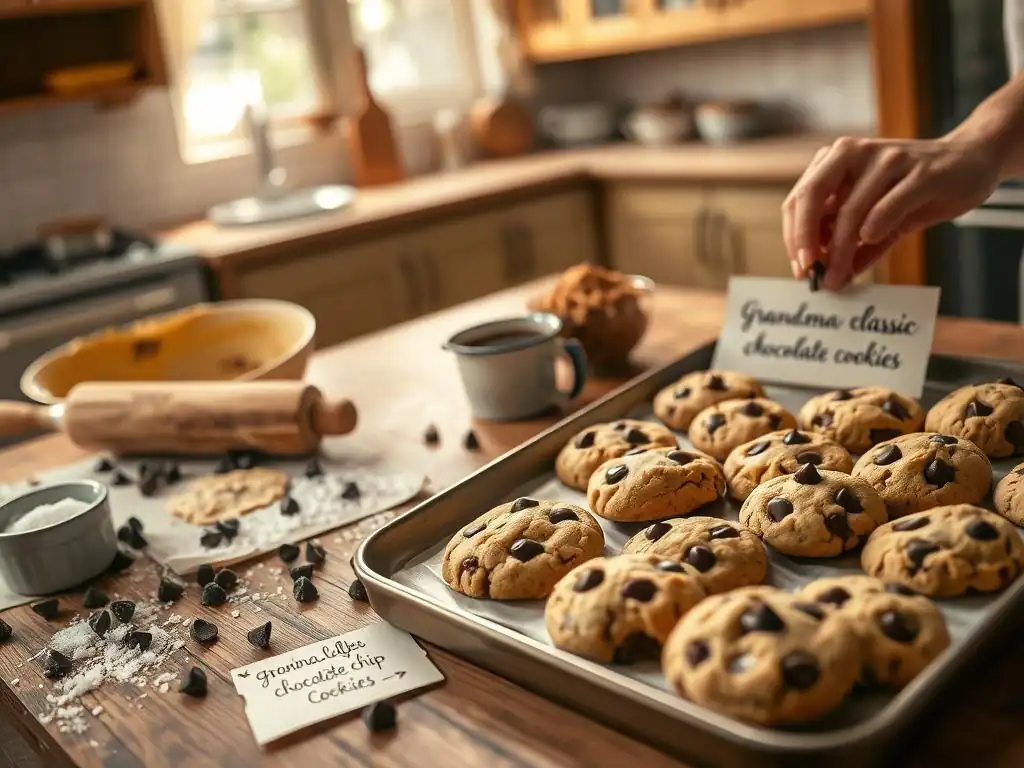
Measuring Ingredients Accurately: The Key to Success
Accurate measuring is arguably the most critical step in baking, especially when you're just starting with easy classic beginner cookie recipes. Unlike cooking, where you can often adjust ingredients as you go, baking is a science that relies on precise ratios.
For dry ingredients like flour, sugar, and baking soda, use the "scoop and level" method: gently spoon the ingredient into your dry measuring cup until it overflows, then use a straight edge (like the back of a knife) to level off the excess. Never scoop directly from the bag or container with your measuring cup, as this compacts the ingredient, leading to too much being used.
Liquid ingredients, such as milk, water, or vanilla extract, should be measured in a liquid measuring cup placed on a flat surface, reading the measurement at eye level. This ensures you're adding the correct amount of moisture. Even small errors in measuring can significantly impact the texture and spread of your cookies. For example, adding just a quarter cup too much flour to a standard cookie recipe can result in dry, dense cookies that don't spread properly during baking. Taking the time to measure accurately is a fundamental skill that will improve all your baking endeavors.
Understanding and controlling oven temperature is vital for achieving perfectly baked easy classic beginner cookie recipes. Most cookie recipes call for baking at temperatures between 325°F and 375°F (160°C to 190°C). Too low a temperature can cause cookies to spread too much and become thin or pale, while too high a temperature can lead to cookies that are burnt on the edges and raw in the center. Even if your oven dial is set correctly, the actual temperature inside can fluctuate.
Using an oven thermometer is highly recommended to verify your oven's accuracy. Place it in the center of your oven and check it after the oven has preheated for at least 15-20 minutes. If your oven runs hot or cold, you can adjust the temperature setting accordingly. For example, if your oven reads 375°F when set to 350°F, you'll know to set it to 325°F for a recipe that calls for 350°F. Knowing your oven's quirks will dramatically improve the consistency and quality of your easy classic beginner cookie recipes.
Proper storage is key to keeping your delicious, easy classic beginner cookie recipes fresh and tasty for as long as possible. Once cookies are completely cooled (this is crucial to prevent condensation), store them in an airtight container. Different types of cookies benefit from slightly different storage methods. Chewy cookies, like chocolate chip or peanut butter, can often be stored together. To keep them soft, you can even place a slice of bread in the container; the cookies will absorb moisture from the bread, helping them stay soft (replace the bread every couple of days).
Crisp cookies, like some sugar cookies or shortbreads, should be stored separately from soft cookies to maintain their texture. They don't need the added moisture and can become soft if stored with chewy varieties. Store cookies at room temperature unless the recipe specifies refrigeration (e.g., if they contain a perishable filling).
Most cookies will stay fresh for 3-5 days when stored properly in an airtight container. For longer storage, most baked cookies freeze very well; simply place them in a single layer on a baking sheet to freeze solid, then transfer to a freezer-safe bag or container for up to 3 months.
Flat cookies are a common issue for beginner bakers working on easy classic beginner cookie recipes. Several factors can contribute to this. One frequent cause is using butter that is too soft or melted; softened butter that is still cool and firm enough to hold its shape when pressed is ideal for creaming and provides structure.
Another reason can be using too little flour or inaccurate flour measurement (scooping directly from the bag compacts flour, but the opposite problem, not enough flour, also happens). Using expired leavening agents (baking soda or powder) can also prevent cookies from rising and spreading correctly.
Over-creaming the butter and sugar, incorporating too much air, can also lead to excessive spread and flat cookies. Additionally, baking on warm baking sheets (reusing a hot sheet for the next batch) will cause the dough to melt and spread immediately before the leavening has a chance to work. Ensure your baking sheets are cool before placing dough on them. Checking your oven temperature with a thermometer is also important, as an oven that is too hot can cause rapid, excessive spread.
Dry, crumbly cookies are often the result of too much flour or overbaking. As mentioned earlier, accurately measuring flour using the scoop and level method is essential. Packing flour into the measuring cup can add significantly more flour than the recipe intends, absorbing too much moisture from the dough. Overmixing the dough after the flour is added can also develop the gluten too much, resulting in a tougher, drier texture.
Baking the cookies for too long is another primary culprit for dryness. Cookies continue to bake slightly after they are removed from the oven due to residual heat. Look for visual cues like lightly golden edges rather than waiting for the centers to look completely set. Baking times given in recipes are often guidelines; your oven and the size of your cookies will affect the exact time needed. Pulling cookies out when they look just done in the center (they might even look slightly underbaked) often yields a perfectly textured cookie after cooling.
Burning edges or bottoms on your easy classic beginner cookie recipes can be frustrating. The most common reasons are an oven temperature that is too high (again, use an oven thermometer! ), placing cookies too close to a heating element, or baking for too long. Using dark-colored baking sheets can also cause bottoms to brown and potentially burn faster than lighter colored sheets, as dark surfaces absorb more heat.
Ensure your oven rack is in the correct position, typically the middle rack for even heat distribution. If you suspect your oven has hot spots or your dark baking sheets are causing issues, you can try reducing the oven temperature slightly (e.g., by 15-25°F) and baking for a minute or two longer, or placing another empty baking sheet underneath the one holding the cookies to provide insulation. Always set a timer and check the cookies a minute or two before the minimum suggested baking time, especially when trying a recipe for the first time.
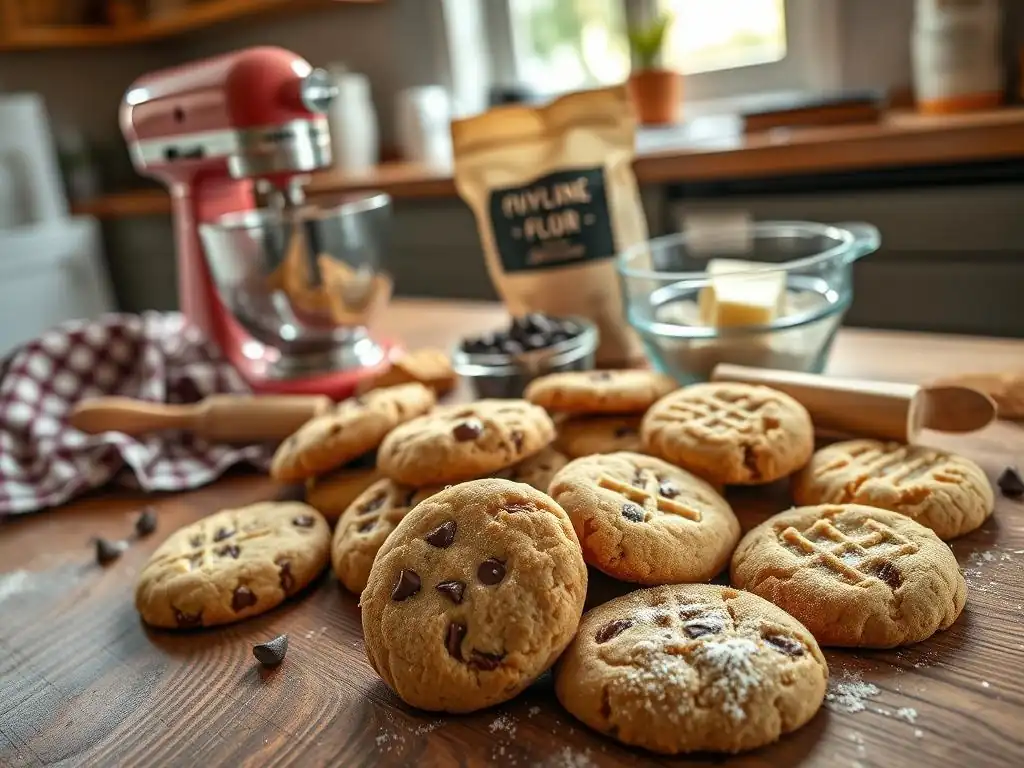
Once you've mastered a few easy classic beginner cookie recipes, you can start experimenting with variations to expand your skills and flavor palate. The basic doughs for chocolate chip, peanut butter, or sugar cookies are excellent starting points for creative twists. For instance, you can add different types of chips (white chocolate, butterscotch), nuts (walnuts, pecans), dried fruit (cranberries, raisins), or spices (cinnamon, nutmeg, ginger) to your chocolate chip cookie dough.
Peanut butter cookies can be made with different nut butters (almond, cashew) or have jam pressed into the center before baking for a twist on the classic peanut butter and jelly combination. Sugar cookies are incredibly versatile; try adding citrus zest (lemon, orange), almond extract instead of vanilla, or rolling the dough in colored sugar or sprinkles before baking. Exploring these simple variations within the framework of easy cookie recipes for beginners is a fun way to discover new favorites and build your confidence.
Decorating cookies adds another layer of fun and creativity to your baking. While the easy classic beginner cookie recipes are delicious on their own, decorating allows you to personalize them for holidays, parties, or just for fun. Sugar cookies cut into shapes are perfect for decorating with simple glazes, royal icing, or buttercream. Start with basic techniques like spreading icing with a knife or dipping the cookie tops.
You can use sprinkles, colored sugars, edible glitter, or even simple patterns made with a fork or toothpick in wet icing. As you get more comfortable, you can try piping outlines or flooding cookies with thinner icing. Even drop cookies like chocolate chip or peanut butter can be dressed up; try drizzling them with melted chocolate or dipping half the cookie in chocolate after they cool. Decorating is a fantastic way to practice fine motor skills and artistic expression, turning your easy classic beginner cookie recipes into edible works of art.
One of the greatest joys of baking easy classic beginner cookie recipes is sharing them with others. Homemade cookies are a wonderful way to show you care, whether you're bringing them to a potluck, gifting them for a holiday, or simply offering them to friends and family who stop by. The effort you put into baking, even a simple batch of classic cookies, is always appreciated.
Sharing your bakes also gives you valuable feedback. People will happily tell you what they loved about your cookies, and you might even get gentle suggestions for future batches. It's a great way to connect with people and spread a little sweetness. Don't be shy about sharing your easy classic beginner cookie recipes – they are made to be enjoyed!
Embarking on your baking journey with easy classic beginner cookie recipes is a smart and rewarding choice. These simple, forgiving bakes use accessible ingredients and teach fundamental techniques that will serve as a solid foundation for all your future baking endeavors. From the comforting familiarity of a chewy chocolate chip cookie to the simple charm of a classic sugar cookie, you have everything you need to start creating delicious treats.
Remember to measure accurately, understand your oven, and don't be afraid to troubleshoot common issues. With a few basic tools and our guide from BakeWithEase.com, you can confidently bake impressive, easy classic beginner cookie recipes that will bring smiles to faces. So grab your apron, preheat your oven, and get ready to experience the simple pleasure of baking and sharing homemade cookies!
Frequently Asked Questions
These recipes focus on simple techniques and readily available ingredients, minimizing complexity for new bakers. They also include step-by-step instructions to guide you through the process.
You'll likely find recipes for staples like chocolate chip cookies, sugar cookies, and peanut butter cookies. These are considered classic due to their widespread popularity and easy-to-master methods.
No, these recipes are designed for beginners and only require basic kitchen tools like mixing bowls, measuring cups, and baking sheets. You won't need any fancy or expensive equipment to succeed.
Can I easily adapt these recipes for dietary restrictions, like gluten-free or vegan?
While the primary focus is on classic recipes, many can be adapted. Look for specific substitution suggestions or consider searching "BakeWithEase" plus your restriction for modified recipes.
Where can I find even more simple baking tips and recipes from BakeWithEase?
Visit BakeWithEase.com to explore a wide range of recipes, baking techniques, and helpful tips suitable for bakers of all skill levels. The site offers step-by-step guides for various baked goods.
Final Reflection: The Enduring Allure of Simple Sweets
The comforting aroma of freshly baked cookies remains a powerful symbol of home, connection, and joy, a sentiment that transcends generations. Even in our fast-paced modern world, the desire for simple pleasures, like a perfectly baked chocolate chip cookie, endures. This enduring appeal underscores the timeless nature of classic recipes and the accessibility of baking, even for complete beginners.
The journey of mastering a few fundamental cookie recipes is more than just acquiring culinary skills; it's about cultivating a sense of accomplishment and sharing the fruits of your labor with loved ones. It's about creating memories, fostering traditions, and experiencing the satisfaction of transforming simple ingredients into something truly special. As Julia Child wisely said, Find something you're passionate about and keep tremendously interested in it.
For many, that passion lies in the simple act of baking, and the joy it brings.
Now, it's your turn. Don't be intimidated by the seemingly complex world of baking. Take the leap, try one of these recipes, and experience the magic firsthand. Embrace the imperfections, celebrate the successes, and most importantly, savor the delicious results. You might surprise yourself with your newfound baking talents and the joy it brings to you and those you share your creations with. The world awaits your perfectly imperfect cookies!
Unlock Your Inner Baker: Start Baking Today!
Thanks for joining us on this delicious journey into the world of classic cookies! We hope you've gained the confidence to tackle these timeless treats. Now it's time to roll up your sleeves and get baking!
- Bake your favorite cookie: Choose one recipe from the article and get started! Don't be afraid to experiment with variations – that's part of the fun!
- Share your baking success: Post a picture of your cookies on social media and tag us – we'd love to see your creations!
- Discover more delicious recipes: Explore our website for even more simple and satisfying baking ideas.
What unique twist will you add to your first batch of classic cookies?