
Skip the Gadgets: The Core Essential Tools for Beginner Bakers

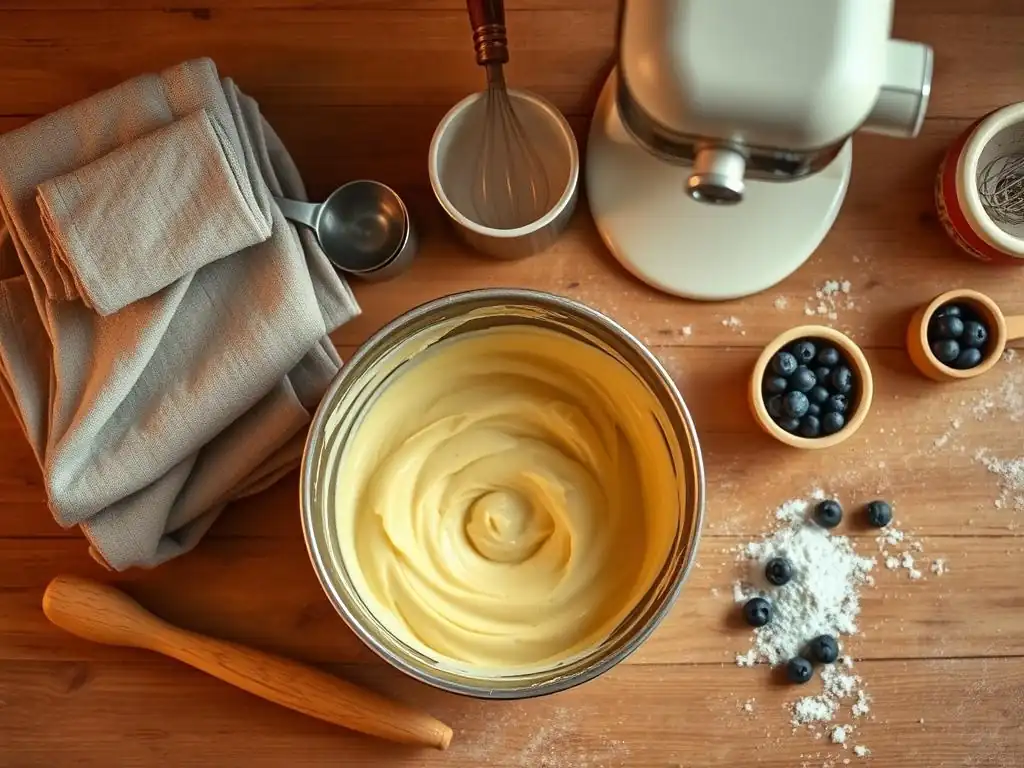
Welcome to BakeWithEase, your guide to confident baking! Are you ready to finally master the art of creating delicious treats without being overwhelmed? This week, we're diving into the essential baking tools beginner bakers really need to get started. Forget fancy gadgets – we'll show you the core equipment that will unlock a world of amazing recipes. Intrigued? Let's uncover the secrets to a perfectly stocked baking arsenal, and get you baking like a pro!
- The Core Essential Tools for Beginner Bakers
- Mastering Baking Basics with Essential Tools
- Why Focus on Core Essential Baking Tools for Beginners?
-
The Beginner Baker's Toolkit: Essential Tools List
- Measuring Cups and Spoons: Precision is Key in Baking
- Mixing Bowls: Selecting the Right Size and Material
- Spatulas: Essential for Mixing, Scraping, and Smoothing
- Baking Sheets: The Foundation for Cookies and More
- Cake Pans: Choosing the Right Size and Shape
- Whisk: Aerating Mixtures for Light and Fluffy Results
- Beyond the Basics: Recommended (But Not Essential) Tools
- Setting Up Your Baking Station: Essential Tool Organization
- Essential Baking Tools Maintenance and Care
- Mastering Baking with the Right Essential Tools
-
Frequently Asked Questions
- What are the absolute must-have tools for someone just starting to bake?
- I'm on a tight budget; what's the most cost-effective way to acquire these essential tools?
- Do I really need a stand mixer when I'm first learning?
- What type of baking sheet is best for beginners?
- Where can I find reliable recipes and instructions for using these essential tools?
- Final Reflection: Rediscovering the Joy of Simple Baking
- Unlock Your Inner Baker: Start Baking Today!
The Core Essential Tools for Beginner Bakers
Mastering Baking Basics with Essential Tools
Embarking on your baking journey is an exciting adventure! Many aspiring bakers feel overwhelmed by the sheer number of gadgets and specialized equipment available. However, the truth is, you don't need a professional kitchen setup to start creating delicious baked goods. Focusing on the core essential tools for beginner bakers is the most practical and effective way to build your skills and confidence without breaking the bank.
This article will guide you through the fundamental equipment that forms the backbone of successful baking, especially when you're just starting out. We'll explore why these specific items are considered indispensable and how they contribute to mastering basic baking techniques. By understanding the purpose of each tool, you'll be better equipped to choose quality pieces that will serve you well as you progress from simple cookies to more complex creations.
Why Focus on Core Essential Baking Tools for Beginners?
Stepping into the world of baking can seem daunting, with countless tools and gadgets filling kitchen supply stores and online shops. For beginner bakers, it's easy to get caught up in the allure of fancy equipment. However, focusing on the core essential baking tools for beginners is not just about saving money; it's about learning the fundamentals effectively. These basic tools teach you the hands-on techniques that are the foundation of all baking.
By starting with a streamlined set of essential baking tools, beginner bakers can concentrate on mastering critical skills like accurate measuring, proper mixing, and temperature control. This focused approach prevents confusion and allows you to build proficiency step-by-step. Once you've mastered the basics using your essential equipment, you'll be better positioned to understand which specialized tools might genuinely benefit your baking later on.
Building a Solid Foundation: Essential Tools vs. Fancy Gadgets
When starting out, the difference between an essential tool and a fancy gadget is often its versatility and necessity for fundamental tasks. Essential tools for beginner bakers are those required for nearly any recipe, such as measuring cups or a simple whisk. Fancy gadgets, like a specific pastry blender or a cookie press, are often specialized for particular recipes or techniques and aren't necessary for foundational learning.
For instance, while a stand mixer is a powerful and convenient tool, a beginner can learn to cream butter and sugar or whip egg whites perfectly well with a hand mixer or even just a sturdy whisk and mixing bowl. Mastering these techniques manually with essential tools gives you a deeper understanding of the process – how the ingredients change in texture and volume – which is invaluable knowledge. Learning to bake with basic hand tools first builds a strong intuition for dough and batter consistency, skills that are transferable even when you eventually upgrade to more automated equipment.
Simple Recipes, Essential Equipment
Many classic beginner baking recipes are designed specifically to be made with minimal equipment. Think of simple drop cookies, basic muffins, or a straightforward loaf cake. These recipes often rely on techniques like whisking wet ingredients, creaming butter and sugar by hand or with a basic mixer, and folding dry ingredients – all tasks easily accomplished with a core set of essential tools for beginner bakers.
For example, a standard chocolate chip cookie recipe typically requires dry and liquid measuring cups, measuring spoons, a mixing bowl, a spatula or wooden spoon for mixing, and a baking sheet. That's often fewer than six different types of essential tools. Successfully creating delicious results with this simple setup reinforces the idea that expensive gadgets aren't a prerequisite for great baking, encouraging beginners to keep practicing and improving their skills with the tools they have.
The Beginner Baker's Toolkit: Essential Tools List
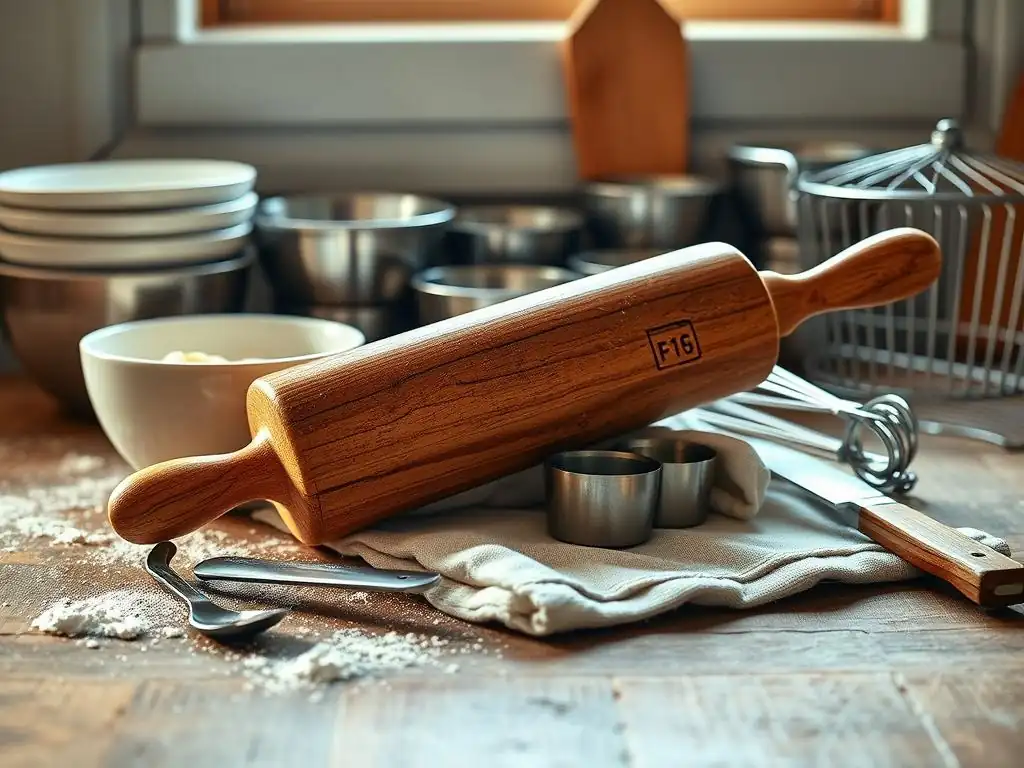
Equipping yourself with the right essential baking tools as a beginner doesn't require a massive investment. The key is to select versatile, functional items that will cover the vast majority of basic baking tasks. This curated list focuses on the absolute must-haves for anyone starting their baking journey.
Here is a breakdown of the core items that form the essential baking tools list for beginner bakers:
- Measuring Cups (Dry and Liquid)
- Measuring Spoons
- Mixing Bowls (Various Sizes)
- Spatulas (Rubber/Silicone and Offset)
- Baking Sheets
- Cake Pans (Round and/or Square)
- Whisk
Let's explore each of these essential tools in more detail.
Measuring Cups and Spoons: Precision is Key in Baking
Unlike cooking, where a pinch of this or a dash of that often works, baking is a science that relies heavily on precise ratios. Accurate measurement is perhaps the single most important skill for a beginner baker to master, and having reliable measuring cups and spoons is fundamental to achieving this accuracy.
You will need two types of measuring cups: dry and liquid. Dry measuring cups should be leveled off with a straight edge (like the back of a knife) after lightly spooning ingredients like flour or sugar into them; scooping directly can add up to 20-30% more ingredient by weight.
Liquid measuring cups, typically made of clear glass or plastic with a spout, should be read at eye level on a flat surface. A standard set of dry cups (1/4, 1/3, 1/2, 1 cup) and a set of measuring spoons (1/4, 1/2 teaspoon, 1 teaspoon, 1 tablespoon) are essential baking tools for beginner bakers, ensuring you follow recipes accurately every time.
Mixing Bowls: Selecting the Right Size and Material
Mixing bowls are the workhorses of the baking world, used for everything from whisking eggs to combining dry ingredients and mixing batters. Having a set of mixing bowls in various sizes is crucial because different tasks require different volumes and surface areas.
A good starting point is a set of three to four bowls, perhaps in sizes ranging from 1.5 liters up to 4 or 5 liters. Smaller bowls are useful for whisking a couple of eggs or melting butter, while larger bowls are necessary for mixing large batches of cookie dough or combining dry ingredients without making a mess. Materials like glass, stainless steel, and plastic are common.
Glass bowls offer stability and allow you to see the mixing process, stainless steel is lightweight and durable, and plastic is often the most affordable. Each has its pros and cons, but having a range of sizes is key for any beginner baker's essential tool collection.
Spatulas: Essential for Mixing, Scraping, and Smoothing
Spatulas are surprisingly versatile and indispensable tools in baking. They are used for scraping down the sides of bowls to ensure all ingredients are incorporated, folding delicate mixtures like whipped cream or egg whites, and smoothing batters or frostings.
Rubber Spatulas: Versatile and Heat-Resistant
Rubber or silicone spatulas are incredibly useful because they are flexible, allowing you to scrape every last bit of batter or dough from a bowl, minimizing waste. Silicone spatulas are particularly popular as they are heat-resistant, making them safe to use with warm ingredients or even for stirring custard over low heat.
Having one or two different sizes is beneficial – a smaller one for scraping jars or tight corners and a larger one for mixing batters. Their smooth, non-porous surface also makes them easy to clean. A good quality silicone spatula is an absolute essential baking tool for beginner bakers.
Offset Spatulas: Perfect for Frosting Cakes
While a flat spatula can work in a pinch, an offset spatula is specifically designed for spreading and smoothing frostings, glazes, and ganaches onto cakes and other baked goods. The offset handle keeps your hand clear of the surface, allowing for a smoother, more even finish.
Offset spatulas come in various sizes, but a medium-sized one (around 8-10 inches) is a great starting point for a beginner baker. The flat, flexible blade allows you to apply consistent pressure and create clean edges, significantly improving the presentation of your finished cakes and cupcakes. It's a simple tool that makes a big difference in finishing touches.
Baking sheets, also known as cookie sheets or sheet pans, are fundamental for baking everything from cookies and scones to roasting nuts or toasting coconut. They provide a flat surface for items that don't require the support of a pan.
Unrimmed baking sheets are ideal for cookies as they allow for easy sliding off, while rimmed baking sheets (often called half-sheet pans, typically around 18x13 inches) are more versatile as the rim prevents liquids or small items from falling off. Aluminum is a common material as it conducts heat evenly. Having at least one, preferably two, quality rimmed baking sheets is essential baking tools for beginner bakers, allowing you to bake multiple batches efficiently.
Cake Pans: Choosing the Right Size and Shape
If you plan on baking cakes (and who doesn't? ), having the right cake pans is necessary. The size and shape specified in a recipe are important because they affect baking time and how the cake rises.
Round Cake Pans: A Classic Choice
8 or 9-inch round cake pans are perhaps the most frequently used sizes for layer cakes. Many standard cake recipes are written for these dimensions. Having two identical round pans allows you to bake layers simultaneously, saving time and ensuring consistency.
These pans are versatile and can be used for simple single-layer cakes, elaborate tiered creations, or even deep-dish pizzas or quiches. Investing in a couple of sturdy, light-colored aluminum round pans is a wise choice for any beginner baker.
Square Cake Pans: For Cakes and Brownies
Square cake pans, typically 8x8 or 9x13 inches, are essential for baking brownies, bar cookies, sheet cakes, and some coffee cakes. The 9x13 inch size is particularly versatile for larger batches or family-sized desserts.
Like round pans, choose light-colored metal pans for even heat distribution and to prevent over-browning around the edges. An 8x8 inch pan is great for smaller batches, perfect for trying out a new recipe or baking for a smaller group. Both sizes represent key essential baking tools for beginner bakers interested in a variety of desserts.
Whisk: Aerating Mixtures for Light and Fluffy Results
A simple whisk is invaluable for incorporating air into ingredients, breaking up lumps, and combining mixtures smoothly. While a fork can work for small tasks, a proper whisk is far more effective for achieving desired textures.
A balloon whisk, with its many wires, is excellent for whipping egg whites or cream to create volume and lightness, crucial for meringues, soufflés, and light batters. A French whisk, with fewer, straighter wires, is good for combining dry ingredients or mixing sauces. For a beginner, a medium-sized balloon whisk is a versatile starting point among the essential baking tools. It allows you to achieve airy textures that are difficult to replicate with other tools.
Beyond the Basics: Recommended (But Not Essential) Tools
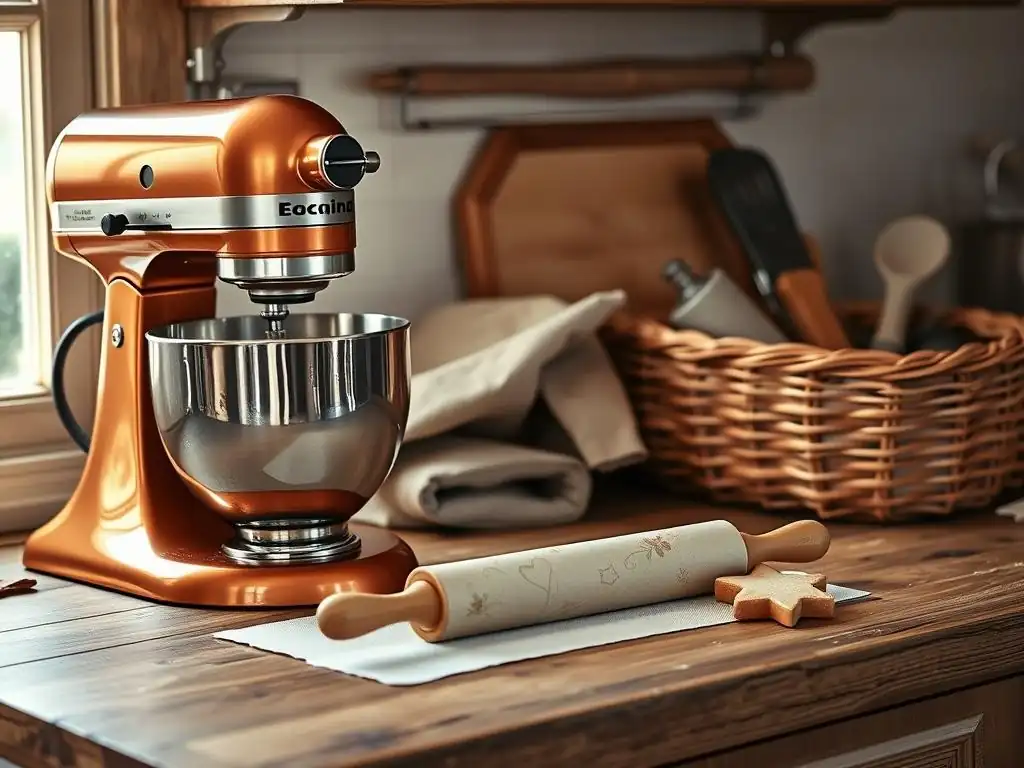
Once you've built your core collection of essential baking tools for beginner bakers and feel comfortable with basic techniques, you might consider adding a few items that, while not strictly necessary to start, can make certain tasks easier or improve results.
These tools are great additions when you're ready to expand your repertoire or optimize your process, but don't feel pressured to get them right away. Master the basics first!
Rolling Pin: For Precise Dough Rolling
A rolling pin is essential if you plan on making rolled cookies, pie crusts, or pastries. It allows you to evenly flatten dough to a consistent thickness, which is vital for uniform baking.
While you can improvise with a bottle, a proper rolling pin provides better control and leverage. Wooden rolling pins are traditional and effective, while marble ones stay cool, which is helpful for pastry dough. Adjustable rolling pins with rings are excellent for ensuring an exact thickness.
Cooling Rack: Preventing Soggy Bottoms
Moving baked goods like cookies or cakes to a cooling rack shortly after they come out of the oven is important. This allows air to circulate around the item, preventing steam from condensing underneath and making the bottom soggy.
A simple wire cooling rack is inexpensive and takes up little space. It ensures that your hard work results in perfectly textured treats, especially cookies, which can become soft on the bottom if left on a hot baking sheet.
Kitchen Scale: Ensuring Accuracy in Recipes
While measuring cups are listed as essential, a digital kitchen scale offers the highest level of accuracy, especially for ingredients like flour, sugar, and chocolate. Many professional bakers and serious amateurs prefer weighing ingredients because it's more consistent than volume measurement (e.g., how tightly flour is packed).
Using a scale can significantly improve the reliability of your baking results, particularly with sensitive recipes like bread or macarons. While not one of the absolute essential baking tools for beginner bakers, it's a tool many bakers quickly adopt as they seek greater consistency.
Setting Up Your Baking Station: Essential Tool Organization
Having the right essential baking tools for beginner bakers is one thing; keeping them organized and accessible is another. A well-organized baking space streamlines your process, saves time, and makes baking more enjoyable.
You don't need a dedicated baking room, but designating a specific area and having smart storage solutions for your essential tools can make a big difference in efficiency and flow when you're ready to bake.
Creating a Designated Baking Space
Choose an area in your kitchen that has enough counter space for mixing and preparing doughs or batters. Ideally, this space should be near your oven and storage for ingredients. Clearing this area before you start baking helps keep you focused and prevents clutter.
Even if it's just a section of your kitchen counter, designating it as your "baking station" helps mentally prepare you for the task and ensures you have the necessary room to work without interruption. Proximity to a power outlet is also helpful if you use a hand mixer.
Essential Tool Storage Solutions
Storing your essential baking tools so they are easy to find and access is key. Grouping similar tools together makes sense. For example, keep all your measuring cups and spoons in one drawer or container. Spatulas and whisks can be stored in a utensil crock on the counter or in a drawer divider.
Consider using drawer organizers for smaller items like measuring spoons or cookie cutters (when you get to that stage). Vertical dividers in cabinets can be useful for storing baking sheets and cooling racks efficiently, making them easy to grab without rummaging. Accessible storage for your core essential baking tools for beginner bakers saves time and reduces frustration.
Essential Baking Tools Maintenance and Care
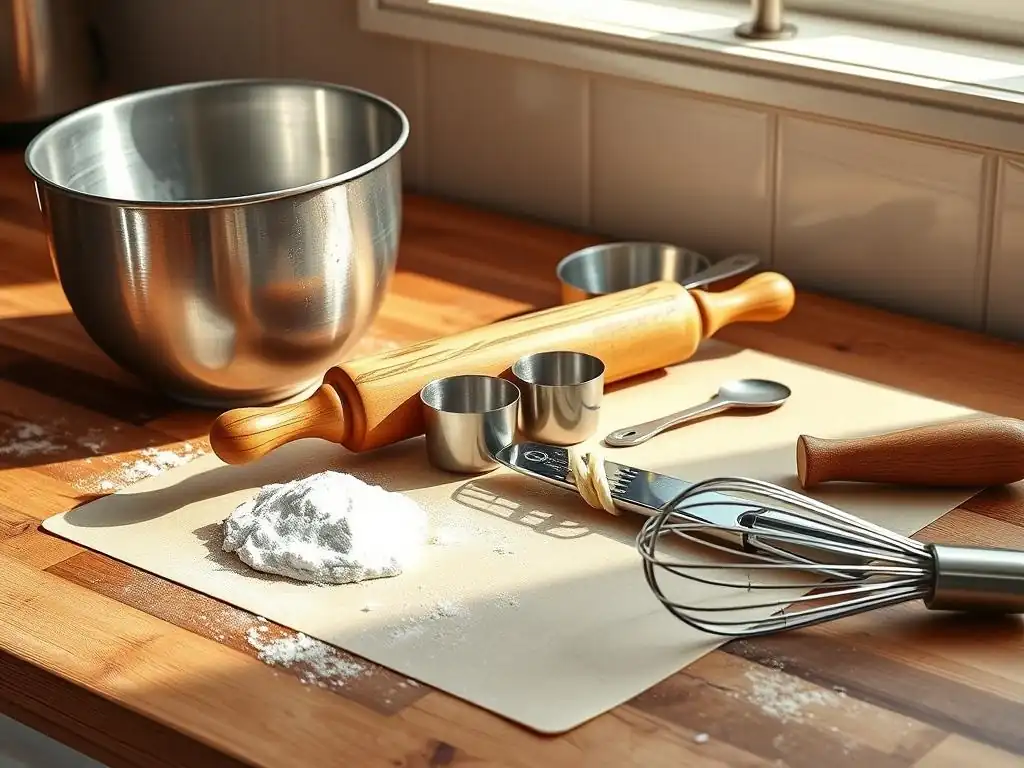
To ensure your essential baking tools for beginner bakers last and perform well, proper cleaning and maintenance are crucial. Taking a few moments to care for your equipment after each use will extend its lifespan and keep it in good condition for future baking adventures.
Neglecting cleaning can lead to residue buildup, affect the performance of your tools (like sticky measuring cups), and even pose hygienic issues. Simple care routines are all that's needed.
Cleaning and Storing Your Baking Tools Properly
Most essential baking tools like spatulas, whisks, and measuring cups and spoons can be washed with warm, soapy water shortly after use. Avoid letting batter or dough dry on them, as this makes cleaning much harder. Wooden tools like rolling pins should not be soaked; wipe them clean and dry thoroughly.
Baking sheets and cake pans often require more attention. Soak them if necessary to loosen baked-on residue, then scrub gently. Ensure all tools are completely dry before storing them to prevent rust or mildew, especially for metal items. Proper storage also means protecting them from damage, like stacking heavy items on delicate whisks.
Extending the Lifespan of Your Essential Baking Equipment
Investing in good quality essential baking tools for beginner bakers is a start, but proper care is what truly extends their lifespan. Avoid using abrasive scrubbers on non-stick surfaces, which can damage the coating. Handwashing is often recommended for items with wooden handles or specialized finishes.
Regularly inspect your tools for wear and tear. Replace items like cracked plastic measuring cups or spatulas with damaged blades. By cleaning and storing your essential baking tools properly, you ensure they remain functional and reliable, supporting your baking efforts for years to come.
Mastering Baking with the Right Essential Tools
Embarking on your baking journey with the right essential baking tools for beginner bakers sets you up for success. By focusing on these core pieces of equipment, you can learn fundamental techniques, build confidence, and create delicious treats without the clutter and cost of unnecessary gadgets.
Remember that baking is a skill that improves with practice. Your essential tools are your partners in this learning process, helping you execute recipes accurately and efficiently.
Start Small, Expand Later: Focus on Essential Tools First
The most practical approach for beginner bakers is to acquire the core essential tools first and get comfortable using them. Don't feel pressured to buy every specialized pan or gadget you see. Master basic recipes using your limited, versatile toolkit.
As you gain experience and find yourself frequently needing a specific tool for recipes you enjoy, then consider adding it to your collection. This gradual approach keeps your kitchen manageable and ensures that every tool you own serves a real purpose in your baking endeavors.
Investing in Quality: Prioritizing Durability and Functionality
When choosing your essential baking tools for beginner bakers, prioritize quality and functionality over the lowest price. A sturdy set of measuring cups, a heat-resistant silicone spatula, and a reliable baking sheet will perform better and last longer than cheap alternatives.
While you don't need professional-grade equipment, opting for well-made tools from reputable brands ensures accuracy (especially for measuring tools) and durability. A slightly higher initial investment in quality essential tools pays off in the long run through consistent performance and longevity.
Essential Baking Tools and Recipes
Ultimately, the best way to utilize your essential baking tools as a beginner baker is to put them to use with simple, reliable recipes. Start with recipes that explicitly call for the tools you have, like basic muffins, sugar cookies, or a simple loaf of quick bread.
As you become more comfortable, gradually tackle slightly more complex recipes. Your essential baking tools will be your constant companions, helping you measure, mix, and bake your way to becoming a more confident and skilled baker. Embrace the process, learn from each bake, and enjoy the delicious results your essential toolkit helps you create!
Frequently Asked Questions
What are the absolute must-have tools for someone just starting to bake?
The essential baking tools for beginners include measuring cups and spoons for accurate ingredient proportions, mixing bowls for combining ingredients, and a baking sheet for cookies and other baked goods. These core essentials will get you started.
I'm on a tight budget; what's the most cost-effective way to acquire these essential tools?
Consider purchasing basic sets of measuring cups/spoons and mixing bowls rather than individual pieces. Look for sales and discounts at stores that sell kitchen essentials.
Do I really need a stand mixer when I'm first learning?
No, a stand mixer is not a necessity for beginners. Many recipes can be easily made with hand mixing using a whisk or spatula. Focus on mastering basic techniques first.
What type of baking sheet is best for beginners?
A light-colored aluminum baking sheet is a good starting point. Avoid dark-colored sheets, as they can cause the bottoms of baked goods to brown too quickly. Consider one with rolled edges for durability.
Where can I find reliable recipes and instructions for using these essential tools?
BakeWithEase.com is a great resource! Look for recipes specifically designed for beginners, focusing on simple steps and easy-to-find ingredients.
Final Reflection: Rediscovering the Joy of Simple Baking
The pursuit of perfect pastries shouldn't overshadow the fundamental pleasure of baking itself. In a world saturated with high-tech kitchen gadgets promising effortless baking, we've explored the core essentials that truly matter for beginner bakers. This isn't about limiting creativity; it's about empowering you to confidently navigate the world of baking with a smaller, more manageable, and ultimately more fulfilling toolkit.
The enduring appeal of baking lies not in the complexity of the equipment, but in the simple act of creation. It's about the warmth of the oven, the satisfying knead of dough, and the aroma that fills your kitchen. These fundamental experiences are often lost in the pursuit of the latest gadget. As Julia Child wisely said, Find something you're passionate about and keep tremendously interested in it.
For me, that passion lies in the foundational elements of baking, and I hope this article has helped you discover that same joy in the simplicity of essential tools.
Now, I invite you to consider your own baking journey. What truly matters to you? Do you find yourself drawn to the latest technology, or do you appreciate the elegance of a well-worn wooden spoon? Take a moment to reflect on your approach to baking. Embrace the simplicity, focus on mastering the fundamentals, and discover the profound satisfaction that comes from creating delicious treats with the core tools that truly matter. The journey of a thousand cakes begins with a single, perfectly mixed bowl.
Unlock Your Inner Baker: Start Baking Today!
Thanks for taking the time to explore the essentials of baking! You've just unlocked the secrets to simpler, more delicious baking without the fancy gadgets. Now it's time to put your newfound knowledge into action.
Here's how to get started:
- Begin with your first recipe: Choose one recipe from the article that excites you and gather the core ingredients. Don't get overwhelmed; you've got this!
- Share your baking journey: Snap a picture of your baking progress and post it on social media using #BakeWithEase – we'd love to see your creations!
- Explore our other beginner-friendly guides: Find more tips and tricks on BakeWithEase.com to expand your baking skills. We've got plenty more to share.
What simple recipe are you most excited to try first? Let us know in the comments below!