
The Bread Pricing Puzzle: How to Value Your Loaves Fairly


Welcome to BakeWithEase, your trusted guide in the delightful world of baking! Ever wondered how to fairly price your artisan bread, ensuring both a worthwhile profit and happy customers? Today, we delve into the bread pricing puzzle, offering practical tips and strategies to help you confidently value your loaves. Discover the secrets to success in your home baking business – your journey starts here!
- Understanding the Artisan Bread Pricing Challenge
- Factors Influencing Artisan Bread Prices
- Methods for Pricing Artisan Bread
- Practical Steps to Determine Your Bread Price
- Tools and Resources for Bread Pricing
- Tips for Justifying Your Artisan Bread Price
- Conclusion: Finding the Sweet Spot for Profitable Bread Sales
-
Frequently Asked Questions
- How do I determine the cost of ingredients for my artisan bread?
- Besides ingredients, what other costs should I consider when pricing my artisan bread?
- What is a good starting point for setting a price for my artisan bread?
- How do I account for the unique value of artisan bread compared to mass-produced bread?
- How often should I re-evaluate my artisan bread prices?
- Final Reflection: The Enduring Value of Artisan Bread
- Unlock Your Baking Business's True Potential!
Understanding the Artisan Bread Pricing Challenge
Navigating the world of home baking and turning it into a thriving business requires more than just perfecting your sourdough starter. One of the most critical, and often perplexing, aspects is figuring out how to price artisan bread fairly and profitably. It's a delicate balance between covering your costs, valuing your skill, and ensuring your customers see the value in your handcrafted loaves. Getting this right is key to sustainable growth.
Pricing homemade bread isn't a simple calculation. It involves understanding the true cost of your product, the value you bring, and the market you operate in. Many home bakers underestimate the complexity, leading to prices that are either too low to be sustainable or too high to attract customers. This section will explore the nuances of pricing your delicious creations effectively.
Why Pricing Artisan Bread is More Than Just Cost Plus Markup
Simply adding a standard markup to your ingredient cost might work for mass-produced goods, but it falls short when you're trying to figure out how to price artisan bread. Artisan bread is defined by quality ingredients, time-intensive processes, and the baker's skill. These elements contribute significantly to the value proposition, which a simple cost-plus model often ignores.
Consider a sourdough loaf: it might use just flour, water, and salt, but the process involves days of fermentation, multiple folds, and careful baking. The cost of ingredients might be relatively low – perhaps \$0.50 to \$1.00 per loaf in raw materials depending on flour type. However, the labor, the energy used, and the expertise required to produce a perfect crumb and crust are substantial. Pricing it at \$2.00 just because ingredients cost \$1.00 would dramatically undervalue your effort and the quality you deliver.
Common Mistakes in Pricing Homemade Bread
One of the most frequent errors when deciding how to price artisan bread is underestimating labor costs. Many home bakers fail to pay themselves a fair wage for the hours spent mixing, kneading, proofing, and baking. If a loaf takes 4 hours of active and passive time (including fermentation time where you might be doing other things, but the process is ongoing and requires monitoring or intervention), and you don't factor in your time, you're essentially working for free.
A realistic labor cost, even at a modest \$15/hour, adds \$60 to the cost equation before considering other factors – though this time is spread across multiple loaves in a batch. A better approach is to calculate the active labor time per batch and the total time the batch occupies your equipment or space, then divide the labor cost per batch by the number of loaves.
Another common pitfall is neglecting overhead costs. It's easy to track flour and yeast, but what about the electricity bill from running the oven at 450°F for an hour? Or the cost of parchment paper, cooling racks, mixing bowls, and even the wear and tear on your stand mixer? These seemingly small costs add up. Failing to include a portion of your utility bills, equipment depreciation, or even the space your baking operation occupies means your price isn't truly covering all expenses, eroding potential profit margins necessary for a sustainable home baking business.
Factors Influencing Artisan Bread Prices
Determining the ideal price for your artisan bread involves a careful analysis of several key factors. It's not just about what you spend, but also about the value you create and the market you operate within. Understanding these elements is crucial for anyone learning how to price artisan bread effectively.
From the quality and cost of your ingredients to the time you invest and the competitive landscape, each factor plays a significant role. Let's break down the components that contribute to the final price tag on your delicious loaves.
Ingredient Costs: Calculating the True Cost of Your Bread
The foundation of any bread price calculation is the cost of the raw materials. While seemingly straightforward, accurately tracking ingredient costs requires attention to detail, especially when buying in bulk or using specialty flours. This is the first step in understanding how to price artisan bread from a cost perspective.
You need to know exactly how much of each ingredient goes into a single loaf or a standard batch, and what that quantity costs you. This involves breaking down bulk purchase prices into per-unit costs (per gram, per ounce, etc.) and then calculating the total ingredient cost for one unit of your final product.
Tracking Flour Costs for Accurate Bread Pricing
Flour is typically the most significant ingredient cost in bread. The price of flour varies wildly based on type (all-purpose, bread flour, whole wheat, rye, specialty grains), quality (organic, locally sourced), and purchase quantity (small bag vs. 50lb sack). To accurately track this, weigh the flour used in your recipe batch.
If a recipe uses 1000g of flour and you buy a 2kg bag for \$5.00, the cost per gram is \$5.00 / 2000g = \$0.0025/g. The flour cost for that batch is 1000g * \$0.0025/g = \$2.50. If the batch yields two loaves, the flour cost per loaf is \$1.25.
Maintain a simple spreadsheet or notebook to record purchase dates, quantities, and costs for your flours. When you develop a new recipe or adjust an old one, recalculate the flour cost based on the new proportions and current market prices. Fluctuations in flour prices can impact your profitability, so periodic review is essential for accurate bread pricing.
Factoring in Yeast, Salt, and Other Ingredient Expenses
Beyond flour, you must account for the cost of yeast (active dry, instant, fresh, or sourdough starter maintenance costs), salt, water (though usually negligible unless using filtered/bottled), and any additions like seeds, nuts, cheese, or herbs. While the cost of yeast and salt per loaf is often small, it's not zero. If a batch uses 7g of instant yeast from a \$4.00 pack containing 100g, the yeast cost is (7g / 100g) * \$4.00 = \$0.28 for the batch.
For sourdough, the cost isn't in buying yeast, but in the flour and water used to maintain the starter. Estimate the weekly or monthly cost of feeding your starter and allocate a portion of that cost to each batch of sourdough baked. Similarly, accurately weigh and cost any 'extras'. If you add 50g of walnuts costing \$0.50 per 100g, that's an additional \$0.25 per loaf right there. Summing up all these ingredient costs gives you the total direct material cost per loaf.
Labor Costs: Valuing Your Time and Skill
Your time and skill are invaluable components of artisan bread making. Unlike a factory, your hands shape the dough, your experience dictates proofing times, and your judgment ensures a perfect bake. Failing to assign a cost to your labor means you're not capturing the true expense of producing your bread. This is a critical, often overlooked, element when figuring out how to price artisan bread sustainably.
Calculating labor cost isn't just about the minutes spent kneading. It includes all the time invested from planning and ingredient prep to mixing, shaping, proofing, baking, and even cleaning up afterward. Your unique skill set, developed through practice and learning, also deserves compensation.
How Much is Your Baking Time Worth?
Determining an hourly rate for your baking time can feel awkward, but it's necessary for a business. Think about what you would need to earn hourly if this were your full-time job, or what a skilled baker earns in your area. Even if you're just starting, assign a reasonable hourly rate, perhaps starting near minimum wage for your location (e.g., \$12-\$15/hour) and increasing it as your skills and efficiency grow. This rate is what you pay yourself from the business's revenue.
Track the active time spent on a batch of bread. This includes measuring ingredients, mixing, kneading (or folding), shaping, and loading/unloading the oven. Let's say a batch yielding 4 loaves takes 1 hour of active time. At \$15/hour, the labor cost for the batch is \$15.00, or \$3.75 per loaf. Don't forget passive time that still requires your presence or monitoring, like the final proof – factor this in at a reduced rate or as part of your overall time commitment.
Considering Time Spent on Mixing, Proofing, and Baking
Break down the process to understand the time investment. Mixing might take 15-20 minutes. Shaping might take 10-15 minutes per loaf or batch. The final proof could be 1-4 hours, requiring occasional checks. Baking typically takes 30-50 minutes. While the long fermentation of sourdough (8-24 hours) is mostly passive, it still ties up equipment (bowls, proofing baskets) and requires initial setup and final handling.
Calculate the total time your direct involvement is required for one batch. If a batch producing 4 loaves requires 45 minutes of active work (mixing, shaping, loading) and 3 hours where you need to be available for checking/handling (proofing, cooling), you might calculate 45 minutes at your full rate and 3 hours at a reduced rate (e.g., \$5/hour) to account for the passive nature. This detailed approach provides a more accurate labor cost per loaf.
Overhead costs are the indirect expenses necessary to run your baking operation that aren't tied to a specific loaf. These are often the 'hidden' costs that home bakers overlook when calculating how to price artisan bread, but they are essential for a true picture of profitability.
These costs include utilities, equipment maintenance, supplies not directly in the bread (like parchment paper), and even administrative costs like permits or marketing materials. Accurately allocating these costs per loaf is crucial for long-term sustainability.
Electricity and Oven Usage for Bread Making
Baking bread requires significant energy, primarily for heating the oven to high temperatures. The wattage of your oven and the duration it runs at high heat contribute directly to your electricity bill. To estimate this cost per loaf, you need to know your electricity rate (cents per kWh) and your oven's power consumption.
A typical electric oven might use 2-4 kWh per hour when preheating and baking at high temperatures. If your rate is \$0.15/kWh and you bake for 1 hour per batch (including preheating), the electricity cost is 1 hour * 3 kWh * \$0.15/kWh = \$0.45 per batch.
If that batch yields 4 loaves, the electricity cost per loaf is \$0.11. This might seem small, but across many loaves, it adds up. Consider also the cost of gas if you use a gas oven, or propane if using a dedicated outdoor oven. Don't let these utility costs eat into your profit margin unnoticed.
Packaging and Marketing Costs for Artisan Bread
Once your bread is baked, you need to package it. The cost of bread bags, labels, twist ties, or paper wraps must be factored in. If a bread bag costs \$0.10 and a label costs \$0.05, that's \$0.15 per loaf for basic packaging. If you add branded stickers, care instructions, or decorative elements, these costs increase.
Marketing expenses also fall under overhead. This could include the cost of business cards, website hosting (if you have one), social media advertising (even small amounts), or samples given away. If you spend \$50 a month on marketing and bake 100 loaves, that's \$0.50 per loaf in marketing overhead. Keep track of all these small expenses and divide the total monthly overhead by the number of loaves baked in that month to get an average overhead cost per loaf.
Market Research: Knowing Your Customer and Competition
Understanding your market is just as important as knowing your costs when determining how to price artisan bread. What are customers willing to pay in your area? What are your competitors charging for similar products? This research helps you position your bread competitively and attract the right customers.
Market research provides context for your cost calculations. It helps you understand if your calculated price is feasible in your local economy and where your bread fits within the existing market landscape – are you a premium product, a mid-range option, or a budget-friendly choice?
Analyzing Local Bread Prices and Trends
Visit local bakeries, farmers' markets, and grocery stores that sell artisan bread. Note the prices for different types and sizes of loaves. A standard sourdough loaf might sell for \$5-\$8 at a farmers' market, while a specialty seeded rye could go for \$7-\$10. Observe trends: are certain types of bread more popular? Are customers willing to pay more for organic or locally sourced ingredients?
Look beyond just the price tag. What is included? Is it packaged nicely? Is there a strong brand story? This helps you understand the perceived value of different offerings. Create a simple comparison chart of competitor prices for similar products. This data is invaluable when deciding how to price artisan bread to be competitive yet profitable.
Identifying Your Target Market and Their Willingness to Pay
Who are you selling to? Are they customers who prioritize convenience and price, or those who value quality, craftsmanship, and unique flavors? Your target market's demographics, income level, and values significantly influence their willingness to pay. Customers who frequent farmers' markets or specialty food stores are often willing to pay a premium for high-quality, handmade goods compared to those who primarily shop at large supermarkets.
Consider if your bread caters to specific needs (e.g., gluten-sensitive options, specific grain types) or offers unique benefits (e.g., long fermentation for better digestion, local ingredients). These factors can justify a higher price point for customers who specifically seek them out. Understanding your ideal customer helps you align your pricing strategy with their expectations and perceived value.
Methods for Pricing Artisan Bread
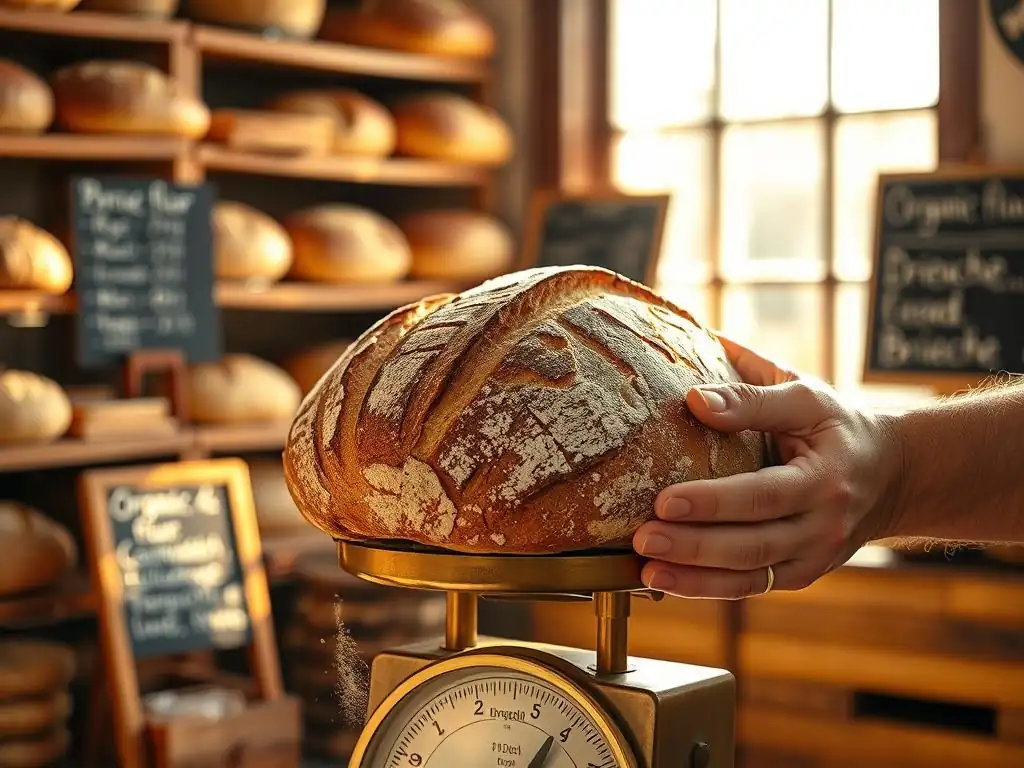
With your costs calculated and market research in hand, you can explore different pricing methods to determine the best approach for your artisan bread business. No single method is perfect for everyone, and many bakers use a combination of approaches. The goal is to find a strategy that ensures profitability while appealing to your target market.
Understanding these methods provides a framework for setting your prices confidently. Each method offers a different perspective, from focusing purely on costs to emphasizing the value you provide or reacting to market conditions.
Cost-Plus Pricing: A Simple Starting Point
Cost-plus pricing is perhaps the most straightforward method and a good baseline for anyone learning how to price artisan bread. It involves calculating the total cost to produce one loaf and then adding a desired profit margin.
While simple, remember the earlier point: this method works best when you have accurately captured all costs – ingredients, labor, and overhead. It ensures that, at a minimum, your price covers expenses and contributes to profit.
Calculating Total Costs per Loaf
Sum up your ingredient cost per loaf, your allocated labor cost per loaf, and your allocated overhead cost per loaf.
- Ingredient Cost: \$1.50
- Labor Cost: \$3.75
- Overhead Cost: \$0.75
- Total Cost per Loaf = \$1.50 + \$3.75 + \$0.75 = \$6.00
This \$6.00 represents the absolute minimum you can charge just to break even on that particular loaf. Selling below this price means you are losing money on every loaf sold.
Adding a Profit Margin to Determine Selling Price
Once you have the total cost, you add a desired profit margin. This margin is the percentage or amount of money you want to keep as profit after all costs are covered. Profit is essential for reinvesting in your business (new equipment, better ingredients, marketing) and for your own income beyond the labor cost you paid yourself. A common starting point for a profit margin might be 30-50% of the cost, or even 100% or more depending on the market and perceived value.
If your total cost is \$6.00 and you aim for a 50% profit margin on the cost:
- Profit Amount = 50% of \$6.00 = \$3.00
- Selling Price = Total Cost + Profit Amount = \$6.00 + \$3.00 = \$9.00
Alternatively, you might aim for a certain profit percentage based on the selling price. If you want a 30% profit margin on the selling price, the formula is: Cost / (1 - Profit Margin Percentage).
- Selling Price = \$6.00 / (1 - 0.30) = \$6.00 / 0.70 = \$8.57.
Choose a margin that makes sense for your business goals and market position when deciding how to price artisan bread using this method.
Value-Based Pricing: Reflecting the Quality of Your Craft
Value-based pricing focuses on what the customer perceives your bread to be worth, rather than solely on your costs. This method is particularly relevant for artisan products where quality, unique characteristics, and the story behind the product significantly influence customer perception and willingness to pay. It's about capturing the premium value of your handcrafted goods.
This approach requires a deep understanding of your target market and the unique selling propositions of your bread. It allows you to potentially charge more than a simple cost-plus model would suggest, reflecting the superior quality and care that goes into each loaf.
Assessing the Perceived Value of Your Artisan Bread
What makes your bread special? Is it the use of rare heritage grains, a unique long fermentation process, the incorporation of local ingredients, or simply your reputation for producing consistently excellent loaves with perfect texture and flavor? These elements contribute to the perceived value. Customers are often willing to pay more for products they see as higher quality, healthier, more ethical (e.g., supporting a local baker), or simply more delicious and desirable than mass-produced alternatives.
Gather feedback from early customers. What do they love about your bread? What do they compare it to? Use this information to understand how your bread is perceived. A loaf made with 100% organic, stone-milled local flour and a 48-hour fermentation will likely be perceived as higher value than a loaf made with conventional flour and a quick rise, justifying a higher price point.
Pricing Based on Uniqueness and Superior Ingredients
If your bread uses premium ingredients that are more expensive than standard options (e.g., imported Italian flour vs. standard bread flour, organic seeds vs. conventional), or requires significantly more time and skill (e.g., complex shaping, multi-stage fermentation), these factors add to its uniqueness and justify a higher price. A pain de campagne made with a blend of high-quality organic flours and a natural levain could command a higher price than a basic white loaf.
Consider the example of a specialty loaf incorporating expensive additions like olives, sun-dried tomatoes, or artisanal cheese. The higher ingredient cost is obvious, but the value to the customer is in the unique flavor profile and the perception of a gourmet product. Price these specialty items higher to reflect both the increased cost and the enhanced value they offer compared to your standard loaves. This is key to understanding how to price artisan bread that stands out.
Competitive Pricing: Staying Relevant in the Market
Competitive pricing involves setting your prices based on what your competitors are charging for similar products. This method is crucial for ensuring your prices are in line with market expectations and for positioning yourself effectively within the local baking scene.
While you shouldn't only use competitive pricing (ignoring your costs is a recipe for disaster), it provides essential context. It helps you understand the price ceiling and floor for artisan bread in your area and decide where you want to position your brand – as a premium option, a value choice, or somewhere in the middle.
Researching Competitor Pricing Strategies
As mentioned earlier, actively research what local bakeries, farmers' market vendors, and specialty stores are charging for loaves comparable to yours in size, type (sourdough, yeasted, enriched doughs), and quality. Note not just the price, but also the weight of the loaf. A \$7 loaf might be 800g, while a \$6 loaf is only 600g, making the more expensive loaf cheaper per pound.
Look for patterns. Are certain types of bread consistently priced higher? Do established bakeries charge more than newer ones? How do prices differ between a downtown bakery and a suburban home baker selling at a local market? This research helps you understand the going rate and identify potential price points for your own bread.
Positioning Your Bread Within the Local Market Landscape
Based on your competitor research and your own costs and value proposition, decide where your bread fits. If your costs are high due to premium ingredients and your quality is exceptional, you might position yourself at the higher end of the market, aligning your prices with established artisanal bakeries. If you are focused on efficiency and using more standard ingredients while still producing quality bread, you might price yourself competitively with mid-range options or slightly below premium bakeries to attract value-conscious customers.
Your pricing strategy should reflect your brand identity. If you market yourself as a luxury product, low prices would undermine that image. If you emphasize affordability and accessibility, your prices should reflect that. Competitive analysis helps you find the right price range that is both viable for your business and appealing to your target market given the existing options. This strategic positioning is vital when determining how to price artisan bread for market success.
Psychological Pricing: Appealing to Customer Perception
Psychological pricing taps into consumer behavior and perception to make prices seem more attractive. While not a standalone method for determining your base price, it can be a useful tool for fine-tuning your pricing strategy once you have a solid understanding of your costs and market value.
These techniques are subtle but can influence purchasing decisions and potentially increase sales volume or perceived value without drastically changing your underlying price structure.
Using Charm Pricing
Charm pricing, or using prices ending in .99 or .95 (e.g., \$6.99 instead of \$7.00), is a classic psychological tactic. The idea is that customers focus on the left-most digit, perceiving \$6.99 as significantly cheaper than \$7.00, even though the difference is minimal. This can make your bread seem more affordable or like a better deal.
While effective in retail, its impact might vary in artisan markets where customers expect to pay a premium for quality and round numbers might feel more authentic or high-end. Test this in your market to see if it resonates with your customers or feels out of place for a handmade product. For instance, a \$7.50 price point might feel more appropriate for a high-quality loaf than \$7.49.
Bundling and Discounting Strategies for Bread Sales
Offering bundles (e.g., a loaf of bread and a small jar of jam for a set price) or discounts (e.g., "Buy 2 loaves, get \$1 off") can encourage customers to buy more, increasing your overall sales volume and potentially clearing inventory. Bundling can also increase the perceived value by offering convenience or a complementary product.
Be cautious with discounting. Frequent or deep discounts can devalue your product in the long run, training customers to only buy when on sale. Use discounts strategically, perhaps for specific events, loyal customers, or to move loaves at the end of a market day. When bundling, ensure the combined price is still profitable after accounting for the cost of all items in the bundle. These tactics add flexibility to how you price artisan bread sales.
Practical Steps to Determine Your Bread Price
Putting theory into practice involves a structured approach. Follow these steps to move from understanding the factors to setting a tangible price for your artisan loaves. This systematic process helps ensure you haven't missed any critical components.
This section outlines a clear workflow, guiding you through the necessary calculations and research to arrive at a well-informed pricing decision.
Step 1: Calculate Your Fixed Costs
Identify all costs that don't change based on how much you bake within a certain period. This might include monthly costs for website hosting, business insurance (if applicable), permit fees, or a portion of your home rent/mortgage if you've dedicated space solely to the business (be cautious with this if working from home – consult local regulations and tax advice). Let's say your total fixed costs are \$100 per month.
Step 2: Calculate Your Variable Costs
Determine the costs that change with each loaf or batch baked. This includes ingredients (flour, yeast, salt, additions), packaging, and direct energy usage per bake cycle. Use the methods described earlier to calculate the variable cost per loaf. Let's assume your variable cost per loaf is \$2.50 (ingredients + direct energy + packaging).
Step 3: Determine Your Desired Profit Margin
Decide what percentage of profit you want to make on each loaf or batch, either based on cost or selling price. This should be a realistic goal based on your business objectives and market research. Let's aim for a 40% profit margin based on the total cost.
Step 4: Research Competitor Pricing in Your Area
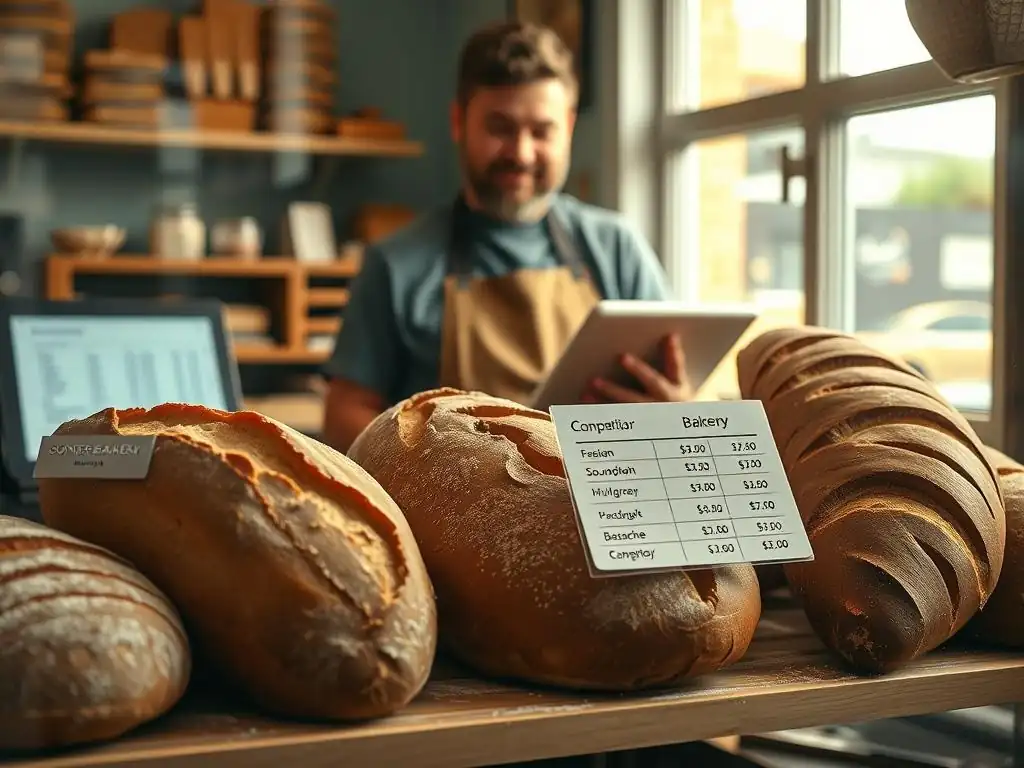
Gather data on what similar artisan loaves are selling for locally. Note the price range, common price points for specific types of bread, and the quality/size offered at those prices. Let's say similar sourdough loaves in your area sell for \$7.00 - \$9.00.
Step 5: Test Different Price Points and Gather Feedback
Based on your cost calculations, desired profit, and market research, propose a starting price. Using our examples:
- Total variable cost per loaf = \$2.50
- To cover fixed costs (\$100/month), estimate how many loaves you expect to sell. If you plan to sell 100 loaves a month, fixed cost per loaf = \$100 / 100 = \$1.00.
- Total cost per loaf (variable + allocated fixed) = \$2.50 + \$1.00 = \$3.50.
- Desired profit margin (40% of cost): 40% of \$3.50 = \$1.40.
- Calculated Price (Cost-Plus): \$3.50 + \$1.40 = \$4.90.
Wait, this price (\$4.90) seems low based on our market research (\$7.00 - \$9.00). This suggests either our cost calculation is missing something (like labor!) or our market can support a higher, value-based price. Let's revisit labor costs. If labor adds \$3.75 per loaf:
- Total cost per loaf (variable + allocated fixed + labor) = \$2.50 + \$1.00 + \$3.75 = \$7.25.
- Desired profit (40% of cost): 40% of \$7.25 = \$2.90.
- Calculated Price (Cost-Plus including labor): \$7.25 + \$2.90 = \$10.15.
Now the calculated price (\$10.15) is above the typical market range (\$7.00 - \$9.00). This indicates you might need to adjust your desired profit margin, find ways to reduce costs (e.g., buy ingredients in larger bulk), increase efficiency (reducing labor time per loaf), or position your bread as a premium product justifying the higher price.
Based on the market range of \$7.00 - \$9.00 and your cost of \$7.25, you might initially set a price of \$8.00 or \$8.50. This gives you a profit margin of \$0.75 or \$1.25 per loaf (\$8.00 - \$7.25 or \$8.50 - \$7.25), which is lower than the desired 40% but is competitive.
Test this price at a market or with a small group of customers. Get feedback not just on the bread, but on the price. Do customers express surprise (either that it's cheap or expensive)? Does the price seem to affect sales? Be prepared to adjust as you gather more information and refine your process.
Tools and Resources for Bread Pricing
Fortunately, you don't have to do all the calculations manually or guess blindly. Several tools and resources can help home bakers accurately determine costs and set profitable prices for their artisan bread. Leveraging these resources can simplify the process and provide greater confidence in your pricing decisions.
From simple spreadsheets to online calculators and local networking groups, these tools offer practical assistance in navigating the complexities of how to price artisan bread effectively.
Spreadsheet Templates for Cost Calculation
One of the most effective tools is a simple spreadsheet. You can create your own or find free templates online designed for food costing. These templates typically have columns for ingredients, quantity per recipe batch, unit of measure, cost per unit, and total cost per ingredient per batch. They can also include sections for labor hours and rate, overhead costs, and yield per batch (number of loaves).
Using a spreadsheet allows you to input your specific ingredient purchase costs and recipe details. It automatically calculates the cost per batch and, based on the number of loaves, the cost per loaf. You can easily adjust ingredient prices as they change or modify recipes and instantly see the impact on your costs. This provides a clear, data-driven foundation for setting your prices.
Online Calculators for Pricing Baked Goods
Numerous websites offer free online calculators specifically designed for pricing baked goods. You input your ingredient costs, labor time and rate, desired profit margin, and sometimes overhead estimates, and the calculator suggests a selling price.
While convenient, ensure the calculator allows you to input detailed costs (not just a lump sum) and differentiate between variable and fixed costs if possible. These calculators can be a quick way to get a ballpark figure or double-check your own calculations, but they are only as accurate as the data you feed them. Use them as a guide, not a definitive answer for how to price artisan bread, as they may not capture all the nuances of your specific operation.
Local Bakers' Associations and Networking Opportunities
Connecting with other home bakers or small bakery owners in your area can be an invaluable resource. Local bakers' associations, online forums, or even informal networking groups allow you to share experiences, discuss pricing challenges, and learn what others are charging and why.
While you shouldn't just copy someone else's price, understanding the common practices and price points in your local baking community provides crucial context. Experienced bakers can offer insights into typical costs, market expectations, and strategies for justifying prices. Learning from others who have navigated how to price artisan bread in your specific market can save you time and prevent common mistakes.
Tips for Justifying Your Artisan Bread Price

Once you've determined a fair and profitable price, you need to communicate the value of your bread to your customers. Artisan bread is often more expensive than supermarket alternatives, and customers need to understand why to feel comfortable with the price. Justifying your price is about highlighting the qualities that make your bread worth the investment.
This involves educating your customers about your process, ingredients, and passion. When customers understand the care and quality that go into each loaf, they are more likely to perceive the price as fair value.
Highlight the Quality of Your Ingredients
Be transparent about the ingredients you use. Do you use organic flour, stone-milled grains, local produce (for inclusions), or high-quality salt? Mentioning these specifics helps justify a higher price. Customers who care about quality and sourcing are often willing to pay a premium for superior ingredients.
For example, instead of just saying "flour, water, salt," you could describe your bread as "Made with organic, regionally-sourced heritage wheat flour, filtered water, and unrefined sea salt, naturally leavened." This language communicates quality and care, supporting your pricing strategy for your artisan bread.
Emphasize the Time and Skill Involved
Educate your customers about the artisan process. Explain that your sourdough takes 24 or 48 hours from start to finish, involving multiple steps of mixing, folding, and slow fermentation. Contrast this with commercial bread made in a few hours. Highlight that your loaves are shaped by hand, not machine.
Share photos or brief descriptions of your process on social media or on a small card included with the loaf. Helping customers understand the labor of love that goes into each loaf builds appreciation and justifies the price reflecting your time and skill. This is a key part of how to price artisan bread and communicate its value.
Offer Samples and Tastings
Let your bread speak for itself! Offering samples at markets or pickup points allows customers to taste the difference quality makes. A bite of your bread with its perfect crust, tender crumb, and complex flavor can immediately demonstrate its superiority over cheaper alternatives and justify the higher price point.
Tastings provide an opportunity to engage with customers, explain your process, and answer questions. This personal interaction builds a connection and reinforces the value of supporting a local artisan producer.
Build a Strong Brand Story
Your brand story is the narrative that connects you, your bread, and your customers. What inspired you to start baking? What are your values (e.g., sustainability, supporting local farmers, perfecting traditional techniques)? Sharing your passion and the "why" behind your baking creates an emotional connection with customers.
A compelling brand story helps customers see your bread as more than just a commodity; it's a product with a history, values, and a personal touch. This intangible value can significantly influence customer perception and their willingness to pay a premium for your unique artisan bread.
Conclusion: Finding the Sweet Spot for Profitable Bread Sales
Determining how to price artisan bread is a multifaceted challenge, but it's fundamental to building a sustainable home baking business. It requires diligent cost tracking, a realistic valuation of your time and skill, an understanding of your market, and a clear communication of your product's value. There's no single magic formula, but by carefully considering all the factors – ingredients, labor, overhead, market prices, and perceived value – you can arrive at a price that works for both you and your customers.
Pricing isn't a one-time task. The market changes, ingredient costs fluctuate, and your efficiency improves as you gain experience. Regularly reviewing and adjusting your pricing strategy is essential for long-term success.
Balancing Profitability and Customer Value
The sweet spot in pricing lies where your price covers all your costs, allows for a reasonable profit, and is perceived as fair value by your target customers. If your price is too low, you won't be profitable, and your business won't last. If it's too high, customers won't buy, no matter how good your bread is.
Achieving this balance requires ongoing attention to your costs, consistent quality in your baking, and continuous engagement with your customers and the market. Listen to feedback, watch sales trends, and be prepared to make informed adjustments.
Continuously Evaluating and Adjusting Your Pricing Strategy
Your journey in how to price artisan bread doesn't end after setting your initial price. Make it a practice to revisit your cost calculations periodically – perhaps every quarter or when ingredient prices change significantly. Track your sales volume and revenue to see if you are meeting your profit goals.
Pay attention to competitor activity and changes in customer demand. Are new bakeries opening? Are customers asking for different types of bread or expressing concerns about price? Use this information to evaluate if your current pricing strategy is still effective. Don't be afraid to test slightly different price points or introduce new products at different price levels. Flexible and informed pricing is key to navigating the bread pricing puzzle and ensuring your home baking business thrives.
Frequently Asked Questions
How do I determine the cost of ingredients for my artisan bread?
Carefully track all ingredients used in each loaf, including flour, water, salt, and any add-ins. Use the unit cost of each ingredient and calculate the total cost for the recipe.
Besides ingredients, what other costs should I consider when pricing my artisan bread?
You must factor in overhead expenses like rent, utilities, and equipment depreciation. Also, calculate the cost of labor, including your own time.
What is a good starting point for setting a price for my artisan bread?
A common starting point is to multiply your total cost (ingredients, overhead, and labor) by a factor of 2 or 3. This provides a basic margin for profit and unforeseen expenses.
How do I account for the unique value of artisan bread compared to mass-produced bread?
Highlight the quality of ingredients, unique flavors, and handmade process in your marketing. Customers are often willing to pay a premium for artisan bread due to these factors.
How often should I re-evaluate my artisan bread prices?
Regularly review your prices, especially when ingredient costs fluctuate or you improve your baking skills. Market research can help you understand what customers are willing to pay.
Final Reflection: The Enduring Value of Artisan Bread
The art of baking artisan bread is more than just a craft; it's a reflection of our relationship with food, community, and fair economic practices. In a world increasingly dominated by mass production and homogenized tastes, the ability to price artisan bread fairly becomes a crucial element in sustaining both the baker and the appreciation for quality ingredients and skilled labor. This article has explored the complexities of this pricing puzzle, highlighting the need to balance cost of goods, time investment, and the inherent value of handcrafted goods.
The journey of understanding fair pricing for artisan bread is a continuous one, deeply intertwined with the evolving cultural landscape of food. We see a growing appreciation for locally sourced ingredients and the stories behind our food, a shift that directly benefits artisan bakers. This movement towards conscious consumption underscores the importance of transparent pricing that reflects the dedication and skill involved. Food is symbolic of love when words are inadequate.
– Alan D. Wolfelt. This quote speaks to the emotional connection we have with food, a connection that artisan bread, with its unique character and story, powerfully embodies. It's a connection that deserves to be valued appropriately.
Now, consider your own relationship with food and the artisans who create it. What does fair pricing mean to you? How can you support local bakers and the preservation of traditional techniques?
Take a moment to reflect on the value you place on quality, craftsmanship, and the human element in food production. By understanding the complexities of bread pricing, you become a more informed consumer, empowered to make choices that support both your own well-being and the thriving of artisan bakers in your community. Let's work together to ensure that the delicious aroma of freshly baked bread continues to fill our lives and our communities for generations to come.
Unlock Your Baking Business's True Potential!
Thanks for taking the time to delve into the often-overlooked world of bread pricing! You've now armed yourself with the knowledge to create a fair and profitable pricing strategy. Ready to put your new skills to the test?
- Calculate your ideal bread price using our recommended formula: Download our free pricing worksheet (not available, this is a sample CTA) to ensure you're earning what you deserve! This will help you immediately apply what you've learned.
- Share your biggest bread pricing challenge in the comments below: Let's help each other navigate this complex world of cost and value! Your experience might just inspire another baker.
- Explore other articles on BakeWithEase: Dive deeper into topics like ingredient sourcing and efficient baking techniques to further optimize your business!
What unique ingredient or technique could you highlight to justify a premium price for your bread?