
Pricing Cakes: From Simple Rounds to Elaborate Creations (A Pricing Guide)

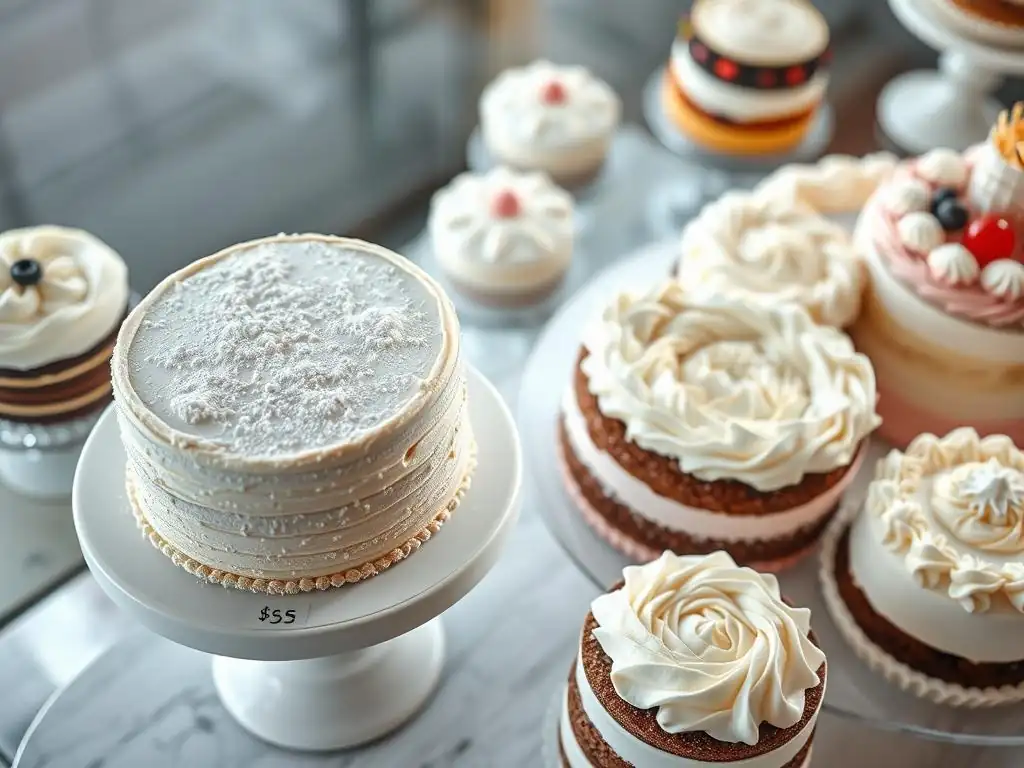
Welcome to BakeWithEase, where transforming flour and sugar into edible masterpieces becomes delightfully simple! Are you ready to turn your passion for baking into a profitable venture? This comprehensive cake pricing guide is your essential starting point. Discover the secrets to accurately pricing your creations, from simple round cakes to elaborate, show-stopping designs. Intrigued? Let's unlock the formula for cake pricing success and help you build a thriving home baking business!
- Cake Pricing Guide for Beginners: Mastering the Art of Cake Costing
- Understanding the Fundamentals of Cake Pricing
- Cake Pricing Strategies for Home Bakers
- Step-by-Step Guide to Calculate Cake Prices
- Cake Pricing Formulas: A Practical Approach
- Pricing Examples: From Basic to Elaborate Cakes
- Common Mistakes to Avoid in Cake Pricing
- Tools and Resources for Cake Pricing
- Tips for Justifying Your Cake Prices to Customers
- Cake Pricing FAQ: Addressing Common Questions
- Conclusion: Confidently Price Your Cakes and Grow Your Baking Business
-
Frequently Asked Questions
- How does BakeWithEase recommend beginners determine the base cost for their cakes?
- What role does labor play in pricing cakes, according to BakeWithEase?
- Does BakeWithEase offer guidance on adjusting prices for different cake complexities?
- What advice does BakeWithEase provide for researching competitor pricing?
- How does BakeWithEase suggest handling the cost of specialized ingredients or equipment?
- Final Reflection: The Sweet Science of Pricing Your Cake Dreams
- Unlock Your Cake Pricing Power!
Cake Pricing Guide for Beginners: Mastering the Art of Cake Costing
Starting a home baking business, even if it's just for friends and family initially, brings the exciting challenge of setting prices for your delicious creations. For many new bakers, figuring out how much to charge can feel like a daunting task.
This cake pricing guide for beginners is designed to demystify the process, helping you confidently determine prices that reflect the quality of your work, cover your expenses, and allow you to make a reasonable profit. It's about more than just guessing; it's about understanding the value you provide and the costs involved in turning simple ingredients into edible art.
Whether you're baking classic vanilla rounds, intricate sculpted cakes, or delicate cupcakes, a solid understanding of pricing principles is crucial for sustainability. Many home bakers unfortunately undervalue their time and skill, leading to burnout and a business that isn't truly profitable.
By following a structured approach, you can ensure that every cake you sell contributes positively to your baking venture, allowing you to reinvest in better ingredients, equipment, or simply enjoy the rewards of your hard work. This guide will walk you through the essential steps, from calculating costs to choosing a pricing strategy, making cake pricing accessible for beginners.
Understanding the Fundamentals of Cake Pricing
Before you can even think about putting a price tag on your cakes, you need to understand the fundamental components that contribute to the final cost. This isn't just about adding up ingredient prices; it's a comprehensive look at everything that goes into creating your baked goods, from the moment you purchase supplies to the moment the cake is handed over to the customer. A thorough understanding of these fundamentals is the bedrock of any effective cake pricing guide beginners can rely on.
Ignoring any one of these elements means you're likely underpricing your cakes, potentially operating at a loss without even realizing it. Think of it like building a house – you need a strong foundation before you start adding walls and a roof. In cake pricing, that foundation is a clear picture of all your costs. Let's break down the different types of costs you need to consider when developing your cake pricing strategy.
Identifying Your Cake Baking Costs: A Crucial First Step
The very first step in any reliable cake pricing guide for beginners is accurately identifying all the costs associated with baking. This goes beyond just the eggs and flour in the mixing bowl. It includes everything from the electricity used to power your oven to the ribbon you tie around the cake box. Many new bakers overlook these smaller, seemingly insignificant costs, but they add up quickly and can significantly impact your profitability.
To get started, create a detailed list of every single item and service you use in your baking process. This might involve tracking expenses for a few typical baking projects to get a realistic average. For instance, don't just note the cost of a bag of flour; figure out how much flour is used per cake and assign that fraction of the bag's cost to the cake. This granular approach provides a much clearer picture of the true cost of each individual item you create.
Direct Costs: Ingredients, Packaging, and Cake Boards
Direct costs are those expenses that can be directly traced to a specific cake. The most obvious direct cost is, of course, your ingredients. This includes flour, sugar, eggs, butter, milk, flavorings, food coloring, sprinkles, and any special components like fresh fruit or premium chocolate. It's vital to track the cost of the amount of each ingredient used in a particular recipe, not just the cost of the package you bought. For example, a standard 8-inch round cake might use about $2.50 worth of basic ingredients like flour, sugar, eggs, and butter, plus maybe $1.00 for frosting ingredients.
Beyond the ingredients that go into the cake, you also have direct costs for presenting and delivering it. This includes the cake board or drum it sits on (which might cost $0.50 to $2.00 depending on size and material), the cake box ($0.75 to $3.00+ depending on size and style), and any specific packaging elements like ribbons, labels, or protective wrapping. Even small items like dowels for tiered cakes or piping bags are direct costs if used specifically for that cake.
Indirect Costs: Utilities, Equipment Depreciation, and Kitchen Rental (if applicable)
Indirect costs, also known as overhead, are expenses that are necessary for your baking operation but aren't tied to a single specific cake. These are costs you incur regardless of whether you bake one cake or ten in a week. Examples include the electricity and gas used to power your oven and mixers, water usage, and internet/phone bills if used for business communication.
While difficult to calculate per cake precisely, you can estimate a portion of your monthly utility bills attributable to baking activities. For instance, if your total monthly utilities are $200 and you estimate half of that is for baking, and you bake 20 cakes a month, you might allocate $5 per cake for utilities.
Another significant indirect cost is the depreciation of your equipment. Your stand mixer, oven, and specialized tools have a limited lifespan. The cost of these items should be spread out over their expected useful life. If a stand mixer costs $300 and is expected to last 5 years, its depreciation cost is $60 per year.
You'd then divide this annual cost by the number of cakes you bake in a year to get a per-cake equipment cost. If you rent commercial kitchen space, that monthly rent is a major indirect cost that must be factored in. Even using a home kitchen involves costs like increased wear and tear on appliances and potential insurance considerations.
Labor Costs: Valuing Your Time and Expertise in Cake Making
One of the most frequently underestimated costs for home bakers is their own labor. Your time spent baking, decorating, communicating with customers, shopping for supplies, cleaning up, and managing your business is valuable and must be included in your pricing. Think about what you would pay someone else to do the same work, or what your time is worth based on your skills and experience. Many bakers start by assigning themselves an hourly rate, perhaps $20-$30 per hour, depending on their skill level and local market rates for skilled work.
Calculating labor cost per cake involves tracking the actual time spent on each project. A simple 8-inch cake might take 2-3 hours from start to finish (mixing, baking, cooling, frosting, packaging). At $25/hour, that's $50-$75 in labor cost. A complex tiered cake with intricate decorations could easily take 10-15 hours or more, resulting in a labor cost of $250-$375 or higher. Accurately tracking your time ensures that you are being compensated fairly for your hard work and expertise, a critical component of any comprehensive cake pricing guide beginners should follow.
Cake Pricing Strategies for Home Bakers
Once you have a clear understanding of all your costs – direct, indirect, and labor – you can start exploring different strategies for setting your final cake prices. There isn't one single "right" way to price cakes, and many bakers use a combination of methods. The best approach often depends on your business goals, your target market, and the type of cakes you specialize in. Let's look at some common pricing strategies in this cake pricing guide for beginners.
Choosing the right strategy helps you position your business effectively. Are you aiming to be the most affordable option, focusing on volume? Or are you selling premium, custom-designed cakes where value and craftsmanship are key selling points? Your chosen strategy should align with your overall business vision and help you attract the right customers who appreciate what you offer at the price you set.
Cost-Plus Pricing: A Simple Cake Pricing Method
Cost-plus pricing is one of the most straightforward methods and is often recommended as a starting point in a cake pricing guide for beginners. The basic idea is simple: calculate your total cost for a cake (ingredients + packaging + allocated indirect costs + labor), and then add a desired profit margin percentage on top of that cost. For example, if a cake costs you $50 to make (including all costs, including your labor), and you want a 30% profit margin, you would add $15 (30% of $50) to the cost, resulting in a price of $65.
This method ensures that all your costs are covered and you are making a predetermined profit on every sale. It's easy to calculate and provides a clear link between your expenses and your pricing. However, its drawback is that it doesn't necessarily consider what the market is willing to pay or the perceived value of your cake. While simple, relying solely on cost-plus might mean you are undercharging for highly skilled work or unique designs that customers would pay more for.
Value-Based Pricing: Setting Prices Based on Perceived Value
Value-based pricing focuses on what the customer believes the cake is worth, rather than solely on your costs. This strategy is particularly effective for custom, highly decorated, or specialized cakes where your artistic skill, unique design, and the emotional significance of the event (like a wedding or special birthday) add significant value. Customers ordering a bespoke cake for a milestone celebration are often willing to pay a premium for something truly unique and memorable, not just for the ingredients.
To implement value-based pricing, you need to understand your target customer and what they value most. Is it the intricate sugar flowers, the unique flavor combination, the perfect execution of a complex design, or the convenience of a reliable, talented baker? Research what similar high-end or custom bakers in your area are charging for comparable work. Your prices in a value-based model might be significantly higher than a simple cost-plus calculation would suggest, reflecting the artistry and expertise you bring to each creation.
Competitive Pricing: Analyzing Market Rates for Similar Cakes
Competitive pricing involves researching what other bakers in your local area or market are charging for similar types and sizes of cakes. This strategy helps you understand the general price range customers expect and allows you to position yourself within that market. You might decide to price slightly below competitors if you're aiming for a more budget-friendly option, align your prices with the average, or price higher if you offer a premium product or service.
While it's important to be aware of competitor pricing, you should never base your prices solely on what others charge without first understanding your own costs. If a competitor is pricing cakes lower than your total cost to produce them, they might be operating unsustainably or have different cost structures (e.g., lower overhead). Use competitive pricing as a reference point to ensure your prices are reasonable within your market, but always ensure your prices cover your costs and desired profit margin.
Psychological Pricing: Using Pricing to Influence Customer Perception
Psychological pricing uses strategies to make prices appear more attractive to customers, often influencing their perception of value or affordability. Common examples include pricing items ending in .99 (e.g., $49.99 instead of $50.00) to make the price seem lower, or using tiered pricing options (e.g., offering a basic, standard, and premium version of a service) to make the middle or higher option seem more appealing.
For cakes, this might involve pricing a standard 8-inch cake at $67 instead of $70, or offering package deals for cupcakes alongside a main cake. While these techniques can subtly influence purchasing decisions, they should be used ethically and in conjunction with a pricing strategy that ensures profitability. They are tools to refine your pricing, not a substitute for understanding your costs and value.
Step-by-Step Guide to Calculate Cake Prices
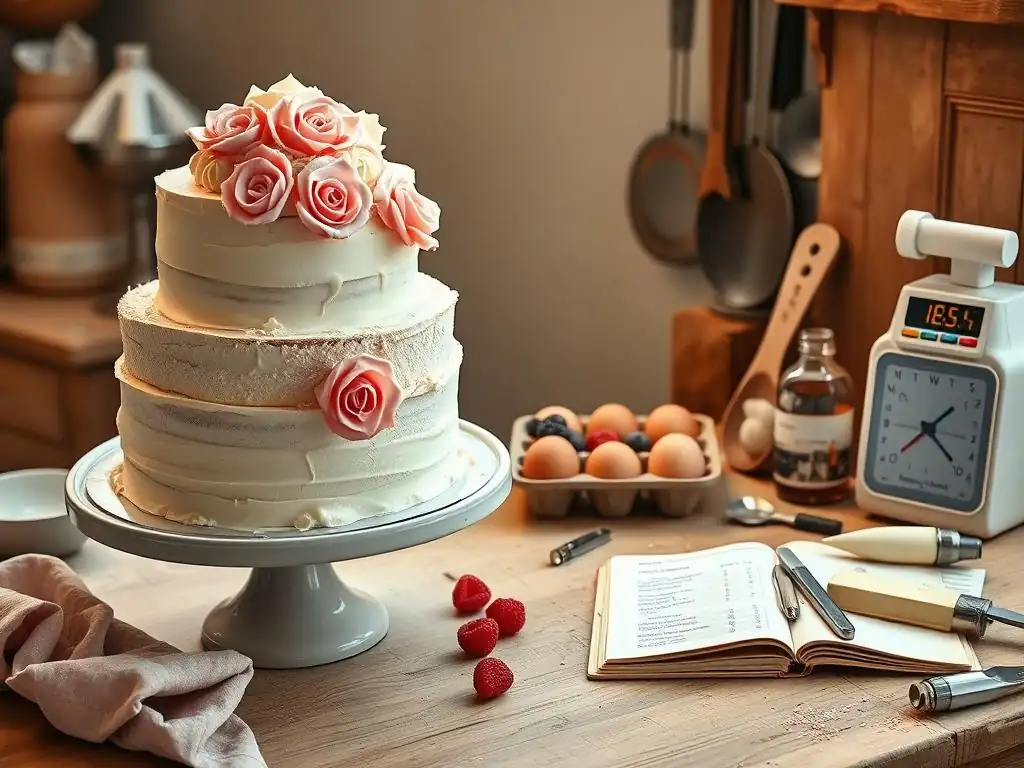
Ready to put theory into practice? This step-by-step guide provides a practical framework for calculating your cake prices, suitable for anyone using this cake pricing guide for beginners. By following these steps for each type of cake you offer, you can build a solid pricing structure for your business. Remember that these steps are iterative; you may need to revisit and adjust your calculations as you gain more experience and your costs change.
Consistency in your pricing approach is key, even if the final price varies greatly from a simple sheet cake to a complex wedding cake. Having a clear process helps you justify your prices to customers and ensures you're not leaving money on the table or, worse, losing money on orders. Let's break down the process.
Step 1: Calculate Your Total Cake Baking Costs
The foundational step is to sum up all the costs associated with creating one specific cake. This means adding the precise cost of ingredients used (e.g., $3.50 for a specific recipe), the cost of packaging and the cake board ($1.75), an allocated portion of your indirect costs for that baking session ($5.00), and your calculated labor cost for the time spent on that cake ($50.00 if it took 2 hours at $25/hr).
Using the example figures above, the total cost for this hypothetical cake would be $3.50 + $1.75 + $5.00 + $50.00 = $60.25. This $60.25 represents the absolute minimum you must charge just to break even. This figure is your starting point and is essential for implementing any profitable cake pricing guide beginners might utilize.
Step 2: Determine Your Desired Profit Margin
Once you know your total cost, you need to decide how much profit you want to make on top of that. Profit is what allows you to grow your business, invest in new equipment, take classes, or simply earn a living. Profit margins in the food industry can vary widely, but for custom baking, aiming for a profit margin of 30% to 50% (or even higher for highly specialized work) is common and often necessary to make the business sustainable.
If your total cost for a cake is $60.25 and you desire a 40% profit margin, you need to add 40% of the final selling price as profit. A common way to calculate this is to divide your total cost by (1 - your desired profit margin as a decimal). So, $60.25 / (1 - 0.40) = $60.25 / 0.60 = $100.42. This means if you sell the cake for $100.42, approximately $40.17 of that is profit (40% of $100.42), and $60.25 covers your costs.
Step 3: Factor in Complexity and Design Elements
Not all cakes are created equal, even if they are the same size. A cake with simple buttercream swirls will take significantly less time and skill than one covered in fondant with intricate sugar flowers, hand-painted details, or sculpted elements. Your pricing must reflect this added complexity and the expertise required. This is where value-based pricing principles often come into play, even if you started with cost-plus.
You can factor this in by having tiered pricing for different levels of decoration (e.g., "Simple," "Standard," "Elaborate") or by assigning a specific hourly rate for intricate decorating time that might be higher than your basic baking labor rate. For example, while baking might be $25/hour, detailed sugar work might be priced at $35-$40/hour to reflect the specialized skill. A cake with 3 hours of intricate decoration at $35/hour adds $105 in labor costs just for the decorating, significantly increasing the final price compared to a cake with only 30 minutes of simple decorating.
Step 4: Consider Customization and Special Requests
Customization is a key part of the home baking business, but it often involves extra time and effort that needs to be priced accordingly. This includes developing new recipes for unique flavor requests, sourcing unusual ingredients, creating custom color palettes, or designing a cake based on a client's specific vision (which involves consultation time, sketching, etc. ).
Charge for these extras. If a client requests a flavor combination not on your standard menu, there might be a "custom flavor" fee ($10-$25) to cover the R&D and potential extra cost of ingredients. Complex dietary requirements (like vegan, gluten-free, or allergy-friendly) almost always involve higher ingredient costs and require extra care to prevent cross-contamination, justifying a surcharge (often 15%-30% of the base price). Consultation time for complex designs should also be factored into your labor cost calculation for that project.
Step 5: Calculate the Final Cake Price
With all the previous steps completed, you can now calculate the final price for a specific cake order. Start with your base cost (ingredients, packaging, allocated overhead, basic labor). Add your desired profit margin. Then, add any extra charges for complexity, specific design elements, customization, or special requests.
Using our example: Base cost + Profit Margin ($100.42) + Extra for complex design ($105 decorating labor) + Custom flavor fee ($20) = Total Price. In this case, a complex, custom-flavored version of that cake might be priced around $225.42. Review this price in the context of your market and the perceived value; you might round up or down slightly (e.g., to $225 or $230) for psychological pricing, but ensure you are not significantly undercutting your calculated value.
Cake Pricing Formulas: A Practical Approach
While the step-by-step guide outlines the process, using formulas can help streamline the calculation, especially when you have multiple orders or different cake types. Formulas provide a structured way to apply the principles discussed in this cake pricing guide for beginners. You can use simple formulas or more advanced ones depending on the complexity of your pricing structure.
Having a consistent formula helps ensure fairness across different orders and makes it easier to explain your pricing to customers if needed. It also provides a clear basis for adjusting prices in the future if your costs change.
Simple Cake Pricing Formula for Beginners
A very basic formula often suggested in a cake pricing guide for beginners is:
Price = (Ingredient Costs + Packaging Costs + Allocated Overhead) * Multiplier
The multiplier is a number you choose to cover your labor and desired profit. Common multipliers range from 3 to 5 or even higher, depending on the complexity and your desired profit margin. For example, if your non-labor costs for a simple cake are $10 and you use a multiplier of 4, the price would be $40. This method is very simple but less accurate than methods that explicitly calculate labor and profit margin separately. It works best for very simple, standardized products.
A more robust simple formula is:
Price = (Total Costs) + (Desired Profit Amount) OR Price = (Total Costs) / (1 - Desired Profit Margin %)
Here, "Total Costs" must include your calculated labor cost. If your total cost (including labor) is $60, and you want a $40 profit, the price is $100. Or using the profit margin percentage: $60 / (1 - 0.40) = $100. This second formula is much better as it forces you to account for your labor and profit explicitly.
Advanced Cake Pricing Formula: Incorporating Hourly Rate
A more detailed formula that is excellent for custom work and recommended as you move past the very beginner stage involves calculating costs based on time:
Price = (Ingredient Costs + Packaging Costs + Allocated Overhead) + (Total Hours Spent * Your Hourly Rate) + (Extra Charges for Complexity/Customization) + (Desired Profit Amount OR factored into Hourly Rate/Multiplier)
In this formula, your "Hourly Rate" might be a blended rate that includes your desired profit, or you might add a separate profit percentage on top of all calculated costs. For example: ($3.50 + $1.75 + $5.00) + (2 hours * $25/hour) + $0 (no extras) + $40.17 (profit) = $100.42. Or, if your $25/hour rate already includes a profit component, the formula might be simpler. This method clearly links price to the time and materials invested.
Another approach is to use a per-serving price as a base, then add complexity/customization fees. For example, a basic cake might be $5-$8 per serving, but a custom design adds a flat fee or an additional per-serving amount ($1-$3 extra per serving for decoration).
Using Excel or Cake Pricing Calculators for Efficiency
Manually calculating costs and prices for every single order can be time-consuming. As your business grows, using tools can significantly improve efficiency. Creating a simple spreadsheet in Excel or Google Sheets is a popular option for home bakers. You can set up columns for ingredients, quantities, cost per unit, and calculated cost per cake. You can also add rows for packaging, estimated utilities, and a section to input hours spent and your hourly rate.
Many online cake pricing calculators are also available, some free and some paid. These tools often have built-in databases for common ingredient costs (though you should verify these against your local prices) and provide structured fields to input all your cost data and desired profit margin. They can quickly generate a suggested price range based on your inputs.
While these tools are helpful, it's crucial to understand the formulas they use and ensure they align with your chosen pricing strategy and accurately reflect your specific costs. They are aids, not replacements for understanding the fundamentals outlined in this cake pricing guide for beginners.
Pricing Examples: From Basic to Elaborate Cakes
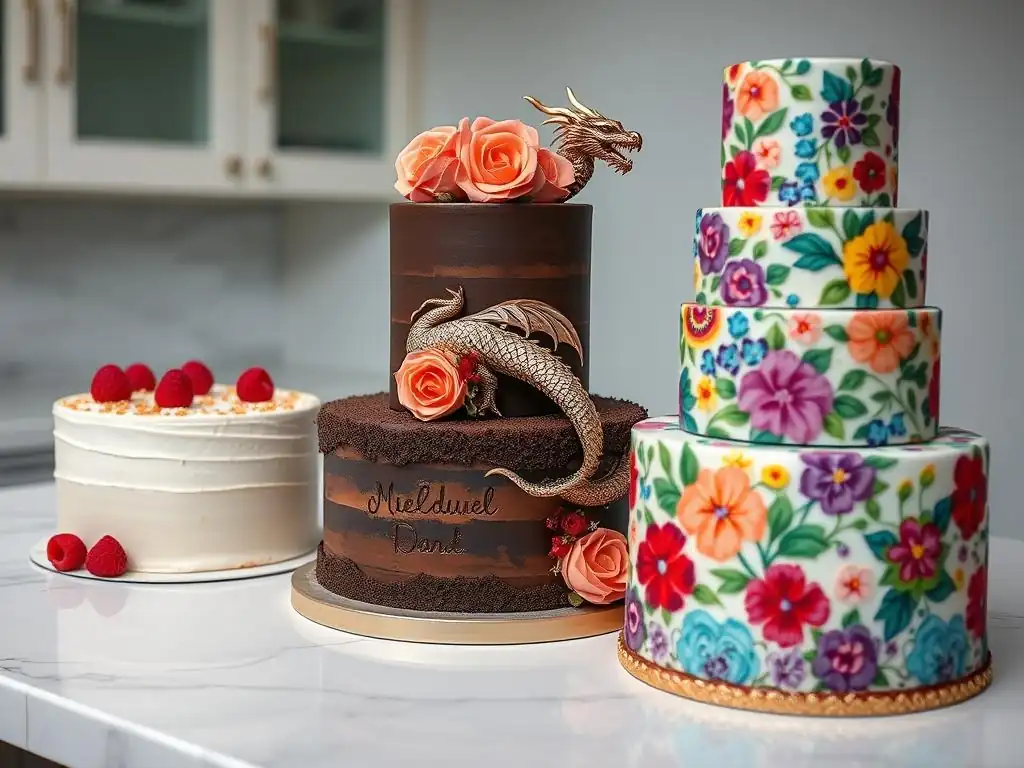
Let's look at a few hypothetical examples to illustrate how the principles and steps discussed in this cake pricing guide for beginners can be applied to different types of cakes. Remember, these figures are illustrative and your actual costs and desired profit margins will vary based on your location, suppliers, and business model.
Seeing examples can help solidify your understanding and provide a starting point for pricing your own creations. We'll move from simple to more complex to show how pricing scales with the effort and materials involved.
Pricing a Simple Round Cake: A Beginner's Example
Consider a basic 8-inch, two-layer vanilla cake with simple buttercream frosting, serving about 12 people.
- Ingredient Costs: Flour, sugar, eggs, butter, milk, vanilla, basic buttercream ingredients. Let's estimate this at $4.00.
- Packaging/Board: Standard 8-inch board and box. Estimate $2.00.
- Allocated Overhead: Portion of utilities, equipment depreciation. Estimate $5.00.
- Labor: Mixing, baking, cooling, simple frosting, packaging (approx. 2.5 hours @ $20/hour). Estimate $50.00.
- Total Cost: $4.00 + $2.00 + $5.00 + $50.00 = $61.00
- Desired Profit: Let's aim for a 35% profit margin. Price = $61.00 / (1 - 0.35) = $61.00 / 0.65 = $93.85.
- Final Price: You might round this to $94 or $95. This price covers all costs, your time, and provides a profit.
This example shows that even a "simple" cake involves significant labor cost, which is often the largest component. Selling this cake for just $30 or $40 would mean you are severely underpaying yourself or not covering other essential costs.
Pricing a Tiered Cake: Accounting for Size and Complexity
Now consider a 2-tier cake (say, 8-inch and 6-inch rounds) serving 25-30 people, with standard buttercream but requiring doweling and stacking.
- Ingredient Costs: More ingredients needed for larger size. Estimate $8.00.
- Packaging/Board: Larger, sturdier board and box. Estimate $5.00.
- Allocated Overhead: Slightly more utilities due to longer baking time. Estimate $7.00.
- Labor: Mixing/baking two cakes, cooling, frosting, doweling, stacking, packaging (approx. 4.5 hours @ $20/hour). Estimate $90.00.
- Total Cost: $8.00 + $5.00 + $7.00 + $90.00 = $110.00
- Desired Profit: Again, 35%. Price = $110.00 / (1 - 0.35) = $110.00 / 0.65 = $169.23.
- Final Price: Round to $170-$175. Note how the cost and price increase significantly with size and complexity like stacking. You might also price this per serving: $170 / 25 servings = $6.80 per serving, which aligns with many standard tiered cake prices.
This example highlights that increased size and structural requirements directly translate to higher costs and labor, justifying a higher price point compared to a smaller, single-tier cake.
Pricing a Custom Cake with Intricate Decorations: Hand-Painted Floral Design
Let's price a custom 8-inch cake serving 12, but covered in fondant with a complex, hand-painted floral design, requiring significant artistic skill and time.
- Ingredient Costs: Basic cake ingredients ($4.00) + Fondant and edible paints ($5.00). Estimate $9.00.
- Packaging/Board: Sturdy board and box for a decorated cake. Estimate $3.00.
- Allocated Overhead: Same as simple cake. Estimate $5.00.
- Labor: Baking/cooling (2 hrs @ $20/hr = $40) + Fondant work/covering (1 hr @ $20/hr = $20) + Detailed Hand-Painting (5 hours @ $30/hour for skilled art work = $150) + Packaging (0.5 hr @ $20/hr = $10). Total Labor: $40 + $20 + $150 + $10 = $220.00.
- Total Cost: $9.00 + $3.00 + $5.00 + $220.00 = $237.00
- Desired Profit: Given the high skill, aim for 40% profit. Price = $237.00 / (1 - 0.40) = $237.00 / 0.60 = $395.00.
- Final Price: Around $395-$400. This shows how specialized skills and significant time investment in decoration dramatically increase the price, even for a cake serving the same number of people as the first example. The value is in the art, not just the ingredients.
Comparing these examples clearly demonstrates why a simple cost-plus formula based only on ingredients is insufficient. The labor and skill involved, especially in custom and decorated cakes, are major drivers of price, a key takeaway for any cake pricing guide beginners should internalize.
Common Mistakes to Avoid in Cake Pricing
Even with a solid understanding of costs and strategies, it's easy to fall into common pricing pitfalls, especially when you're just starting out. Being aware of these mistakes, as highlighted in this cake pricing guide for beginners, can save you from potential financial trouble and burnout.
Avoiding these errors is just as important as applying the correct formulas. They represent the most frequent reasons why home baking businesses struggle to become truly profitable.
Underestimating Your Costs: The Biggest Pitfall
This is arguably the most common and damaging mistake. Many new bakers only think about the cost of major ingredients (flour, sugar, eggs) and forget smaller items like baking powder, vanilla extract, food coloring, parchment paper, cupcake liners, disposable piping bags, cleaning supplies, and even the cost of gasoline for picking up supplies. They also often completely overlook indirect costs like utilities and equipment wear.
Keeping detailed records of all expenses, no matter how small, is crucial. Create a spreadsheet or use an app to track every purchase related to your baking business. Review these costs regularly, perhaps quarterly, as ingredient prices fluctuate. A small increase in the price of butter or eggs can significantly impact your costs over time.
Ignoring Your Time: Valuing Your Labor Properly
As demonstrated in the pricing examples, your time is valuable and constitutes a large portion of the true cost of a cake. Many home bakers start by charging only for ingredients, or maybe ingredients plus a small amount. This is essentially paying yourself nothing for your skilled work. You are not just selling a cake; you are selling your expertise, creativity, and hours of effort.
Start by assigning yourself a reasonable hourly rate based on your skills and experience, and track your time diligently for each project. As you become more skilled and efficient, your rate can increase. Remember that your labor includes baking, decorating, customer communication, shopping, cleaning, admin, and marketing. Value your time as much as you value your ingredients.
Setting Prices Too Low: Devaluing Your Expertise
Undercutting your prices significantly below the market rate or below your actual costs sends the wrong message to customers and is unsustainable. While it might attract price-sensitive customers initially, it can position you as a "cheap" option, making it harder to raise prices later. More importantly, it devalues your skill and the quality of your product. High-quality ingredients, careful attention to detail, and artistic talent command higher prices.
Have confidence in your skills and the quality of your cakes. Research what established bakers offering similar quality are charging. If your costs and desired profit lead to a price that seems high compared to mass-produced grocery store cakes, that's okay! You are offering a different product – a custom, handmade item often made with superior ingredients and personalized service. Don't be afraid to charge what you are worth.
Not Accounting for Waste: Factoring in Ingredient Spoilage
Ingredients can spoil, batches can fail, and mistakes happen during decoration, leading to wasted materials and time. These losses are part of the cost of doing business and should be factored into your overall pricing structure. If, on average, 5% of your ingredients end up as waste (due to spoilage, spills, or errors), you need to account for this.
One way to factor in waste is to slightly increase your ingredient cost calculations (e.g., multiply your calculated ingredient cost by 1.05). Alternatively, you can build a small buffer into your desired profit margin to cover these unforeseen losses. Regularly track your waste to get a realistic percentage and adjust your pricing accordingly.
Tools and Resources for Cake Pricing
Fortunately, you don't have to figure out cake pricing entirely on your own. Several tools and resources can assist you in accurately calculating costs and setting profitable prices, complementing the information in this cake pricing guide for beginners.
Leveraging these resources can save you time, reduce errors, and help you maintain consistent pricing across your product range.
Cake Pricing Calculators: Online and Spreadsheet Options
As mentioned earlier, both online web-based calculators and downloadable spreadsheet templates (for Excel, Google Sheets, etc.) are available. Online calculators often require you to input ingredient quantities and costs, packaging costs, labor time/rate, and desired profit margin, then provide a calculated price. Some offer features for different cake sizes, shapes, and complexity levels.
Spreadsheet templates offer more flexibility. You can customize them to fit your specific recipes, track costs from different suppliers, and incorporate your unique overhead calculations. Many experienced bakers create their own detailed pricing spreadsheets over time. Search online for "cake pricing spreadsheet template" or "home bakery pricing calculator" to find options. Remember to verify that any tool you use aligns with sound pricing principles (covering all costs, including labor and profit).
Ingredient Cost Tracking Templates: Staying Organized
Accurately tracking ingredient costs is fundamental. Prices for flour, butter, eggs, and sugar can fluctuate based on season, demand, and location. Maintaining a simple spreadsheet or using an app specifically for tracking ingredient purchases helps you stay on top of these costs. Record the date of purchase, supplier, item, quantity, and total cost. You can then calculate the cost per unit (e.g., cost per gram of flour, cost per egg).
When you bake a cake, refer to your cost tracking sheet to get the most current prices for the quantities used in your recipe. This ensures your cost calculations are based on what you are currently paying, not outdated figures. Staying organized with ingredient costs is a simple but powerful step in effective cake pricing for beginners.
Local Market Research: Understanding Competitive Pricing
While you shouldn't base your prices solely on competitors, knowing the market rate is essential for positioning. Research other home bakers and local bakeries in your area. Look at their websites or social media (if prices are listed) or inquire discreetly about pricing for standard items like a basic 8-inch round cake or a dozen cupcakes.
Pay attention to the quality and style of their work. Are they offering similar levels of decoration, ingredient quality, and customer service? This research helps you understand the price range customers in your area expect for different levels of quality and complexity. Use this information to validate or adjust your calculated prices, ensuring you are competitive while still being profitable.
Tips for Justifying Your Cake Prices to Customers
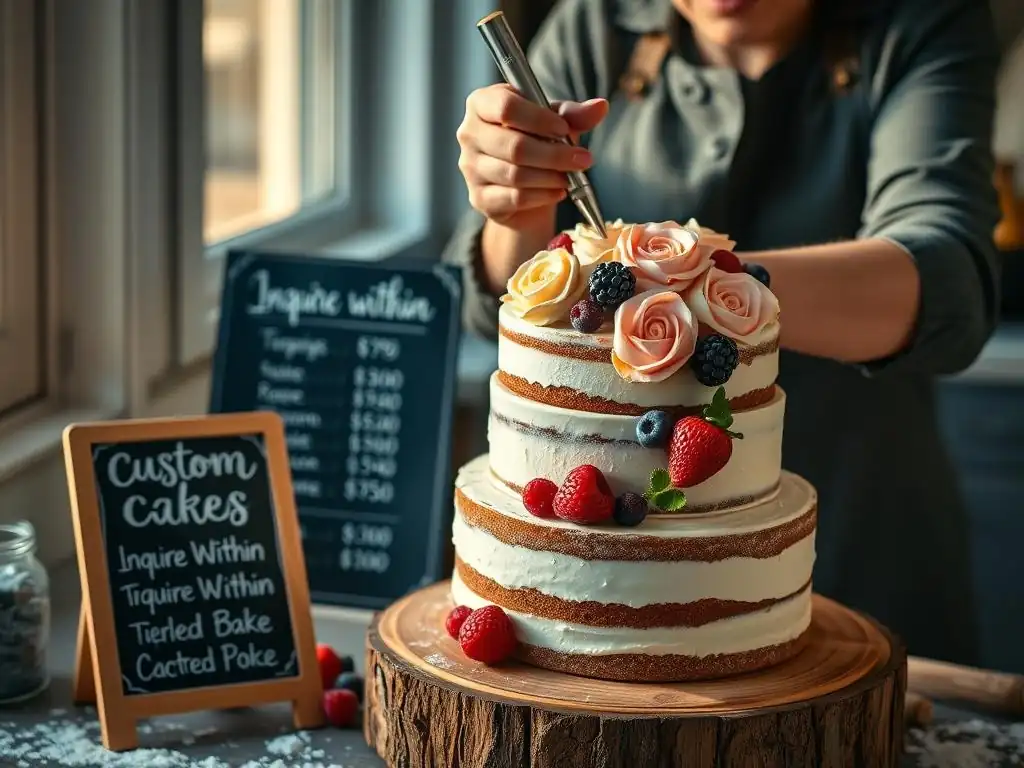
Even with a perfectly calculated price, some customers might question why your custom cake costs more than a grocery store option. Being able to confidently explain the value you provide is crucial, especially when you're using this cake pricing guide for beginners to set prices that reflect your worth.
Think of it as educating your customers about the difference between a handmade, custom product and a mass-produced one. Your confidence in your pricing will also instill confidence in your customers.
Clearly Communicating Your Value Proposition
Your value proposition is what makes your cakes special and worth the price. Is it your unique flavor combinations, your ability to create stunning, personalized designs, your use of high-quality or organic ingredients, your exceptional customer service, or your reliability for important events? Identify what sets you apart.
Communicate this value clearly on your website, social media, and in conversations with potential clients. Instead of just saying "This cake costs $X," explain why. "This custom cake is priced at $X because it includes hand-painted details, uses premium Belgian chocolate, and is designed specifically for your event."
Highlighting the Quality of Your Ingredients
Customers often understand that better ingredients cost more and result in a superior-tasting cake. If you use high-quality butter, pure vanilla extract, premium chocolate, or fresh, local fruit, mention this (briefly and naturally) when discussing your cakes or pricing.
Phrases like "We use real butter and premium vanilla for a truly rich flavor" or "Our fruit fillings are made with fresh, seasonal berries" can justify a higher price point compared to bakers using lower-cost alternatives. This reinforces that they are paying for quality.
Showcasing Your Expertise and Skill
Your years of practice, honed techniques, and artistic talent are major contributors to the value of your cakes. Share photos of your best work, perhaps showing intricate details or complex structures you've successfully created. Briefly explaining the process behind a challenging technique (like sugar flowers or sculpted shapes) can help customers appreciate the skill involved.
Mentioning any relevant training, classes, or certifications can also build trust and demonstrate your expertise. When a customer sees the skill and effort that goes into a cake, they are more likely to accept a higher price compared to a standard bake.
Providing Excellent Customer Service
Exceptional customer service adds significant value that customers are often willing to pay for. This includes prompt and friendly communication, clear consultation about their vision, flexibility where possible, reliable delivery or pick-up, and ensuring the cake is perfect and the customer is happy.
Going the extra mile, like providing detailed cutting guides for tiered cakes or offering flavor samples during consultation, enhances the customer experience. When customers feel well-cared for and confident in your service, they perceive higher value, making your prices feel more justified.
Cake Pricing FAQ: Addressing Common Questions
As you start pricing cakes, you're likely to encounter specific questions or scenarios. This section of the cake pricing guide for beginners addresses some frequently asked questions.
Understanding how to handle these common situations will help you price confidently and consistently.
How do I price cakes for wholesale?
Wholesale pricing is typically different from retail pricing (selling directly to the end consumer). When selling wholesale to cafes, restaurants, or shops, they need to be able to mark up the price to make their own profit. This means your wholesale price will be significantly lower than your retail price, often 50% or less of your retail rate.
To calculate wholesale prices, you still need to know your total costs (ingredients, labor, overhead per cake). Your profit margin will be much smaller per cake, but the idea is to sell in higher volume. Focus on efficient production to keep costs low. You might use a formula like Wholesale Price = (Total Costs) / (1 - Lower Desired Wholesale Profit Margin %). Ensure the price covers your costs and provides a small profit, even at volume.
How do I price cakes for special diets (vegan, gluten-free)?
Cakes for special diets almost always require premium ingredients that are more expensive than conventional ones (e.g., almond flour, gluten-free blends, vegan butter/eggs, alternative milks). Production might also require extra steps or dedicated equipment to prevent cross-contamination.
Factor in the higher cost of these ingredients precisely. Add a surcharge (often 15%-30% of the base price) to cover the increased ingredient cost and the extra care required during preparation. Clearly communicate to the customer that this surcharge reflects the specialized ingredients and processes needed to meet their dietary requirements.
How often should I review my cake prices?
You should review your cake prices regularly, ideally at least once a year, and potentially more often if ingredient costs are volatile.
- Annually: Conduct a full review of all your costs (ingredients, overhead, labor rate) and market prices. Adjust your pricing formula or multiplier as needed based on these findings.
- Quarterly: Briefly check major ingredient costs (butter, eggs, flour, sugar) for significant changes that might warrant a small price adjustment.
- As Needed: If you add new, complex services, invest in expensive new equipment, or see a sustained increase in a major cost component, review your prices sooner.
Regular review ensures your prices remain profitable as your costs change and your skills and business evolve.
Conclusion: Confidently Price Your Cakes and Grow Your Baking Business
Mastering cake pricing is a critical step in turning your passion for baking into a sustainable and profitable home business. This cake pricing guide for beginners has walked you through the essential elements: understanding your costs, choosing a pricing strategy, calculating prices step-by-step, using formulas, learning from examples, avoiding common mistakes, and utilizing helpful resources.
By diligently tracking your expenses, valuing your time and skill, and confidently communicating the value of your creations, you can set prices that not only cover your costs and provide a healthy profit but also position your business for growth. Don't be afraid to charge what you're worth. With practice and careful calculation, you'll be able to price your simple rounds and elaborate creations with confidence, allowing you to focus on what you love most – baking delicious cakes!
Frequently Asked Questions
How does BakeWithEase recommend beginners determine the base cost for their cakes?
BakeWithEase suggests calculating the cost of all ingredients used in the cake and then adding a reasonable amount for overhead costs, such as electricity and equipment usage. This provides a foundation for your cake pricing.
What role does labor play in pricing cakes, according to BakeWithEase?
Labor is crucial. BakeWithEase emphasizes that you should assign an hourly rate to your time, factoring in preparation, baking, decorating, and cleaning. This ensures you're compensated for your work.
Does BakeWithEase offer guidance on adjusting prices for different cake complexities?
Yes. The guide explains how to increase the price based on the complexity of the design and the time required for elaborate decorations. Simple cakes will be less expensive than tiered or sculpted cakes.
What advice does BakeWithEase provide for researching competitor pricing?
BakeWithEase advises researching local bakeries and home-based cake businesses to understand the market rate for similar cakes. This helps you price your cakes competitively.
How does BakeWithEase suggest handling the cost of specialized ingredients or equipment?
If you use specialized ingredients (like high-quality chocolate) or require new equipment for a specific cake, BakeWithEase recommends factoring those additional costs directly into the cake's price.
Final Reflection: The Sweet Science of Pricing Your Cake Dreams
The art of cake pricing isn't just about numbers; it's about valuing your creativity, time, and the joy you bring to others. In today's competitive market, understanding the nuances of pricing—from basic buttercream rounds to intricate sculpted masterpieces—is crucial for any aspiring cake artist's success. Ignoring this vital aspect can lead to burnout and financial instability, hindering your ability to truly flourish in your passion.
The journey of learning to price cakes effectively is a continuous one, reflecting the ever-evolving landscape of the baking industry. It's about more than just covering costs; it's about recognizing the inherent worth of your skills and the emotional investment you pour into each creation. As I've learned, and as many experienced bakers will attest, The price of a cake is not just the sum of its ingredients, but the reflection of the artistry, time, and passion poured into it.
This understanding allows you to not only sustain your business but also to command respect for your craft.
Now, it's your turn. Take the knowledge gained from this guide, adapt it to your unique circumstances, and confidently price your cakes. Don't undervalue your talent; embrace the power of accurate pricing to build a thriving business and a fulfilling career. Remember, every beautifully frosted layer, every intricate detail, deserves to be appreciated—and fairly compensated. Let your passion guide you, and watch your cake business blossom.
Unlock Your Cake Pricing Power!
Thanks for taking the time to learn how to price your cakes effectively! We hope this guide has given you the confidence to accurately value your baking artistry. Now, it's time to put your newfound knowledge into practice.
- Create your first price list: Use the formulas and strategies discussed to price three of your most popular cake designs. This is the crucial first step to confidently pricing all your future creations.
- Share your price list with a trusted baker friend: Get feedback and discuss any pricing anxieties or questions you may have. A fresh perspective can be invaluable!
- Explore new cake design possibilities: Now that you have a clear pricing system, don’t be afraid to experiment and expand your cake offerings!
What unique element will you add to your next cake design to justify a higher price point?