
Safe Cooling Secrets: Stop Bacteria Before It Starts in Your Baked Goods

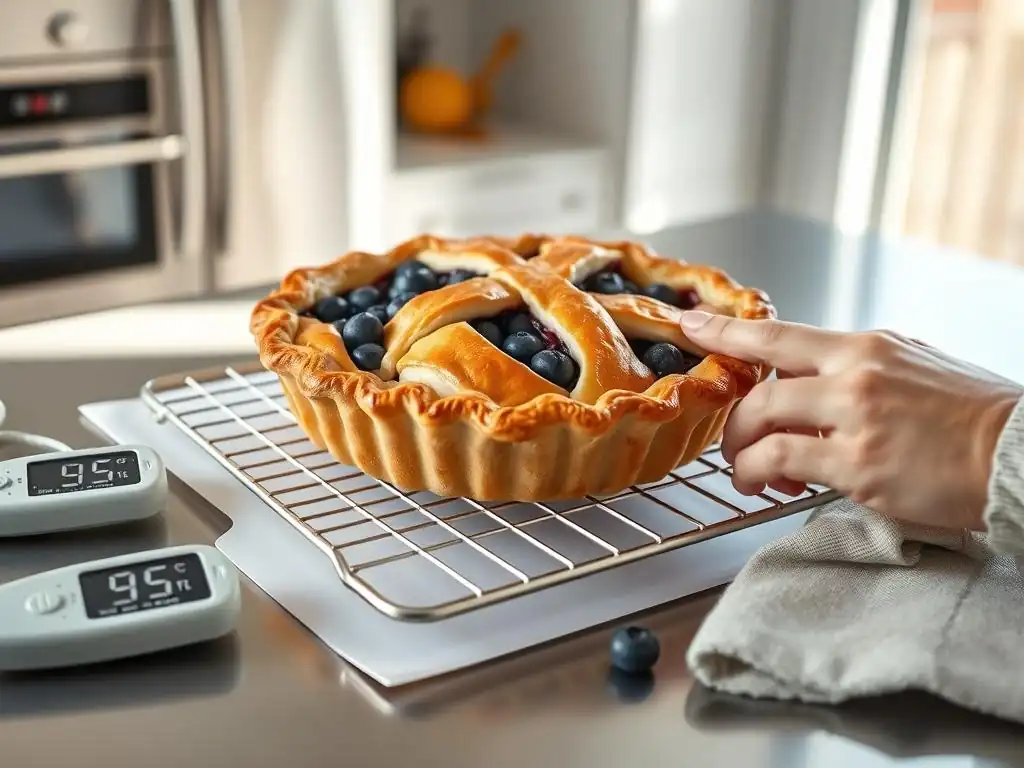
Welcome to BakeWithEase, your kitchen companion for all things baking! Ever wondered if you're really cooling your delicious creations correctly? This isn't just about patience; it's about food safety. Dive into our guide, " Safe Cooling Secrets: Stop Bacteria Before It Starts in Your Baked Goods," and unlock the secrets to proper cooling techniques. Discover how to safeguard your treats and your customers, ensuring every bite is not only delicious but also perfectly safe. Ready to learn how to cool baked goods the right way and protect your Home Baking Business? Let's get started!
- Safe Cooling Secrets: Stop Mold and Staling Before They Start in Your Baked Goods
- Introduction: The Unseen Threat to Baked Goods
- How to Cool Baked Goods Safely: A Step-by-Step Guide
- Common Cooling Mistakes That Encourage Mold and Staling
- Maintaining a Clean Baking Environment for Optimal Results
- Specific Cooling Guidelines for Different Types of Baked Goods
- Troubleshooting Cooling Problems and Quality Concerns
- Advanced Cooling Techniques for Specific Baked Goods
- Conclusion: Bake with Ease and Confidence – Safe Cooling for Delicious Results
-
Frequently Asked Questions
- How quickly should I cool baked goods after removing them from the oven?
- Why is cooling baked goods properly so important?
- What are the best methods for cooling different types of baked goods?
- Can I cool baked goods in the refrigerator to speed up the process?
- How do I know when my baked goods are cool enough to frost or store?
- Final Reflection: The Enduring Importance of Safe Cooling
- Unlock Your Baking's Freshness Potential!
Safe Cooling Secrets: Stop Mold and Staling Before They Start in Your Baked Goods
Introduction: The Unseen Threat to Baked Goods
Why Proper Cooling is Crucial for Quality and Preservation in Baking
Proper cooling is a fundamental step in the baking process that often gets overlooked, yet it's absolutely critical for both the quality and longevity of your baked goods. When you pull a cake, loaf of bread, or batch of cookies from the oven, the internal temperature is very high, often exceeding 200°F (about 93°C). While the baking is finished, a complex process of moisture redistribution and structural setting continues as the item cools.
If this cooling process is rushed or done incorrectly, it can lead to a host of problems, including gummy textures, soggy bottoms, dry interiors, and a significantly reduced shelf life. Understanding how to cool baked goods correctly is key to achieving perfect results every time.
Beyond texture and taste, safe cooling is paramount for food safety. Leaving baked goods, especially those containing moisture or fillings like custards or creams, in the temperature danger zone (typically 40°F to 140°F or 4°C to 60°C) for too long allows bacteria to multiply rapidly. While dry baked goods like plain bread or cookies are less susceptible to bacterial growth if cooled properly, improper cooling can still lead to undesirable outcomes. For anyone asking how to cool baked goods effectively, the answer involves controlling temperature and moisture from the moment they leave the heat.
Understanding Mold Growth and Staling in Baked Goods
Mold and staling are the primary enemies of baked goods after they've been successfully baked. Staling is a complex process, primarily involving the retrogradation of starch molecules. As a baked good cools and sits over time, the starch molecules within the crumb reorganize, forcing water out.
This causes the bread or cake to become firm, dry, and crumbly – what we perceive as stale. While staling doesn't make food unsafe, it significantly impacts its appeal. Different baked goods stale at different rates; for instance, a lean baguette might show signs of staling within hours, whereas a rich pound cake could take several days.
Mold, on the other hand, is a type of fungus that grows on food. Mold spores are present in the air everywhere. They are killed during the high temperatures of baking, but as soon as the baked good begins to cool, it becomes susceptible to airborne spores. Mold requires moisture and a suitable temperature to grow.
Improper cooling, which can trap moisture, creates an ideal environment for mold spores to land and germinate. This is why knowing the best way how to cool baked goods is vital; rapid, efficient cooling reduces the time the surface remains warm and moist, minimizing the window for mold spores to settle and begin growing. Once mold is visible, the baked good should generally be discarded, as the mold often has roots extending deeper than what is visible on the surface.
How to Cool Baked Goods Safely: A Step-by-Step Guide
Step 1: Immediate Actions After Baking
Removing Baked Goods from Baking Pans Properly
The very first step after removing your baked goods from the oven is often the most critical initial phase of cooling: getting them out of the hot pan. Leaving items like cakes, muffins, or quick breads in their baking pans for too long can lead to residual heat from the pan continuing to cook the bottom and sides, resulting in overcooked edges and potentially a soggy bottom due due to trapped steam. For most cakes and quick breads, it's recommended to let them sit in the pan for only 5-15 minutes after coming out of the oven.
This brief period allows the structure to set slightly, making them less likely to break when handled. After this short rest, they should be carefully inverted or lifted out of the pan.
Cookies are a bit different. Often, they are slightly soft when they first come out of the oven. Letting them sit on the hot baking sheet for 1-2 minutes allows them to firm up just enough to be moved without falling apart.
However, leaving them on the hot sheet for too long will continue the baking process (carryover cooking) and can result in hard or burnt bottoms. Promptly transferring them off the hot surface is essential. Regardless of the type of baked good, the goal is to stop the cooking process initiated by the hot pan as quickly as possible, which is a core part of learning how to cool baked goods effectively.
The Importance of Wire Racks for Cooling
Once removed from the baking pan or sheet, baked goods should almost always be transferred to a wire cooling rack. This is a non-negotiable step in safe and effective cooling. A wire rack elevates the baked good, allowing air to circulate freely around the entire surface – the top, sides, and crucially, the bottom. This airflow is essential for releasing steam that continues to escape from the hot interior. Without proper air circulation, steam gets trapped underneath, particularly if the item is placed on a flat surface like a countertop or cutting board.
Trapped steam is the primary culprit behind soggy bottoms in cakes and breads and can make cookies lose their crispness. Furthermore, a humid microenvironment around the baked good encourages mold growth. A wire rack facilitates rapid and even cooling, reducing the time the item spends in the temperature range where bacteria can thrive and minimizing the conditions favorable for mold spores. Using a wire rack is arguably the single most important technique when considering how to cool baked goods for optimal results and safety.
Step 2: Optimizing Air Circulation for Even Cooling
Positioning Baked Goods for Optimal Airflow
Simply placing baked goods on a wire rack is a great start, but how you position them can further optimize airflow and ensure even cooling. Avoid crowding items on the rack. Leave space between loaves of bread, cakes, and individual cookies or muffins. This allows air to flow freely around each item, facilitating faster and more uniform heat dissipation. If you have multiple batches, use multiple racks or cool in batches. Stacking items or placing them too close together inhibits air circulation, leading to slower cooling and potentially trapping moisture.
For items like loaves of bread with a distinct top and bottom, placing them upright or slightly on their side (if stable) can sometimes help with airflow, though flat on the rack is standard and effective if spaced properly. For cakes, ensure they are placed flat on the rack after being removed from the pan. Cookies should be arranged in a single layer with space around each one. Thinking about how air moves around each piece is key to mastering how to cool baked goods efficiently.
Using Fans to Accelerate Cooling (and When to Avoid It)
In certain situations, particularly when cooling large quantities for a home baking business or in a warmer environment, using a fan can help accelerate the cooling process by increasing air circulation. A gentle fan blowing across the cooling racks can significantly speed up the rate at which the baked goods reach room temperature. This is especially useful for items that are prone to staling quickly or when you need to store them relatively soon after baking. Accelerated cooling reduces the time spent in the temperature danger zone and minimizes moisture buildup on the surface.
However, using a fan isn't always necessary and can sometimes be detrimental. For delicate items like meringues or certain pastries, direct fan airflow might cause them to dry out too quickly or become brittle. For rich cakes intended to be moist, excessive fan use might pull too much moisture from the surface.
Use fans cautiously, ensuring the airflow is gentle and indirect if possible, or reserve this technique for items like bread or sturdy cookies where the primary goal is rapid cooling and firming. Always consider the specific type of baked good when deciding how to cool baked goods, including whether a fan is appropriate.
Step 3: Monitoring Cooling Progress
Why Cooling Time Matters for Quality
Allowing baked goods to cool completely is not just about reaching a safe temperature; it's also crucial for the final texture and flavor. Many internal processes continue during cooling, such as the setting of starches and proteins, and the redistribution of moisture. Cutting into a bread loaf or cake before it has fully cooled can result in a gummy, dense, or doughy texture because the internal structure hasn't fully set. For example, bread often needs several hours to cool completely to allow the crumb structure to stabilize and the crust to crisp properly.
Cutting warm bread traps steam inside, leading to a gummy texture. Similarly, slicing a warm cake can cause it to crumble or become compressed. Cookies need to cool to room temperature to achieve their final crisp or chewy texture. Rushing the cooling process compromises the quality you worked hard to achieve during mixing and baking. Patience during the cooling phase is just as important as precision during mixing and baking when considering how to cool baked goods successfully.
Recommended Cooling Times for Different Baked Goods
Cooling times vary significantly depending on the size and type of baked good. Here are some general guidelines:
- Cookies: Typically 10-30 minutes on a wire rack until completely cool. Thicker cookies might take longer.
- Muffins and Cupcakes: Usually 30-60 minutes on a wire rack.
- Cakes (Loaf or Bundt): After the initial 10-15 minutes in the pan, cool on a wire rack for 1-2 hours until completely cool to the touch.
- Cakes (Layer Cakes): After the initial 10-15 minutes in the pan, cool on a wire rack for 1-2 hours. Ensure they are fully cool before frosting, which might require longer cooling or even chilling.
- Breads (Standard Loaves): Often require 2-4 hours on a wire rack to cool completely to the center. Dense or large loaves might take even longer. Cutting too early is a common mistake.
- Quick Breads: Similar to loaf cakes, 1-2 hours on a wire rack.
These are approximations; ambient temperature and humidity will affect cooling times. The key is to ensure the center has reached room temperature (around 70-75°F or 21-24°C) before storing or further handling like frosting or slicing. This careful attention to timing is a vital part of understanding how to cool baked goods properly.
Step 4: Safe Storage After Cooling
Choosing the Right Storage Containers
Once your baked goods are completely cool, selecting the appropriate storage method is crucial for maintaining freshness and preventing mold or staling. The type of container depends on the baked good.
- Breads with a crust: Best stored at room temperature in a paper bag or a bread box. This allows the crust to breathe and maintain crispness. Plastic bags trap moisture, which makes the crust soft and encourages mold. A typical sourdough loaf stored properly might last 2-3 days at room temperature before staling significantly.
- Soft breads and rolls: Can be stored in airtight plastic bags or containers at room temperature to keep them soft. They generally last 3-5 days.
- Cakes: Unfrosted cakes can be wrapped tightly in plastic wrap or aluminum foil and stored in an airtight container at room temperature for 3-4 days. Frosted cakes (especially those with perishable frosting like cream cheese or whipped cream) should be stored in an airtight container in the refrigerator. A standard butter cake might stay fresh for 4-5 days at room temp if sealed well.
- Cookies: Store crisp cookies in an airtight container at room temperature. Store soft cookies separately in an airtight container, perhaps with a slice of bread or a marshmallow to maintain softness (though this can introduce moisture). Most cookies stay fresh for 5-7 days.
- Muffins and Cupcakes: Store in an airtight container at room temperature for 2-3 days.
Proper storage after careful cooling is the final step in preserving quality and safety.
Preventing Condensation in Storage
Condensation is the enemy of proper storage and a major contributor to mold growth and soggy textures. It occurs when warm, moist air comes into contact with a cooler surface. If you store a baked good that is still warm, the heat radiating from it will create moisture inside the container as it cools down, leading to condensation on the lid and sides. This trapped moisture then settles back onto the baked good, creating a damp surface – a perfect breeding ground for mold.
This is why ensuring baked goods are completely cool before storing them is non-negotiable. Even slightly warm items can cause significant condensation in an airtight container. Additionally, ensure the storage container is dry before use. If storing in the refrigerator, which is a humid environment, ensure the baked goods are well-wrapped to protect them from excess moisture and odors. For example, a pie stored in the fridge might develop condensation on its crust if not properly covered. Mastery of how to cool baked goods extends to preventing this post-cooling moisture issue.
Common Cooling Mistakes That Encourage Mold and Staling
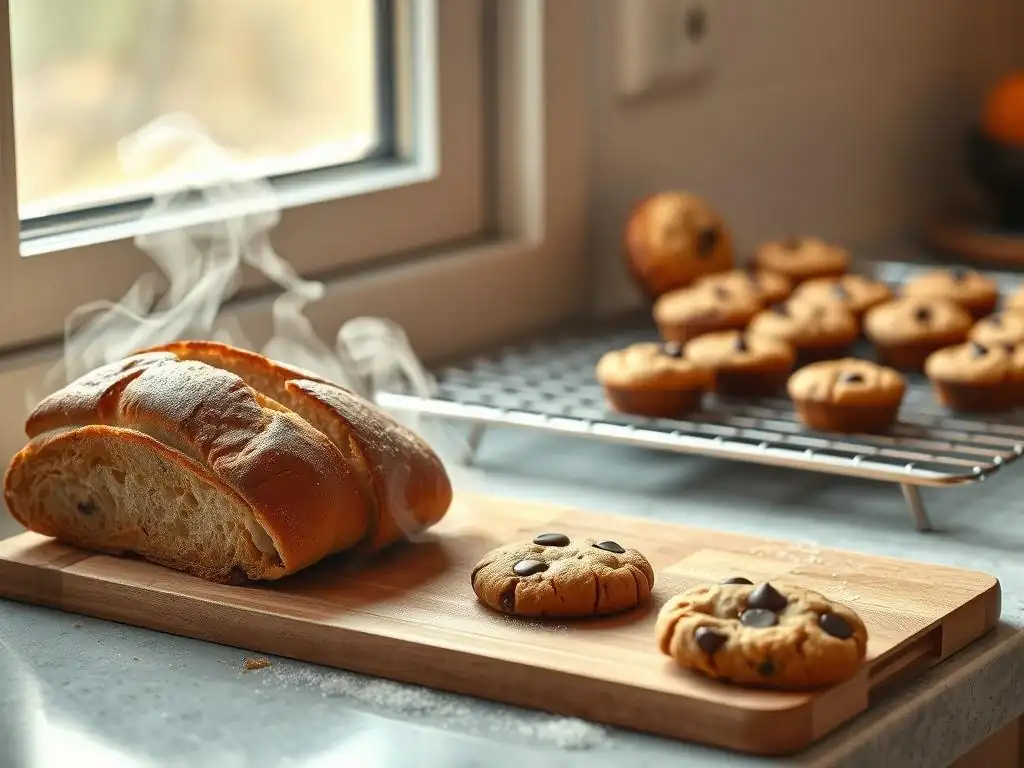
Leaving Baked Goods at Room Temperature Too Long
While baked goods need to cool at room temperature, leaving them exposed for excessive periods, especially in warm or humid conditions, increases the risk of issues. The longer items sit at room temperature after cooling, the more they are exposed to airborne mold spores and the effects of staling. While dry items like crackers can sit out indefinitely (they just become stale), most baked goods contain enough moisture to eventually support mold growth.
For instance, a loaf of bread might be safe to leave on the counter in a bread box for a few days, but a rich, moist coffee cake left uncovered for 24 hours in a humid kitchen is far more likely to develop mold quickly. The general rule of thumb is to cool them properly on a rack until they reach room temperature, then store them appropriately without undue delay.
Don't let fully cooled items sit out uncovered for hours on end after they've reached the correct temperature; this is a common error in how to cool baked goods and handle them post-baking.
Cooling Baked Goods in Closed Containers While Still Warm
This is perhaps the most significant mistake home bakers make regarding cooling, and it almost guarantees problems. Placing a warm or even slightly warm baked good into an airtight container or wrapping it tightly in plastic wrap immediately after removing it from the oven traps all the heat and steam attempting to escape. As the item cools, this trapped steam turns into condensation inside the container, creating a very humid environment right around the surface of the baked good.
This high humidity is the perfect incubator for mold spores, which are likely already present in the air and on the surface of the baked good. It also leads to soggy crusts on breads and moist, gummy surfaces on cakes and cookies. For example, placing warm muffins directly into a plastic container will inevitably result in sticky, damp tops and bottoms within a few hours.
Always wait until the baked good is completely cool to the touch – ideally at room temperature throughout its core – before sealing it in any way. This step is non-negotiable when learning how to cool baked goods safely and effectively.
Storing Baked Goods Improperly After Cooling
Even after successful cooling, improper storage can quickly ruin your efforts. Using the wrong type of container or storing items at the wrong temperature can accelerate staling or encourage mold. For example, storing crusty bread in a plastic bag prevents airflow, traps residual moisture, and quickly turns the crust soft and chewy, while also increasing the risk of mold within a day or two compared to a paper bag or bread box.
Conversely, storing soft cookies in a container that isn't airtight will expose them to air, causing them to dry out and become hard rapidly. Cakes left uncovered will quickly lose moisture and become stale. Understanding the specific storage needs of different types of baked goods after they are fully cooled is just as vital as the cooling process itself. A comprehensive approach to how to cool baked goods includes knowing how to store them correctly afterward.
Maintaining a Clean Baking Environment for Optimal Results
Cleaning Baking Tools and Equipment Regularly
A clean baking environment is fundamental to food safety, extending beyond the baking process itself to the cooling phase. Residual food particles on baking sheets, cooling racks, or countertops can harbor bacteria and mold spores. If you place hot baked goods on a cooling rack that wasn't properly cleaned after its last use, you are directly exposing your freshly baked items to potential contaminants.
Make it a habit to wash baking pans, cooling racks, and utensils thoroughly with hot, soapy water after each use. Ensure countertops are wiped down and sanitized regularly. A study might show that improperly cleaned surfaces can harbor thousands of mold spores per square inch, vastly increasing the risk of contamination compared to a clean surface. By minimizing the presence of mold spores and bacteria in your workspace, you reduce the chances of them landing on your baked goods while they are cooling and vulnerable.
Minimizing Moisture During the Cooling Process
Controlling ambient moisture in the cooling area is another factor that can impact the success of how to cool baked goods. High humidity in the kitchen can slow down the cooling process and increase the moisture content on the surface of the baked goods, making them more susceptible to mold. While you can't control the weather, you can take steps to minimize excess moisture.
Avoid cooling baked goods right next to a sink where dishes are being washed or near a pot simmering on the stove, as these activities generate significant steam and humidity. If your kitchen is particularly humid, consider using a fan (as mentioned earlier, with caution) to increase airflow, or if possible, move the baked goods to a drier area of the house to cool. Ensuring good ventilation in the kitchen during and after baking can also help dissipate steam and humidity. A slightly less humid environment promotes faster surface drying, which is beneficial in preventing mold growth during cooling.
Specific Cooling Guidelines for Different Types of Baked Goods
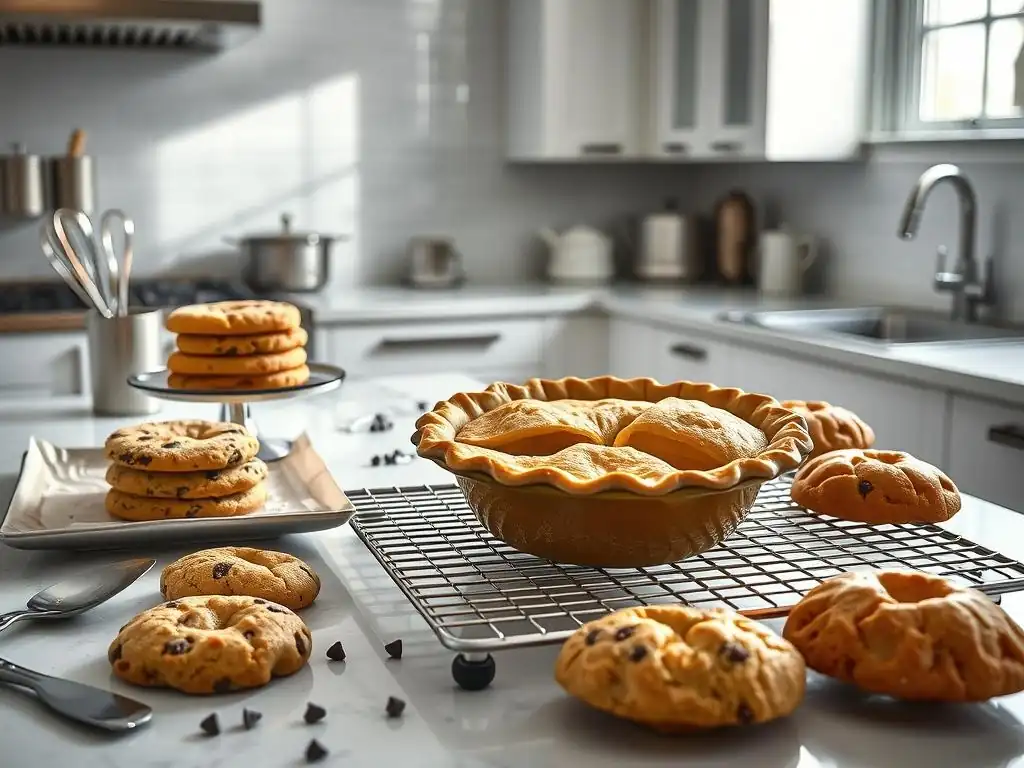
Cooling Cakes: Tips for Preventing Soggy Bottoms and Maintaining Moisture
Cooling cakes requires balancing the need for structural integrity with preventing moisture issues. After baking, most cakes benefit from a brief period (5-15 minutes) in the pan on a wire rack to set. This allows the cake to firm up enough to be handled without breaking. However, leaving it in the hot pan for too long will cause the bottom and sides to overcook and trap steam, leading to a soggy or dense layer.
Once inverted onto a wire rack, the cake should cool completely, undisturbed. Ensure the rack allows air to circulate fully underneath. For layer cakes, cooling layers flat on the rack is standard. Bundt cakes should be inverted onto the rack. Resist the urge to move or frost the cake before it is fully cool, which can take 1-2 hours for standard sizes. For very moist cakes, ensuring maximum airflow during cooling is key to preventing soggy spots. This attention to detail is crucial for how to cool baked goods like cakes successfully.
Cookies require careful handling immediately after baking to achieve the desired texture. Most cookies are soft when they first come out of the oven and need a minute or two on the hot baking sheet to set slightly. However, leaving them on the sheet for too long will continue baking via residual heat, potentially leading to hard or burnt bottoms.
Promptly transfer cookies to a wire cooling rack using a spatula after this initial brief rest (typically 1-2 minutes). Arrange them in a single layer with space in between for optimal airflow. This allows them to cool quickly and evenly, preventing them from becoming greasy or soggy from trapped steam and ensuring they develop their final crisp or chewy texture. Cooling on a wire rack also prevents them from sticking to a solid surface as they cool. Knowing how to cool baked goods like cookies is about timing and airflow.
Cooling Breads: Maintaining Crust Integrity
Cooling bread is crucial for both its internal structure and its crust. A loaf of bread needs to cool completely to allow the internal steam to dissipate and the crumb structure to set fully. Cutting into a loaf too early traps steam, resulting in a gummy interior. The crust, which is crisp when it comes out of the oven, can become soft and rubbery if steam is trapped during cooling.
Bread should be transferred from the baking pan (if used) to a wire rack immediately after baking. Position the loaf to allow maximum air circulation around all sides. For freestanding loaves, placing them on their side can sometimes aid cooling. Large or dense loaves, like sourdough or rye, may require 2-4 hours or even longer to cool completely to the center. Patience is key; wait until the loaf is fully cool before slicing to maintain that desirable crust and perfect crumb. This is a fundamental rule for how to cool baked goods, specifically bread.
Cooling Pastries: Preventing Softening and Maintaining Texture
Pastries, especially those with delicate layers like croissants or puff pastry, or those filled with creams or fruits, require specific cooling techniques to maintain their texture and prevent fillings from becoming unstable or soggy. Like other baked goods, pastries should be moved to a wire rack immediately after baking to allow air circulation and prevent soggy bottoms.
For pastries with crisp layers, rapid cooling on a wire rack is essential to help the layers set and remain flaky. Filled pastries need to cool to allow the filling to set. Cream-filled pastries, éclairs, or fruit tarts should be cooled completely on a wire rack. Due to their fillings and often higher moisture content, these items may need to be refrigerated after cooling to room temperature to ensure food safety and maintain filling consistency. Understanding the composition of the pastry is key to determining the best way how to cool baked goods in this category.
Troubleshooting Cooling Problems and Quality Concerns
What to Do if Your Baked Goods Cool Too Slowly
If you find your baked goods are cooling too slowly, leading to prolonged exposure to the temperature danger zone or impacting texture, several factors could be at play. The most common cause is insufficient airflow. Ensure items are spaced adequately on a wire rack and that the rack itself is elevated. Avoid cooling in a humid environment or a poorly ventilated kitchen.
If ambient conditions are warm or humid, consider using a gentle fan to increase air movement across the cooling racks. For very large or dense items like substantial bread loaves or large cakes, understand that they simply require a longer cooling time – patience is necessary. However, if even standard items seem to take excessively long, check your cooling setup and environment. Improving airflow is usually the most effective solution when figuring out how to cool baked goods more efficiently.
Identifying Signs of Mold or Staling
Recognizing the signs of mold and staling is important for food safety and quality control. Staling is primarily identified by changes in texture – bread becomes hard and dry, cakes become crumbly. It might also involve a loss of flavor. Stale bread, for example, is still safe to eat (though unpleasant) and can often be repurposed into breadcrumbs or croutons.
Mold, however, is a sign of spoilage and potential health risk. Visible mold appears as fuzzy or slimy patches, often green, white, black, or blue. It might start as small spots and spread over time. Mold often has a musty or off odor.
Even if mold is only visible in one spot, its "roots" (hyphae) can penetrate deeper into the food. If a baked good shows signs of mold, it should generally be discarded immediately. Don't try to scrape mold off soft baked goods like bread or cake; the spores and roots are likely widespread. This is a critical food safety point related to how to cool baked goods and store them correctly.
When to Discard Baked Goods Due to Quality Deterioration
Baked goods should be discarded if they show any signs of mold growth, regardless of how recently they were baked or how they were cooled. Food safety is paramount.
Beyond mold, you might choose to discard baked goods due to significant quality deterioration from staling. While stale bread can be repurposed, a cake that has become excessively dry and crumbly might simply not be enjoyable to eat. Use your judgment based on the specific item and your intended use. Proper cooling and storage techniques, following guidelines on how to cool baked goods effectively, will significantly extend the period before this quality deterioration occurs. However, all baked goods have a limited shelf life, even when stored correctly.
Advanced Cooling Techniques for Specific Baked Goods
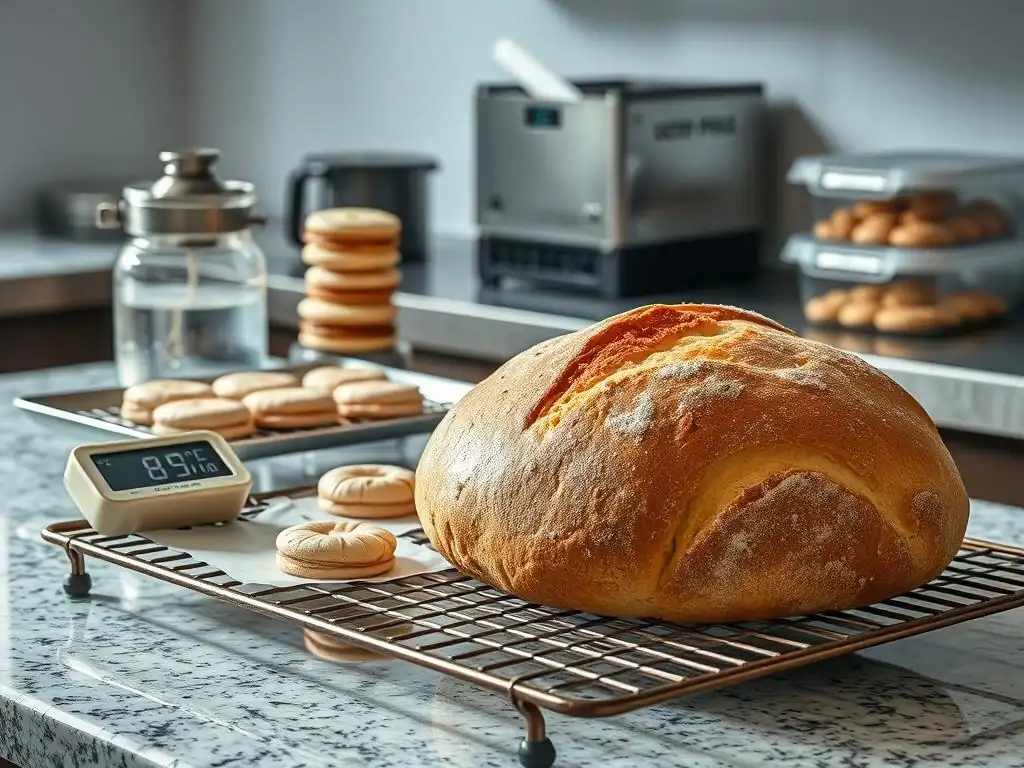
Cooling Cheesecakes: Preventing Cracking
Cheesecakes are notorious for cracking during cooling, primarily due to rapid temperature changes and shrinkage as they cool. To prevent this, cheesecakes are often cooled gradually. One common technique is to turn off the oven when the cheesecake is done but leave it inside with the door propped open slightly for 30-60 minutes. This allows the cheesecake to cool down slowly within the ambient warmth of the oven, reducing the thermal shock.
After this period, the cheesecake is typically removed from the oven and placed on a wire rack to finish cooling completely at room temperature. Avoid placing hot cheesecakes directly into the refrigerator, as the sudden temperature drop will almost certainly cause cracks. Only refrigerate once completely cool at room temperature (usually after 2-3 hours or more). This gentle, two-stage cooling process is a specific technique within how to cool baked goods that applies particularly to delicate items like cheesecakes.
Cooling Meringue-Based Desserts: Maintaining Structure
Meringue-based desserts, such as pavlovas or lemon meringue pie toppings, require specific cooling to maintain their crisp or chewy texture and structural integrity. Meringues are essentially stabilized whipped egg whites and sugar. They are baked at low temperatures for a long time to dry out.
For items like pavlovas, which should be crisp on the outside and slightly chewy inside, they are often left in the oven after baking with the heat turned off and the door propped open. This slow cooling process in a dry environment prevents them from collapsing or weeping (releasing liquid). Lemon meringue pies are typically cooled at room temperature, sometimes with a fan gently blowing over them, to help the meringue topping set firmly and prevent beading (sugar droplets forming on the surface).
Avoiding high humidity during cooling is crucial for all meringue-based items. These specialized approaches highlight the nuances of how to cool baked goods depending on their ingredients and structure.
Conclusion: Bake with Ease and Confidence – Safe Cooling for Delicious Results
Mastering the art of baking goes beyond perfect mixing and precise oven temperatures; it includes understanding the vital, often underestimated, step of cooling. Knowing how to cool baked goods correctly is not just about achieving the ideal texture and flavor – preventing soggy bottoms, gummy interiors, or stale crumbs – it's also fundamentally about food safety. By ensuring rapid and complete cooling on wire racks, you minimize the time your baked goods spend in the temperature danger zone and create an environment less hospitable to mold spores.
Avoiding common mistakes like cooling items in closed containers while they are still warm or improper storage after cooling are critical steps in preventing premature spoilage. By following these safe cooling secrets, adapting your techniques slightly for different types of baked goods like cakes, cookies, breads, and pastries, and maintaining a clean environment, you can significantly extend the freshness and safety of your homemade treats. Embrace proper cooling as an integral part of your baking process, and you'll consistently produce delicious, high-quality baked goods that stay fresh longer, allowing you to bake with ease and confidence.
Frequently Asked Questions
How quickly should I cool baked goods after removing them from the oven?
It's crucial to cool baked goods rapidly to prevent bacterial growth. Aim to get them out of the oven and start the cooling process within minutes.
Why is cooling baked goods properly so important?
Improper cooling provides the perfect environment for harmful bacteria to multiply. This can lead to food poisoning and spoilage of your delicious treats.
What are the best methods for cooling different types of baked goods?
For cakes and breads, wire racks are excellent for air circulation. Cookies can be cooled directly on the baking sheet for a few minutes before transferring to a rack. Pastries might require specific cooling techniques depending on their filling.
Can I cool baked goods in the refrigerator to speed up the process?
While refrigeration can speed things up, it's important to cool them slightly first. Placing hot baked goods directly in the fridge can create condensation and affect their texture and flavor.
How do I know when my baked goods are cool enough to frost or store?
They should be completely cool to the touch before frosting, otherwise the frosting may melt. For storage, ensure they're fully cooled to prevent condensation and mold growth.
Final Reflection: The Enduring Importance of Safe Cooling
The seemingly simple act of cooling baked goods is far more critical than many realize; improper cooling techniques can lead to bacterial growth and spoiled treats, impacting both food safety and the enjoyment of your culinary creations. This article highlighted the often-overlooked dangers of improper cooling and offered practical, effective solutions to ensure your baked goods remain delicious and safe to consume. The information presented is not just about preserving taste; it's about safeguarding health.
The impact of safe food handling practices extends far beyond the individual kitchen. It's a cornerstone of public health, influencing everything from reducing foodborne illnesses to promoting sustainable food practices. Food safety is not just a matter of avoiding illness; it's a matter of ensuring the well-being and prosperity of our communities.
This quote underscores the broader societal implications of understanding and implementing proper cooling techniques, emphasizing the interconnectedness of individual actions and collective well-being. The knowledge shared here empowers readers to contribute to a safer and healthier food system.
Now, consider your own baking practices. Do you rush the cooling process? Are you aware of the potential risks involved? Take a moment to reflect on the information presented in this article. Commit to incorporating these safe cooling secrets into your routine, not just for the sake of perfectly preserved cakes and cookies, but for the peace of mind knowing you're prioritizing food safety and the health of yourself and others. Let's make safe cooling a standard practice in every kitchen.
Unlock Your Baking's Freshness Potential!
Thanks for taking the time to learn about keeping your baked goods safe and delicious! You now have the knowledge to prevent bacterial growth and ensure your creations stay fresh and flavorful for longer. Ready to put your new skills into practice?
- Master the art of safe cooling: Immediately implement the cooling techniques discussed in the article to experience the difference. This is your key to preventing bacterial growth!
- Share your newfound baking wisdom! Tell your friends and family about these simple yet effective cooling methods. Let's build a community of bakers focused on food safety!
- Challenge yourself: Try baking a new recipe and meticulously follow the cooling steps. Observe the results and share your experience in the comments!
What's your biggest baking challenge when it comes to keeping things fresh, and how will you tackle it now?