
Elevate Your Cookies: Plating Elegant Cookie Desserts

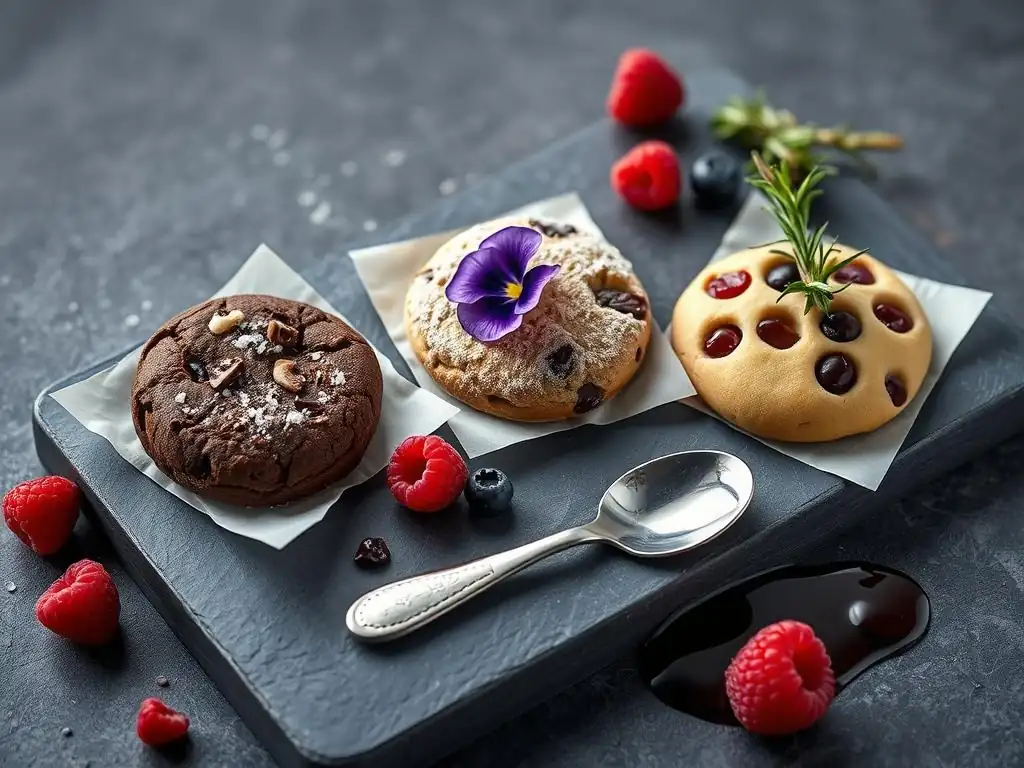
Welcome to BakeWithEase, where baking becomes a joy! Ready to transform your cookies from simple treats to stunning centerpieces? Dive in and discover the secrets to achieving beautiful, elegant cookie dessert plating that will impress your guests and elevate your baking to a whole new level. Curious about the techniques and tips? Let's get started!
- Introduction to Elegant Cookie Dessert Plating
- Essential Elements for Plating Cookie Desserts
- Techniques for Beautiful, Elegant Cookie Dessert Plating
- Cookie Plating Ideas: Inspiration and Examples
- Advanced Cookie Plating Techniques
- Tips for Achieving Professional-Looking Cookie Plates
- Conclusion: Mastering the Art of Elegant Cookie Dessert Plating
-
Frequently Asked Questions
- How can I choose the right plate for elegant cookie presentation?
- What are some simple techniques for arranging cookies on a plate?
- What ingredients can I use to enhance the visual appeal of my cookie plating?
- How do I create a focal point on my cookie dessert plate?
- What are some common mistakes to avoid when plating cookie desserts?
- Final Reflection: The Art of the Cookie, Elevated
- Unleash Your Inner Pastry Artist: Plate Like a Pro!
Baking delicious cookies is a wonderful achievement, but presenting them beautifully transforms a simple treat into a memorable dessert experience. The visual appeal of food significantly impacts our perception of its taste and quality. When you take the time to plate your cookies elegantly, you're not just serving a baked good; you're crafting an experience for your guests or family.
This level of care shows attention to detail and respect for the craft, elevating even the most humble chocolate chip cookie to something special. Beautiful, elegant cookie dessert plating turns everyday baking into an art form, making each bite feel more luxurious and thoughtful.
Beyond impressing others, focusing on presentation can also enhance your own enjoyment of baking. It encourages creativity and experimentation, pushing you to think about textures, colors, and arrangements in new ways. A study by Oxford University found that presentation can affect how much people enjoy food by up to 18%. By focusing on elegant cookie presentation, you're directly contributing to a more enjoyable sensory experience. Mastering the art of beautiful, elegant cookie dessert plating is a skill that complements your baking prowess, allowing you to showcase your creations in the best possible light.
Cookie plating is the thoughtful arrangement of cookies and accompanying elements on a dish to create an appealing visual composition. It goes far beyond simply placing cookies on a platter. It involves considering the plate itself, complementary garnishes, sauces, and the overall layout. Think of it as creating a small edible landscape or sculpture. The goal is to guide the eye, create balance, and hint at the flavors within the dessert. This requires a shift in perspective from just baking the perfect cookie to designing a complete dessert experience.
The art of beautiful, elegant cookie dessert plating involves understanding principles of design like color, texture, height, and negative space. For instance, a crisp shortbread cookie might be paired with a smooth fruit coulis and a sprinkle of vibrant microgreens to create contrast in texture and color. A rich chocolate cookie could be accented with a dusting of cocoa powder and a dollop of whipped cream.
It's about building layers of flavor and visual interest. This deliberate approach ensures that the first impression, the visual one, is as delightful as the first bite, making your elegant cookie dessert plating truly stand out.
The plate serves as the canvas for your beautiful cookie dessert plating. Its size, shape, and color significantly influence the final presentation. For elegant plating, a minimalist approach often works best, allowing the cookies and their accompaniments to be the stars. White plates are a classic choice as they provide a neutral background that makes colors pop and textures stand out. Round plates are traditional, but square or rectangular plates can offer a more modern aesthetic and provide interesting lines for arrangement.
Consider the size of the plate in relation to the portion size. A single cookie on a large plate can create a dramatic, minimalist statement, emphasizing negative space. A collection of smaller cookies might require a medium-sized plate to avoid looking cluttered or sparse.
Texture can also play a role; a matte finish can look sophisticated, while a glossy surface can add a touch of shine. For achieving beautiful, elegant cookie dessert plating, selecting a plate that complements the style and color of your cookies is a foundational step. Aim for plates that are clean, free from distracting patterns, and in good condition.
Garnishes are small, edible additions that enhance the visual appeal and flavor profile of your plated cookie desserts. They should be chosen carefully to complement the main cookie flavor, not overpower it. Fresh berries, such as raspberries or strawberries, add vibrant color and a touch of acidity that can cut through the sweetness of many cookies. A sprig of fresh mint or a sprinkle of edible flowers can introduce subtle herbal notes and visual freshness.
Consider the texture of your garnishes as well. A crumble of toasted nuts or extra cookie pieces adds crunch. A dollop of créme fraîche or mascarpone provides a creamy counterpoint. Even a simple dusting of powdered sugar or cocoa powder can add a professional touch and visual interest, especially through a stencil.
When aiming for beautiful, elegant cookie dessert plating, think about how the garnish interacts with the cookie – does it add brightness, richness, crunch, or freshness? A successful garnish enhances both the look and the taste. For example, shortbread paired with lemon zest and a small pile of fresh blueberries creates a bright, zesty, and visually appealing combination.
Sauces and coulis are liquids, often sweet, that can be drizzled, swiped, or pooled on a plate to add flavor, moisture, and significant visual impact. A vibrant raspberry coulis provides a tangy contrast to rich chocolate cookies and adds a striking splash of color. A warm chocolate ganache or caramel sauce can add decadent richness and create beautiful patterns when drizzled. Fruit purees, like mango or passion fruit, bring tropical flavors and bright hues.
Applying sauces requires some technique to achieve an elegant look. A simple drizzle from a spoon or squeeze bottle creates delicate lines. A swipe across the plate with the back of a spoon makes a dramatic smear. Pooling a small amount of sauce provides a base for stacking cookies or placing other elements.
The consistency of the sauce is key; it should be thick enough to hold its shape somewhat but fluid enough to flow gracefully. Using contrasting colors, like a white vanilla bean sauce on a dark chocolate plate smear, is a classic technique for beautiful, elegant cookie dessert plating. Experiment with different consistencies and application methods to find what works best for your specific cookie dessert.
You don't need a professional kitchen's worth of equipment to start creating beautiful, elegant cookie dessert plating. A few basic tools can make a significant difference. High-quality plates in various sizes and colors are essential. Spoons are versatile for drizzling sauces or creating swooshes; having spoons of different sizes can be helpful. Squeeze bottles with fine tips allow for precise lines and dots with sauces or melted chocolate.
Other useful tools include fine-mesh sieves for dusting powdered sugar or cocoa, tweezers for precise placement of small garnishes like microgreens or edible flowers, and offset spatulas for spreading sauces or lifting delicate elements. Stencils are excellent for creating intricate patterns with powders. A small brush can be used for painting edible colors or glazes onto the plate or cookies. While creative plating is possible with minimal tools, having a few dedicated items can make achieving those refined, elegant looks much easier and more consistent, enhancing your ability to produce beautiful, elegant cookie dessert plating consistently.
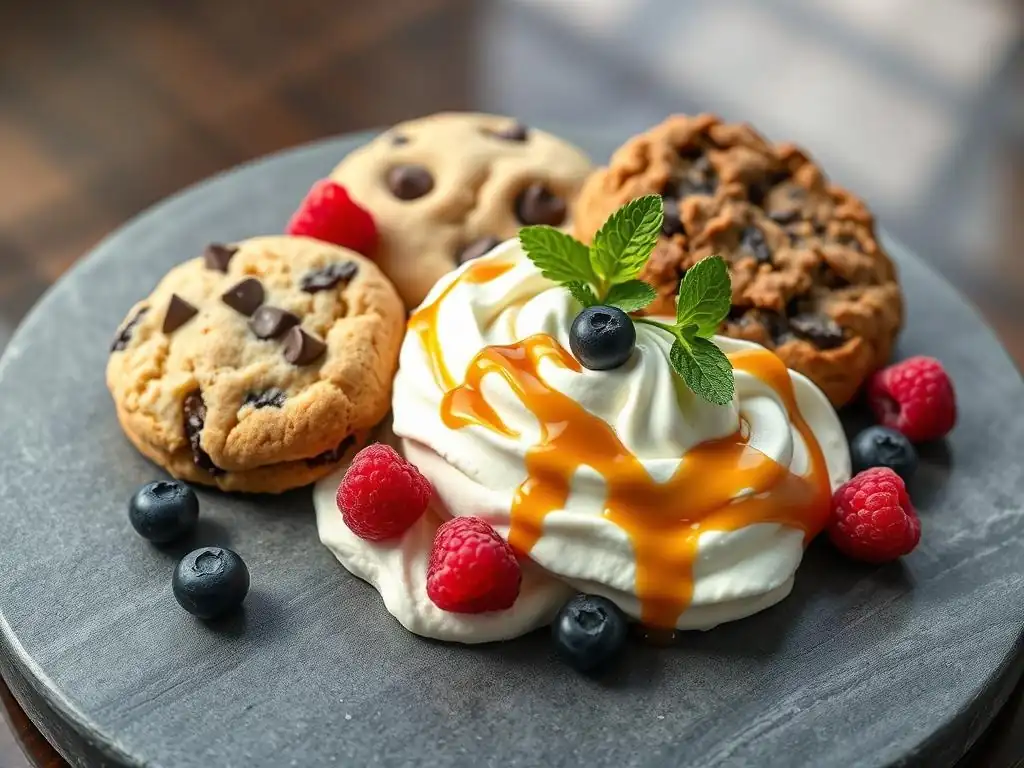
Sometimes, less is truly more, especially in beautiful, elegant cookie dessert plating. The single cookie statement focuses on highlighting one exceptional cookie, treating it as the centerpiece of the plate. This technique works best with cookies that are visually stunning on their own – perhaps a perfectly baked large cookie, a cookie with intricate decoration, or one with interesting textures. The large size of the plate relative to the single cookie creates significant negative space, drawing the eye directly to the cookie and giving it prominence.
To execute this technique effectively, the single cookie must be flawless. It should be placed deliberately, perhaps slightly off-center according to the rule of thirds, which suggests placing elements along invisible lines that divide the plate into nine equal sections. Accompaniments should be minimal and strategically placed.
A single perfect berry, a small quenelle of cream, or a subtle swipe of sauce are examples. The goal is to enhance the cookie, not distract from it. This minimalist approach requires confidence in the cookie itself and a keen eye for balance and proportion on the plate, resulting in a sophisticated and elegant cookie presentation.
The deconstructed cookie dessert takes the components of a classic cookie treat and separates them, presenting each element individually on the plate in an artistic arrangement. Instead of serving a whole cookie, you might have pieces of cookie crumble, a dollop of cookie dough-flavored mousse, a smear of ganache, and a scoop of ice cream, all related to the original cookie concept. This technique is inherently modern and allows for playful experimentation with textures and temperatures. For example, a deconstructed s'mores cookie might feature graham cracker crumble, chocolate ganache, toasted marshmallow fluff, and a piece of the baked cookie.
This approach offers immense creative freedom for beautiful, elegant cookie dessert plating. You can arrange the components in abstract patterns, clean lines, or organic shapes. It's an opportunity to showcase different textures – the crispness of the crumble, the smoothness of a sauce, the creaminess of a mousse. Labeling the elements can add an educational or intriguing touch for the diner. This technique requires careful consideration of how the flavors and textures work together, even when separated, ensuring that the sum of the parts delivers the intended cookie dessert experience in a sophisticated, visually striking way.
Adding height is a simple yet effective way to make beautiful, elegant cookie dessert plating more dynamic and visually interesting. Stacking cookies, especially round ones, creates a tower effect. This works particularly well with flat, sturdy cookies like shortbread, gingersnaps, or thin chocolate wafers. A stack of three to five cookies is usually sufficient to create height without becoming unstable. You can also stack cookies with layers of cream, ganache, or fruit in between, like a mini mille-feuille or a stacked sandwich cookie.
Another method is to prop cookies up or lean them against another element, such as a scoop of ice cream or a dollop of mousse. This breaks the horizontal plane of the plate and adds dimension. When creating towers or stacks, ensure the cookies are uniform in size and thickness for stability. Using a binding agent like a dab of melted chocolate or ganache can help keep stacks from toppling. This technique instantly elevates the presentation, drawing the eye upwards and adding a sculptural quality to your beautiful, elegant cookie dessert plating.
Presenting a selection of three different but complementary cookies on a single plate is a popular technique for beautiful, elegant cookie dessert plating. This offers variety to the diner while allowing you to showcase different flavors, textures, and colors. The key is to select cookies that work well together conceptually or flavor-wise and to arrange them cohesively on the plate. For instance, you might pair a rich chocolate cookie, a bright lemon shortbread, and a chewy oatmeal cookie.
Arranging the trio requires thought. They can be placed in a line, a triangle, or clustered together. Consider varying the height or presentation of each cookie slightly – one leaning, one flat, one with a small garnish on top. Adding a single complementary element that ties them together, such as a shared sauce drizzle or a sprinkle of crumble across the plate, can unify the composition. The cookie trio allows you to demonstrate versatility in your baking while presenting a harmonious and visually appealing plate of beautiful, elegant cookie dessert plating.
Stencils and edible powders are fantastic tools for adding intricate detail and a professional finish to beautiful, elegant cookie dessert plating. A fine-mesh sieve is your primary tool for applying powders evenly. Powdered sugar, cocoa powder, ground cinnamon, or even edible glitter can be used. Place a stencil on the plate or directly over a cookie, and gently tap the sieve filled with powder over it. When you lift the stencil, it leaves a clean, defined pattern.
Common patterns include geometric shapes, floral designs, or simple borders. You can stencil directly onto the plate before adding the cookie or onto the surface of a flat cookie. For instance, stenciling cocoa powder onto a white plate before placing a vanilla shortbread cookie creates a lovely contrast. Using stencils adds a layer of sophistication and precision that is characteristic of beautiful, elegant cookie dessert plating. It's a relatively simple technique that yields impressive visual results, transforming plain surfaces into decorated canvases.
The humble chocolate chip cookie can be elevated to classic elegance with thoughtful plating. A single large, perfectly baked chocolate chip cookie placed slightly off-center on a clean white plate makes a strong statement. Add a small scoop of high-quality vanilla bean ice cream or a quenelle of whipped cream beside it. A drizzle of warm chocolate sauce or a sprinkle of sea salt over the cookie just before serving enhances both flavor and appearance.
For a slightly more complex approach to beautiful, elegant cookie dessert plating with chocolate chip cookies, consider a stack of two or three smaller cookies with a layer of chocolate ganache or espresso cream in between. Garnish with a few fresh raspberries or a sprig of mint for a pop of color and freshness.
Another idea is to create a smear of caramel sauce across the plate and place a broken piece of chocolate chip cookie on it, alongside a dollop of crème fraîche and a few chocolate shavings. Focus on highlighting the rich brown tones and the texture of the chocolate chips.
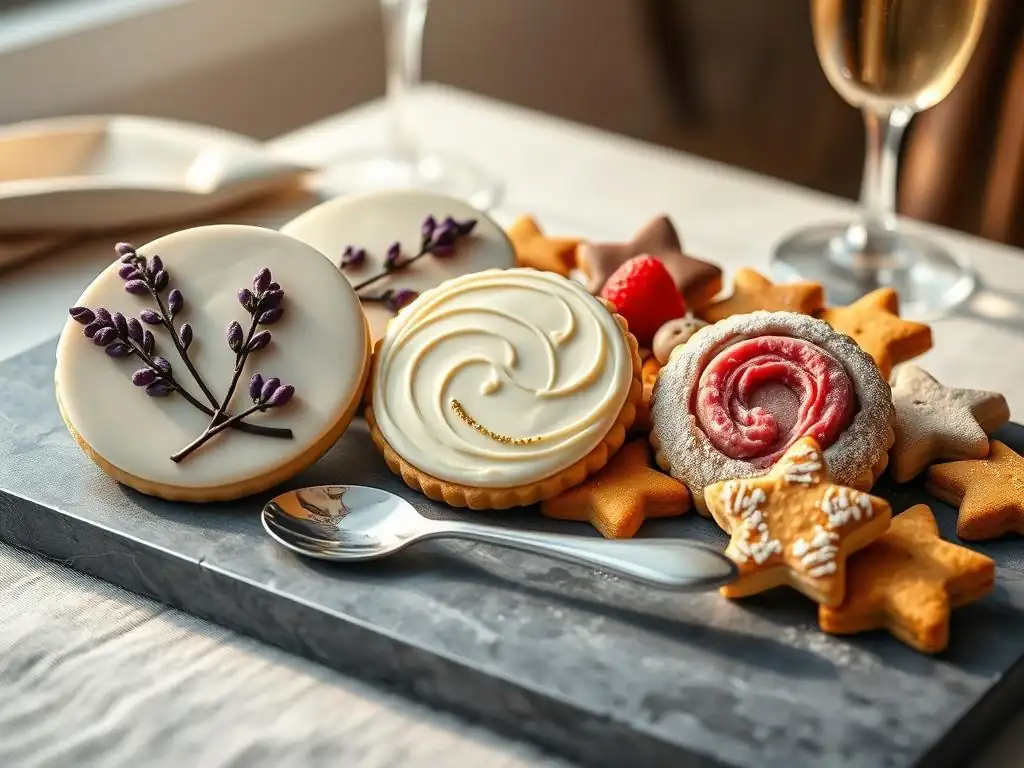
Sugar cookies offer a blank canvas for beautiful, elegant cookie dessert plating, especially when they are decorated. For simple elegance, place a perfectly iced or decorated sugar cookie on a colored plate that complements the icing colors. For instance, a light blue plate can enhance white or gold decorations. Add a light dusting of edible glitter or a few nonpareils scattered artfully on the plate.
To create a more composed dessert, consider serving a warm, undecorated sugar cookie with a scoop of vibrant sorbet, like raspberry or lemon. The contrast in temperature and texture is delightful. Arrange the cookie and sorbet with a swirl of fruit coulis. If using cut-out sugar cookies, arrange a few different shapes on the plate with a light drizzle of glaze and a sprinkle of edible flowers. Sugar cookies lend themselves well to themed plating for holidays or special occasions, allowing for creative and beautiful, elegant cookie dessert plating that matches the event.
Oatmeal cookies, with their inherently rustic texture and warm flavors, can be plated to enhance this charm while maintaining elegance. Place a few warm oatmeal raisin or oatmeal chocolate chip cookies on a natural-looking plate, perhaps one with an earthy tone or a slight texture. Pair them with a dollop of cinnamon-spiced whipped cream or a scoop of brown butter ice cream.
A drizzle of caramel or maple syrup sauce complements the flavors beautifully. For beautiful, elegant cookie dessert plating with oatmeal cookies, consider incorporating elements like toasted pecans, a sprinkle of coarse sea salt, or a small pile of dried cranberries. Arrange the cookies slightly overlapping or stacked loosely. The goal is to embrace their wholesome, textured appearance while adding refined touches that elevate the presentation. A block quote from a hypothetical pastry chef might say:
Oatmeal cookies are comforting, but elegant plating shows they deserve just as much respect as a delicate pastry. Focus on enhancing their inherent warmth and texture.
Shortbread cookies are the epitome of refined simplicity, and their plating should reflect this. Their clean edges and buttery flavor pair well with minimalist presentations. A few fingers of classic shortbread can be arranged neatly on a rectangular plate with a small bowl of lemon curd or a pot de crème served alongside. The focus is on clean lines and highlighting the cookie's perfect crumb.
For beautiful, elegant cookie dessert plating with shortbread, consider variations like lavender or rosemary shortbread. Pair these with a light honey syrup or a sprig of the herb used in the cookie. Chocolate-dipped shortbread can be presented with a smear of raspberry coulis and a few fresh berries. The key is restraint; let the quality and shape of the shortbread shine. A horizontal line can separate the cookie section from its accompaniment:
Shortbread | Lemon Curd
Shortbread is versatile; it can be snapped into pieces and used as an element in a deconstructed dessert or served whole as the star.
Peanut butter blossom cookies, with their distinctive shape and chocolate kiss center, offer a built-in visual element. For beautiful, elegant cookie dessert plating, highlight the cookie's unique form. Place one or two perfect peanut butter blossoms on a plate. Pair with a small amount of chocolate sauce (to echo the kiss) or a peanut butter crémeux.
Consider serving them warm so the chocolate is slightly melted. Add a sprinkle of chopped roasted peanuts for extra texture and flavor, or a dusting of cocoa powder around the cookie. A small scoop of complementary ice cream, like coffee or banana, can turn it into a more substantial dessert plate. The contrast of the soft cookie, the melting chocolate, and a creamy accompaniment makes for a delightful and visually appealing presentation. A task list for plating peanut butter blossoms might include:
- [ ] Select perfect, symmetrical cookies.
- [ ] Choose a plate contrasting in color (e.g., white or blue).
- [ ] Prepare a chocolate or peanut butter sauce.
- [ ] Drizzle sauce artfully or create a small pool.
- [ ] Place 1-2 cookies on or near the sauce.
- [ ] Add a sprinkle of peanuts or a small scoop of ice cream.
- [ ] Dust lightly with cocoa powder if desired.
This structured approach helps ensure all elements contribute to beautiful, elegant cookie dessert plating.
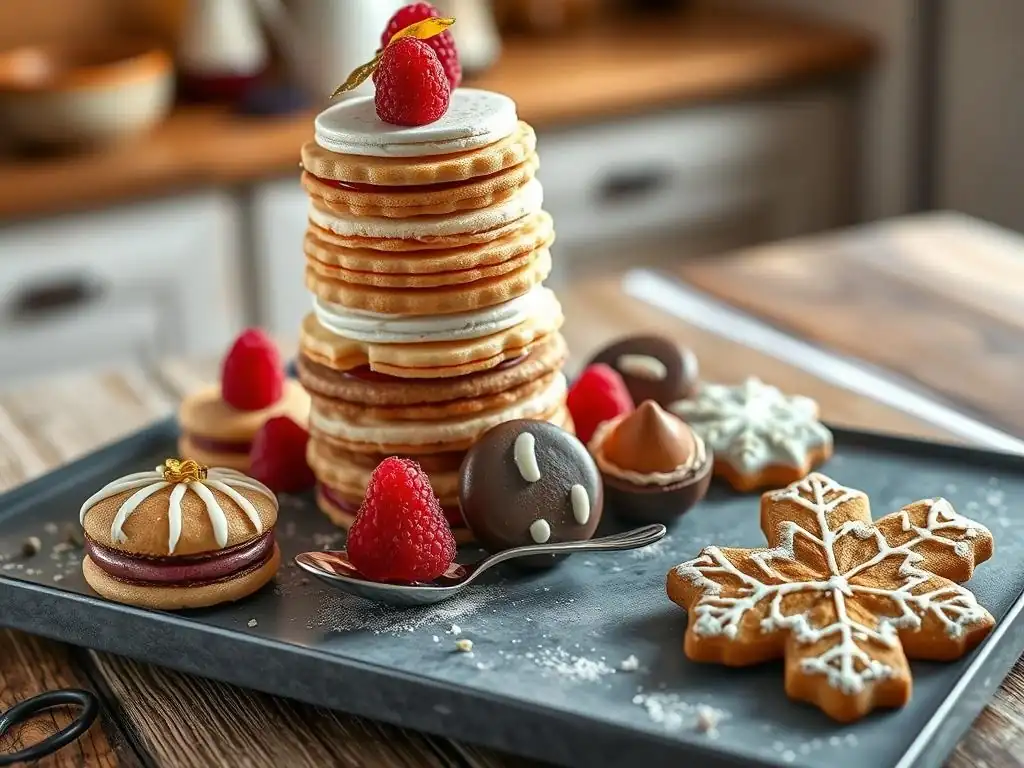
Using cookie crumble is an effective advanced technique for adding texture and visual interest to beautiful, elegant cookie dessert plating. Crumble is simply made by breaking or processing cookies into small pieces. It can range from fine crumbs (like sand) to larger, more rustic chunks. Different types of cookies yield different crumbles – shortbread creates a fine, sandy texture, while oatmeal cookies create a more varied, textured crumble.
The crumble can be scattered artfully across the plate, used to create a textured base for other elements, or formed into a defined shape using a ring mold. Toasted cookie crumble adds an extra layer of flavor and crispness. For example, toasted graham cracker crumble is perfect for s'mores-inspired desserts, while toasted shortbread crumble adds buttery richness. Using crumble adds a delightful crunch that contrasts with smoother elements like sauces or creams, enhancing the overall sensory experience of beautiful, elegant cookie dessert plating.
Tempering chocolate is a technique that, while requiring precision, allows you to create shiny, stable chocolate garnishes that snap beautifully. Tempered chocolate can be used to make delicate chocolate shards, curls, piped patterns, or even molded shapes to adorn your beautiful, elegant cookie dessert plating. Unlike untempered chocolate, which can be dull and melt easily at room temperature, tempered chocolate sets hard and has a professional finish.
The process involves carefully heating and cooling chocolate to specific temperatures (around 115-120°F for dark, cooling to 82-84°F, then reheating slightly to 88-90°F) to stabilize the cocoa butter crystals. While it requires practice, mastering tempering opens up a world of possibilities for intricate and stunning chocolate decorations. You can drizzle tempered chocolate over cookies, create abstract patterns on parchment paper that harden into edible art, or make delicate chocolate leaves. These elements add a touch of professional sophistication to your beautiful, elegant cookie dessert plating. A small note on temperature might be included:
Dark Chocolate Tempering Temps:
Melt: 115-120°F
Cool: 82-84°F
Reheat: 88-90°F
Taking beautiful, elegant cookie dessert plating to the next level can involve crafting edible decorations from cookie dough or other edible mediums. Sugar cookie dough is particularly versatile for this. You can roll it thin, cut out small shapes (like stars, hearts, or leaves) using mini cookie cutters, bake them until crisp, and use them as delicate garnishes. These small cookies can be left plain, glazed, or dusted with edible glitter.
Beyond cookie dough, techniques like using edible paper, gum paste, or modeling chocolate allow you to create more intricate decorations like realistic flowers, ribbons, or complex shapes. These require specific skills and materials but can result in stunning, highly detailed edible art. For example, a delicate sugar cookie might be adorned with a small, handcrafted gum paste rose. These types of edible decorations require planning and skill but add an unparalleled level of bespoke elegance to your beautiful, elegant cookie dessert plating, making each plate a unique masterpiece.
Pairing cookies with ice cream or sorbet is a classic combination, but plating it elegantly elevates it beyond a simple scoop alongside a cookie. The temperature contrast between a warm cookie and cold ice cream is delightful, and the creamy texture of ice cream or the refreshing texture of sorbet complements the cookie's bite. For beautiful, elegant cookie dessert plating, focus on the presentation of the frozen element.
Use a warm scoop to create perfectly smooth, round quenelles of ice cream or sorbet, or use a standard scoop and shape it neatly. Place the scoop deliberately on the plate, perhaps slightly melting into a sauce base. Arrange the cookie(s) alongside or leaning against the scoop. Add garnishes that tie the flavors together, like a drizzle of sauce, a sprinkle of nuts, or fresh fruit. Consider the color contrast – a vibrant raspberry sorbet next to a golden shortbread cookie is visually striking. This pairing offers a familiar comfort with an elevated, beautiful, elegant cookie dessert plating presentation.
Understanding basic color theory can dramatically enhance your beautiful, elegant cookie dessert plating. Colors influence mood and perception, and using them effectively creates visually appealing compositions. Contrasting colors, like red berries on a white plate with a dark brown cookie, create vibrancy and draw the eye. Analogous colors, which are next to each other on the color wheel (e.g., yellow lemon curd with golden shortbread), create a harmonious and soothing effect.
Consider the natural colors of your cookies and accompaniments and how they interact. Green from mint or pistachios adds freshness. Red from berries or raspberry coulis adds vibrancy. Browns and golds from baked goods are warm and inviting. Using a neutral plate allows the colors of the dessert components to stand out. Aim for a balanced palette that is appealing and hints at the flavors within the dish, making your beautiful, elegant cookie dessert plating not just delicious but also a feast for the eyes.
The Importance of White Space in Dessert Presentation
White space, or negative space, is the empty area on the plate around the food elements. It is crucial in beautiful, elegant cookie dessert plating because it gives the elements room to breathe and prevents the plate from looking cluttered. Strategic use of white space draws attention to the plated components, making them stand out and appear more deliberate and refined.
Resist the urge to fill the entire plate. A single cookie on a large plate with minimal garnish utilizes white space to create a striking, minimalist effect. Even with multiple elements, arranging them thoughtfully with space between them enhances clarity and elegance. White space guides the eye through the composition. It's about balance – having enough elements to be interesting but enough space to be sophisticated. Mastering the use of white space is key to achieving that clean, professional look in beautiful, elegant cookie dessert plating.
Like baking itself, mastering beautiful, elegant cookie dessert plating requires practice and experimentation. Don't expect your first attempt to look like a magazine cover. Start simple, perhaps focusing on just one technique like sauce drizzling or garnish placement. Try plating the same cookie in several different ways to see which presentation you prefer.
Experiment with different plates, garnishes, and sauces. Take photos of your plated desserts (even if just with your phone) to review and see what worked and what didn't. Pay attention to how professional chefs and food stylists plate desserts for inspiration, but adapt ideas to your own style and the cookies you are making. Each attempt is a learning opportunity that refines your eye and technique, bringing you closer to consistently creating beautiful, elegant cookie dessert plating.
If you plan to photograph your beautiful, elegant cookie dessert plating, there are a few extra considerations. Food photography often benefits from natural light; place your plate near a window. Consider the angle of the shot – overhead shots (flat lay) work well for showcasing patterns and arrangement, while shots taken slightly above the plate can highlight height and dimension.
Ensure the plate is clean; smudges or drips can be distracting. Think about composition within the frame of the photo – use the rule of thirds. Add props sparingly if desired, such as a complementary napkin or a small bowl of ingredients used in the cookie, but ensure they don't clutter the shot. The goal is to capture the elegance and appeal of your plated cookies, making them look as delicious in the photo as they are in person, showcasing your beautiful, elegant cookie dessert plating skills to the world.
Mastering the art of beautiful, elegant cookie dessert plating is a rewarding skill that significantly elevates your baking. It transforms simple cookies into sophisticated desserts worthy of any occasion, from a casual gathering to a formal dinner party. By paying attention to the details of presentation – the plate, the garnishes, the sauces, and the arrangement – you add another layer of craftsmanship to your baked goods. This focus on visual appeal not only impresses others but also deepens your own appreciation for the process of creating delicious and beautiful food.
The techniques and ideas discussed, from minimalist single cookie statements to complex deconstructed desserts, provide a framework for creativity. Remember that practice is key, and each attempt refines your eye and skills. Embracing elegant cookie presentation allows you to fully showcase the care and effort you put into your baking, making every cookie moment truly special. Continue to experiment, find your style, and enjoy the process of turning your delicious cookies into stunning visual masterpieces through beautiful, elegant cookie dessert plating.
At BakeWithEase, we are passionate about helping you not just bake delicious cookies, but also present them beautifully. Our resources cover everything from foundational baking techniques to creative decorating and, of course, beautiful, elegant cookie dessert plating. We believe that everyone, from beginners to experienced bakers, can learn to plate their creations with style and confidence.
Explore our wide range of cookie recipes, from classic favorites to innovative new ideas. Find tips on making perfect dough, achieving the right texture, and decorating your cookies before they even hit the plate. Then, use the guidance on plating techniques to arrange them artfully, adding those finishing touches that transform a simple cookie into an elegant dessert experience. BakeWithEase is here to support you on your journey to creating beautiful cookie desserts that taste as incredible as they look. Let us be your guide to mastering beautiful, elegant cookie dessert plating.
Frequently Asked Questions
Consider the color and size of your plate. Opt for neutral colors and a plate that complements, not overshadows, the cookies. The plate should also be large enough to allow for some empty space around the cookies.
Try grouping cookies in odd numbers for visual appeal. Use varying heights and angles, perhaps stacking some and laying others flat. Consider adding a complementary sauce drizzle or dusting of powdered sugar.
Fresh fruits like berries or sliced citrus add color and freshness. Edible flowers or herbs like mint can also provide a pop of color and aroma. A light dusting of cocoa powder or cinnamon can add a subtle touch.
Create a centerpiece using a taller stack of cookies or a unique garnish. Consider using a small ramekin of chocolate sauce or whipped cream to draw the eye. Ensure the focal point complements the overall design.
Avoid overcrowding the plate; less is often more. Don't use plates that are chipped or stained. Be mindful of symmetry – while intentional asymmetry can work, avoid unintentional unevenness in your arrangement.
The art of presenting food is as crucial as its creation, and nowhere is this more evident than in the seemingly simple cookie. A perfectly baked cookie, beautifully plated, transforms from a humble treat into a miniature masterpiece, capable of delighting the eye and tantalizing the palate in equal measure. This elevates the entire experience, turning a simple snack into a moment of mindful indulgence.
The impact of aesthetically pleasing food presentation on our enjoyment is undeniable. It's a subtle yet powerful influence, shaping our perception and enhancing our appreciation of even the most familiar dishes. We eat first with our eyes,
a culinary adage often repeated, holds true especially when considering the impact of a thoughtfully plated cookie. From the careful arrangement of cookies on a plate to the strategic use of garnishes, every detail contributes to the overall sensory experience, creating a lasting impression that goes beyond mere taste.
Consider the possibilities: You've mastered the perfect chocolate chip cookie recipe, but what about the presentation? Will you simply pile them onto a plate, or will you arrange them artfully, perhaps with a dusting of powdered sugar, a sprig of mint, or a drizzle of melted chocolate? The choice is yours, and it's a choice that speaks volumes about your attention to detail and your appreciation for the beauty in the everyday.
Take the time to elevate your cookie creations; experiment with different plating styles, garnishes, and serving vessels. Let your creativity shine, and discover the joy of transforming a simple cookie into a truly unforgettable culinary experience.
Unleash Your Inner Pastry Artist: Plate Like a Pro!
Thanks for taking the time to explore the art of elegant cookie plating! We hope you’ve gained some delicious inspiration and new techniques. Now it’s time to put your skills to the test.
- Create your masterpiece: Try plating your next batch of cookies using one of the techniques we explored – perhaps the unexpected height and layering or the surprising use of negative space? Share a picture with us!
- Experiment with different garnishes: Elevate your cookie game even further by exploring new flavor combinations and garnishes. What unexpected textures and tastes could you add?
- Share your creations: Show off your stunning cookie arrangements on social media! Use #BakeWithEase to connect with our community and inspire others.
Ready to transform your ordinary cookies into extraordinary edible works of art? What unexpected flavor combination will you try next?