
Rich Vanilla Custard Sauce: Perfect for Pouring


Welcome to BakeWithEase, your kitchen companion for all things baking! Ever dreamt of creating that perfect, velvety smooth finish for your desserts? Then you're in the right place. Discover how to elevate your pastries and desserts with our easy vanilla custard sauce recipe, a simple yet elegant addition that will impress every time. Intrigued? Let's unlock the secrets to this luscious sauce and transform your baking creations!
- Classic Vanilla Custard Sauce: A Luscious Addition to Any Dessert
- BakeWithEase: Elevate Your Desserts with Homemade Vanilla Custard Sauce
- Mastering the Classic Vanilla Custard Sauce Recipe: A Step-by-Step Guide
- Step-by-Step Instructions: Crafting Your Vanilla Custard Sauce
- Tips and Tricks for the Best Vanilla Custard Sauce
- Serving Suggestions: How to Use Your Delicious Vanilla Custard Sauce
- Storing Your Vanilla Custard Sauce: Keeping It Fresh
- The Ultimate Classic Vanilla Custard Sauce: A Recipe for Success
- Frequently Asked Questions
- Final Reflection: The Enduring Allure of a Simple Pleasure
- Unlock the Creamy Secret: Elevate Your Desserts Today!
Classic Vanilla Custard Sauce: A Luscious Addition to Any Dessert
BakeWithEase: Elevate Your Desserts with Homemade Vanilla Custard Sauce
The Versatility of Vanilla Custard: Beyond Cakes
Vanilla custard sauce, often known as Crème Anglaise, is one of the most fundamental and versatile dessert sauces you can master. While it's a classic pairing for cakes, its utility extends far beyond. Think of it as a luxurious bath for warm fruit crumbles or pies, a velvety base for layered parfaits, or even a simple yet elegant dip for fresh berries. This easy vanilla custard sauce recipe provides a smooth, pourable consistency that complements a wide array of textures and flavors, making it an indispensable tool in any home baker's repertoire.
This delightful sauce shines when poured over warm desserts where it can slightly melt and meld with the flavors. Consider pairing it with a rustic apple crumble, a warm chocolate lava cake, or a classic bread pudding. Its subtle sweetness and rich mouthfeel balance the tartness of fruit or the intensity of chocolate, creating a harmonious spoonful every time. Learning this simple vanilla custard recipe unlocks a world of dessert possibilities, turning everyday baked goods into something truly special.
Homemade vs. Store-Bought: A Taste and Texture Comparison
While convenient, store-bought vanilla custard sauces often fall short in flavor and texture compared to a homemade version. Commercial products frequently rely on artificial flavorings and stabilizers like modified corn starch or cellulose gum to achieve thickness and shelf stability. This can result in a texture that is sometimes gummy or overly uniform, lacking the natural silkiness derived from properly cooked egg yolks. The vanilla flavor in store-bought options is often synthetic vanillin, which lacks the complex aromatic profile of real vanilla bean or high-quality extract.
Crafting your own easy vanilla custard sauce recipe at home allows you complete control over the ingredients, resulting in a sauce that is significantly richer, creamier, and infused with genuine vanilla flavor. Using fresh egg yolks provides a natural richness and smooth consistency that thickeners can't replicate. A real vanilla bean or good quality pure vanilla extract imparts a depth of flavor that synthetic alternatives simply cannot match. The difference is palpable – a homemade sauce has a delicate, pourable viscosity and a pure, lingering vanilla taste that elevates any dessert it accompanies.
Mastering the Classic Vanilla Custard Sauce Recipe: A Step-by-Step Guide
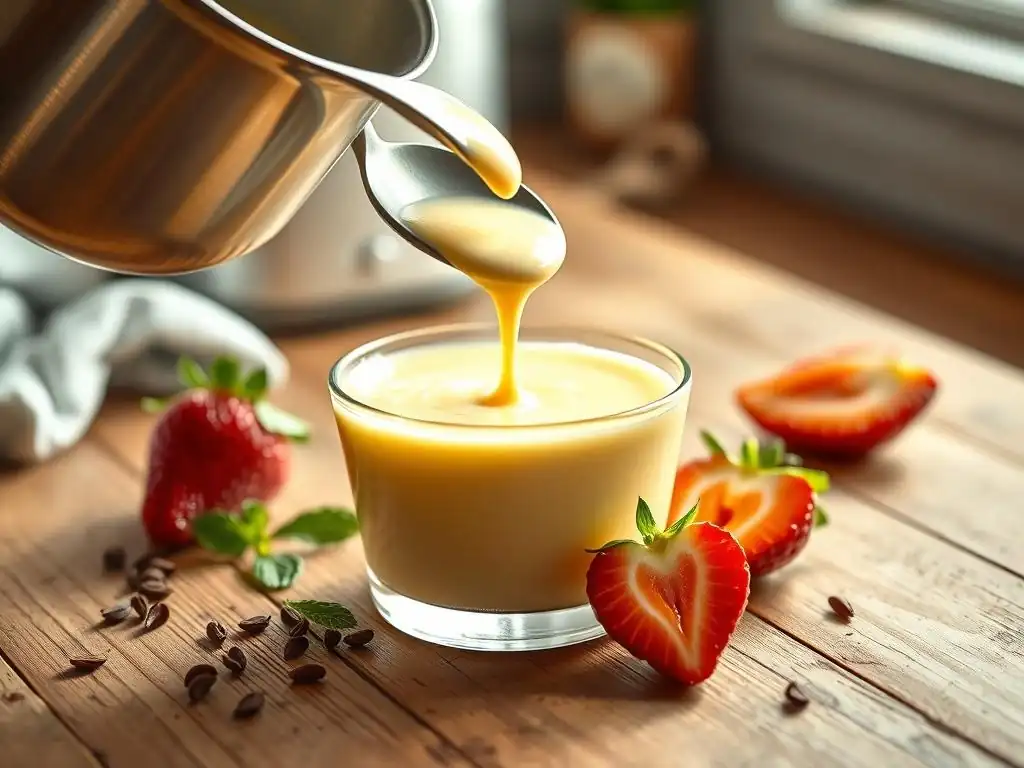
Ingredients for a Smooth and Creamy Vanilla Custard Sauce
Creating a luscious vanilla custard sauce starts with selecting quality ingredients. You'll need dairy, egg yolks, sugar, and, of course, vanilla. For a standard batch, you might use 1 cup (approx. 240ml) of whole milk and 1 cup (approx. 240ml) of heavy cream for richness. The fat content from both contributes to a smooth, velvety texture. A generous amount of egg yolks is key – typically 6-8 large egg yolks for this quantity of liquid provides the necessary thickening power and richness without making it too thick.
Sugar not only sweetens the custard but also helps to stabilize the egg yolks. About 1/2 cup (approx. 100g) of granulated sugar is a common starting point, but you can adjust slightly to taste. For the star flavor, vanilla, a scraped vanilla bean is highly recommended for the purest taste and those beautiful vanilla specks. Alternatively, 1-2 teaspoons of high-quality pure vanilla extract can be used, added at the end to preserve its delicate aroma. Using fresh, good quality ingredients is the first step to a truly exceptional easy vanilla custard sauce recipe.
Essential Equipment for Perfect Custard
Having the right tools on hand makes the process of crafting a smooth vanilla custard sauce much easier and helps prevent common issues like lumps. You'll need a medium-sized heavy-bottomed saucepan. The heavy bottom helps distribute heat evenly, reducing the risk of scorching the dairy. A good whisk is crucial for continuously stirring the custard as it cooks; a balloon whisk works well for incorporating air and ensuring even heating.
Two medium-sized bowls are necessary: one for whisking the egg yolks and sugar, and another, preferably chilled, for the finished custard to cool down quickly. A fine-mesh sieve is absolutely essential for straining the custard after cooking. This removes any potential scrambled egg bits or leftover vanilla bean pieces, ensuring a perfectly smooth, silky texture. Lastly, a heatproof rubber spatula is useful for scraping down the sides of the pan and stirring thicker parts of the custard.
Step-by-Step Instructions: Crafting Your Vanilla Custard Sauce
Step 1: Infusing the Cream with Vanilla Flavor
Begin by gently heating your dairy. Combine the milk and cream in your heavy-bottomed saucepan. If using a vanilla bean, split it lengthwise with a sharp knife, scrape out the tiny black seeds, and add both the seeds and the pod to the saucepan. This allows the full flavor of the vanilla to infuse into the dairy as it warms. If using vanilla extract, you'll add it later.
Heat the milk and cream mixture over medium heat, stirring occasionally, just until small bubbles appear around the edge of the pan and the mixture is steaming. Do not let it boil vigorously, as this can scorch the dairy. Once heated, remove the pan from the heat, cover it, and let it steep for about 10-15 minutes if using a vanilla bean. This steeping time allows the vanilla flavor to deepen significantly, contributing to a more aromatic and delicious easy vanilla custard sauce recipe.
Step 2: Whisking the Egg Yolks and Sugar
While the dairy is steeping (or while it's heating if using extract), prepare your egg mixture. In a separate medium bowl, combine the egg yolks and sugar. Using your whisk, immediately begin whisking them together vigorously. Continue whisking for 1-2 minutes until the mixture becomes pale yellow and slightly thickened, almost ribbon-like when the whisk is lifted. This process is sometimes called "ribboning" and helps to dissolve the sugar into the yolks and creates a stable base for the custard.
Ensuring the sugar is well incorporated at this stage is important. Undissolved sugar can potentially cause graininess in the final custard. Whisking also helps to lighten the yolks slightly and prepares them for the tempering process, which is the crucial next step in preventing scrambled eggs. This simple vanilla custard recipe relies on this careful preparation of the yolks.
Step 3: Tempering the Egg Mixture for a Silky Texture
Tempering is perhaps the most critical step in making a smooth custard. It involves gradually raising the temperature of the egg yolks without cooking them instantly. After your milk and cream mixture has steeped (and you've removed the vanilla bean pod if used), slowly ladle about half a cup of the hot liquid into the whisked egg yolk and sugar mixture while continuously whisking vigorously.
Keep whisking constantly as you add the hot liquid in a thin stream. This slow addition and constant motion gently warms the egg yolks, bringing their temperature up closer to that of the hot dairy without scrambling them. Repeat this process, adding another half cup or so of the hot liquid while still whisking constantly. Once you've incorporated about a cup of the hot liquid into the yolks, your egg mixture is tempered and ready to be added back to the remaining hot dairy in the saucepan.
Step 4: Cooking the Custard to Perfection: Achieving the Right Consistency
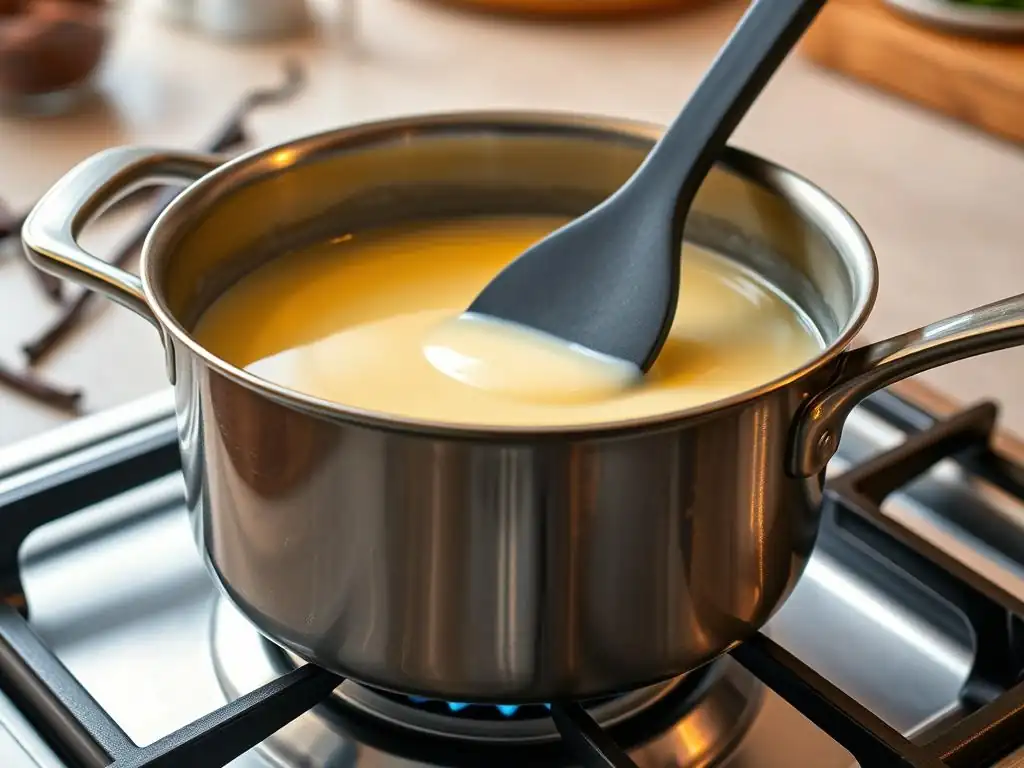
Pour the tempered egg yolk mixture back into the saucepan with the remaining hot milk and cream. Return the saucepan to medium-low heat. Now, this requires patience and constant attention. Stir the custard continuously with your whisk or a heatproof spatula, making sure to scrape the bottom and sides of the pan. The custard will gradually thicken as the egg yolks cook.
Do not let the mixture boil at any point, as this will curdle the egg yolks and ruin the smooth texture. Cook the custard gently, stirring constantly, until it thickens enough to coat the back of a spoon (Nappé consistency). If you draw a line across the back of the coated spoon with your finger, the line should hold without the custard running back into it.
This typically takes about 5-10 minutes of gentle cooking after returning the mixture to the heat. Using a thermometer, the ideal temperature is usually between 170°F and 175°F (about 77°C to 79°C). Cooking beyond this can lead to scrambling.
Step 5: Straining and Cooling Your Homemade Vanilla Custard
Immediately after the custard reaches the desired thickness and temperature, remove the saucepan from the heat. Place a fine-mesh sieve over a clean bowl. Carefully pour the hot custard through the sieve. This step is essential for ensuring a perfectly smooth texture, catching any small bits of cooked egg or vanilla bean. Don't skip this step in your easy vanilla custard sauce recipe!
If you used vanilla extract, stir it into the strained custard at this point. To cool the custard quickly and prevent a skin from forming on top, you can place the bowl of custard over an ice bath (a larger bowl filled with ice and a little water) and stir occasionally until it cools down. Alternatively, cover the surface of the custard directly with plastic wrap, pressing it down so it touches the entire surface. This prevents a skin from forming. Once cooled, refrigerate the custard until thoroughly chilled, which will also allow it to thicken slightly more.
Tips and Tricks for the Best Vanilla Custard Sauce
Avoiding a Lumpy Custard: Troubleshooting Tips
Lumps in vanilla custard sauce are usually caused by the egg yolks cooking too quickly and scrambling. The most common culprits are overheating the mixture or not stirring constantly during the cooking phase. To avoid lumps, always cook the custard over medium-low heat and stir continuously, ensuring you scrape the bottom and sides of the pan where the custard is hottest and thickest.
- Tempering is Key: Make sure you temper the egg yolks properly by slowly adding hot liquid while whisking constantly in Step 3. This prevents the shock of adding cold eggs directly to hot dairy.
- Constant Stirring: Never walk away from the custard while it's on the heat. Constant, thorough stirring ensures even cooking.
- Don't Boil: As mentioned, boiling will curdle the eggs. If you see the mixture starting to bubble vigorously, remove it from the heat immediately and whisk rapidly.
- Strain: Even if you think you've avoided lumps, straining the finished custard is the best insurance policy for a silky smooth result.
If you do end up with a slightly lumpy custard, don't despair! You can try blending it carefully with an immersion blender or transferring it to a regular blender and blending until smooth. While this might slightly alter the texture, it can often salvage a batch.
Achieving the Ideal Thickness: Consistency Control
The desired thickness of vanilla custard sauce depends on its intended use, but typically you're aiming for a pourable consistency that coats a spoon. The key factors influencing thickness are the ratio of egg yolks to liquid, and the cooking time/temperature. Using more egg yolks per volume of dairy will result in a thicker sauce. For a standard pourable sauce, a ratio of 6-8 egg yolks to 2 cups of liquid (milk/cream) is common.
Cooking time is also critical. The custard thickens as the egg proteins coagulate. Cooking it longer or at a slightly higher temperature (while still avoiding boiling) will result in a thicker custard. Conversely, undercooking will leave it too thin.
The "coat the back of a spoon" test and reaching the 170-175°F (77-79°C) temperature range are your best guides. If your custard is too thin after cooling, you can gently reheat it and cook it slightly longer, stirring constantly, until it reaches the desired consistency, then strain again. If it's too thick, you can whisk in a little warm milk or cream until it reaches the desired pourable consistency.
Flavor Variations: Enhancing Your Vanilla Custard
While classic vanilla is divine, this easy vanilla custard sauce recipe serves as an excellent base for various flavor enhancements. Once the custard is cooked and strained, you can stir in additional ingredients to create exciting variations.
- Citrus: Add the zest of half an orange or a whole lemon during the dairy steeping phase for a bright, aromatic twist.
- Spices: Infuse the dairy with a cinnamon stick, a few whole cloves, or a star anise along with the vanilla bean. Strain them out before adding the yolks. A pinch of nutmeg can also be stirred in at the end.
- Chocolate: Whisk in finely chopped good-quality chocolate (dark, milk, or white) into the hot, strained custard until melted and smooth.
- Coffee: Stir in 1-2 teaspoons of instant espresso powder or strong coffee extract into the hot, strained custard.
- Liqueur: For an adult version, whisk in a tablespoon or two of a complementary liqueur like Grand Marnier, rum, or Frangelico after the custard has cooled slightly but is still warm.
Experimenting with these variations allows you to customize your simple vanilla custard recipe to perfectly match the dessert it will accompany.
Serving Suggestions: How to Use Your Delicious Vanilla Custard Sauce
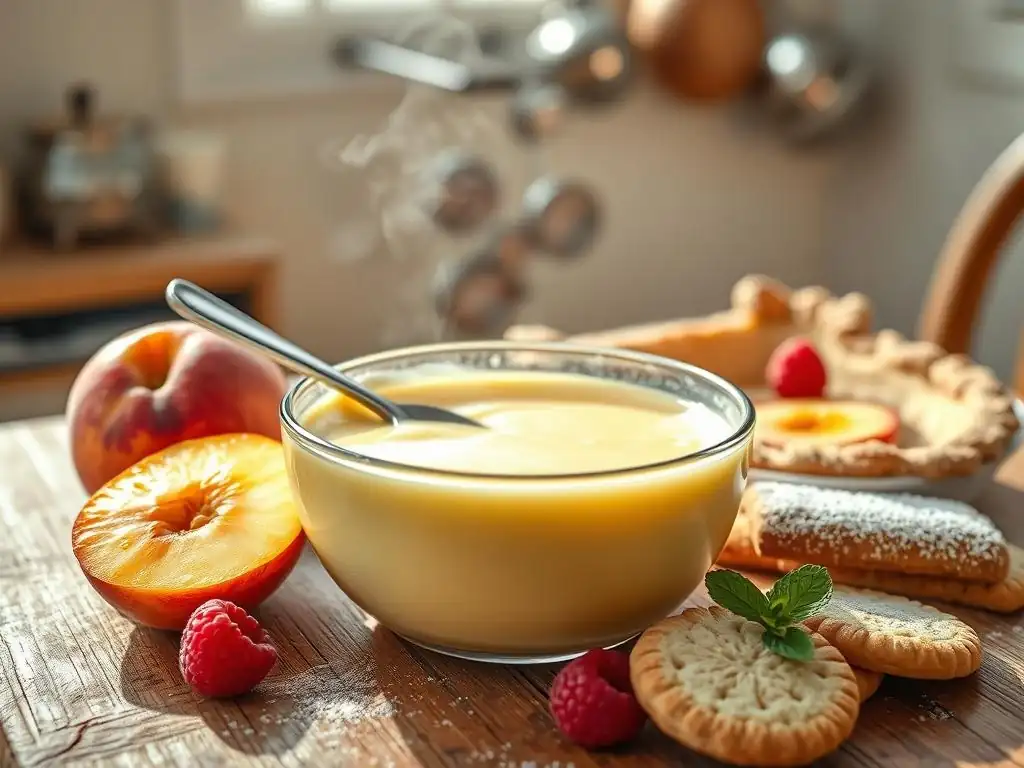
Vanilla Custard Sauce for Cakes and Pastries
This classic vanilla custard sauce is the perfect accompaniment to a wide variety of cakes and pastries. Its smooth, pourable texture makes it ideal for drizzling generously over slices of warm cake. Think of pound cake, sponge cake, or even a simple loaf cake – a pool of warm custard sauce transforms them into elegant desserts.
It's also a traditional pairing for fruit-based pastries like apple pie, peach cobbler, or berry tarts. The rich, sweet sauce provides a creamy counterpoint to the often tart fruit and crisp pastry. A simple vanilla custard recipe like this enhances the overall dessert experience, adding moisture and a layer of luxurious flavor. Serve it warm for maximum effect with these baked goods.
Vanilla Custard Sauce for Fruit Desserts
Beyond baked goods, vanilla custard sauce is a fantastic partner for fresh or cooked fruit. A bowl of mixed fresh berries becomes a sophisticated dessert when topped with a spoonful of chilled vanilla custard. The cool, creamy sauce highlights the natural sweetness and acidity of the fruit.
Consider pairing it with poached pears, roasted apples, or grilled pineapple. The warmth of the cooked fruit combined with the smooth, potentially warm or chilled custard is delightful. It's also a classic component in trifles, layered with sponge cake, fruit, and sometimes jelly. The versatility of this easy vanilla custard sauce recipe makes it a go-to for fruit presentations.
Vanilla Custard Sauce as a Standalone Dessert
While often thought of as an accompaniment, chilled vanilla custard sauce can absolutely stand on its own as a light, elegant dessert. Served in small glasses or bowls, perhaps topped with a sprinkle of cinnamon, a fresh berry, or a delicate cookie, it's a lovely way to end a meal.
For a slightly more substantial standalone dessert, consider making an île flottante (floating island), where meringues are poached and served floating on a pool of chilled Crème Anglaise. This highlights the beautiful simplicity and rich flavor of the custard itself. This simple vanilla custard recipe is delicious enough to be enjoyed by the spoonful.
Storing Your Vanilla Custard Sauce: Keeping It Fresh
Refrigerator Storage: Best Practices
Proper storage is key to keeping your homemade vanilla custard sauce fresh and safe to eat. Once the custard has been strained and cooled, it should be transferred to an airtight container. Alternatively, you can leave it in the bowl it was strained into and cover the surface directly with plastic wrap before covering the bowl tightly.
Stored correctly in the refrigerator, homemade vanilla custard sauce will typically last for 3 to 4 days. Always store it at or below 40°F (4°C). Before serving, give it a gentle whisk as it may thicken slightly and need to be loosened. If serving warm, reheat it gently over low heat or in a microwave, stirring frequently, again being careful not to boil it.
Freezing Vanilla Custard: Is It Possible?
While technically possible, freezing vanilla custard sauce is generally not recommended if you prioritize a perfectly smooth texture. Custards thickened primarily with egg yolks tend to change texture when frozen and thawed. The proteins can separate, resulting in a slightly grainy or watery consistency that is difficult to fully recover, even with whisking.
If you absolutely must freeze it, ensure it is completely cooled before transferring it to a freezer-safe container, leaving some headspace for expansion. Thaw it slowly in the refrigerator. You will likely need to whisk it vigorously or even briefly blend it after thawing to try and restore some of its original smoothness. For the best quality and texture, plan to use your easy vanilla custard sauce recipe within its refrigerated lifespan.
The Ultimate Classic Vanilla Custard Sauce: A Recipe for Success
Frequently Asked Questions
What makes this vanilla custard sauce "easy"?
This recipe focuses on simple steps and readily available ingredients, making it achievable for bakers of any skill level. There are no complicated techniques required.
Can I use something other than vanilla extract?
Yes, you can experiment! Consider using vanilla bean paste for a stronger vanilla flavor or a different extract like almond or lemon for a unique twist.
How do I prevent my custard sauce from curdling?
Curdling happens when the eggs overcook. To avoid this, use low heat and stir constantly while cooking. Immediately remove from heat when it thickens.
What's the best way to store leftover vanilla custard sauce?
Store leftover sauce in an airtight container in the refrigerator for up to three days. Place plastic wrap directly on the surface to prevent a skin from forming.
What can I use this vanilla custard sauce for?
This sauce is incredibly versatile! It's perfect for pouring over cakes, pies, fruit, or even using as a delicious filling for pastries and cream puffs.
Final Reflection: The Enduring Allure of a Simple Pleasure
The seemingly simple act of making a perfect vanilla custard sauce transcends mere culinary technique; it's a gateway to comfort, connection, and the enduring power of homemade goodness. In a world of instant gratification and pre-packaged desserts, the effort invested in crafting this creamy, luscious sauce offers a tangible reward that resonates far beyond the taste buds. This recipe, designed for ease and accessibility, empowers anyone to experience the joy of creating something delicious and deeply satisfying from scratch.
The influence of simple, comforting foods on our cultural landscape is undeniable. From childhood memories of warm desserts to the shared experience of gathering around a table laden with homemade treats, the act of preparing and sharing food fosters connection and creates lasting memories. Food is symbolic of love when words are inadequate.
- Alan D. Wolfelt. This sentiment rings particularly true when considering the effort and care poured into a seemingly simple custard, a testament to the love and intention behind its creation. It's a small act that speaks volumes.
Now, consider the possibilities. Imagine the joy of surprising a loved one with a warm, comforting dessert, or the satisfaction of mastering a classic technique. This isn't just about a recipe; it's about embracing the process, savoring the moments, and appreciating the simple pleasures life offers. I encourage you to try this recipe, not just for the delicious result, but for the journey it represents. Let the aroma of vanilla fill your kitchen, and allow the experience to remind you of the power of simple acts to bring joy and connection into your life.
Unlock the Creamy Secret: Elevate Your Desserts Today!
Thanks for taking the time to explore the world of rich vanilla custard sauce with us! We hope you've gained some valuable tips and tricks to create the perfect creamy complement to your favorite desserts. Ready to take your baking to the next level?
- Master the art of custard: Try making our recipe today – the results are incredibly rewarding!
- Share your custard creations: Tag us on social media with your photos using #BakeWithEaseCustard and inspire others!
- Discover new ways to use your custard: Explore our website for recipes that feature this delightful sauce – you might be surprised by what you find!
What innovative dessert will you create with your flawlessly smooth vanilla custard?