
Using Egg Yolks vs. Whole Eggs for Different Custard Textures

Welcome to BakeWithEase, where mastering the art of baking becomes, well, easy! Ever wondered how a simple ingredient swap can dramatically alter the texture of your favorite dessert? Prepare to unlock the secrets behind achieving the perfect custard consistency. This week, we're diving deep into the fascinating world of egg yolks and exploring how they can transform your custard from ordinary to extraordinary. Ready to discover the key to that luxuriously smooth and rich egg yolks custard texture you've always dreamed of? Let's get baking!
- Understanding the Role of Eggs in Custard Baking
- Achieving Different Custard Textures: Egg Yolks vs. Whole Eggs
- Egg Yolk Custard: Recipes and Techniques for Perfection
- Mastering Custard Texture: Tips and Tricks
- Comparing Egg Yolk and Whole Egg Custard Textures
- Elevate Your Custard Baking Skills
-
Frequently Asked Questions
- How does using only egg yolks affect custard texture compared to using whole eggs?
- Why would I choose to use only egg yolks when making custard?
- What happens if I use too many egg yolks in my custard recipe?
- Can I substitute whole eggs for egg yolks in a custard recipe? If so, how will it affect the outcome?
- What are some common mistakes people make when trying to achieve the perfect "egg yolks custard texture"?
- Final Reflection: The Yolky Truth: Unveiling the Secrets of Custard Texture
- Unlock Your Custard Potential: Mastering Egg Yolks & Whole Eggs
Understanding the Role of Eggs in Custard Baking
Eggs are fundamental to the structure and texture of custards. They act as a primary thickener and binder, transforming a liquid base of milk or cream into a smooth, set dessert or savory filling. This transformation occurs through the process of protein coagulation.
As eggs are heated, the protein molecules unwind and link together, forming a network that traps the liquid and creates a semi-solid structure. The precise temperature at which this happens and the firmness of the resulting network depend heavily on the type and quantity of eggs used, as well as the cooking method and the presence of other ingredients like sugar or fat. Understanding this basic principle is the first step towards mastering the nuances of custard baking.
Beyond thickening, eggs contribute significantly to the richness, flavor, and color of custard. The fat in eggs, particularly concentrated in the yolks, adds a luxurious mouthfeel and helps create a smooth, creamy texture. The yellow pigment in yolks provides the characteristic golden hue.
Sugar also plays a vital role, not only for sweetness but also because it raises the coagulation temperature of the egg proteins, allowing the custard to cook more gently and reducing the risk of curdling. Cornstarch or flour are sometimes added as secondary thickeners, particularly in pastry cream, providing additional stability and allowing for boiling without curdling, which isn't possible with eggs alone.
The Science Behind Custard Texture and Egg Components
Custard's texture is a direct result of how egg proteins coagulate when heated. Egg white is primarily composed of albumin, a protein that sets relatively quickly and forms a firm, somewhat elastic gel structure. Egg yolk, on the other hand, contains more fat and different proteins (like livetins and phosvitins) which coagulate at a slightly higher temperature than egg white proteins and create a softer, richer, and less rigid network. The fat and lecithin in the yolk also interfere with protein coagulation, contributing to a smoother, less rubbery texture compared to using only egg whites.
When you heat a custard mix, the egg proteins begin to denature and link up. If heated too quickly or to too high a temperature, the proteins can coagulate too tightly, squeezing out the liquid and resulting in a curdled or watery texture. This is why gentle heat and precise temperature control are crucial.
The ratio of yolks to whites or the use of whole eggs fundamentally alters the protein and fat balance in the mixture, directly impacting how the proteins coagulate and, consequently, the final egg yolks custard texture or whole egg custard texture. For instance, a higher proportion of fat from yolks creates a more tender, melt-in-your-mouth texture compared to the firmer, more jelly-like set achieved with a higher proportion of egg white proteins.
Exploring the Impact of Egg Yolks and Whole Eggs on Custard's Structure
The difference between using primarily egg yolks versus whole eggs lies in the ratio of fat, protein, and water each contributes. Egg yolks are rich in fat (about 33%) and protein (about 16%), with less water than the whites. Egg whites are mostly water (about 90%) and protein (about 10%), with virtually no fat. A whole egg is roughly 12% protein and 10% fat, with the rest being water and other components.
Using a higher proportion of egg yolks relative to the liquid creates a custard with a very fine, smooth texture due to the higher fat content and the specific way yolk proteins coagulate. This increased fat coats the protein network, preventing it from becoming too rigid and yielding that coveted silky mouthfeel associated with a luxurious egg yolks custard texture. Conversely, using whole eggs incorporates the higher water and albumin content of the whites.
This results in a protein network that is stronger and sets more firmly, leading to a custard with a more stable, jelly-like structure. The texture is less rich and melts less readily in the mouth compared to a yolk-only custard.
Achieving Different Custard Textures: Egg Yolks vs. Whole Eggs
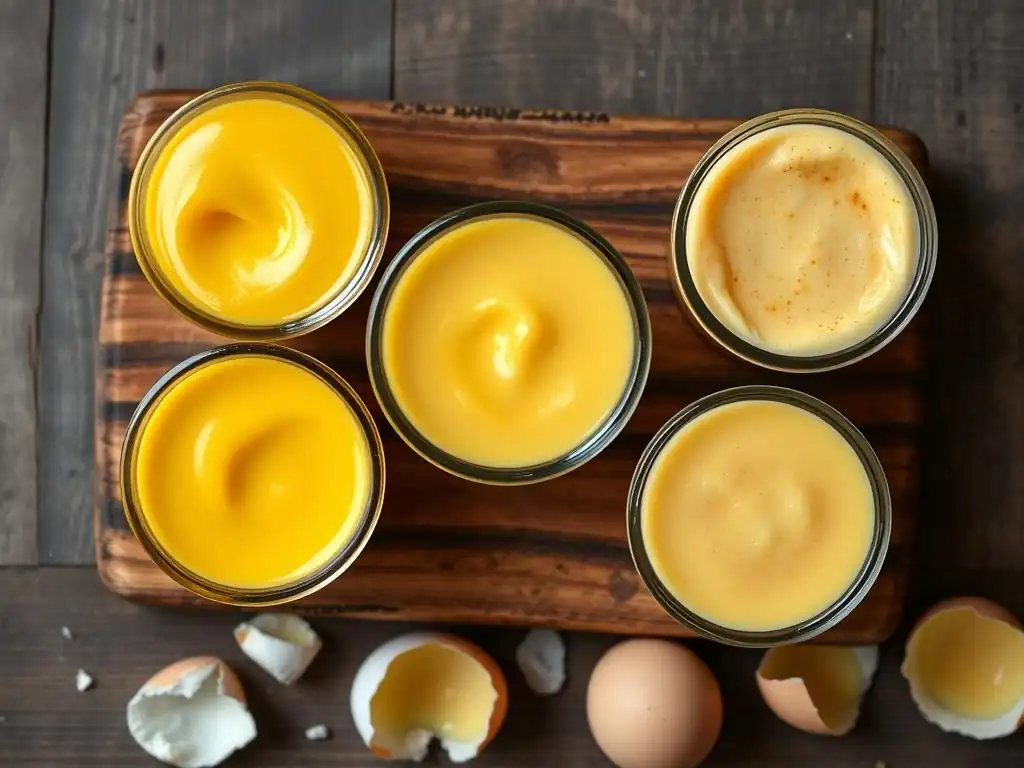
Choosing between egg yolks and whole eggs is perhaps the most significant decision when aiming for a specific custard texture. Each provides a distinct result, catering to different dessert or savory applications. Understanding this difference allows bakers to intentionally craft custards that are perfectly suited to their purpose, whether it's a delicate filling for a tart or a sturdy base for a quiche. The ratio of eggs to liquid is also critical; generally, more eggs result in a firmer custard, while fewer eggs yield a softer set.
The desired egg yolks custard texture is often described as rich, smooth, and melt-in-your-mouth. This is achieved by maximizing the contribution of the yolks' fat and specific proteins. When whole eggs are used, the goal is usually a firmer, more sliceable or spoonable texture that holds its shape better. This difference in texture is not just about feel but also affects how the custard interacts with other components in a dish, like a pie crust or fruit topping.
Egg Yolks for Rich and Creamy Custards
When your goal is a custard that is incredibly rich, smooth, and almost melts on the tongue, egg yolks are your primary tool. The high fat content of the yolks (approximately 33%) coats the protein molecules, inhibiting them from forming too tight a network upon coagulation. This results in a delicate, tender set that is the hallmark of classic, luxurious custards. Think of the difference between a scoop of premium ice cream (high fat) versus a sorbet (no fat) – the fat contributes significantly to the creamy mouthfeel.
The specific proteins found predominantly in egg yolks also play a role in this desired texture. Unlike the albumin in whites, yolk proteins coagulate into a softer gel. This combination of higher fat and different protein structure produces that signature egg yolks custard texture – a texture that is less elastic and more prone to yielding under gentle pressure, perfect for fillings that should be soft and luscious. A classic pastry cream, for example, relies heavily on egg yolks (often 6-8 yolks per liter of milk) to achieve its characteristic richness and smooth consistency, often further stabilized by starch.
Why Egg Yolks Create a Silky Smooth Custard
The silkiness of an egg yolk-based custard comes down to the interaction of fat and protein during the setting process. The fat globules dispersed throughout the custard mixture lubricate the protein network as it forms. Instead of the proteins clumping together into a rigid, coarse structure, the fat acts as a barrier, keeping the protein strands separated and flexible. This creates a very fine, smooth matrix that feels incredibly soft and rich on the palate.
Furthermore, the lecithin present in egg yolks acts as a natural emulsifier, helping to keep the fat and water components of the custard smoothly integrated. This emulsification contributes to the overall stability and smooth consistency, preventing separation that could lead to a grainy or watery texture. The result is that sought-after egg yolks custard texture – a custard that is not only set but also retains a luxurious, almost liquid-like smoothness as it melts in your mouth.
Best Uses for Egg Yolk-Based Custards [Crème brûlée, Pastry Cream, Zabaglione]
Egg yolk-based custards are typically used in applications where a very rich, smooth, and often soft set is desired.
- Crème brûlée: This iconic dessert is a prime example. It traditionally uses only egg yolks, heavy cream, and sugar. The high proportion of yolks and cream fat results in a custard that is incredibly rich and sets just enough to support the caramelized sugar crust, yielding a texture that is almost liquid underneath the surface. A typical recipe might use 5-6 egg yolks per cup of heavy cream.
- Pastry Cream (Crème Pâtissière): Used as a filling for tarts, éclairs, and cakes, pastry cream requires richness but also some stability. It uses a significant amount of egg yolks for flavor and richness, combined with starch (usually cornstarch or flour) for added thickening and stability that allows it to be boiled briefly. The egg yolks custard texture here is thick, smooth, and pipeable, with the starch preventing curdling even at high temperatures.
- Zabaglione: This Italian dessert/sauce is essentially a light, foamy custard made by whisking egg yolks, sugar, and a liquid (like Marsala wine) over a bain-marie (water bath). It relies entirely on the thickening power and emulsifying properties of egg yolks, resulting in a light, airy, yet rich foam that is served immediately. The texture is delicate and reflects the gentle coagulation of the yolks without additional thickeners or fats from cream.
Whole Eggs for Firmer Custard Textures
When a more stable, sliceable, or firmly spoonable custard is required, whole eggs are often the egg of choice, or used in combination with yolks. Incorporating the egg whites adds a significant amount of protein (albumin) and water to the mix. The albumin sets into a firmer, more gel-like structure compared to yolk proteins. This results in a custard that holds its shape better and has a texture that is less prone to melting or spreading, making it ideal for baked goods that need structural integrity.
Using whole eggs creates a custard with a texture that is often described as jiggly, smooth, but notably firmer than a yolk-only custard. While still smooth, it lacks the intense richness and melt-away quality provided by the higher fat content of yolks. The higher water content also contributes to a slightly lighter mouthfeel, though the overall texture is denser and more robust. This firmness is crucial in applications where the custard serves as a structural component or needs to withstand slicing.
How Whole Eggs Contribute to a More Stable Custard
The stability provided by whole eggs comes primarily from the albumin in the egg whites. Albumin proteins form a strong, elastic gel network when heated. This network is more robust and less easily disturbed than the network formed predominantly by yolk proteins and fat. When whole eggs are used, the albumin reinforces the overall protein structure, resulting in a custard that sets more firmly and is less likely to weep or collapse.
Consider the difference between a soft-set crème brûlée (yolks only) and a classic baked flan (whole eggs or a mix). The flan is firm enough to be inverted and hold its shape perfectly, a testament to the strength of the protein network created by the whole eggs. This increased stability makes whole egg custards suitable for baking in dishes where they need to stand alone or support other ingredients. The water content from the whites also ensures the custard isn't overly dense, providing a good balance of firmness and smoothness.
Ideal Applications for Whole Egg Custards [Flan, Quiche, Bread Pudding]
Whole egg custards are versatile and used in a variety of baked dishes where a firm, stable set is needed.
- Flan: A classic example of a whole egg custard. Flan typically uses whole eggs, milk, sugar, and vanilla. The proportion of eggs to liquid is often higher than in crème brûlée (perhaps 3-4 whole eggs per cup of milk). Baked in a caramel-lined mold, the whole eggs provide the necessary structure for the custard to hold its shape perfectly when inverted, resulting in a firm, sliceable dessert.
- Quiche: This savory tart filling is essentially a whole egg custard baked in a pastry crust. The mixture of eggs, cream or milk, cheese, and other fillings relies on the whole eggs to set firmly enough to bind all the components together and be easily sliced. A standard quiche might use 3-4 whole eggs per cup of cream/milk mixture, providing a robust, sliceable texture that doesn't crumble.
- Bread Pudding: While variations exist, traditional bread pudding often uses a custard base made with whole eggs and milk or cream soaked into bread cubes. The whole eggs set around the bread, creating a cohesive, spoonable dessert. The goal here is a custard that is firm enough to hold the bread together but still soft and moist. The whole eggs provide this balance, creating a texture that is comforting and stable.
Egg Yolk Custard: Recipes and Techniques for Perfection
Achieving the perfect egg yolks custard texture requires careful attention to technique. Because egg yolks have a higher fat content and their proteins coagulate more gently, they are more susceptible to curdling if overheated or cooked too quickly. Mastering the method ensures a smooth, luxurious result every time. Key techniques revolve around gentle heating, consistent stirring, and knowing when to stop cooking.
Recipes focusing on egg yolks custard texture often involve tempering the yolks. This process involves gradually whisking a small amount of hot liquid into the egg yolks before adding the warmed yolk mixture back to the main pot of liquid. This gently raises the temperature of the yolks, preventing them from scrambling when they hit the hot liquid. It's a crucial step for ensuring a smooth, lump-free custard base, especially in recipes like pastry cream or crème anglaise.
Key Techniques for Baking with Egg Yolks in Custard
When working primarily with egg yolks for that desired egg yolks custard texture, several techniques are paramount:
- Tempering: As mentioned, tempering is vital. Heat your milk/cream gently until just simmering or hot but not boiling. While whisking the yolks vigorously in a separate bowl (often with sugar), slowly pour about a quarter of the hot liquid into the yolks. Whisk constantly. Then, pour this warmed yolk mixture back into the remaining hot liquid in the pot. This gradual heating prevents the yolks from cooking too fast.
- Gentle Heating: Cook the custard base over low to medium heat, or ideally, in a double boiler (bain-marie) for very delicate custards like crème anglaise or zabaglione. This provides even, gentle heat, allowing the proteins to coagulate slowly and smoothly without scrambling.
- Constant Stirring: Stir the custard constantly with a whisk or wooden spoon, scraping the bottom and sides of the pot. This prevents the custard from sticking and overheating in spots, which leads to lumps and curdling. Stirring also promotes even thickening.
- Cooking to Nappé: For stovetop custards like crème anglaise or pastry cream, cook until the custard is thick enough to coat the back of a spoon (nappé). Run your finger through the custard on the spoon; the line should hold. This typically happens around 170-175°F (77-79°C) for yolk-only custards (without starch). Using an instant-read thermometer is highly recommended.
- Straining: Always strain the finished custard through a fine-mesh sieve. This removes any small lumps or bits of cooked egg that may have formed, ensuring a perfectly smooth egg yolks custard texture.
Avoiding Common Pitfalls When Using Egg Yolks in Custard [Overcooking, Curdling]
Working with egg yolks for custard can be tricky, but being aware of common mistakes helps prevent them. The most frequent issues are overcooking and curdling, both of which ruin the smooth egg yolks custard texture you're aiming for.
- Overcooking: Heating the custard past the point where the proteins have optimally set causes them to tighten too much, forcing out the liquid. This results in a grainy, watery, or rubbery texture. Prevention: Use gentle heat (bain-marie is best for delicate custards), stir constantly, and use a thermometer to monitor the temperature. Remove the custard from the heat immediately when it reaches the target temperature (around 170-175°F for stovetop, or when it sets in the oven, checking for a slight wobble in the center).
- Curdling: This happens when parts of the custard overheat and the egg proteins scramble into visible lumps. It's essentially localized overcooking. Prevention: Temper your eggs properly. Cook over low heat. Stir constantly and thoroughly, getting into the corners of the pan. If you notice any small lumps starting to form, remove the pot from the heat immediately and whisk vigorously, or place the pot in an ice bath to stop the cooking process. Straining the finished custard is a final safeguard against small curds.
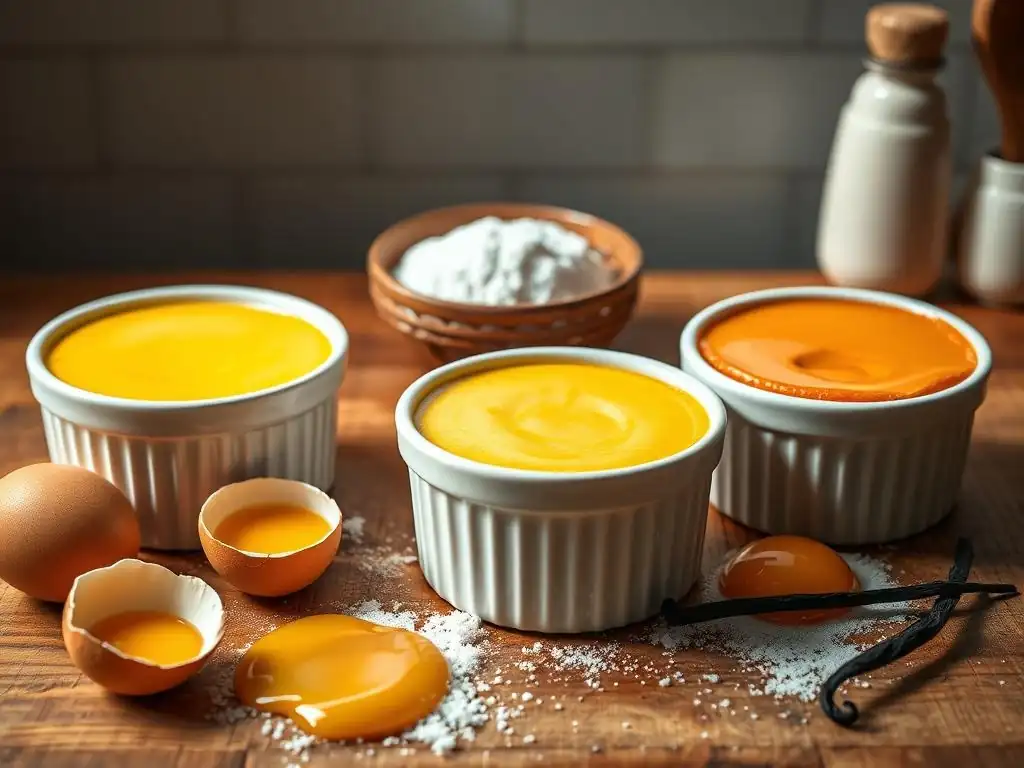
Baking with whole eggs for custard generally results in a more forgiving process compared to yolk-only custards, primarily because the white proteins are more stable at higher temperatures and the presence of more water helps distribute heat. However, achieving the ideal smooth, firm, yet tender texture requires its own set of best practices. The goal is to set the custard without making it rubbery or tough.
Whole egg custards are most often baked, rather than cooked on the stovetop, because the higher protein content allows for a more stable set in the oven. Techniques focus on gentle, even heat application and preventing the surface from drying out or cracking. The ratio of whole eggs to liquid is crucial for firmness; more eggs mean a firmer set. A typical ratio might be 2-3 whole eggs per cup of liquid for a moderately firm custard like a quiche filling, or slightly more for a very firm flan.
Best Practices for Baking Whole Egg Custards
To ensure your whole egg custards are smooth, evenly set, and not rubbery, follow these best practices:
- Whisk Gently: Whisk the eggs with the sugar and liquid until just combined. Avoid incorporating too much air, as this can lead to a foamy top or separation during baking.
- Strain the Mixture: Even with whole eggs, straining the custard mixture through a fine-mesh sieve before pouring it into the baking dish or crust removes any chalazae (the white stringy bits attached to the yolk) or bits of unincorporated egg, ensuring a smooth texture.
- Use a Water Bath (Bain-Marie): Baking whole egg custards in a water bath is highly recommended, especially for delicate items like flan or individual ramekins. The water bath provides gentle, even heat, preventing the edges from overcooking before the center is set. It also helps regulate the temperature, reducing the risk of the custard becoming rubbery or cracking on the surface.
- Low Oven Temperature: Bake whole egg custards at a relatively low temperature, typically between 300°F and 325°F (150°C - 160°C). Lower temperatures promote slow, even protein coagulation, resulting in a smoother, more tender texture.
- Check for Doneness Carefully: Whole egg custards are done when the edges are set and slightly firm, but the center still has a slight wobble when gently shaken. The internal temperature should be around 170-175°F (77-79°C). Over-baking is the primary cause of rubberiness.
Preventing Problems with Whole Egg Custards [Rubbery Texture, Uneven Baking]
Whole egg custards, while more stable than yolk-only versions, are susceptible to their own set of problems if not handled correctly. The most common issues are a rubbery texture and uneven baking.
- Rubbery Texture: This is usually caused by overcooking or baking at too high a temperature. The proteins in the egg white become too tightly coiled and squeeze out moisture, resulting in a dense, rubbery consistency. Prevention: Always bake whole egg custards in a water bath. Use a low oven temperature (300-325°F). Check for doneness using the wobble test or a thermometer and remove from the oven as soon as it reaches the target temperature. Remember, the custard will continue to set slightly as it cools.
- Uneven Baking: This occurs when parts of the custard cook faster than others, leading to edges that are set and possibly tough while the center is still liquid. Prevention: A water bath is the most effective way to ensure even heating. Make sure the water comes at least halfway up the sides of the baking dish. If baking a large custard (like a full pie), rotating it halfway through the baking time can also help ensure even heat distribution in your oven. Avoid opening the oven door frequently, as this causes temperature fluctuations.
Mastering Custard Texture: Tips and Tricks
Beyond the fundamental choice between egg yolks and whole eggs, several other factors influence the final egg yolks custard texture or whole egg custard texture. Controlling these variables allows for even greater precision in achieving your desired result, whether it's a delicate crème brûlée or a sturdy quiche. These tips involve adjusting ingredient ratios, managing temperature, and selecting the appropriate baking method.
Mastering custard is often a matter of subtle adjustments and careful observation. Small changes in technique can make a big difference in consistency. Don't be afraid to experiment slightly within a recipe's guidelines once you understand the basic principles. Using a kitchen scale to weigh ingredients, especially eggs and liquids, can also lead to more consistent results than using volume measurements, as the size of "large" eggs can vary.
Controlling Custard Consistency with Egg Ratios
The ratio of eggs (whether yolks, whole, or a combination) to the liquid base (milk, cream, or a mix) is the primary determinant of custard firmness. A higher proportion of eggs will result in a firmer, more densely set custard, while a lower proportion will yield a softer, more delicate texture.
- For a very soft, pourable custard (like crème anglaise), you might use 4-6 egg yolks per quart (about 1 liter) of milk/cream.
- For a baked custard that is set but still very tender (like crème brûlée), a common ratio is 5-6 egg yolks per cup (about 240ml) of heavy cream.
- For a firmer, sliceable baked custard (like flan or quiche), you might use 3-4 whole eggs per cup (about 240ml) of milk or cream.
- For pastry cream, which is thickened by both yolks and starch, the ratio of yolks is high for richness (e.g., 6-8 yolks per liter of milk), but the starch provides the primary structure, allowing it to be much thicker than a pure egg custard.
Adjusting the egg ratio is a powerful way to fine-tune the egg yolks custard texture or overall custard consistency for a specific application.
The Importance of Temperature Control in Custard Baking
Precise temperature control is arguably the most critical factor in achieving a smooth, properly set custard, regardless of whether you're using egg yolks or whole eggs. Eggs are sensitive to heat, and their proteins coagulate within a relatively narrow temperature range.
- Egg white proteins begin to set around 140°F (60°C) and are fully set by about 180°F (82°C).
- Egg yolk proteins begin to set around 150°F (65°C) and are fully set by about 175°F (79°C).
- Whole eggs (a mix) will typically set between 160°F and 170°F (71-77°C).
Overheating causes the proteins to over-coagulate, leading to rubberiness or curdling. Underheating means the custard won't set properly. Using an instant-read thermometer is highly recommended for stovetop custards (like crème anglaise) to ensure you reach the correct temperature (around 170-175°F) without going over. For baked custards, baking at a low temperature (300-325°F) and checking the internal temperature (target 170-175°F) or using the wobble test ensures even cooking and prevents over-baking. A water bath is invaluable for maintaining a consistent, gentle temperature.
Utilizing Different Baking Methods for Optimal Custard Results [Water Bath, Direct Heat]
The method used to heat the custard significantly impacts the final texture.
- Water Bath (Bain-Marie): This is the preferred method for most delicate baked custards, especially those relying primarily on egg yolks for their egg yolks custard texture, like crème brûlée or flan. The water bath provides gentle, even heat from all sides and prevents the temperature from exceeding the boiling point of water (212°F / 100°C), protecting the sensitive egg proteins from overheating. This results in a smoother, creamier set without cracking or rubberiness.
- Direct Heat (Stovetop): Used for stirred custards like crème anglaise or pastry cream. This method requires constant stirring and careful temperature monitoring to prevent scorching and curdling. It's suitable for custards that are meant to be thickened on the stovetop before being chilled or used immediately.
- Direct Oven Heat: Some very sturdy custards (like certain types of bread pudding or quiche baked in a pie shell) can be baked directly in the oven without a water bath, often at slightly higher temperatures (e.g., 350°F / 175°C). However, this method increases the risk of uneven cooking, a tougher texture, and cracking on the surface, particularly if the custard is delicate or contains a high proportion of liquid. Using a water bath is generally safer for achieving a smooth, tender result.
Comparing Egg Yolk and Whole Egg Custard Textures
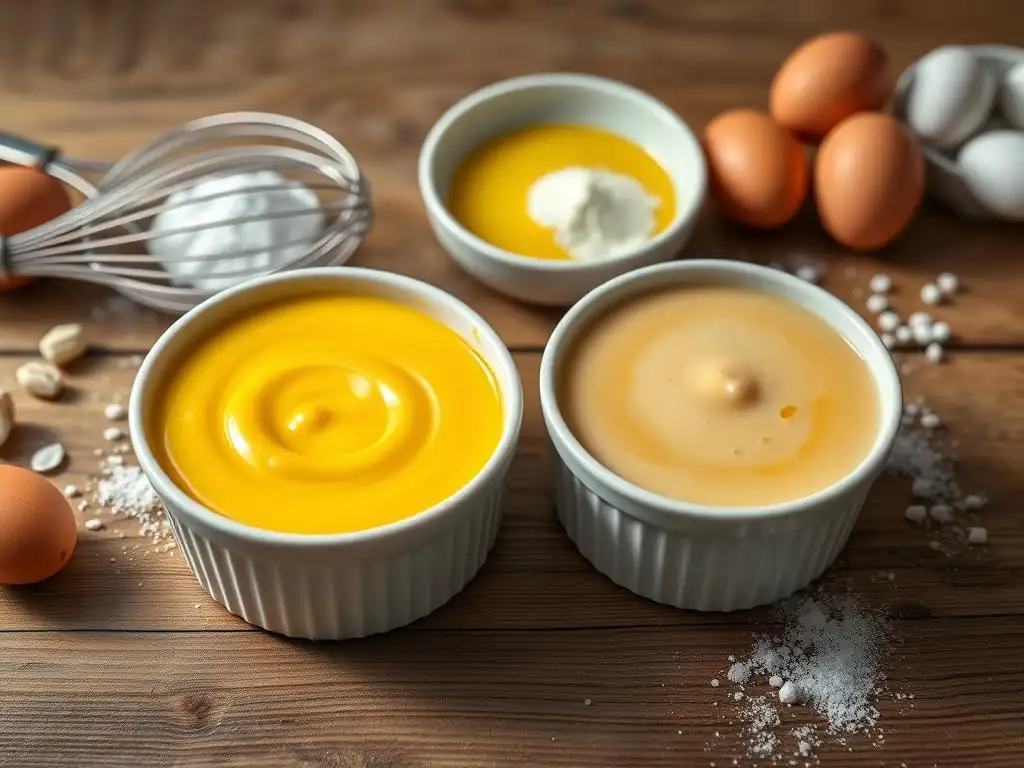
The fundamental difference in texture between custards made predominantly with egg yolks versus those made with whole eggs is significant and informs their best uses. Understanding this comparison is key to selecting the right approach for your baking project. It's not about one being "better" than the other, but about choosing the egg type that delivers the desired consistency and richness for a specific dish.
The egg yolks custard texture is characterized by its luxurious richness, intense creaminess, and delicate, melt-in-your-mouth quality. It's the texture of indulgence. Whole egg custard texture, while still smooth, is firmer, more stable, and often described as jiggly or sliceable. It has less richness but provides necessary structure for many baked applications.
Quick Guide to Choosing the Right Egg Type for Your Custard
Deciding whether to use egg yolks, whole eggs, or a combination depends entirely on the desired outcome:
- Choose Egg Yolks When You Want:
- Maximum richness and creamy flavor.
- A very smooth, almost melt-in-your-mouth texture.
- A relatively soft set (unless combined with starch).
- A vibrant yellow color.
- Examples: Crème brûlée, Crème Anglaise, Zabaglione.
- Focus on egg yolks custard texture.
- Choose Whole Eggs When You Want:
- A firmer, more stable set.
- A custard that holds its shape for slicing (like flan or quiche).
- A less rich, lighter texture compared to yolk-only.
- A good binder for other ingredients (like in bread pudding).
- Examples: Flan, Quiche, Baked Cheesecake (often includes whole eggs), Bread Pudding.
Sometimes, recipes use a combination of whole eggs and extra yolks to achieve a balance of firmness and richness, offering a middle ground texture.
Achieving Your Desired Custard Texture: Egg Selection Chart
Here's a simple guide comparing the general outcomes of using different egg types in custard:
| Egg Type Used | Primary Contribution | Texture Characteristics | Common Applications | Notes |
|---|---|---|---|---|
| Egg Yolks Only | Richness, Fat, Color | Very Rich, Creamy, Silky, Delicate, Soft Set | Crème brûlée, Crème Anglaise, Zabaglione | Most prone to curdling if overheated. Ideal for luxurious textures. |
| Whole Eggs Only | Protein (Albumin & Yolk), Water | Firmer, More Stable, Jiggly, Sliceable | Flan, Quiche, Simple Baked Custards, Bread Pudding | More forgiving than yolks, provides structure. Can be rubbery if overcooked. |
| Whole Eggs + Yolks | Balance of Richness & Structure | Moderately Rich, Smooth, Firm but Tender Set | Pastry Cream (with starch), Richer Baked Custards | Combines benefits of both, balancing texture and richness. |
Understanding this chart helps predict the final egg yolks custard texture or whole egg custard outcome and choose the appropriate egg type for your recipe goals.
Elevate Your Custard Baking Skills
Mastering custard texture is a key milestone for any baker. It involves understanding the science, practicing techniques, and learning to observe your custard as it cooks. Once you've grasped the basics of using egg yolks versus whole eggs and controlling temperature, you can begin to experiment further and refine your skills. Don't be discouraged by initial failures; custard can be finicky, but practice leads to perfection.
Beyond the egg type and temperature, factors like the type of dairy used (milk vs. cream, low-fat vs. full-fat), the amount and type of sugar, and the inclusion of other thickeners like starch or gelatin will also impact the final texture. Exploring these variables opens up a world of possibilities for creating unique custard creations.
Experimenting with Egg Variations for Unique Custard Creations
Once comfortable with basic whole egg and egg yolks custard texture principles, try varying the egg component to see how it changes your favorite recipes.
- Add an extra yolk or two to a whole egg custard recipe (like a quiche or bread pudding) to increase richness and slightly soften the set.
- Replace some whole eggs with extra yolks in a flan recipe for a creamier texture, while still using some whites for structure. For instance, instead of 4 whole eggs, try 2 whole eggs plus 3-4 yolks.
- Experiment with the ratio of yolks to starch in pastry cream to adjust its thickness and richness. More starch yields a firmer, less rich cream; more yolks yield a richer, softer cream (while still stable).
- Consider using different sizes of eggs and adjust quantities by weight for consistency. A large egg is typically around 50-57 grams, with the yolk being about 17-20 grams. This precision can help replicate results.
Keep notes on your experiments – the ratios used, the cooking temperature, and the resulting texture – to build your understanding of how these changes affect the final custard.
Further Resources for Mastering Custard Techniques
To continue honing your custard-making abilities, seek out reliable resources. Look for detailed recipes from reputable culinary sources that explain why certain techniques are used (like tempering or using a water bath). Many classic cookbooks offer extensive sections on custards and sauces, explaining the science behind the methods.
Online culinary forums and baking blogs can also be valuable for troubleshooting specific issues or finding variations on classic recipes. Watching video demonstrations of techniques like tempering or checking for doneness can also provide helpful visual guidance. Practice is key; the more custards you make, the better you'll become at recognizing the signs of proper cooking and achieving that perfect egg yolks custard texture or whole egg custard set every time.
Frequently Asked Questions
How does using only egg yolks affect custard texture compared to using whole eggs?
Using only egg yolks results in a richer, denser custard texture. This is because egg yolks contain more fat and lecithin, contributing to a smoother mouthfeel.
Why would I choose to use only egg yolks when making custard?
You might choose to use only egg yolks for a more decadent and intense flavor. This is ideal when you want a very creamy and rich dessert.
What happens if I use too many egg yolks in my custard recipe?
Using too many egg yolks can lead to a custard that is too thick, almost like a pudding, and potentially grainy. Balancing the yolk quantity is crucial for proper texture.
Can I substitute whole eggs for egg yolks in a custard recipe? If so, how will it affect the outcome?
Yes, you can, but the custard will be lighter in texture and less rich. The flavor will also be less intense and the color paler.
What are some common mistakes people make when trying to achieve the perfect "egg yolks custard texture"?
Overcooking is a big one, leading to curdling. Also, not using enough heavy cream or fat will prevent that smooth, luxurious texture from developing properly.
Final Reflection: The Yolky Truth: Unveiling the Secrets of Custard Texture
The subtle dance between egg yolk and whole egg in custard creation is far more than a culinary curiosity; it's a fundamental principle impacting the very texture of this beloved dessert. Understanding this nuanced relationship unlocks a world of possibilities for bakers and home cooks alike, allowing for precise control over the final product. From the silky smoothness of a crème anglaise to the firm richness of a flan, the choice between yolk and whole egg is paramount.
This exploration into the world of custard textures has been a fascinating journey, highlighting the often-overlooked power of individual egg components. The subtle differences in fat content and protein structure significantly impact the final result, a fact that resonates deeply with my own baking experiences. The proof of the pudding is in the eating,
as the saying goes, and the proof of a truly exceptional custard lies in the careful consideration of its ingredients. This article aims to empower readers to understand and control that process, leading to consistently delicious results.
Now, it's your turn. Consider the next custard you create. Will you opt for the velvety richness of pure egg yolks, or the slightly firmer structure of whole eggs? Experiment, explore, and discover the perfect texture to suit your palate and recipe. Remember the lessons learned here, and let the subtle science of egg yolks guide you towards custard perfection. The journey of culinary exploration is a rewarding one, and the rewards of mastering custard texture are truly delicious.
Unlock Your Custard Potential: Mastering Egg Yolks & Whole Eggs
Thanks for exploring the fascinating world of custard textures with us! We hope you now feel confident in choosing the right egg approach for your next culinary masterpiece. Ready to put your newfound knowledge into practice?
- Whip up your dream custard: Experiment with different yolk-to-whole-egg ratios and notice the subtle shifts in texture. Start with your favorite custard recipe and try substituting half the whole eggs with yolks—see what happens!
- Share your custard creations: Post a picture of your custard triumph on social media and tag us! Let’s build a community of custard connoisseurs! (Use #BakeWithEaseCustard)
- Dive deeper into egg science: Research the role of proteins and fats in custard creation. You might be surprised at the wealth of information available on this topic!
What unexpected custard texture will you create next?