
A Guide to Tempering Eggs for Silky Smooth Custards

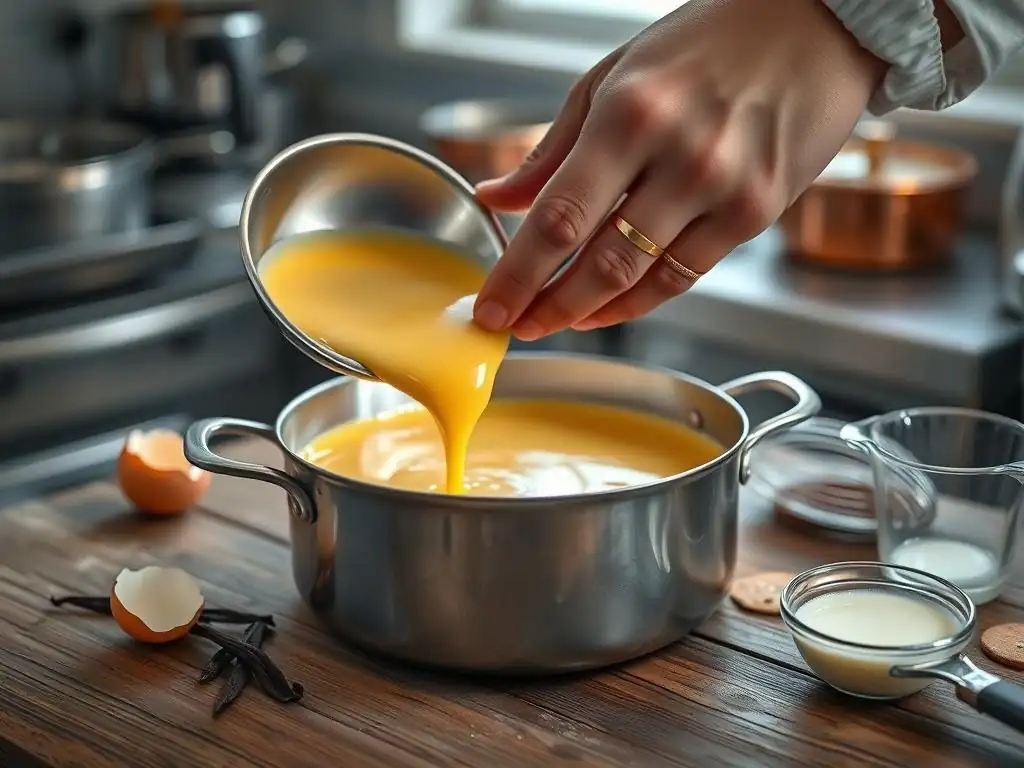
Welcome to BakeWithEase, your baking sanctuary! Ever wondered how to achieve that perfectly smooth and luscious custard, free from lumps and curdling? You're in the right place. Dive in as we unveil the secrets behind tempering eggs for custards, a crucial technique that separates the amateur from the artisan. Discover why this simple step makes all the difference and get ready to elevate your pastry and dessert game!
- Mastering Tempering: A Guide to Silky Smooth Sauces and Creams
- Introduction to Tempering: Achieving Culinary Excellence
- Why Temper? Preventing Separation and Achieving Smoothness
- Tempering Techniques: A Step-by-Step Guide
- Troubleshooting Tempering Problems
- Tips and Tricks for Successful Tempering
- Applications of Tempering: Recipes and Techniques
- Conclusion: Elevating Your Culinary Skills Through Tempering
- Frequently Asked Questions
- Final Reflection: The Art and Science of the Tempered Egg
- Unlock the Secret to Silky Smooth Custards!
Mastering Tempering: A Guide to Silky Smooth Sauces and Creams
Introduction to Tempering: Achieving Culinary Excellence
Tempering is a fundamental technique in the culinary world, particularly essential when working with sensitive ingredients like eggs. It's the process of gradually raising the temperature of a cold or room-temperature mixture, often eggs or egg yolks, by slowly adding a hot liquid. This gentle heating prevents the ingredients from cooking too quickly and curdling, ensuring a smooth, homogenous result.
Whether you're aiming for a rich pastry cream, a delicate custard, or a velvety sauce like Hollandaise, mastering tempering is key to avoiding grainy textures and achieving that professional finish. It's a skill that transforms simple ingredients into luxurious creations.
For home bakers and cooks, understanding how to temper eggs for custards and other bases opens up a world of possibilities. It allows you to confidently tackle recipes that might otherwise seem intimidating, like classic crème brûlée or a smooth lemon curd for a tart. This guide will walk you through the process, explaining the science behind it and providing practical steps to ensure success every time you temper eggs for custards or other delicate mixtures. With a little practice, you'll be creating beautifully smooth and stable sauces and creams with ease.
Why Temper? Preventing Separation and Achieving Smoothness
Understanding Emulsions and Protein Denaturation
Tempering is crucial because it deals directly with the delicate nature of proteins, particularly those found in eggs. Eggs contain proteins that are highly susceptible to heat. When subjected to sudden, high temperatures, these proteins denature and coagulate rapidly. Think of what happens when you drop an egg into boiling water – it solidifies almost instantly. In sauces or creams, this rapid coagulation leads to curdling, where the proteins clump together, separating from the liquid and resulting in a grainy, unappealing texture.
Furthermore, many sauces and custards are emulsions, meaning they contain liquids that wouldn't naturally mix, like oil and water, held together by an emulsifier – often the lecithin found in egg yolks. Rapid heating can break this emulsion, causing the mixture to separate. Tempering prevents this shock by slowly bringing the egg mixture closer to the temperature of the hot liquid.
This gradual increase allows the proteins to denature gently and evenly, integrating smoothly into the liquid base rather than scrambling. For instance, when making a classic vanilla custard, tempering the eggs ensures the mixture thickens into a uniform, creamy consistency rather than becoming a lumpy soup with scrambled egg bits.
The Secret to Stability: Achieving a Velvety Texture
The primary goal of tempering, especially when tempering eggs for custards and sauces, is to create a stable, velvety texture. By slowly incorporating the hot liquid into the egg mixture, you effectively pre-warm the eggs, bringing their temperature up gradually. This prevents the proteins from seizing up and curdling when they are fully combined with the rest of the hot base. The process allows the egg proteins to form a delicate network that thickens the liquid smoothly and evenly as it cooks, without creating large, undesirable clumps.
Consider the difference between a perfectly smooth pastry cream used to fill éclairs and a grainy, separated one. The smooth texture is achieved through careful tempering and controlled cooking. In a typical pastry cream recipe using 4 egg yolks and 2 cups of milk, the milk is heated to a simmer (around 180-190°F or 82-88°C).
If the yolks were added directly to this hot milk, they would instantly scramble. By whisking about half a cup of the hot milk into the yolks first, you raise the yolk temperature from maybe 40°F (4°C) to perhaps 120-140°F (49-60°C) before adding them back to the main pot. This gradual transition ensures the final mixture cooks into a consistently thick, smooth cream, capable of holding its structure and providing that desirable mouthfeel.
Tempering Techniques: A Step-by-Step Guide
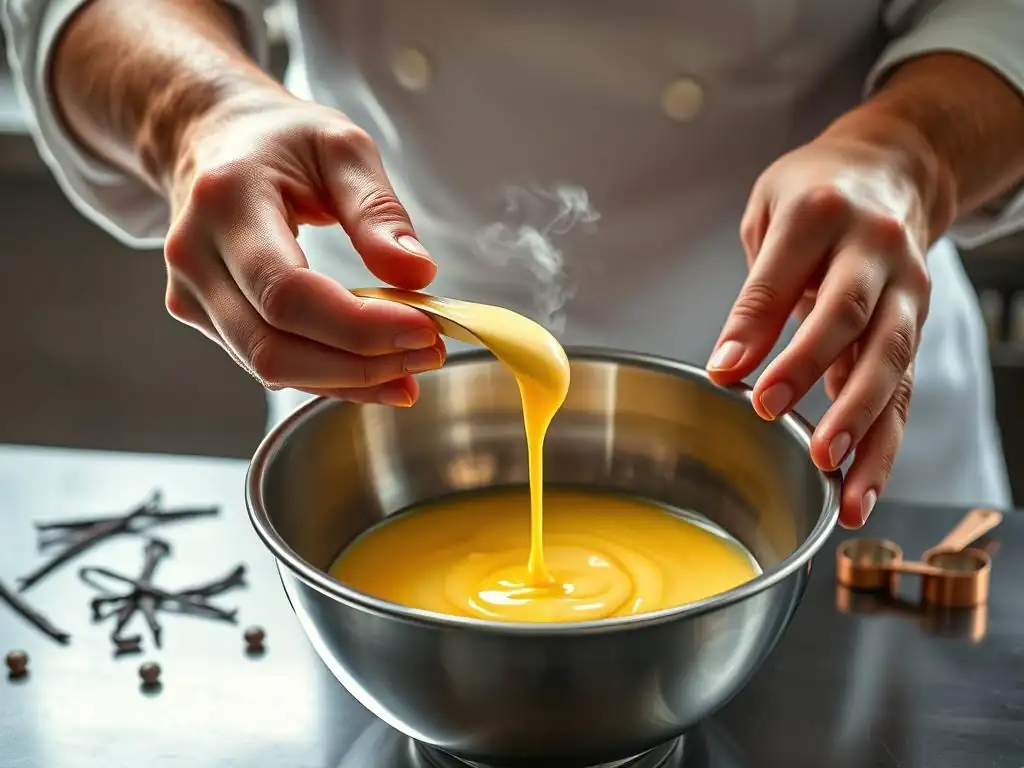
Step 1: Preparing Ingredients and Equipment
Gathering Ingredients: Eggs, Liquids, and Flavorings
The first step in successful tempering is having all your ingredients measured and ready. For most custard bases or sauces, you'll need eggs (either whole eggs, yolks, or whites, depending on the recipe), a liquid base (commonly milk, cream, broth, or even melted butter for sauces like Hollandaise), and often sugar, salt, or flavorings like vanilla extract, spices, or herbs. Ensure your eggs are at room temperature or slightly chilled, but not frozen. Room temperature eggs tend to incorporate more easily. The liquid base should be measured accurately according to your recipe.
For a standard custard recipe using 6 egg yolks and 3 cups of milk, have your yolks separated into a bowl. Measure your milk into a saucepan. If adding sugar to the yolks, whisk it in now; sugar can help protect the egg proteins slightly during heating. Have your flavorings, like a vanilla bean split or extract, ready to add to the milk or the final mixture. Organization is key – having everything prepped before you start heating the liquid will prevent frantic scrambling (pun intended!) and increase your chances of success when tempering eggs for custards.
Essential Equipment: Bowls, Whisks, and a Double Boiler (Optional)
Having the right tools makes the tempering process much smoother. You will need at least two bowls: one for your egg mixture and another, larger bowl if you plan to set the finished product over an ice bath to cool quickly. A sturdy whisk is essential for continuously stirring both the egg mixture as you temper it and the main liquid base as it heats and thickens. A heavy-bottomed saucepan is ideal for heating the liquid base evenly, reducing the risk of scorching.
While not always required, a double boiler or setting one bowl over a pot of simmering water can provide a gentler, more controlled heat for finishing sensitive sauces or custards after tempering. A heatproof rubber spatula is also useful for scraping down the sides of the pan and ensuring even cooking. Finally, a reliable instant-read thermometer is invaluable for monitoring the temperature of your liquid base and the final mixture, ensuring you reach the correct consistency without overheating – typically around 160-175°F (71-79°C) for most custards using egg yolks.
Step 2: Gently Warming the Base Liquid
Heating Milk, Broth, or Sauce Base: The Right Temperature
The liquid base needs to be heated to a specific temperature range before tempering begins. The goal is to get it hot enough to cook the eggs when combined, but not boiling, which can shock the eggs and lead to immediate curdling. For most custards and pastry creams using milk or cream, heating the liquid until it just begins to simmer – you'll see small bubbles forming around the edges of the pan, and perhaps a little steam – is usually sufficient. This is typically around 180-190°F (82-88°C). Avoid a rolling boil.
For sauces like Hollandaise or Béarnaise, the hot liquid component is often melted butter or a reduction of wine/vinegar and shallots, which is then kept warm (not boiling) while the egg yolks are whisked vigorously over gentle heat (often a double boiler). The temperature needs to be high enough to emulsify the butter and cook the yolks slightly, but low enough to prevent scrambling. Maintaining a consistent, moderate heat is crucial during this stage, whether you're heating milk for a custard or preparing the base for a savory sauce.
Infusing Flavors: Herbs, Spices, or Aromatics [Optional]
This is an excellent stage to infuse flavors into your liquid base. If your recipe calls for spices like cinnamon sticks, star anise, or cardamom, add them to the cold milk or cream before heating. As the liquid warms, it will absorb the flavors beautifully. Similarly, vanilla beans can be split and scraped, adding both the bean and the scraped seeds to the milk to steep. Zest from citrus fruits can also be added at this point.
Allow the flavors to steep as the liquid heats. Once the liquid reaches the desired temperature for tempering, you may want to remove the solid aromatics (like cinnamon sticks or vanilla beans) by straining the liquid before proceeding. This prevents over-infusion or bits of spice ending up in your final smooth product. For example, when making a spiced pumpkin custard, adding cinnamon sticks, ground nutmeg, and cloves to the milk and pumpkin puree as it heats ensures the flavors are deeply integrated before tempering the eggs.
Step 3: Slowly Introducing Heat: The Tempering Process
Adding a Small Amount of Warm Liquid to the Eggs/Yolks
This is the critical step where the temperature of the egg mixture is gradually raised. While continuously whisking the eggs or yolks in their bowl, slowly pour a small stream of the hot liquid into the egg mixture. Start with just a ladleful or about 1/4 to 1/2 cup (60-120 ml) of the hot liquid for a batch using 4-6 yolks and 2-3 cups of milk. The key is to add it slowly while whisking constantly.
The hot liquid heats the eggs gently, bringing their temperature up closer to the temperature of the main batch of liquid. This prevents the shock that would occur if the cooler eggs were added directly to the hot liquid. Think of it as acclimatizing the eggs to the heat. For a standard batch of custard, you might add 1/4 cup of hot milk, whisk vigorously for 10-15 seconds, then add another 1/4 cup, whisking again. The goal is to raise the temperature of the egg mixture by 20-30°F (11-17°C) or more in this initial step.
Whisking Vigorously: Preventing Curdling
Constant and vigorous whisking is paramount during the tempering process. As you slowly pour the hot liquid into the egg mixture, you must whisk continuously and quickly. This ensures that the hot liquid is immediately dispersed throughout the cooler egg mixture, preventing any one spot from getting too hot and cooking the eggs instantly. The whisking also helps to evenly distribute the heat, promoting uniform warming of the eggs.
If you stop whisking, even for a moment while adding the hot liquid, you risk creating hot spots where the eggs can curdle. The action of the whisk incorporates the hot liquid smoothly, transforming the egg mixture from a thick, raw consistency into a slightly thinner, warmed state. This warmed mixture is now ready to be added to the rest of the hot base without the risk of scrambling. Mastering this technique of slowly adding hot liquid while whisking vigorously is the heart of successful tempering eggs for custards and sauces.
Step 4: Combining the Tempered Mixture with the Remaining Base
Gradually Incorporating the Tempered Mixture into the Warm Base
Once your egg mixture has been tempered (its temperature raised by incorporating some of the hot liquid), it's time to combine it with the rest of the hot base liquid in the saucepan. Don't simply dump the tempered egg mixture into the pot. Instead, pour the tempered egg mixture back into the saucepan containing the remaining hot liquid. Do this slowly, ideally while continuing to whisk the mixture in the saucepan.
Pouring the tempered mixture back into the main pot is often safer and easier than trying to pour the large volume of hot liquid into the tempered eggs. As you pour the tempered mixture into the pot, the whisking action in the pot helps to immediately integrate the slightly warmer egg mixture with the main body of hot liquid. This ensures that the combined mixture is uniform and ready for the final stage of cooking to the desired thickness.
Ensuring Even Heat Distribution: The Importance of Constant Stirring
Once the tempered egg mixture has been fully combined with the remaining hot liquid in the saucepan, it's crucial to continue stirring constantly as you cook the mixture. Use a whisk or a heatproof spatula, making sure to scrape the bottom and sides of the pan. Egg-based mixtures, especially custards, can easily scorch or form clumps on the bottom of the pan if left undisturbed.
Constant stirring ensures that the heat is distributed evenly throughout the mixture, allowing the egg proteins to coagulate gradually and thicken the liquid into a smooth, consistent texture. This even heating prevents hot spots where the mixture could curdle. Continue stirring over medium-low heat until the mixture reaches the desired consistency, often indicated by it coating the back of a spoon (the nape test) or reaching a specific temperature.
Step 5: Cooking to the Desired Consistency
Low and Slow Cooking: The Ideal Temperature Range
After combining the tempered egg mixture with the base, the final step is to cook the mixture until it reaches the desired thickness. This should always be done over low to medium-low heat. High heat is the enemy here, as it can quickly cause the mixture to curdle or scorch, even after successful tempering. Gentle, gradual heating allows the egg proteins to thicken the mixture smoothly.
For most custards and pastry creams made with egg yolks, the target temperature range is typically between 160°F and 175°F (71°C and 79°C). At 160°F (71°C), the egg yolks have cooked sufficiently to thicken the mixture and make it safe to consume, but they haven't been overheated to the point of curdling. Cooking slightly higher, up to 175°F (79°C), can result in a thicker final product. Using an instant-read thermometer to monitor the temperature is highly recommended to avoid under or overcooking.
Recognizing Doneness: The Nape Test and Viscosity
Beyond temperature, there are visual cues to help you recognize when your custard or sauce has reached the correct consistency. The most common method is the "nape test." Dip a spoon into the mixture, then draw a line through the coating on the back of the spoon with your finger. If the line holds cleanly and the mixture doesn't run back into it, it has thickened sufficiently. The mixture should coat the spoon thickly enough that you can't easily see the spoon through the coating.
Another indicator is the viscosity. The mixture should feel noticeably thicker as you stir it. It will have a smooth, creamy texture, not watery or lumpy. For sauces like Hollandaise, the consistency should be thick enough to coat food without running off immediately. For custards, it should be pourable but with body, or very thick for pastry cream. Practice with recipes helps you recognize the right consistency, but the nape test and a thermometer provide reliable guides, especially when tempering eggs for custards.
Troubleshooting Tempering Problems
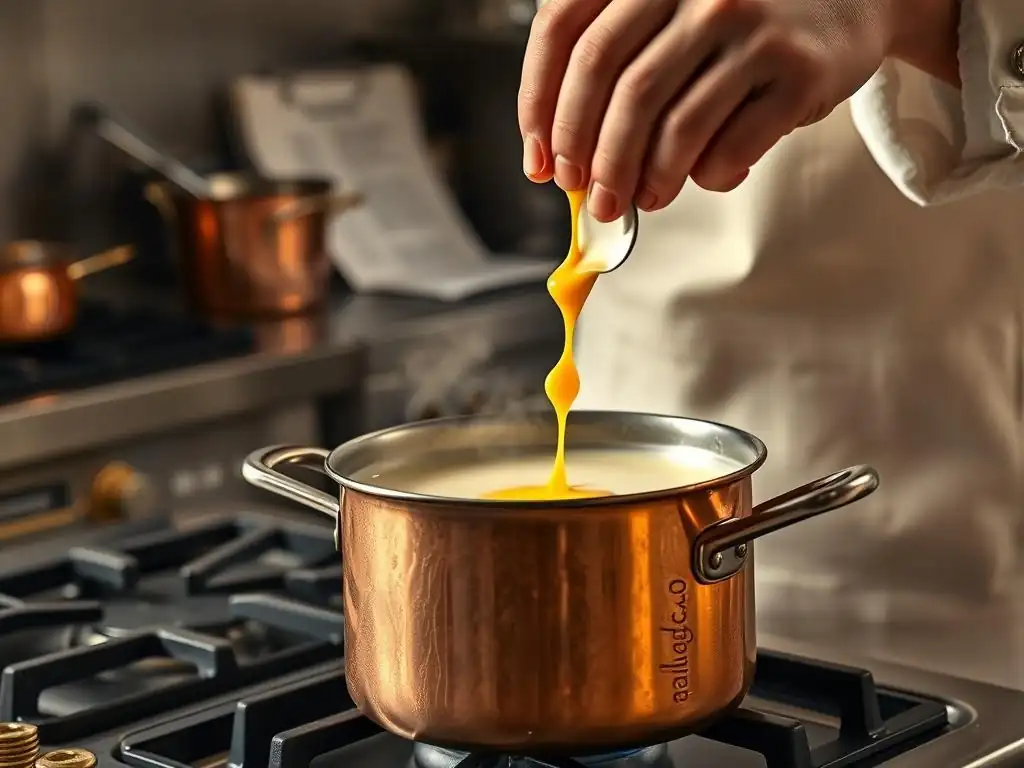
Overheating and Separation: Quick Recovery Techniques
Even with careful tempering, sometimes mixtures can still overheat and show signs of separation or slight curdling, especially if the heat gets too high during the final cooking stage or if stirring stops. If you notice small clumps forming or the mixture starting to look grainy, immediately remove the pan from the heat. Don't hesitate – speed is key.
If the curdling is minor, sometimes vigorous whisking off the heat can help smooth it out. For more significant curdling, or if you're aiming for absolute smoothness (like for a crème brûlée), the best recovery technique is to immediately strain the mixture through a fine-mesh sieve into a clean bowl. Whisking the strained mixture over an ice bath to cool it quickly can also help prevent further cooking and potential separation. While straining removes the lumps, it won't restore the texture if the proteins are severely overcooked, but it can save the liquid base.
Lumpy Sauce or Cream: Straining for a Smooth Finish
Despite your best efforts, you might end up with a few small lumps in your sauce or cream. This can happen if a small amount of egg wasn't fully incorporated during tempering or if there were minor hot spots during cooking. The easiest and most effective way to deal with a lumpy sauce or cream is to strain it.
Pass the entire mixture through a fine-mesh sieve set over a clean bowl. You might need to gently push the mixture through with a spoon or spatula, especially if it's thick. The sieve will catch any small clumps or unincorporated bits, leaving you with a beautifully smooth product on the other side. This is a standard practice for achieving professional-level smoothness in pastry creams, custards, and delicate sauces, ensuring that all your hard work tempering eggs for custards results in a flawless texture.
Thin Sauce or Cream: Adjusting Cooking Time and Reduction
If your sauce or cream is too thin after reaching the standard cooking temperature (around 160-175°F or 71-79°C), it likely needs to cook a bit longer to allow the egg proteins to thicken it further. Return the pan to low heat and continue to stir constantly. Monitor the temperature carefully, but rely more on visual cues like the nape test and viscosity at this point.
Cook gently, stirring all the while, until the mixture thickens to your desired consistency. Be cautious not to let it boil or overheat, which could lead to curdling. If you've already reached the typical maximum temperature range for egg-based mixtures (around 175°F or 79°C) and it's still too thin, it's possible there wasn't enough egg in the mixture relative to the liquid, or the heat was too low throughout the process. For very thin sauces, careful simmering might be needed to reduce the liquid slightly, but this should be done cautiously with egg-based mixtures.
Tips and Tricks for Successful Tempering
Use Fresh, High-Quality Ingredients
The quality of your ingredients significantly impacts the final outcome when tempering eggs for custards and sauces. Fresh eggs, especially yolks, have strong protein structures and high emulsifying power, which is essential for creating smooth, stable mixtures. Older eggs can sometimes be less forgiving when heated. Similarly, using high-quality milk, cream, or butter will contribute to better flavor and texture.
For instance, using fresh, large egg yolks in a crème brûlée base provides the necessary richness and thickening power to create that luxurious, smooth custard. Stale eggs might result in a weaker emulsion or a less stable custard that is more prone to separation. Starting with the best ingredients gives you a head start towards successful tempering and a delicious finished product.
Strain for Extra Smoothness and Refinement
Even if you don't encounter lumps or curdling during the tempering and cooking process, straining your finished custard or sauce through a fine-mesh sieve is a highly recommended step for achieving maximum smoothness and refinement. This simple action removes any tiny bits of cooked egg that might have formed, stray specks of spice, or any other small imperfections.
Straining ensures a perfectly silky texture, which is particularly desirable for delicate desserts like panna cotta, crème brûlée, or smooth pastry creams used in fine pastries. It takes only an extra minute or two but makes a noticeable difference in the final presentation and mouthfeel. For example, after tempering eggs for a vanilla bean custard, straining it ensures no flecks of cooked egg or vanilla bean sediment end up in your silky dessert.
Control Heat: A Thermometer is Essential
Precise heat control is perhaps the most critical factor in successful tempering and cooking of egg-based mixtures. Guessing the temperature of your liquid base or the final mixture can easily lead to overheating and curdling. An instant-read thermometer is an invaluable tool that takes the guesswork out of the process.
Use the thermometer to ensure your liquid base (milk, cream, etc.) is heated to the correct temperature range (e.g., 180-190°F / 82-88°C) before you begin tempering. More importantly, use it during the final cooking stage to ensure your custard or sauce reaches the safe thickening temperature (e.g., 160-175°F / 71-79°C) without exceeding it. This allows you to remove the mixture from the heat at precisely the right moment, guaranteeing a perfectly cooked, smooth, and safe product every time you temper eggs for custards or other delicate recipes.
Applications of Tempering: Recipes and Techniques
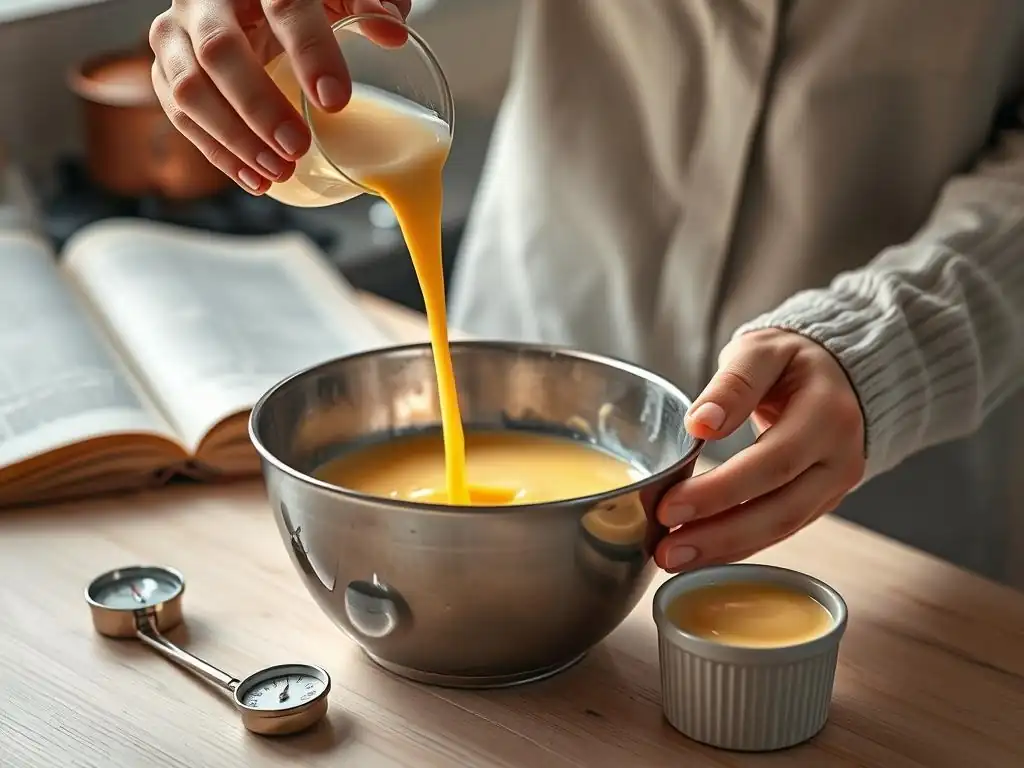
Tempering is a versatile technique used across many classic recipes, primarily those relying on eggs for thickening and emulsification. Mastering tempering eggs for custards is just one application; the principles extend to savory sauces and other dessert components.
Hollandaise Sauce Recipe: A Classic Emulsification
Hollandaise is a rich, classic French sauce often served with eggs Benedict or asparagus. It's a prime example of an emulsion stabilized by egg yolks, and tempering is crucial for its smooth texture.
-
Ingredients: 3 large egg yolks, 1/4 cup fresh lemon juice, 1/2 cup unsalted butter (melted and kept warm), pinch of salt, pinch of cayenne pepper.
-
Method:
- Whisk egg yolks and lemon juice in a heatproof bowl.
- Set the bowl over a pot of simmering water (a double boiler setup); the bottom of the bowl should not touch the water.
- Whisk vigorously until the mixture is thick and pale, reaching about 140-150°F (60-66°C). This is essentially tempering the yolks over gentle heat.
- Remove from heat, but keep over the warm water.
- Slowly drizzle the warm melted butter into the egg yolk mixture while whisking constantly and vigorously. This is the emulsification step, where the fat is incorporated smoothly.
- Continue whisking until all butter is incorporated and the sauce is thick and glossy.
- Season with salt and cayenne. Serve immediately or keep warm gently.
This process, starting with gently heating and whisking the yolks over simmering water, is a form of tempering that prevents the yolks from scrambling while creating a stable base for the butter emulsion.
Béarnaise Sauce Recipe: A Flavorful Variation
Béarnaise sauce is a derivative of Hollandaise, made by adding a reduction of vinegar, wine, shallots, and tarragon to the base. It follows a similar tempering and emulsification process.
-
Ingredients: 3 large egg yolks, 1/4 cup Béarnaise reduction (made from white wine, white wine vinegar, minced shallots, fresh tarragon stems, black peppercorns, reduced and strained), 1/2 cup unsalted butter (melted and warm), chopped fresh tarragon and chervil, salt, cayenne.
-
Method:
- Prepare the reduction: Combine wine, vinegar, shallots, tarragon stems, and peppercorns in a small saucepan. Simmer until reduced to about 2 tablespoons. Strain and cool slightly.
- Whisk egg yolks and the Béarnaise reduction in a heatproof bowl.
- Set the bowl over simmering water (double boiler) and whisk vigorously until thickened and pale (140-150°F / 60-66°C), tempering the yolks.
- Remove from heat but keep warm.
- Slowly whisk in the warm melted butter until emulsified and thick.
- Stir in chopped fresh tarragon and chervil. Season with salt and cayenne.
The initial step of whisking the yolks with the warm reduction over gentle heat is the tempering phase, crucial for preventing the yolks from scrambling before the butter is added to create the stable emulsion.
Crème Brûlée Recipe: Achieving a Smooth Custard Base
Crème brûlée is a classic example of a dessert that absolutely requires proper tempering eggs for custards to achieve its signature smooth, delicate texture.
-
Ingredients: 5 large egg yolks, 1/2 cup granulated sugar, 2 cups heavy cream, 1 vanilla bean (split and scraped) or 1 tsp vanilla extract, pinch of salt, extra sugar for topping.
-
Method:
- Preheat oven to 300°F (150°C). Place ramekins in a baking dish.
- Heat heavy cream, vanilla bean/extract, and salt in a saucepan over medium heat until it just simmers (around 185°F / 85°C). Remove vanilla bean if used.
- In a bowl, whisk egg yolks and sugar until pale and slightly thickened.
- Temper the eggs: Slowly pour about half a cup of the hot cream into the egg yolk mixture while whisking constantly.
- Pour the tempered egg mixture back into the saucepan with the remaining hot cream.
- Stir constantly over low heat until the mixture thickens enough to coat the back of a spoon (165-170°F / 74-77°C). Do not boil.
- Strain the custard through a fine-mesh sieve into a clean bowl or measuring cup.
- Pour strained custard into ramekins.
- Place baking dish with ramekins in the oven and carefully pour hot water into the baking dish to come halfway up the sides of the ramekins. This is a water bath, which ensures gentle, even cooking.
- Bake 30-35 minutes, or until edges are set but center is still slightly jiggly.
- Remove from water bath, cool completely, then chill for at least 4 hours.
- Just before serving, sprinkle with sugar and torch until caramelized.
Tempering eggs for this custard base is essential. It prevents the eggs from scrambling when combined with the hot cream, ensuring the final texture is perfectly smooth and sets correctly in the gentle heat of the water bath.
Conclusion: Elevating Your Culinary Skills Through Tempering
Mastering the art of tempering eggs for custards, sauces, and creams is a fundamental skill that significantly elevates your abilities in the kitchen. It's the technique that separates grainy, separated mixtures from silky, professional-quality results. By understanding the science behind protein coagulation and emulsion stability, and practicing the step-by-step process of gradually introducing heat, you gain the confidence to tackle a wide range of classic and complex recipes.
From the rich smoothness of a crème brûlée to the delicate emulsion of a Hollandaise, successful tempering is the key. Remember to prepare your ingredients and equipment, heat your liquid base gently, temper the eggs slowly while whisking vigorously, combine carefully, and cook over low heat until the correct consistency is reached. Using fresh ingredients, straining for extra refinement, and controlling heat with a thermometer are tips that will consistently lead to success. Embrace this technique, and you'll find yourself effortlessly creating beautifully smooth and stable sauces and creams, impressing yourself and anyone you cook for.
Frequently Asked Questions
What is egg tempering and why is it important for custards?
Tempering eggs is the process of gradually raising the temperature of egg yolks before adding them to hot liquids. This prevents the eggs from scrambling and ensures a smooth, silky custard.
What happens if I don't temper my eggs properly?
If you don't temper your eggs, the sudden heat can cause them to curdle or scramble, resulting in a lumpy and grainy custard instead of a smooth one. This ruins the desired texture.
What's the best way to temper eggs for a custard?
The best method involves slowly drizzling a small amount of the hot liquid into the whisked eggs, whisking constantly. Repeat this process gradually until the egg mixture is warm to the touch.
How do I know when my eggs are properly tempered?
Properly tempered eggs will be warm to the touch and have a smooth, slightly thickened consistency. They should also be fully incorporated with the warm liquid.
Can I temper eggs for other things besides custards?
Yes, tempering eggs is useful for any recipe that calls for incorporating eggs into a hot liquid, such as sauces like hollandaise or creams like pastry cream. It prevents the eggs from cooking too quickly.
Final Reflection: The Art and Science of the Tempered Egg
Mastering the art of tempering eggs is not merely a culinary technique; it's the key to unlocking flawlessly smooth and luxurious custards. This seemingly simple process, as detailed in this guide, holds the power to transform a potentially grainy, lumpy dessert into a silky masterpiece. The impact of proper tempering extends far beyond just the final product; it represents a foundational understanding of heat transfer and emulsion, crucial skills for any aspiring pastry chef.
The subtle dance between hot cream and delicate eggs has captivated cooks for centuries, and its influence on culinary traditions worldwide is undeniable. From the classic crème brûlée to the elegant flan, the tempered egg serves as the backbone of countless beloved desserts. The precision involved fosters a deep appreciation for the delicate balance between ingredients and technique. The proof of the pudding is in the eating,
they say, and in the case of custards, the proof lies in the velvety smoothness achieved only through careful tempering.
Now, it's your turn. Don't just read about the perfect custard; create it. Experiment with different ratios, explore various flavor combinations, and most importantly, embrace the process. The journey of mastering the tempered egg is a rewarding one, filled with the satisfaction of transforming simple ingredients into something truly extraordinary. The next time you face a recipe calling for a custard, remember the power of this seemingly small step – and let the silky smoothness speak for itself.
Unlock the Secret to Silky Smooth Custards!
Thanks for taking the time to explore the art of tempering eggs with us! You've now unlocked a key to creating incredibly smooth and luxurious custards. Ready to put your new skills to the test?
- Whip up your dream custard: Try the recipe from the article, adjusting it to your favorite flavors. Don't be afraid to experiment!
- Share your custard creations: Tag us on social media with your photos—we'd love to see what you bake! #BakeWithEase #TemperedCustard
- Challenge a friend to a custard-making duel: It's a fun way to practice your tempering technique and share the delicious results!
What incredible flavor combinations will you create with your perfectly tempered custard?