
Maillard vs. Caramelization: Understanding Baking's Two Browning Processes

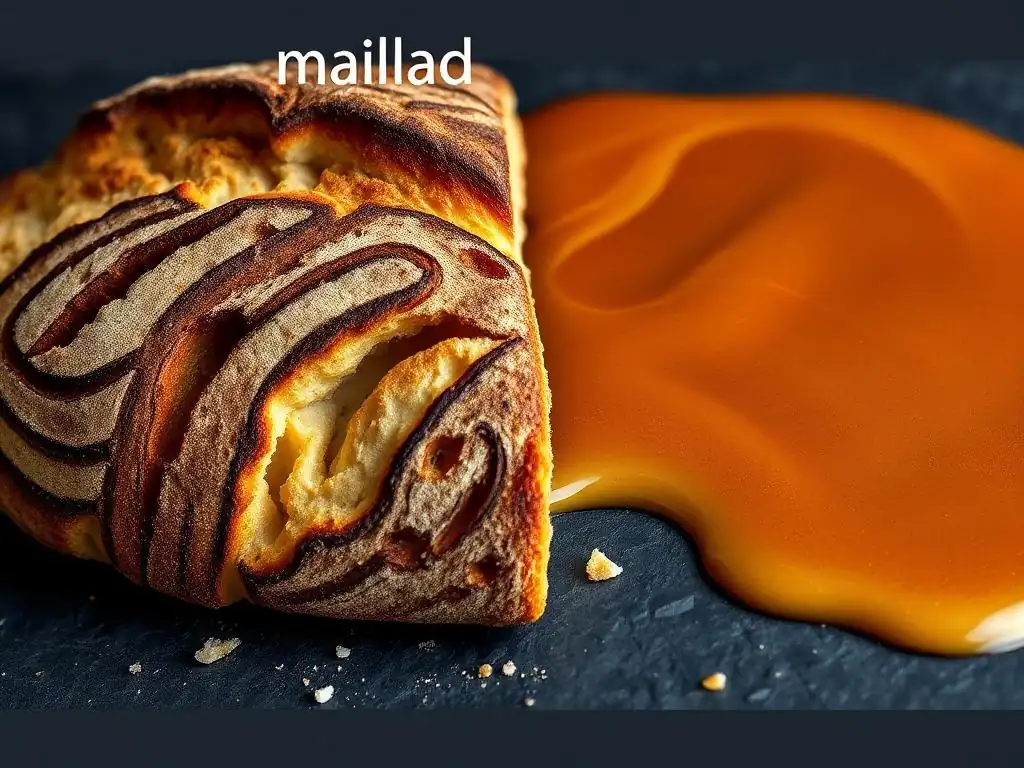
Welcome to BakeWithEase, your guide to unlocking the secrets of delicious baked goods! Ever wondered exactly what's happening when your cookies turn that perfect golden brown? This time, we're taking a deep dive into the fascinating world of baking browning science explained. Discover the critical differences between Maillard reaction and caramelization – knowledge that will transform your baking from good to unforgettable. Get ready to elevate your skills and understand the magic behind the bake!
- Baking Browning Science Explained: Unveiling the Secrets of Color and Flavor
-
The Maillard Reaction: Deep Dive into Flavor Development
- What is the Maillard Reaction in Baking?
- The Science Behind the Maillard Reaction: Amino Acids and Reducing Sugars
- Factors Affecting the Maillard Reaction: Temperature, pH, and Moisture
- Maillard Reaction Examples in Baking: Bread Crusts, Steak Sear, and Chocolate Production
- Maximizing the Maillard Reaction for Deeper Flavor
-
Caramelization: Sweetening the Deal with Burnt Sugar
- What is Caramelization in Baking?
- The Chemistry of Caramelization: Sugar Decomposition and Flavor Compounds
- Temperature's Role in Caramelization: From Light Gold to Dark Amber
- Caramelization Examples in Baking: Caramel Sauce, Crème brûlée, and Onion Confit
- Controlling Caramelization for Perfect Sweetness and Color
- Maillard Reaction vs. Caramelization: Key Differences in Baking Browning
- Mastering Baking Browning: Tips and Techniques for Success
- Baking Browning Science: A Summary of Maillard and Caramelization
-
Frequently Asked Questions
- What are the two main browning reactions discussed in the article?
- What is the key difference between the Maillard reaction and caramelization?
- What factors influence the Maillard reaction in baking?
- Does caramelization occur at a higher or lower temperature than the Maillard reaction?
- How does understanding these browning reactions improve baking?
- Final Reflection: The Sweet Science of Browning – A Baker's Journey
- Unlock Your Baking Potential: Master Browning Techniques!
Baking Browning Science Explained: Unveiling the Secrets of Color and Flavor
Baking isn't just about mixing ingredients and applying heat; it's a fascinating interplay of chemistry and physics that transforms simple dough or batter into delicious, aromatic treats. Among the most critical transformations are the browning processes that give baked goods their appealing color, complex aromas, and signature flavors. Understanding these processes, specifically the Maillard reaction and caramelization, is fundamental to mastering the art of baking browning science explained.
These two distinct chemical reactions occur under heat and are responsible for much of the magic that happens in your oven. While both result in a desirable brown hue, they involve different ingredients, require different conditions, and produce entirely different flavor profiles. Delving into the science behind them allows bakers to predict, control, and optimize the results, leading to consistently perfect crusts, rich caramels, and deeply flavored baked goods.
The Maillard Reaction: Deep Dive into Flavor Development
What is the Maillard Reaction in Baking?
The Maillard reaction is a complex series of chemical reactions that occurs when amino acids and reducing sugars are heated together. This process is responsible for the b browning of many foods, not just in baking, but also in searing meats, roasting coffee beans, and even producing dark beers. It's a non-enzymatic browning process, meaning it doesn't require enzymes to occur, just heat.
In baking, the Maillard reaction is primarily responsible for the beautiful golden-brown crust on bread, the tempting color of cookies, and the rich flavors in pastries made with dairy or eggs. It begins at temperatures typically above 280°F (around 140°C), though it can occur slowly at lower temperatures over longer periods. The reaction produces hundreds of different compounds, including melanoidins, which contribute to the brown color and complex aroma and flavor.
The Science Behind the Maillard Reaction: Amino Acids and Reducing Sugars
At its core, the Maillard reaction involves a chemical dance between amino acids (the building blocks of proteins) and reducing sugars (like glucose, fructose, lactose, and maltose). When heat is applied in the presence of moisture, the carbonyl group of the reducing sugar reacts with the amino group of the amino acid. This initial reaction kicks off a cascade of further transformations, including rearrangements, dehydration, and fragmentation.
This complex series of steps leads to the formation of intermediate compounds that then polymerize into large, brown molecules known as melanoidins. These melanoidins are not only responsible for the characteristic brown color but also contribute significantly to the aroma and flavor profile, producing notes ranging from nutty and malty to savory and roasted. The specific amino acids and sugars present, along with the reaction conditions, dictate the exact flavor compounds produced.
Factors Affecting the Maillard Reaction: Temperature, pH, and Moisture
Several factors significantly influence the rate and outcome of the Maillard reaction. Temperature is paramount; the reaction speeds up dramatically as temperature increases, typically starting around 280°F (140°C). However, extremely high temperatures can lead to burning before the desired Maillard development occurs.
pH also plays a crucial role; the reaction proceeds much faster in alkaline (higher pH) environments than in acidic ones. This is why adding a pinch of baking soda (alkaline) can enhance browning in cookies or pretzels. Moisture is another critical factor; the reaction requires some water to initiate but slows down as the food dries out. Optimal Maillard browning often occurs on the surface where moisture is evaporating but hasn't completely vanished.
Maillard Reaction Examples in Baking: Bread Crusts, Steak Sear, and Chocolate Production
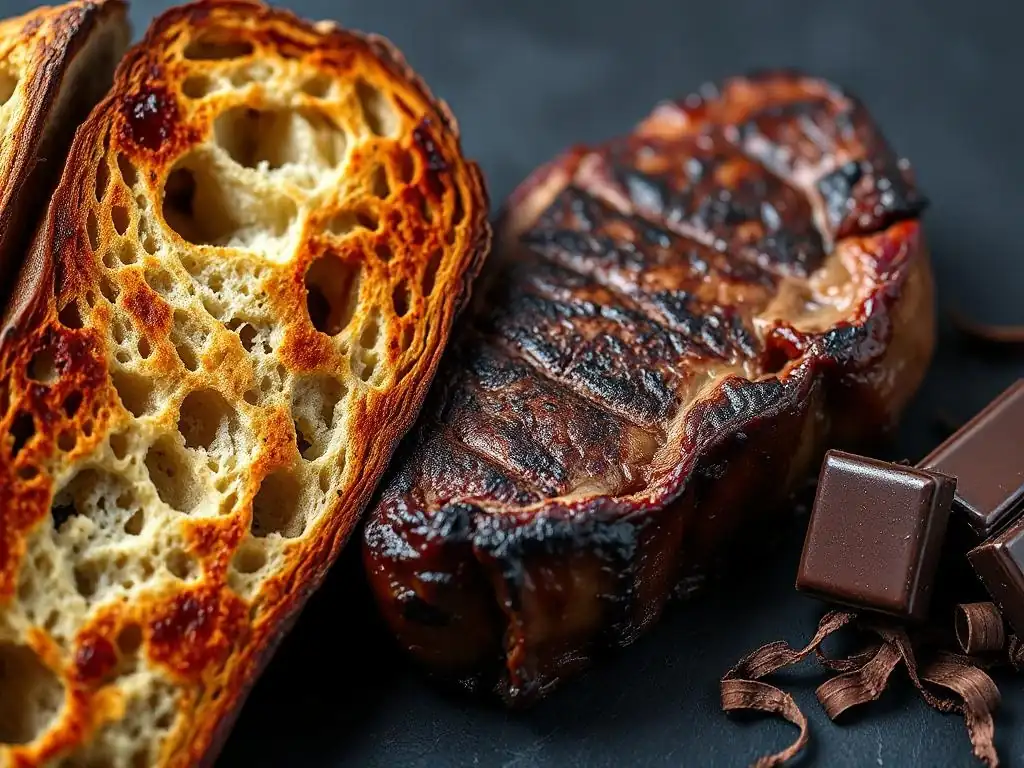
One of the most common baking examples of the Maillard reaction is the crust of a loaf of bread. As the bread bakes, the surface temperature rises, and the amino acids from the flour and yeast interact with the reducing sugars present, creating that signature golden-brown color and complex, slightly savory flavor. This is distinct from the pale interior crumb where the temperature doesn't reach the necessary levels and moisture is higher.
Beyond baking, the Maillard reaction is what gives a seared steak its flavorful crust, roasted vegetables their depth, and toasted marshmallows their complex aroma. Even the development of flavor and color in roasted coffee beans and the production of chocolate involve the Maillard reaction, showcasing its widespread impact on cooked food flavors.
Maximizing the Maillard Reaction for Deeper Flavor
To enhance the Maillard reaction in your baking, consider incorporating ingredients rich in amino acids or reducing sugars. Milk proteins (whey and casein) and the lactose (a reducing sugar) in milk and milk powder are excellent promoters of the Maillard reaction, contributing to the rich brown crust on milk bread or the flavor of cookies made with butter and milk.
Increasing the surface area exposed to heat can also help, as can ensuring the surface is relatively dry to allow the temperature to rise above the boiling point of water (212°F / 100°C). Baking at slightly higher temperatures (within reason) or for longer periods can also boost Maillard development, leading to more intense flavors and darker browning.
Caramelization: Sweetening the Deal with Burnt Sugar
What is Caramelization in Baking?
Caramelization is the process of browning sugar through heating. Unlike the Maillard reaction, caramelization involves only sugars and does not require the presence of amino acids. It's a thermal decomposition process where sugar molecules break down and rearrange into new compounds, resulting in characteristic caramel flavors and colors.
This reaction is responsible for the rich, sweet, sometimes slightly bitter notes found in caramel candies, crème brûlée topping, and caramelized onions. It occurs at higher temperatures than the Maillard reaction, typically starting around 320°F (160°C) for sucrose (table sugar), though the exact temperature varies depending on the type of sugar.
The Chemistry of Caramelization: Sugar Decomposition and Flavor Compounds
When sugar is heated to its caramelization point, its molecules begin to break apart and react with each other. Water is driven off, and the sugar molecules fragment, isomerize (rearrange), and polymerize (link together). This complex chemical transformation produces a variety of compounds responsible for the characteristic caramel flavor and aroma.
Some key compounds formed during caramelization include furans (contributing nutty or burnt notes), maltol (toasty, bready), and diacetyl (buttery). As the temperature increases and the process continues, larger, more complex molecules form, leading to darker color and more intense, sometimes bitter, flavors. The final color can range from a light golden yellow to a dark, almost black brown, corresponding to increasing levels of bitterness.
Temperature's Role in Caramelization: From Light Gold to Dark Amber
Temperature is the primary driver of caramelization, and even small variations can dramatically change the outcome. Sucrose, common table sugar, begins to caramelize around 320°F (160°C). Fructose caramelizes at a lower temperature, around 220°F (104°C), while maltose requires a higher temperature, about 356°F (180°C).
As the temperature rises above the starting point, the sugar progresses through different stages of browning. A light caramel (around 320-340°F / 160-170°C) is golden and mildly sweet. Medium caramel (around 340-355°F / 170-180°C) develops a richer color and more pronounced flavor. Dark caramel (above 355°F / 180°C) becomes increasingly bitter as more sugar is broken down and polymerized, eventually reaching a point of being burnt and unusable.
Caramelization Examples in Baking: Caramel Sauce, Crème brûlée, and Onion Confit
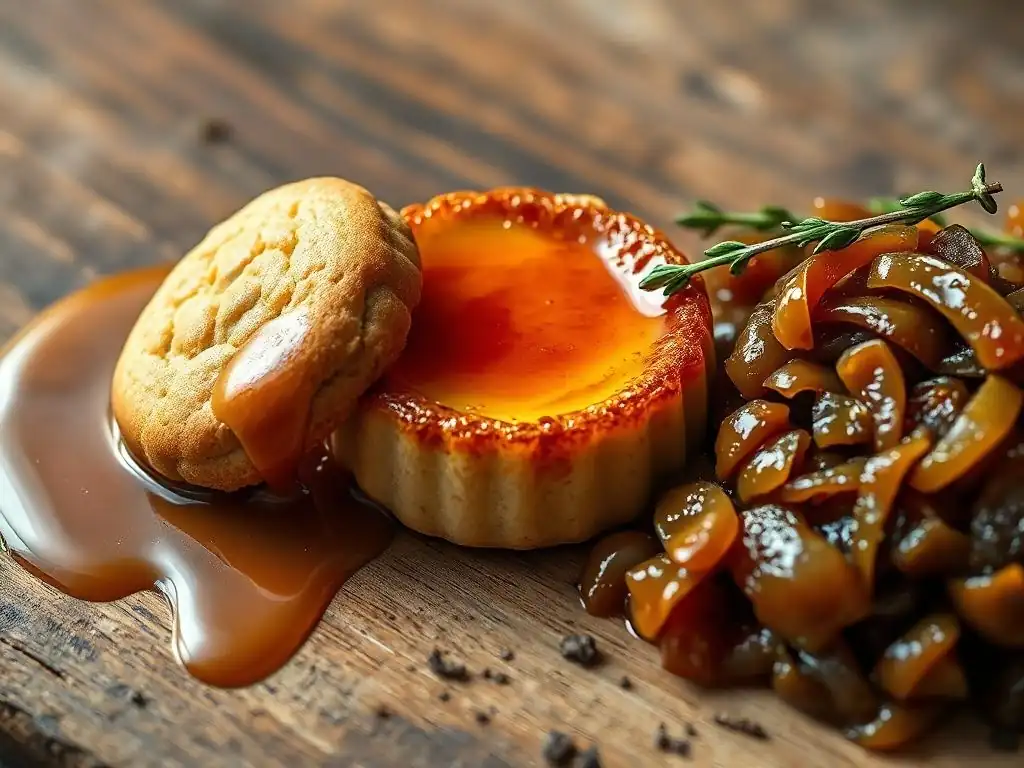
The most obvious example of caramelization in baking is, of course, caramel sauce itself, made by heating sugar until it browns and then often adding cream or butter. The crunchy, glass-like topping on a crème brûlée is another perfect illustration, created by rapidly caramelizing a layer of sugar with a torch.
While less direct, caramelization also contributes to the flavors in recipes where sugars are heated intensely, such as in some cookie recipes baked at high temperatures, or in the base of a tarte Tatin where apples and sugar are cooked down before baking. Outside of traditional sweet baking, the slow cooking of onions to create a sweet, brown "confit" relies heavily on the caramelization of their natural sugars.
Controlling Caramelization for Perfect Sweetness and Color
Controlling caramelization requires careful monitoring of temperature. Using a candy thermometer is highly recommended, as the difference between perfect caramel and burnt sugar can be just a few degrees. Heating sugar evenly is also important; using a pan with a heavy bottom helps distribute heat more uniformly.
Adding a small amount of water to the sugar at the start (wet caramel method) can help the sugar heat more evenly and prevent scorching initially, as the water must evaporate before the sugar temperature can rise to the caramelization point. Once the desired color is achieved, stopping the process immediately, often by adding a liquid like cream or butter (carefully, as it will steam), is crucial to prevent further browning and bitterness.
Maillard Reaction vs. Caramelization: Key Differences in Baking Browning
While both the Maillard reaction and caramelization result in appealing brown colors and complex flavors, they are fundamentally different chemical processes. Understanding these distinctions is key to predicting and controlling browning in baking.
| Feature | Maillard Reaction | Caramelization |
|---|---|---|
| Reactants | Amino acids AND Reducing sugars | Sugars ONLY |
| Starting Temp | Around 280°F (140°C) | Around 320°F (160°C) for sucrose |
| Flavor Profile | Savory, nutty, roasted, complex | Sweet, buttery, nutty, sometimes bitter |
| Color Range | Golden brown to dark brown | Light gold to dark amber/brown |
| Requires Protein? | Yes | No |
| Requires Sugar? | Yes (specifically reducing sugars) | Yes |
Ingredients: What's Needed for Each Process?
The most significant difference lies in the required ingredients. The Maillard reaction is a reaction between amino acids (from proteins) and reducing sugars. This means foods containing both, like bread dough (flour has protein and develops sugars), dairy products (lactose and protein), and eggs, are prime candidates for Maillard browning. You won't get the Maillard reaction with just pure sugar or pure fat.
Caramelization, on the other hand, only requires sugar. Any type of sugar, when heated sufficiently, will caramelize. This could be sucrose, fructose, glucose, etc. While other ingredients might be present in a recipe, they don't participate in the caramelization reaction itself, they are just heated alongside the sugar.
Temperature Ranges: Optimal Heat for Browning
The temperature at which these reactions predominantly occur also differs. The Maillard reaction typically starts at lower temperatures, around 280°F (140°C), and accelerates rapidly as the temperature increases. This is why bread crusts brown in an oven set to 350-450°F (175-230°C), as the surface quickly reaches and exceeds the Maillard threshold.
Caramelization requires higher temperatures to initiate, with sucrose needing about 320°F (160°C). This higher temperature requirement is why you can bake many items to a beautiful golden brown via Maillard browning without simultaneously burning the sugars through caramelization, unless there's a high concentration of sugar on the surface or the temperature is very high.
Flavor Profiles: Savory vs. Sweet Notes
The resulting flavors are a key distinguishing feature. The Maillard reaction produces a vast array of flavor compounds that contribute to savory, roasted, nutty, toasted, and complex aromas. Think of the smell of baking bread or roasting meat – that's Maillard at work. These flavors are generally not perceived as purely "sweet," even though sugars are involved in the reaction.
Caramelization, conversely, produces flavors that are inherently tied to heated sugar. These range from sweet and buttery notes in light caramel to increasingly bitter and complex flavors as the sugar darkens. The dominant flavor is distinctly "caramel" or "burnt sugar," depending on the degree of browning.
Visual Cues: Distinguishing the Browns
While both processes result in brown colors, there can be subtle visual differences. Maillard browning often appears as a more even, diffused golden-brown or reddish-brown color across a surface, like a bread crust or cookie surface. The color development tends to be progressive and uniform where the conditions are met.
Caramelization, especially when sugar is heated directly, can sometimes appear more localized or intense, particularly if there are hot spots. The color progression often moves from clear (melted sugar) to light yellow, then gold, amber, and finally dark brown/black. A sugar glaze that has caramelized will have a distinct, often glossy, brown appearance.
Mastering Baking Browning: Tips and Techniques for Success
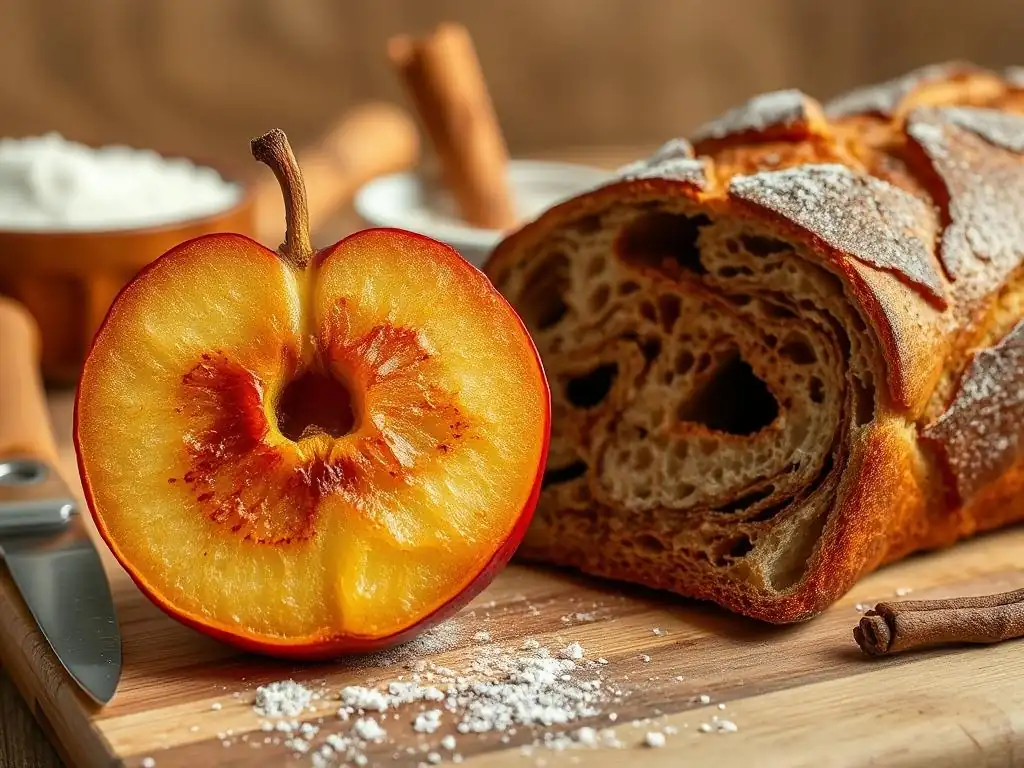
Achieving the perfect level of browning is a skill that comes with practice, but understanding the science behind it provides a significant advantage. Here are some practical tips for controlling these essential baking browning science explained processes.
Achieving Consistent Color: Utilizing Oven Thermometers and Rotating Baking Sheets
One of the biggest challenges in achieving consistent browning is oven temperature variation. Ovens can be notoriously inaccurate, sometimes being off by 25°F (about 14°C) or more from the set temperature. Using an inexpensive oven thermometer placed inside your oven provides a real-time check on the actual temperature, allowing you to adjust accordingly.
Furthermore, most ovens have hot spots. To ensure even browning across a batch of cookies or a sheet pan of pastries, rotate your baking sheets halfway through the bake time. If baking on multiple racks, swap their positions as well. This helps expose all items to similar heat conditions for uniform Maillard and caramelization development.
Enhancing Flavor Through Browning: Exploring Honey and Milk Powders
Certain ingredients can significantly enhance browning and flavor development through the Maillard reaction. Milk powder, for example, is rich in both lactose (a reducing sugar) and protein (containing amino acids), making it a powerful Maillard booster. Adding a tablespoon or two to bread dough or cookie batter can result in a deeper brown color and richer, more complex flavors.
Using honey or maple syrup, which contain fructose and glucose (potent reducing sugars), instead of just sucrose can also promote faster and more intense Maillard browning at lower temperatures. Be mindful, however, that these liquid sweeteners can also affect dough hydration and texture, so adjust your recipe accordingly.
Troubleshooting Browning Issues: Adjusting Sugar Content and Oven Ventilation
If your baked goods aren't browning sufficiently, several factors could be at play. Low oven temperature is common, as mentioned earlier. Insufficient sugar, especially reducing sugars, or protein can also limit the Maillard reaction. Conversely, if items are browning too quickly or unevenly, the oven might be too hot, or the sugar content on the surface might be too high.
Consider the role of moisture and steam. In bread baking, introducing steam at the beginning helps keep the crust moist longer, allowing the loaf to expand fully before the crust sets and starts browning via Maillard. Poor oven ventilation can trap moisture, hindering browning; sometimes opening the oven vent (if your oven has one) or slightly cracking the door in the final minutes can help achieve a crispier, browner crust.
Recipes Showcasing Maillard and Caramelization: Examples
Many classic baking recipes showcase the interplay or dominance of these browning processes.
- Bread: Primarily Maillard reaction for the crust.
- Cookies: Both Maillard (from milk, eggs, flour) and potentially caramelization (from sugar, especially if baked hot or long).
- Caramel Cake: Relies heavily on caramelization for the distinct flavor and color in the frosting or batter.
- Roasted Vegetables (e.g., carrots, sweet potatoes): Excellent examples of both reactions occurring, contributing both sweet and savory notes.
- Dulce de Leche: A slow Maillard reaction between milk proteins and lactose.
These examples highlight how controlling these reactions is fundamental to achieving the desired outcome in a wide range of culinary applications.
Baking Browning Science: A Summary of Maillard and Caramelization
Understanding the baking browning science explained by the Maillard reaction and caramelization empowers you to become a more skilled and confident baker. These two distinct chemical processes, one involving proteins and sugars, the other just sugars, are responsible for the appealing colors, aromas, and deep flavors we love in baked goods.
Key Takeaways: Mastering the Art of Baking Browning
Mastering baking browning means recognizing what triggers each reaction and how to control it.
- The Maillard reaction needs amino acids and reducing sugars, starts around 280°F (140°C), and creates savory, complex flavors.
- Caramelization needs only sugar, starts at higher temperatures (around 320°F/160°C for sucrose), and creates sweet to bitter caramel flavors.
- Temperature control is paramount for both, often requiring an oven thermometer.
- Ingredients like milk powder and honey can enhance Maillard browning.
- Even heating and managing moisture are crucial for consistent results.
By paying attention to your ingredients, oven temperature, and baking time, you can intentionally harness the power of the Maillard reaction and caramelization to elevate your baking from good to truly exceptional.
Explore more articles on BakeWithEase.com to deepen your understanding of baking science:
- Understanding Gluten Development
- The Role of Leavening Agents
- Hydration Ratios Explained
Frequently Asked Questions
What are the two main browning reactions discussed in the article?
The two main browning reactions are the Maillard reaction and caramelization. These both contribute significantly to the flavor and color of baked goods.
What is the key difference between the Maillard reaction and caramelization?
The Maillard reaction involves both sugars and amino acids, while caramelization only involves sugars being heated. This difference affects the resulting flavors.
What factors influence the Maillard reaction in baking?
Factors influencing the Maillard reaction include temperature, pH levels, and the presence of amino acids and reducing sugars. Higher temperatures generally speed up the reaction.
Does caramelization occur at a higher or lower temperature than the Maillard reaction?
Caramelization typically occurs at higher temperatures than the Maillard reaction. It requires temperatures around 320°F (160°C) or higher.
How does understanding these browning reactions improve baking?
Understanding these reactions allows bakers to control flavor and color development. It leads to more consistent and predictable baking results.
Final Reflection: The Sweet Science of Browning – A Baker's Journey
Understanding the Maillard reaction and caramelization is not just about achieving a beautiful golden crust; it's about unlocking the full potential of flavor and texture in baking. These two processes, intricately intertwined yet distinctly different, are the foundation upon which countless culinary masterpieces are built. Mastering their nuances elevates baking from a simple act of following instructions to a sophisticated understanding of chemical transformations.
The impact of this knowledge extends far beyond the home kitchen. From the artisan baker perfecting their sourdough to the industrial food scientist optimizing mass production, a deep understanding of browning reactions is crucial. It's a testament to the power of scientific inquiry in enhancing our everyday experiences. As Harold McGee eloquently puts it, The Maillard reaction and caramelization are not just chemical processes; they are the heart and soul of many of our most cherished foods.
This quote encapsulates the profound influence these reactions have on our sensory perception and cultural appreciation of food.
Now, I invite you to consider your own baking journey. Reflect on the times you've achieved that perfect golden-brown crust, or perhaps when things didn't quite go to plan. Understanding the science behind browning empowers you to troubleshoot, experiment, and ultimately, create even more delicious baked goods. Take this knowledge, apply it to your next baking project, and experience the transformative power of understanding the sweet science behind the browning process. The possibilities are endless.
Unlock Your Baking Potential: Master Browning Techniques!
Thanks for diving deep into the world of Maillard vs. Caramelization! You've now got the knowledge to elevate your baking game. Ready to put your newfound expertise to the test?
- Experiment with a new recipe: Try a recipe that specifically highlights either Maillard reaction or caramelization—think a perfectly browned croissant or a rich, deep caramel sauce. Challenge yourself to achieve that perfect golden hue!
- Share your baking triumphs (and challenges!): Let's connect! Share your baking creations and experiences using #BakeWithEaseBrowning on social media. We love seeing your results!
- Dive deeper: Explore our other articles on advanced baking techniques to further enhance your skills. We’re always adding new resources!
What delicious creation will you bake next, using your newfound understanding of browning processes?