
Your First French SaintHonoré Cake: Simplified Steps

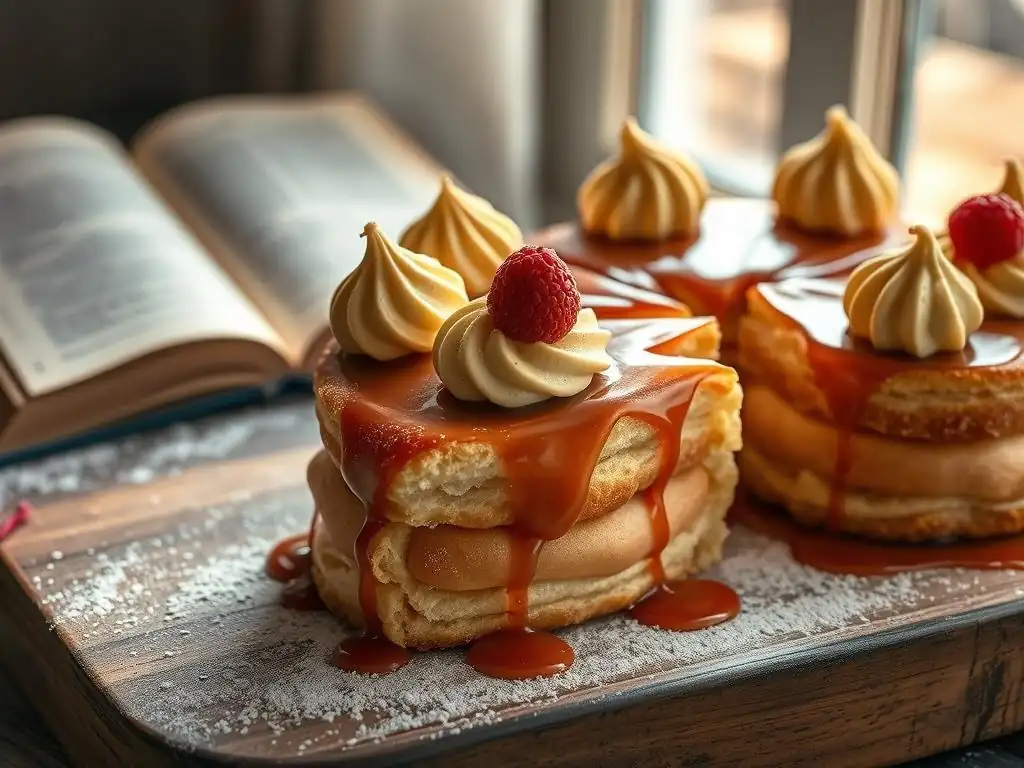
Welcome to BakeWithEase, where the joy of baking meets simplicity! Ever dreamt of creating a show-stopping dessert that tastes as exquisite as it looks? Then you're in the right place. Dive into the world of Regional & Cultural Baking with our guide to crafting your very own, delightfully simplified Easy French Saint Honoré Recipe. Discover the secrets behind this classic pastry and unlock a new level of baking confidence. But that's just the beginning – are you ready to explore the delicious possibilities that await?
- Mastering the Classic Saint Honoré Cake
- A Deep Dive into French Pastry Excellence
- Crafting the Perfect Saint Honoré: A Detailed Recipe
- Step-by-Step: Assembling the Saint Honoré
- Tips and Techniques for Saint Honoré Success
- Flavor Variations and Creative Adaptations
- Storing and Serving
- Frequently Asked Questions
- Final Reflection: The Sweet Triumph of a Simplified Saint-Honoré
- Unleash Your Inner Pâtissier: Bake Your Dream Saint-Honoré!
Mastering the Classic Saint Honoré Cake
A Deep Dive into French Pastry Excellence
Understanding the Saint Honoré
The Saint Honoré is a true icon of French patisserie, a magnificent creation that combines several fundamental techniques into one spectacular dessert. Named after Saint Honoré, the patron saint of bakers and pastry chefs, this cake is traditionally served on his feast day, May 16th. Its intricate structure and delicate balance of textures – crisp puff pastry, light choux puffs, creamy filling, and brittle caramel – make it a challenging yet incredibly rewarding project for any baker. Mastering the components individually is key to successfully assembling this impressive cake.
While the classic version features crème Chiboust, a blend of pastry cream and Italian meringue, variations have emerged over time. Some modern interpretations might substitute crème diplomate (pastry cream lightened with whipped cream) or even a rich mousseline. However, the core structure remains the same: a puff pastry base, a ring of caramel-glazed choux puffs, and a central mound of filling, often piped with a special Saint Honoré piping tip for its distinctive fluted shape. Creating an easy french saint honore recipe involves simplifying some steps while respecting the fundamental techniques.
History and Significance
Key Components: Puff Pastry, Crème Chiboust, and Caramelized Choux
Crafting the Perfect Saint Honoré: A Detailed Recipe
Gathering Ingredients: Quality is Key
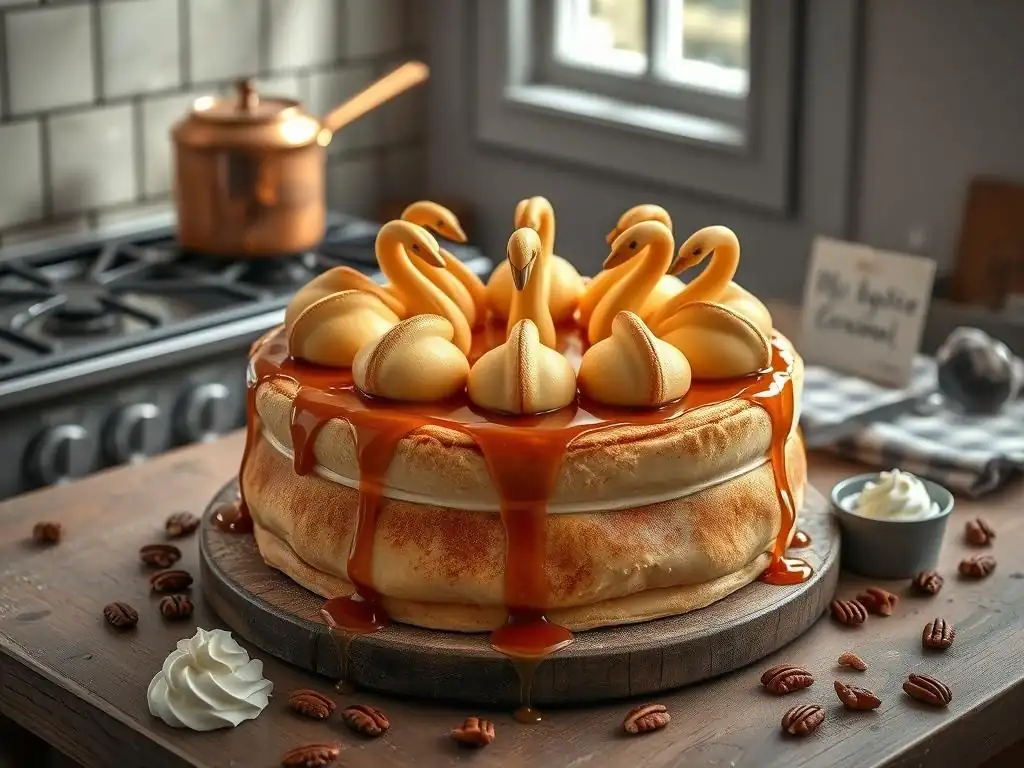
Selecting high-quality ingredients is paramount when attempting an easy french saint honore recipe. For the puff pastry, using a butter with a high fat content, ideally around 82% butterfat, will yield the flakiest layers. French beurre sec (dry butter) is often preferred for its pliability and minimal water content, which helps prevent sogginess during baking. Similarly, using strong bread flour or a good quality all-purpose flour with a protein content between 11-12% for both the puff pastry and choux helps develop the necessary gluten structure for lift.
For the crème Chiboust, fresh, free-range eggs provide richer color and flavor. The sugar used for the Italian meringue should be fine granulated sugar that dissolves easily into the syrup, typically heated to 118-121°C (244-250°F) for the soft-ball stage. Vanilla, a key flavoring, should ideally be from a high-quality extract or scraped seeds from a vanilla bean for the most authentic taste in your simple french saint honore recipe. Using these premium ingredients elevates the final product significantly.
Essential Equipment: Ensuring Success
Having the right tools makes crafting this intricate pastry much more manageable. A stand mixer is almost indispensable for both making the choux paste and whipping the Italian meringue to the correct consistency. For the choux, the paddle attachment is used initially to incorporate the eggs, followed by the whisk attachment for the meringue. Accurate temperature measurement is crucial, especially for the sugar syrup in the Italian meringue and the caramel; a good digital thermometer or candy thermometer is a must-have, allowing you to hit precise temperatures like 118°C for meringue or 160°C for caramel.
Piping bags fitted with various tips are also essential. A plain round tip (like Ateco #10 or #12) is needed for piping the choux puffs. A star tip (like Ateco #1M or a larger French star tip) is perfect for piping the crème Chiboust in the center.
For the traditional Saint Honoré look, a special fluted Saint Honoré tip creates elegant waves of cream. Baking sheets lined with silicone mats or parchment paper ensure even baking and easy release, crucial for the delicate puff pastry base and choux. These tools simplify the process, making it an easy french saint honore recipe to follow.
Step-by-Step: Assembling the Saint Honoré
Step 1: Preparing the Puff Pastry Base
The foundation of the Saint Honoré is a disc of puff pastry. Start with a sheet of ready-made puff pastry (or make your own if you're feeling ambitious!) and roll it out to a thickness of about 3-4mm. Cut a circle approximately 20-22cm (8-9 inches) in diameter.
You can use a sharp knife and a template (like a cake pan or plate) for accuracy. Gently score a smaller inner circle, about 2cm (approx. 3/4 inch) from the edge, without cutting all the way through; this encourages the outer ring to puff up higher than the center, creating a slight well for the filling and choux.
Baking the Base: Achieving Golden Perfection
Bake the puff pastry base in a preheated oven, typically at 190-200°C (375-400°F). To prevent the center from puffing up too much, you can prick it all over with a fork before baking or place a piece of parchment paper topped with pie weights or dried beans in the center during the first half of baking.
Bake for approximately 20-30 minutes, or until the pastry is deeply golden brown and crisp throughout. A properly baked base is crucial; underbaked pastry will be soft and soggy under the weight of the cream and choux, compromising the texture of your easy french saint honore recipe.
Step 2: Crafting the Crème Chiboust
The crème Chiboust is a delicate filling that provides a lovely contrast to the pastry. It begins with a classic pastry cream (crème pâtissière) made from milk, egg yolks, sugar, and flour or cornstarch, cooked until thick and smooth. The cooked pastry cream must be cooled quickly, ideally spread thinly on a baking sheet covered with plastic wrap directly touching the surface to prevent a skin from forming. Cooling it in an ice bath also speeds up the process significantly, ensuring it's ready to be combined with the meringue.
Mastering Italian Meringue: The Foundation
Italian meringue, made by whipping egg whites while a hot sugar syrup (heated to 118-121°C) is slowly poured in, provides the airy lift for the crème Chiboust. The hot syrup cooks the egg whites, making the meringue stable and safe to eat without further baking. Whip the egg whites to soft peaks before adding the syrup in a thin, steady stream while the mixer runs on medium-high speed.
Continue whipping until the meringue is glossy, stiff, and has cooled down to room temperature, which can take 5-10 minutes. This stable meringue is key to the texture of your easy french saint honore recipe filling.
Combining Pastry Cream and Meringue: Achieving Lightness
Once both the pastry cream and Italian meringue are ready and cooled, they are gently folded together to create the crème Chiboust. Start by whisking the cooled pastry cream vigorously to loosen it and ensure it's smooth. Then, fold about one-third of the meringue into the pastry cream to lighten it, using a whisk or spatula. Finally, gently fold in the remaining meringue in two additions, taking care not to deflate the mixture. The goal is a light, airy, yet stable cream that holds its shape when piped. Add vanilla extract or seeds at this stage for flavor.
Step 3: Assembling and Decorating
With all the components ready, the assembly begins. Start by attaching the small, baked choux puffs around the outer edge of the baked puff pastry base using a little bit of caramel or even some pastry cream as 'glue'. Ensure they are evenly spaced. Next, prepare the caramel for glazing the tops of the choux. Sugar is heated in a saucepan until it melts and turns a beautiful amber color, typically reaching 160-165°C (320-329°F). Work quickly as caramel cools and hardens rapidly.
Caramelizing the Choux: Achieving a Crisp Glaze
Carefully dip the tops of each choux puff into the hot caramel, allowing excess to drip off briefly before placing them back onto the puff pastry base. Some pastry chefs also dip the side that will attach to the base into caramel for extra adhesion. This caramel glaze provides a lovely crunch and shine. Be extremely cautious when working with hot caramel, as it can cause severe burns. Use gloves if necessary and work efficiently. This step is crucial for the signature texture of your easy french saint honore recipe.
Filling and Arranging the Choux: Creating Visual Appeal
After the caramel has set and the choux are secured to the base, pipe the crème Chiboust into each choux puff. You can do this by making a small hole in the bottom of each puff and using a piping bag with a small plain tip. Alternatively, if the puffs were cut slightly for filling before baking, you can pipe from the top. Ensure each choux is generously filled. This step adds both flavor and moisture to the crisp choux.
Decorating the Cake: Adding Finishing Touches
The final step is piping the remaining crème Chiboust into the center of the cake and adding decorative elements. Use a piping bag fitted with a Saint Honoré tip or a large star tip (like Ateco #1M) to pipe swirls or a mound of cream in the central well of the puff pastry base. For a traditional look, pipe upright waves of cream.
You can also pipe small rosettes or dots of cream between the choux puffs on the outer ring. A drizzle of leftover caramel (reheated slightly if needed), candied fruit, chocolate curls, or a dusting of powdered sugar can add the finishing touches to your stunning easy french saint honore recipe.
Tips and Techniques for Saint Honoré Success
Troubleshooting Common Issues: Avoiding Pitfalls
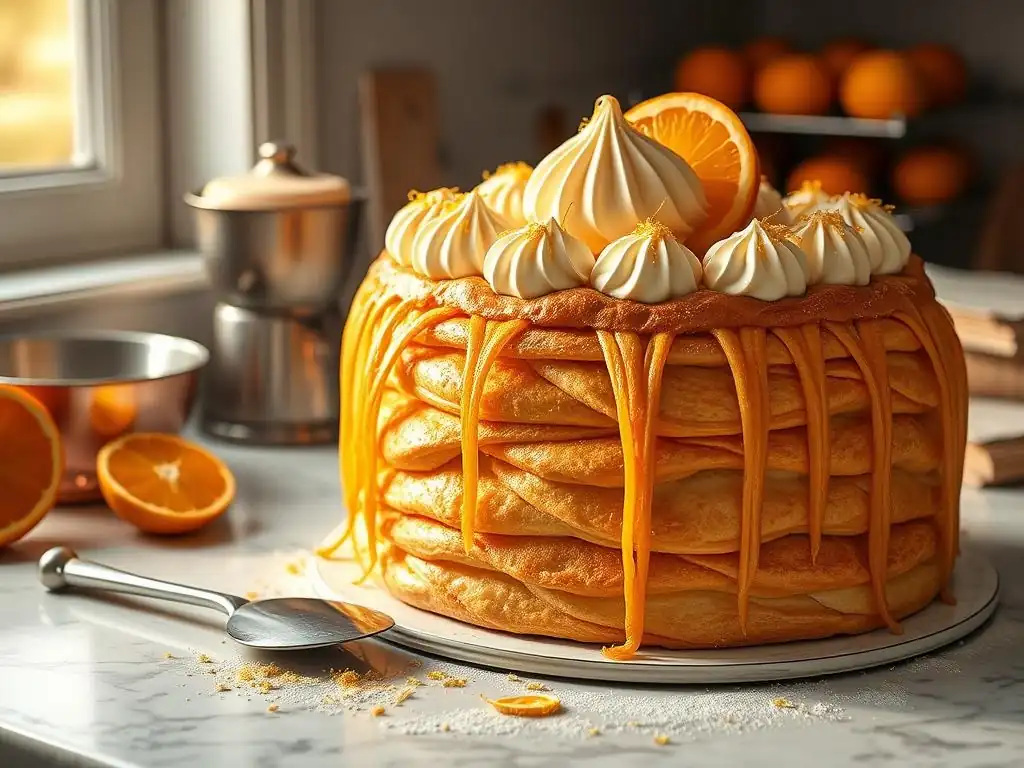
Attempting an easy french saint honore recipe can still present challenges. One common issue is soggy puff pastry; this often results from underbaking the base or assembling the cake too far in advance. Ensure the base is baked until very crisp and cool completely before adding components. Collapsed choux puffs are another problem, usually caused by opening the oven door too soon during baking or not baking them long enough until they are dried out inside. Bake choux until they are light, hollow-sounding, and feel firm.
Caramel issues are also frequent. If the caramel crystallizes, it might be due to sugar crystals on the side of the pan or stirring the sugar before it has fully melted. To prevent this, brush down the sides of the pan with a wet pastry brush during cooking. If the caramel burns, the temperature was too high or it cooked too long; keep a close eye on the color and use a thermometer to hit the correct temperature range (160-165°C). Patience and attention to detail are key to avoiding these common pitfalls in your simple french saint honore recipe.
Achieving Perfect Caramel: Temperature and Consistency
Mastering caramel is critical for the Saint Honoré's signature glaze. Start with granulated sugar and a little water (or just sugar for a dry caramel). If using water, heat gently until the sugar dissolves, then increase the heat and boil without stirring. Swirl the pan gently if needed to ensure even cooking. Watch the color closely; it will progress from clear to pale yellow, then amber, and finally deep mahogany. For dipping choux, an amber color (around 160-165°C or 320-329°F) is ideal – it's hot enough to set quickly but not so dark it tastes bitter.
Once the desired color is reached, immediately remove the pan from the heat. Be prepared to work quickly as the caramel cools rapidly. If it starts to harden too much while you are dipping, you can gently warm it again over very low heat, but be careful not to overheat it and burn. The perfect caramel should be fluid enough to dip the choux easily but set quickly into a hard, brittle glaze. This skill is vital for achieving the professional finish on your easy french saint honore recipe.
Mastering Choux Pastry: A Foundation for Success
Choux pastry, or pâte à choux, is a versatile dough used in many French pastries, including eclairs, profiteroles, and the Saint Honoré. The key is to thoroughly cook the flour mixture on the stovetop until it forms a ball that pulls away from the sides of the pan and a thin film forms on the bottom.
This cooks the starch, allowing the pastry to absorb the eggs properly. The mixture should then be cooled slightly before adding the eggs, one at a time, mixing thoroughly after each addition until the dough is smooth, glossy, and falls from a spoon in a V-shape.
Baking choux requires high initial heat to create steam, causing the puffs to rise rapidly, followed by a lower temperature to dry them out completely. A typical baking schedule might be 200°C (400°F) for 10-15 minutes, then reducing to 175°C (350°F) for another 15-20 minutes or until golden and firm. Avoid opening the oven door during the initial high-heat phase. Properly baked choux are light, hollow, and hold their shape, providing the perfect vehicle for filling in your easy french saint honore recipe.
Flavor Variations and Creative Adaptations
Exploring Flavor Profiles: Coffee, Pistachio, and Raspberry
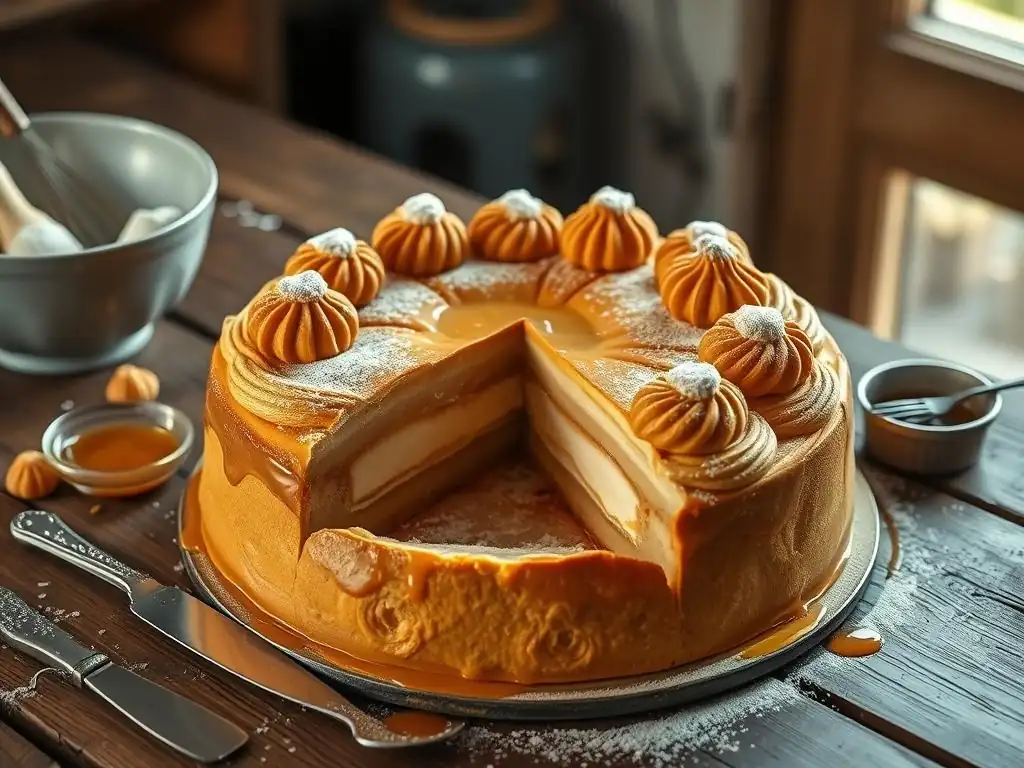
While the classic Saint Honoré features vanilla crème Chiboust, exploring different flavor profiles can add an exciting twist to your easy french saint honore recipe. Coffee Saint Honoré is popular; you can infuse the milk for the pastry cream with coffee beans or add instant coffee powder or a reduction of espresso to the finished cream. A pistachio version could involve adding finely ground pistachios and a touch of almond extract to the crème Chiboust, perhaps even incorporating pistachio paste for a more intense flavor and color.
For a fruitier take, raspberry is a fantastic choice. You can make a raspberry-flavored pastry cream by adding raspberry puree (strained to remove seeds) or extract. Alternatively, pipe a layer of vibrant raspberry coulis or fresh raspberries into the center well before adding the crème Chiboust, or fill some of the choux puffs with raspberry jam or compote alongside the cream. These variations allow you to personalize the simple french saint honore recipe to your taste preferences.
Gluten-Free Saint Honoré: Adapting the Recipe
Adapting the Saint Honoré to be gluten-free requires careful substitution of the flour in both the puff pastry base and the choux paste. For puff pastry, a blend of gluten-free flours like rice flour, sorghum flour, and tapioca starch, combined with xanthan gum (typically about 1/4 teaspoon per cup of flour blend), can mimic the structure needed for flakiness. The folding and chilling process remains similar to traditional puff pastry.
For the choux pastry, a similar gluten-free flour blend is used, often with a slightly higher proportion of starch. The cooking of the panade (flour and liquid mixture) is still crucial to gelatinize the starches. The amount of egg might need slight adjustment as gluten-free flours absorb liquids differently. Baking times and temperatures may also vary slightly to ensure the gluten-free choux dry out properly and hold their shape. While more challenging, creating a gluten-free easy french saint honore recipe is achievable with the right blend and technique.
Storing and Serving
Maintaining Freshness: Storage Solutions
Due to its components, particularly the crème Chiboust and puff pastry, the Saint Honoré is best assembled and served within a few hours. However, if necessary, some components can be prepared in advance. The baked puff pastry base and unfilled, baked choux puffs can be stored in airtight containers at room temperature for a day or two. The pastry cream component of the crème Chiboust can be made a day ahead and stored in the refrigerator with plastic wrap directly on the surface. The Italian meringue is best made just before assembly, as it is less stable over time.
Once assembled with the crème Chiboust, the cake should be stored in the refrigerator. The caramel glaze on the choux will soften over time in the humid environment of the fridge, typically within 4-6 hours. The puff pastry base will also begin to absorb moisture from the filling, becoming less crisp. For optimal texture, assemble the final cake no more than 2-3 hours before serving. Leftovers can be refrigerated, but the texture will degrade. This is why an easy french saint honore recipe is often best enjoyed fresh.
Presentation and Serving Suggestions
Presenting a Saint Honoré is part of its charm. Place the finished cake on a beautiful cake stand or serving platter. Ensure the piped cream in the center is neat and visually appealing. If you have extra caramel, you can pull thin threads of caramel to create a decorative "spiderweb" over the top just before serving. A light dusting of powdered sugar can also enhance its elegance.
When serving, use a sharp knife to slice the cake. It can be tricky to cut through the crisp caramel and puff pastry simultaneously. Warming the knife slightly can help achieve cleaner slices. Serve the Saint Honoré chilled or at cool room temperature. Pair it with a cup of coffee or a dessert wine. Explain the different components to your guests as you serve this impressive easy french saint honore recipe – they will appreciate the effort and artistry involved!
Frequently Asked Questions
How difficult is the French Saint Honoré cake to make, really?
While traditionally complex, our recipe focuses on simplified steps and easy-to-find ingredients, making it approachable even for newer bakers. We break down each component for success.
What are the key components of a Saint Honoré cake?
The core elements include pâte à choux (cream puff pastry), caramel, crème chiboust, and often a base of puff pastry. Our easy french saint honore recipe guides you through each stage.
Can I substitute any ingredients in the recipe?
While we recommend sticking to the recipe for best results, some substitutions are possible. For example, you could use a pre-made puff pastry base to save time.
What equipment do I need to make this cake?
Essential equipment includes a baking sheet, piping bags, a saucepan for caramel, and a mixer for the cream. Exact measurements are crucial for the puff pastry and choux dough.
How long does it take to make a Saint Honoré cake from start to finish?
Plan for approximately 3-4 hours due to the multiple components and cooling times. Our step-by-step guide helps manage the timing effectively.
Final Reflection: The Sweet Triumph of a Simplified Saint-Honoré
Mastering the seemingly daunting Saint-Honoré cake is more accessible than you might think. This article aimed to demystify the creation of this classic French pastry, proving that with clear, simplified steps, even novice bakers can achieve impressive results. The joy of baking, and the satisfaction of creating something beautiful and delicious, shouldn't be reserved for culinary experts.
The enduring appeal of the Saint-Honoré lies not just in its exquisite taste, but in its ability to evoke a sense of occasion and celebration. It's a testament to the power of pastry to transcend mere sustenance and become a symbol of artistry and shared joy. The best things in life are the simple things.
This sentiment rings particularly true when considering the effortlessness of this simplified recipe, which allows you to focus on the pleasure of the process and the satisfaction of the outcome, without being overwhelmed by complexity.
Now, I invite you to roll up your sleeves and embark on your own Saint-Honoré adventure. Don't be intimidated by the seemingly intricate design; embrace the challenge, savor each step, and revel in the sweet triumph of creating your own masterpiece. The journey is as rewarding as the destination, and the memories made while baking, and sharing this delightful cake, will be even sweeter than the pastry itself.
Unleash Your Inner Pâtissier: Bake Your Dream Saint-Honoré!
Thanks for joining us on this delicious journey into the world of Saint-Honoré cakes! We hope you gained confidence in tackling this seemingly complex pastry. Now it's time to put your newfound skills to the test!
- Bake your own Saint-Honoré: Grab your ingredients and follow our simplified recipe again. This time, experiment with different flavors or frostings! We dare you to try a salted caramel version!
- Share your masterpiece: Post a picture of your creation on social media using #BakeWithEaseSaintHonore and inspire others to take on this challenge.
- Join our baking community: Let's discuss your baking experience in the comments! What challenges did you overcome, and what tips would you share with others?
Ready to create your own stunning Saint-Honoré? What unique twist will you add to this classic French dessert?