
From Hoecakes to Johnnycakes: Simple American Cornmeal Bakes Explored

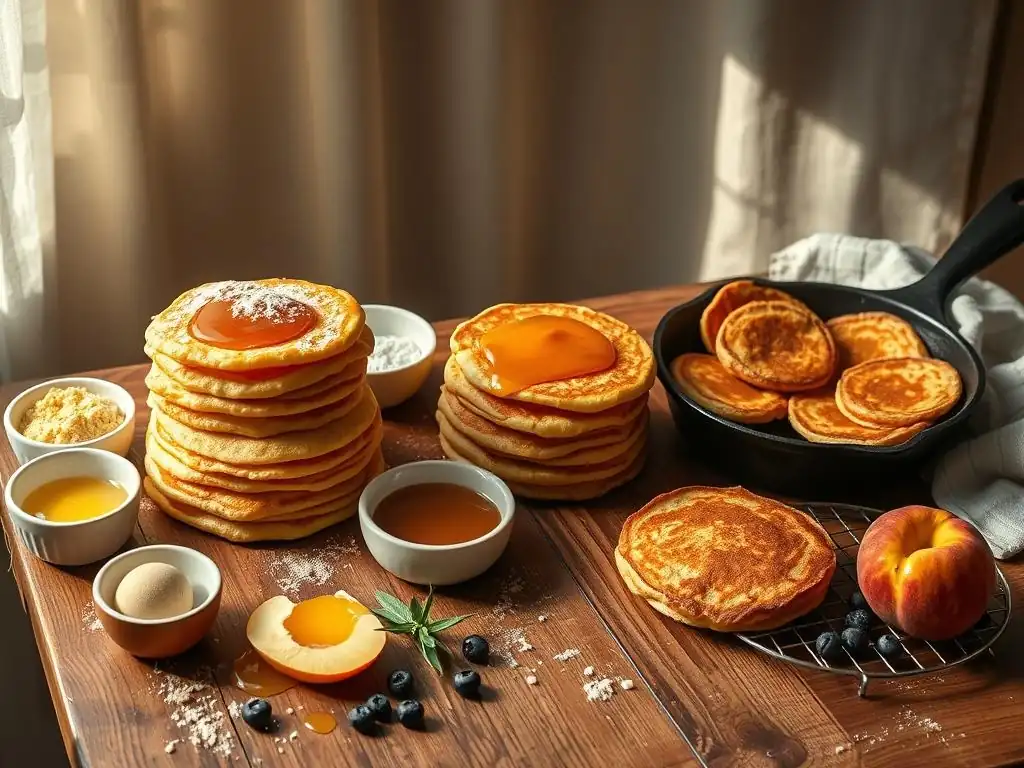
Welcome to BakeWithEase, your kitchen companion for all things baking! Ever wondered how a humble ingredient like cornmeal could unlock a world of delicious possibilities? Get ready to explore the delightful realm of American cornmeal bakes. This week, we're diving deep into the heart of easy cornmeal pancake recipes, uncovering their history, variations, and, most importantly, how to whip them up effortlessly. Prepare to transform simple ingredients into unforgettable breakfasts (or anytime treats!) – let's get baking!
- Discovering Easy Cornmeal Pancake Recipes: A Bake With Ease Guide
- What are Hoecakes? Exploring the History of this Simple Cornmeal Bread
- Johnnycakes: A Cornmeal Pancake with a Story
- Simple Cornmeal Pancake Recipes: Making Hoecakes and Johnnycakes at Home
- Tips for Perfect Cornmeal Pancakes: Achieving the Ideal Texture and Flavor
- Serving Suggestions for Hoecakes and Johnnycakes: Delicious Ways to Enjoy Your Cornmeal Bakes
-
Frequently Asked Questions
- What's the difference between a hoecake and a johnnycake, and which is easier to make using BakeWithEase's cornmeal pancake recipes?
- Are the "easy cornmeal pancake recipes" on BakeWithEase suitable for beginner bakers who have never worked with cornmeal before?
- Can BakeWithEase's "easy cornmeal pancake recipes" be adapted for dietary restrictions, such as gluten-free or vegan?
- What kind of cornmeal is recommended for the "easy cornmeal pancake recipes" featured on BakeWithEase?
- Does BakeWithEase offer variations on "easy cornmeal pancake recipes", such as adding fruit or spices, to enhance the flavor?
- Final Reflection: The Enduring Power of Simple Cornbread
- Unlock Your Inner Baker: Craft Your Perfect Cornbread Today!
Discovering Easy Cornmeal Pancake Recipes: A Bake With Ease Guide
Cornmeal, a staple grain in American history, has given rise to numerous simple and satisfying bakes. Among the most beloved are hoecakes and johnnycakes, often considered early forms of pancakes or flatbreads. These easy cornmeal pancake recipes are not only delicious but also offer a taste of regional history, proving that humble ingredients can create truly memorable dishes. Exploring these classics is a wonderful way to connect with America's culinary past right in your own kitchen.
This guide from Bake With Ease will walk you through the history, ingredients, and techniques for making perfect hoecakes and johnnycakes. Whether you're a beginner baker or simply looking for new easy cornmeal pancake recipes to add to your repertoire, these simple bakes are incredibly forgiving and rewarding. Get ready to explore the subtle differences and unique charms of these historical cornmeal treasures, from the rustic simplicity of hoecakes to the slightly more refined nature of johnnycakes.
What are Hoecakes? Exploring the History of this Simple Cornmeal Bread
The Origins of Hoecakes: A Staple of Early American Cuisine
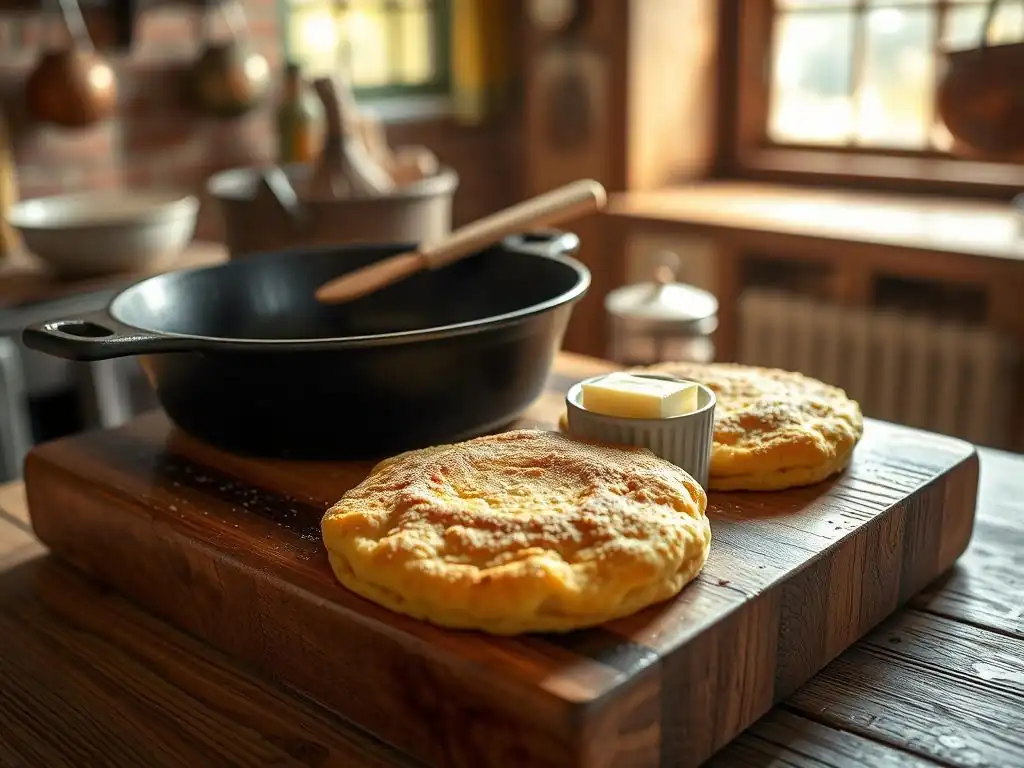
Hoecakes boast a rich history dating back centuries in early American life, particularly in the Southern colonies. Their name is often linked to the method of cooking them on the blade of a hoe over an open fire, a practical solution for travelers and field workers who needed a quick, portable meal. This simple flatbread, made primarily from cornmeal, water, and salt, was a fundamental part of the diet for many, offering sustenance from readily available ingredients. It represents a foundational element of early American foodways, reflecting resourcefulness and necessity.
This basic cornmeal mixture provided essential calories and was incredibly versatile. While the "hoe" cooking method might be the most famous association, hoecakes were also cooked on hot stones, griddles, or in skillets. Their widespread adoption across different communities highlighted cornmeal's importance as a primary grain source before wheat flour became widely accessible and affordable. The simplicity of hoecakes underscores a period where food was about survival and making the most of local provisions, laying the groundwork for many later American cornmeal recipes.
Traditional Hoecake Ingredients: Understanding the Basics
At their core, traditional hoecakes are incredibly simple, requiring just a few basic ingredients. The primary component is, of course, cornmeal, typically yellow or white. This is mixed with water and a pinch of salt to form a thick batter or dough. Historically, animal fat, often lard, was crucial for cooking, providing the necessary grease for the hoecakes to cook through and develop a crisp exterior without sticking to the cooking surface. This minimalist ingredient list reflects the practicality and limited resources of the time they originated.
While the base remains consistent, minor variations existed depending on region and availability. Some might have added a tiny bit of sugar for a hint of sweetness, or perhaps buttermilk instead of water for a slightly richer flavor and tender crumb. However, the defining characteristic of a true hoecake is its reliance on just cornmeal, liquid, and salt, cooked with fat. Understanding these basic building blocks is key to appreciating the historical context and simplicity of these easy cornmeal pancake recipes.
How to Bake Hoecakes: A Beginner's Guide
Baking hoecakes is remarkably straightforward, making it an ideal entry point for anyone exploring easy cornmeal pancake recipes. The process begins by combining the cornmeal, water, and salt to create a thick, pourable or scoopable batter. The consistency should be thick enough to hold its shape somewhat when placed on the cooking surface but not so stiff it won't spread slightly. Let the mixture sit for a few minutes to allow the cornmeal to hydrate, which helps prevent a gritty texture.
The cooking method is key to achieving the classic hoecake texture – crispy on the outside and soft within. Heat a heavy skillet or griddle over medium-high heat and add a generous amount of fat (like butter, oil, or lard). Once the fat is hot, spoon or pour portions of the batter onto the skillet, forming flat patties roughly 1/2 inch thick and 3-4 inches in diameter.
Cook for several minutes per side, until deeply golden brown and crisp. The fat helps fry the edges, giving them that characteristic crunch. This simple cooking approach yields a rustic, satisfying cornmeal bake.
Johnnycakes: A Cornmeal Pancake with a Story
Johnnycakes vs. Hoecakes: Understanding the Key Differences
While often conflated, johnnycakes and hoecakes have distinct differences, primarily in their regional origins, ingredients, and typical preparation. Hoecakes are generally associated with the American South, characterized by their extreme simplicity – often just cornmeal, water, and salt, cooked with fat into flat, rustic patties. They are historically linked to a more basic, field-cooked preparation.
Johnnycakes, on the other hand, are strongly tied to New England, particularly Rhode Island. While also cornmeal-based, traditional johnnycake recipes often call for scalding the cornmeal with boiling water or milk, creating a smoother texture. They might also include a little sugar for sweetness and are typically cooked on a griddle, resulting in a thinner, often crispier pancake compared to a hoecake. These differences, though subtle, reflect regional culinary evolution and preferences.
The History of Johnnycakes: A New England Tradition
Johnnycakes are deeply rooted in the history of New England, particularly in Rhode Island, where they are considered a culinary icon. Their origins predate European settlement, influenced by the Native American use of ground corn (known as "nokehick" or "nocake") which was mixed with water and carried as travel food. Early colonists adopted cornmeal, adapting it into their own forms of flatbreads. The name "johnnycake" itself has debated origins; some believe it's a corruption of "journey cake" (referring to their portability) or "joniken," a Native American term for cornmeal cake.
Rhode Island white cap cornmeal, a specific variety known for its fine texture and unique flavor, is traditionally considered essential for authentic Rhode Island johnnycakes. The practice of scalding the meal with boiling liquid before cooking is a key step that distinguishes many johnnycake recipes, resulting in a smoother, less gritty texture than some hoecakes. This regional focus and specific preparation method highlight johnnycakes as a more defined culinary tradition compared to the broader category of hoecakes.
Regional Variations in Johnnycake Recipes: Rhode Island Johnnycakes & Nantucket Johnnycakes
While Johnnycakes are most famously associated with Rhode Island, variations exist, reflecting local ingredients and customs. The classic Rhode Island Johnnycake is perhaps the most purist form: made from finely ground white cornmeal, boiling water or milk, and salt. The batter is typically thin and cooked slowly on a griddle with butter or lard until very thin and crispy, almost like a large, delicate cracker. This specific preparation method is fiercely defended by purists in the state.
Nantucket Johnnycakes, while also cornmeal-based, often present a slightly different character. Recipes from Nantucket and other parts of New England might use yellow cornmeal and sometimes include milk or even egg in the batter, resulting in a thicker, more substantial pancake than the paper-thin Rhode Island version. Some recipes might also incorporate a leavening agent like baking powder, pushing them closer to what many today would consider a standard pancake texture, albeit with cornmeal. These regional nuances demonstrate how a simple concept can evolve within different communities.
Simple Cornmeal Pancake Recipes: Making Hoecakes and Johnnycakes at Home
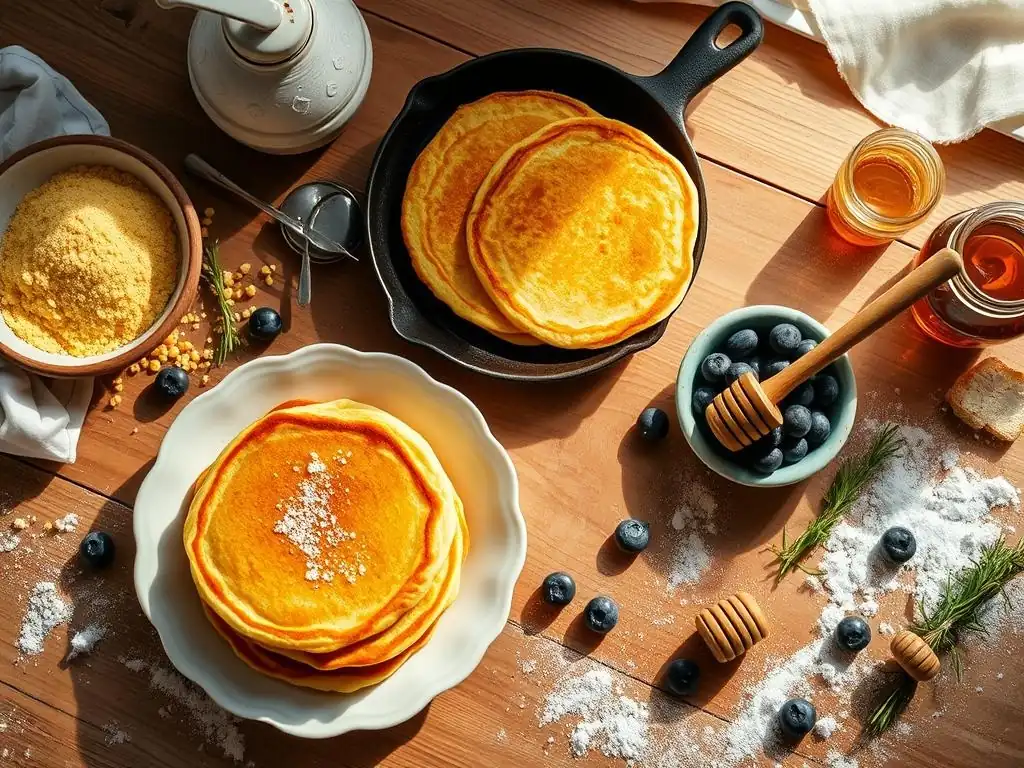
Creating easy cornmeal pancake recipes like hoecakes and johnnycakes at home is a rewarding experience that connects you directly to American culinary heritage. These recipes are forgiving and require minimal ingredients, making them perfect for a spontaneous baking session. The basic techniques are easy to master, focusing on simple mixing and proper cooking on a hot surface.
Whether you prefer the rustic simplicity of a hoecake or the potentially crisper texture of a johnnycake, both offer a delightful way to enjoy the unique flavor of cornmeal. These recipes are infinitely adaptable to your taste, allowing you to experiment with different liquids or fats. Baking these simple bakes is a testament to the fact that delicious food doesn't need to be complicated – sometimes, the most basic recipes yield the most satisfying results.
Ingredients for Hoecakes: Cornmeal, Water, Salt, Fat (Lard or Butter)
*   1 cup yellow or white cornmeal
*   1 cup cold water (or slightly less for a thicker cake)
*   1/2 teaspoon salt
*   2-3 tablespoons lard, butter, or vegetable oil for cooking
Instructions for Baking Hoecakes: Mix ingredients, form patties, cook in hot skillet with fat until golden brown.
- [ ] In a medium bowl, whisk together the cornmeal, cold water, and salt until well combined. The mixture should be like a thick, pourable batter.
- [ ] Let the batter rest for 5-10 minutes to allow the cornmeal to absorb the liquid.
- [ ] Heat the fat (lard, butter, or oil) in a heavy skillet or on a griddle over medium-high heat until shimmering hot.
- [ ] Spoon or pour about 1/4 cup of batter per hoecake onto the hot skillet, spacing them apart. Use the back of the spoon to gently spread each into a round patty about 1/2 inch thick and 3-4 inches wide.
- [ ] Cook for 4-6 minutes per side, or until the edges are crispy and the centers are cooked through and golden brown.
- [ ] Serve hot.
Ingredients for Johnnycakes: Cornmeal, Milk or Water, Salt, Sugar (Optional), Baking Powder (Optional)
*   1 cup finely ground white cornmeal (Rhode Island style if possible)
*   1 1/2 cups boiling water or milk
*   1/2 teaspoon salt
*   1 tablespoon sugar (optional, for a touch of sweetness)
*   1/2 teaspoon baking powder (optional, for a slightly lighter texture)
*   Butter or lard for cooking
Instructions for Baking Johnnycakes: Mix ingredients, pour batter onto hot griddle, cook until golden brown and cooked through.
- [ ] In a heatproof bowl, combine the cornmeal, salt, sugar (if using), and baking powder (if using).
- [ ] Carefully pour the boiling water or milk over the cornmeal mixture, stirring constantly with a spoon or whisk until a thin, smooth batter forms.
- [ ] Let the batter stand for 5-10 minutes to thicken slightly and allow the cornmeal to hydrate.
- [ ] Heat a griddle or flat skillet over medium heat and add butter or lard until it melts and coats the surface.
- [ ] Pour 2-3 tablespoons of batter per johnnycake onto the hot griddle, spreading it thinly with the back of a spoon if you desire a crispier, Rhode Island-style cake.
- [ ] Cook for 5-8 minutes per side, or until the edges are crisp, the centers are cooked through, and they are golden brown. Rhode Island johnnycakes may take longer at a lower heat to achieve maximum crispness.
- [ ] Serve hot.
Tips for Perfect Cornmeal Pancakes: Achieving the Ideal Texture and Flavor
Choosing the Right Cornmeal: Stone-Ground vs. Degerminated
The type of cornmeal you choose significantly impacts the texture and flavor of your easy cornmeal pancake recipes. Degerminated cornmeal, which is the most common type found in supermarkets, has had the germ and hull removed. This results in a finer, more uniform texture and a longer shelf life, but it sacrifices some of the corn's natural oils and flavor. Bakes made with degerminated cornmeal tend to be lighter and less intensely flavored.
Stone-ground cornmeal, on the other hand, is milled using traditional methods that retain the germ and hull. This results in a coarser, more rustic texture and a richer, more complex corn flavor. Because the germ contains oils, stone-ground cornmeal is more perishable and should ideally be stored in the refrigerator or freezer. Using stone-ground cornmeal will give your hoecakes and johnnycakes a more authentic, robust taste and a pleasantly slightly coarser texture, which many find desirable in these historical bakes.
Achieving a Crispy Crust: Mastering the Cooking Technique
A hallmark of excellent hoecakes and johnnycakes is a wonderfully crispy exterior that contrasts with a tender interior. Achieving this relies heavily on the cooking technique and the use of fat. Ensure your skillet or griddle is properly heated to medium-high heat before adding the batter. If the surface isn't hot enough, the cakes will soak up the fat and become greasy rather than crisp.
Equally important is using sufficient fat – don't be shy! Lard, butter, or oil not only prevent sticking but also essentially fry the surface of the pancake, creating that desired crispy crust. Cook the cakes undisturbed for several minutes on the first side until you see the edges firming up and turning golden brown before flipping. Cooking time varies based on thickness, but typically ranges from 4 to 8 minutes per side. Using a heavy cast-iron skillet is often recommended as it retains heat exceptionally well, promoting even cooking and crisping.
Avoiding Dry Cornmeal Pancakes: Hydration is Key
One common pitfall when making easy cornmeal pancake recipes is ending up with dry or crumbly cakes. This often happens because the cornmeal hasn't had enough time or liquid to properly hydrate. Unlike wheat flour, cornmeal needs time to absorb moisture and soften. Simply mixing the ingredients and immediately cooking can result in a gritty texture and a dry interior.
Allowing the batter to rest for at least 5-10 minutes after mixing is crucial. This gives the cornmeal granules time to swell and absorb the liquid, leading to a more tender and moist final product. For johnnycakes, the traditional method of scalding the cornmeal with boiling liquid is particularly effective at ensuring full hydration and a smooth texture.
If your batter seems too thick after resting, you can always add a tablespoon or two more liquid until it reaches the desired consistency – thin for crispy johnnycakes, slightly thicker for hoecakes. Proper hydration is the secret to tender, delicious cornmeal bakes.
Serving Suggestions for Hoecakes and Johnnycakes: Delicious Ways to Enjoy Your Cornmeal Bakes
Sweet Toppings for Cornmeal Pancakes: Honey, Maple Syrup, and More
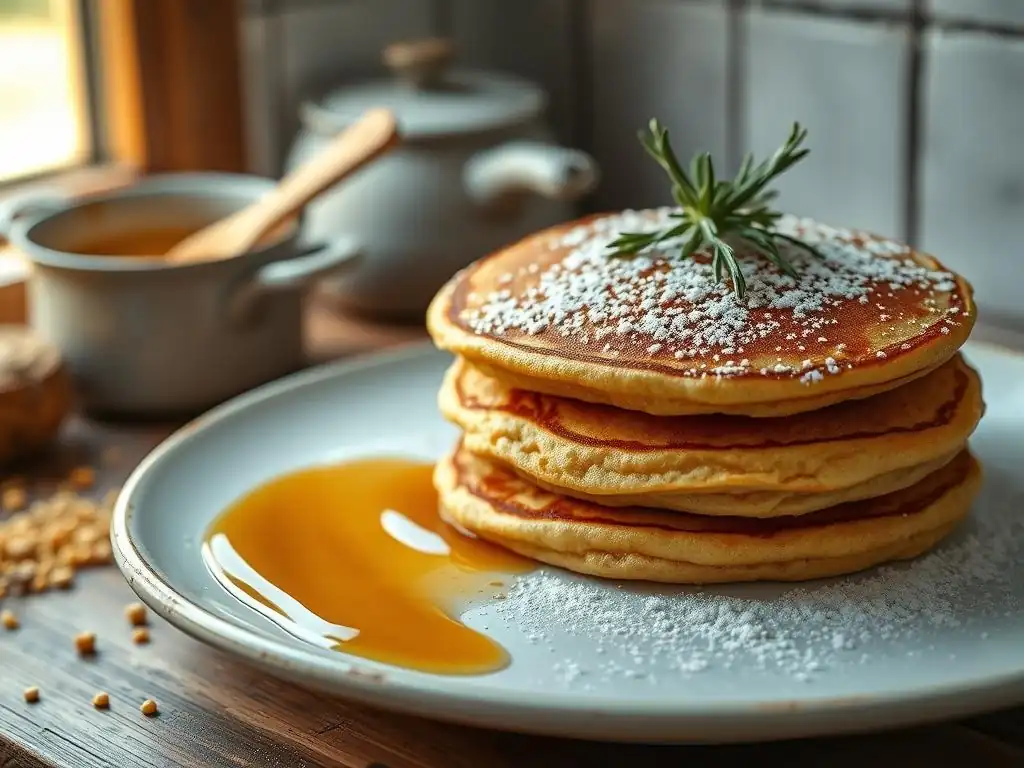
Hoecakes and johnnycakes, with their subtle corn flavor, pair beautifully with a variety of sweet toppings, transforming them into delightful breakfast or dessert options. The most classic pairing, especially for johnnycakes, is pure maple syrup. Its rich, amber sweetness perfectly complements the earthy notes of the cornmeal. A simple pat of melting butter is also essential, adding richness and moisture.
Beyond maple syrup, experiment with other sweet additions. Warm honey is a wonderful choice, offering a different floral sweetness. Fruit preserves or compotes, like blueberry, apple, or peach, provide a burst of fruity flavor and moisture. A dusting of powdered sugar, a drizzle of molasses, or even a dollop of whipped cream can elevate these simple cornmeal pancakes into something truly special. These easy cornmeal pancake recipes serve as a perfect canvas for your favorite sweet accompaniments.
Savory Pairings for Cornmeal Pancakes: Bacon, Eggs, and Grits
While delicious with sweet toppings, hoecakes and johnnycakes also shine when paired with savory dishes, reflecting their historical role as part of a larger meal. In the South, hoecakes are often served alongside classic breakfast meats like crispy bacon or sausage. They make an excellent absorbent base for soaking up egg yolks from fried or poached eggs.
Pairing cornmeal pancakes with other Southern staples like grits creates a delightful textural contrast and doubles down on the corn flavor. A simple side of fried chicken, pulled pork, or even a hearty stew or gravy can turn these humble cakes into a substantial and comforting meal. The slightly savory, earthy flavor of the cornmeal provides a sturdy counterpoint to rich, savory main courses.
Elevating Your Cornmeal Pancakes: Creative Recipe Ideas
Once you've mastered the basic easy cornmeal pancake recipes, you can get creative! Consider adding mix-ins to the batter before cooking. Fresh or frozen corn kernels can boost the corn flavor and add texture. Shredded cheese, like cheddar or Monterey Jack, melts into the cakes, creating a savory, cheesy version perfect with chili or beans. Chopped herbs like chives or scallions can also add a fresh, savory note.
Think beyond just serving them flat on a plate. Use larger johnnycakes as a base for savory toppings, similar to polenta cakes – topped with sautéed mushrooms, roasted vegetables, or a simple tomato sauce. Smaller hoecakes can serve as appetizers, topped with smoked salmon and cream cheese or pulled pork and coleslaw. These simple cornmeal bakes are incredibly versatile and invite culinary exploration beyond the traditional breakfast plate.
Frequently Asked Questions
What's the difference between a hoecake and a johnnycake, and which is easier to make using BakeWithEase's cornmeal pancake recipes?
Hoecakes are traditionally cooked on a flat surface, often a griddle or skillet, while johnnycakes often contain milk or cream for a richer texture. BakeWithEase offers easy cornmeal pancake recipes that can be adapted to create either.
Are the "easy cornmeal pancake recipes" on BakeWithEase suitable for beginner bakers who have never worked with cornmeal before?
Yes! BakeWithEase focuses on simple recipes and step-by-step guides, making them perfect for beginners. The emphasis is on easy-to-find ingredients and clear instructions.
Can BakeWithEase's "easy cornmeal pancake recipes" be adapted for dietary restrictions, such as gluten-free or vegan?
Absolutely. The recipes on BakeWithEase can often be modified with gluten-free flour blends or plant-based milk alternatives to accommodate dietary needs. Experimentation is encouraged!
What kind of cornmeal is recommended for the "easy cornmeal pancake recipes" featured on BakeWithEase?
BakeWithEase generally recommends using medium-grind cornmeal for the best texture in cornmeal pancakes. However, the specific recipe will provide clarification on the exact type.
Does BakeWithEase offer variations on "easy cornmeal pancake recipes", such as adding fruit or spices, to enhance the flavor?
Yes, BakeWithEase encourages creativity! You'll find inspiration for adding fruit, spices, or even herbs to customize your cornmeal pancakes and create unique flavor combinations.
Final Reflection: The Enduring Power of Simple Cornbread
The humble cornmeal pancake, a staple of American cuisine, remains surprisingly relevant in today's fast-paced world. Its ease of preparation and adaptability to diverse tastes make it a beacon of comfort and practicality, a testament to the enduring power of simple ingredients and time-honored techniques. From quick weeknight meals to celebratory gatherings, the cornmeal pancake continues to hold a cherished place on our tables.
The journey from hoecakes to johnnycakes, as explored in this article, reveals more than just a culinary evolution; it reflects a broader narrative of cultural adaptation and ingenuity. The simple act of transforming cornmeal into a delicious and satisfying bake speaks to our innate human desire for resourcefulness and connection to our food heritage. Food is symbolic of love when words are inadequate.
- Alan D. Wolfelt. This sentiment rings especially true for the cornmeal pancake, a dish that transcends mere sustenance and becomes a vehicle for shared experiences and family traditions.
Now, consider your own kitchen. What simple ingredients can you transform into something extraordinary? I encourage you to embrace the spirit of the cornmeal pancake – its simplicity, its versatility, its capacity to bring people together. Experiment with different variations, share your creations with loved ones, and rediscover the joy of cooking and eating food that nourishes both body and soul. Let the humble cornmeal pancake be your inspiration to create delicious and meaningful moments in your own life.
Unlock Your Inner Baker: Craft Your Perfect Cornbread Today!
Thanks for joining us on this delicious journey through the world of cornbread! We hope you've discovered some new techniques and inspiration to elevate your baking game. Now it's time to put your newfound knowledge into action.
- Bake your own masterpiece: Try one of the recipes we highlighted, or get creative and experiment with your own cornbread variations. Don't be afraid to swap out ingredients or add your own unique twist!
- Share your creation: Post a picture of your cornbread on social media and tag us! We'd love to see your culinary triumphs.
- Explore more cornmeal recipes: Dive deeper into our archives – you might discover your new favorite baked good!
What exciting cornbread adventure will you embark on next?