
Mastering the Art of the Elegant Swirl (Sauce Techniques)

Welcome to BakeWithEase, where the art of baking becomes delightfully simple! Ever wondered how to achieve those picture-perfect, restaurant-quality desserts? This week, we're diving deep into the secrets of elegant sauce swirl techniques – transforming ordinary pastries into extraordinary edible masterpieces. Discover how to elevate your desserts with a touch of artistry and create swirls that will leave everyone wondering, "How did they do that?" Prepare to unlock the secrets – let's get swirling!
- Mastering the Art of Elegant Sauce Techniques for Desserts
- Introduction to Elegant Sauce Techniques for Dessert Plating
- Essential Sauces for Creating Elegant Designs
- Tools and Equipment for Perfect Sauce Application
- Step-by-Step Guide to Elegant Sauce Techniques
- Tips and Tricks for Stunning Sauce Designs
- Troubleshooting Common Sauce Application Problems
- Examples of Elegant Desserts Using Sauce Designs
- Advanced Sauce Techniques
- Conclusion: Elevate Your Baking with Elegant Sauce Techniques
-
Frequently Asked Questions
- How important is the consistency of the sauce for creating an elegant swirl?
- What tools are best for achieving elegant sauce swirls?
- Can I use any type of sauce for elegant swirling techniques?
- How do I prevent my sauce swirls from becoming messy or blending together?
- Are there any beginner-friendly swirl techniques I can try first?
- Final Reflection: The Enduring Elegance of the Swirl
- Unleash Your Inner Sauce Artist!
Mastering the Art of Elegant Sauce Techniques for Desserts
Introduction to Elegant Sauce Techniques for Dessert Plating
Elevating Your Dessert Presentation with Sauce Art
The final flourish on a beautifully crafted dessert often comes in the form of a perfectly placed sauce. Moving beyond simply drizzling, mastering elegant sauce swirl techniques transforms a tasty treat into a visual masterpiece, captivating diners before they even take their first bite. This level of detail elevates the perceived value and sophistication of your creations, whether you're plating for guests at home or presenting desserts professionally.
Think of the difference between a scoop of ice cream with chocolate syrup poured haphazardly versus one adorned with a precise chocolate ganache swirl or a vibrant berry coulis feathered across the plate. The visual impact is immediate and significant, promising a refined culinary experience.
Developing proficiency in these decorative applications is a skill that distinguishes good bakers from great ones. It involves understanding not just the techniques themselves, but also the properties of different sauces – their viscosity, opacity, and how they interact with the plate surface and the dessert itself. A well-executed elegant sauce swirl technique can guide the eye across the plate, complement the dessert's shape and color, and add an extra layer of flavor complexity. It's an essential element in the art of pastry plating, turning simple ingredients into edible art.
Why Mastering Sauce Techniques Matters
In the world of pastry, presentation is almost as crucial as taste. Diners eat with their eyes first, and an attractively plated dessert creates anticipation and enhances the overall enjoyment. Mastering elegant sauce swirl techniques allows you to control the aesthetic narrative of your dessert, creating focal points, adding movement, and balancing the composition on the plate. This skill is particularly valuable when presenting classic desserts that might otherwise seem simple; a sophisticated sauce application can breathe new life into familiar recipes.
Furthermore, proficiency in various elegant sauce swirl techniques gives you versatility and confidence in the kitchen. You learn how different sauces behave under different conditions and with various tools, enabling you to adapt techniques to suit specific desserts and desired outcomes. This knowledge is empowering, allowing you to experiment and develop your own signature plating styles. Whether you're aiming for minimalist lines, dramatic splashes, or intricate patterns, having a repertoire of sauce techniques at your disposal is a key step in becoming a truly accomplished dessert artist.
Essential Sauces for Creating Elegant Designs
Dark Chocolate Ganache: A Rich Foundation
Dark chocolate ganache is a cornerstone sauce for elegant dessert plating due to its rich flavor and ability to set into a beautiful, slightly glossy finish. Typically made from just dark chocolate and heavy cream, the ratio of these two ingredients determines the ganache's consistency, which is crucial for plating.
A common ratio for a pourable yet firm ganache is 1 part chocolate to 1 part cream by weight, though a slightly thicker ganache (like 2 parts chocolate to 1 part cream) can be excellent for piping more defined lines or dots. The deep, intense color of dark chocolate ganache provides a strong contrast, making it ideal for creating bold lines or solid bases on lighter plates.
When preparing dark chocolate ganache for plating, ensure the chocolate is finely chopped for even melting, and heat the cream just until it simmers before pouring it over the chocolate. Let it sit for a minute or two to allow the heat to transfer, then whisk gently from the center outwards until smooth and emulsified.
For plating, it's vital to let the ganache cool slightly to a pourable but not runny consistency, often around 85-90°F (29-32°C), depending on the desired line thickness. Using ganache at the right temperature prevents it from spreading too much on the plate, allowing for precise and elegant sauce swirl techniques.
Passion Fruit Coulis: A Tangy Burst of Color
Passion fruit coulis offers a vibrant, tropical counterpoint to many desserts, providing both a tangy flavor and a striking, sunny yellow-orange color. Made by puréeing fresh or frozen passion fruit pulp (often strained to remove seeds) and simmering it with a little sugar and sometimes a touch of lemon or lime juice, coulis is typically thinner than ganache or caramel.
Its bright acidity cuts through the richness of chocolate, cream, or cheese-based desserts, making it a popular choice for both flavor and visual appeal. The natural viscosity of the pulp, even after straining, helps it hold shape better than a simple fruit juice reduction.
To achieve the best consistency for plating with passion fruit coulis, it should be smooth and free of any fibrous material. Straining the purée through a fine-mesh sieve is essential. While sugar is added for balance, avoid making it too thick and syrupy, as this can make elegant sauce swirl techniques difficult.
A good plating coulis should be able to flow smoothly from a squeeze bottle or spoon but not spread uncontrollably. Serving it chilled can also help slightly thicken it and maintain its shape on a cool plate. Its bright hue makes it perfect for adding pops of color or creating contrasting lines against darker sauces or desserts.
Vanilla Bean Crème Anglaise: Silky Smooth Elegance
Vanilla bean crème anglaise, a classic custard sauce, brings a touch of silky smooth elegance and comforting vanilla flavor to dessert plating. Made from egg yolks, sugar, milk or cream, and infused with real vanilla bean, its pale yellow color and luxurious texture make it a versatile canvas for elegant sauce swirl techniques or as a base for other elements.
The richness comes from the egg yolks and cream, while the characteristic black speckles from the vanilla bean add a visual cue of quality and flavor. Achieving the perfect consistency is key – it should be thick enough to coat the back of a spoon (nappé consistency) but still pourable.
Cooking crème anglaise requires careful temperature control; it should be gently heated, usually to around 170-175°F (77-79°C), tempering the egg yolks to prevent scrambling. Overheating will result in a curdled sauce, while underheating will leave it too thin. For plating, it's typically served warm or at room temperature. Its smooth, consistent texture makes it excellent for creating pools, broad strokes, or for flooding areas within a design. The subtle color provides a lovely backdrop for darker sauces or vibrant fruit elements, highlighting other components of the dessert presentation.
Salted Caramel Sauce: Adding Depth and Texture
Salted caramel sauce provides a wonderful balance of sweetness, bitterness (from the caramelized sugar), and salinity, adding depth of flavor and a beautiful amber hue to dessert plating. Made by caramelizing sugar, then adding butter and cream, and finishing with salt, its consistency can range from thin and pourable to thick and chewy, depending on the sugar cooking temperature and the amount of cream added.
For plating, a consistency similar to warm honey is often ideal – thick enough to hold a line but still fluid enough to flow smoothly. The addition of salt not only enhances the flavor but also slightly affects the sauce's texture and how it sets.
The process of making caramel requires precision, particularly in cooking the sugar to the correct stage without burning it. Once the sugar is caramelized to a rich amber, carefully whisking in warm butter and cream creates the emulsion. The sauce will thicken as it cools.
For plating, it's best used warm, as it becomes quite viscous at room temperature. Its slightly sticky nature can also be used to adhere elements to the plate. Salted caramel is fantastic for creating elegant sauce swirl techniques, drips, or pools, pairing exceptionally well with chocolate, apple, or vanilla-based desserts, and its rich color offers a warm contrast on the plate.
Tools and Equipment for Perfect Sauce Application
Precision Piping Bags: Achieving Fine Lines
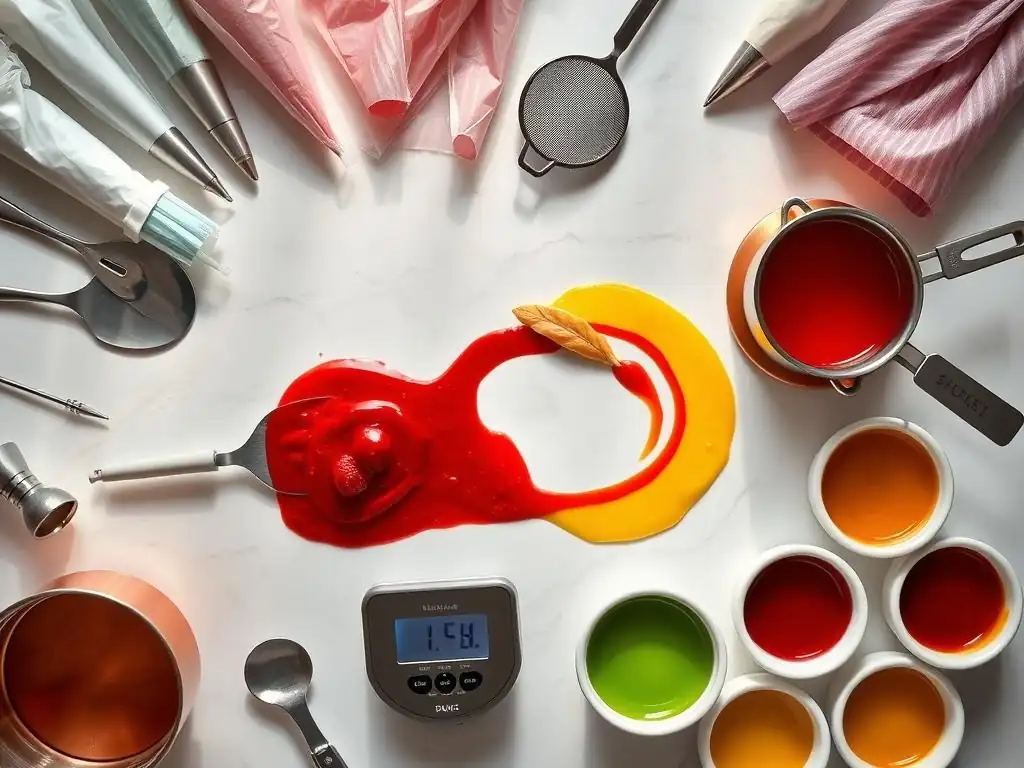
Precision piping bags, often used with small, round tips (like Ateco #1, #2, or #3), are indispensable tools for executing fine, delicate lines and intricate patterns in elegant sauce swirl techniques. These tips allow for a high degree of control over the flow and thickness of the sauce, making them ideal for drawing thin outlines, writing text, or creating detailed filigree work.
The flexibility of the piping bag allows you to apply consistent pressure, ensuring smooth, unbroken lines. For best results, use a small amount of sauce in the bag at a time to keep it at the right temperature and prevent it from cooling and thickening too much during application.
Using a piping bag requires a steady hand and practice to maintain even pressure and speed. The tip size should be chosen based on the desired line thickness and the consistency of the sauce; thinner sauces might require smaller tips, while slightly thicker sauces can work with slightly larger ones.
Filling the bag correctly, twisting the top to create tension, and holding it at the right angle to the plate are all critical steps for achieving clean, professional-looking lines. This tool is essential for techniques requiring high precision, such as creating intricate spiderweb designs or drawing detailed patterns around the dessert.
Squeeze Bottles: Controlled Sauce Placement
Squeeze bottles are perhaps the most versatile and user-friendly tools for applying sauces in elegant dessert plating, especially for techniques like dots, lines, and controlled pouring. Available in various sizes with different tip apertures, from very fine points to wider openings, they offer excellent control over the amount of sauce dispensed and the speed of flow. The ability to simply squeeze the bottle allows for quick and easy application, making them ideal for techniques like the classic comma or creating uniform dots around a plate. They are also easy to refill and clean, making them efficient for busy service.
Choosing the right squeeze bottle depends on the sauce consistency and the desired effect. Bottles with fine tips are great for thin lines or small dots, while those with wider openings are better for thicker sauces or creating larger pools or drips. It's important to ensure the sauce is free of any solid particles that could clog the tip. Using squeeze bottles allows for a relaxed grip and natural movement, facilitating fluid and dynamic elegant sauce swirl techniques. They are particularly useful for beginners learning to control sauce flow and for creating consistent, repeatable designs.
Offset Spatulas: Creating Artistic Effects
Offset spatulas, with their angled blades, are invaluable for spreading sauces smoothly across a plate or creating artistic smears and swooshes as part of elegant sauce swirl techniques. Unlike straight spatulas, the offset handle keeps your hand clear of the plate surface, allowing for flatter, more controlled movements.
They come in various sizes, from small palette knives to larger offset spatulas, each suited for different tasks. A small offset spatula is perfect for nudging dessert components into place or creating delicate smears, while a larger one can be used to spread a base layer of sauce or create broader strokes.
Using an offset spatula for sauce application often involves placing a dollop or line of sauce on the plate and then dragging or pushing it with the spatula to create the desired shape. This tool is excellent for achieving organic, painterly effects, such as a sweeping curve or a textured smear. The angle of the blade and the pressure applied will affect the final look.
Cleaning the spatula between strokes or colors is essential to maintain clean lines and prevent muddying the design. Mastering the offset spatula allows you to add a freehand, artistic touch to your elegant sauce swirl techniques, creating dynamic and unique presentations.
White Porcelain Plates: Showcasing Sauce Art
The choice of plate is fundamental to showcasing elegant sauce swirl techniques. White porcelain plates are the industry standard for dessert plating for several compelling reasons. Their neutral color provides a clean, high-contrast background that makes vibrant sauces and colorful desserts pop. The smooth, non-porous surface allows sauces to flow and spread predictably, making it easier to execute precise techniques like lines, dots, and swirls. The weight and feel of porcelain also add a sense of quality and sophistication to the dining experience, complementing the visual elegance of the plated dessert.
Different plate shapes and sizes offer various canvases for your sauce art. A large, round plate provides ample space for expansive designs, while a rectangular or square plate can lend itself to more structured, linear patterns. The rim of the plate also plays a role; some techniques utilize the rim, while others focus solely on the interior space. Using a slightly chilled plate can help prevent thinner sauces from spreading too quickly, giving you more control over your elegant sauce swirl techniques. Ultimately, the white porcelain plate serves as the essential stage upon which your edible art is presented.
Step-by-Step Guide to Elegant Sauce Techniques
Technique 1: The Classic Comma
Preparing Your Plate and Sauce
Before attempting the classic comma, ensure your plate is clean and dry. A slightly chilled plate (refrigerated for about 10-15 minutes) is ideal, especially for thinner sauces like coulis or crème anglaise, as it helps the sauce set slightly faster and prevents excessive spreading. Your chosen sauce should be at the correct temperature and consistency – warm for ganache or caramel (around 85-95°F / 29-35°C) or cool for coulis or crème anglaise.
It should be smooth and free of lumps. Load your squeeze bottle or piping bag with the sauce, ensuring there are no air bubbles, which can cause breaks in your lines.
For a standard 10-inch plate, you might prepare about 1/4 cup of sauce per plate, though this varies based on the size of the comma and the overall design. If using a squeeze bottle, hold it upright and tap it gently to bring the sauce to the tip.
If using a piping bag, twist the top tightly to create tension and gently squeeze until sauce just begins to appear at the tip. Having your dessert components ready to be placed immediately after executing the comma is also part of the preparation, as you want to work efficiently while the sauce is fresh.
Executing the Comma: A Detailed Walkthrough
The classic comma is one of the most fundamental elegant sauce swirl techniques. To execute it, hold your squeeze bottle or piping bag with the tip very close to the plate surface, but not touching. Start applying gentle, consistent pressure to release the sauce, creating a small dot.
Without lifting the tip from the dot you just created, continue applying pressure and smoothly pull the bottle/bag away from the dot in a curved motion, lifting slightly as you extend the line. Gradually decrease the pressure as you reach the desired length, allowing the line to taper off into a point, resembling a comma.
Practice varying the pressure and speed to control the size of the dot and the length and thickness of the tail. A quick pull will create a shorter, thicker comma, while a slower, more controlled pull with tapering pressure will result in a longer, more elegant shape. For consistency across multiple plates, try to maintain the same starting pressure, pulling speed, and ending lift-off point. Aim for a smooth, continuous line without breaks or wavering. This technique works beautifully with medium-viscosity sauces like slightly cooled ganache, thicker coulis, or warm caramel.
Technique 2: The Feathered Design
Creating the Base Lines for the Feathered Design
The feathered design, another popular elegant sauce swirl technique, starts with creating parallel lines or a circular pattern of dots on the plate. For parallel lines, using a squeeze bottle or piping bag with a medium tip, draw several straight lines of sauce across a section of the plate. These lines should be relatively close together, typically spaced about 1/2 to 1 inch apart, depending on the size of your plate and the desired density of the feathered effect.
The lines should be uniform in thickness and consistency. Ensure the sauce is fluid enough to draw smooth lines but not so thin that it spreads uncontrollably.
Alternatively, you can create a circular pattern of dots or a ring of sauce. For dots, pipe or squeeze a series of uniform dots in a circle or oval shape on the plate. For a ring, draw a continuous circle of sauce.
The key is to have the sauce applied in a way that allows you to pull through it in the next step without the lines or dots merging completely into a solid mass. Aim for consistency in the amount of sauce in each line or dot to ensure a uniform feathered effect. This base layer provides the structure for the subsequent feathering action.
Feathering the Sauce: Achieving a Delicate Effect
Once your base lines or dots are in place, immediately grab a clean skewer, toothpick, or the tip of a small knife. While the sauce is still wet, gently drag the tip of the skewer through the sauce lines or dots. For parallel lines, drag the skewer perpendicularly across the lines, alternating the direction of your drag for each pass (e.g., drag down, then drag up).
This pulls the sauce, creating a delicate, feathered or marbled effect. For a circular pattern, drag the skewer from the center outwards through the ring of sauce or dots, or from the outside towards the center.
The speed and pressure of your drag will influence the look of the feathering. A slow, light drag will create finer, more distinct feathers, while a faster, firmer drag will create a more blended, marbled effect. Wipe the skewer clean after each drag to prevent smudging and maintain crisp lines. This technique works best with sauces that aren't too quick to set, like crème anglaise, coulis, or slightly warmer ganache. The feathered design adds intricate detail and movement to the plate, making it one of the most visually appealing elegant sauce swirl techniques.
Technique 3: The Abstract Splash
Mastering Controlled Splashing
The abstract splash technique, while appearing random, requires a surprising amount of control to look artistic rather than messy. It's about creating dynamic, spontaneous-looking patterns using controlled drips, flicks, or gentle splatters of sauce. This technique works particularly well with sauces that are slightly thinner, like a warm coulis, a thin caramel, or a slightly runnier ganache. The goal is to create visual interest and energy on the plate without overwhelming the dessert. It's one of the more expressive elegant sauce swirl techniques.
To execute a controlled splash, you can use a spoon, a small whisk, or even your fingers (if gloved and hygienic!). Dip the tool into the sauce, lifting it to allow excess to drip off until you have the desired amount. Then, holding the tool over the plate at a slight distance, gently flick your wrist or tap the tool to create small drops or streaks of sauce.
Experiment with holding the tool at different heights and using varying degrees of force to create different splatter patterns. You can also hold the tool still and let drips fall naturally for larger, more deliberate spots. Practice on a spare plate first to get a feel for how the sauce behaves.
Creating Visual Interest with Random Patterns
The beauty of the abstract splash lies in its apparent randomness, but strategic placement is key to creating visual interest. Instead of just splashing sauce anywhere, consider where the dessert will sit and splash the sauce in areas that complement or contrast with its placement. You might splash sauce around the perimeter of the plate, in a corner, or even across a portion of the dessert itself (if its texture allows).
Using multiple colors of sauce in controlled splashes can add even more vibrancy and complexity to the design. For instance, a dark chocolate splash next to a bright raspberry coulis splash can create a striking contrast.
Varying the size and density of the splashes also adds visual depth. Some areas might have concentrated small speckles, while others feature larger, more spread-out drops. The goal is to create a balanced yet dynamic composition that enhances, rather than detracts from, the main dessert. This technique is less about precise lines and more about texture, movement, and color interaction. It's a fantastic way to add an artistic, modern flair using elegant sauce swirl techniques.
Technique 4: The Concentric Circles
Building the Circle Foundation
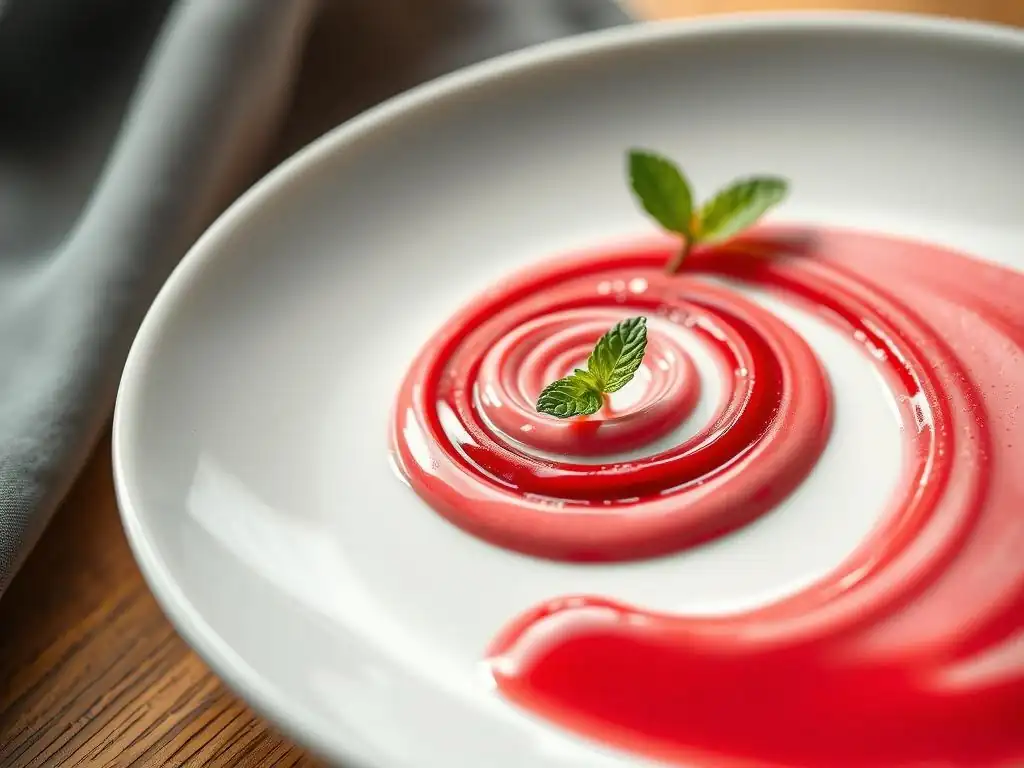
Creating elegant concentric circles on a plate requires a steady hand and consistent sauce flow. This technique works best with sauces that are smooth and not too thick, such as crème anglaise, coulis, or a well-tempered ganache. Start by placing a small dollop or a single drop of sauce in the absolute center of your plate. Then, using a squeeze bottle or piping bag, begin drawing a continuous circle around this central point. Apply steady, even pressure as you move your hand in a smooth circular motion.
Once the first circle is complete, move your hand slightly outwards and begin drawing a second circle around the first. Maintain the same consistent pressure and speed. Continue this process, drawing increasingly larger circles around the previous ones, moving outwards towards the edge of the plate.
The circles should be relatively close together, but with enough space between them to allow for the next step if you plan to marble them. Ensure the sauce flow is consistent to create circles of uniform thickness. This technique creates a sense of order and focus on the plate, drawing the eye towards the center or where the dessert will be placed.
Varying Circle Thickness for Dynamic Appeal
While uniform concentric circles can be elegant, varying the thickness of the circles can add dynamic appeal to this elegant sauce swirl technique. Instead of using the same pressure throughout, you can alternate between applying slightly more pressure for thicker circles and slightly less pressure for thinner ones. For example, you might start with a thin central circle, follow with a thicker one, then a thin one, and so on. This creates a visually interesting pattern that isn't monotonous.
Another variation is to apply the sauce in a spiral motion, starting from the center and spiraling outwards, increasing the pressure slightly as you move outwards to create a gradually widening line. Once the circles or spiral are laid down, you can leave them as is for a clean, graphic look, or immediately use a skewer to drag lines through them (like in the feathering technique) to create a spiderweb or marbled effect. Experimenting with different sauce colors in alternating circles can also yield stunning results, creating a vibrant bullseye or target design that is both simple and sophisticated.
Tips and Tricks for Stunning Sauce Designs
Sauce Consistency: Achieving the Ideal Texture
Achieving the ideal sauce consistency is paramount for successful elegant sauce swirl techniques. If a sauce is too thin, it will spread uncontrollably on the plate, blurring lines and losing definition. If it's too thick, it will be difficult to pipe or squeeze smoothly, resulting in broken lines or uneven dots. The "ideal" consistency varies slightly depending on the specific technique you're using. For fine lines or dots, a consistency similar to warm honey or thick syrup works well. For broader strokes or pools, a slightly thinner, yet still viscous, texture like heavy cream is often preferred.
Adjusting sauce consistency can often be done by carefully heating or cooling it. Ganache and caramel thicken as they cool and thin as they warm. Coulis can be reduced slightly on the stovetop to thicken it or thinned with a little water or juice. Crème anglaise consistency is primarily determined during cooking; reheating gently can thin it slightly, but be careful not to curdle it.
If a sauce is too thick, you might gently warm it or whisk in a tiny amount of liquid (like water, milk, or juice, depending on the sauce type). If too thin, careful reduction (for fruit sauces/caramel) or chilling (for ganache/crème anglaise) might help. Always test the consistency on a spare plate before applying it to your final dessert.
Plate Temperature: Preventing Sauce from Spreading
The temperature of your plate has a significant impact on how sauces behave, particularly thinner ones. A warm plate can cause sauces to spread out rapidly, losing the crisp lines and defined shapes essential for elegant sauce swirl techniques. This is especially true for sauces with a lower melting point or viscosity that decreases significantly with heat, such as chocolate ganache or fruit coulis. Using a plate that is too warm can quickly turn a precise design into a blurry mess, frustrating your plating efforts.
Conversely, using a slightly chilled plate (refrigerated for 10-20 minutes) can help sauces set up slightly faster upon contact, maintaining their shape and definition. This is particularly beneficial when working with techniques that require sharp lines or dots, like the classic comma, feathering, or concentric circles.
Crème anglaise, often served warm, is an exception, but even then, a room-temperature plate is better than a hot one unless the intention is for the sauce to pool and spread intentionally. For best results with most elegant sauce swirl techniques, aim for a plate that is cool to the touch or at least at room temperature.
Color Contrast: Choosing Complementary Sauce Colors
Strategic use of color contrast is a powerful tool in creating visually stunning dessert presentations using elegant sauce swirl techniques. Choosing sauce colors that stand out against the plate and the dessert makes your designs pop and adds vibrancy to the overall composition. On a white plate, dark sauces like chocolate ganache or berry reductions provide strong contrast. Bright sauces like passion fruit coulis or vibrant raspberry purée offer striking color against both white plates and darker desserts (like chocolate cake).
Consider the colors of your dessert components as well. A white vanilla panna cotta provides a neutral canvas for almost any colored sauce, allowing you to be bold with reds, yellows, or browns. A dark chocolate lava cake, however, pairs beautifully with bright, contrasting colors like red (raspberry coulis), yellow (passion fruit coulis), or a lighter color like white chocolate sauce or crème anglaise.
Using two or more contrasting sauce colors in a single design can create complex, dynamic patterns, enhancing the visual appeal and making your elegant sauce swirl techniques truly stand out. Aim for combinations that are both visually appealing and flavor compatible.
Practice Makes Perfect: Honing Your Skills
Like any artistic skill, mastering elegant sauce swirl techniques requires practice. Your first attempts might not be perfect – lines might be wobbly, dots uneven, or feathers smudged. This is completely normal! Dedicate time to practicing the basic techniques on practice plates before attempting them on your final dessert. Use inexpensive ingredients or even just water mixed with a little cornstarch or food coloring to simulate sauce consistency for practice runs. This allows you to get a feel for the tools and the movement required without wasting valuable ingredients.
Focus on one technique at a time until you feel comfortable with it. Pay attention to the pressure you apply, the speed of your movement, and the angle you hold your tool. Try different sauces with the same technique to see how consistency affects the outcome. Take photos of your practice plates to track your progress and identify areas for improvement. Consistent practice, even just for 10-15 minutes a day, will significantly improve your control and confidence, enabling you to execute elegant sauce swirl techniques smoothly and consistently on your finished desserts.
Troubleshooting Common Sauce Application Problems
Sauce Spreading Too Quickly
One of the most common frustrations when applying sauces is when they spread too quickly upon hitting the plate, ruining the intended design. This usually indicates the sauce is too thin or the plate is too warm. For sauces like ganache or caramel, allowing them to cool slightly will increase their viscosity. If they are already at room temperature and still too thin, they might need to be thickened slightly – for ganache, whisking in a bit more melted chocolate; for caramel, simmering gently to reduce it further (be careful not to burn! ).
For fruit coulis or thinner sauces, chilling the sauce can help. If the sauce is still too thin even when chilled, it might need a thickening agent like a tiny pinch of xanthan gum whisked in (use sparingly, as too much can make it gummy) or a very brief simmer to reduce.
Crucially, ensure your plate is cool or at room temperature, not warm from the dishwasher or kitchen heat. A chilled plate provides a cooler surface that helps the sauce set slightly faster, maintaining its shape and preventing excessive spreading, allowing your elegant sauce swirl techniques to hold their form.
Uneven Sauce Application
Uneven sauce application, resulting in lines that are thick in some places and thin in others, or dots of varying sizes, is often due to inconsistent pressure or flow from the tool. If using a squeeze bottle, ensure the bottle is full enough to maintain consistent pressure and that the tip isn't partially clogged. Squeeze from the bottom of the bottle, rolling it up as you go, to keep pressure constant. For piping bags, twist the top tightly to create consistent tension and apply pressure from the top down, not squeezing randomly.
Air bubbles in the sauce or the tool can also cause breaks or inconsistent flow. Tap squeeze bottles gently or squeeze piping bags over a separate bowl before starting to expel any air bubbles. If using a spoon for drizzling, practice maintaining a steady stream by tilting the spoon at a consistent angle and speed.
For techniques like feathering or spreading with an offset spatula, ensure you have a consistent amount of sauce to work with and apply even pressure as you drag or spread. Practice focusing on maintaining steady pressure and movement for smooth, even elegant sauce swirl techniques.
Achieving Symmetry and Balance
Achieving symmetry and balance in your sauce designs is key to creating an elegant and harmonious presentation. While some elegant sauce swirl techniques, like the abstract splash, are intentionally asymmetrical, others like concentric circles, parallel lines for feathering, or multiple commas require careful placement to look balanced. Start by visualizing where the main dessert component will sit on the plate. Your sauce design should complement this placement, not compete with it or make the plate look lopsided.
For symmetrical designs, mentally divide your plate. If placing the dessert centrally, your sauce design might radiate outwards from the center or form a border around the edge. If placing the dessert off-center, the sauce design might balance the composition by filling the empty space with a complementary shape or pattern. Use the rim of the plate as a guide for straight lines or consistent spacing.
For repetitive elements like dots or commas, try to make them uniform in size and spacing. Step back and look at the plate from different angles to assess balance before serving. Practice helps develop an eye for composition and symmetrical elegant sauce swirl techniques.
Examples of Elegant Desserts Using Sauce Designs
Chocolate Fondant with Passion Fruit Coulis
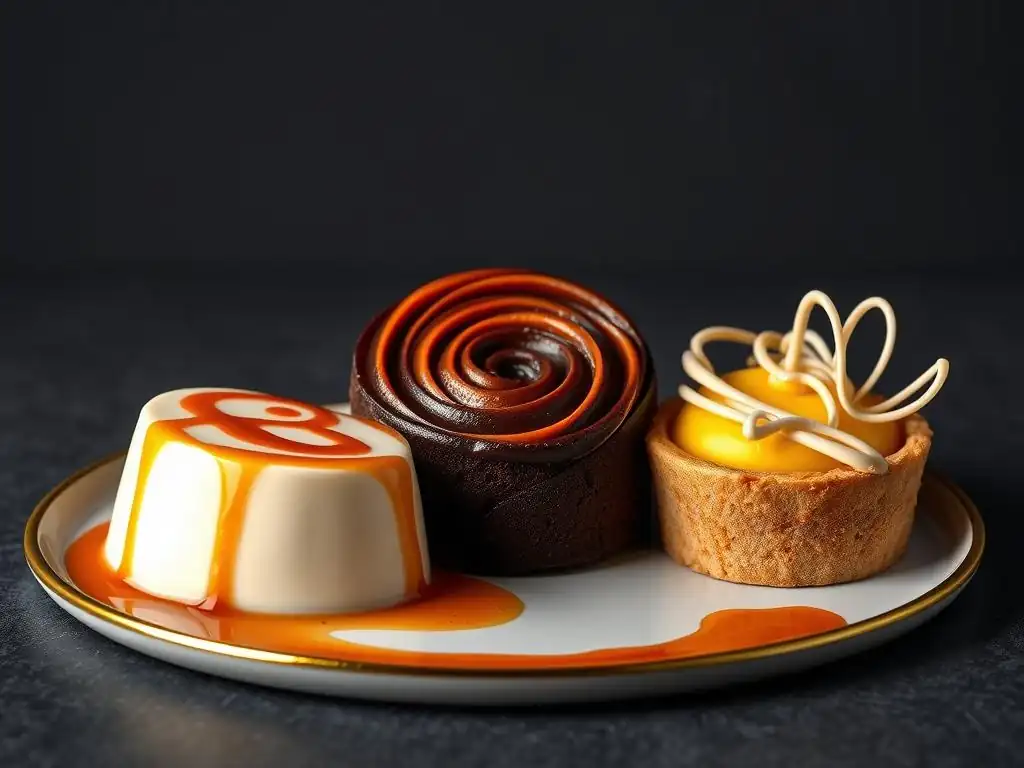
A classic example pairing rich flavor with vibrant color is a warm chocolate fondant (or lava cake) presented with a passion fruit coulis. The deep, dark color of the chocolate cake and the dark chocolate sauce that flows from its center provide a dramatic contrast to the bright, sunny yellow-orange of the passion fruit coulis. An elegant sauce swirl technique like a classic comma or a feathered design using the coulis around the base of the fondant creates a visually striking border.
Alternatively, a controlled abstract splash of the passion fruit coulis across the plate adds a dynamic element, suggesting tropical vibrancy. A delicate drizzle of the coulis over the top of the warm chocolate fondant just before serving can also add a beautiful sheen and a pop of color. The acidity of the passion fruit cuts through the richness of the chocolate, providing a perfect flavor balance that is mirrored in the visual contrast created by the elegant sauce swirl techniques.
Vanilla Bean Cheesecake with Salted Caramel
Vanilla bean cheesecake, with its smooth, creamy texture and pale color, serves as an excellent canvas for darker, richer sauces like salted caramel. A popular elegant sauce swirl technique here is to create a pool or a broad sweep of warm salted caramel sauce on the plate before placing the cheesecake slice on top or alongside it. The warm, amber color of the caramel stands out beautifully against the white or off-white cheesecake.
Another effective technique is to drizzle the salted caramel sauce in a lattice pattern or concentric circles directly onto the top of the cheesecake. For a more dynamic look, you could use a squeeze bottle to create a spiral of caramel on the plate and then feather it outwards with a skewer. The slightly glossy finish of the caramel catches the light, adding another layer of visual appeal. The interplay of the creamy, cool cheesecake with the warm, slightly salty caramel sauce, highlighted by elegant sauce swirl techniques, creates a harmonious and inviting dessert.
Raspberry Tart with Crème Anglaise
A vibrant raspberry tart, with its geometric shape and bright red fruit, pairs wonderfully with the pale, smooth elegance of vanilla bean crème anglaise. The contrast in color and texture is key here. One elegant sauce swirl technique is to create a pool or a broad sweep of the crème anglaise on the plate and place the tart slice partially within or alongside it. The creamy white sauce provides a soft backdrop that makes the red raspberries pop.
Another approach is to use a squeeze bottle or piping bag to create a delicate border of crème anglaise dots around the edge of the plate or around the tart itself. For a more artistic touch, you could create parallel lines of crème anglaise and feather them perpendicularly with a skewer, creating a soft, marbled effect next to the crisp lines of the tart.
Sometimes, simply drizzling a clean line or two of the silky crème anglaise across the plate is all that's needed to add a touch of elegance and balance to the vibrant raspberry tart, showcasing simple yet effective elegant sauce swirl techniques.
Advanced Sauce Techniques
Incorporating Multiple Sauces into a Single Design
Once you are comfortable with individual elegant sauce swirl techniques, incorporating multiple sauces into a single design opens up a world of creative possibilities. Using two or more sauces allows you to play with color, flavor, and texture contrasts simultaneously on the plate. For example, you could start with a base layer or a broad stroke of one sauce (like crème anglaise), then pipe lines or dots of a contrasting sauce (like dark chocolate ganache or raspberry coulis) on top.
Techniques like feathering become even more dynamic when applied to multiple sauces. You could create alternating lines of dark chocolate ganache and white chocolate ganache and then feather through them for a marbled effect. Or, draw concentric circles using two different colored coulis and then drag a skewer through them to create a vibrant target design. The key is to ensure the sauces have compatible consistencies and flavors that work well together. Practice coordinating your movements and sauce application to keep the design clean and visually appealing when using multiple elegant sauce swirl techniques.
Using Stencils for Intricate Patterns
For creating highly detailed and intricate patterns that are difficult to achieve freehand, stencils are an excellent tool in advanced elegant sauce swirl techniques. Stencils can range from simple geometric shapes to complex lace-like designs or even custom logos. They allow for perfect repetition and precision, making it possible to create professional-looking patterns with relative ease. Stencils are typically made from thin, flexible plastic or metal.
To use a stencil with sauce, place the stencil flat on the plate where you want the design to appear. Then, carefully apply your sauce over the stencil, ensuring it fills the cut-out areas. This can be done by gently spreading a slightly thicker sauce (like a thicker coulis or a medium-viscosity ganache) over the stencil with a small offset spatula or by using a squeeze bottle to fill the areas.
Once the sauce is applied, carefully lift the stencil straight up and away from the plate to reveal the clean, intricate design beneath. This technique is fantastic for adding a sophisticated level of detail using elegant sauce swirl techniques, especially for formal presentations.
Creating Textural Effects with Sauce
Beyond just creating lines and shapes, advanced elegant sauce swirl techniques can also involve creating textural effects on the plate using sauces. This adds another dimension to the visual presentation. One simple way to add texture is to use a sauce that has some body or particles, like a berry coulis with tiny seeds left in, or a caramel sauce that has been slightly cooled to a thicker consistency.
More deliberate textural effects can be created by manipulating the sauce after it's applied. For instance, after spreading a layer of sauce with an offset spatula, you can gently tap the back of the spatula or use a fork or comb to create ridges, waves, or other patterns in the sauce surface. This works well with thicker sauces like ganache or a reduced fruit purée.
Another technique is to create raised dots or lines using a piping bag with a round tip and then gently touching the top of each dot with a wet fingertip or the back of a spoon to create a peak or a swirl. These textural elements add visual interest and sophistication to your elegant sauce swirl techniques.
Conclusion: Elevate Your Baking with Elegant Sauce Techniques
The Importance of Presentation in Dessert Making.
Ultimately, mastering elegant sauce swirl techniques is about recognizing and leveraging the crucial role of presentation in dessert making. A delicious dessert is a treat for the palate, but a beautifully presented dessert is a feast for the senses, engaging sight and smell before the first bite. By taking the time to apply sauces with care and artistry, you demonstrate attention to detail and a commitment to creating a complete culinary experience. This level of presentation can transform even simple desserts into memorable occasions, leaving a lasting impression on your diners.
Investing time in learning and practicing these elegant sauce swirl techniques is an investment in your baking journey. It enhances your skills, expands your creative repertoire, and allows you to express your personal style on the plate. Whether you aspire to professional pastry arts or simply wish to impress friends and family, the ability to confidently execute beautiful sauce designs will elevate your desserts from merely tasty to truly unforgettable works of edible art. So, grab your squeeze bottle, choose your favorite sauce, and start practicing – the art of elegant plating awaits!
Frequently Asked Questions
How important is the consistency of the sauce for creating an elegant swirl?
The sauce consistency is crucial; it should be thick enough to hold its shape but fluid enough to spread. Too thick, and it won't swirl; too thin, and it will run.
What tools are best for achieving elegant sauce swirls?
While a spoon can work, a piping bag or a squeeze bottle provides the most control and precision. These tools allow for consistent application and intricate designs.
Can I use any type of sauce for elegant swirling techniques?
While many sauces can be used, those with a vibrant color and smooth texture work best. Consider using fruit purees, chocolate ganache, or flavored creams.
How do I prevent my sauce swirls from becoming messy or blending together?
Work quickly and deliberately, avoiding over-application. Chilling the plate or dessert beforehand can also help the sauce set faster and prevent bleeding.
Are there any beginner-friendly swirl techniques I can try first?
Start with simple concentric circles or a basic figure-eight pattern. Practice these techniques before attempting more complex designs to build confidence and skill.
Final Reflection: The Enduring Elegance of the Swirl
The art of the elegant sauce swirl, once a hallmark of fine dining, is experiencing a vibrant resurgence in modern culinary practices. It's no longer just about presentation; the deliberate swirl speaks to a chef's precision, creativity, and deep understanding of flavor profiles, elevating a simple dish to a work of art. This technique, once confined to the highest echelons of gastronomy, is now accessible and inspiring home cooks everywhere.
The impact of mastering the sauce swirl extends far beyond the plate; it's a testament to the power of detail and the pursuit of perfection. It reflects a dedication to craftsmanship that resonates across various creative fields. The careful control, the understanding of viscosity and texture, the subtle interplay of colors – these are principles that transcend the culinary arts. The details are not the details. They make the design.
– Charles Eames. This quote perfectly encapsulates the essence of the elegant swirl, reminding us that seemingly small elements can have a profound impact on the overall experience.
Now, consider your own culinary journey. Perhaps you've already experimented with swirling sauces, or maybe this article has sparked a newfound interest. I encourage you to embrace the challenge, to practice the techniques, and to discover the joy of transforming a simple dish into something truly special. Don't be afraid to experiment, to find your own unique style, and to let the elegant swirl become your signature mark of culinary artistry. The journey of mastering this technique is as rewarding as the final, beautiful result.
Unleash Your Inner Sauce Artist!
Thanks for diving into the world of elegant swirls! We hope you've gained some delicious inspiration and new techniques to elevate your culinary creations. Ready to put your newfound knowledge into practice?
- Master your first perfect swirl: Choose your favorite recipe from the article and give it a try. Don't be afraid to experiment!
- Share your sauce-making journey: Show us your stunning swirls on social media using #BakeWithEaseSwirls. We'd love to see your creations!
- Challenge yourself: Try a completely new sauce technique – maybe one you've never attempted before.
What amazing sauce masterpiece will you create next?